Critical Thinking Normal Animals Worksheets for Ages 4-8
4 filtered results
-
From - To
Discover our engaging "Critical Thinking Normal Animals Worksheets" designed specifically for children aged 4-8! These worksheets help young learners explore and analyze various animal species while enhancing their critical thinking skills. Each activity encourages creativity and problem-solving through fun, age-appropriate tasks such as comparing animals, identifying patterns, and solving puzzles. Perfect for home or classroom use, our resources promote curiosity about the natural world and foster a deeper understanding of animals. Empower your child with essential cognitive skills as they embark on an educational adventure with our thoughtfully curated worksheets. Enhance learning and spark interest in science today!
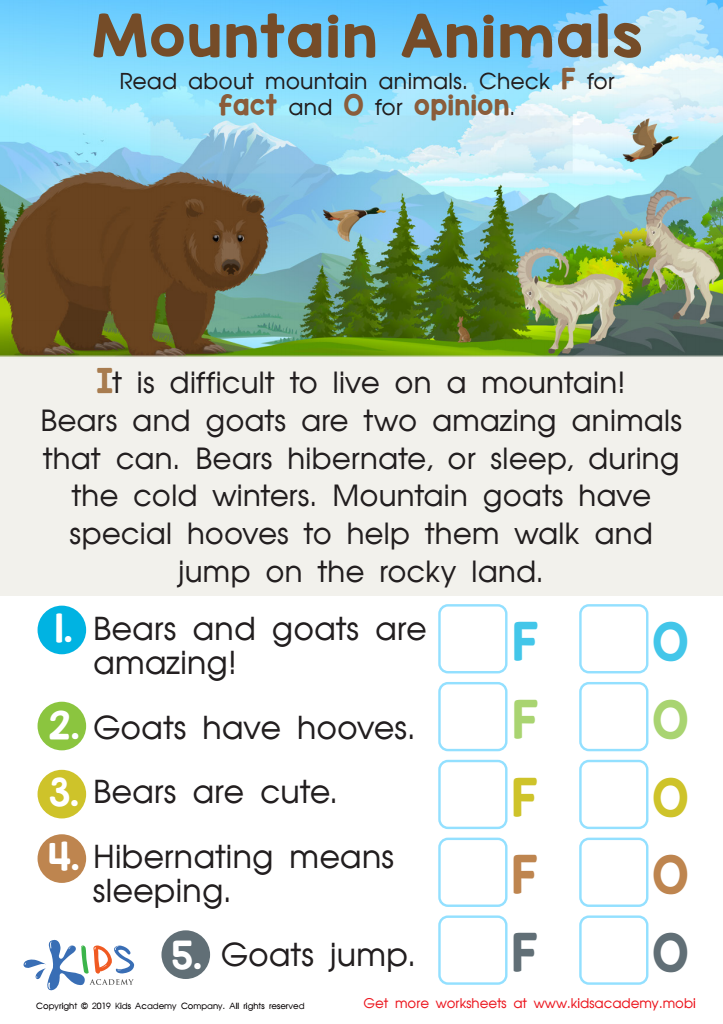
Mountain Animals Worksheet
 Assign to My Students
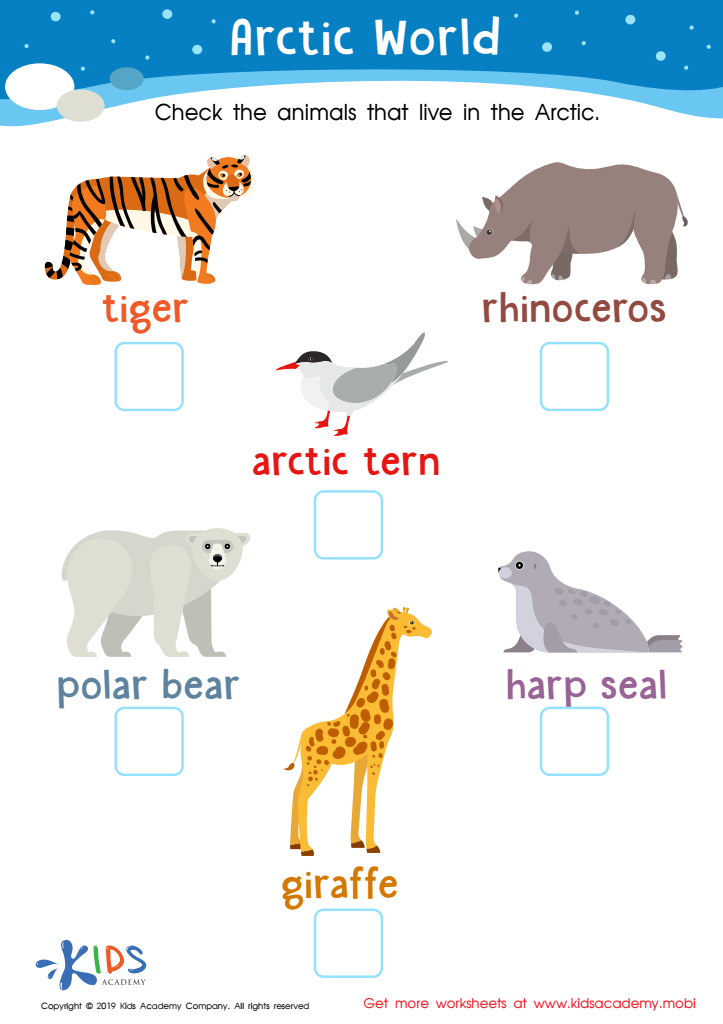
Arctic World Worksheet
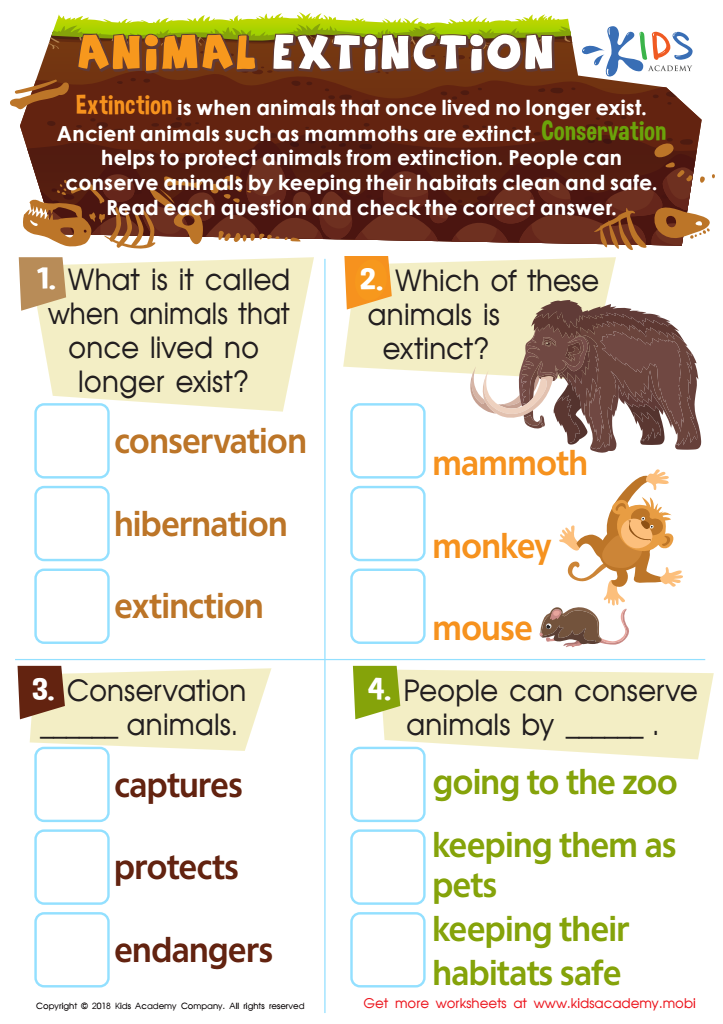
Animal Extinction Worksheet
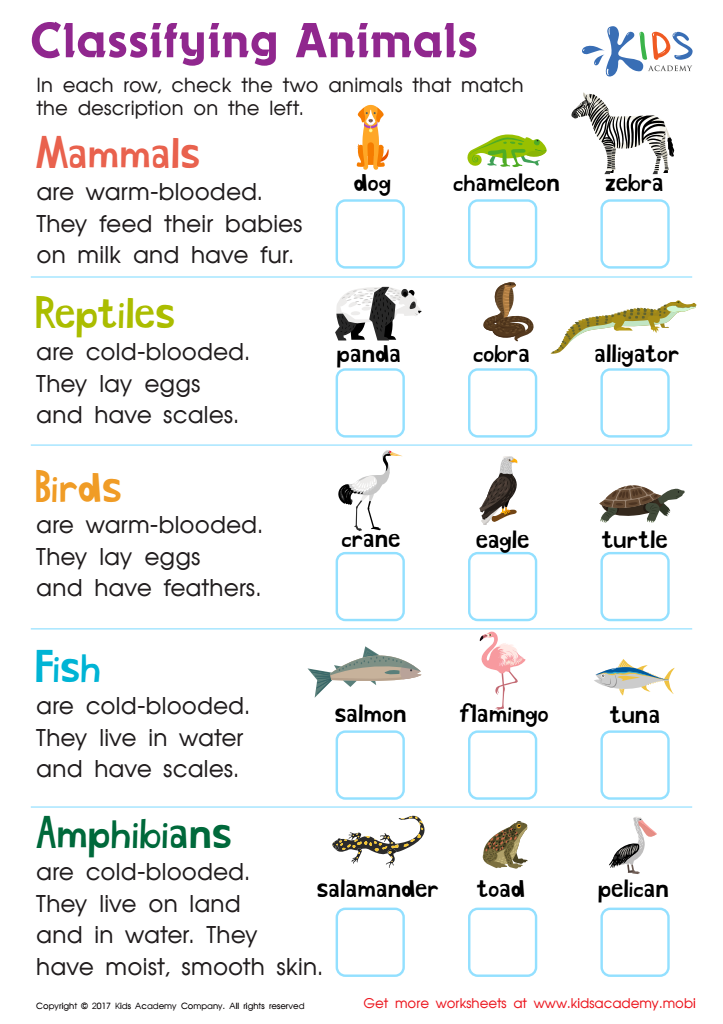
Classifying Animals Worksheet






Critical thinking is essential for children ages 4-8 as it lays the foundation for lifelong learning and problem-solving skills. Engaging with themes like "Critical Thinking Normal Animals" not only captivates young minds but also ignites their curiosity about the natural world. This age group is inherently inquisitive, and fostering critical thinking allows children to explore deeper. They learn to ask questions, analyze information, and develop their reasoning abilities.
Incorporating critical thinking with animals makes it relatable and fun. It encourages children to observe animal behaviors, understand their environments, and recognize patterns, which can stimulate discussions about biology, ecology, and even empathy towards living beings. Moreover, when children engage with scenarios involving animals, they practice decision-making by considering different outcomes, enhancing their cognitive skills.
For parents and teachers, nurturing critical thinking fosters independence; children become more adept at making informed choices and articulating their thoughts. It also promotes cooperation and communication when they work with peers on group activities. By offering opportunities to think critically about normal animals, adults can help children build confidence and curiosity—a crucial part of their personal and academic growth. Thus, prioritizing critical thinking is vital for holistic childhood development.








