Problem-Solving Skills Normal Addition & Subtraction Worksheets for Ages 4-9 - Page 2
33 filtered results
-
From - To
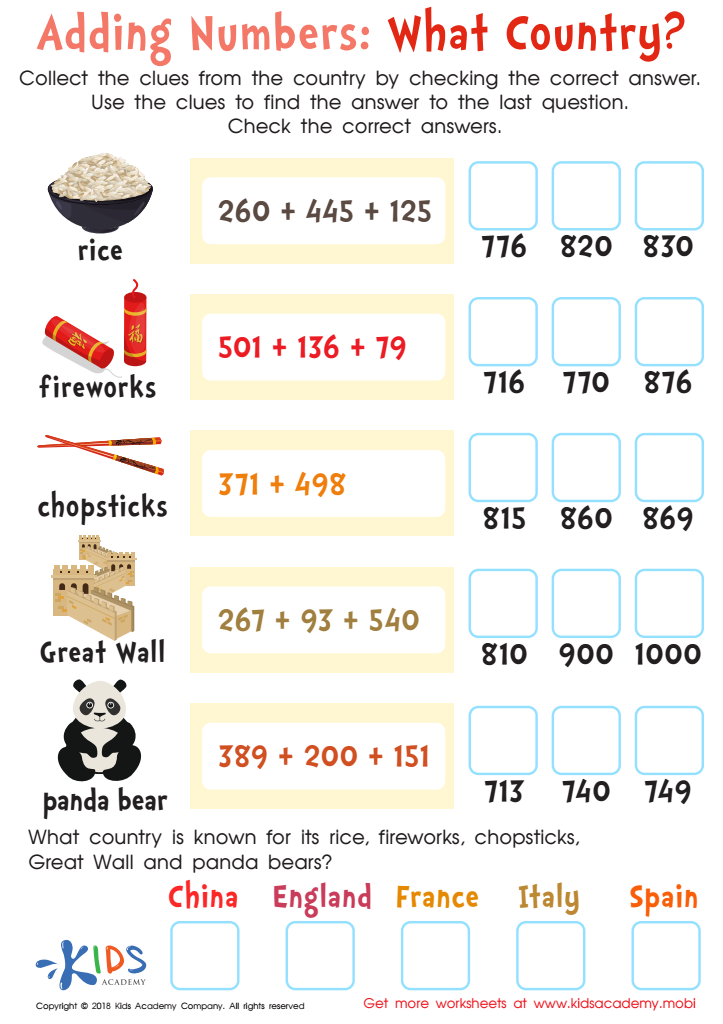
Adding Numbers: What Country Worksheet
 Assign to My Students
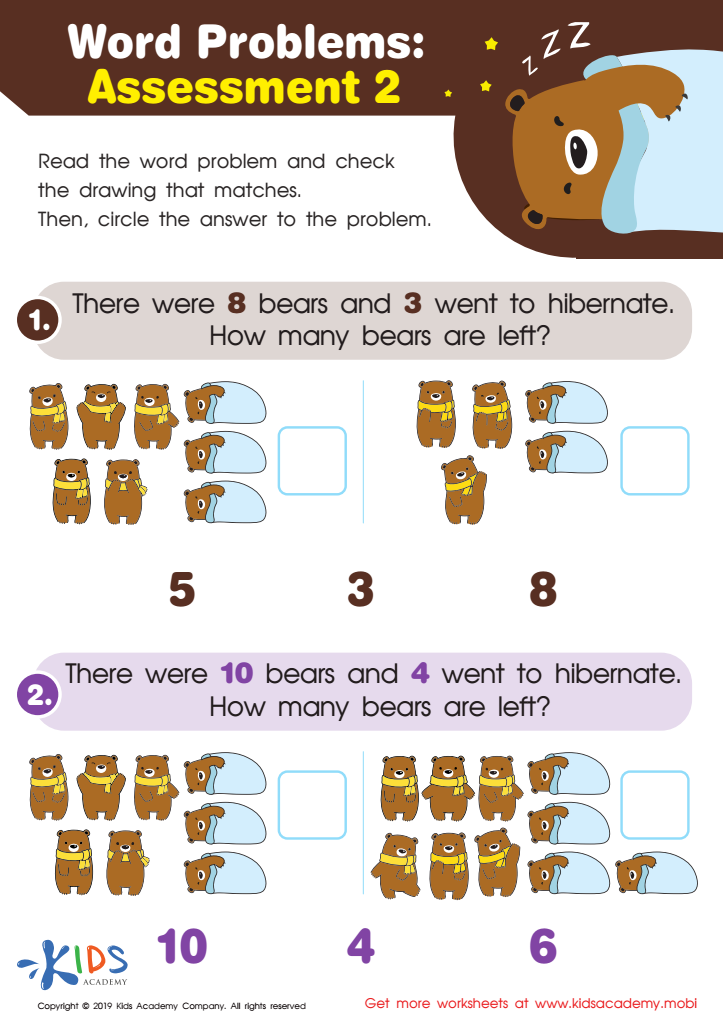
Word Problems: Assessment 2 Worksheet
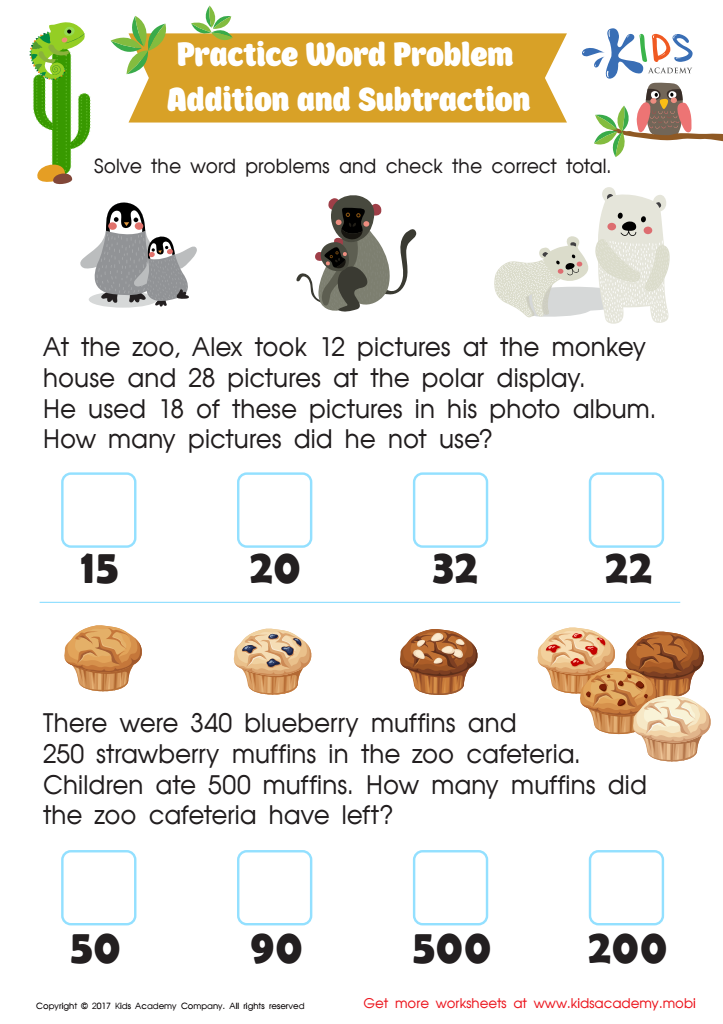
Addition and Subtraction: Word Problems Worksheet
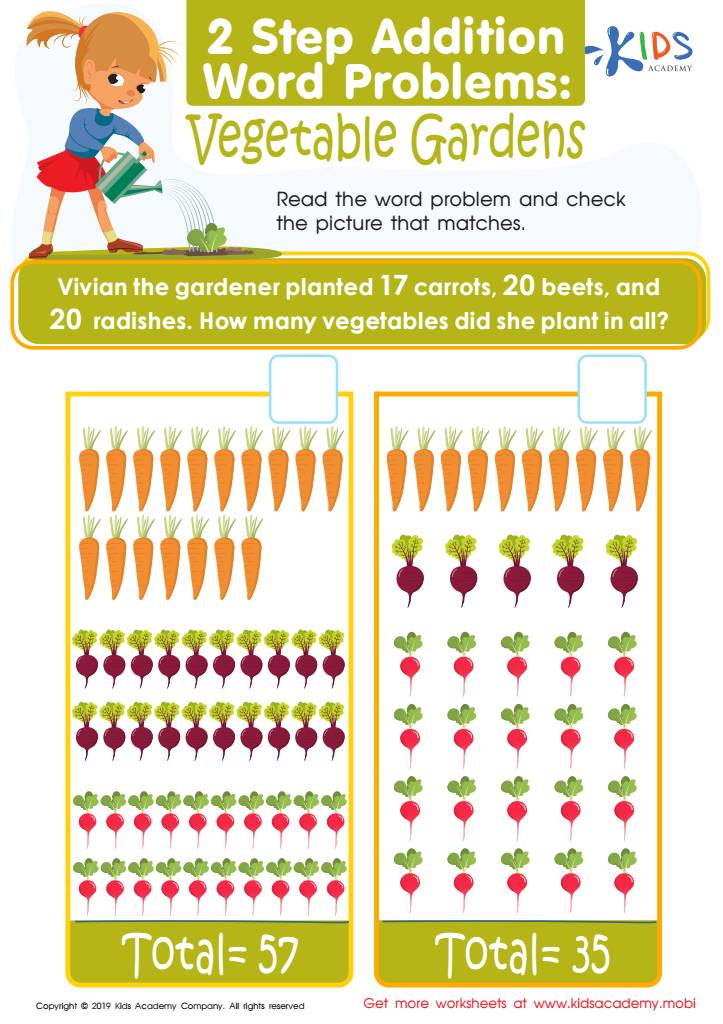
Vegetable Gardens Worksheet
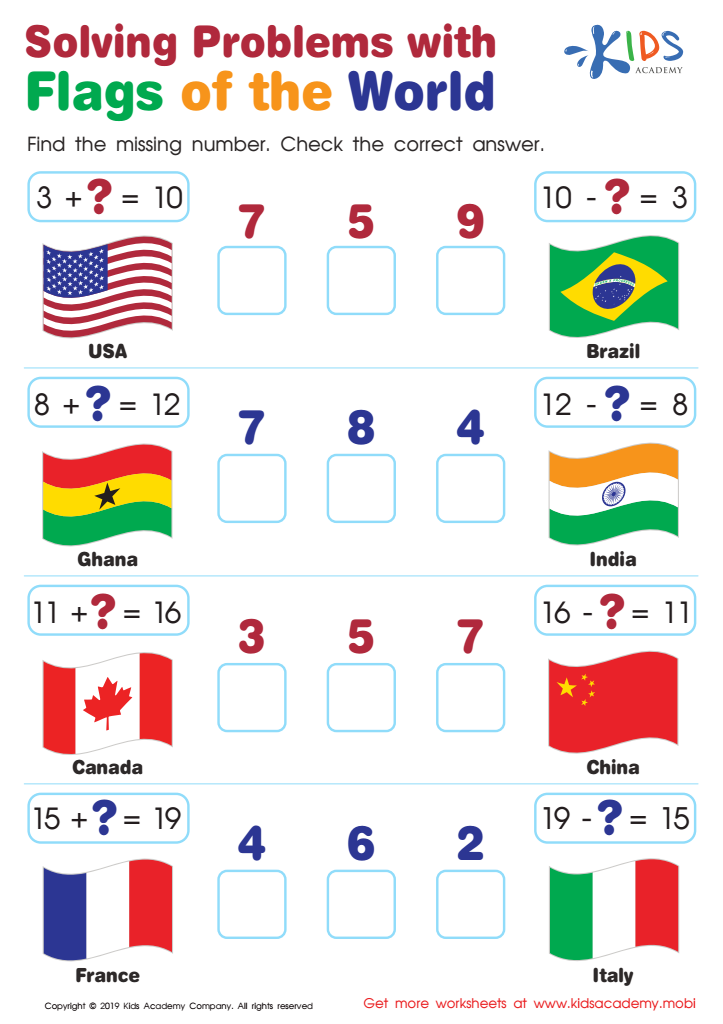
Solving Problems with Flags of the World Worksheet
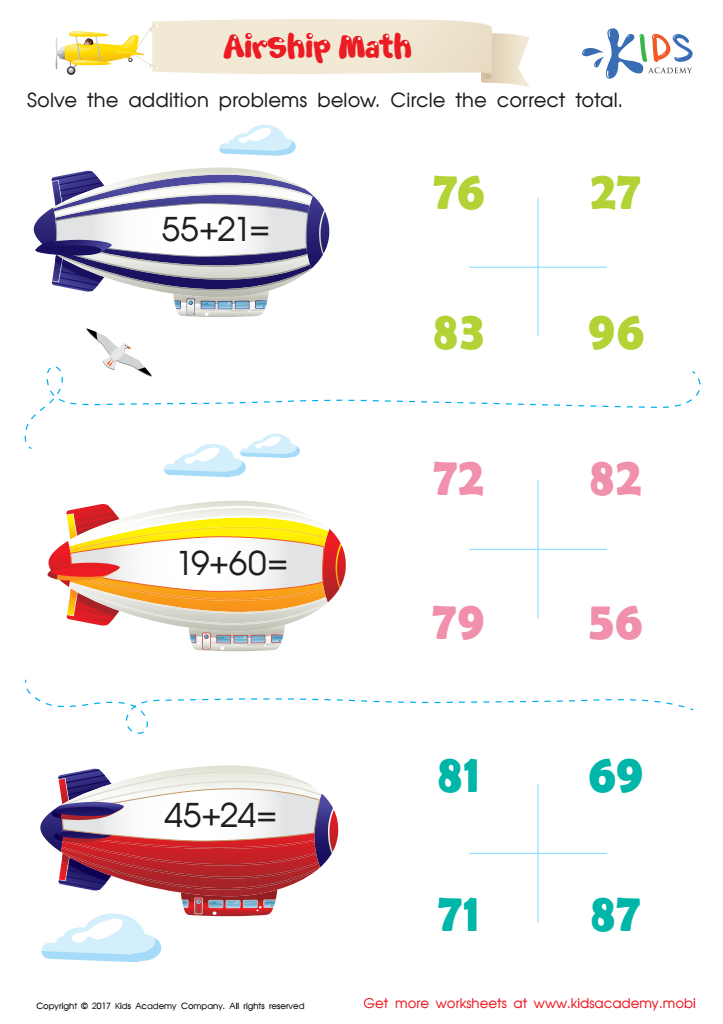
Airship Math Addition Printable
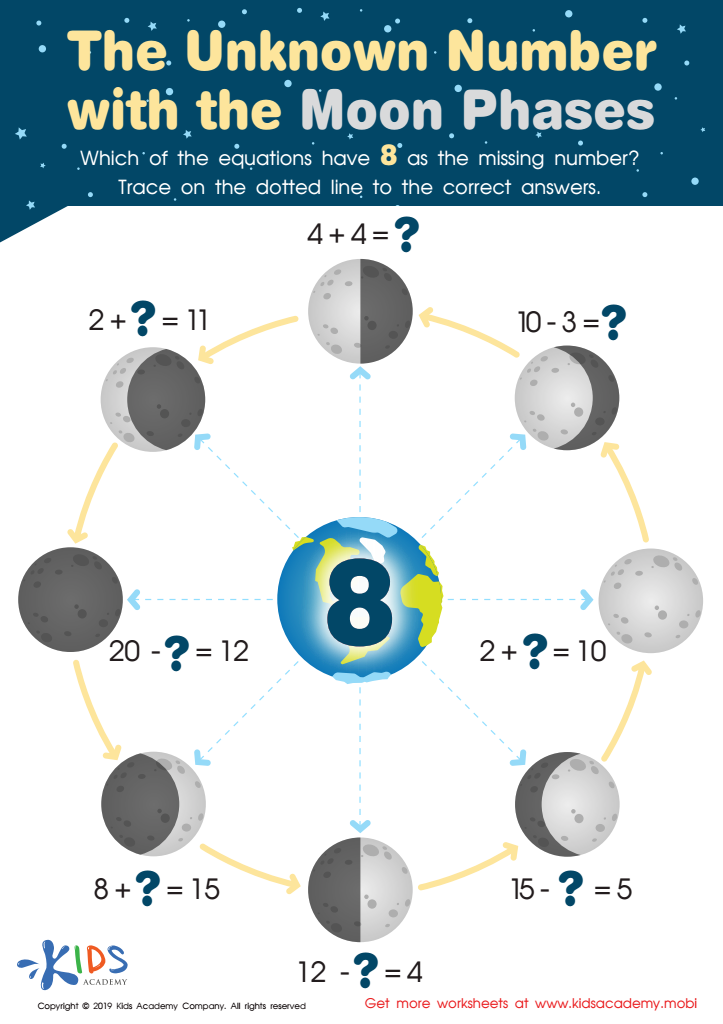
The Unknown Number with the Moon Phases Worksheet
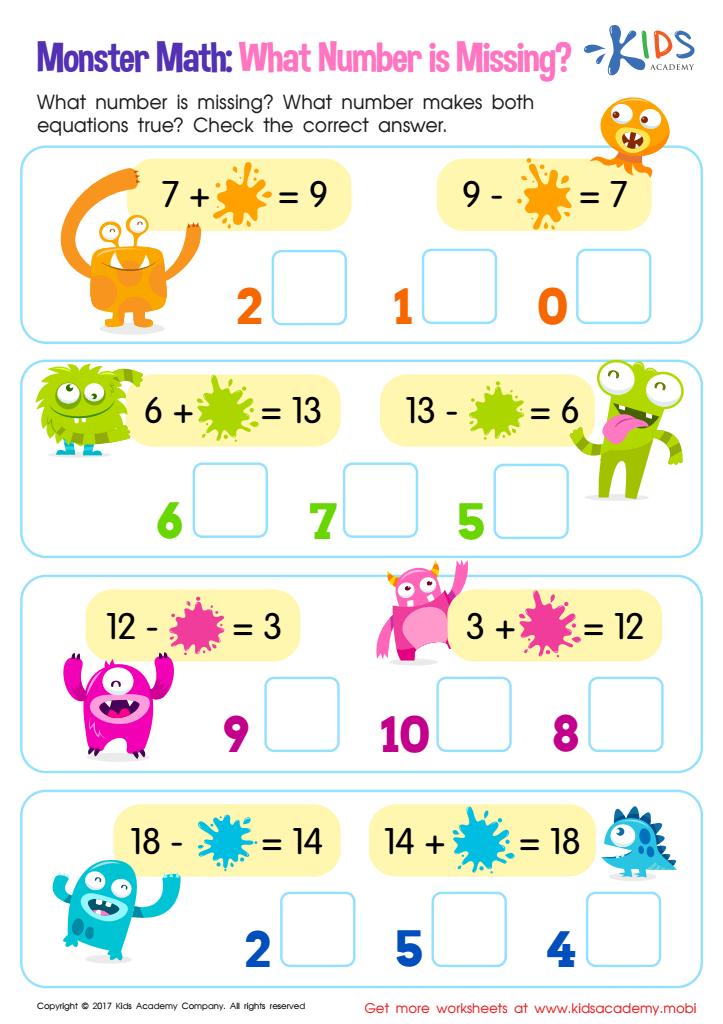
Missing Number: Monster Math Worksheet
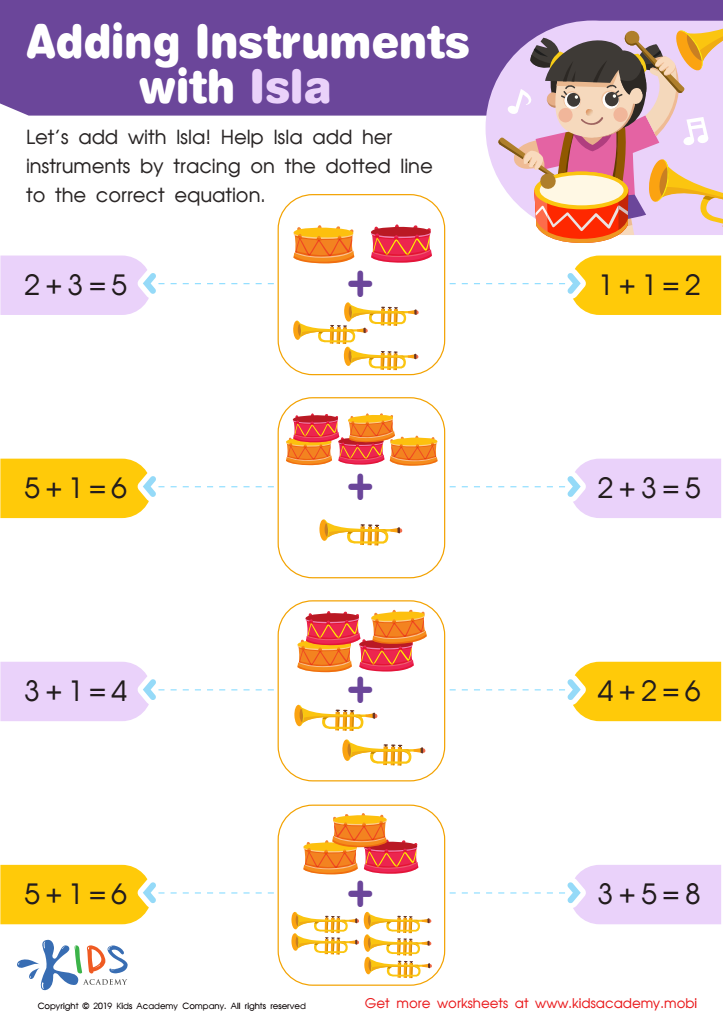
Adding Instruments with Isla Worksheet







Problem-solving skills in normal addition and subtraction are essential for children aged 4-9, forming the foundation for their mathematical understanding and critical thinking. At this stage, children are not only learning to perform basic calculations; they are developing cognitive skills that help them approach a variety of situations logically and efficiently.
By fostering these skills, parents and teachers can significantly enhance children's ability to assess problems, choose appropriate strategies, and evaluate outcomes, which are crucial for their academic success and everyday life. Engaging with addition and subtraction through problem-solving also encourages a growth mindset, helping children understand that persistence and effort lead to improvement and mastery.
Moreover, early proficiency in basic math operations lays the groundwork for more complex concepts later on, such as multiplication, division, and fraction work. Children who struggle with these foundational skills may find themselves facing greater challenges in subsequent grades.
When parents and teachers prioritize problem-solving in math, they encourage exploration and discovery, making learning more enjoyable. Ultimately, investing in these early skills equips children with the tools to navigate not only their educational pathways but also real-world challenges, fostering lifelong learners who can think critically and creatively.








