Categorization skills Normal Matching Worksheets for Ages 4-9
6 filtered results
-
From - To
Enhance your child's learning with our Categorization Skills Normal Matching Worksheets, specially designed for ages 4-9. These engaging worksheets promote critical thinking by helping young learners identify and group similar items. Each exercise encourages children to classify objects, animals, and shapes, fostering essential cognitive and organizational skills. With vibrant illustrations and age-appropriate challenges, these worksheets make learning fun and interactive. Perfect for teachers and parents alike, our resources are ideal for classroom settings, homeschool activities, or extra practice at home. Download our Categorization Skills worksheets today and watch your child's confidence and knowledge grow as they master the art of matching!
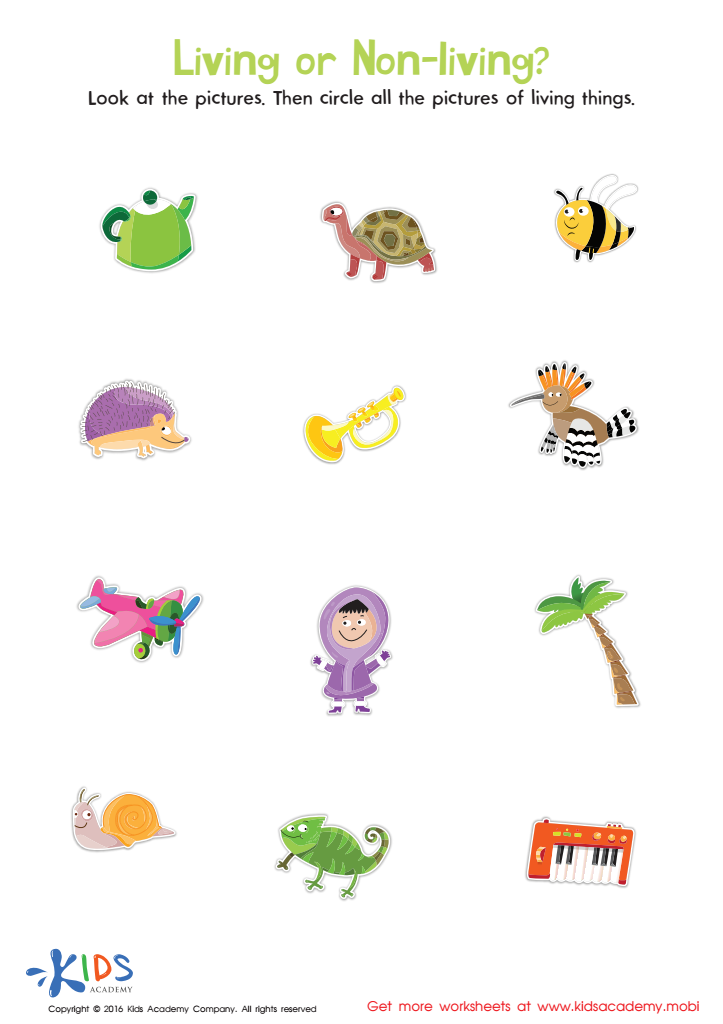
Identifying Living and Non–living Things Sorting Worksheet
 Assign to My Students
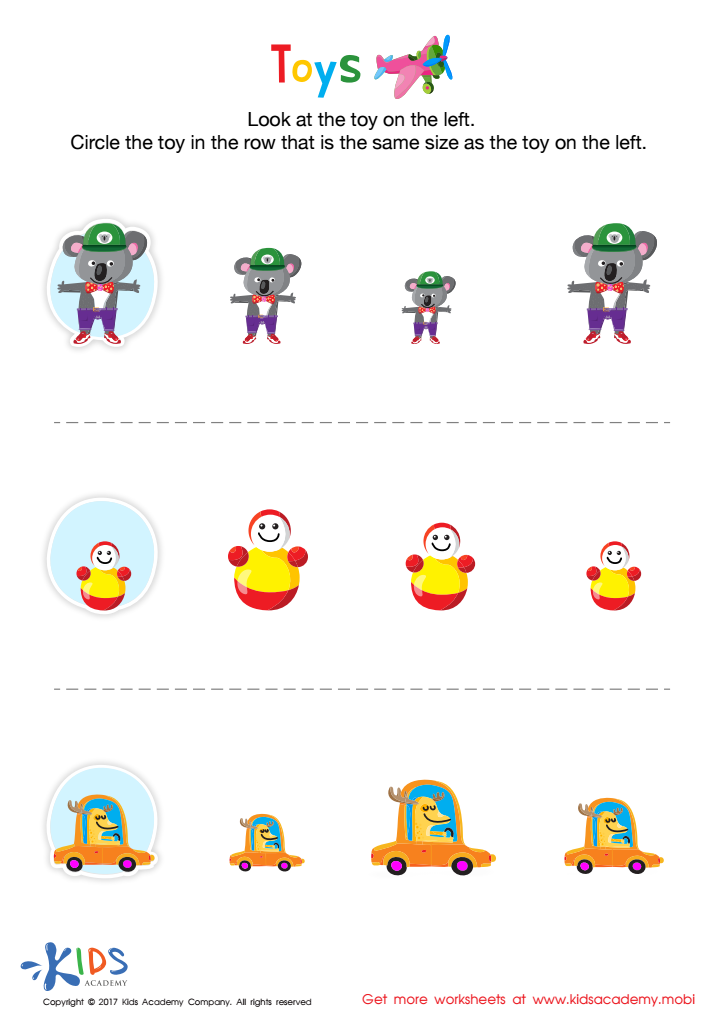
Matching: Classifying Toys by Size Worksheet
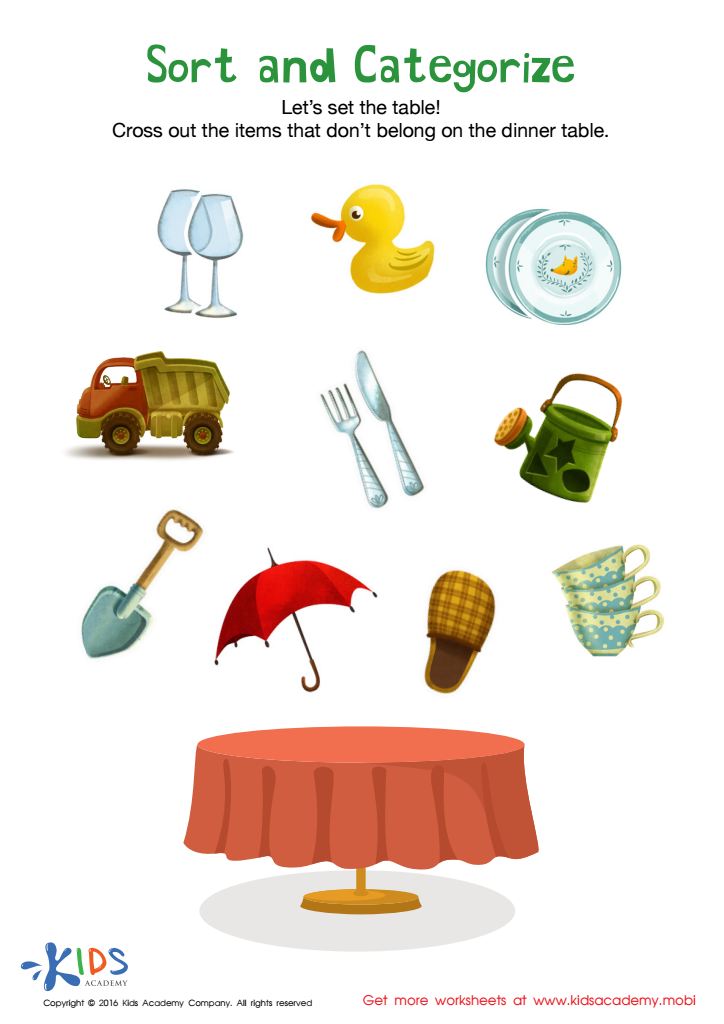
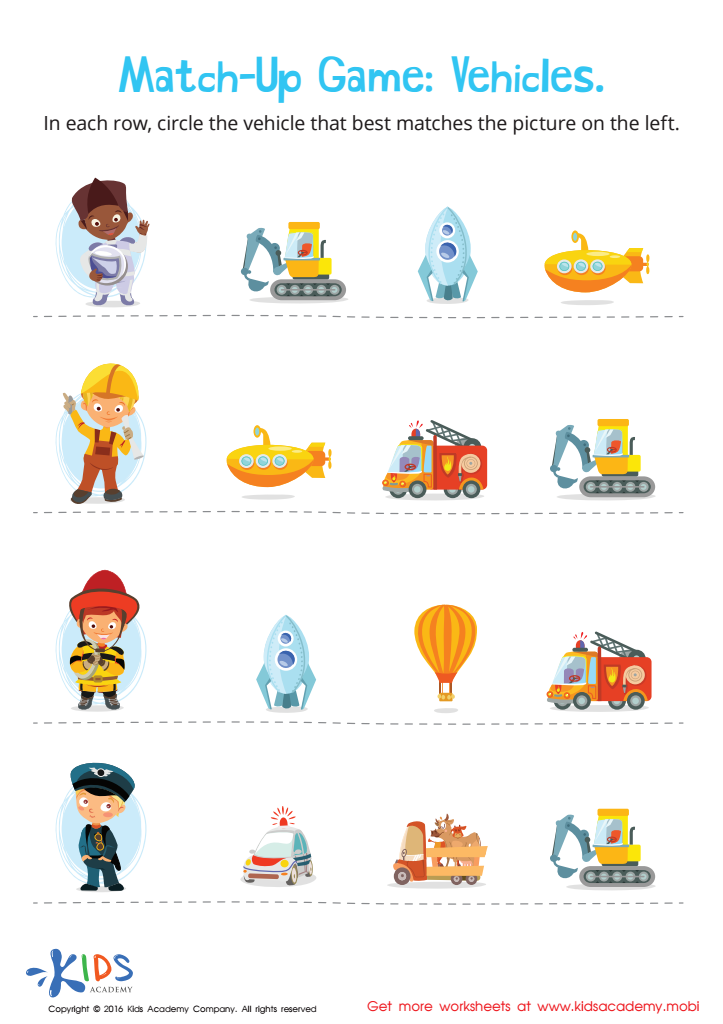
Vehicles Worksheet
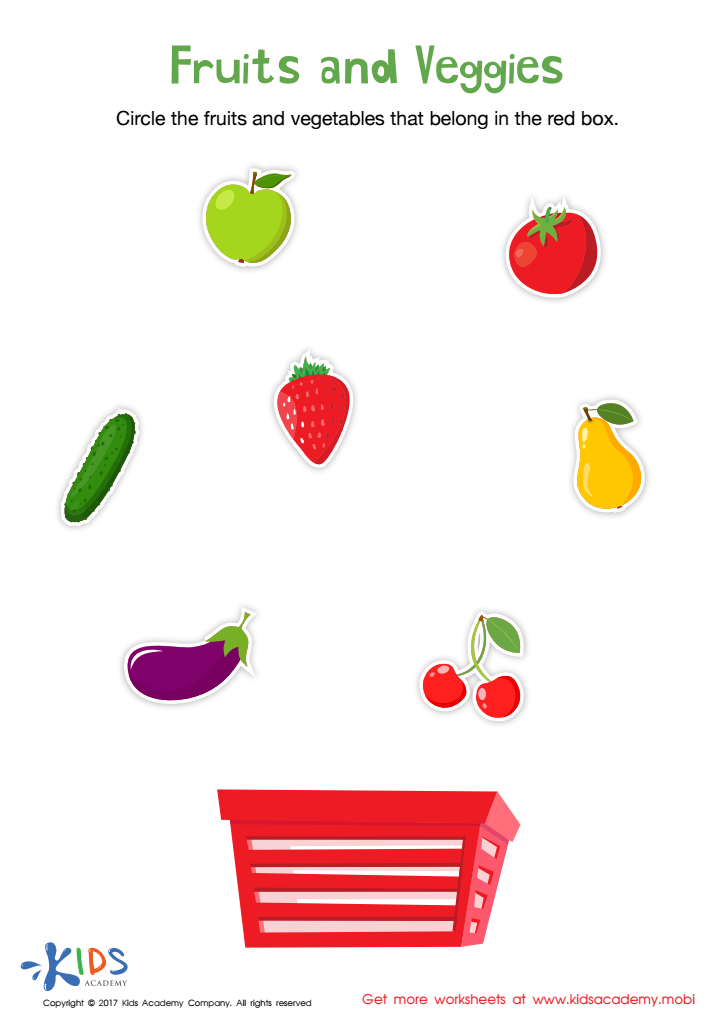
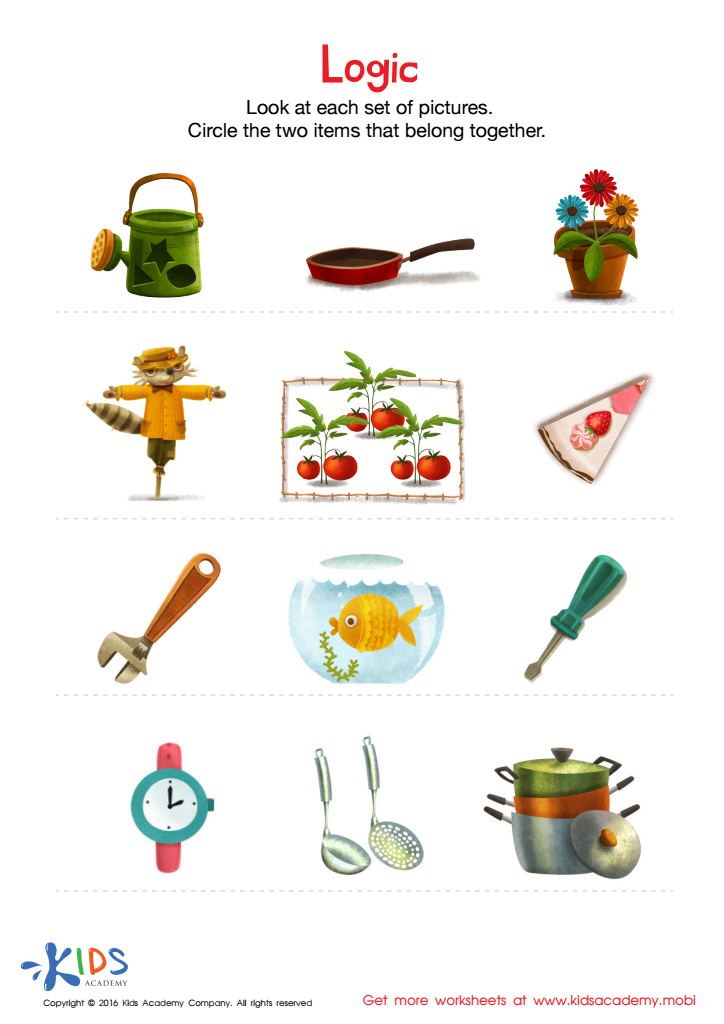
Logic Game Sorting Worksheet








Categorization skills, particularly normal matching, are crucial for children aged 4-9 as they form the foundation for critical thinking and cognitive development. These skills enable children to group and differentiate objects, concepts, and information based on shared attributes, which is essential for problem-solving and comprehension in their daily lives.
For parents and teachers, fostering categorization skills enhances children's ability to engage with their environment. It helps young learners make sense of the world by simplifying complex information into manageable categories, thus improving their observational and analytical skills. Effective categorization contributes to early literacy development; for instance, children learn to classify words based on their meanings, fostering vocabulary growth.
Additionally, normal matching activities promote social interaction and collaboration, as children often engage in grouping activities with peers, encouraging communication and teamwork. Development of these skills sets the stage for more advanced cognitive abilities, preparing children for the academic demands of later grades. By prioritizing categorial skills, parents and teachers nurture a vital cognitive ability that supports academic success, critical thinking, and everyday decision-making. Therefore, their attention to normal matching in early childhood is essential for holistic development.








