Fine Motor Skills Normal Tracing Numbers Worksheets for Ages 4-9
6 filtered results
-
From - To
Boost your child's fine motor skills with our engaging Tracing Numbers Worksheets for ages 4-9. Perfect for young learners, these worksheets are designed to develop precision and control in hand movements while introducing number concepts. Children will enjoy tracing numbers, which enhances their ability to hold writing tools correctly and improve hand-eye coordination. Ideal for preschool to elementary age groups, our worksheets provide a fun and educational way to prepare kids for more advanced writing tasks. Explore our collection to support your child's developmental milestones and make learning an enjoyable experience.
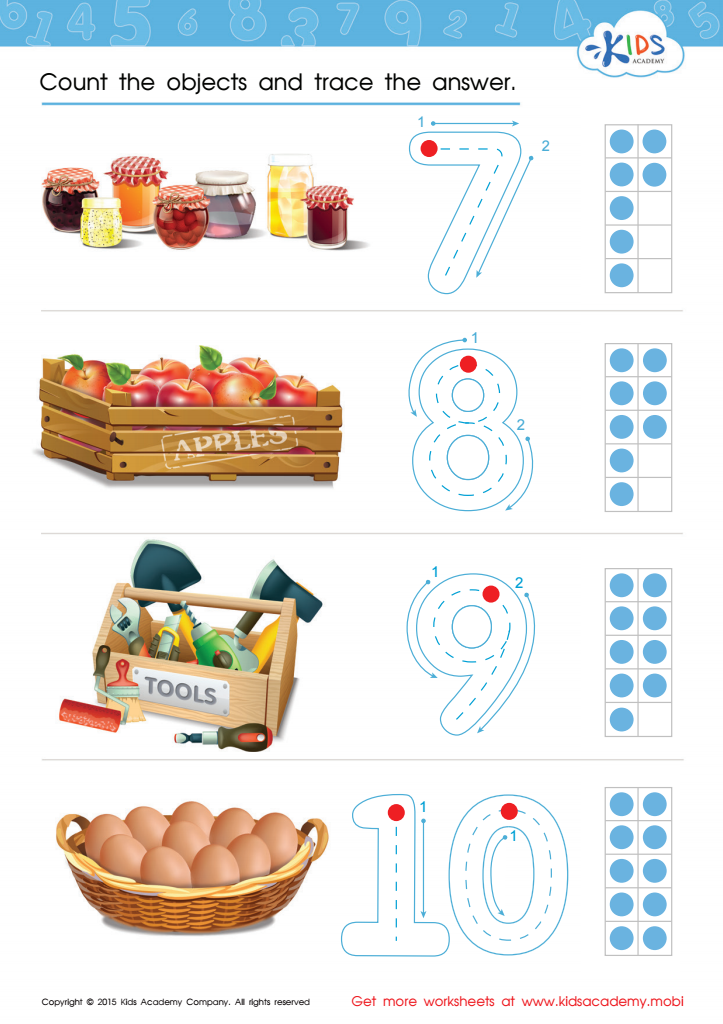
Count and Trace 7 – 10 Worksheet
 Assign to My Students

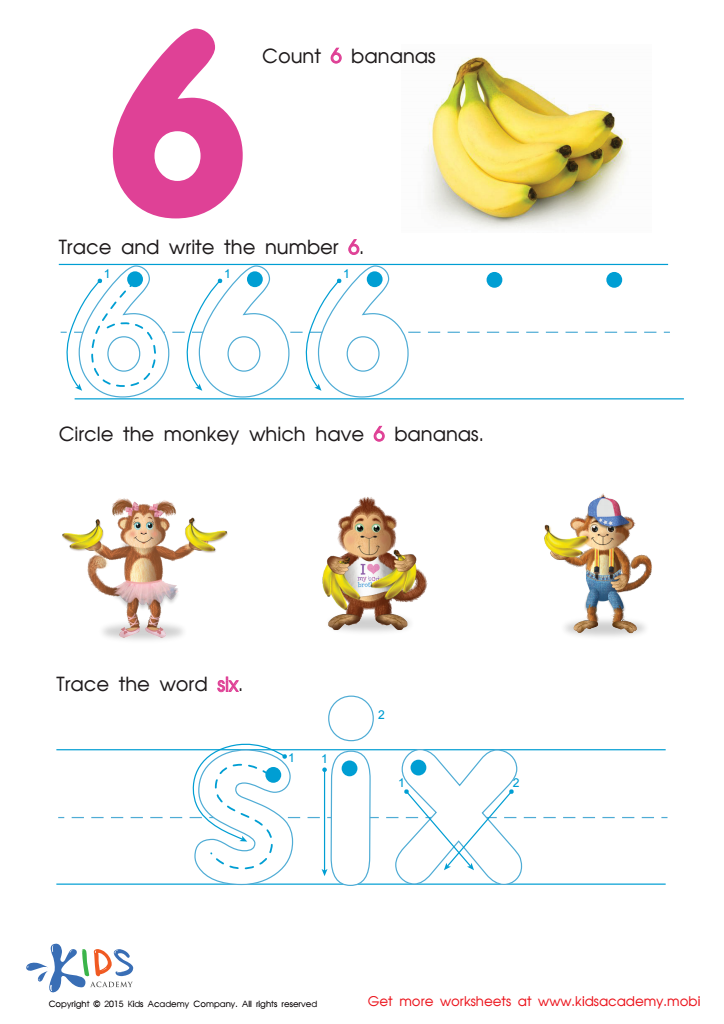
Tracing And Writing Number 6 Worksheet
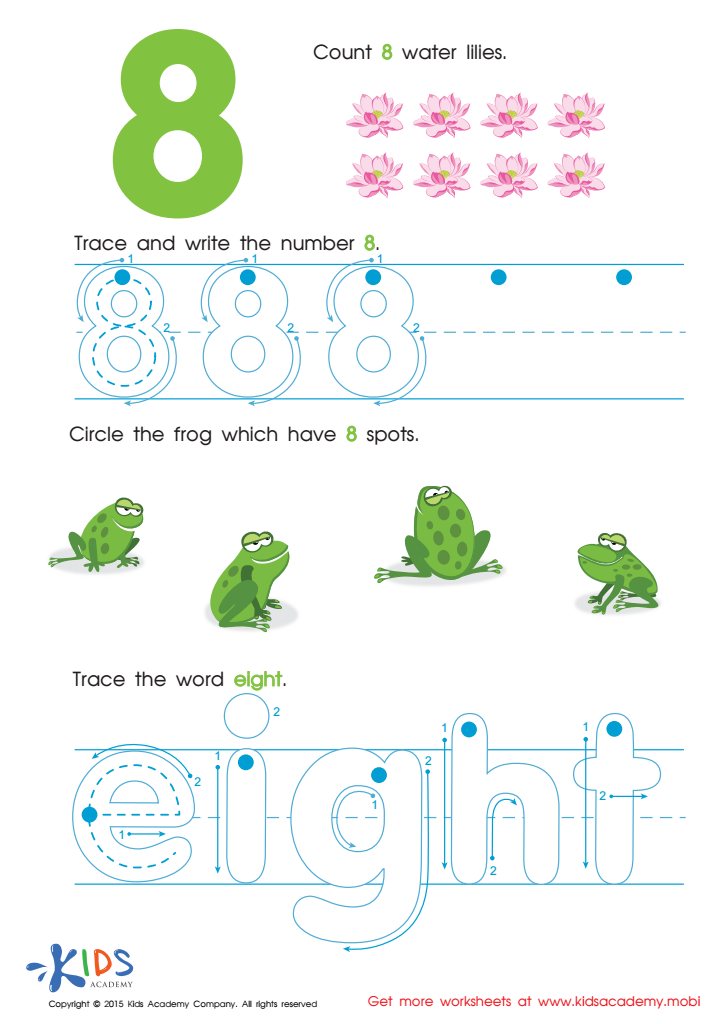
Learn Number 8 Easily Worksheet
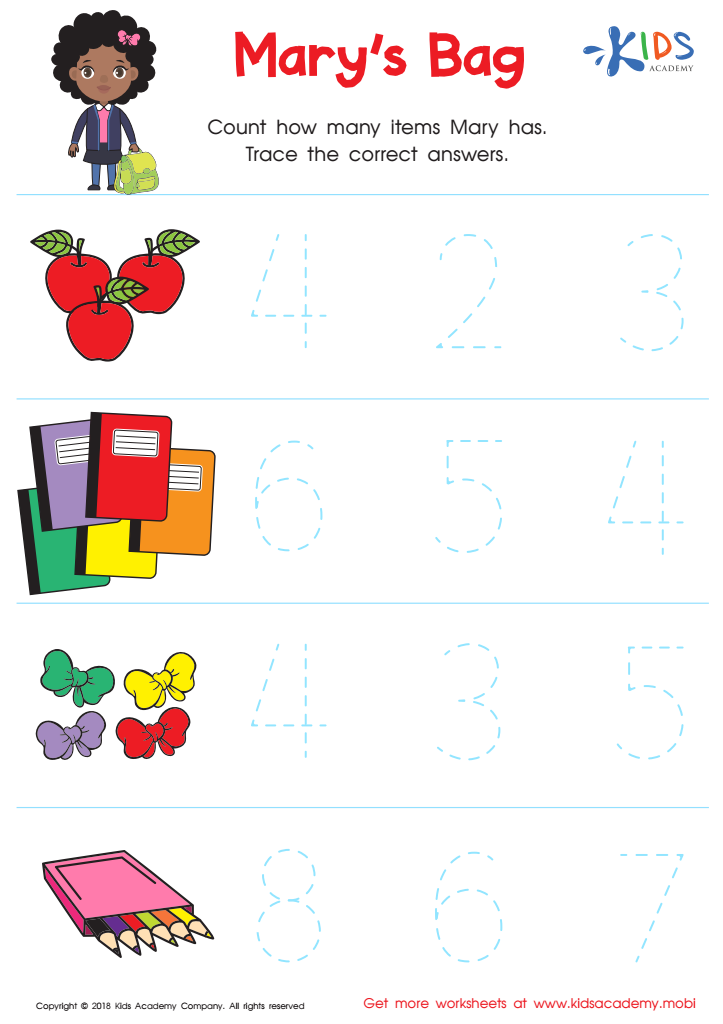
Kindergarten Number Tracing: Mary's Bag Worksheet
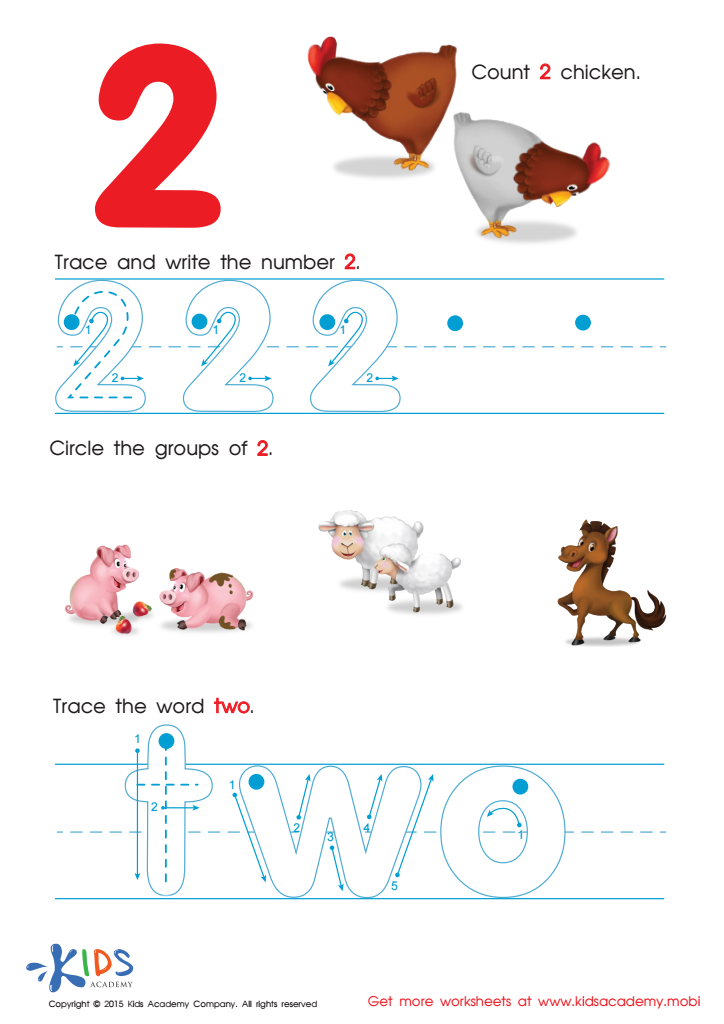
Learn to Write the Number 2 Worksheet








Fine motor skills are essential for children's development, especially during the ages of 4-9, as they lay the groundwork for many critical tasks. These skills involve the coordination of small muscle movements, particularly in the hands and fingers. One foundational activity that supports fine motor development is tracing numbers.
Parents and teachers should care about fine motor skills because they are intimately connected to a child's ability to perform everyday tasks, such as writing, buttoning clothes, and using utensils. Tracing numbers can significantly enhance a child's hand-eye coordination, muscle memory, and precision. As children practice tracing, they gradually gain better control over their hand movements, which is essential for writing proficiency. This proficiency not only boosts academic performance but also encourages independence and self-confidence.
Moreover, tracing numbers is particularly beneficial as it combines fine motor development with numerical literacy. This dual focus helps children become more comfortable with numbers, fostering early math skills that are crucial for future learning. The repetitive nature of tracing also reinforces patience and attention to detail, both of which are important qualities for academic success.
In essence, prioritizing activities that develop fine motor skills, like tracing numbers, equips children with the tools they need to thrive both academically and in daily life. Thus, both parents and teachers should champion practices that nurture these abilities during early childhood.