
Spatial awareness Normal Worksheets for Ages 5-8
29 filtered results
Difficulty Level
Grade
Age
-
From - To
Subject
Activity
Standards
Enhance your child's spatial awareness with our carefully crafted worksheets designed for ages 5-8. Kids Academy offers engaging, fun, and educational activities that help young learners understand spatial relationships and improve their problem-solving skills. Each worksheet focuses on essential concepts such as positioning, shape recognition, and directionality. Through our dynamic exercises, children can explore and develop their spatial reasoning while enhancing their visual and cognitive abilities. Perfect for both classroom and home use, these worksheets provide a solid foundation for early math and science skills, ensuring your child builds confidence in their learning journey. Introduce your child to spatial fun today!
Favorites
With answer key
Interactive
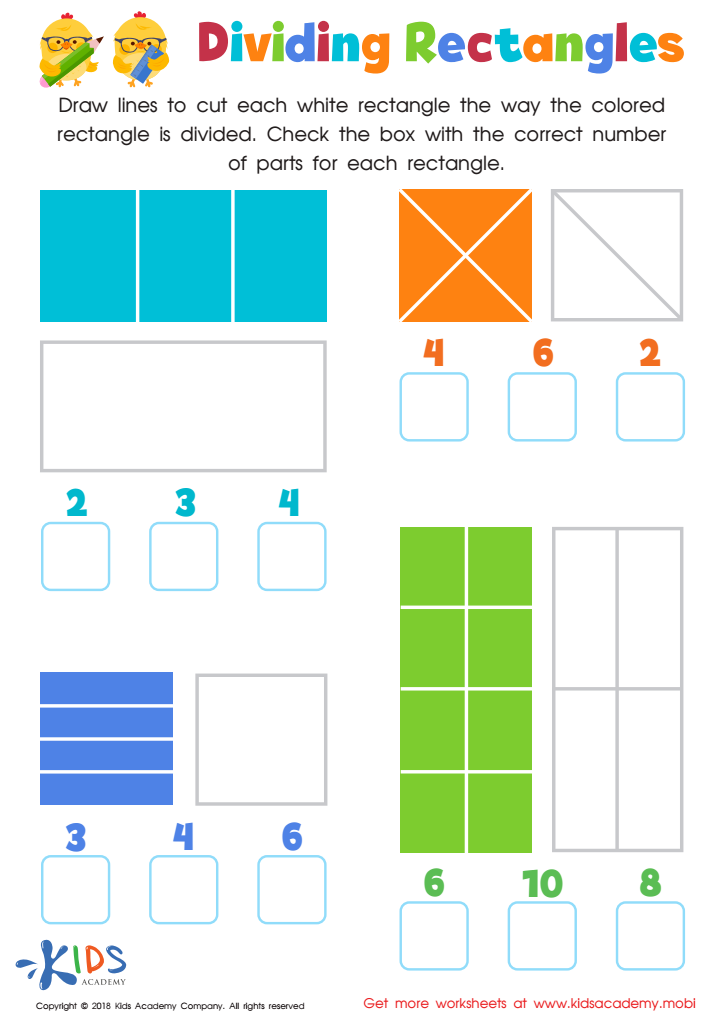
Dividing Rectangles Worksheet
Ask your child to draw lines to divide the white rectangles like the colored ones. Then, have them count the parts in each and choose the correct number. This worksheet will help them practice counting and dividing.
 Assign to My Students
Dividing Rectangles Worksheet
Worksheet
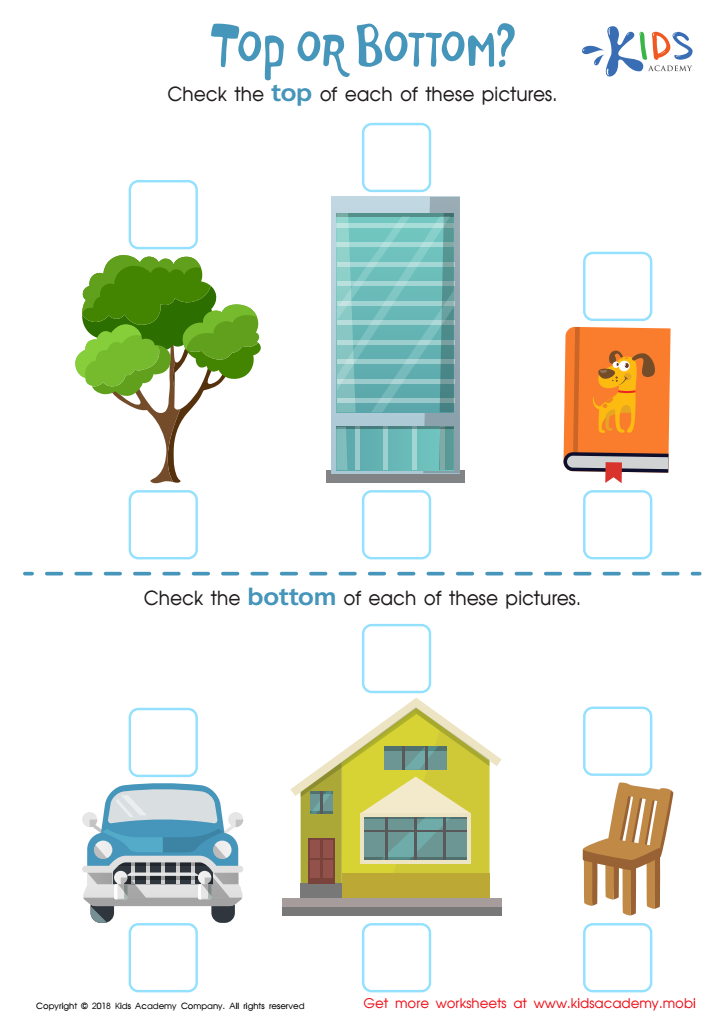
Top or Bottom Worksheet
Help your toddler master orientation and early geometry skills with this free printable worksheet. It tasks children with identifying the top and bottom of familiar images, like cars, to help build their mental map of objects. It may be simple for adults and older kids, but toddlers must learn the words to describe objects and their physical orientation.
Top or Bottom Worksheet
Worksheet
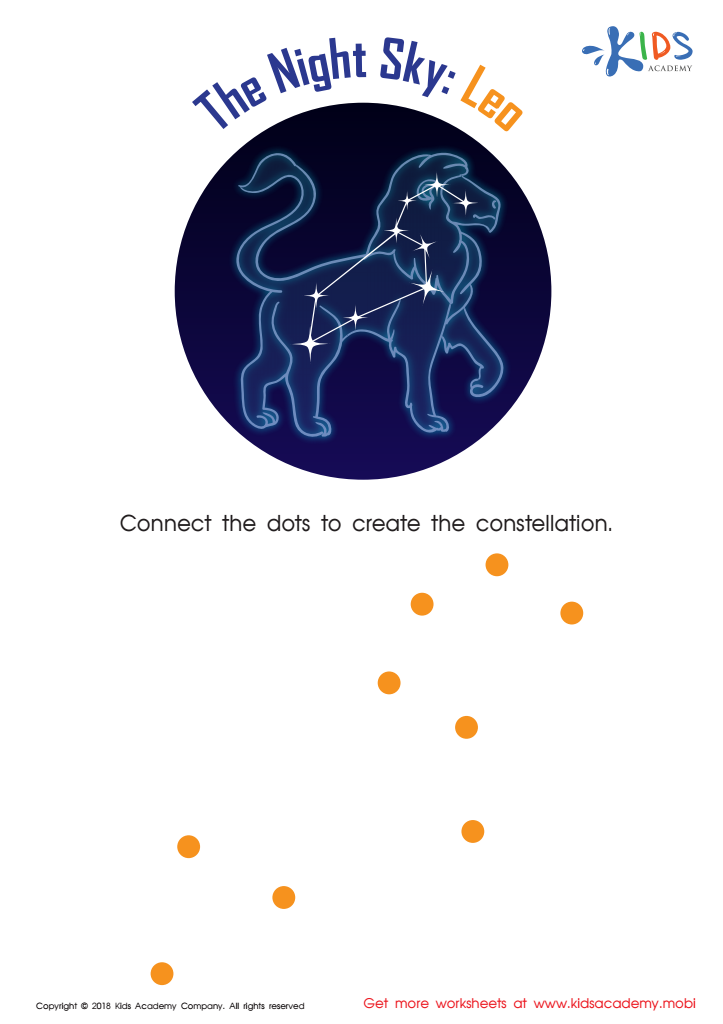
The Night Sky: Leo Worksheet
Let your kids explore the wonders of the stars with this fun worksheet! They'll connect the dots to create the constellation Leo. Night gazing instruments, a telescope or this printout can help your kids learn about constellations and horoscopes. Download the worksheet and let the star watching begin!
The Night Sky: Leo Worksheet
Worksheet
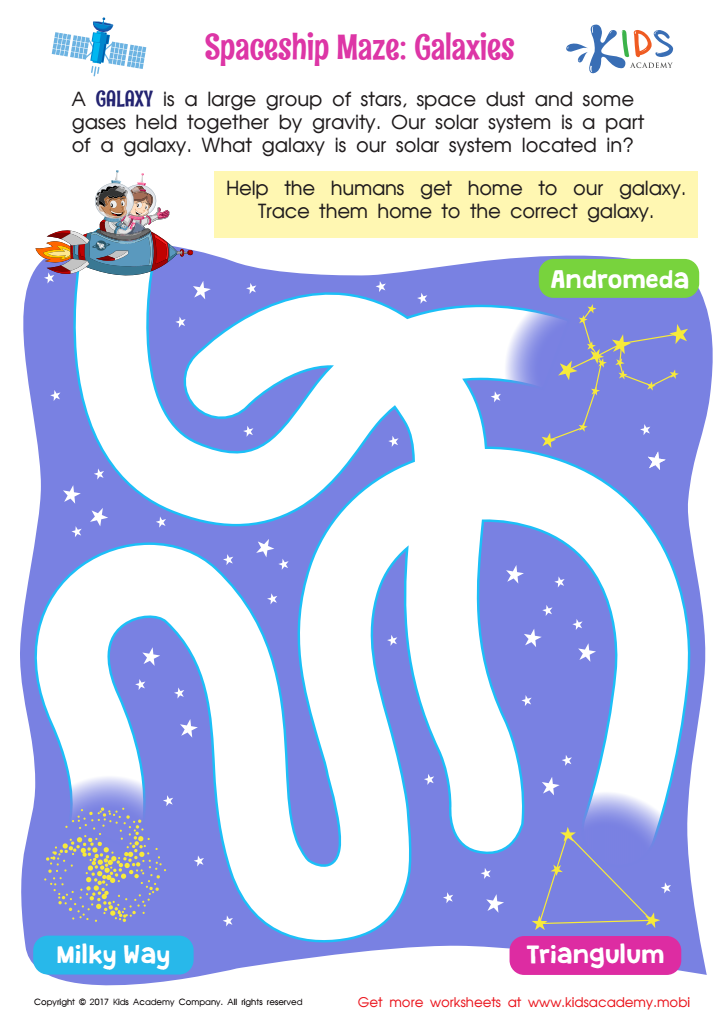
Spaceship Maze: Galaxies Worksheet
Guide lost humans home with this fun space maze: Galaxies! Once the journey is complete, kids can discover the name of our galaxy: the Milky Way! An exciting way to teach kids about space and help humans find their way back home.
Spaceship Maze: Galaxies Worksheet
Worksheet
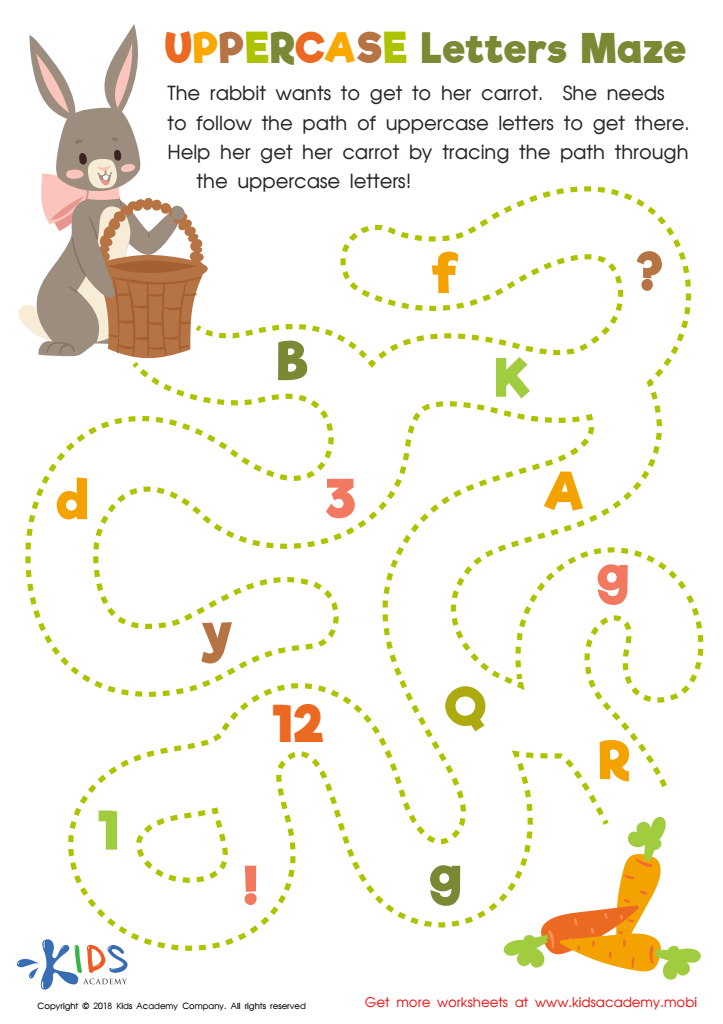
Uppercase Letters Maze Worksheet
Kids can have fun helping a rabbit find her carrot by picking the path with uppercase letters. This worksheet teaches letter differentiation while building confidence. Kids will have a great time while getting an essential skill!
Uppercase Letters Maze Worksheet
Worksheet
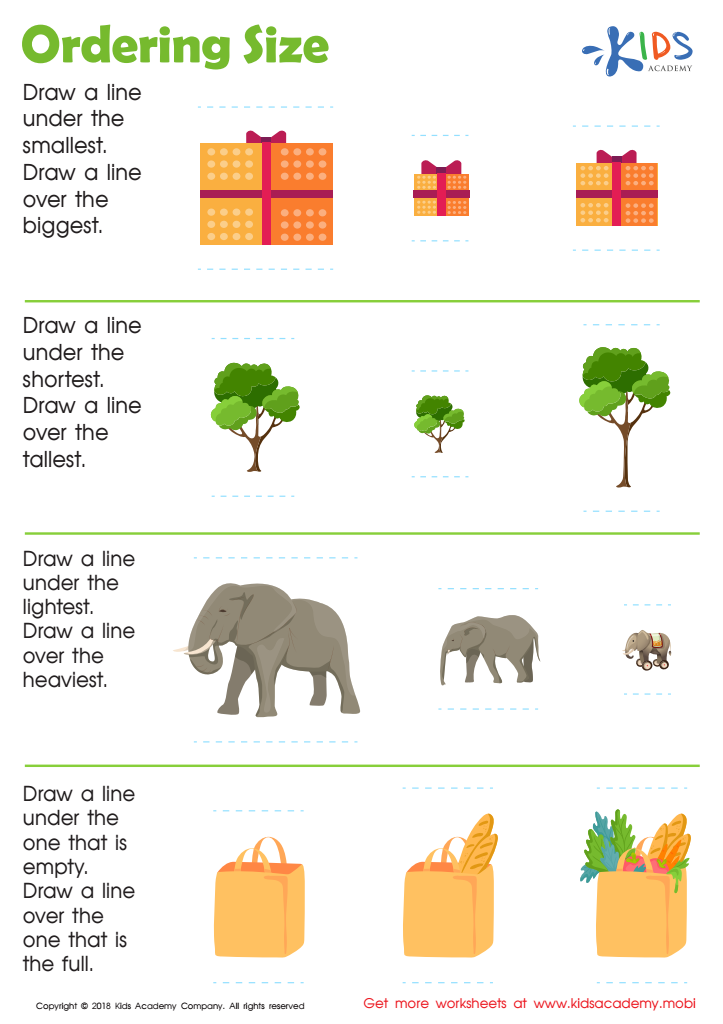
Ordering Size Worksheet
This worksheet helps students practice mathematical vocabulary related to size and quantity. Children look at pictures and draw a line to the objects that are taller, shorter, big, small, light, heavy, empty or full. The teacher can quickly check students' understanding of these measurement terms and then ask for examples of their own.
Ordering Size Worksheet
Worksheet
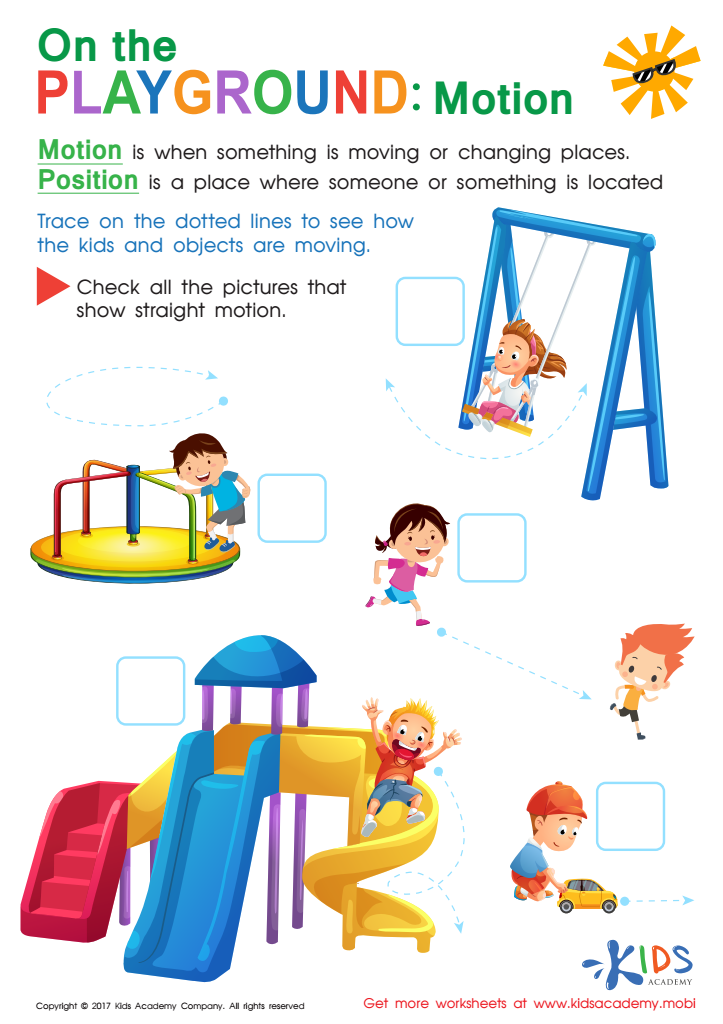
Position and Motion Worksheet
Take a trip to the park and explore motion and position with fun worksheets!
Take your child's science knowledge to a whole new level with Kids Academy's grade 2 position and motion worksheets! Explore motion and position with fun worksheets while taking a trip to the park. Strengthen their understanding of physics and how people and objects move through space.
Position and Motion Worksheet
Worksheet
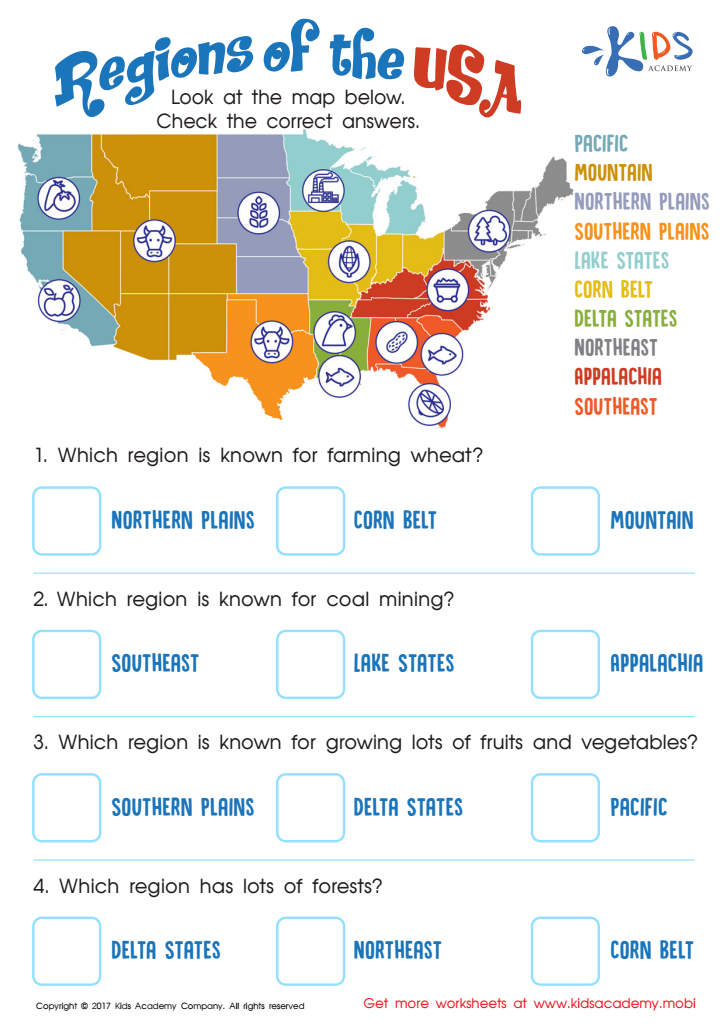
Regions of the USA Worksheet
Help your child explore the US with this regions of the United States worksheet! They'll learn about the diverse cultures, climates and purposes of each region. Make geography and US history fun with this educational exercise!
Regions of the USA Worksheet
Worksheet
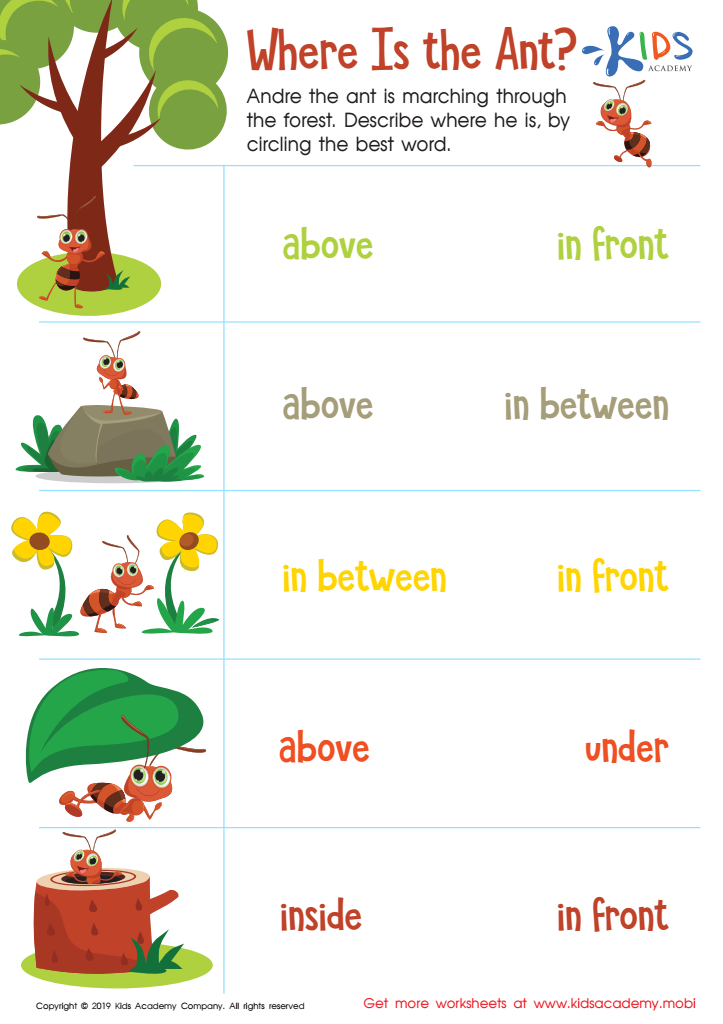
Where Is the Ant? Worksheet
Kids are captivated by ants. Andre is a busy ant, marching through the forest. Help your child circle the best word that best describes what he's doing in each picture. This colorful printout will show them the way.
Where Is the Ant? Worksheet
Worksheet
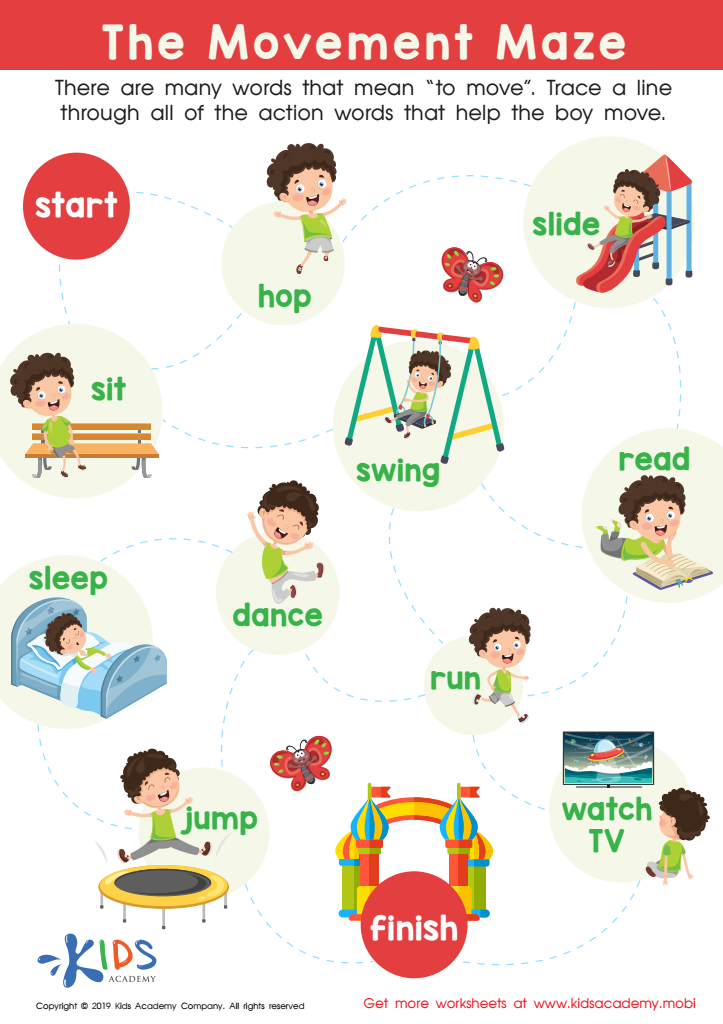
The Movement Maze Worksheet
Let your child have fun with this interactive PDF download. Kids will learn movement words with cute pictures, plus practice fine motor skills as they trace. A fun way to reinforce vocabulary. Jump, hop and sit – it's all here!
The Movement Maze Worksheet
Worksheet
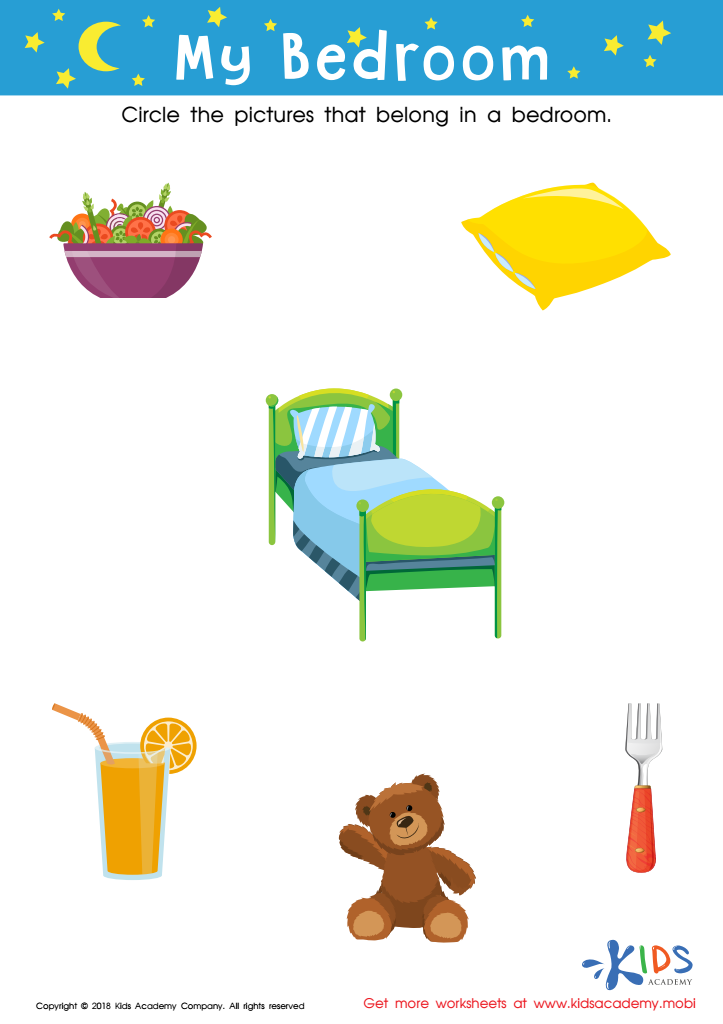
My Bedroom Worksheet
Your child's room is their special space, where only a few are allowed in. You may have let them choose some special decorations, like wall stickers and toys. This exercise will be easy for your child, as they know their bedroom well. Ask them to circle the pictures that belong in a bedroom.
My Bedroom Worksheet
Worksheet
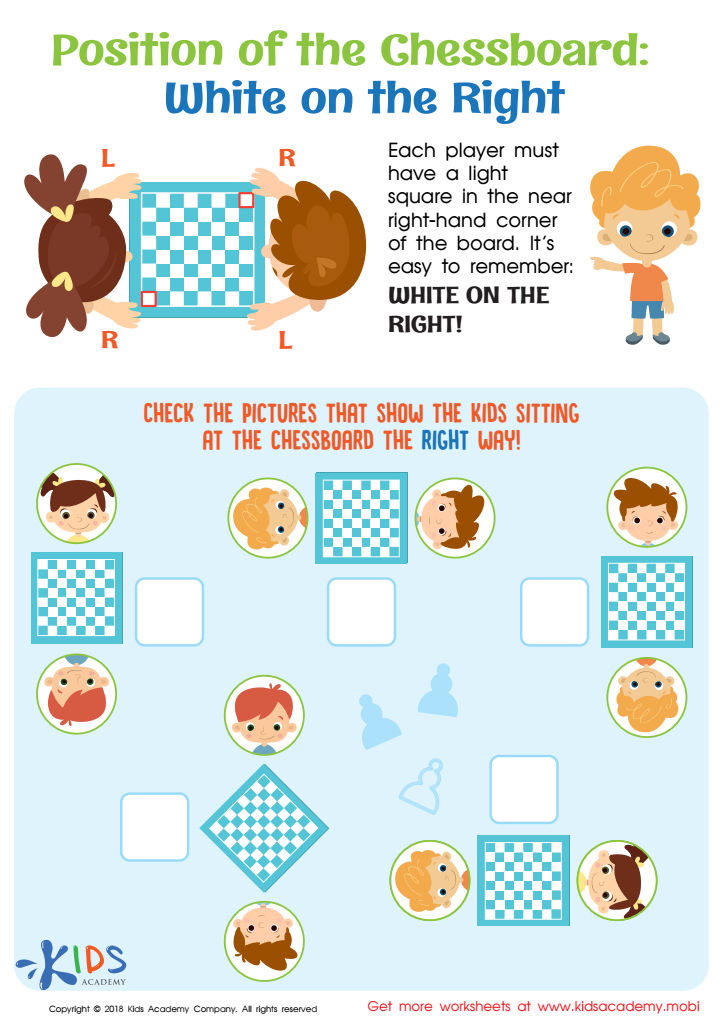
Position of the Chessboard: White on the Right Worksheet
Proper positioning of the chessboard and players is key. Before the game, make sure the white square is in the right-hand corner. A simple rhyme can help: "White on the right". Check pictures of kids at the chessboard to ensure correct positioning.
Position of the Chessboard: White on the Right Worksheet
Worksheet
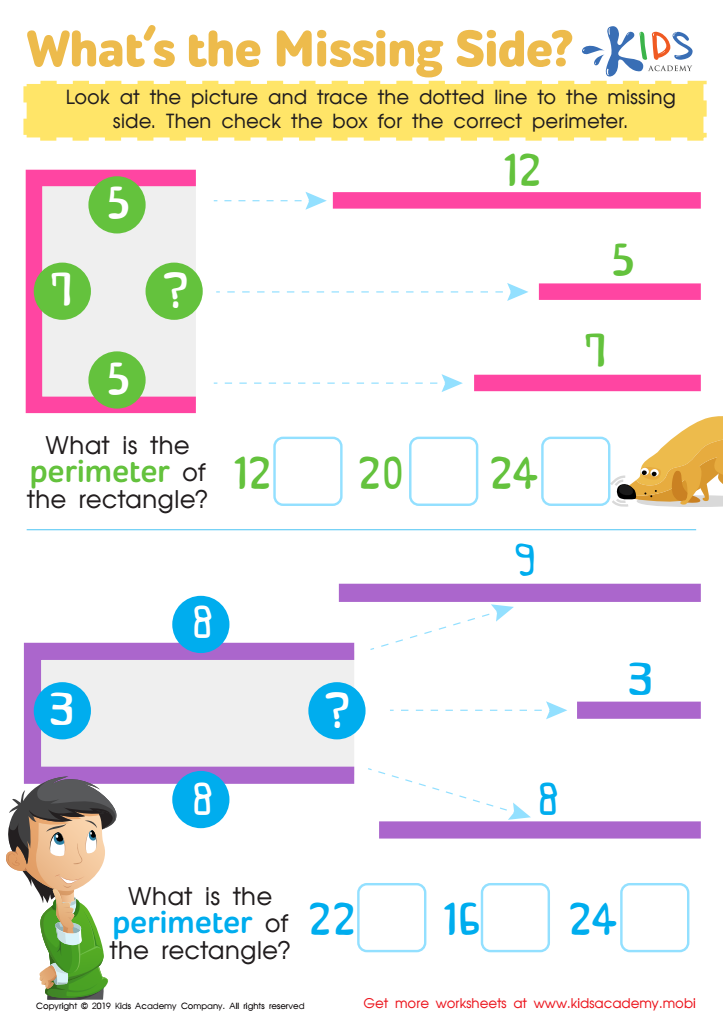
What's the Missing Side Worksheet
Assist your pupils in improving math skills with fun exercises like the tracing sheet. Show them the picture and guide them to trace the missing side. Ask them to check the box of the right perimeter afterwards. Doing this regularly can help them to enjoy and appreciate the subject more.
What's the Missing Side Worksheet
Worksheet
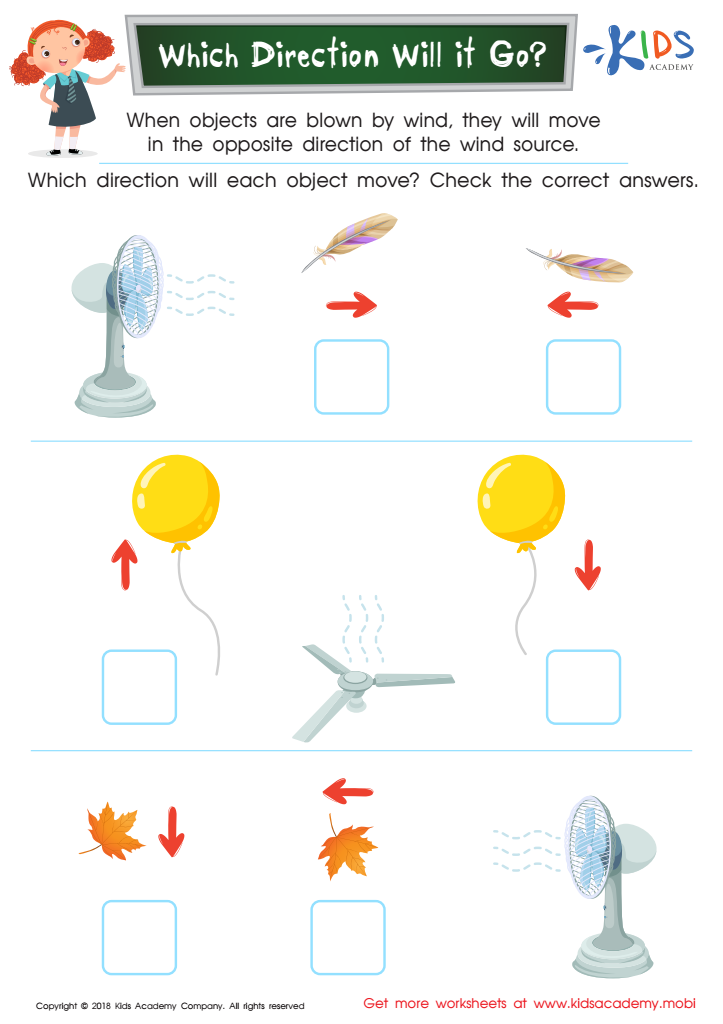
Which Direction Will it Go? Worksheet
Explain to your students: when objects are blown by wind, they will move in the opposite direction. In the worksheet, there are pictures of wind sources and objects being blown by the wind. Ask your child to identify and check the direction each object will move.
Which Direction Will it Go? Worksheet
Worksheet
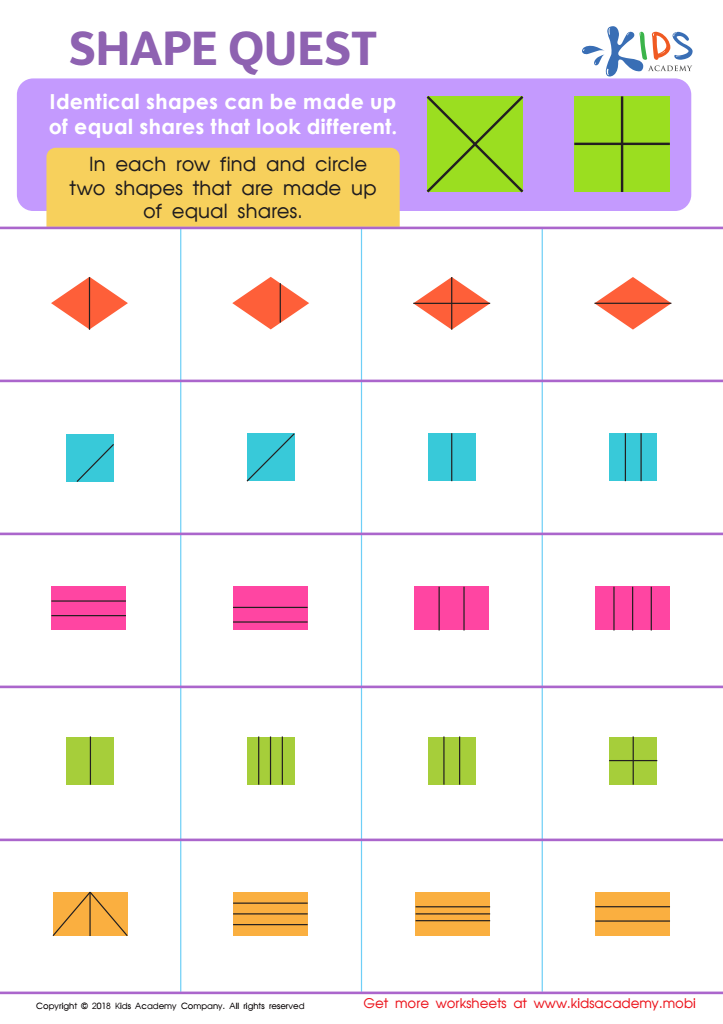
Shape Quest Worksheet
Help your child identify shapes by having them find shapes made up of equal parts. This colorful worksheet challenges them to look through each row and circle two matching shapes. It's a great way to teach them the unique features of each shape, while also helping them understand that identical shapes can look different.
Shape Quest Worksheet
Worksheet
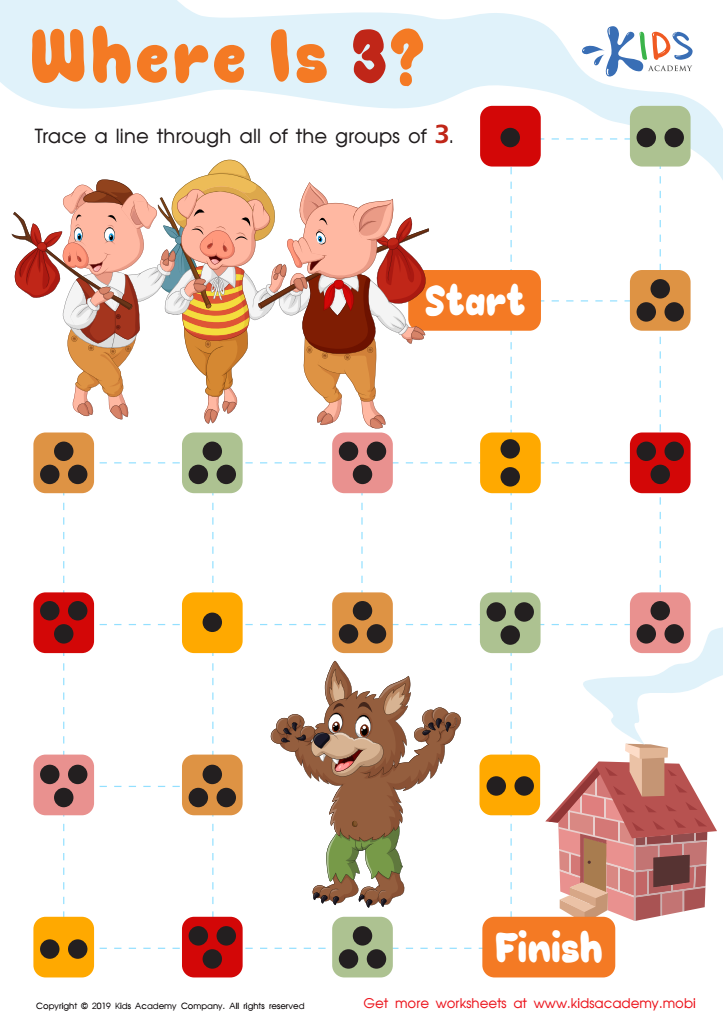
Where Is 3? Worksheet
Let your little mathematician join the Three Little Pigs on an adventure! With this free worksheet, they'll guide the pigs through a maze of numbered bricks, using one-to-one representation to get to the sturdy house. Have fun helping the piggy friends past the wolf!
Where Is 3? Worksheet
Worksheet
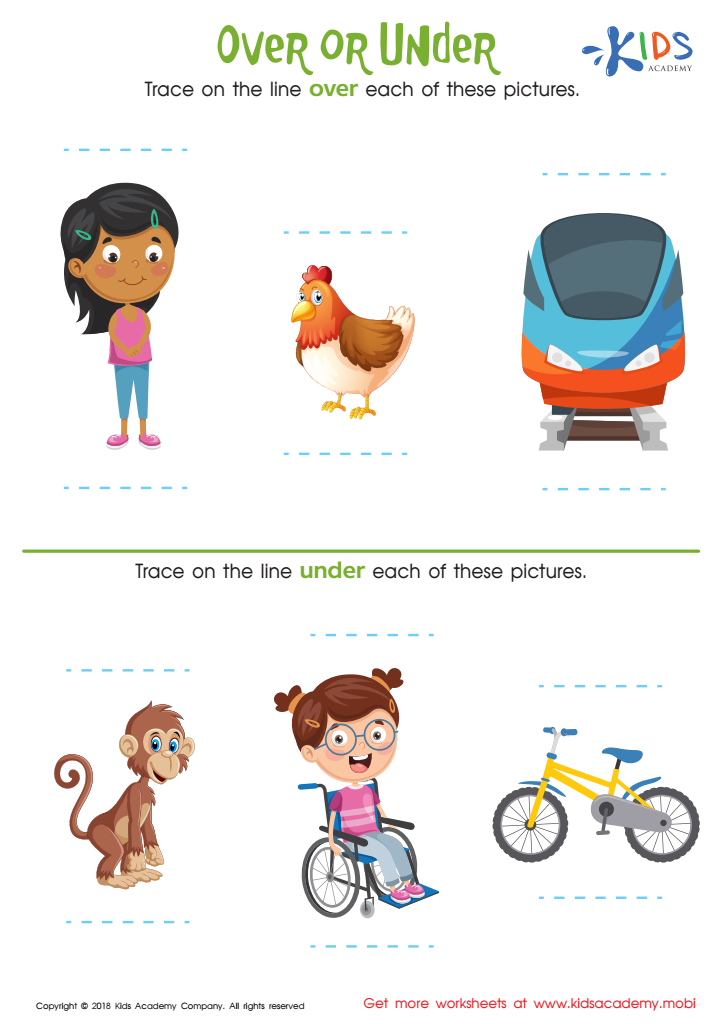
Over or Under Worksheet
Help your toddler grasp prepositions like "over" and "under" with this fun worksheet. Have them trace lines over the pictures on one half and under the pictures on the other, thus practicing basic communication and math concepts. Strengthen your child's understanding and communication skills with this activity.
Over or Under Worksheet
Worksheet
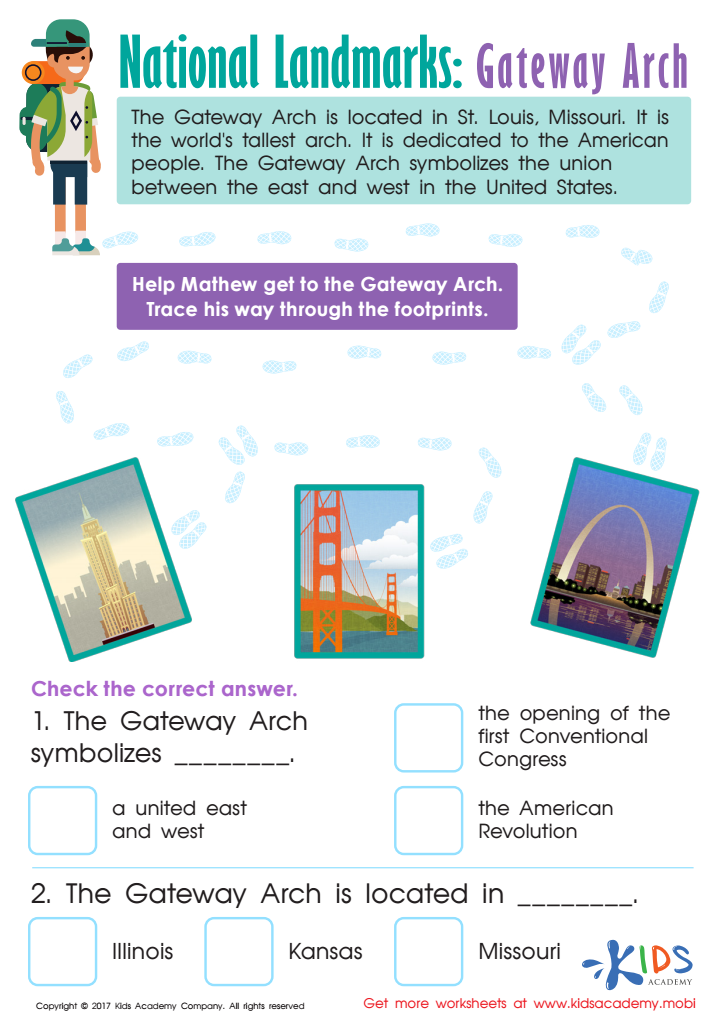
Gateway Arch Printable Worksheet
Explore America with your child! This printable worksheet takes them to St. Louis, Missouri's iconic Gateway Arch. As they learn about its history, they'll be quizzed with fun-filled facts. A great way to discover and appreciate this amazing national landmark! (80 words)
Gateway Arch Printable Worksheet
Worksheet
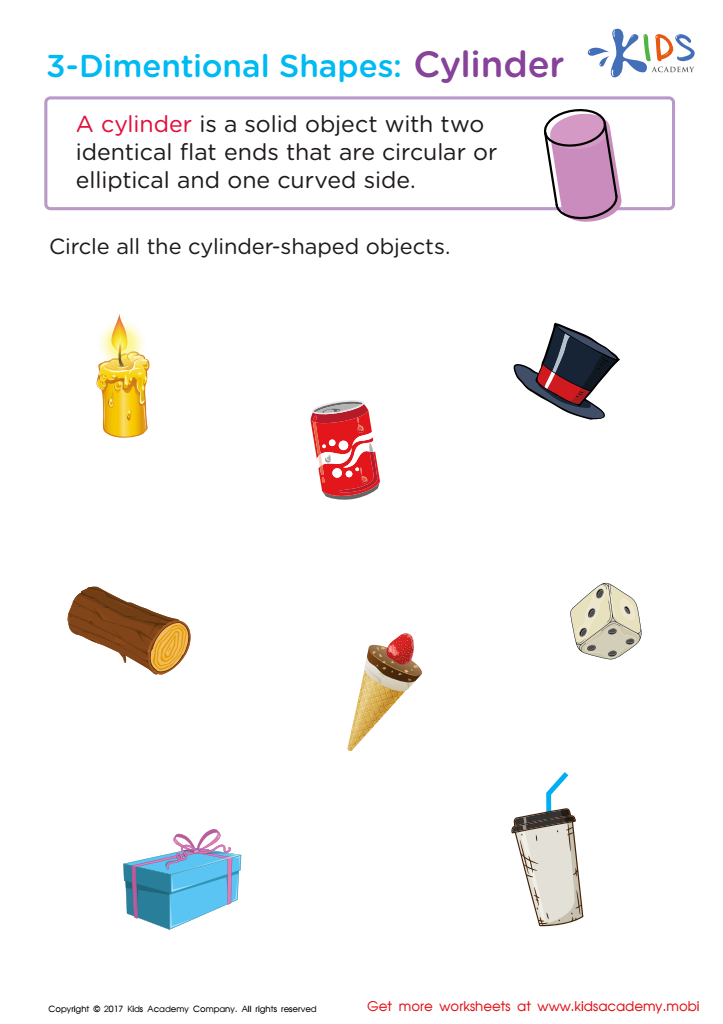
Three–Dimensional Shapes: Cylinder Worksheet
Introduce your toddler to geometry and 3D cylinders with this printable and watch their knowledge grow. It will help them recognize, define, and identify cylinders, as well as differentiate between 3D objects.
Three–Dimensional Shapes: Cylinder Worksheet
Worksheet
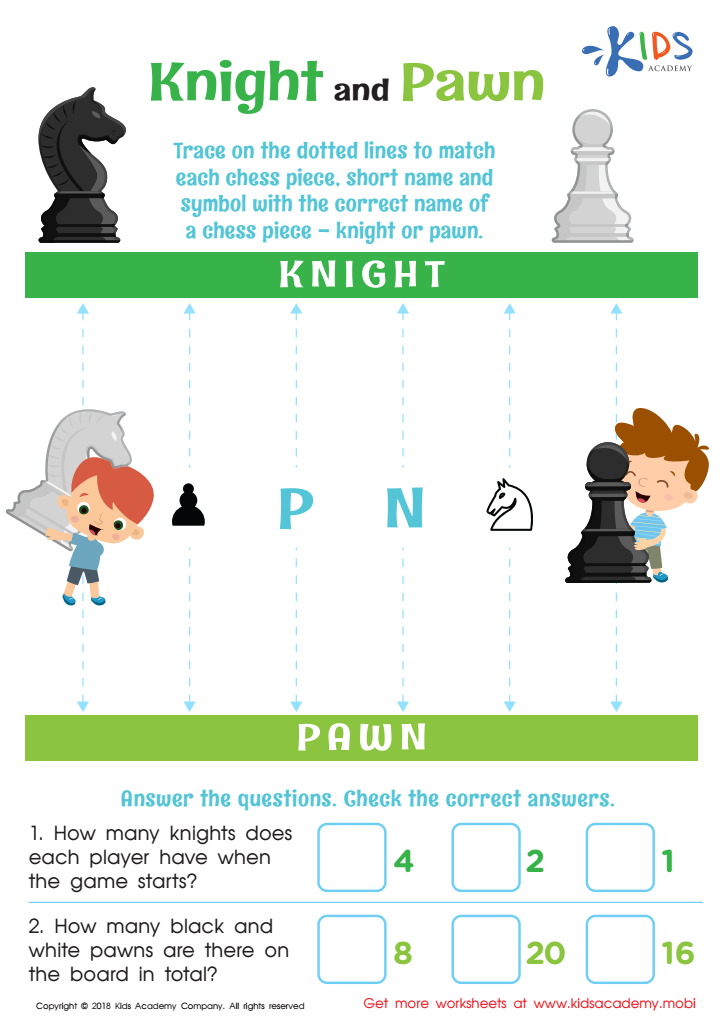
Knight and Pawn Worksheet
This tracing worksheet teaches kids about chess. They trace the dotted lines to match pieces, names and symbols to the correct chess piece. Questions at the bottom test their understanding. It's a simple exercise for a fun way to learn.
Knight and Pawn Worksheet
Worksheet
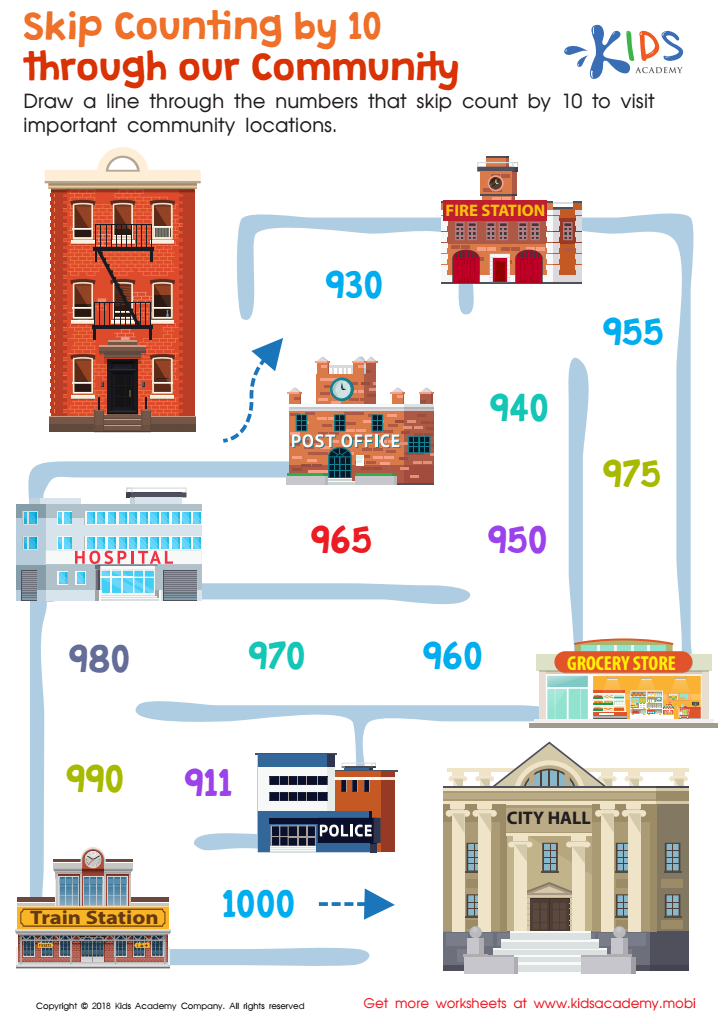
Skip Counting by 10 Through Our Community Worksheet
Our kids need to 'make a ten' and skip count by tens to boost their speed and accuracy in math. This cool, free worksheet takes them on a journey through their local community to practice counting by tens. They'll work on social studies and fine motor skills while having fun with the maze they get to count by tens in!
Skip Counting by 10 Through Our Community Worksheet
Worksheet
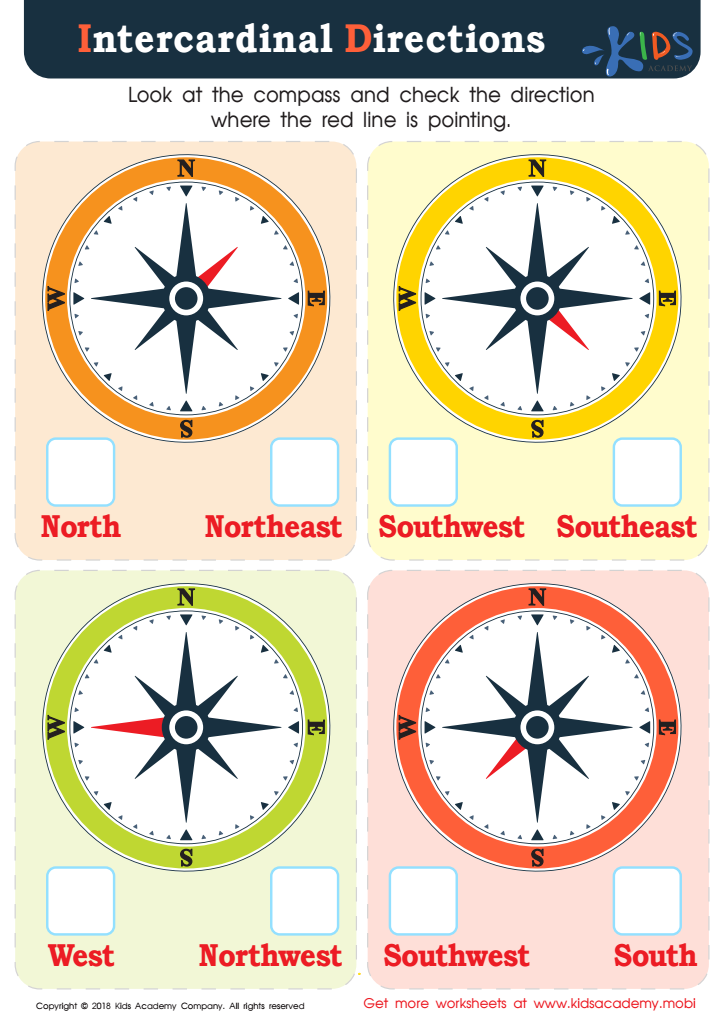
Intercardinal Directions Worksheet
Young students often don't get to practice cardinal and intercardinal directions in the digital age, but it's an important social studies and geography concept to learn. This PDF provides colorful compasses for them to practice with, giving them a real-world skill for common curriculum and independent living.
Intercardinal Directions Worksheet
Worksheet
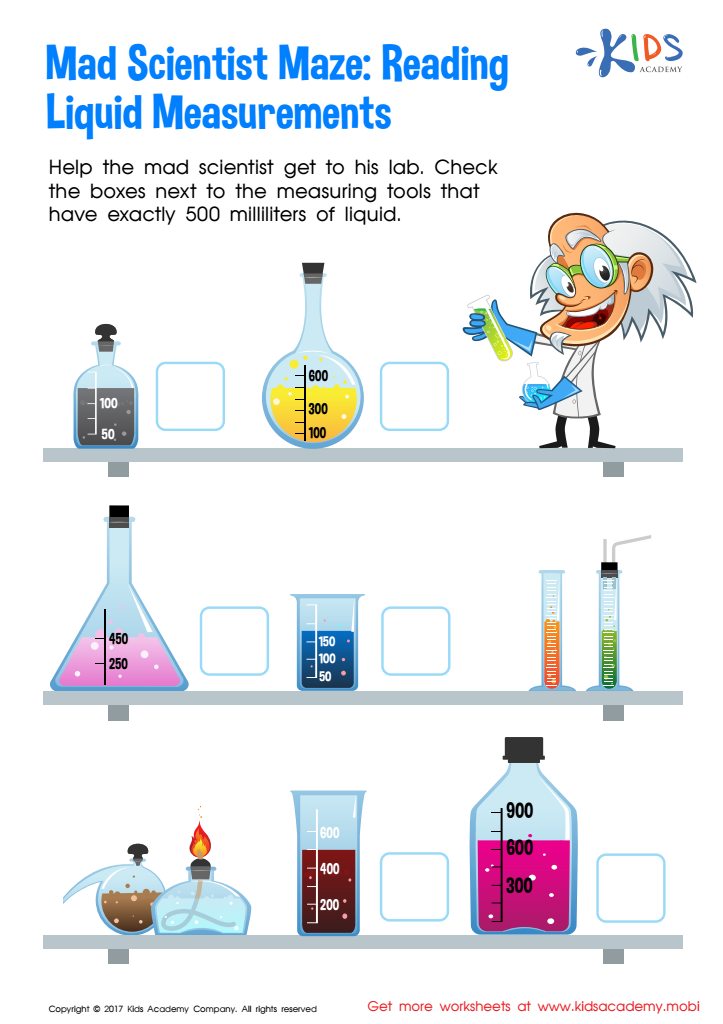
Reading Liquid Measurement Worksheet
Help a mad scientist return to his lab by having your child measure the liquid in each flask. Their results will determine his fate!
Help a mad scientist return to his lab! Kids can practice reading liquid measurements to the millimeter on this worksheet. Determine the amount of liquid in each flask and let your child's results decide the scientist's fate!
Reading Liquid Measurement Worksheet
Worksheet
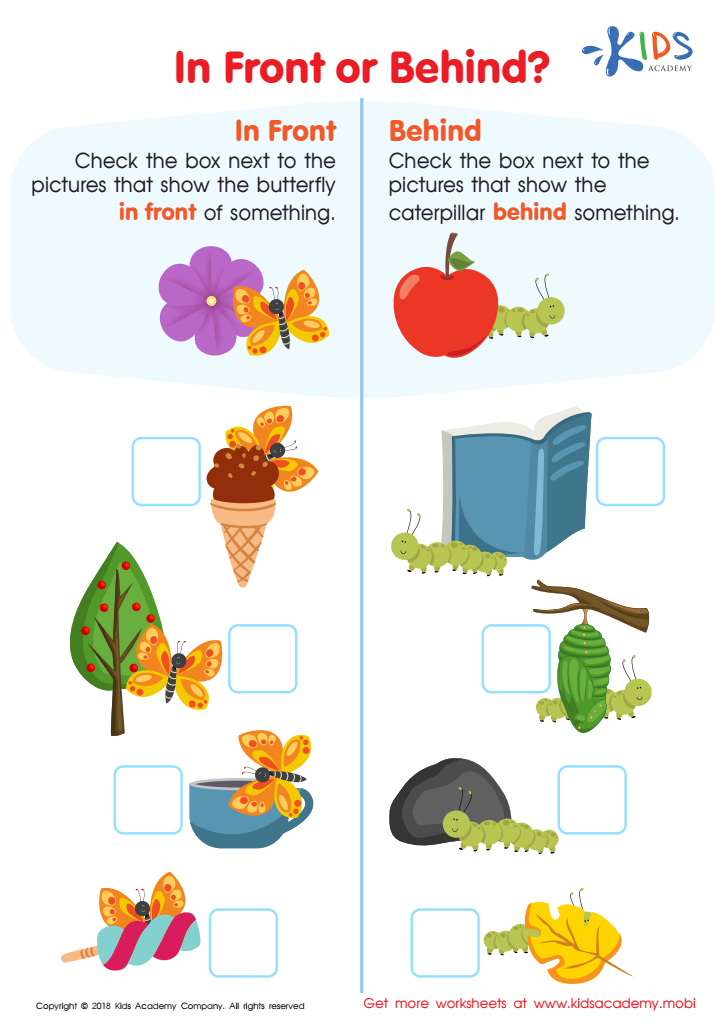
In Front or Behind Worksheet
Hone your child's spatial skills with 'in front' and 'behind'! This knowledge is essential for communication and study. Get them started with this free PDF worksheet - check off the pictures that show the butterfly in front and caterpillar behind!
In Front or Behind Worksheet
Worksheet
Join Kids Academy for Free
Who is primarily going to use this learning content?




Spatial awareness is a crucial developmental skill for children ages 5-8, and parents or teachers need to prioritize its cultivation. This ability allows children to understand their relationship to objects and people around them, forming the foundation for more complex cognitive and motor skills. At this early stage, children are rapidly developing their hand-eye coordination, balance, and the ability to navigate through space with respect to other people and objects.
One primary reason to focus on spatial awareness is its direct impact on academic learning, especially in subjects like mathematics and reading. For instance, understanding geometry and solving puzzles require strong spatial skills. Similarly, navigating text and understanding the relationship between letters and words can benefit from well-developed spatial awareness.
Motor skills, essential for activities such as writing, tying shoes, or participating in sports, are significantly impacted by spatial awareness. Children who lag in these skills may find themselves struggling with tasks their peers handle confidently, potentially affecting their self-esteem and social development.
Moreover, teaching spatial awareness can support safety, as children learn to judge distances and recognize physical boundaries, reducing the risk of accidents. Engaging children in activities like building blocks, drawing, or playing catch can be both fun and educational, helping them develop their spatial awareness in enjoyable and meaningful ways.








