Shape Recognition Normal Geometry Worksheets for Ages 5-8 - Page 2
30 filtered results
-
From - To
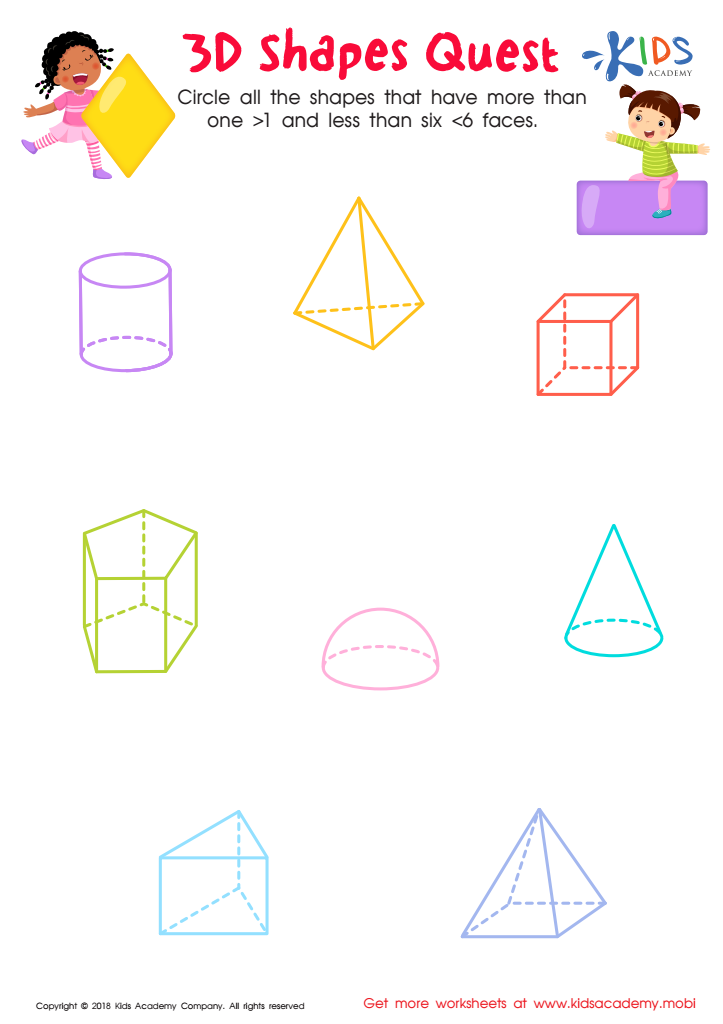
3D Shapes Quest Worksheet
 Assign to My Students











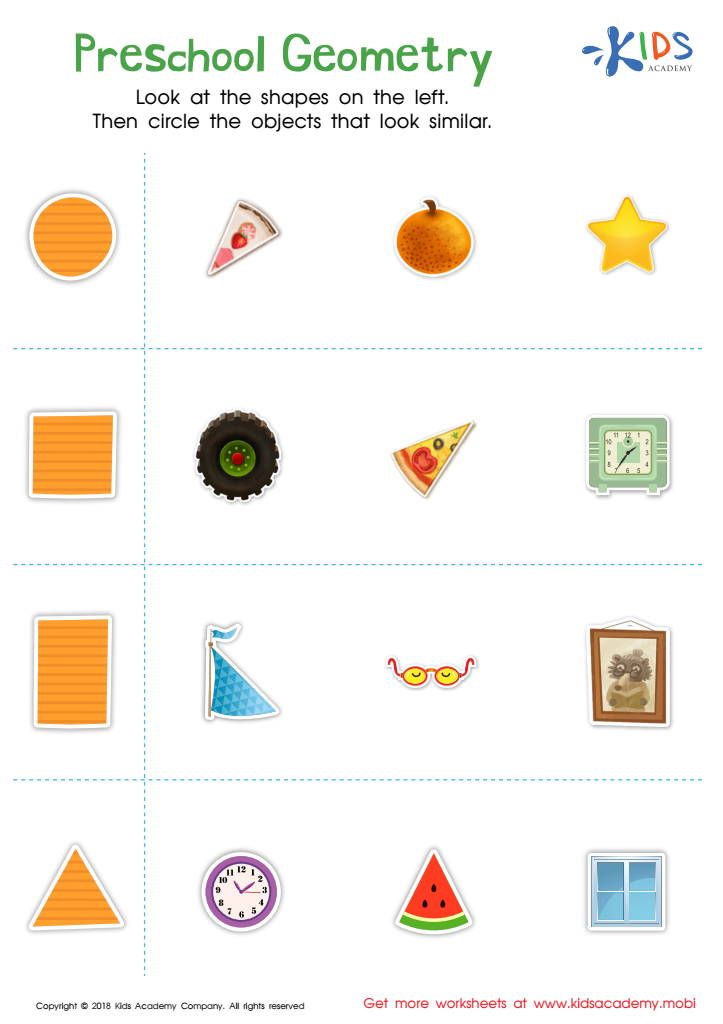
Preschool Geometry Worksheet
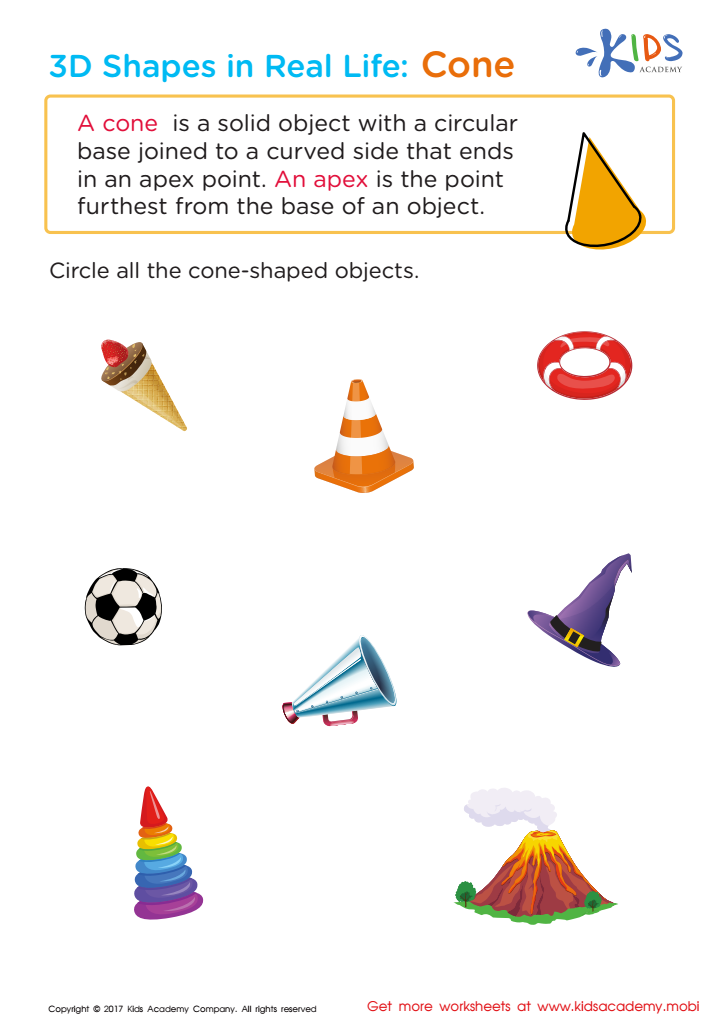
Shapes in Real Life: Cone Worksheet
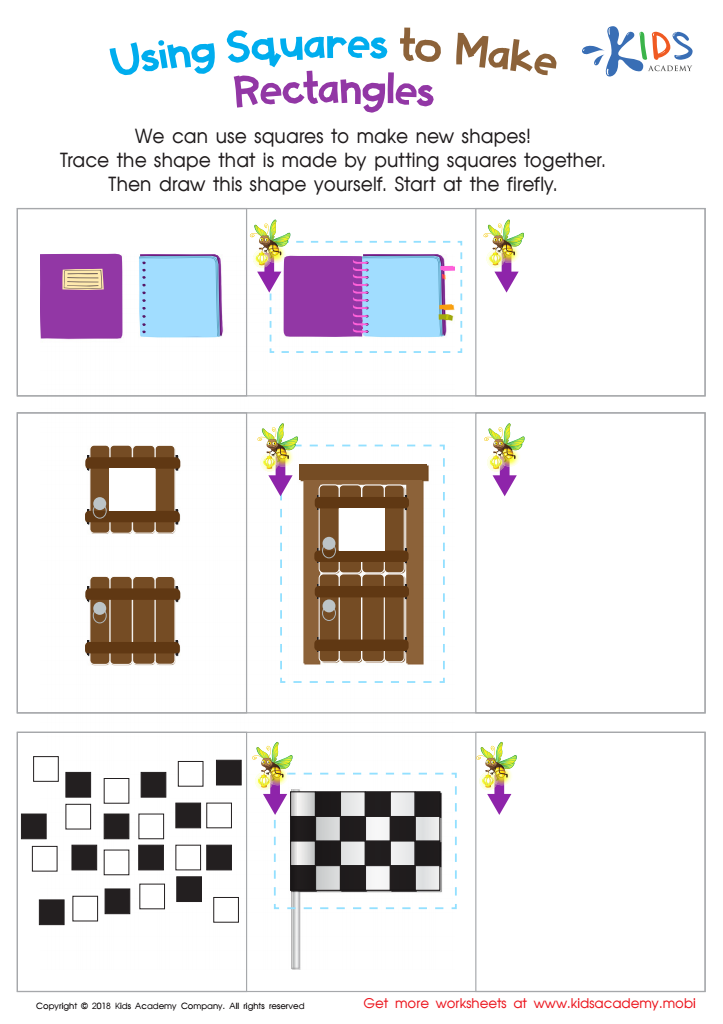
Using Squares to Make Rectangles Worksheet
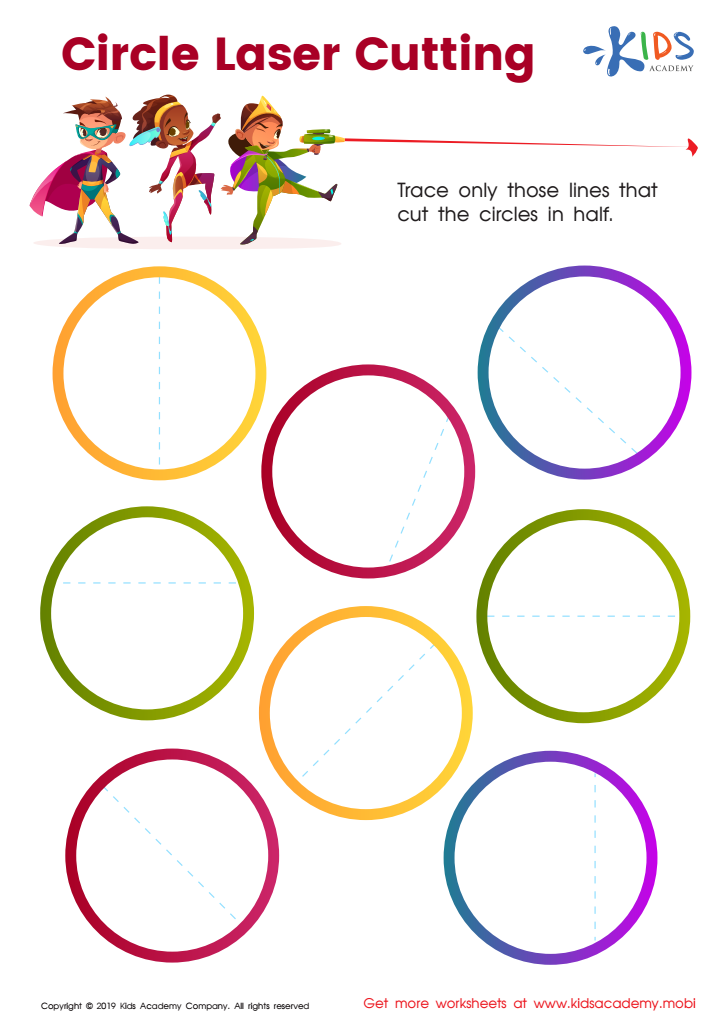
Circle Laser Cutting Worksheet
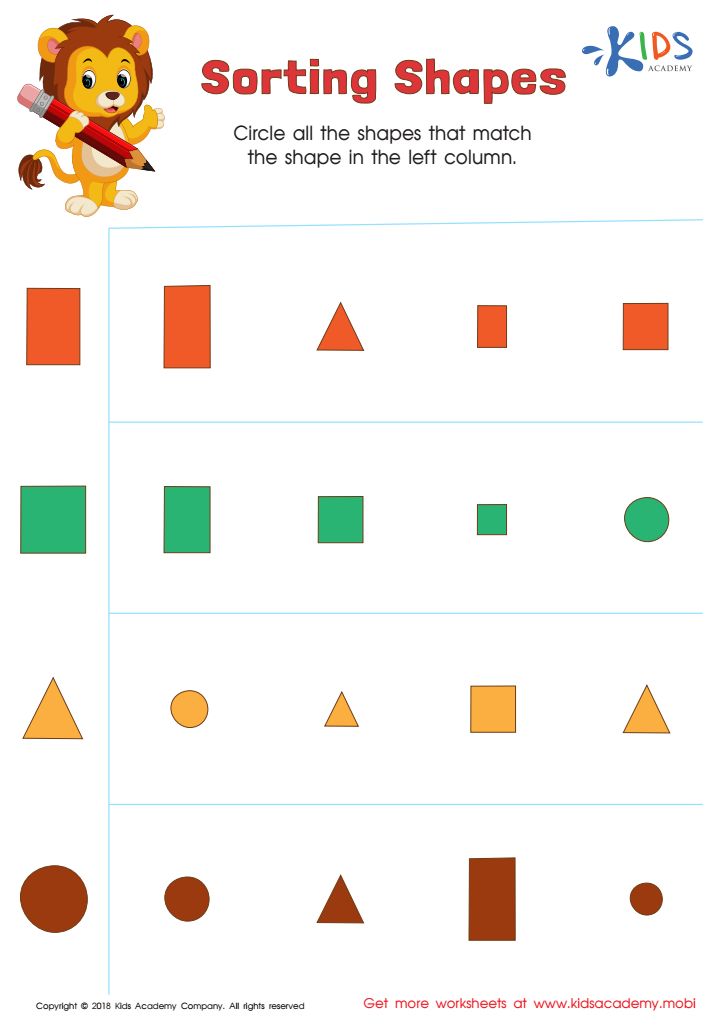
Sorting Shapes - Part 2 Worksheet








Shape recognition in early childhood education plays a crucial role in cognitive development and forms a foundation for more advanced mathematical concepts. For children ages 5-8, being able to identify and understand shapes is not only vital for geometry but also enhances spatial awareness, problem-solving skills, and logical reasoning.
Parents and teachers who focus on shape recognition help children grasp the basic properties of shapes such as circles, squares, and triangles. This knowledge translates to real-world understanding, allowing children to accurately interpret and interact with their environment, from art projects to building blocks. Shape recognition also bolsters language development as children learn to describe and differentiate objects based on their geometric attributes.
In a classroom setting, incorporating shape recognition into daily activities fosters a sense of curiosity and engagement. Teachers can utilize hands-on activities, such as sorting games and puzzle-solving, to make learning both fun and effective. At home, parents can support this learning through simple practice, such as drawing shapes together or pointing out shapes in the household environment.
Ultimately, fostering shape recognition in early grades helps build a strong mathematical foundation that will support more complex learning in the future, contributing to a child’s overall academic success and confidence in math-related subjects.








