Vocabulary Building Normal Matching Worksheets for Ages 5-8
5 filtered results
-
From - To
Enhance your child's vocabulary with our fun and engaging Vocabulary Building Normal Matching Worksheets for ages 5-8. Perfectly designed for young learners, these worksheets help children easily connect words with their meanings, improving their language skills in an enjoyable way. By matching pictures to words or pairing synonyms, your child will expand their vocabulary, comprehension, and cognitive abilities. Ideal for both classroom and home use, these activities not only build essential communication skills but also boost confidence in young readers. Download now from Kids Academy and watch your child’s language skills flourish!
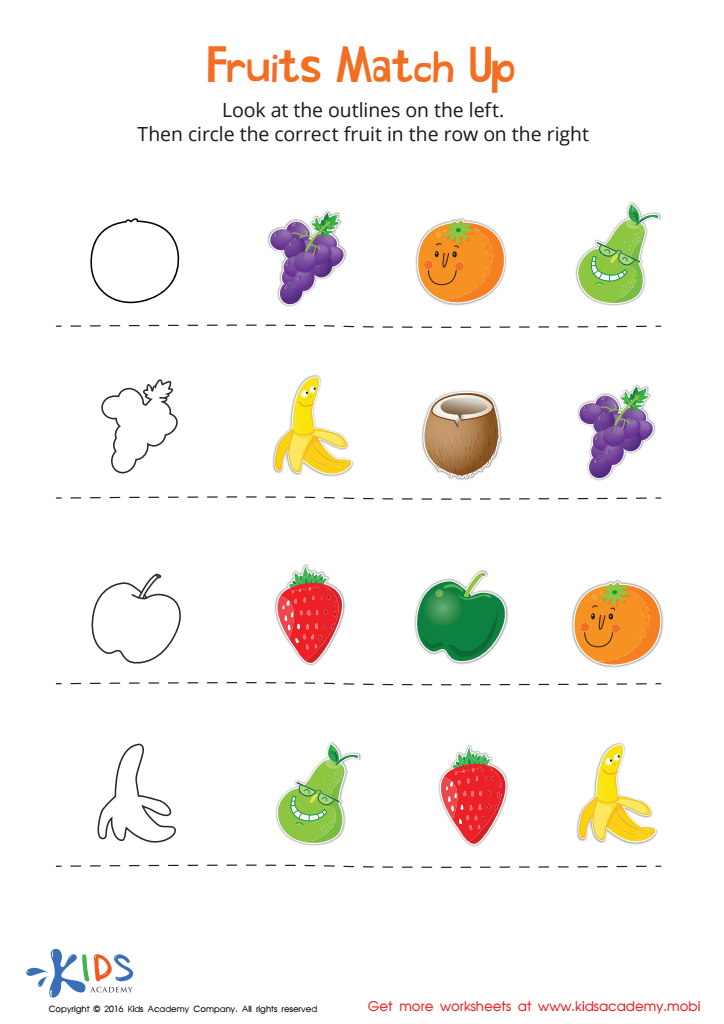
Fruits Match Up Worksheet
 Assign to My Students
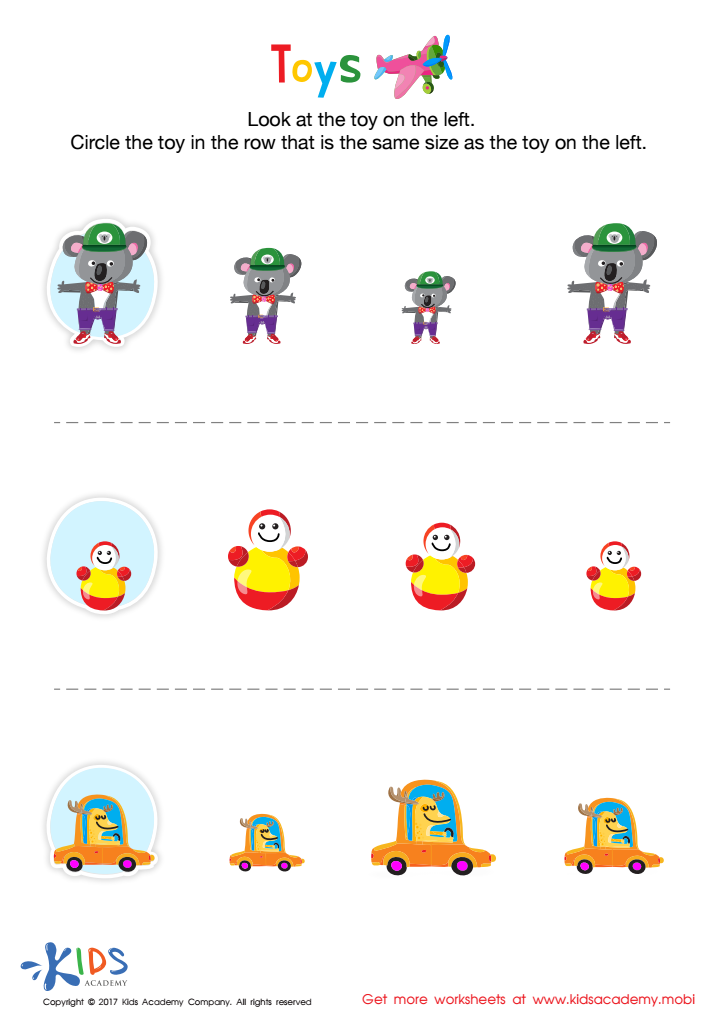
Matching: Classifying Toys by Size Worksheet
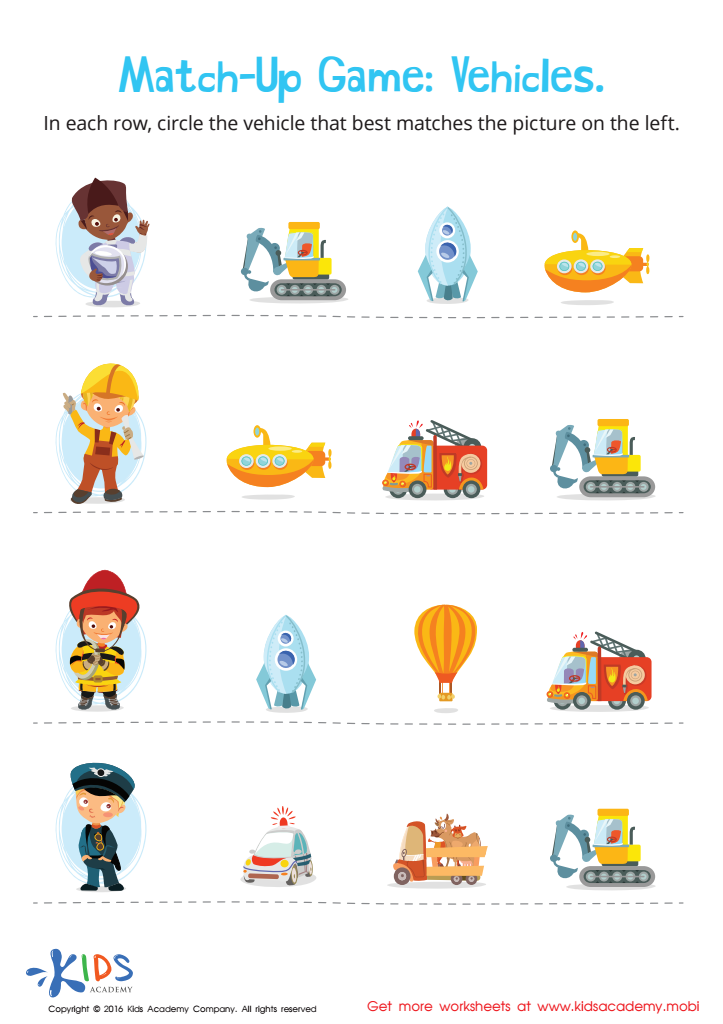
Vehicles Worksheet
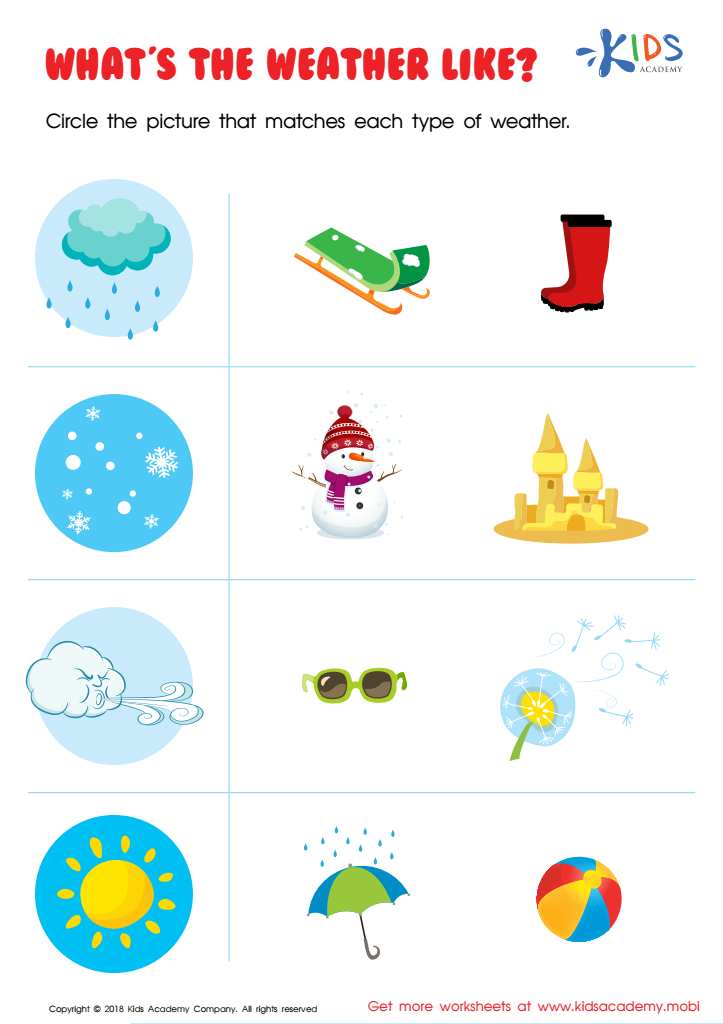
What's the Weather Like? Worksheet








Parents and teachers play crucial roles in a child’s development, and vocabulary building is a cornerstone of early education. For ages 5-8, these formative years are critical for language acquisition and literacy skills, which can significantly impact a child’s future academic success and effective communication.
Engaging in vocabulary-building activities, such as normal matching exercises, helps children to connect words with meanings more robustly. This not only enhances their language comprehension but also fosters creativity and cognitive development. For instance, a strong vocabulary allows children to understand and follow instructions more effectively and express their thoughts clearly within academic settings and everyday communication.
Moreover, a rich vocabulary is directly linked to improved reading skills. When children can easily recognize and understand words, reading becomes a more enjoyable and less frustrating activity, encouraging a lifelong love for books and learning. Furthermore, early vocabulary acquisition is associated with greater reading comprehension, which is foundational for future educational success.
In addition, vocabulary building supports emotional and social development. It equips children with the words they need to articulate their feelings and interact more successfully with peers, promoting stronger, more positive relationships.
Therefore, parents and teachers should prioritize vocabulary-building to ensure their children develop essential language skills that will benefit them academically, socially, and emotionally throughout their lives.








