Understanding fractions Normal Worksheets for Ages 5-9
17 filtered results
-
From - To
Welcome to our "Understanding Fractions Normal Worksheets" designed specifically for children aged 5-9! These engaging worksheets introduce young learners to the foundational concepts of fractions in a fun and interactive manner. With colorful visuals and relatable examples, kids will explore the basics of halves, quarters, and thirds. Each worksheet includes various activities that reinforce fraction skills, making learning both effective and enjoyable. Perfect for home or classroom use, these resources aim to build confidence and comprehension in math. Start your child’s journey towards fraction mastery today with our thoughtfully crafted materials. Let’s make learning fractions a joy!
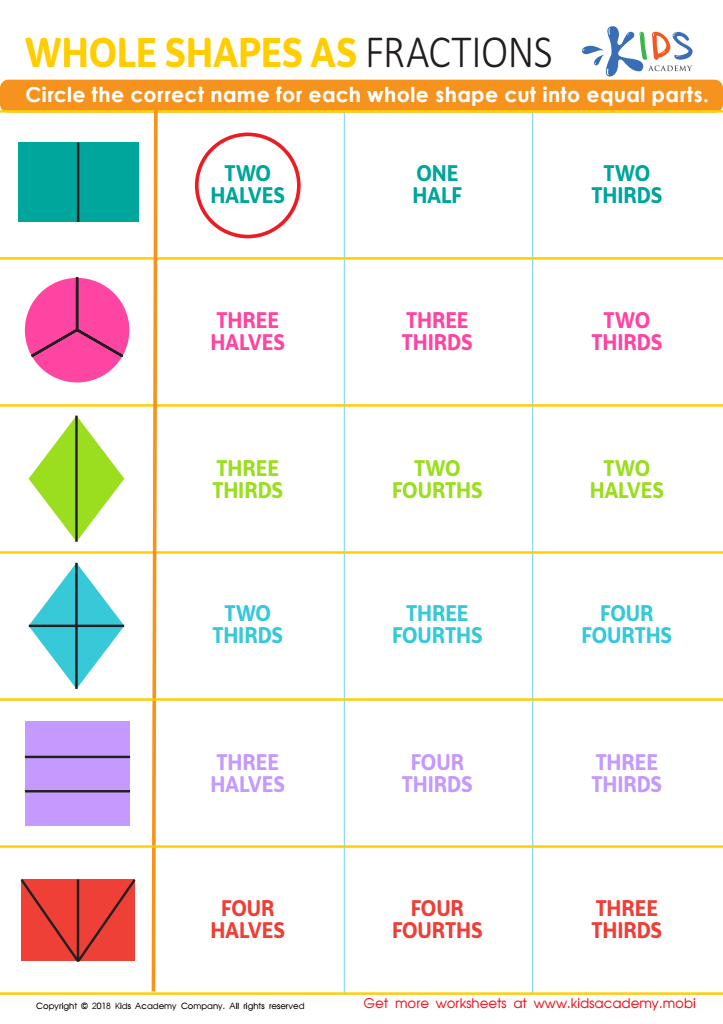
Whole Shapes as Fractions Worksheet
 Assign to My Students
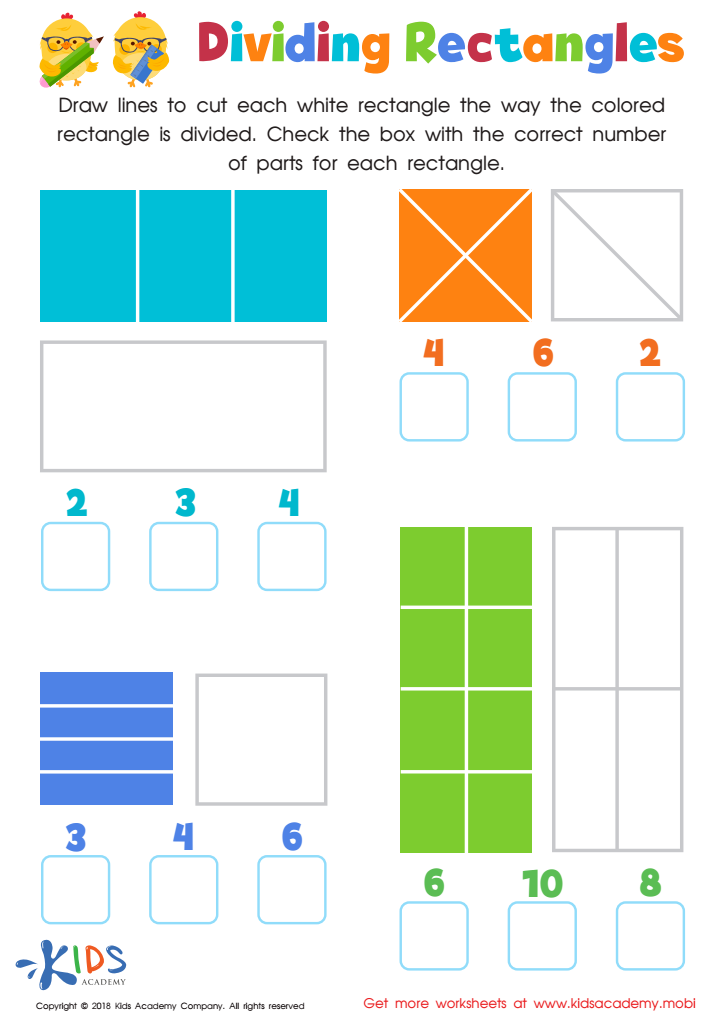
Dividing Rectangles Worksheet
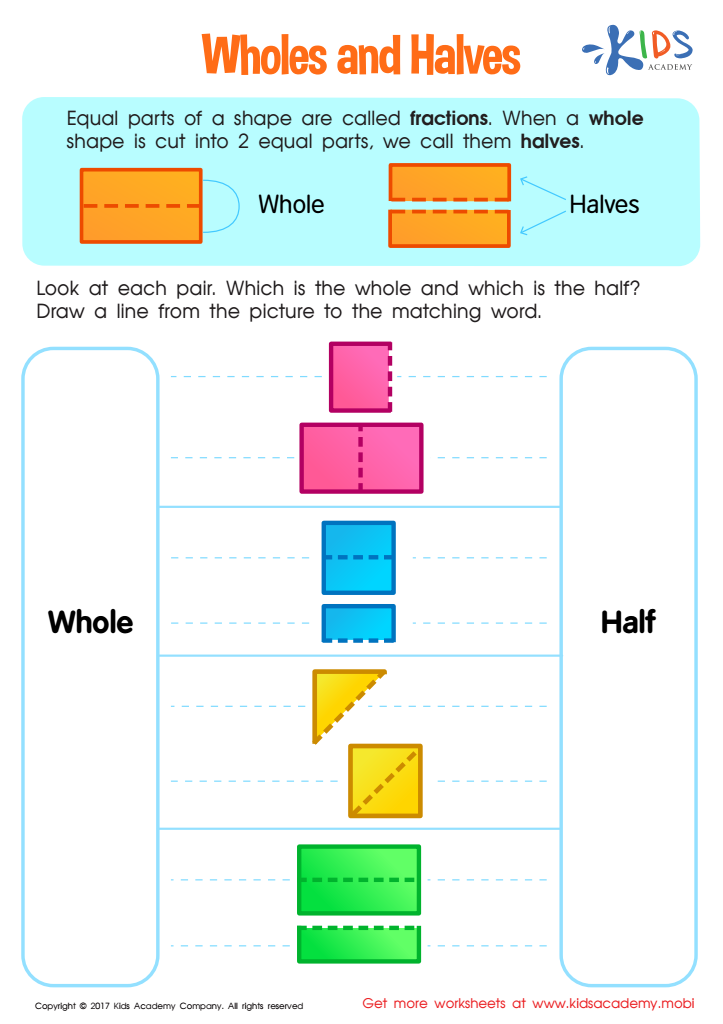
Wholes and Halves Worksheet
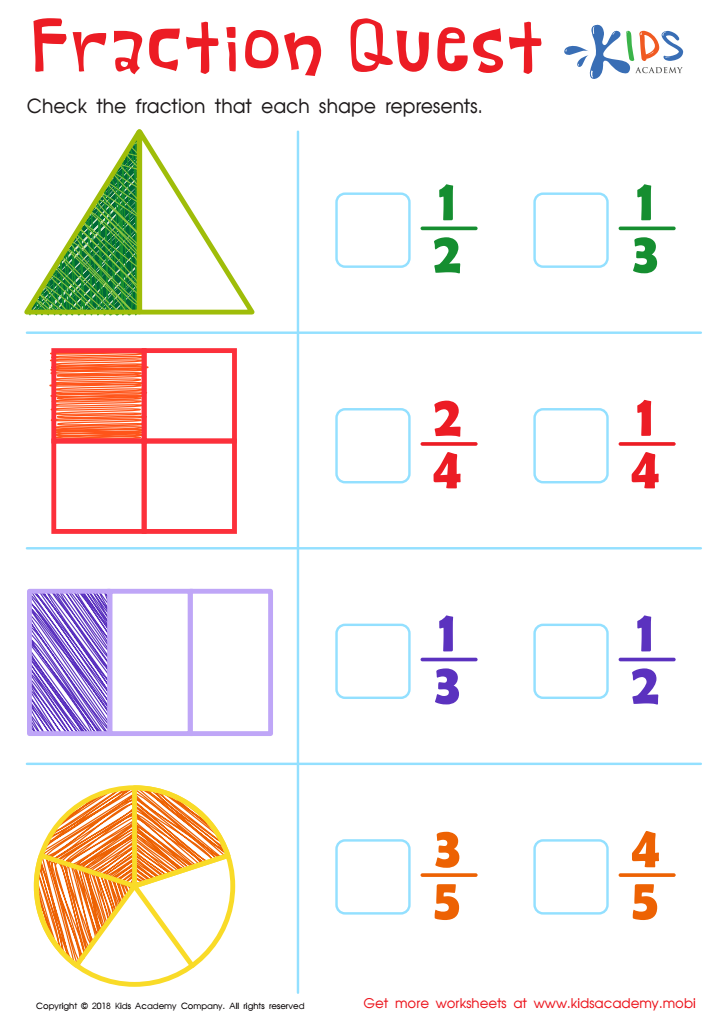
Fraction Quest Worksheet
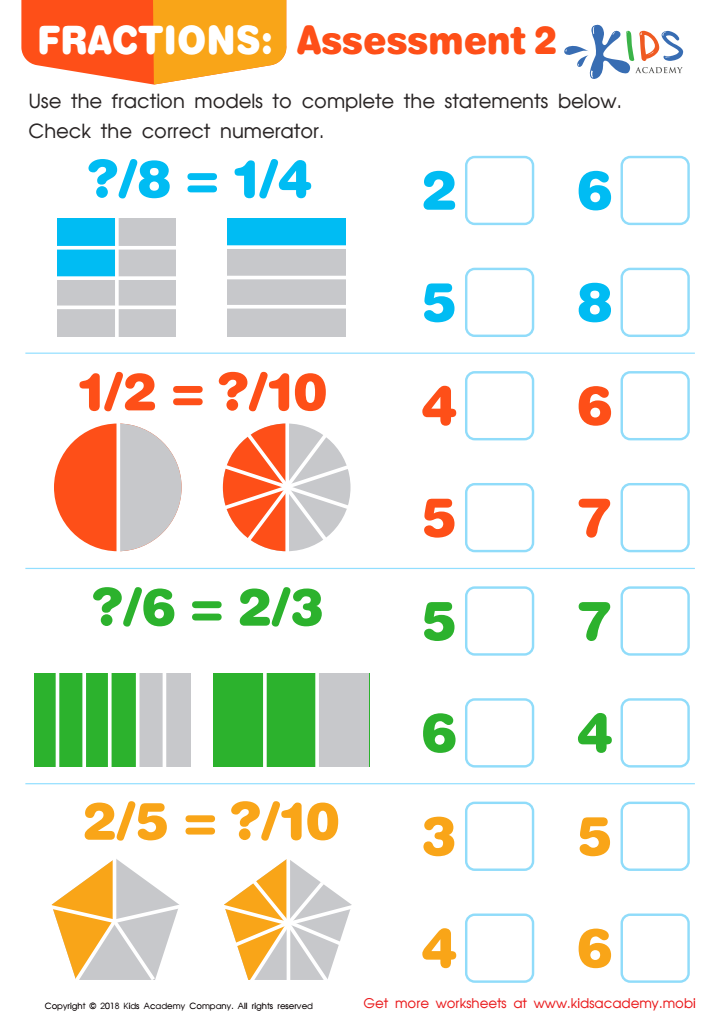
Fractions: Assessment 2 Worksheet
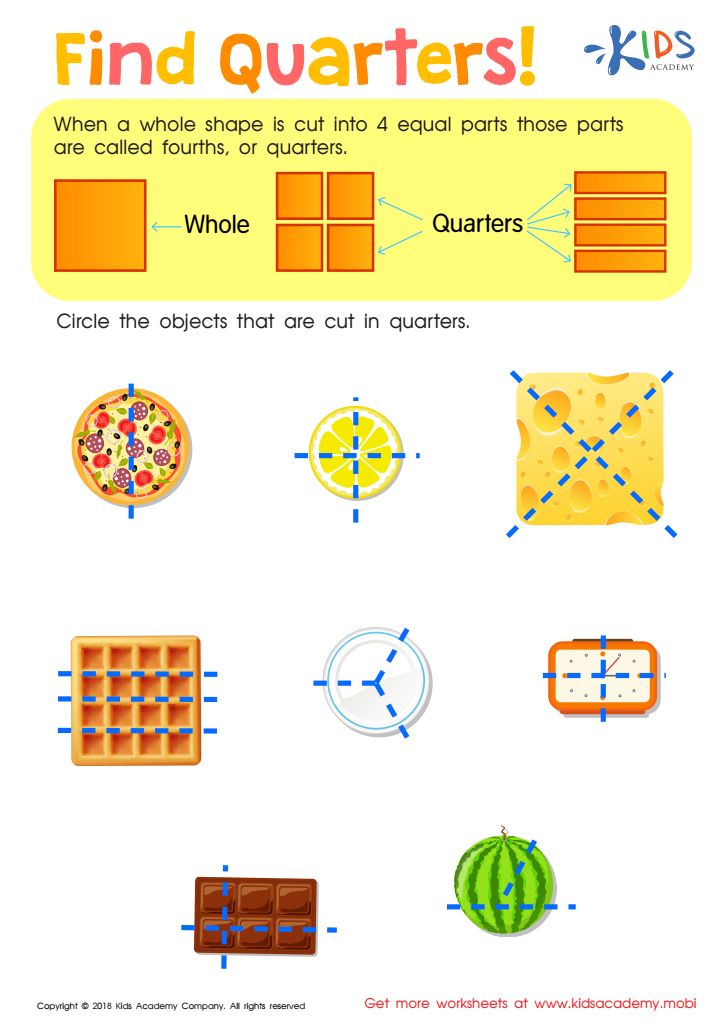
Find Quarters Worksheet
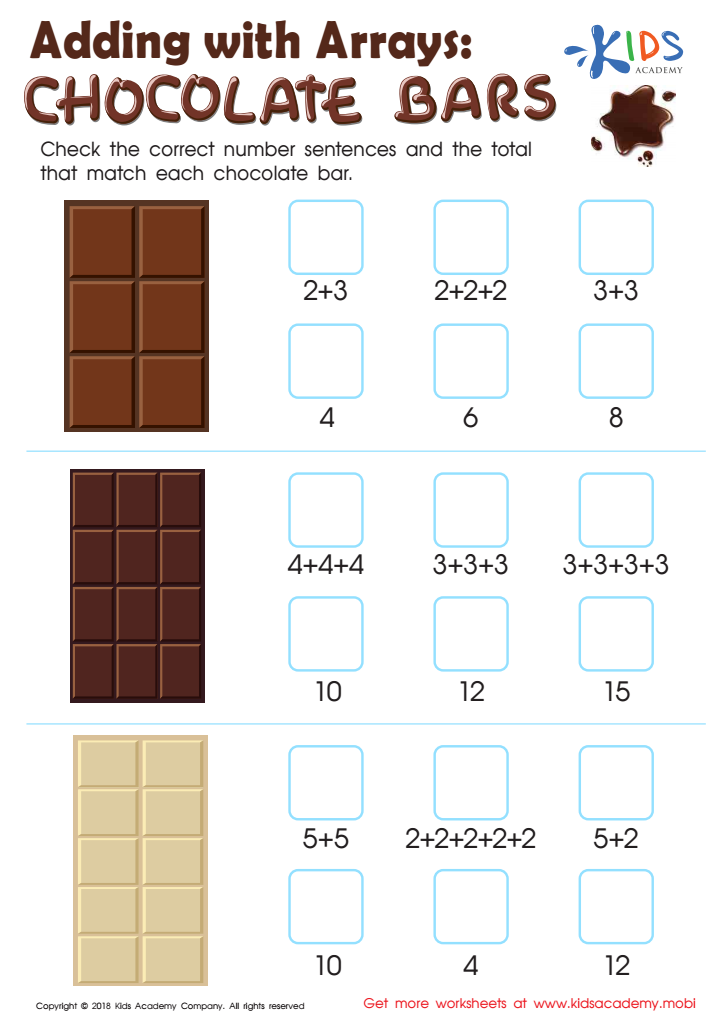
Adding with Arrays: Chocolate Bars Worksheet
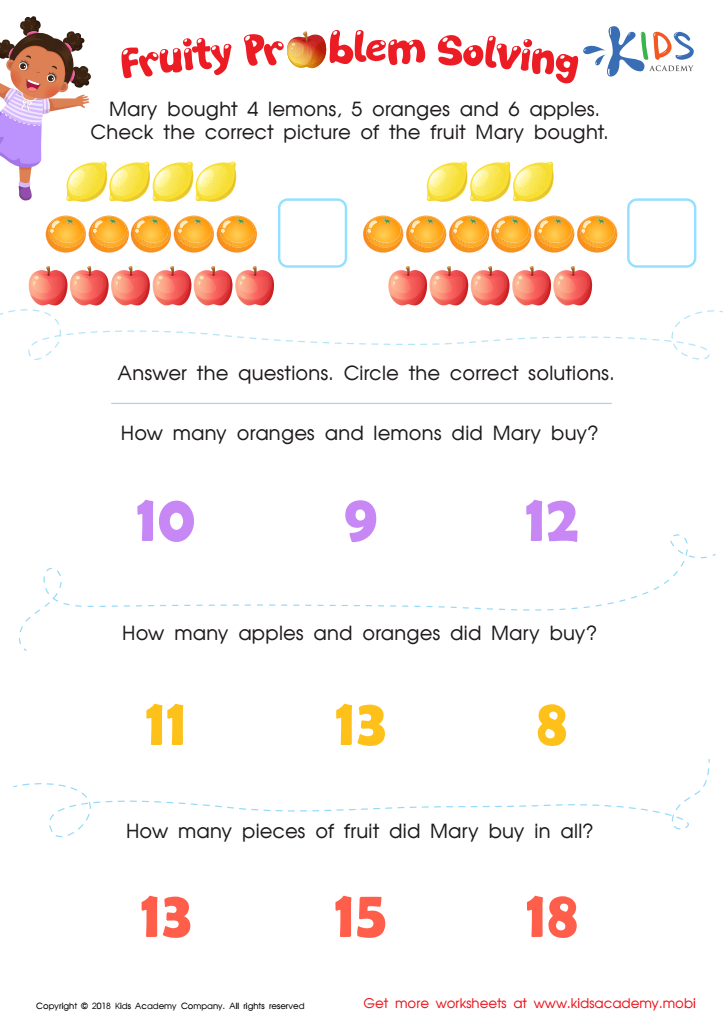
Fruity Problem Solving Worksheet
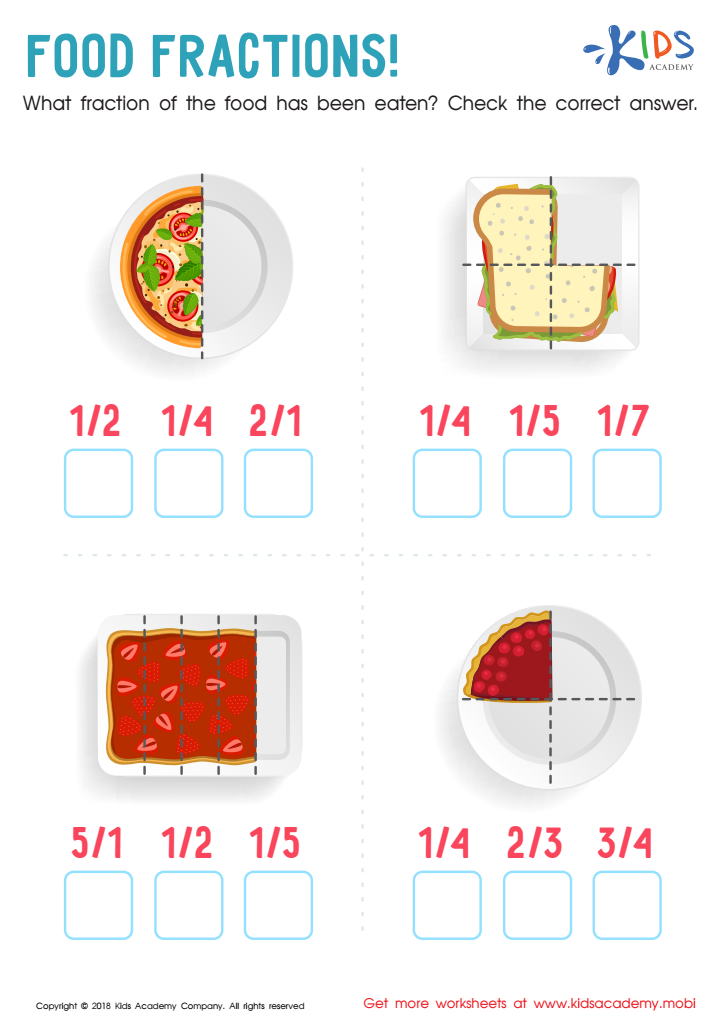
Food Fractions Worksheet
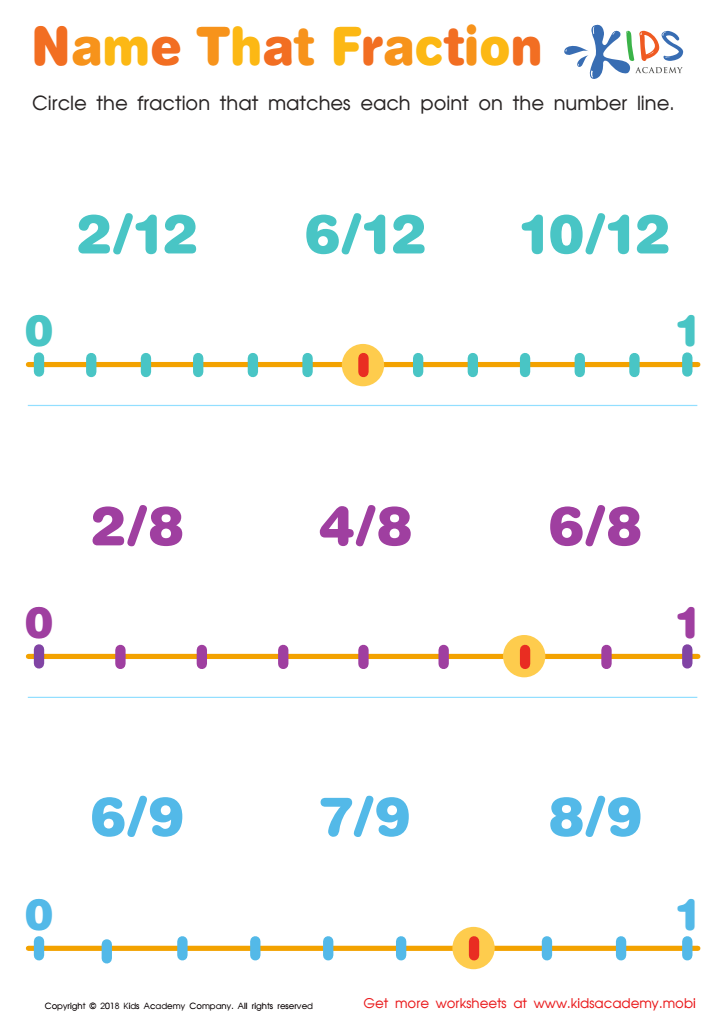
Name That Fraction Worksheet
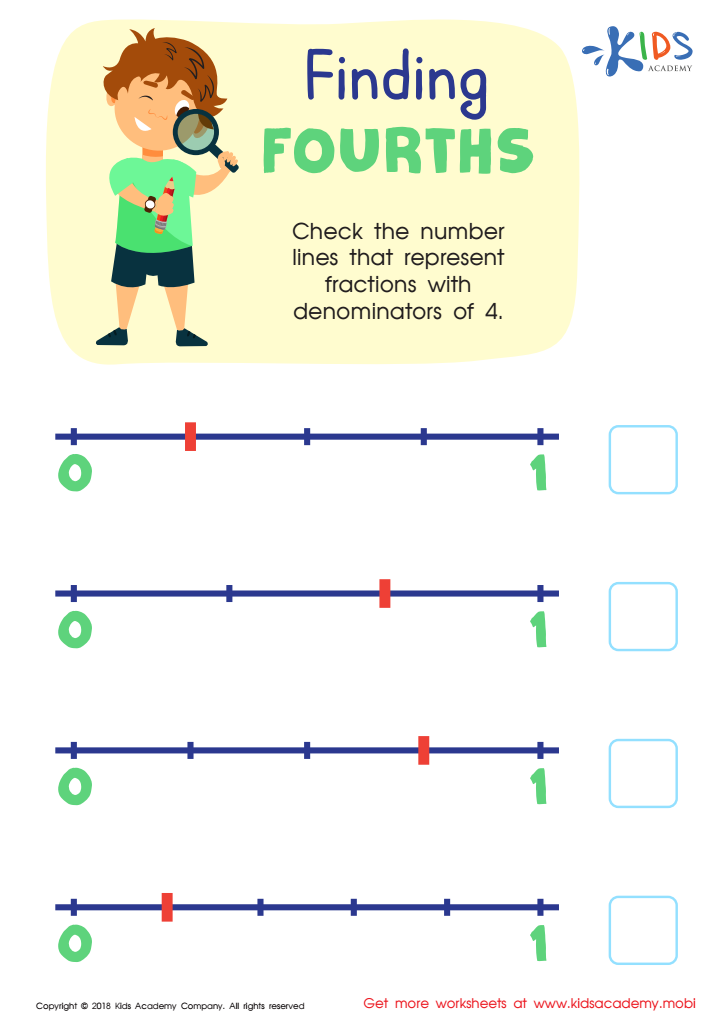
Finding Fourths Worksheet
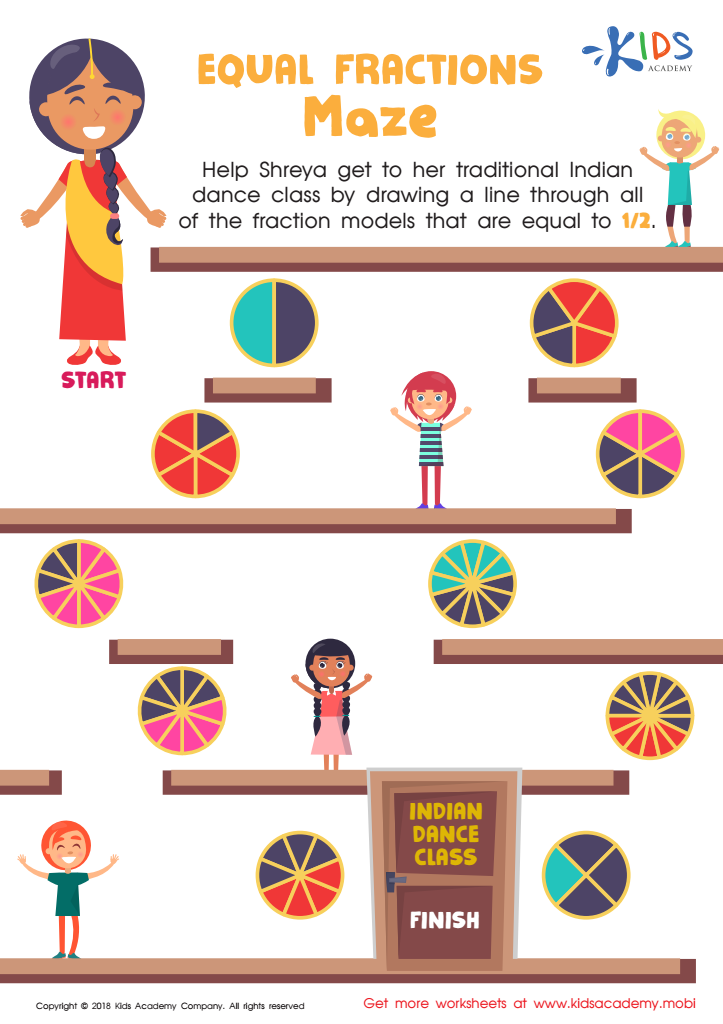
Equal Fractions Maze Worksheet
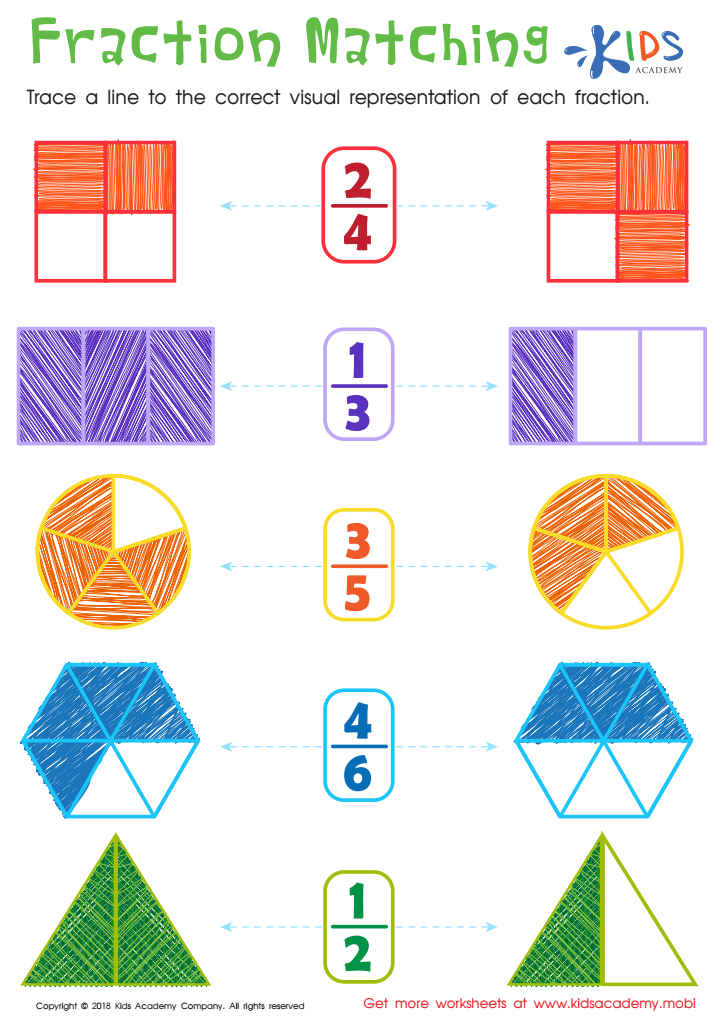
Fraction Matching Worksheet
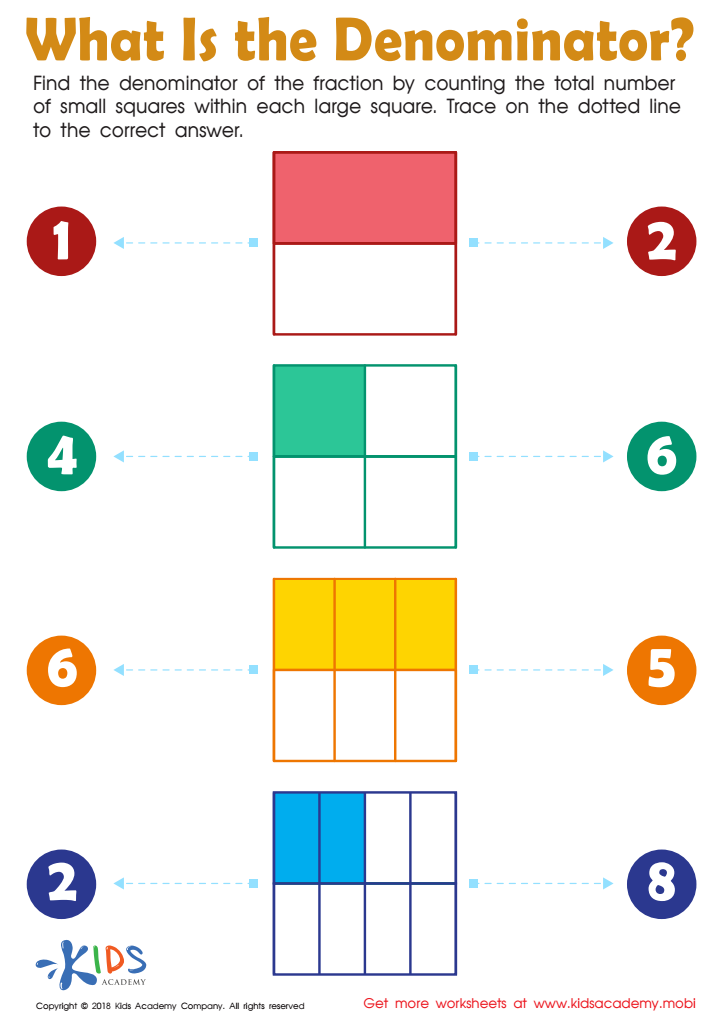
What Is the Denominator? Worksheet
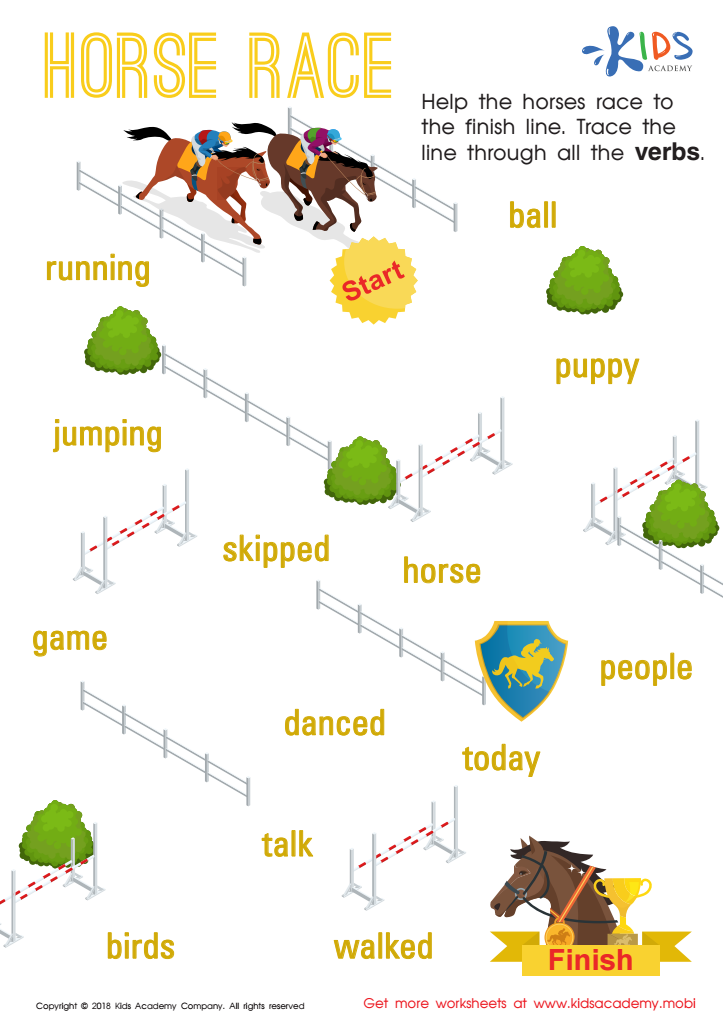
Horse Race Worksheet
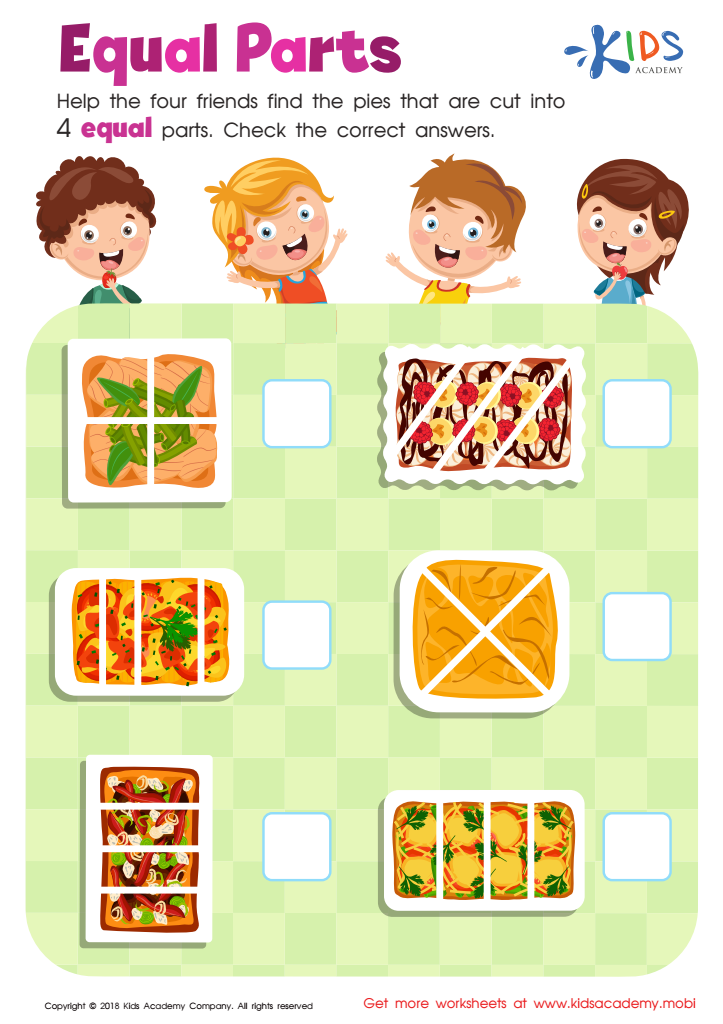
Equal Parts: Food Worksheet
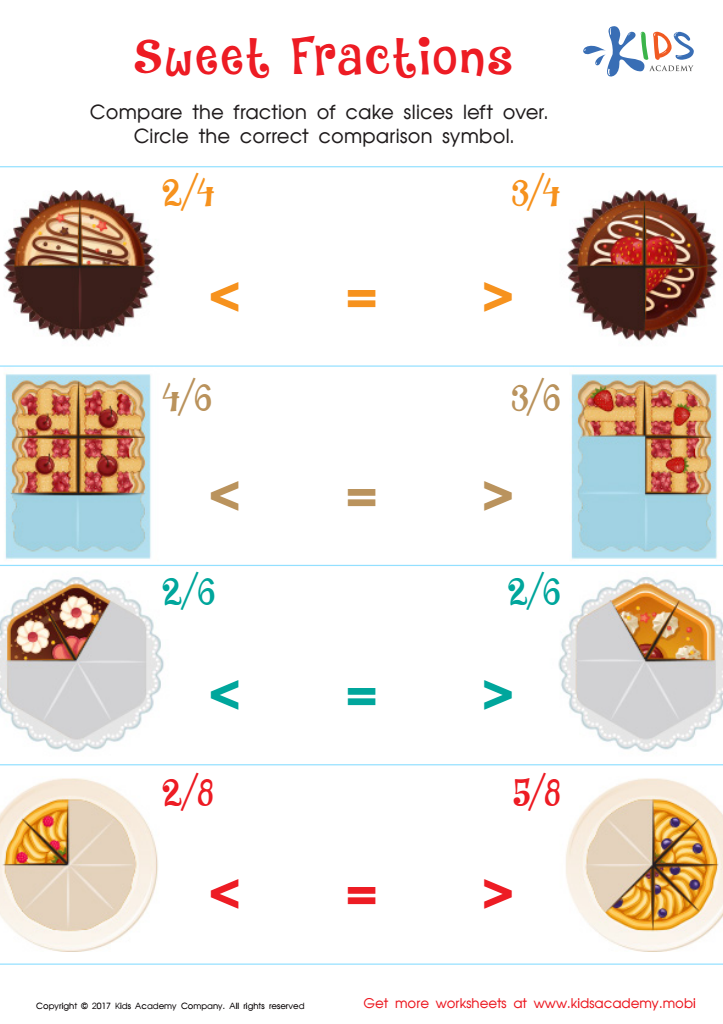
Compare Fractions Worksheet





Understanding fractions is crucial for children aged 5-9 as it lays the groundwork for their mathematical knowledge and logical thinking skills. At this stage, children are beginning to grasp basic mathematical concepts, and introducing fractions helps them make sense of the world around them—like sharing pizza or dividing a cake.
Fractions teach essential life skills, such as problem-solving, decision-making, and critical thinking. Recognizing that parts can represent a whole allows children to appreciate relationships within numeracy. This understanding also fosters their ability to compare quantities and comprehend concepts of equivalence. For parents and teachers, emphasizing fractions makes mathematics more relatable and enjoyable, enabling children to engage with real-life situations.
Moreover, mastery of fractions is a foundational skill necessary for advanced mathematical topics, such as decimals and percentages. A solid grasp of fractions can build a child's confidence, reducing the likelihood of math-related anxiety later on. Encouraging exploration, discussion, and practical activities related to fractions can enhance cognitive development. Ultimately, a solid understanding of fractions equips children with tools that support their overall learning journey, fostering curiosity and a positive attitude toward mathematics. Parents and teachers, as guides, play a vital role in nurturing this essential competency.








