Welcome to our “Categorization Skills Normal Worksheets for 5-Year-Olds” page! Designed to enhance young learners' cognitive abilities, our worksheets guide your child in identifying and organizing items into meaningful groups. These engaging activities cover various categories, including animals, colors, and shapes, helping children develop early math and reasoning skills while having fun. Each worksheet encourages critical thinking and fine motor skills as kids cut, color, and sort their way to success. Perfect for parents and educators alike, our printables provide an interactive and enjoyable learning experience that lays the foundation for future academic achievement. Start categorizing today!

Check out this FREE "Categorization skills" Trial Lesson for age 5!

Sorting Objects into 3 Categories

Favorites
With answer key
Interactive
  • 5
  • Categorization skills
  • Normal
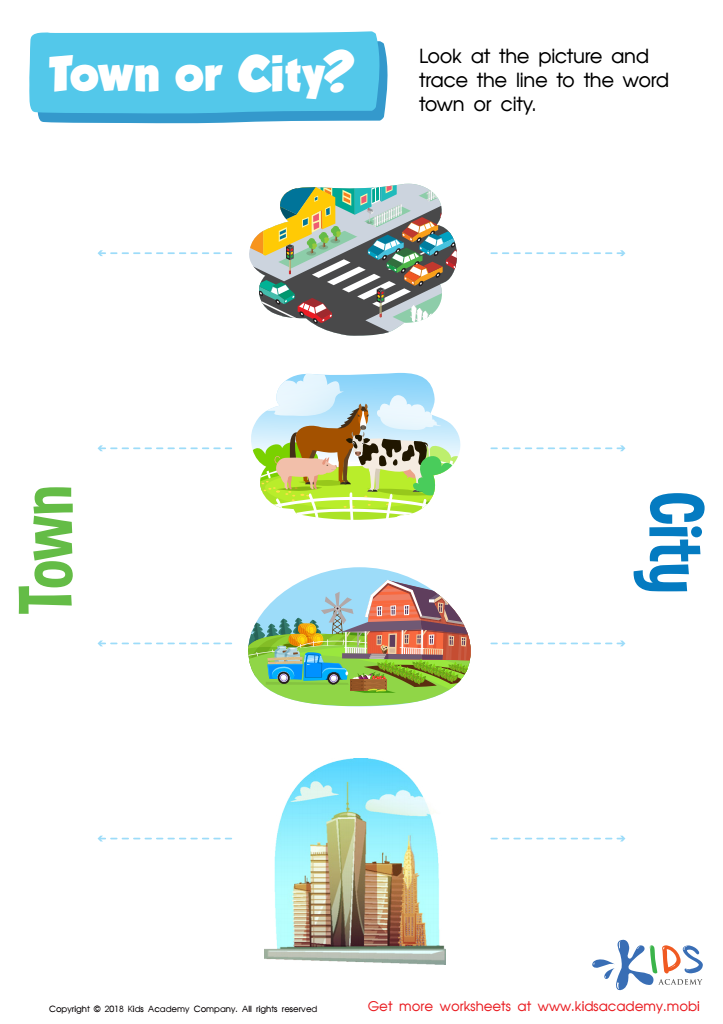
Town or City? Worksheet

Town or City? Worksheet

Kids will have fun with this free worksheet, matching pictures to either a city or a town. Fine motor skills will be practiced as they trace the lines to their answer. It's a great way to reinforce the differences between cities and towns.
Town or City? Worksheet
Worksheet
Sorting Worksheets for Kids

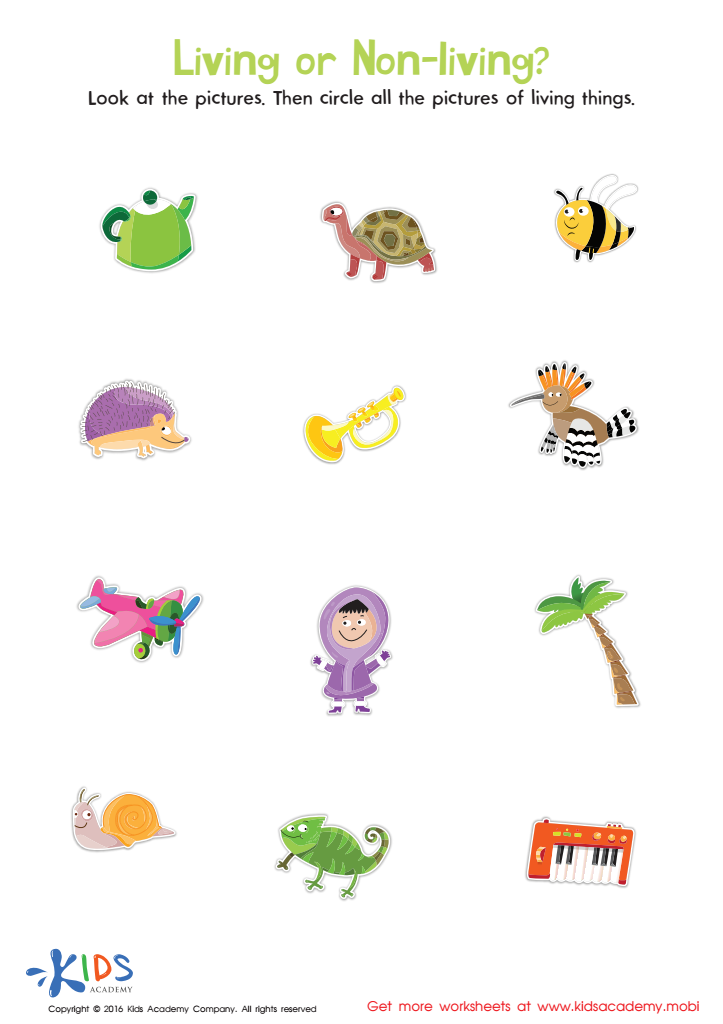
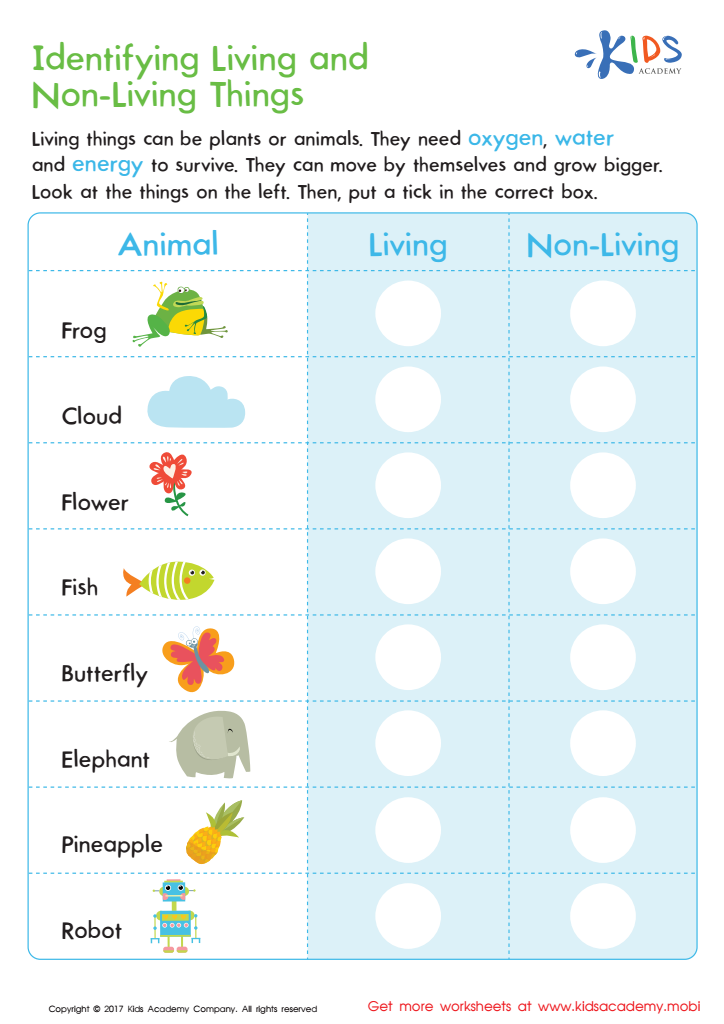
Identifying Living and Non–living Things Sorting Worksheet
Help your child sort living and non-living objects with this cute worksheet. Kids will use problem-solving skills to recognize and categorize the images they see. Matching worksheets available to help their skills soar.
Identifying Living and Non–living Things Sorting Worksheet
Worksheet
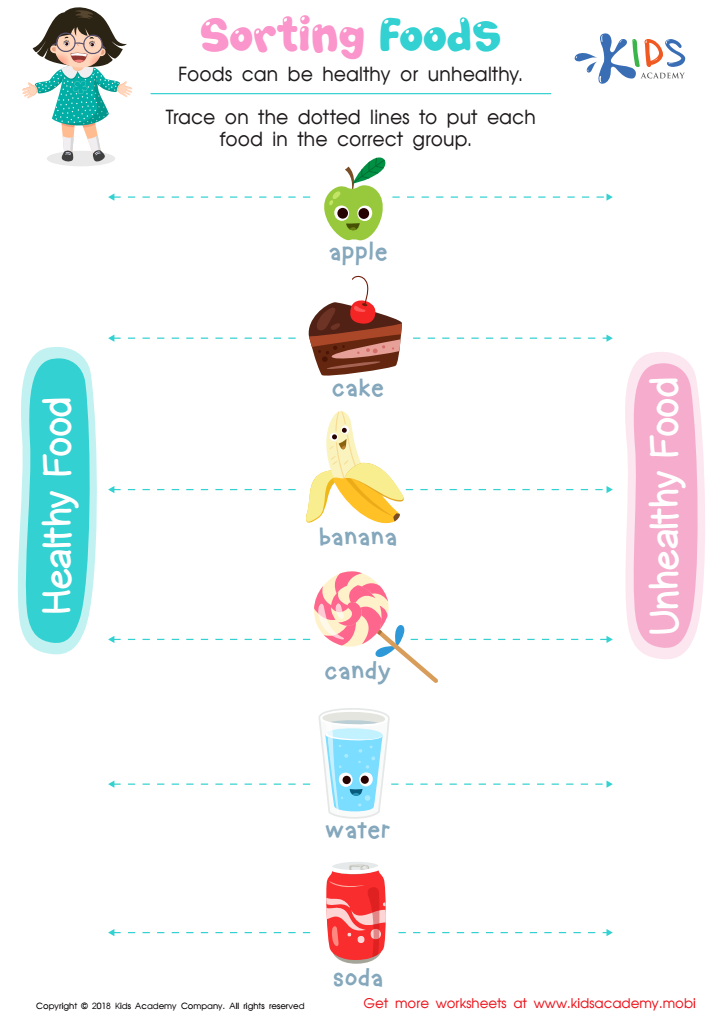
Sorting Food Worksheet

Sorting Food Worksheet

This delightful worksheet boosts critical thinking and fine motor skills. Kids use prior knowledge and pictures to sort foods into healthy and unhealthy groups. Tracing lines support accurate sorting and matching. Enjoy fun and free learning!
Sorting Food Worksheet
Worksheet
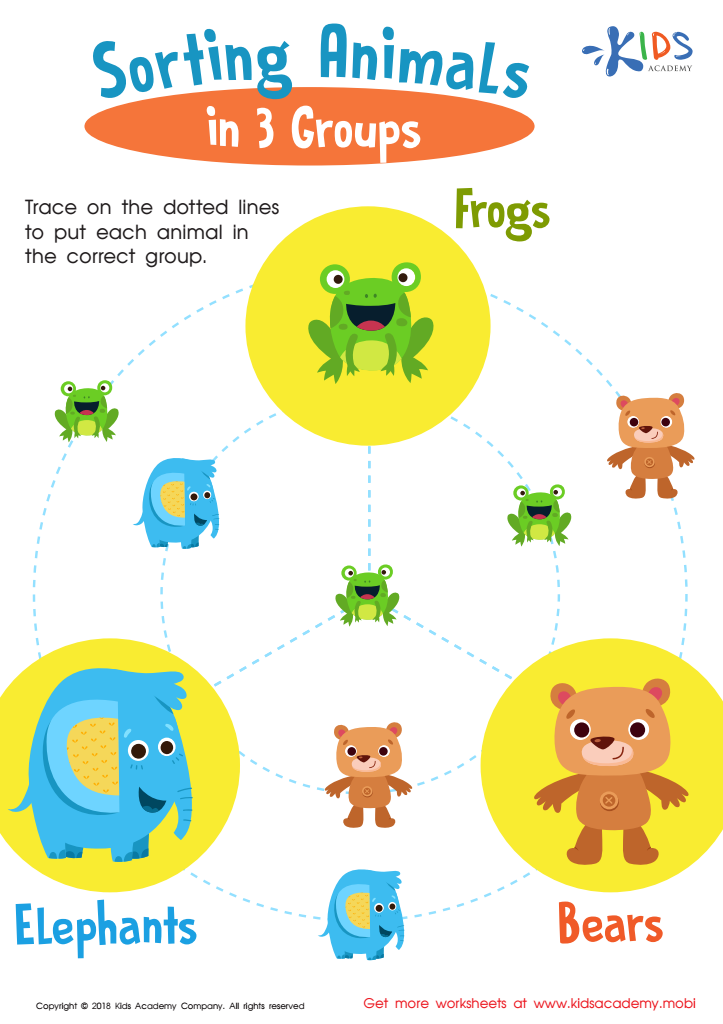
Sorting Animals in 3 Groups Worksheet

Sorting Animals in 3 Groups Worksheet

Let your kids practice and build skills for future Venn Diagrams with this PDF worksheet. They'll trace lines to match and group animals, and learn the differences and similarities of animals by categorizing with pictures and words. Plus, it's a great way to develop fine motor skills.
Sorting Animals in 3 Groups Worksheet
Worksheet
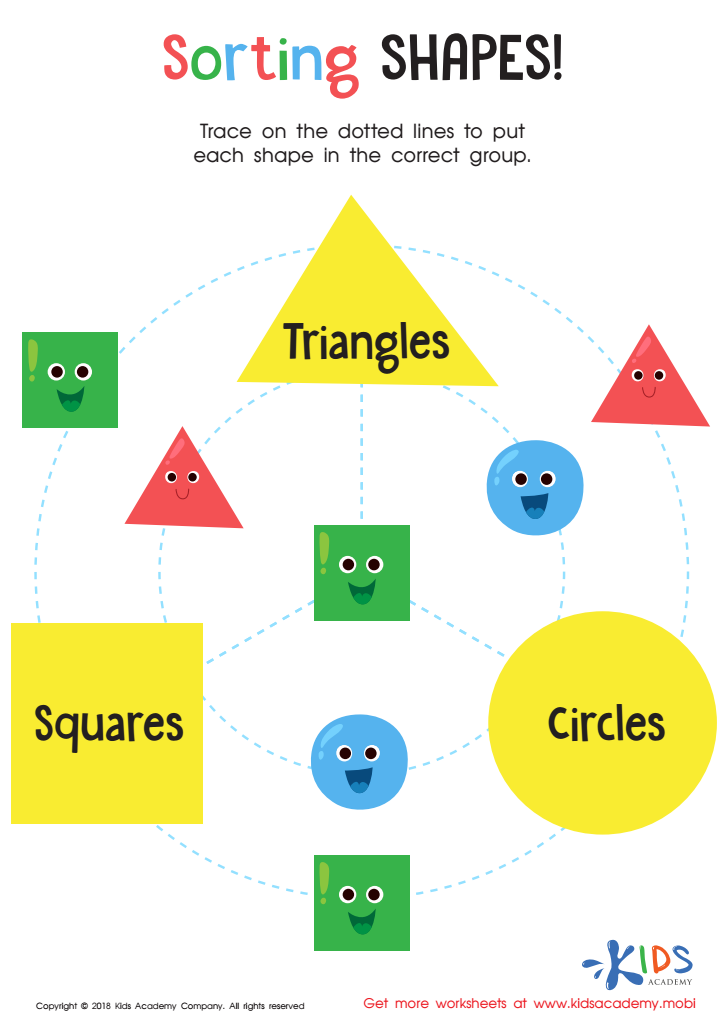
Sorting Shapes - Part 3 Worksheet
Sorting Shapes - Part 3 Worksheet

Download this fun PDF to help your kiddos recognize basic shapes like circles, squares, and triangles. It'll sharpen their fine motor skills as they trace and sort shapes by color, size, and sides. Your kids won't even realize they're learning with these cheery shapes!
Sorting Shapes - Part 3 Worksheet
Worksheet
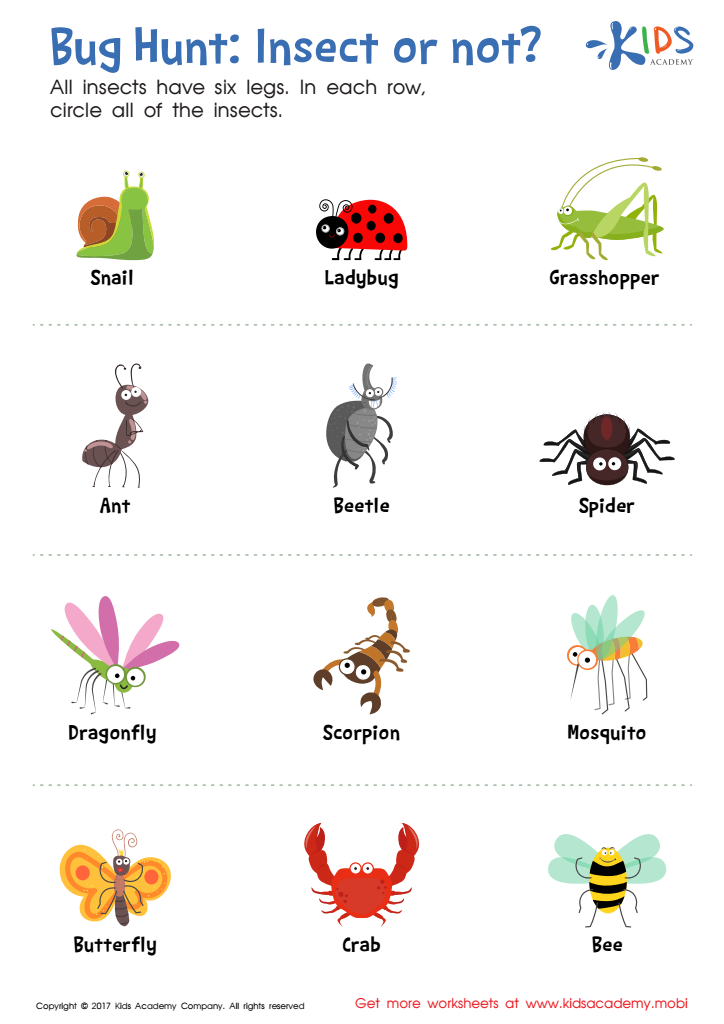
Bug Hunt: Insect or Not

Insect or Not? Worksheet

Try the “Bug Hunt: Insect or Not?” worksheet today!
Insect or Not? Worksheet
Worksheet
Sorting Worksheets for Preschool

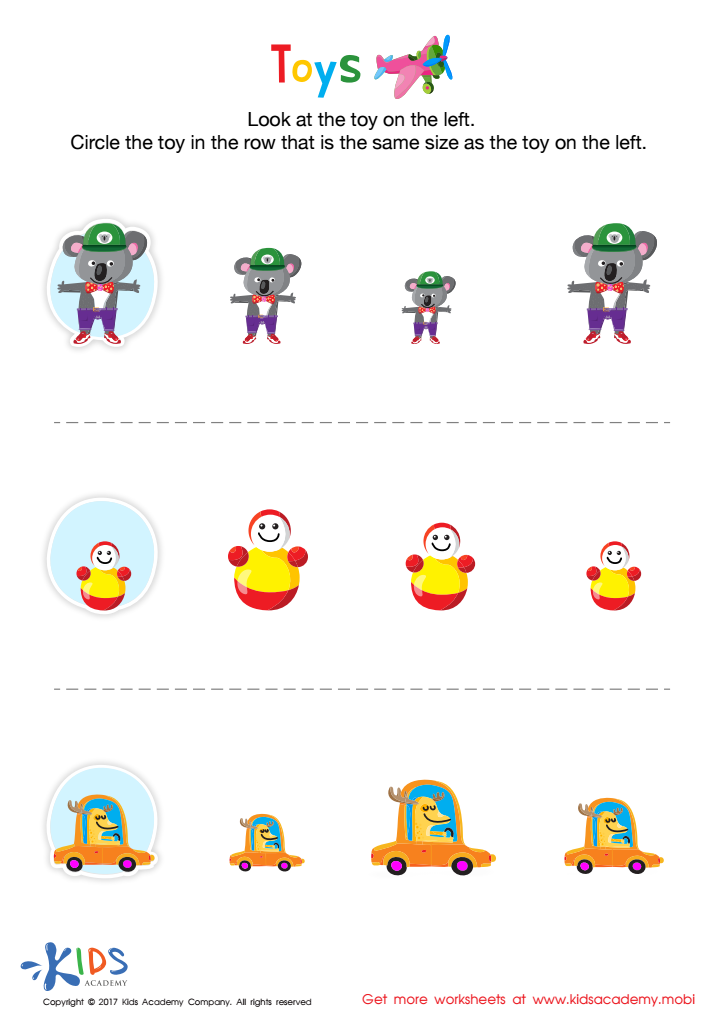
Matching: Classifying Toys by Size Worksheet
Sorting worksheets are an effective way to help your preschooler learn life and educational skills. Spatial awareness, direction recognition, and reading directions all help build a strong foundation for future educational success.
Matching: Classifying Toys by Size Worksheet
Worksheet
Categorization Worksheets

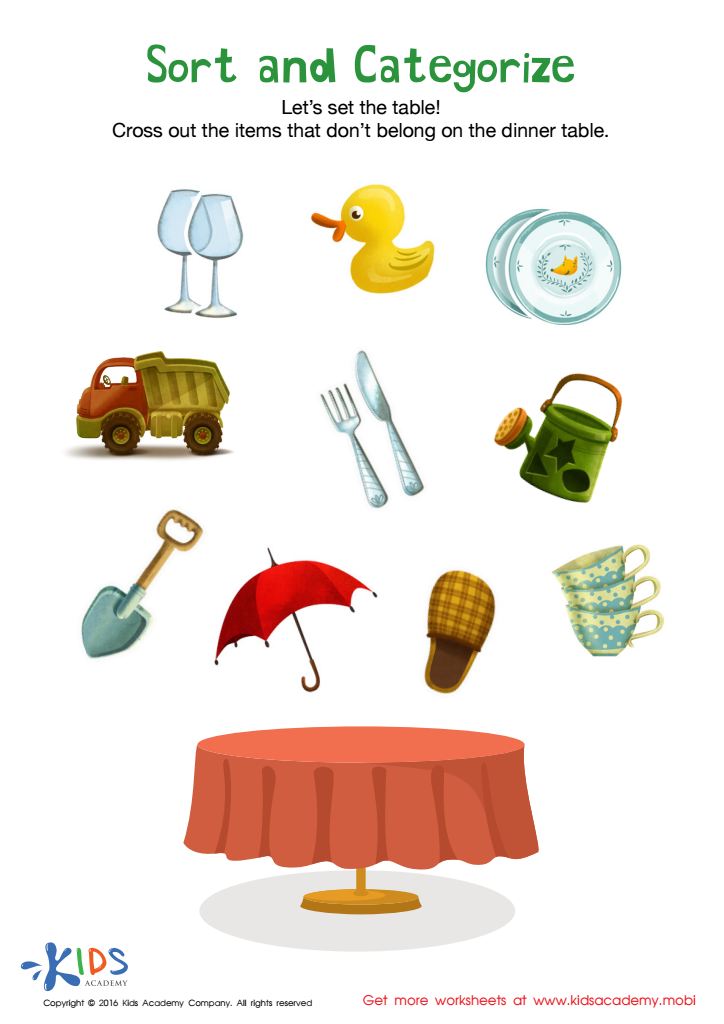
Sort and Categorize Sorting Worksheet

(83 words)
Sort and Categorize Sorting Worksheet
Worksheet
What Doesn’t Belong Worksheet for Preschool

First Words: What Doesn't Belong Worksheet
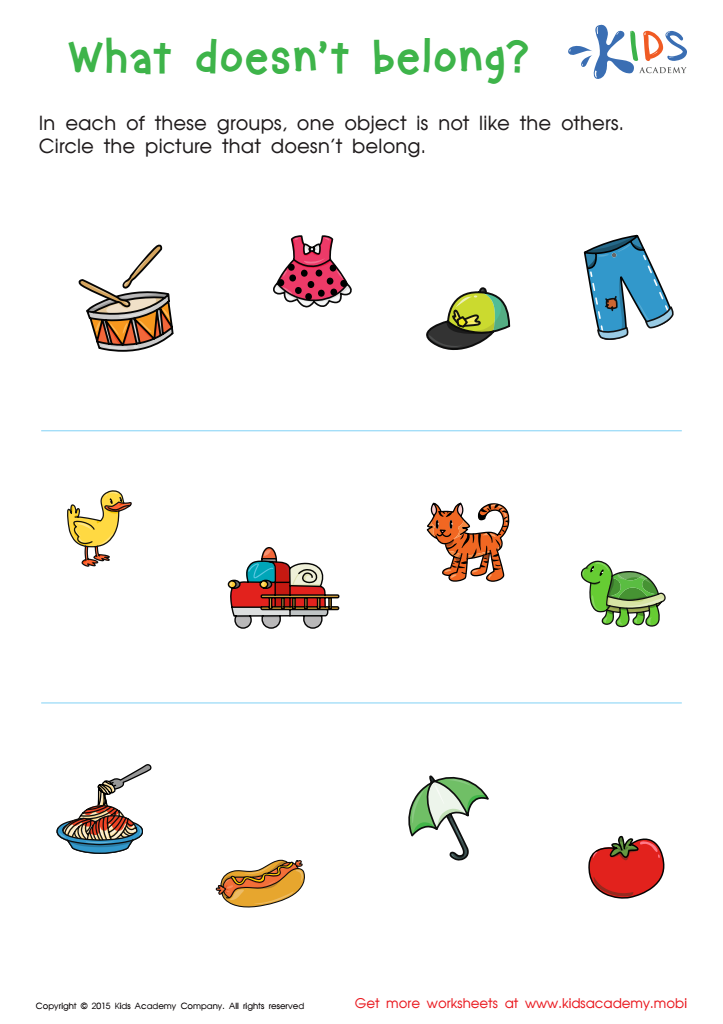
Categorizing items is an important skill for little learners. Sorting and classifying objects helps kids make sense of the world. With this "what doesn't belong" worksheet, your child will practice problem-solving, strengthen categorization and improve logical reasoning skills. It's perfect for toddlers and preschoolers, with bright and exciting images giving their minds a challenging workout!
First Words: What Doesn't Belong Worksheet
Worksheet
Preschool Matching Game Worksheet

Vehicles Worksheet

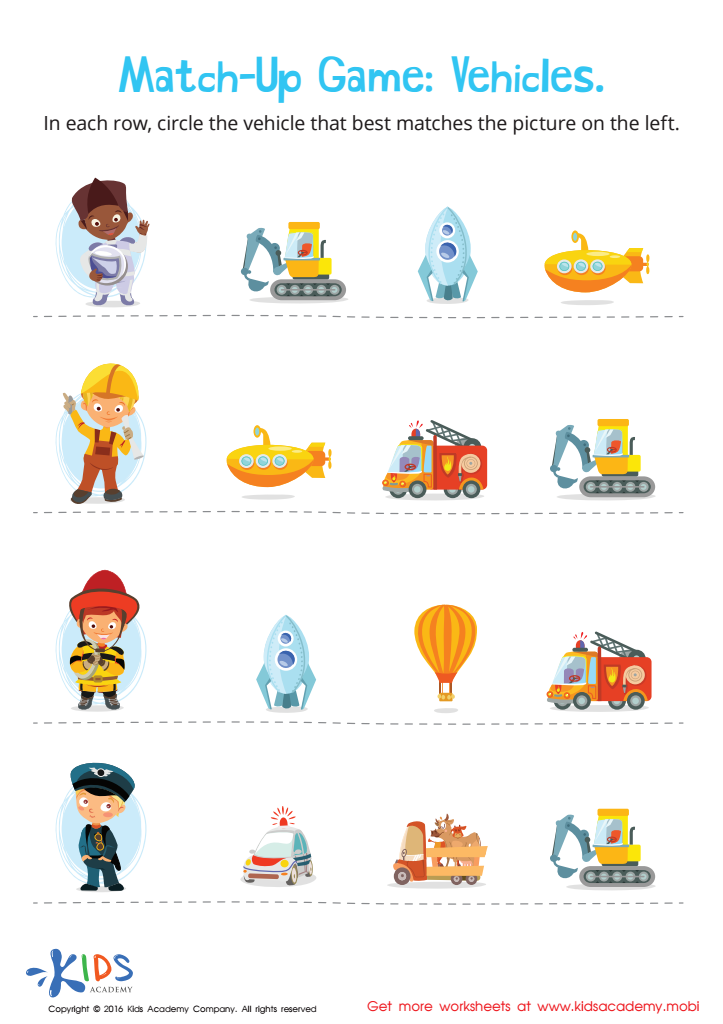
Beep, beep! Your little driver will love this matching game! Matching vehicles with their drivers can help your child discover new jobs and practice problem-solving skills. It can even start a conversation about different careers. Don’t be surprised if they start playing with more cars and trucks! Use this and other sorting activities to practice with colors, shapes and patterns.
Vehicles Worksheet
Worksheet
Sorting Games for Kindergarten
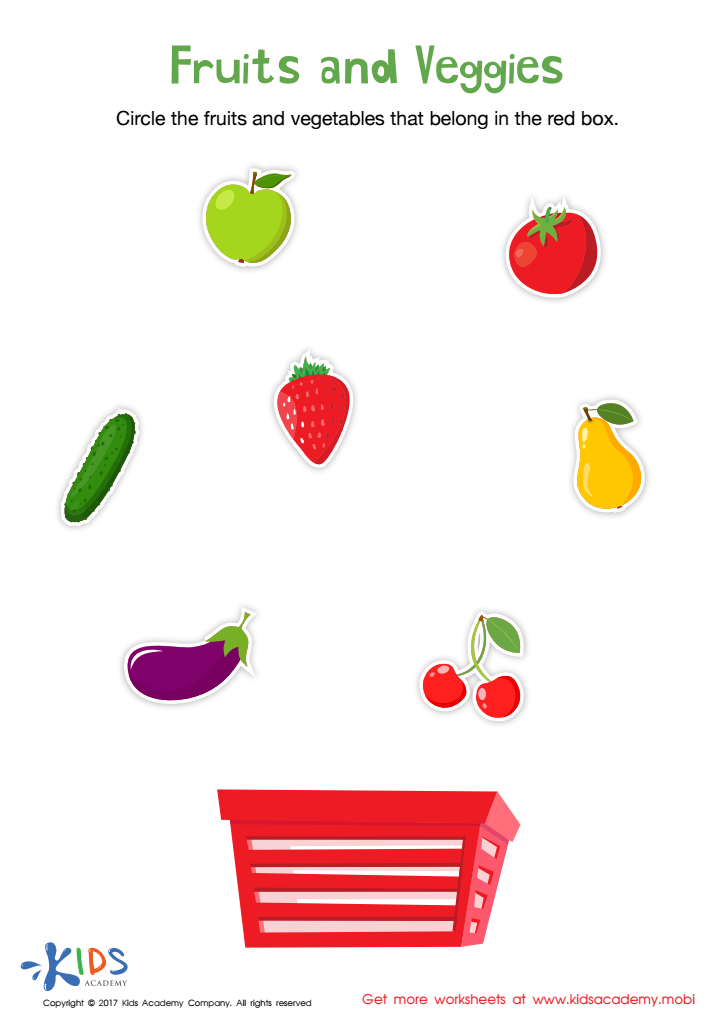
Classifying Fruits and Veggies by Color Sorting Worksheet
Worksheet
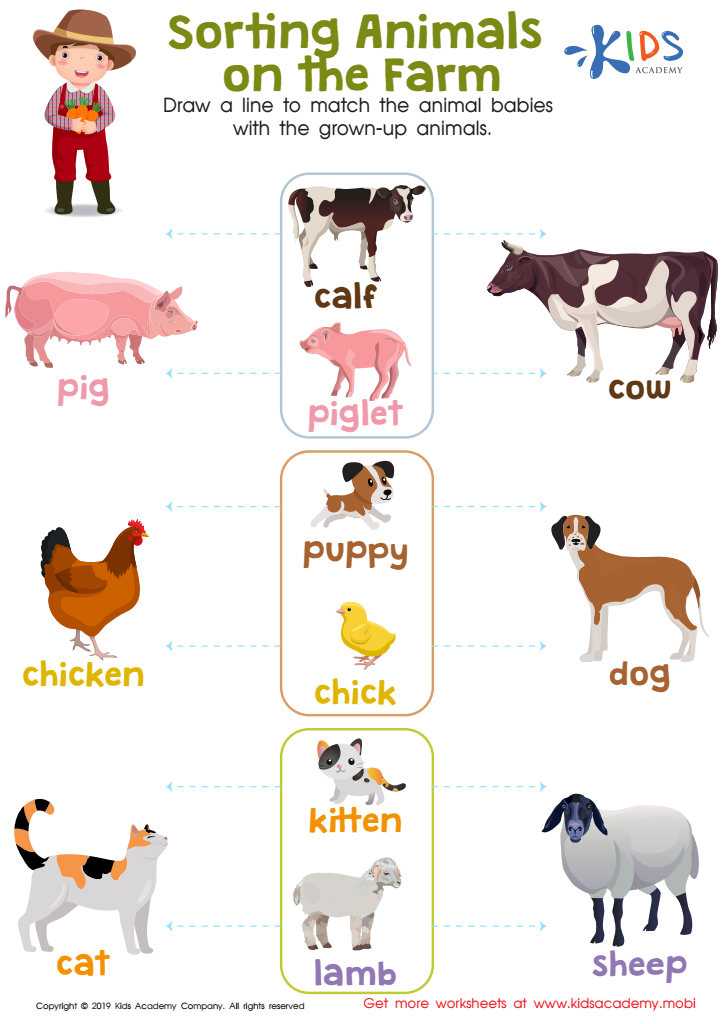
Sorting Animals on the Farm Worksheet

Sorting Animals on the Farm Worksheet

This PDF worksheet engages preschoolers in a fun activity to match Mama farm animals with their babies, strengthening their sorting and patterning skills. They'll learn to recognize rules and relationships, while gaining familiarity with animal-related words.
Sorting Animals on the Farm Worksheet
Worksheet
Matching Worksheet for Toddlers

Logic Game Sorting Worksheet

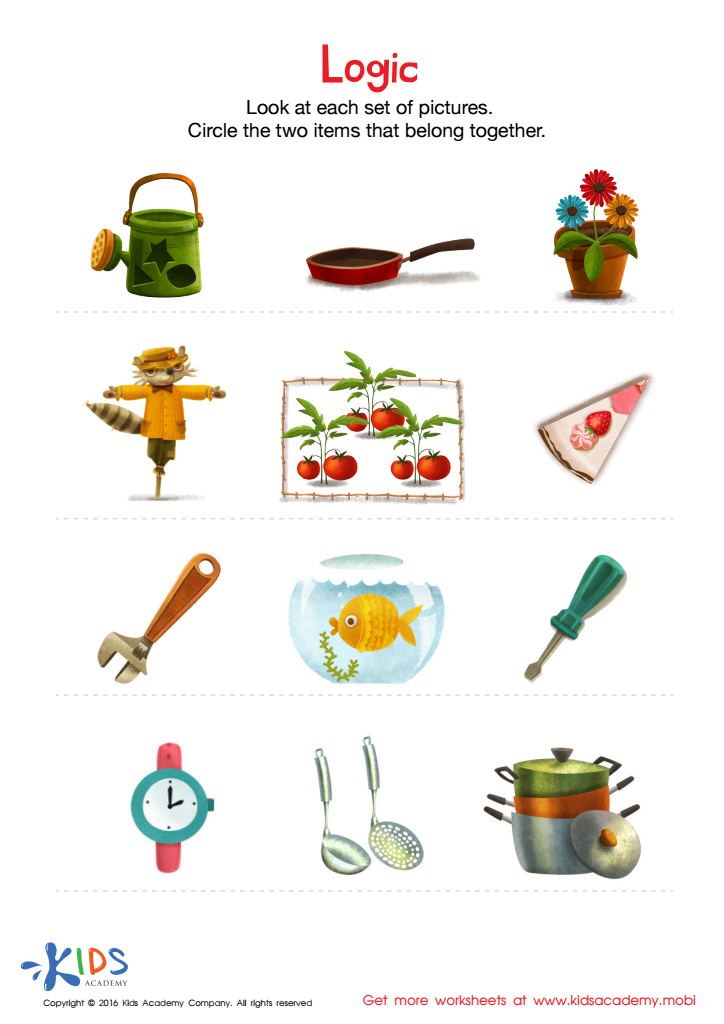
Start your child's logic and reasoning development early with this fun matching worksheet! Through cute images and simple conversations, your little one can learn problem-solving, categorization, and matching skills. Plus, it's a great way for children to explore how items are used in real life. Try it and watch them boost skills with ease and fun!
Logic Game Sorting Worksheet
Worksheet
Living and Non-living Worksheet

Identifying Living or Non–living Worksheet
Help your child learn to sort and categorize in a new way! Teach them to classify things as living or non-living using this worksheet. It's the perfect way to build their scientific understanding, and to have some learning fun! Print this worksheet and watch them discover the world of science!
Identifying Living or Non–living Worksheet
Worksheet
Sorting by Size Worksheet

Sorting by Size Worksheet

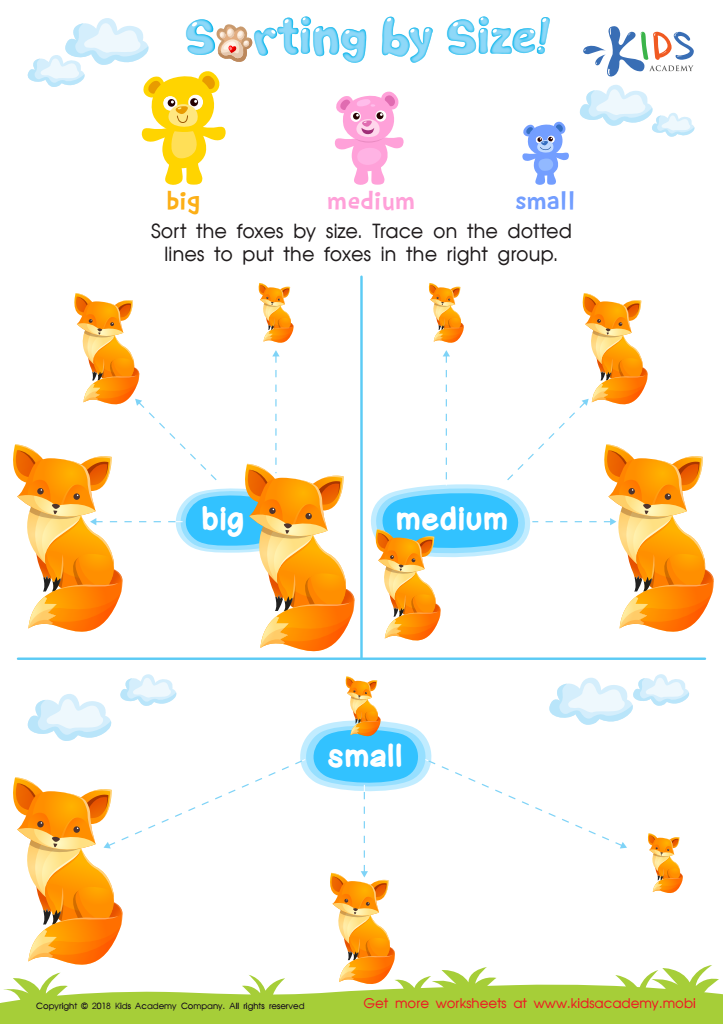
This bright printout lets your students sort the foxes by size. Ask them to identify objects, then trace the dotted lines to put the foxes in the right group. Clear and easy instructions make this a fun and colorful exercise for your young ones.
Sorting by Size Worksheet
Worksheet
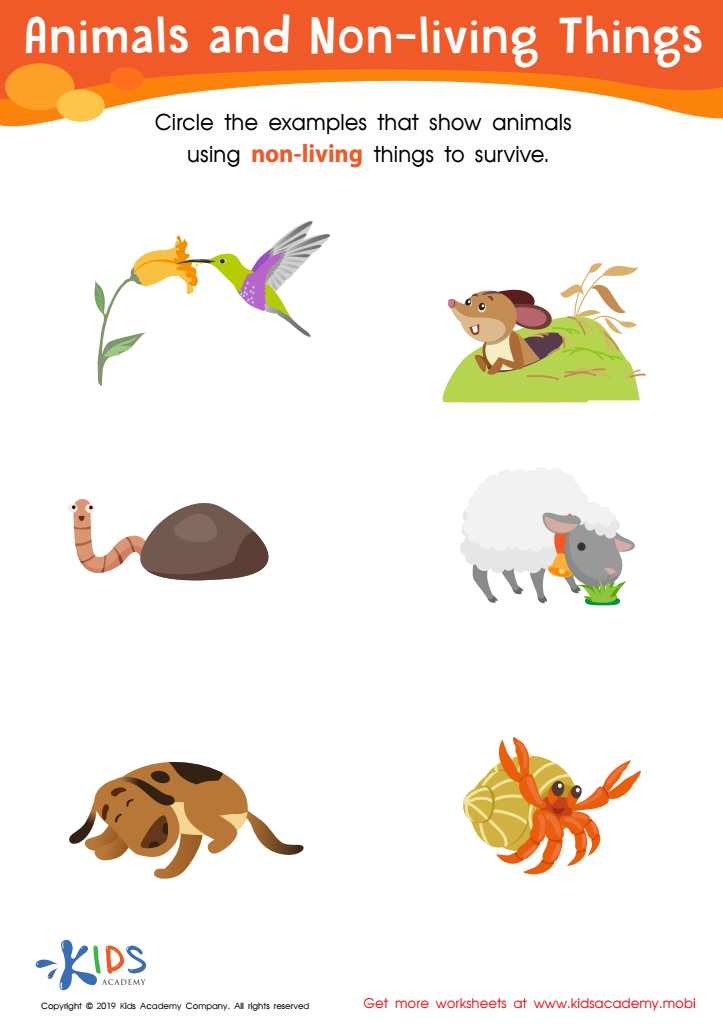
Animals and Non-Living Things Worksheet


Animals and Non-Living Things Worksheet

People and animals both require more than food to survive. We need shelter, clothing and water, while animals use non-living things like rocks and trees. Ask your kids what else is necessary to survive - then have them identify the objects in the worksheet and circle the examples of animals using non-living things.
Animals and Non-Living Things Worksheet

Worksheet


Categorization skills are essential for 5-year-olds as they lay the foundation for critical thinking and problem-solving abilities. During this crucial developmental stage, children begin to make sense of the world by organizing information into recognizable groups based on shared characteristics. When parents and teachers nurture these skills, they foster cognitive development, which enhances language acquisition and improves communication skills.

Categorization helps children identify relationships between objects, concepts, and ideas, facilitating better memory retention and comprehension. For instance, when children categorize animals by their habitats or toys by color, they learn to analyze and sort information, which is foundational for later academic success.

Furthermore, these skills contribute to social development; understanding how to categorize social situations or emotions aids in building relationships and conflict resolution. Engaging kids in sorting activities or encouraging them to group similar items promotes curiosity and involvement in their environment.

By prioritizing and recognizing the importance of categorization skills, parents and teachers can actively support a child's readiness for future learning and ensure they develop critical skills necessary for their academic journey and everyday life. This investment in their early years can have lasting benefits for their educational and emotional well-being.