Cognitive Development Normal Geometry Worksheets for Ages 6-7
5 filtered results
-
From - To
Boost your child's cognitive skills with our engaging Normal Geometry Worksheets designed for ages 6-7. These worksheets focus on fundamental geometry concepts such as shapes, spatial awareness, patterns, and symmetry. Each activity is meticulously crafted to enhance logical reasoning, problem-solving abilities, and fine motor skills. Through fun and interactive exercises, children will explore and understand geometric ideas that are crucial for their academic growth. Perfect for both classroom and home use, these worksheets ensure that learning geometry is an exciting adventure. Start your child's cognitive development journey today with our expertly designed resources!
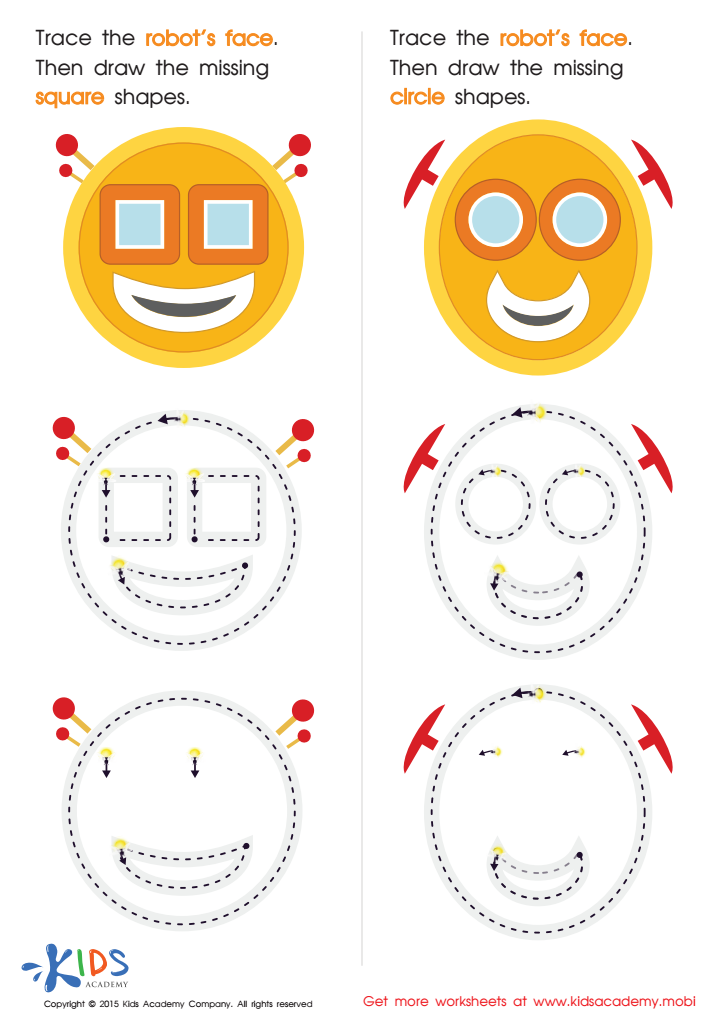
Practicing to Draw Circles And Squares Printable
 Assign to My Students











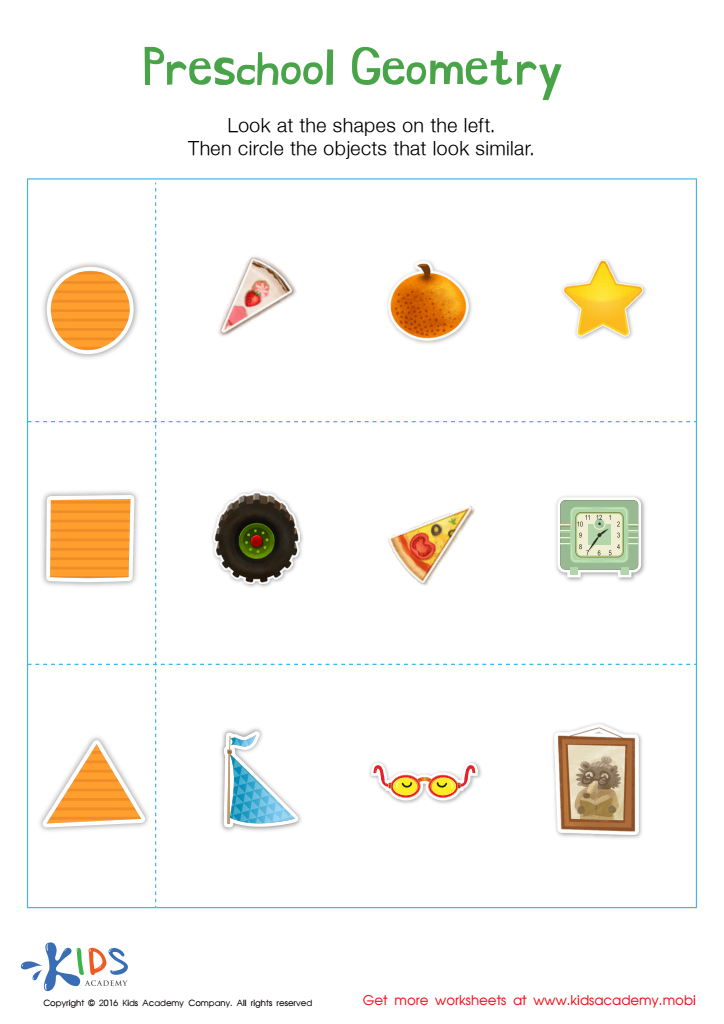
Preschool Geometry Match Up Worksheet
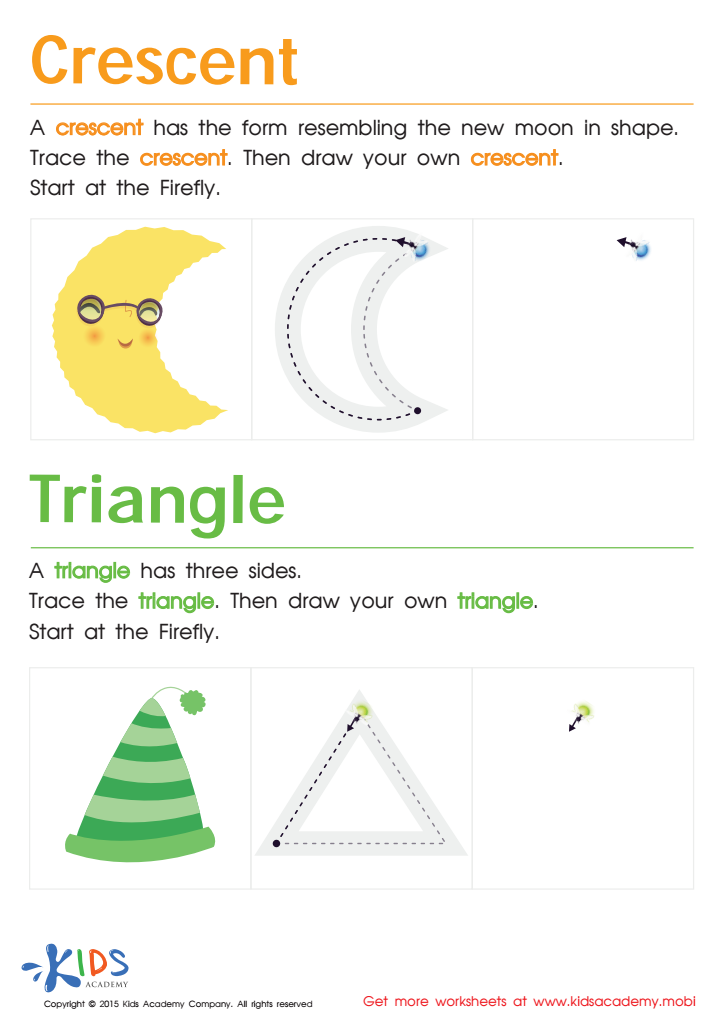
Learning to Draw Crescents And Triangles Worksheet
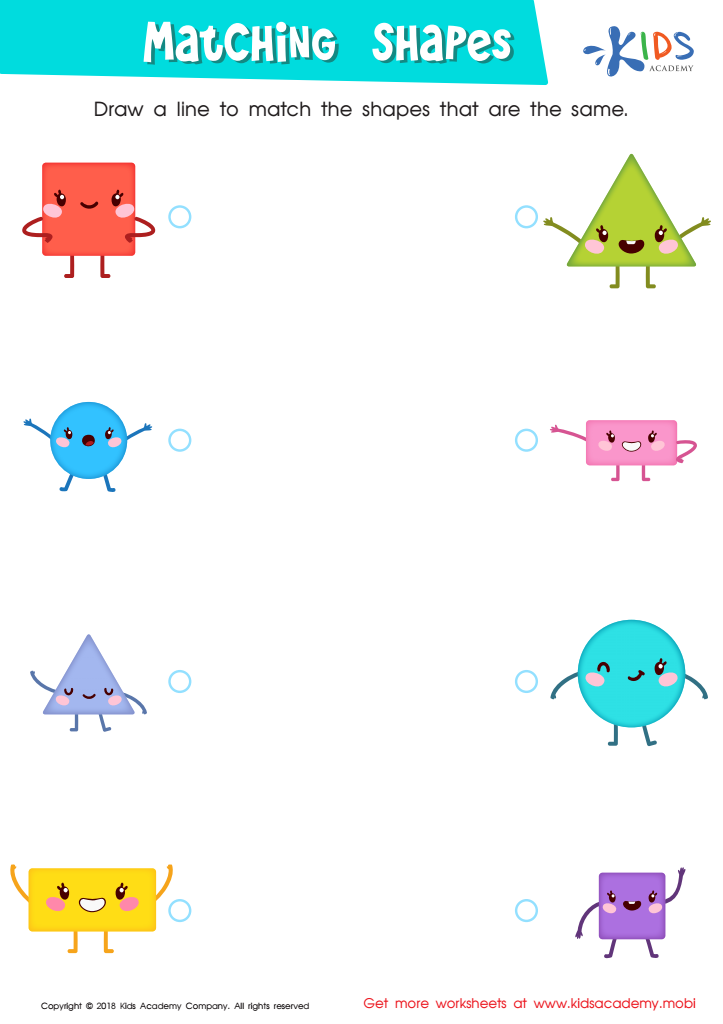
Matching Shapes Worksheet
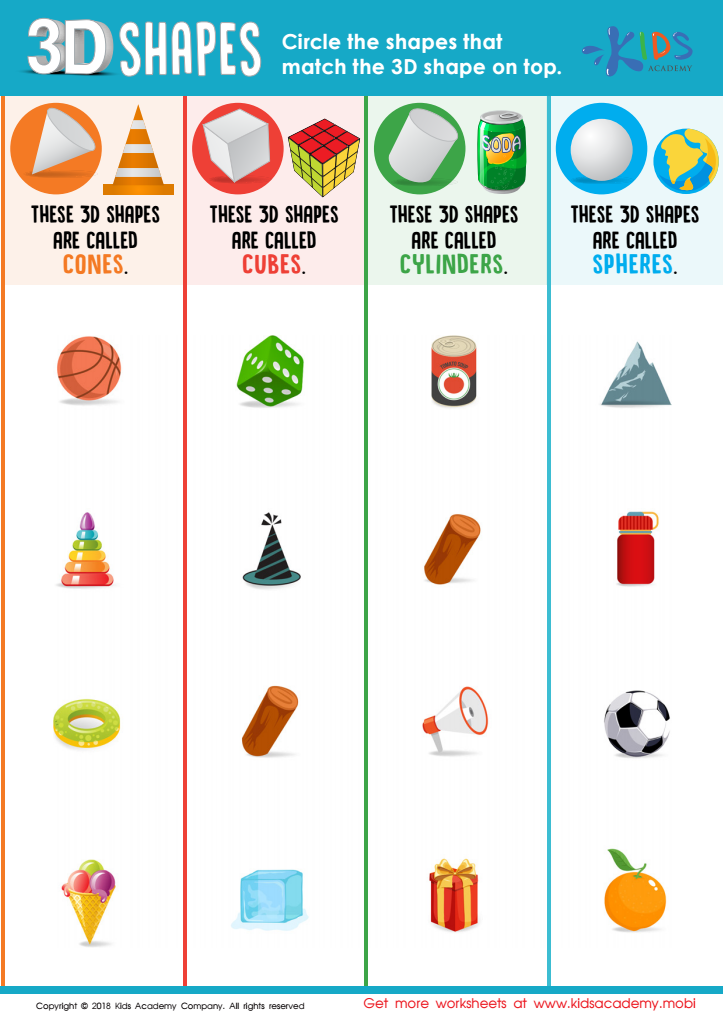
3D Shapes Worksheet








Parents and teachers should prioritize understanding and fostering cognitive development in geometry for children ages 6-7 because it forms the foundation for more complex mathematical and spatial reasoning skills. During this critical developmental stage, children begin to grasp essential concepts like shapes, sizes, spatial relationships, and basic geometric terms. These early experiences are fundamental to their future academic success.
Introducing geometric concepts helps to enhance children's spatial awareness and problem-solving abilities. For example, recognizing different shapes and understanding their properties aids children in perceiving and interacting with the world around them more meaningfully. Furthermore, cognitive development in geometry promotes critical thinking as children learn to compare, analyze, and categorize shapes, which are essential skills not just in math but across other subjects and everyday life.
Engaging with geometry at this age in fun, hands-on ways—such as playing with building blocks, drawing shapes, or solving simple puzzles—also supports fine motor skills and hand-eye coordination. Involving parents or caregivers in these activities reinforces learning and demonstrates that math is a valuable, enjoyable part of daily life. Ultimately, nurturing geometric understanding in early childhood prepares children for future educational challenges and cultivates a lifelong appreciation for learning.








