Normal Skip Counting Worksheets for Ages 6-9
11 filtered results
-
From - To
Discover our engaging Normal Skip Counting Worksheets designed specifically for children aged 6-9! These worksheets are perfect for introducing young learners to the concept of skip counting, enhancing their mathematical skills while making learning fun. Kids will practice counting by twos, fives, and tens through colorful, interactive activities. Our resources promote number familiarity, boosting confidence as students master this essential math skill. Perfect for homeschooling or classroom use, these worksheets cater to various learning styles and ensure an enjoyable education experience. Download your free printables today and watch your child's math abilities flourish with our vivid skip counting resources!
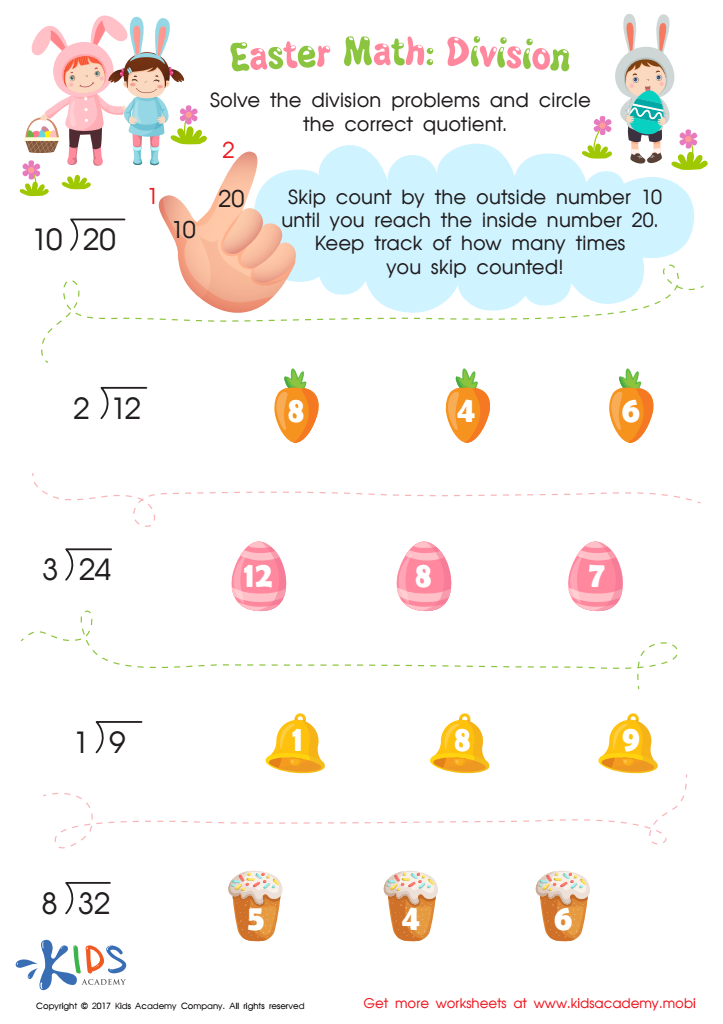
Division Worksheet
 Assign to My Students
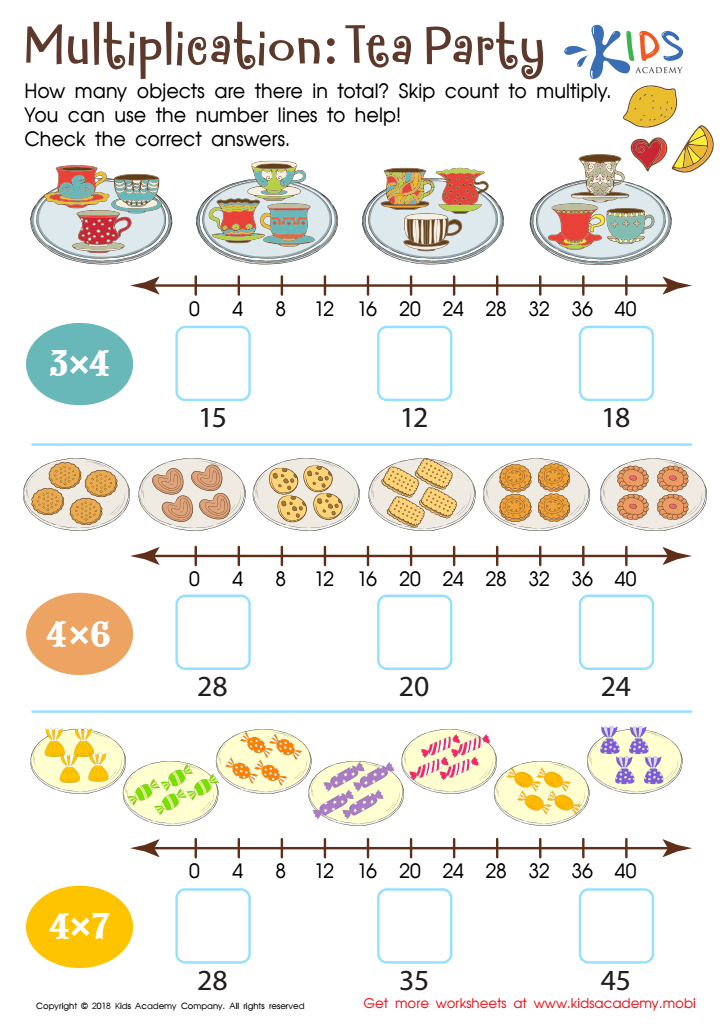
3rd Grade Math Worksheet Multiplication
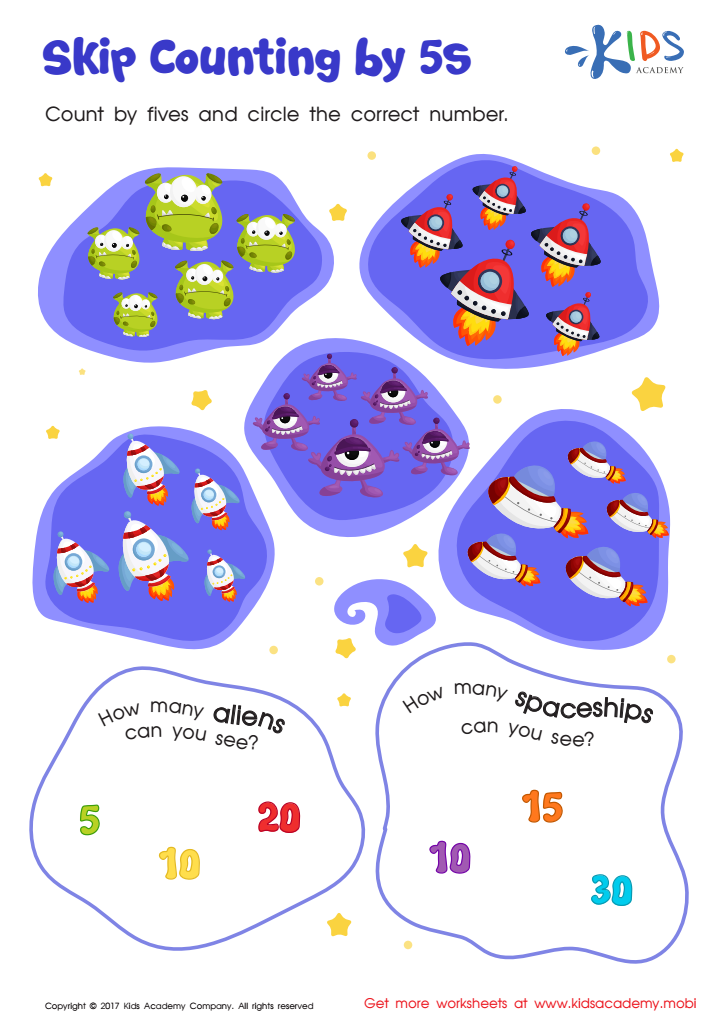
Skip Counting by 5s: Aliens and Spaceships Printable
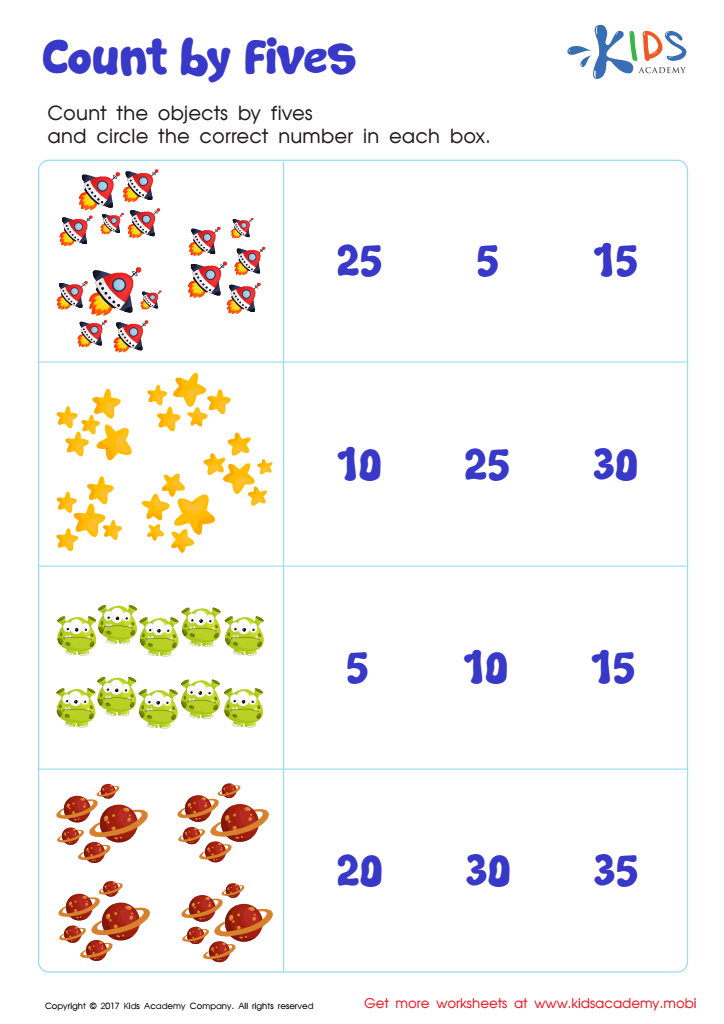
Skip Counting by 5s: Space Math Printable
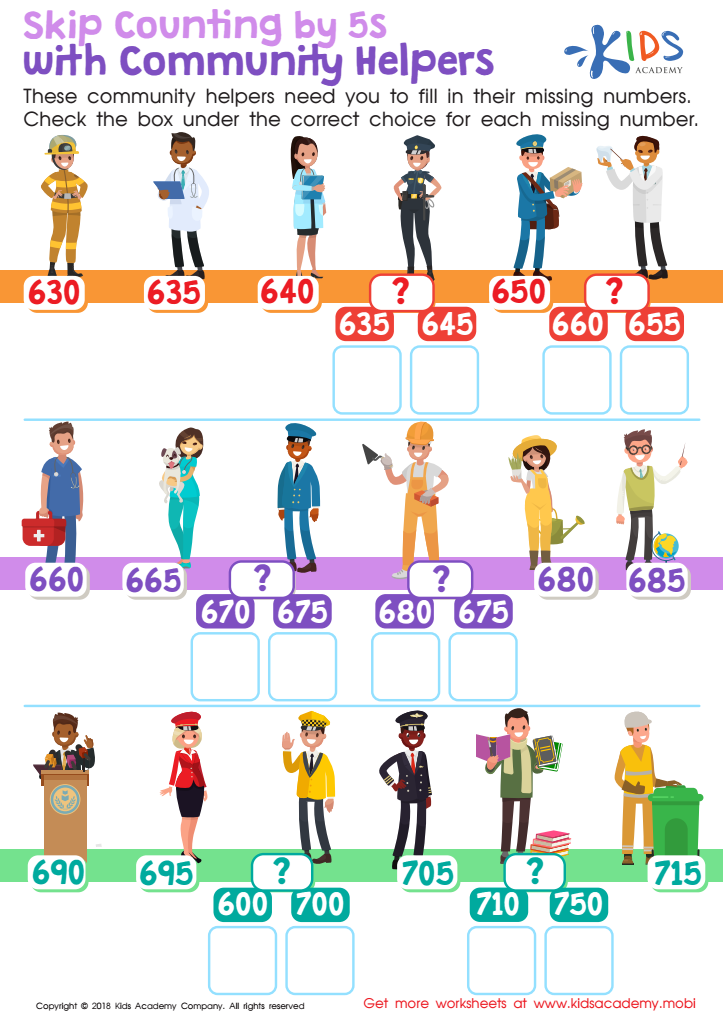
Skip Counting by 5s With Community Helpers Worksheet
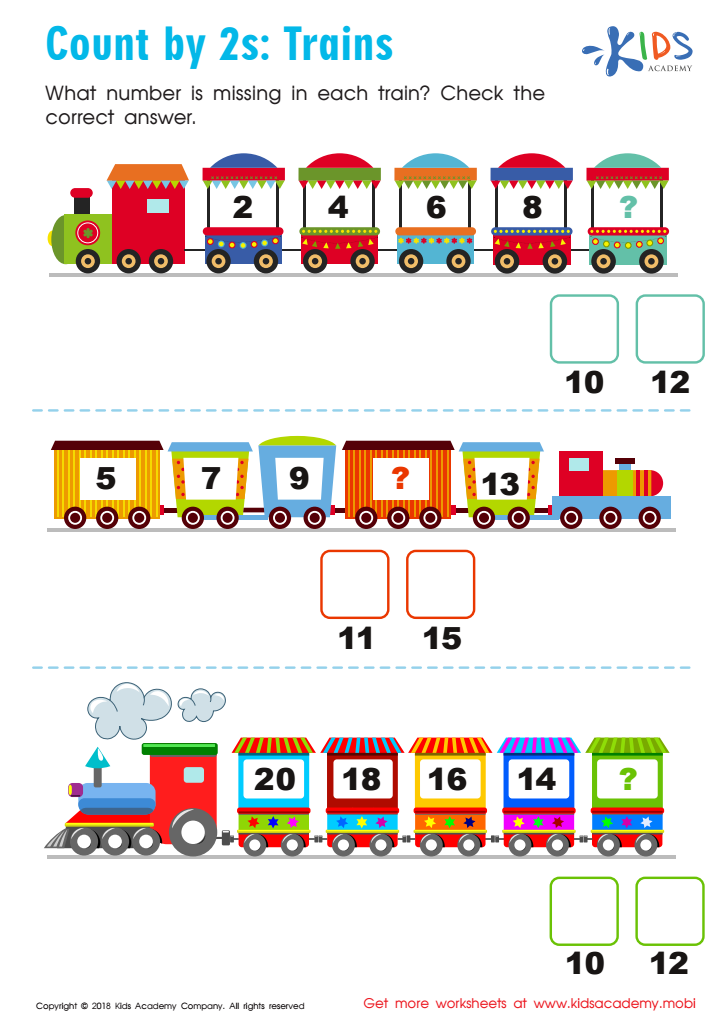
Count by 2's: Trains Worksheet
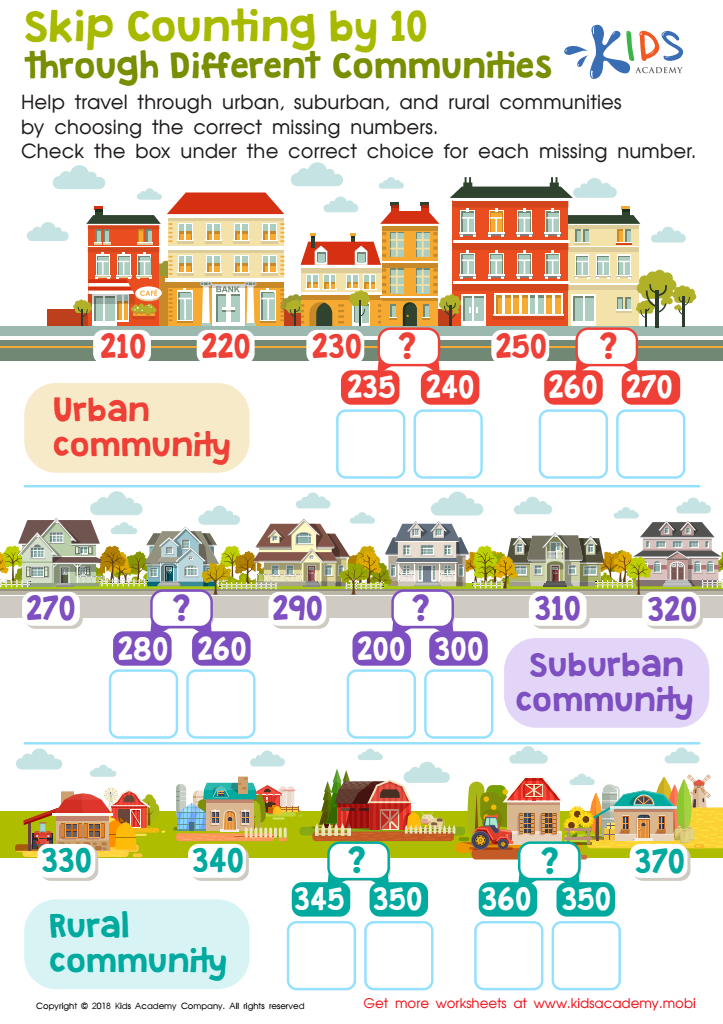
Skip Counting by 10 through Different Communities Worksheet
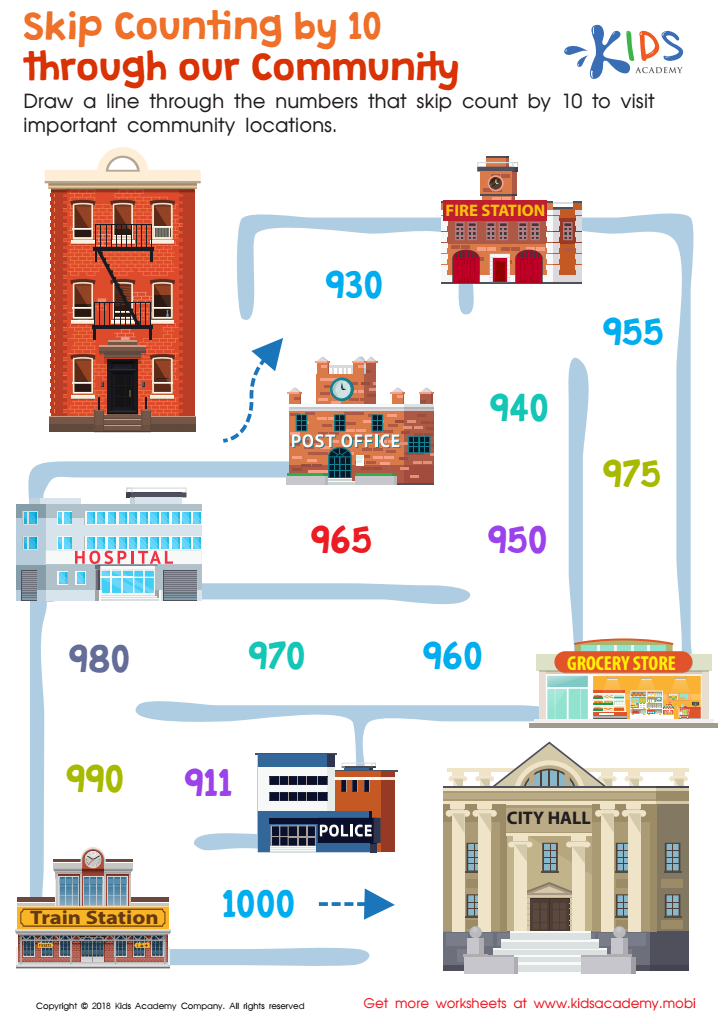
Skip Counting by 10 Through Our Community Worksheet
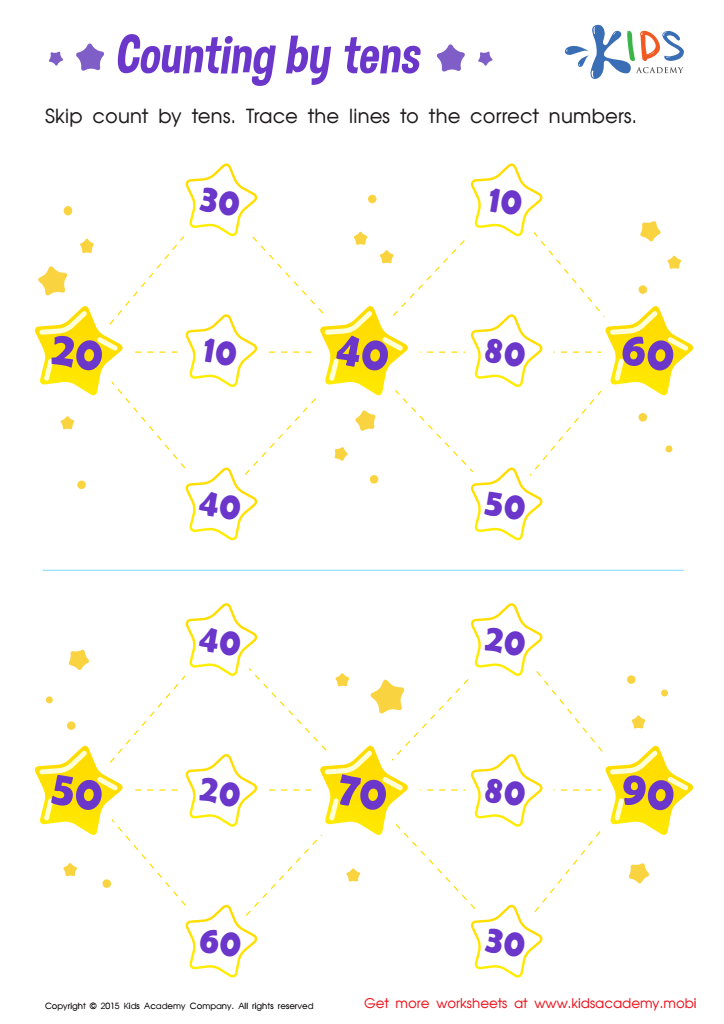
Learn Dozens: Counting by Tens Printable
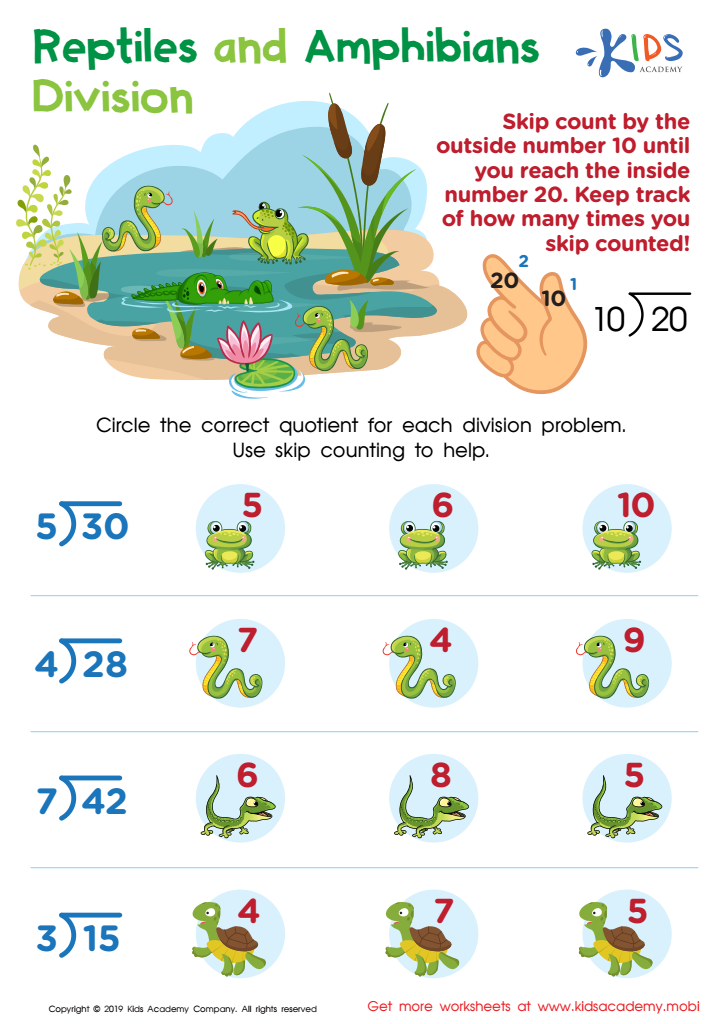
Reptile and Amphibians Division Worksheet








Normal skip counting is a foundational mathematical skill that involves counting by a specific increment, such as twos, threes, fives, or tens, which can significantly benefit children aged 6 to 9. Firstly, it enhances numerical fluency and builds confidence in young learners as they manage larger sets of numbers with ease. Mastering this skill helps children recognize patterns, which is crucial for understanding more complex mathematical concepts like multiplication and division.
Moreover, skip counting aids in the development of critical thinking and problem-solving abilities. As children start to see relationships between numbers, their ability to analyze and manipulate numerical information improves, empowering them to tackle word problems and real-life scenarios effectively.
Parents and teachers should also consider the role of skip counting in fostering mathematical language. Discussing skip counting introduces terminology that enhances comprehension, which can boost performance in higher mathematics. Additionally, because skip counting can be taught through fun and engaging activities, it cultivates a positive attitude towards math, making learning enjoyable.
Overall, normal skip counting forms the basis for advanced mathematical understanding and is an integral part of a well-rounded education, with far-reaching implications for a child’s academic future.








