Number Recognition Normal Grade 3 Math Worksheets
18 filtered results
Difficulty Level
Grade
Age
-
From - To
Subject
Activity
Standards
Welcome to our Number Recognition Math Worksheets for Grade 3! Designed to enhance students' foundational math skills, these interactive worksheets engage learners with fun exercises focused on recognizing and working with numbers. Each worksheet is crafted to support third graders in mastering number identification, improving their numerical literacy and confidence. Our diverse activities include visual recognition, sequencing, and engaging games, making learning enjoyable. Perfect for classroom use or at-home practice, these worksheets align with educational standards and foster a deeper understanding of numbers. Explore our resources today and help your students build a strong math foundation!
Favorites
With answer key
Interactive
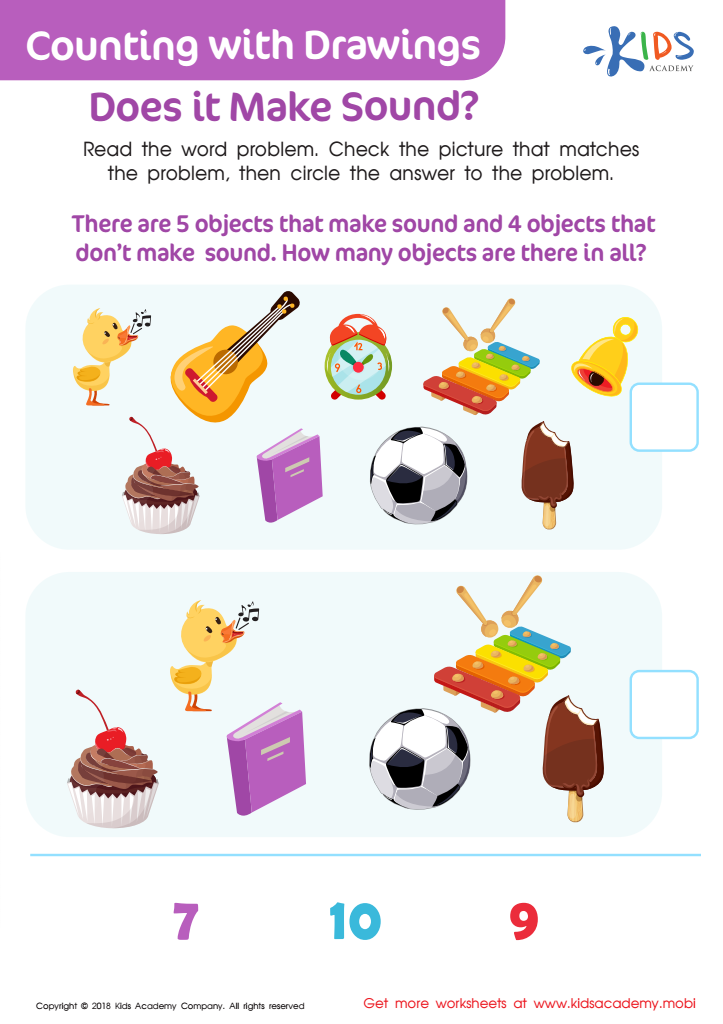
Counting With Drawings. Does It Make Sound? Worksheet
Introduce word problems with this simple worksheet. Ask your students to name the objects pictured, then read the word problem and ask them to circle the answer. With practice, it'll help them scale this challenging area of math.
 Assign to My Students
Counting With Drawings. Does It Make Sound? Worksheet
Worksheet
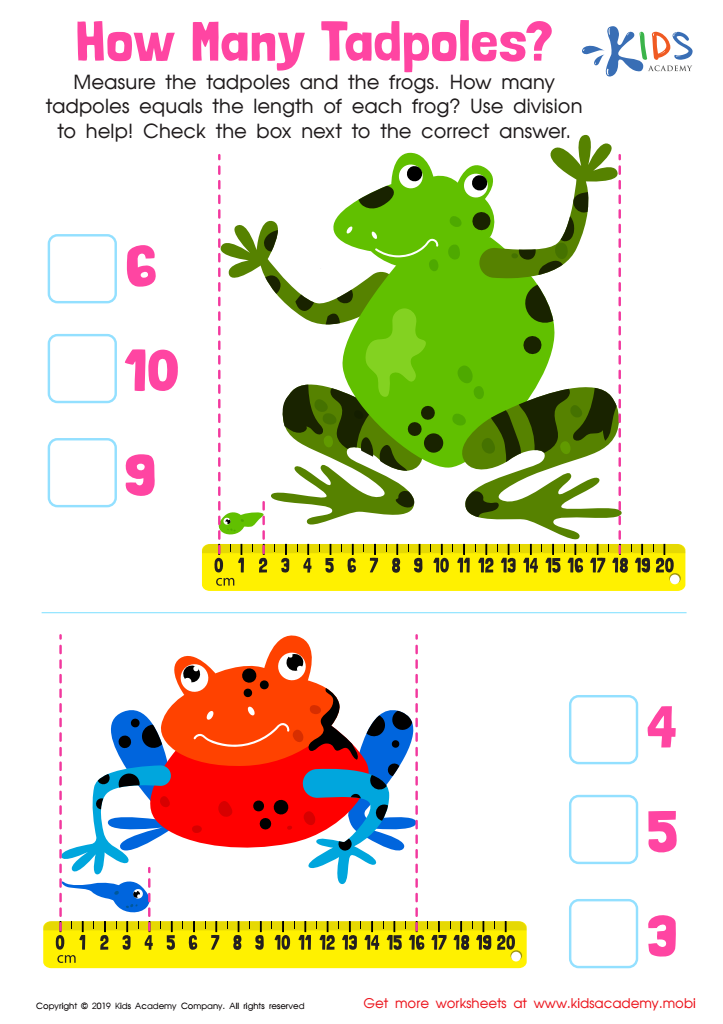
How Many Tadpoles Worksheet
Kids love tadpoles! They'll have fun using them to work out the measurements of their frog friends. By dividing the length of the frogs by the length of the tadpoles, children can deduce how many tadpoles it takes to equal a frog. With the use of 'how many' and 'each' they'll solve math problems without realizing it!
How Many Tadpoles Worksheet
Worksheet
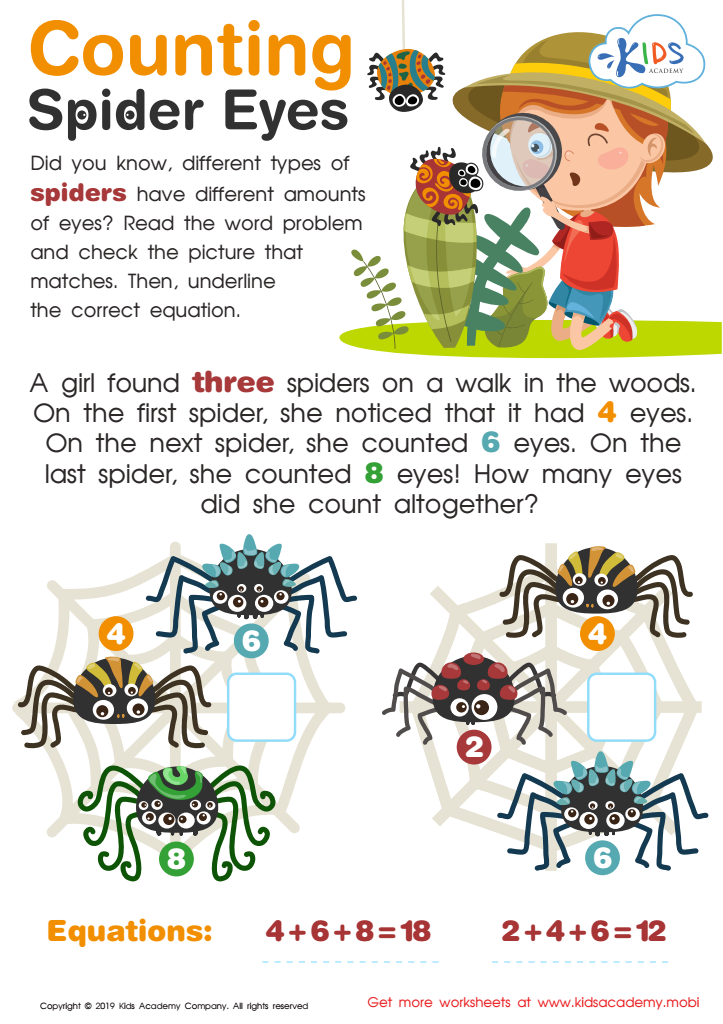
Counting Spider Eyes Worksheet
Did you know different spiders have different eye numbers? Kids will love learning this fact and solving the spider word problems on this free worksheet! Word problems promote a deeper understanding of the concept, plus they get to add up the spiders’ eyes while solving addition problems with more than one addend. Fun and math all in one!
Counting Spider Eyes Worksheet
Worksheet
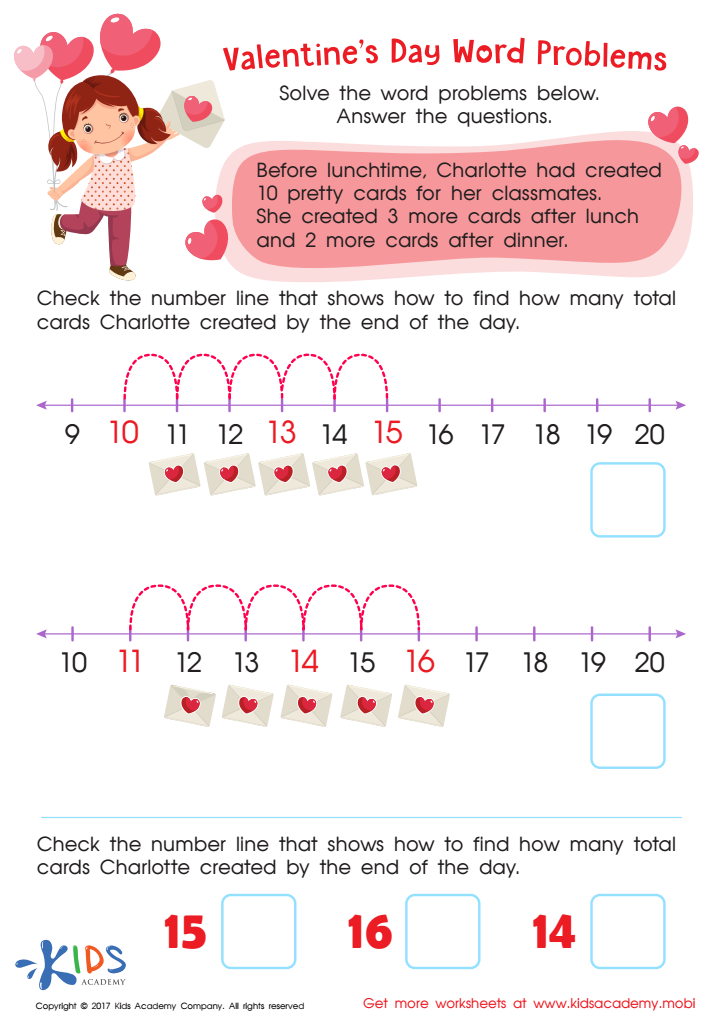
Valentines Day Word Problem Worksheet
This Valentine's Day worksheet will help your child practice using a number line to solve an addition problem. It's a great way to boost confidence and make solving word problems a breeze.
Valentines Day Word Problem Worksheet
Worksheet
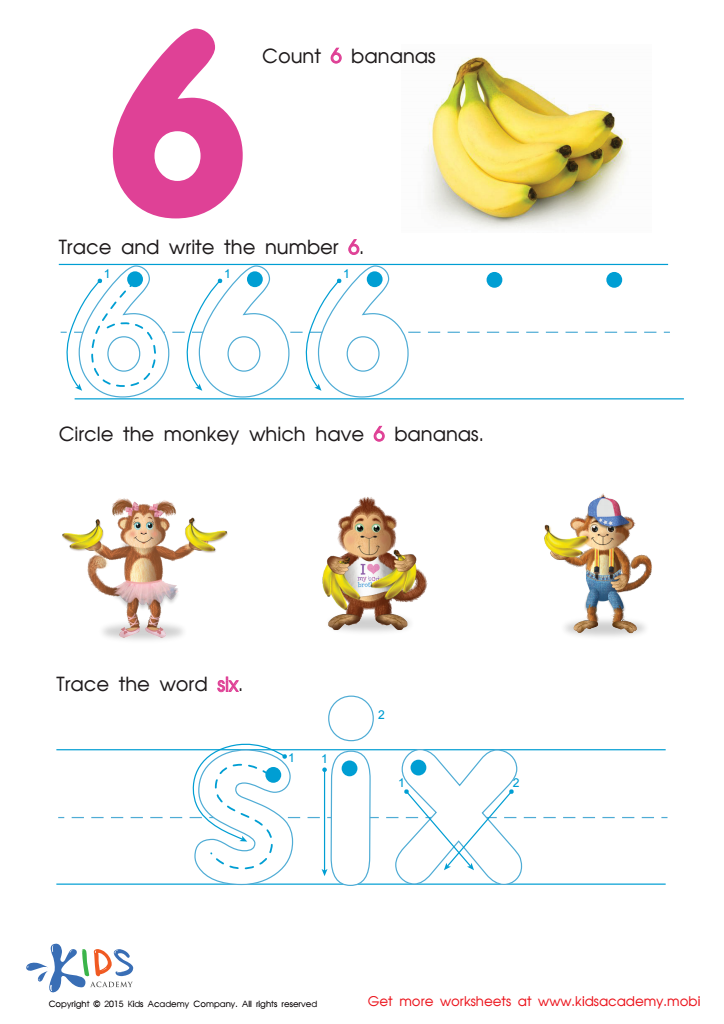
Tracing And Writing Number 6 Worksheet
Learn numbers in a fun way with our preschool number worksheets. Count six bananas, trace and write the number, find the monkey with six bananas, and trace the word "six." Explore more activities at Kids Academy.
Tracing And Writing Number 6 Worksheet
Worksheet
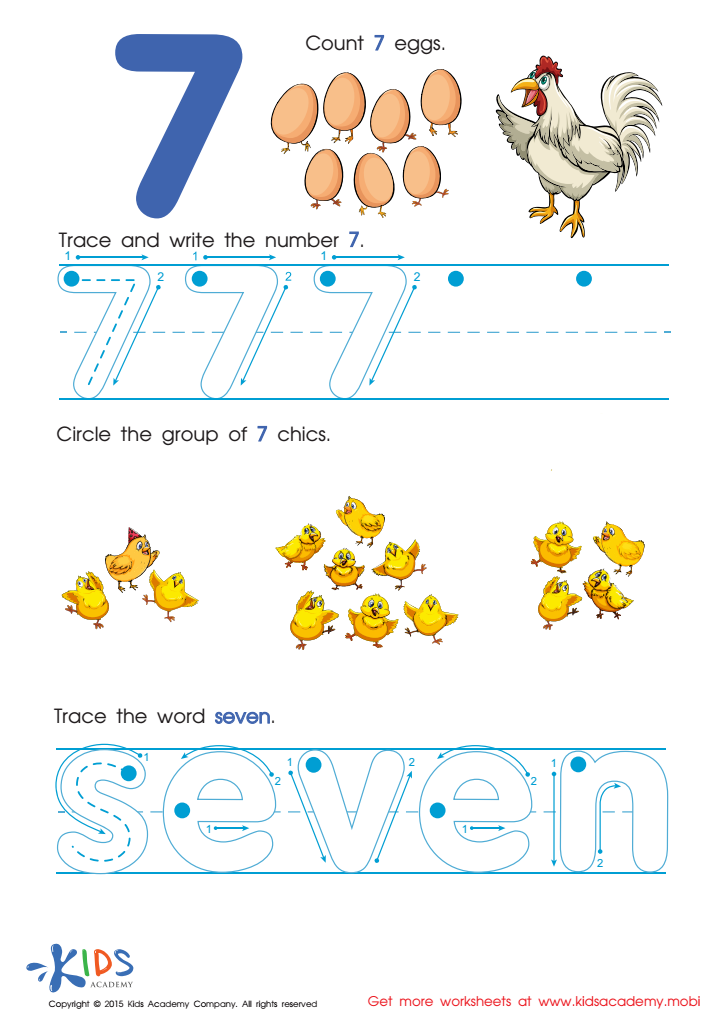
Trace And Write Number 7 with Fun Worksheet
Try one with a cute hen and its seven eggs! Trace and write the number 7, circle the group of seven chicks, and trace the word "seven". Fun and educational!
Trace And Write Number 7 with Fun Worksheet
Worksheet
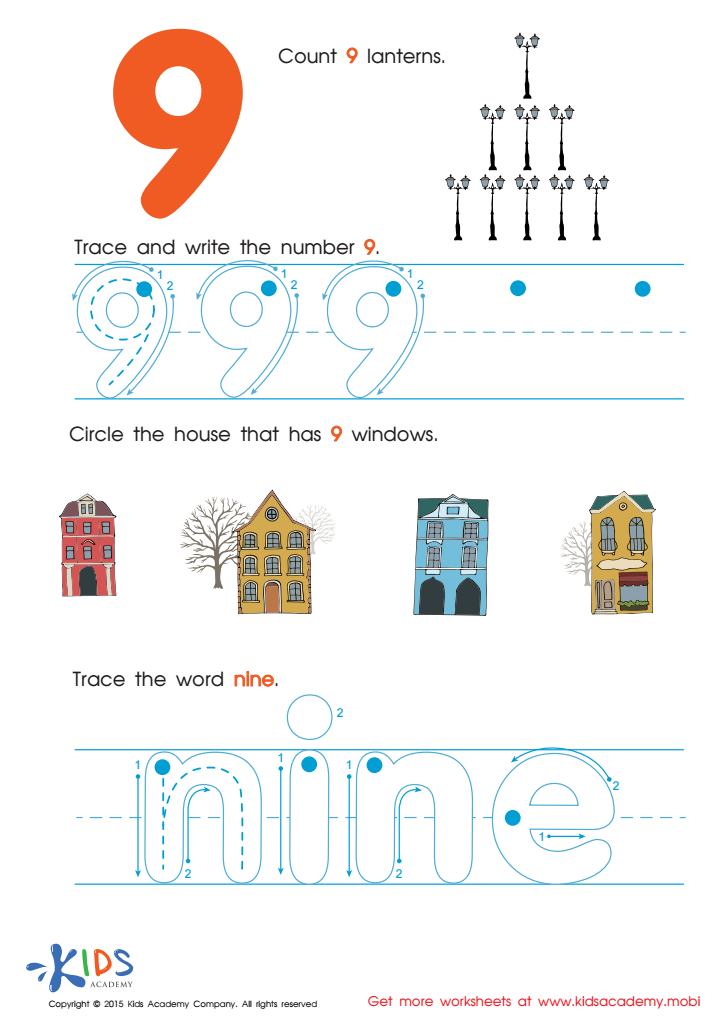
Tracing And Learning to Write Number 9 Worksheet
Explore our collection of learning numbers worksheets and make teaching numbers to preschoolers easier with Kids Academy. Trace numbers, circle houses with the specified number of windows, write the corresponding number words and revise previous numbers regularly to help kids learn.
Tracing And Learning to Write Number 9 Worksheet
Worksheet
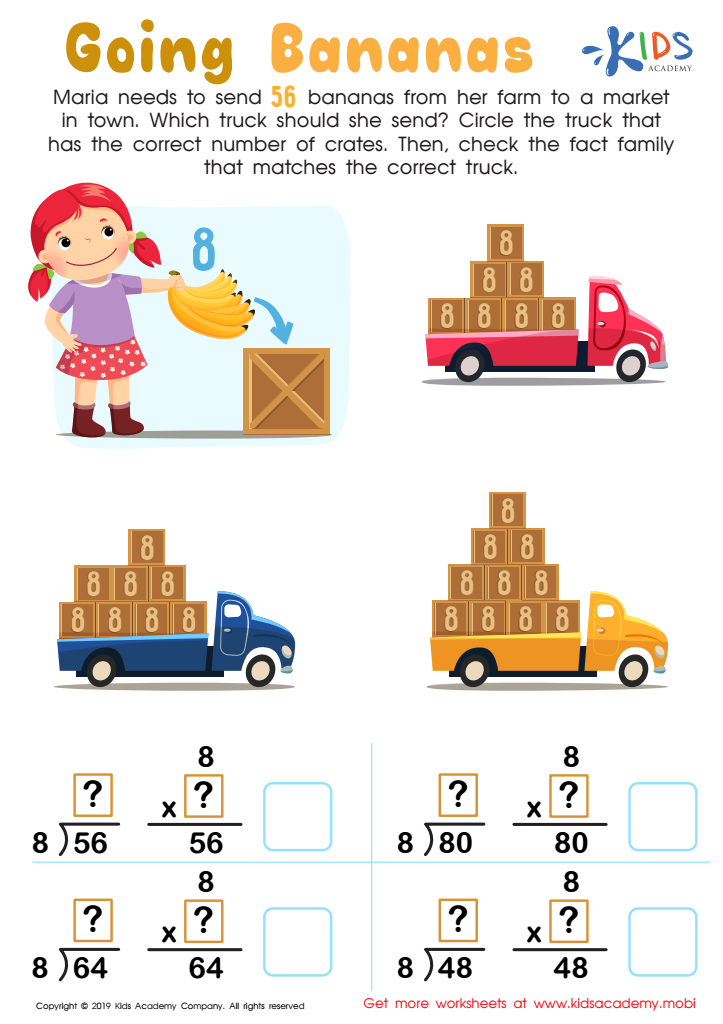
Going Bananas Worksheet
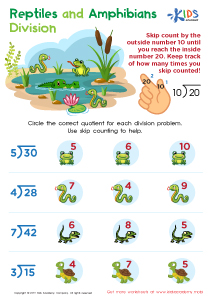
Marla needs to send 56 bananas in batches of 8. Help your child practice division and learn about fact families with this free worksheet. It'll help boost their multiplication skills and increase speed when solving problems.
Going Bananas Worksheet
Worksheet
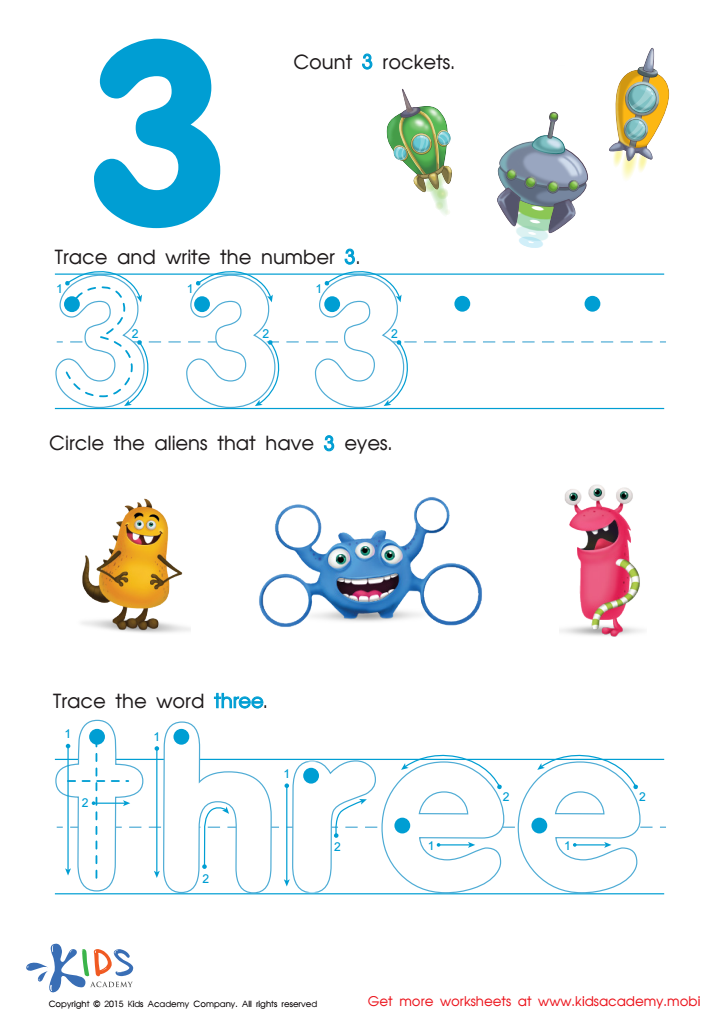
Learning Number Three Worksheet
Learn to count with aliens! Trace the number 3 and circle aliens with 3 eyes. Explore our web site for more number games and activities for preschoolers.
Learning Number Three Worksheet
Worksheet
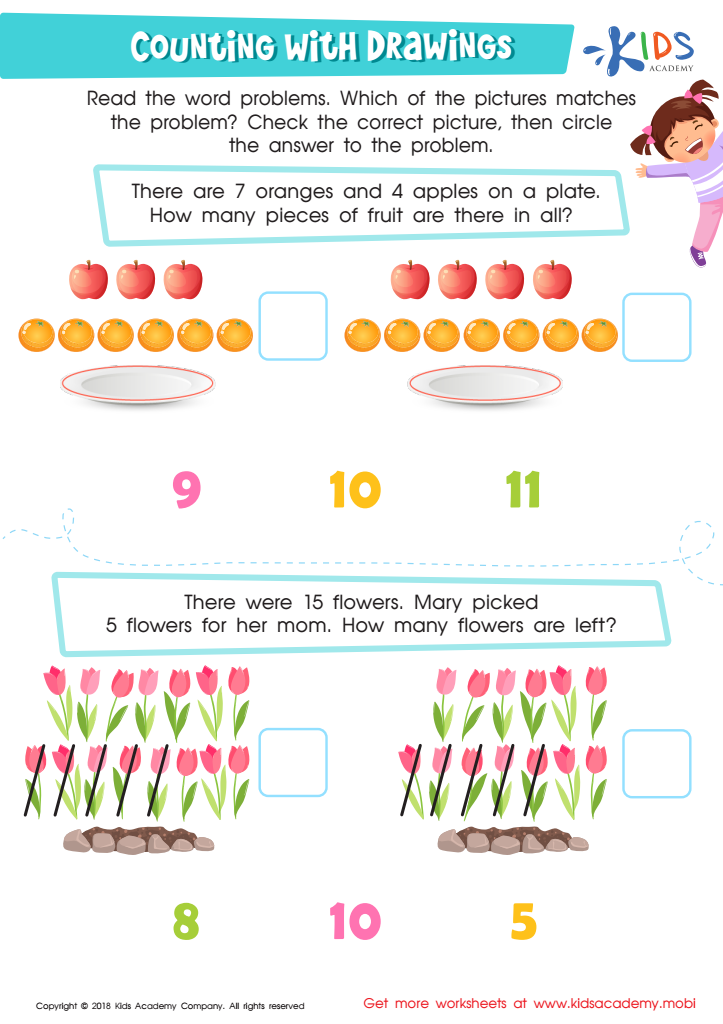
Counting with Drawings: Fruits & Chocolates Worksheet
Learning basic addition and subtraction has never been easier with this free worksheet! Young mathematicians can sort & count to get the right sum or difference for each problem. Plus, they'll practice fine motor skills by circling the correct answer. An ideal way to help kids build important visual recognition and discernment skills.
Counting with Drawings: Fruits & Chocolates Worksheet
Worksheet
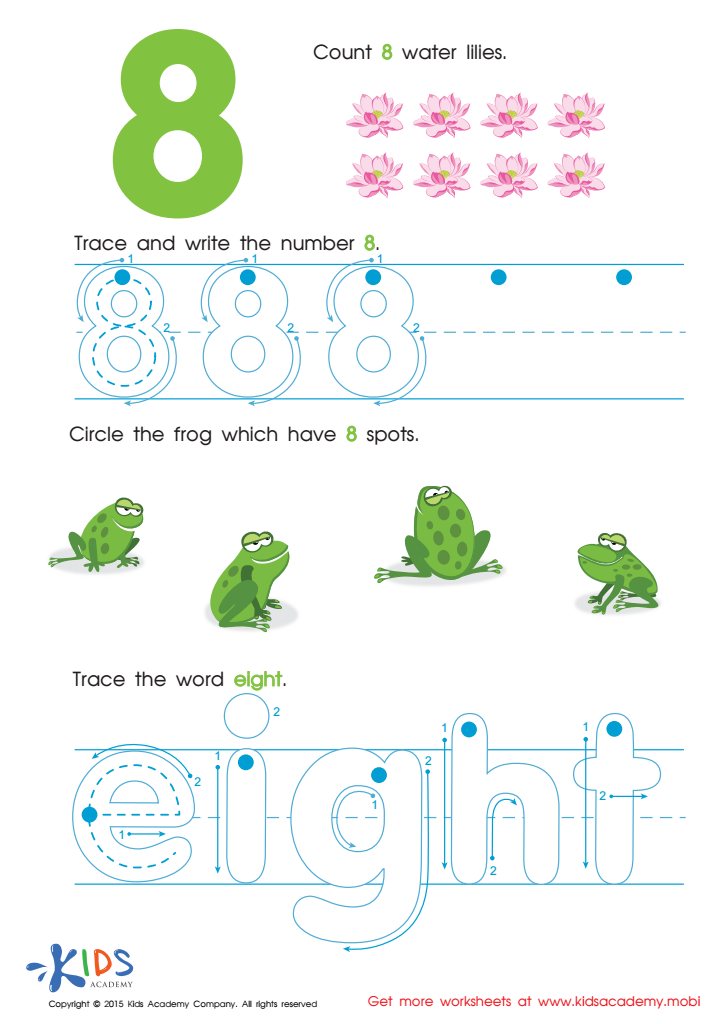
Learn Number 8 Easily Worksheet
Kids can trace, write numbers and learn to pronounce them through exciting activities and games. Try our number worksheets for preschoolers to make learning fun!
Learn Number 8 Easily Worksheet
Worksheet
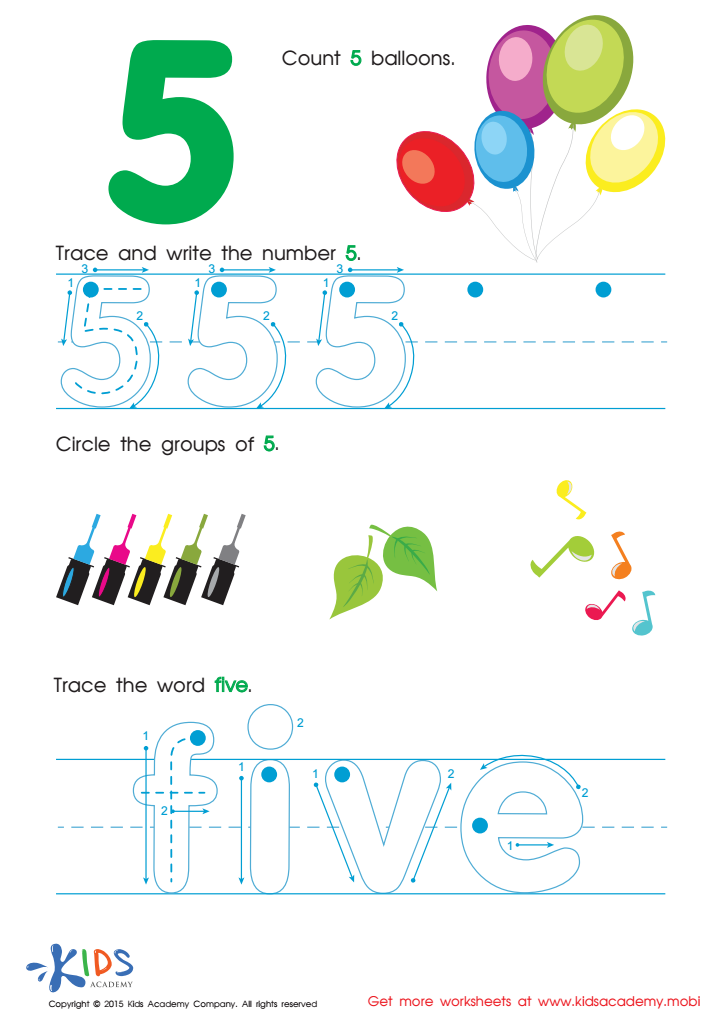
Practice Writing Number 5 Worksheet
Make learning numbers fun! Let your kids count the balloons, trace numbers, and circle the groups with five items. Also, have them trace the word "five" for letter revision. Get the full collection of preschool number worksheets from Kids Academy for a fun and interactive learning experience.
Practice Writing Number 5 Worksheet
Worksheet
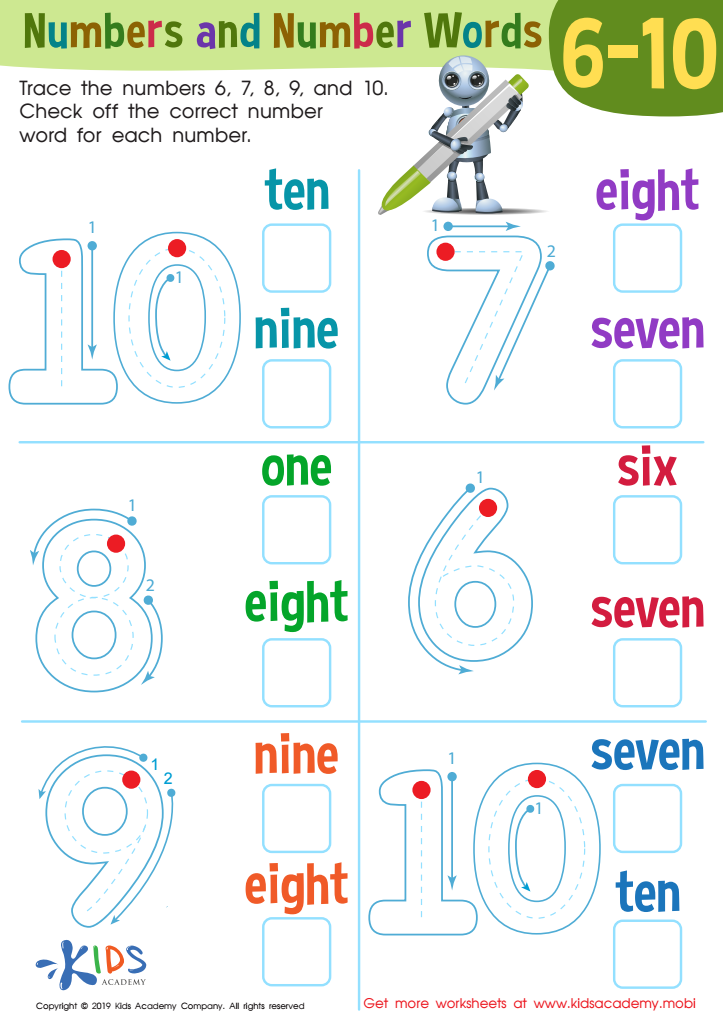
Numbers and Number Words 6–1 Worksheet
As children explore numbers and words, parents and teachers can help them learn to count and read with activities such as this worksheet. Here, the student traces numbers 6-10 and then selects the right number words to match. A fun and interactive way to learn!
Numbers and Number Words 6–1 Worksheet
Worksheet
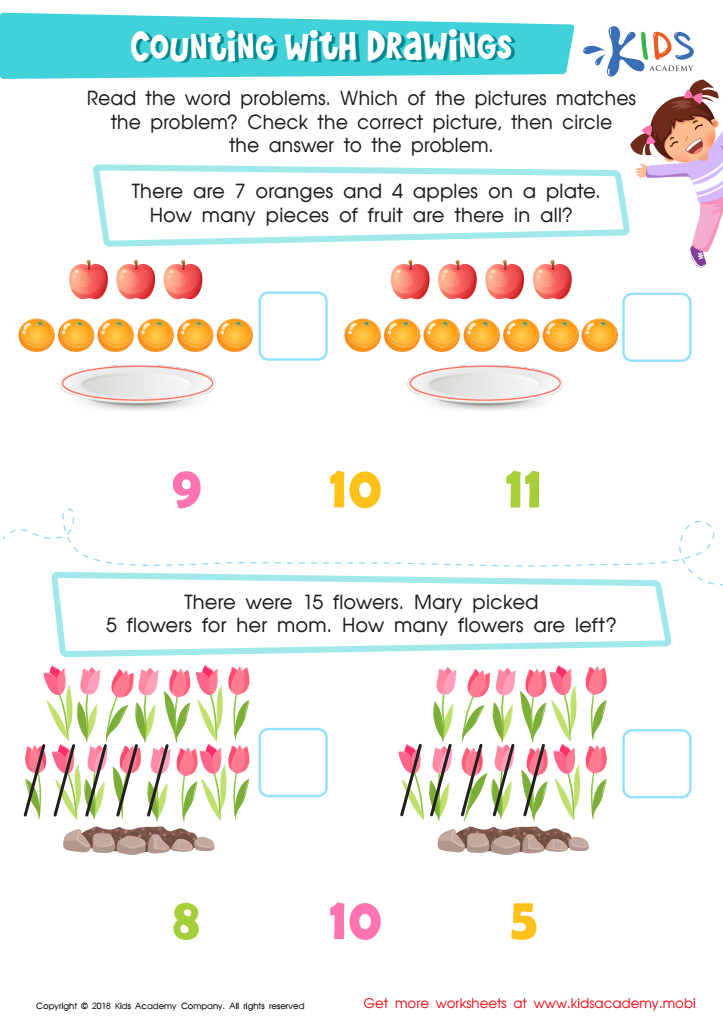
Counting with Drawings:Fruits & Flowers Worksheet
At Kids Academy, we know pictures make math come alive and make sense. This worksheet is perfect for early learners to practice word problems. Kids read each problem and count the images that represent the numbers, then solve the problem with addition or subtraction to get the right answer.
Counting with Drawings:Fruits & Flowers Worksheet
Worksheet
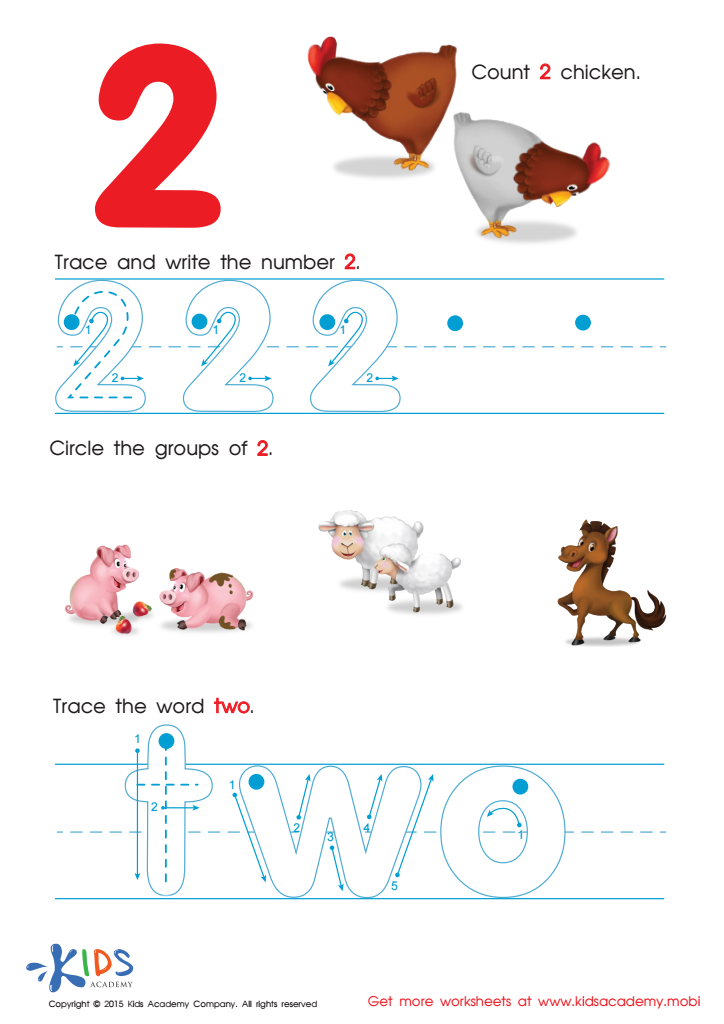
Learn to Write the Number 2 Worksheet
Teaching numbers should be fun! Ask your kids to count the two chicks, circle the groups of two among the animals, then trace and write the number and word. Get more fun worksheets from Kids Academy.
Learn to Write the Number 2 Worksheet
Worksheet
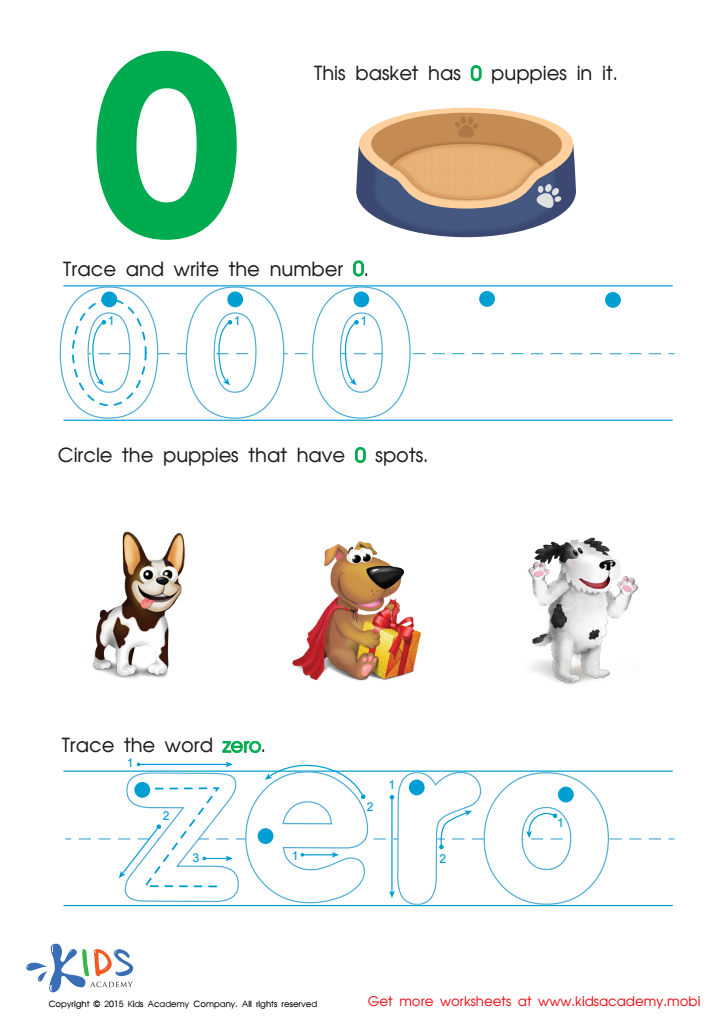
Trace And Write Number 0 Worksheet
Let’s learn numbers together! Start with zero: practice writing, counting, matching spots. Tracing lines will help. Then move on to the collection of number worksheets. Enjoy learning with Kids Academy!
Trace And Write Number 0 Worksheet
Worksheet
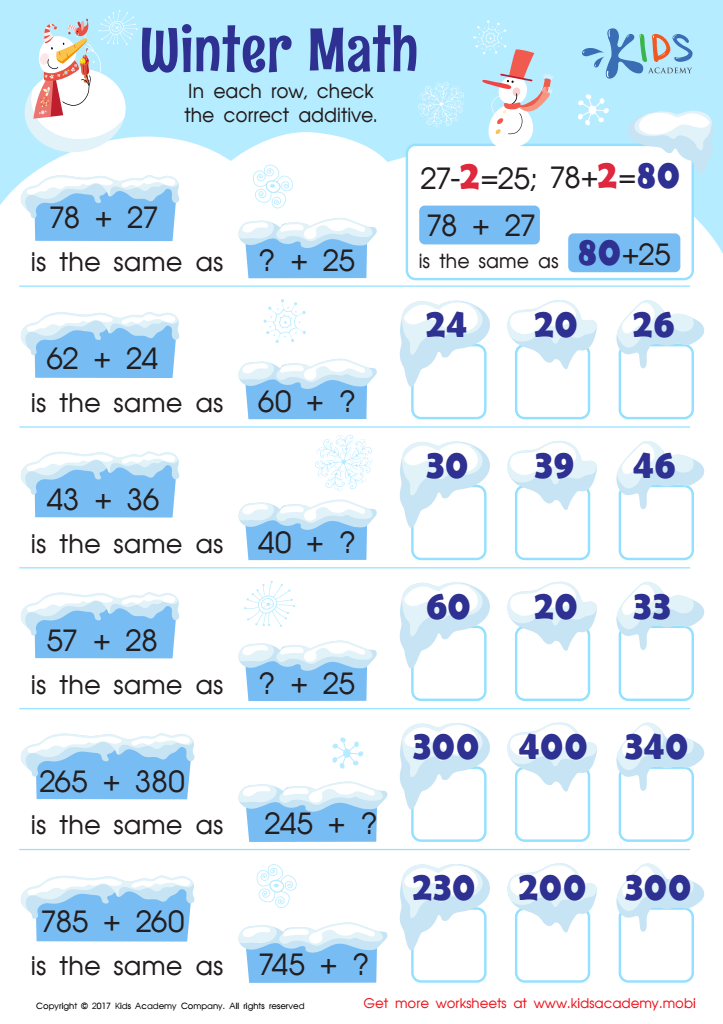
Free Addition Worksheet
Perfect for a wintry day, challenge your 3rd grader to compare addition equations and fill in the missing numbers in the PDF.
This winter-themed worksheet is sure to bring a smile while your 3rd grader practices their addition skills. Perfect for a blustery day, challenge your child to compare addition equations and complete the missing numbers in the PDF.
Free Addition Worksheet
Worksheet
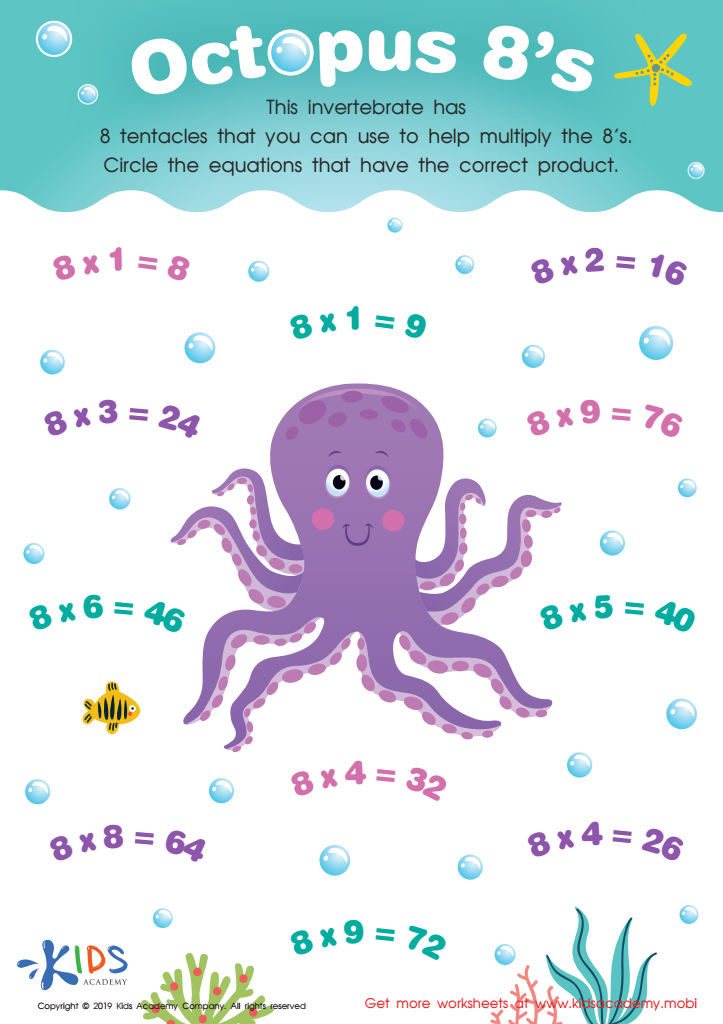
Octopus 8’s Worksheet
Can your child identify the octopus in the worksheet? It's an invertebrate with 8 tentacles. Have your child circle the equations with the correct products, and see if they can tell you some other features of the octopus too.
Octopus 8’s Worksheet
Worksheet
Join Kids Academy for Free
Who is primarily going to use this learning content?






Number recognition is a foundational skill essential for students by Grade 3, as it lays the groundwork for more complex mathematical concepts. It is crucial for parents and teachers to prioritize number recognition for several reasons.
First, number recognition enables students to understand the numerical world around them. In Grade 3, students begin to tackle multi-digit addition and subtraction, as well as simple multiplication and division. A solid grasp of numbers allows them to engage confidently with these operations.
Second, number recognition aids in developing critical thinking and problem-solving skills. It allows students to analyze mathematical problems effectively, thus preparing them for real-world scenarios involving budgeting, measurements, and data interpretation.
Moreover, when students struggle with number recognition, it can lead to frustration and diminished confidence in their math abilities. Early intervention by parents and teachers can foster a supportive learning environment, helping children overcome these challenges and build a positive math identity.
Finally, solid number recognition leads to better performance in standardized testing, which often influences educators’ assessments and students' future math courses. By investing time and resources into strengthening this skill, both parents and teachers contribute significantly to a child's lifelong success in mathematics and overall academia.