Filters

150 filtered results

Clear all filters
Favorites
With answer key
Interactive

150 filtered results

Difficulty Level

Grade


Check out this FREE Knowledge Check Trial Lesson for age 3-9!

L

Favorites
With answer key
Interactive
  • Knowledge Check
  • 3-9
  • Interactive
Place Value: Chapter 1 Worksheet

Place Value: Chapter 1 Worksheet

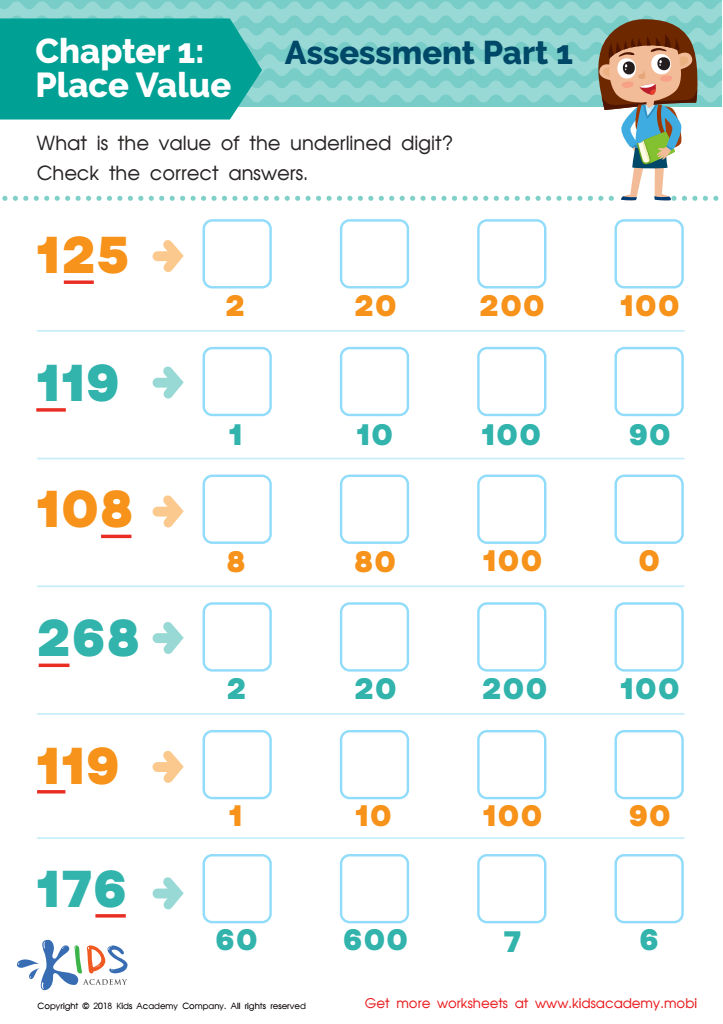
Check your kid's place value understanding with this assessment worksheet. It features 6 questions with one digit underlined for your child to determine the correct value of. Get the download and see if they can correctly choose the answer from the options given. It's a great way to test progress and keep their minds sharp!
Place Value: Chapter 1 Worksheet
Worksheet
Counting: Assessment 5 Worksheet

Counting: Assessment 5 Worksheet

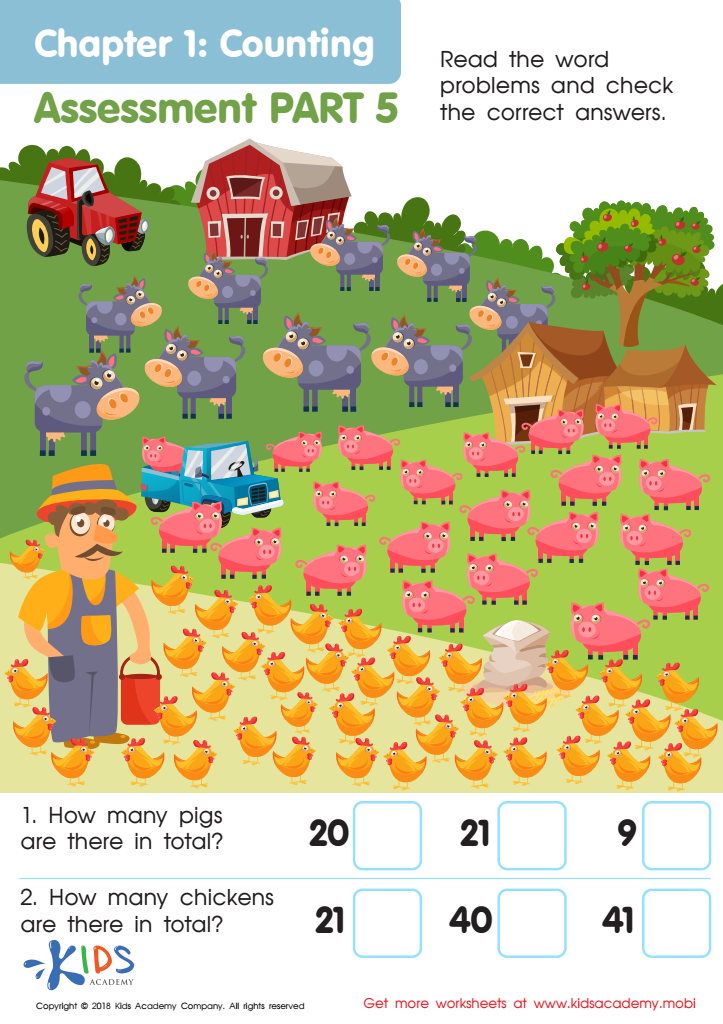
Let your kids have fun counting farm animals on this worksheet! Help the farmer count the animals and have your child check the answers to assess their counting skills. Read the word problem at the bottom of the page and count the animals together. It's an entertaining way to practice counting and have a great time!
Counting: Assessment 5 Worksheet
Worksheet
Counting: Assessment 4 Worksheet

Counting: Assessment 4 Worksheet

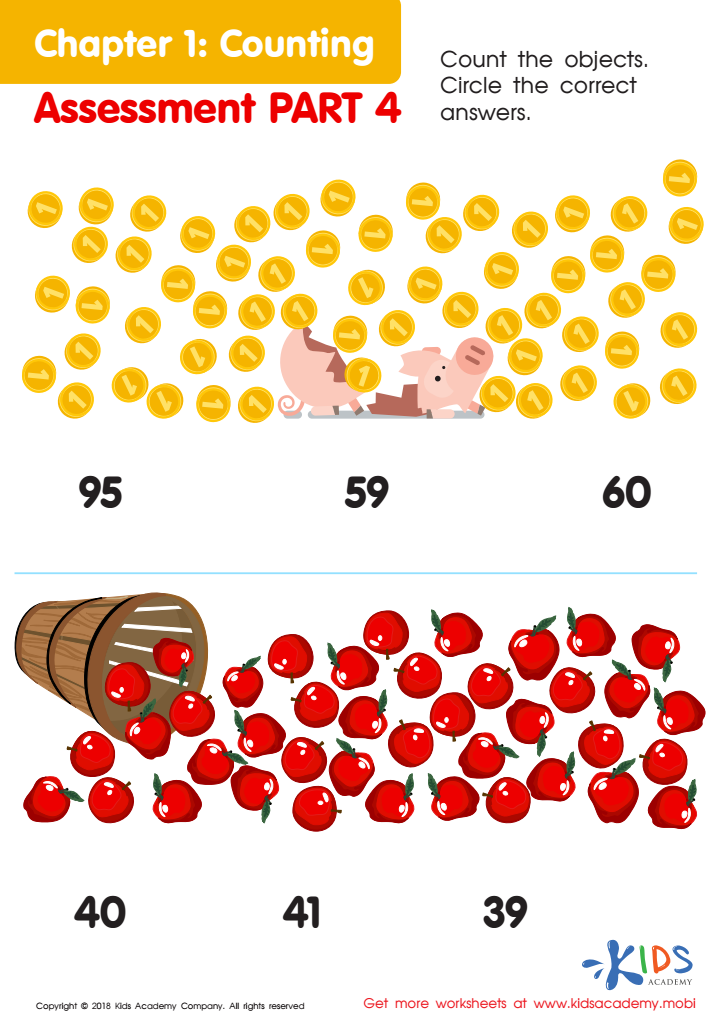
Encourage your students to count objects in this colorful worksheet. Ask them to circle the correct answers from the options given. See how much their counting skills have improved with your guidance. Have fun!
Counting: Assessment 4 Worksheet
Worksheet
Counting: Assessment 3 Worksheet

Counting: Assessment 3 Worksheet

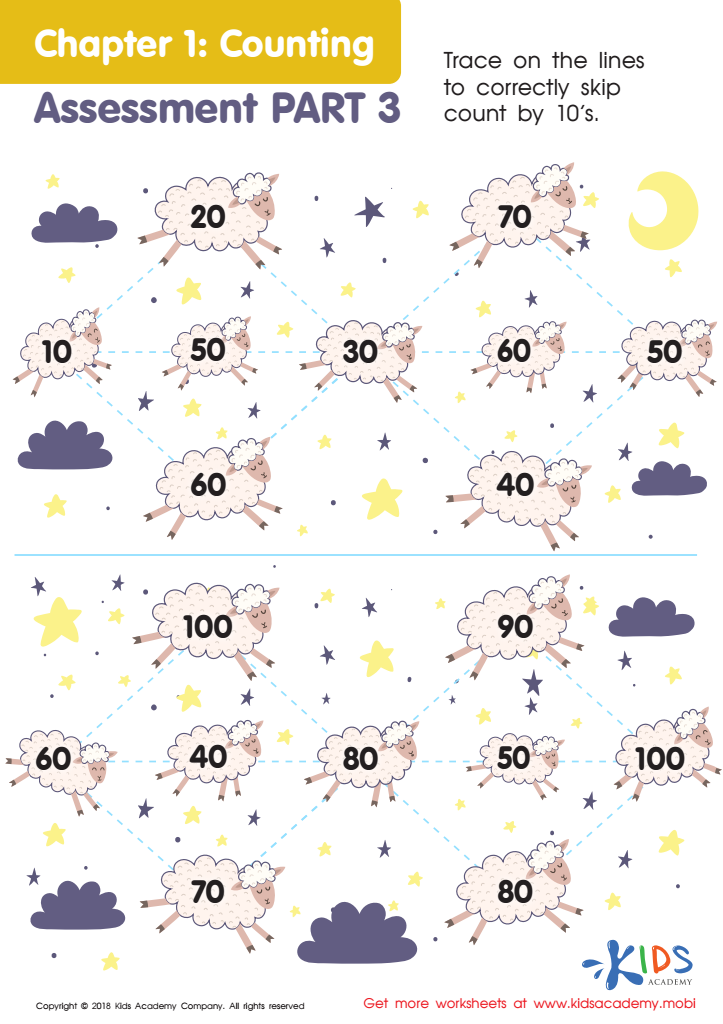
This worksheet is great for assessing your child's counting skills. It's a bit more challenging than the usual 'count to fifty' exercises. Have them trace the lines and skip count by 10's to help them learn counting in tens.
Counting: Assessment 3 Worksheet
Worksheet
Counting: Assessment 2 Worksheet

Counting: Assessment 2 Worksheet

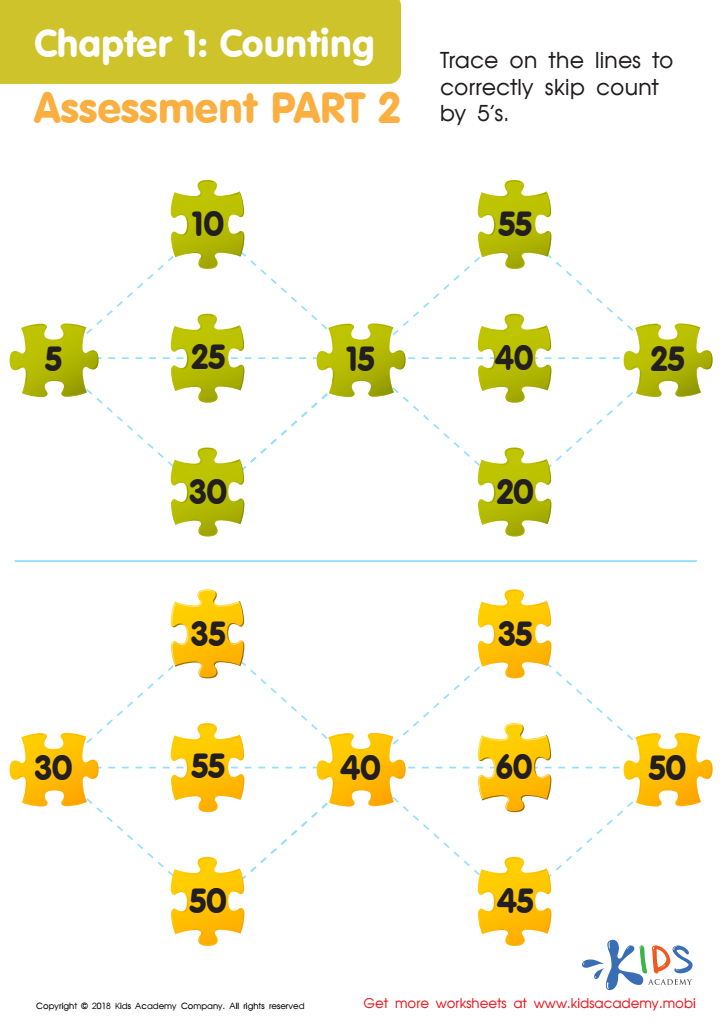
By now, your child should be able to count up to the hundreds. If they're still learning the tens, that's okay - as long as they're going at their own pace. This worksheet will be easy if they can count to ten. Ask them to trace the lines and skip count by 5's.
Counting: Assessment 2 Worksheet
Worksheet
Counting Past 1: Assessment 1 Worksheet


Counting Past 1: Assessment 1 Worksheet

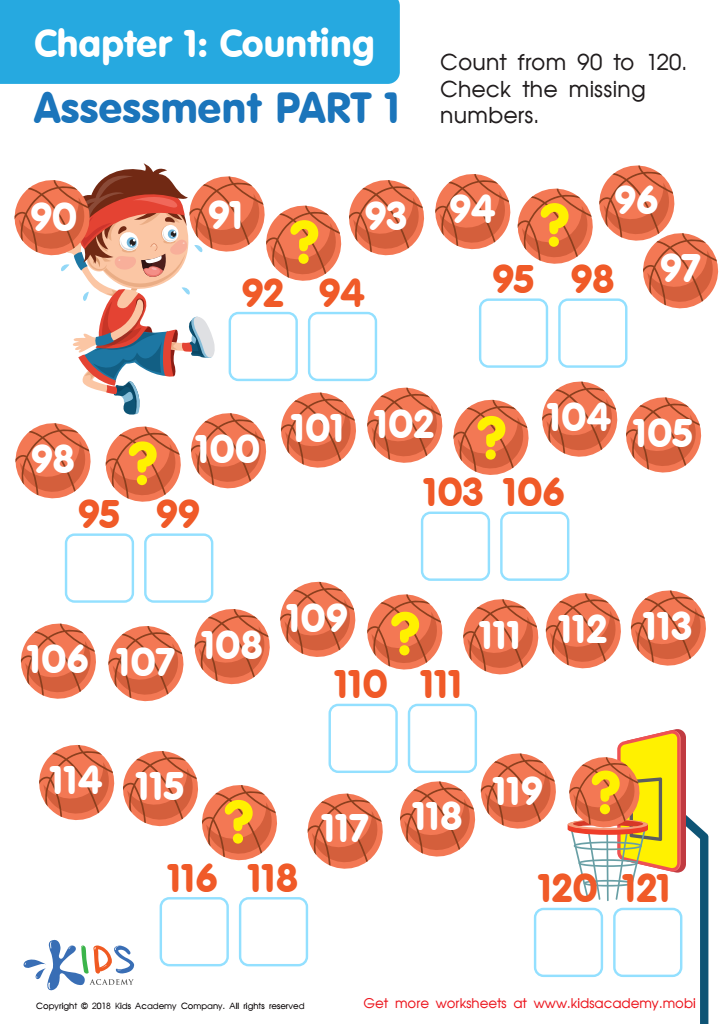
Test your children's counting skills with this worksheet. Have them count from 90 to 120, checking for missing numbers. You'll be able to see how well they do and how far they have progressed. See how high they can count with little or no mistakes!
Counting Past 1: Assessment 1 Worksheet

Worksheet


... 6 7

Knowledge Check activities are essential for children aged 3-9, as they support foundational learning in a critical developmental stage. For parents and teachers, these activities serve multiple purposes. First, they help assess a child's understanding of essential concepts and their ability to apply knowledge in various contexts. This ensures a personalized learning experience, enabling adults to identify strengths and areas needing improvement.

Additionally, Knowledge Check activities foster skills such as critical thinking, problem-solving, and self-assessment in young learners. By encouraging kids to reflect on what they know, these activities help build confidence and motivate them to engage with lessons more deeply. When children are actively involved in their learning process, they are more likely to retain information and develop a love for education.

Furthermore, in an increasingly digital age, these activities can often incorporate playful elements that make learning enjoyable, reducing stress associated with conventional assessments. Lastly, collaboration between parents and teachers in implementing Knowledge Check activities can establish a consistent learning environment, thereby enhancing academic success and reinforcing family involvement in education. By caring about these practices, parents and teachers lay the groundwork for life-long learning habits.