Addition & Subtraction worksheets activities for Ages 3-9 - Page 2
26 filtered results
-
From - To
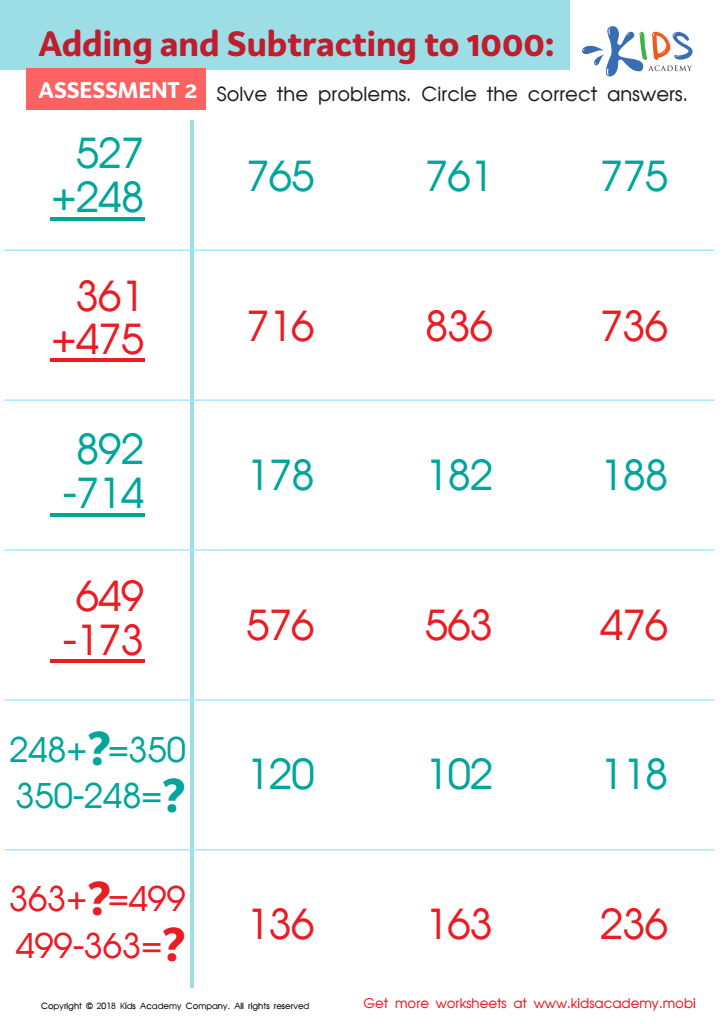
Adding and Subtracting to 1 Worksheet: Assessment 2
 Assign to My Students
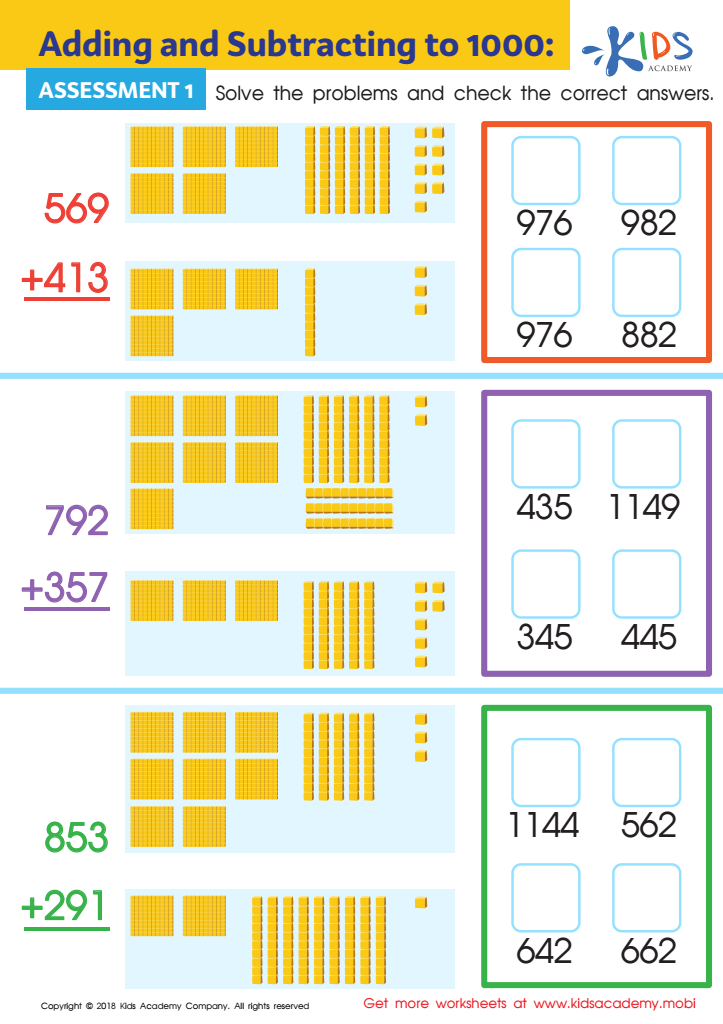
Adding and Subtracting to 1 Worksheet: Assessment 1


.jpg)




Parents and teachers should prioritize addition and subtraction activities for children ages 3-9 because these foundational skills are crucial for their overall mathematical development and future academic success. Early exposure to these concepts fosters number sense and problem-solving skills, laying the groundwork for more complex math topics later on.
Engaging young learners in fun, interactive activities helps them grasp the basic idea of quantity and how numbers relate to one another. Such activities can take various forms, like using manipulatives, games, or storytelling, making learning enjoyable and memorable. This active participation stimulates critical thinking and encourages a positive attitude toward math at a young age, reducing anxiety about the subject later in school.
Moreover, mastering addition and subtraction helps children develop cognitive skills such as logic and reasoning. It also enhances their ability to make calculations in everyday situations, thus building essential life skills. By incorporating these activities into their routine, parents and teachers can create a strong foundation in mathematics, support academic growth, and prepare children to tackle more challenging concepts confidently in the future. Ultimately, investing time and resources in addition and subtraction learning lays the groundwork for lifelong learning and success.








