Our Planet and Environment worksheets activities for Ages 3-9
5 filtered results
-
From - To
Explore our engaging "Our Planet and Environment" worksheets designed specifically for children aged 3-9. These fun activities promote early learning about Earth, nature, and environmental stewardship. Your little learners will enjoy coloring, matching, and interactive tasks that help them understand ecosystems, recycling, and the importance of taking care of our planet. Each worksheet is tailored to foster curiosity and encourage discussions about our surroundings, making learning both educational and enjoyable. Download now to spark a passion for environmental awareness in your child, and watch them grow into responsible global citizens. Perfect for home or classroom use!
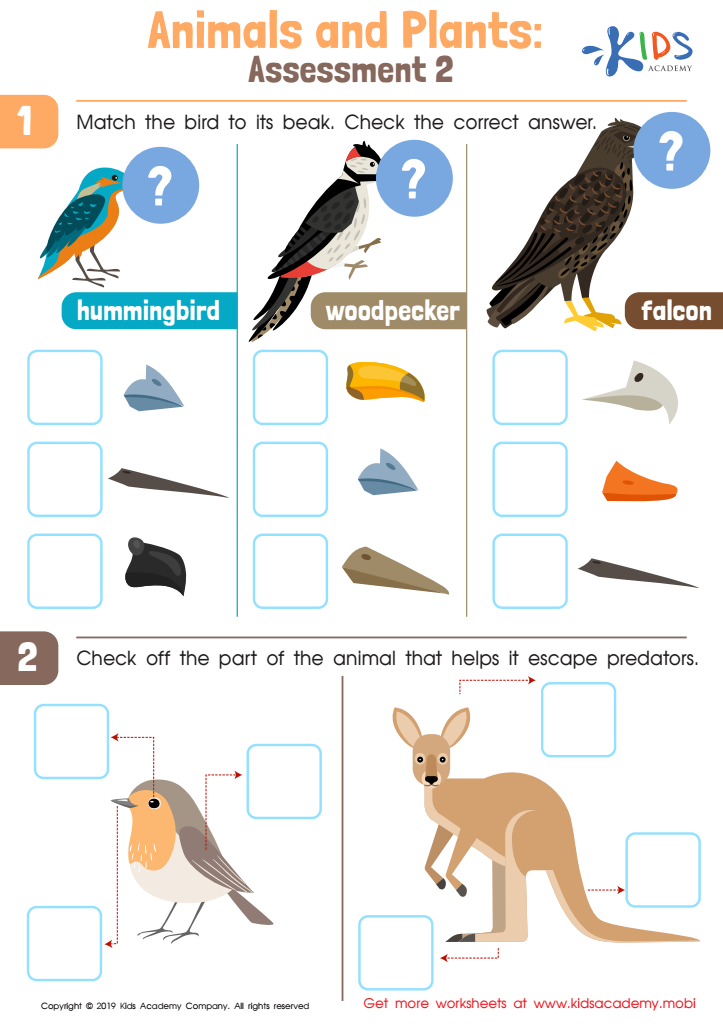
Animals and Plants: Assessment 2 Worksheet
 Assign to My Students
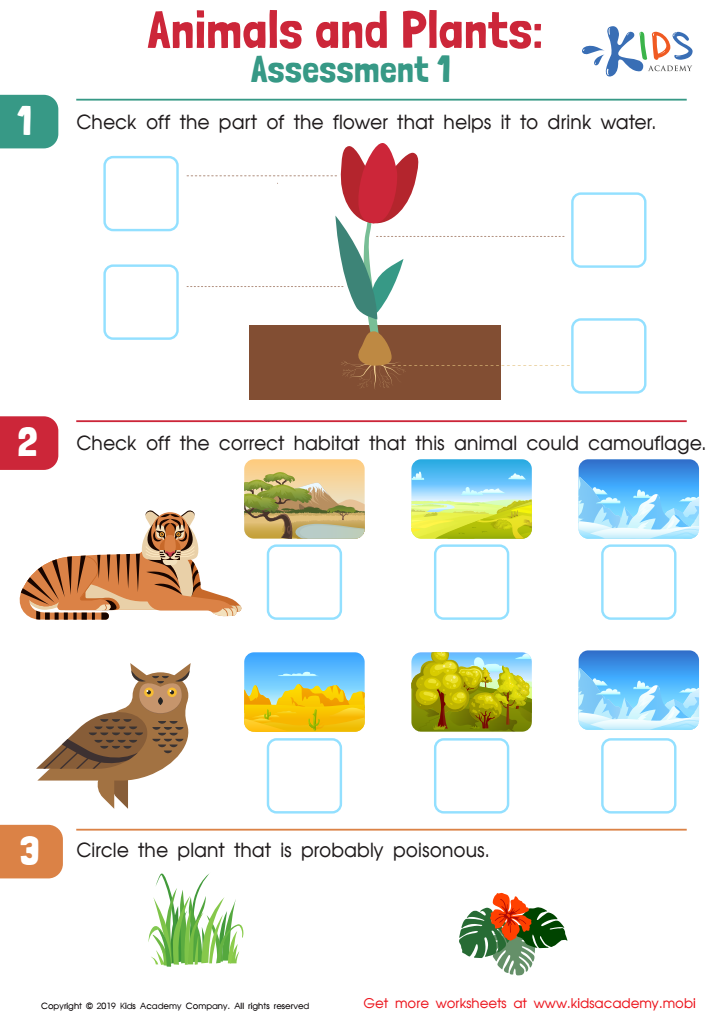
Animals and Plants: Assessment 1 Worksheet
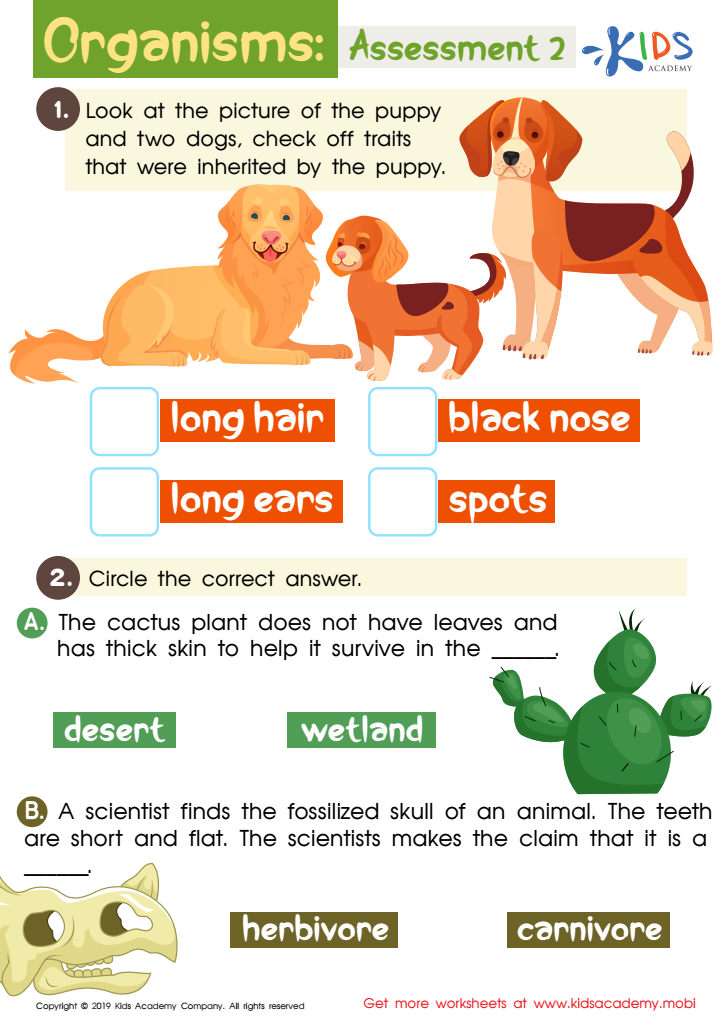
Organisms: Assessment 2 Worksheet
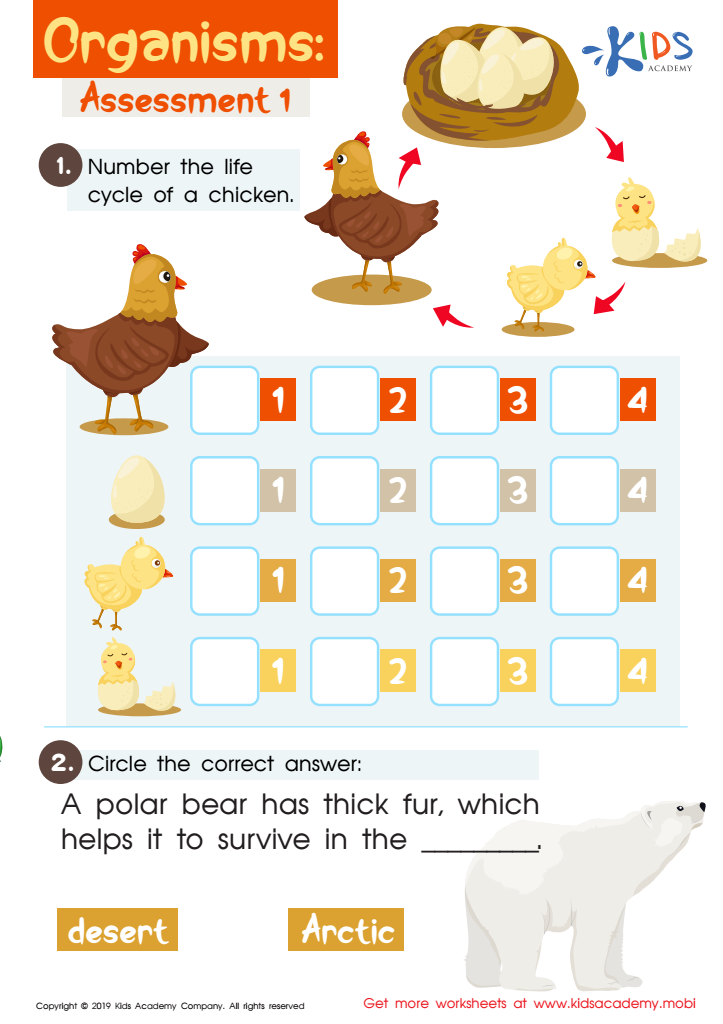
Organisms: Assessment 1 Worksheet
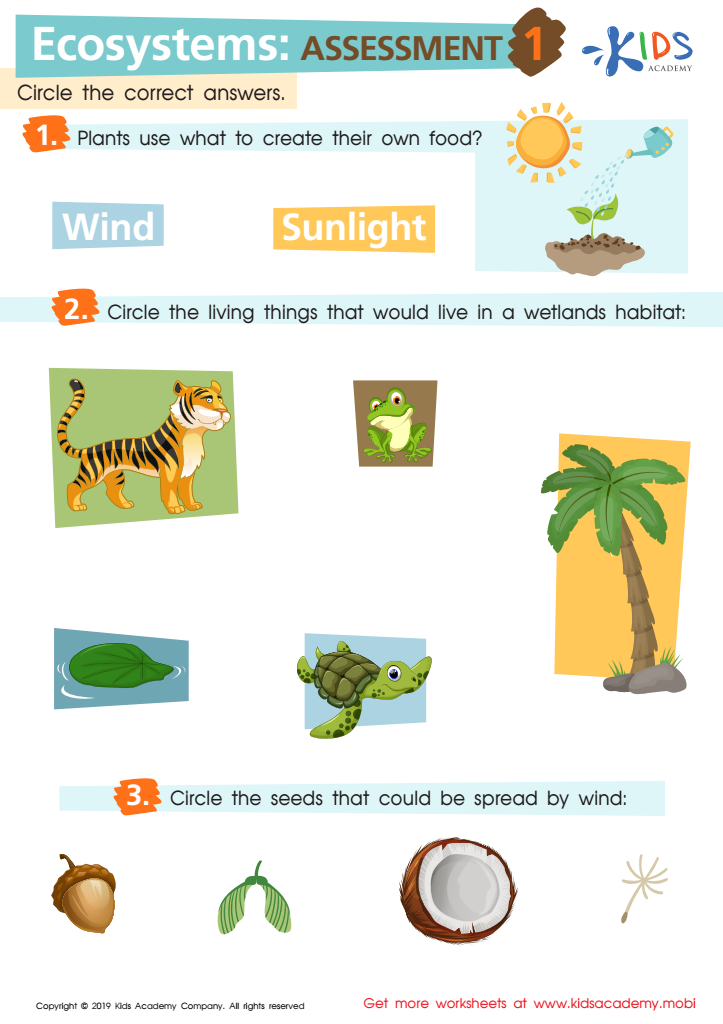
Ecosystems: Assessment 1 Worksheet





Parents and teachers should prioritize Our Planet and Environment activities for children ages 3-9 for several vital reasons. At this young age, children are naturally curious and deeply impressionable, making it an ideal time to instill a sense of responsibility and connection to their environment. Engaging in environmental activities fosters a love for nature, encouraging kids to explore and appreciate the world around them. Such activities can cultivate awareness about sustainability and the impact of human actions on the planet, laying the groundwork for future environmentally-conscious behavior.
Additionally, these activities promote essential skills like critical thinking and problem-solving as children learn how to care for their surroundings. Hands-on experiences, like gardening or recycling projects, can enhance fine motor skills and teamwork as children collaborate and share responsibilities. Moreover, discussions about climate change, pollution, and conservation during these formative years will help build a generation of informed and proactive citizens.
Incorporating environmental education into early childhood not only benefits the planet but also nurtures compassion, creativity, and resilience in young minds. Ultimately, empowering children with the knowledge and passion to protect their environment is an investment in a sustainable future for all.








