Normal Tracing worksheets activities for Ages 3-9 - Page 5
98 filtered results
-
From - To
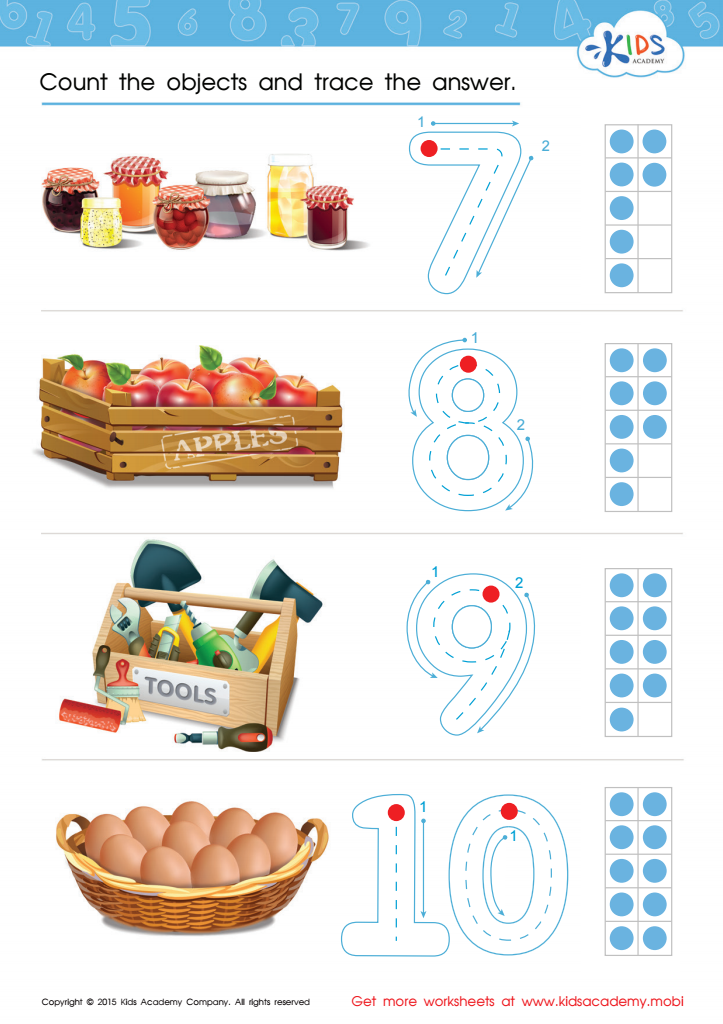
Count and Trace 7 – 10 Worksheet
 Assign to My Students
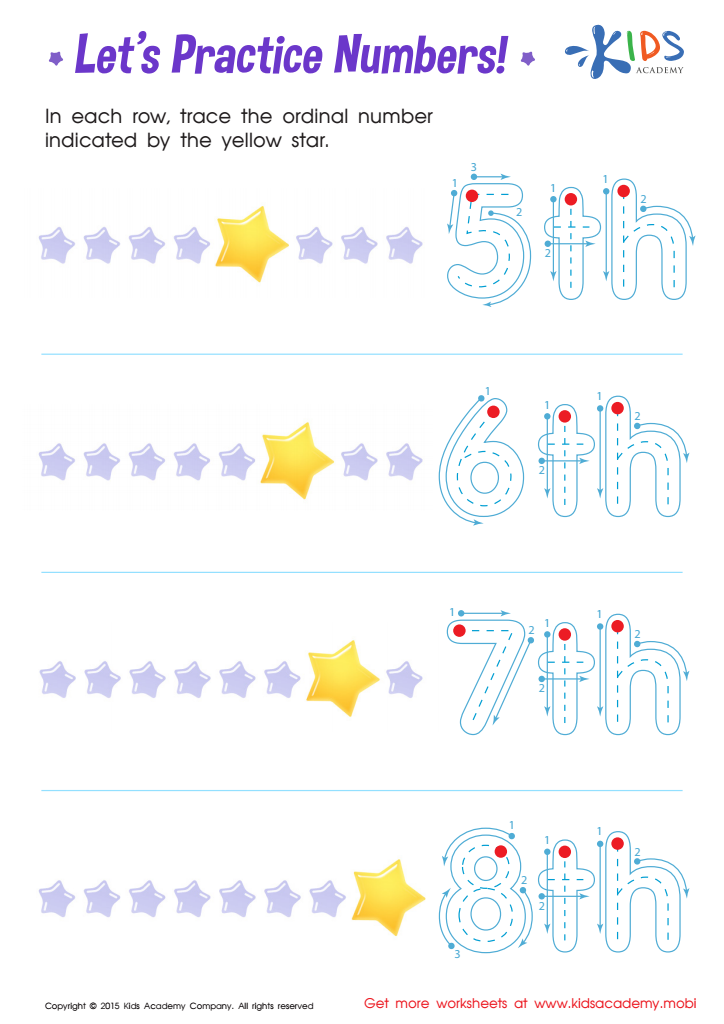








Normal Tracing activities are essential for children aged 3-9 as they significantly enhance fine motor skills, hand-eye coordination, and cognitive development. These foundational abilities are crucial for tasks such as writing, drawing, and even self-care activities like buttoning clothes. By engaging in tracing activities, children become more adept at controlling their hand movements, which will help them develop confident handwriting skills in the future.
Moreover, Normal Tracing promotes focus and concentration. As children learn to trace shapes, letters, or paths, they practice following instructions and staying attentive to the task, skills that are vital for successful learning. Additionally, these activities encourage creativity and conceptual understanding in subjects such as math and language arts. For example, tracing letters helps solidify recognition and phonetic awareness.
Parents and teachers should care about incorporating Normal Tracing activities into the learning environment, as they offer a playful yet educational approach to developing essential cognitive and physical skills. This not only prepares children for academic tasks but also gives them a sense of accomplishment, boosting their self-esteem and motivating them to explore more complex activities in the future. Fostering these early skills sets a strong foundation for lifelong learning and personal development.








