Upper & Lowercase Letters Worksheets for Ages 3-8 - Page 3
50 filtered results
-
From - To
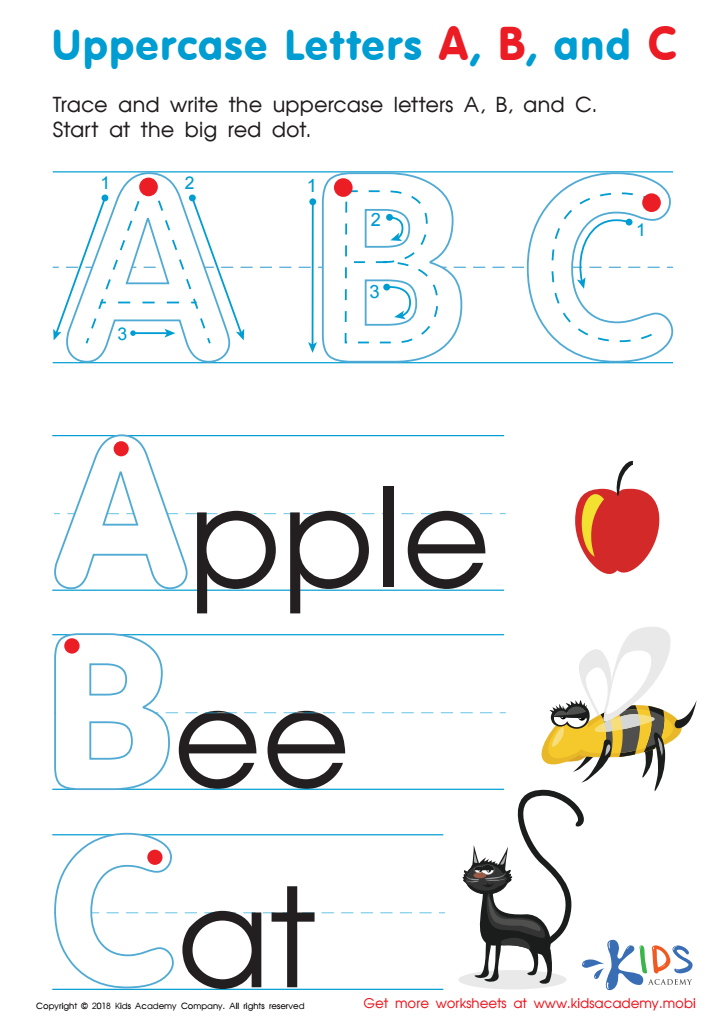
Uppercase Letters A, B, and C Worksheet
 Assign to My Students

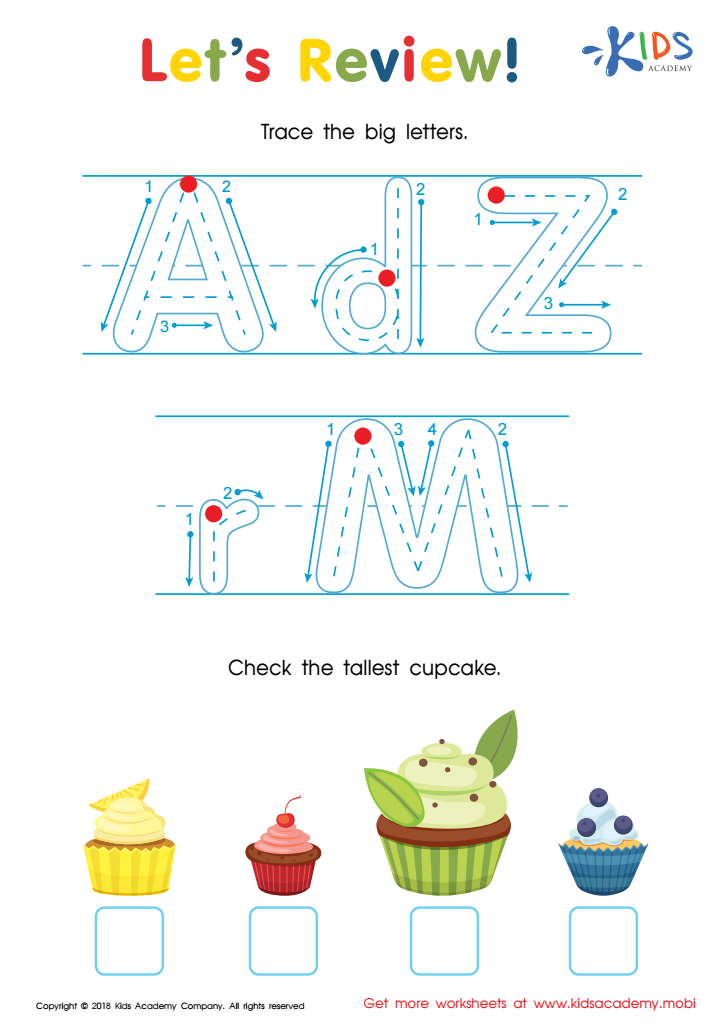
Let's Review! Big Letters Worksheet






Understanding uppercase and lowercase letters is fundamental for young learners aged 3-8 because it forms the foundation for reading and writing skills. At this developmental stage, children are highly receptive to visual and auditory stimuli, making it the optimal period for introducing literacy concepts.
Parents and teachers should prioritize teaching both uppercase and lowercase letters to build a child's recognition and differentiation skills. Uppercase letters are often introduced first because they have simpler and more distinguishable shapes, which are easier for young children to identify and remember. However, lowercase letters are more frequently found in text. Ensuring kids are familiar with both cases is crucial for their ability to read books, sentences, and signs in everyday life.
By recognizing letter cases early, children can better understand word structures and sentence flow, aiding their reading fluency. Furthermore, practice with writing both uppercase and lowercase letters enhances fine motor skills, handwriting, and eye-hand coordination, contributing to overall academic success. Engaging activities, such as matching games and tracing, can make this learning process enjoyable and effective. By supporting children in mastering both letter cases, parents and teachers set the stage for a smoother transition to more complex literacy tasks, fostering a lifelong love of reading and learning.







