Filters

2847 filtered results

Clear all filters
Favorites
With answer key
Interactive

2847 filtered results

Difficulty Level

Grade


Check out this FREE Trial Lesson for age 3-9!

Taking Care of Nature

Favorites
With answer key
Interactive
  • 3-9
  • Interactive
Keep Your Community Clean Worksheet
Keep Your Community Clean Worksheet

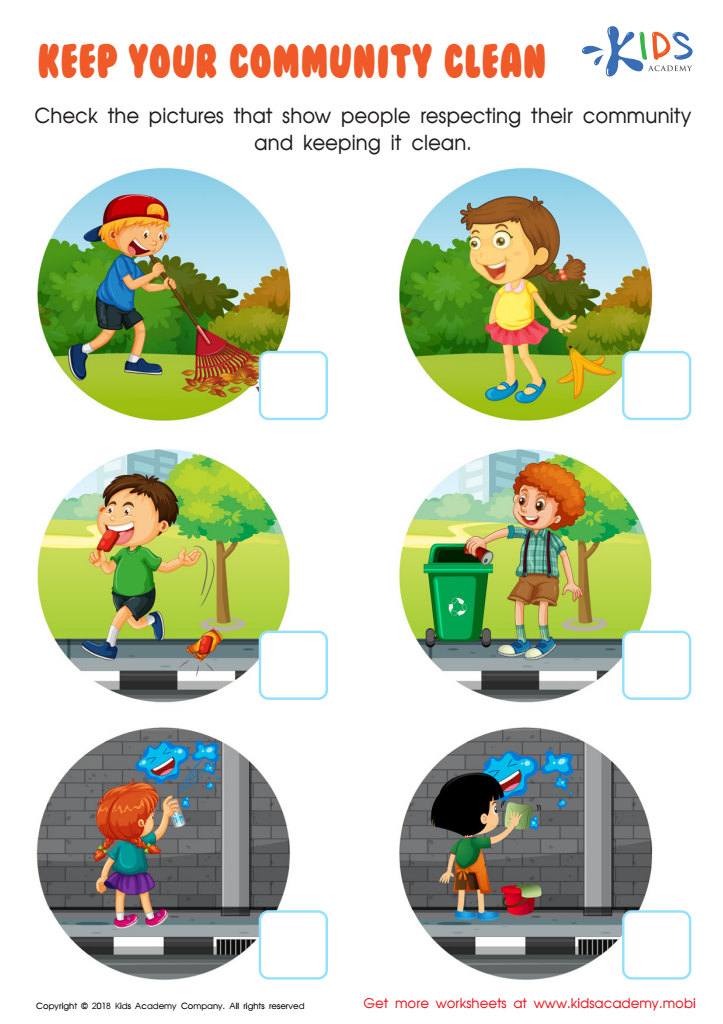
Teach your kids the importance of cleanliness. Even if they resist, show them that it affects the whole community. Use this worksheet to help them understand - it has six pictures of community members doing different things. Ask them what the kids are doing, and help them tick the pictures that show respect for the community and cleanliness.
Keep Your Community Clean Worksheet
Worksheet
Community Signs Worksheet

Community Signs Worksheet

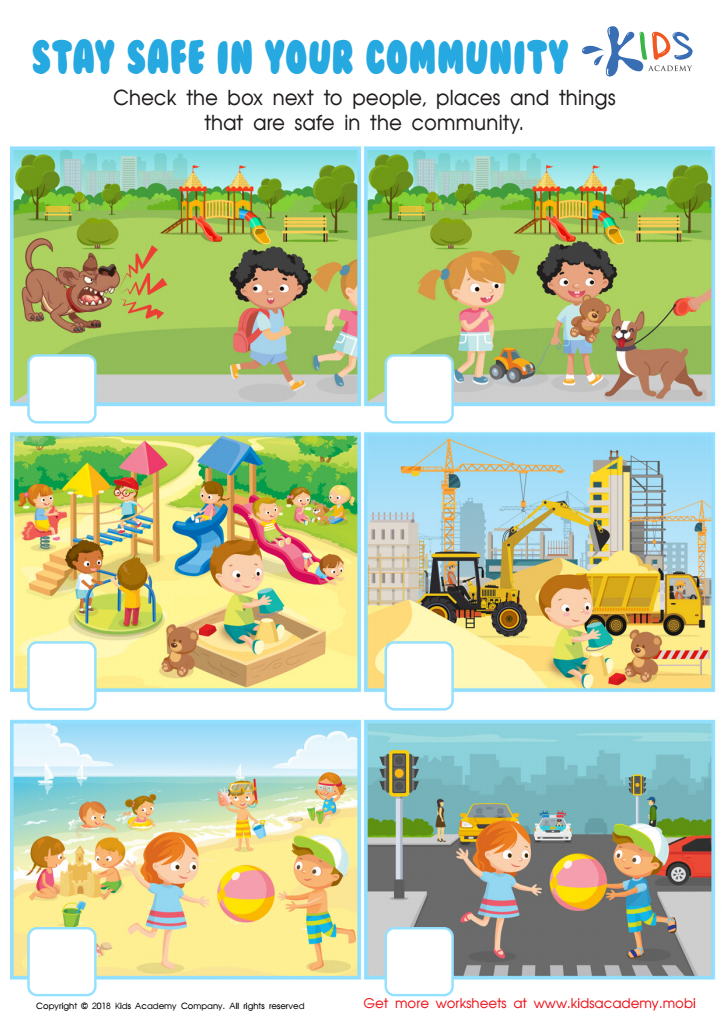
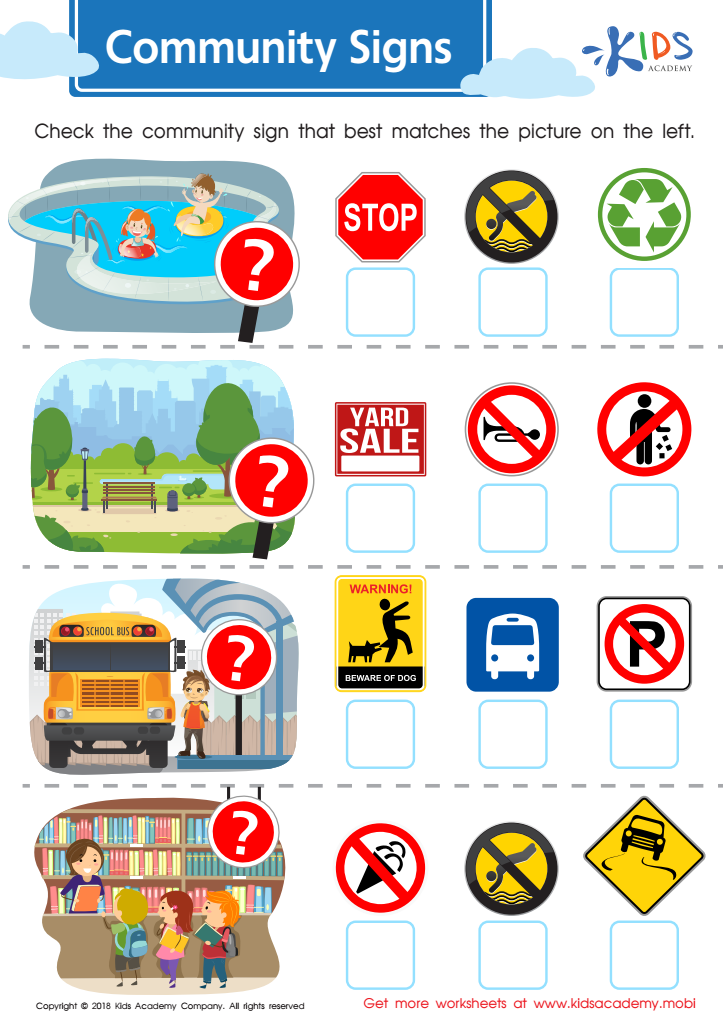
To stay safe, our kids need to know community signs. Ask them to name signs at the pool, park, etc. Then, have them check the worksheet for the picture that matches the community signs.
Community Signs Worksheet
Worksheet
Community Rules Worksheet

Community Rules Worksheet

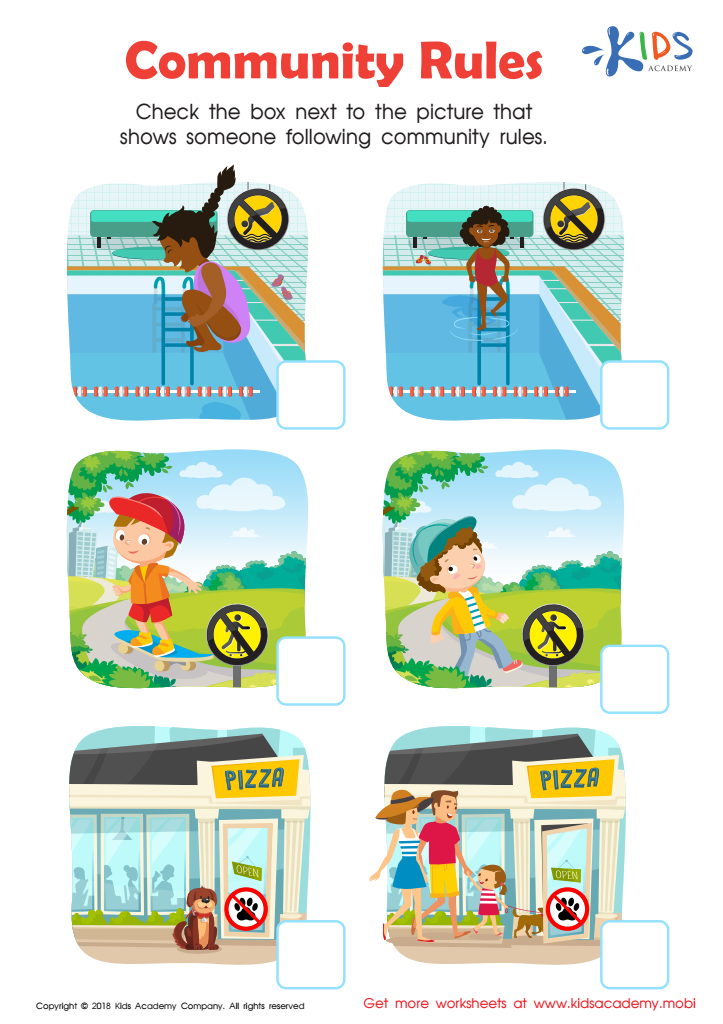
Communities are where different people live, work and worship. They're made up of homes, schools, places of worship, businesses and other buildings. To create a healthy, functioning community, it's important for members to follow the rules and guidelines. Use this printout to teach kids about community rules. Ask them to check the box next to the picture that shows someone following them.
Community Rules Worksheet
Worksheet
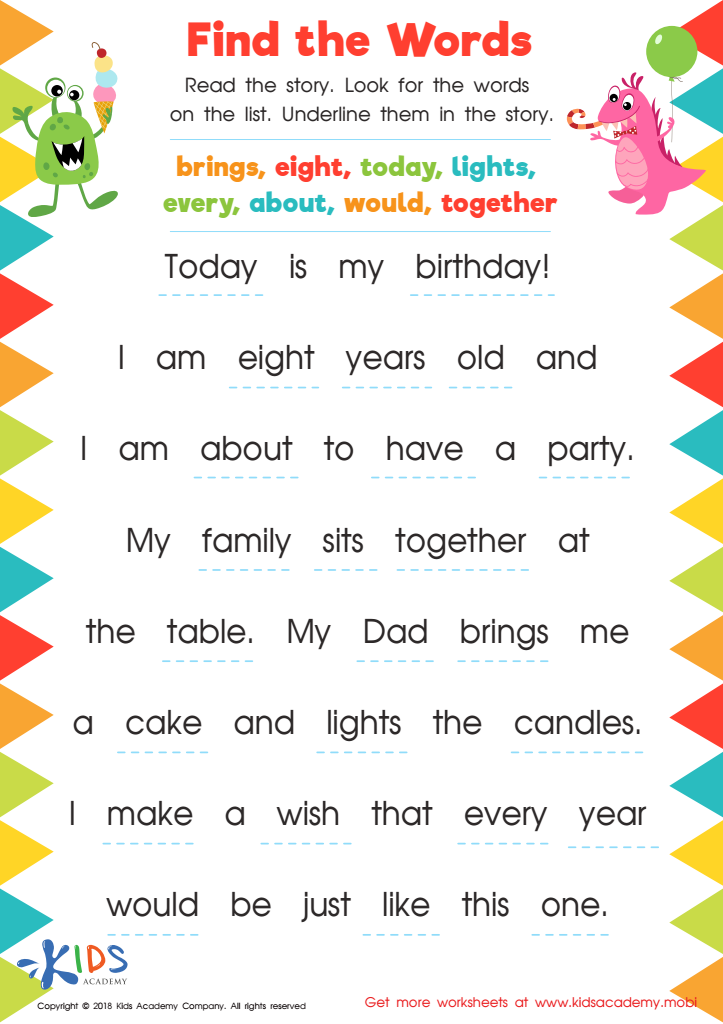
Find the words printable worksheet

Find The Words Printable Worksheet
Hunt for words while reading this birthday story! This printable worksheet will help your child practice early reading skills as they search for words in the text. Enjoy the story and find the words!
Find The Words Printable Worksheet
Worksheet
Animals and their names worksheet

Animals and Their Names Worksheet
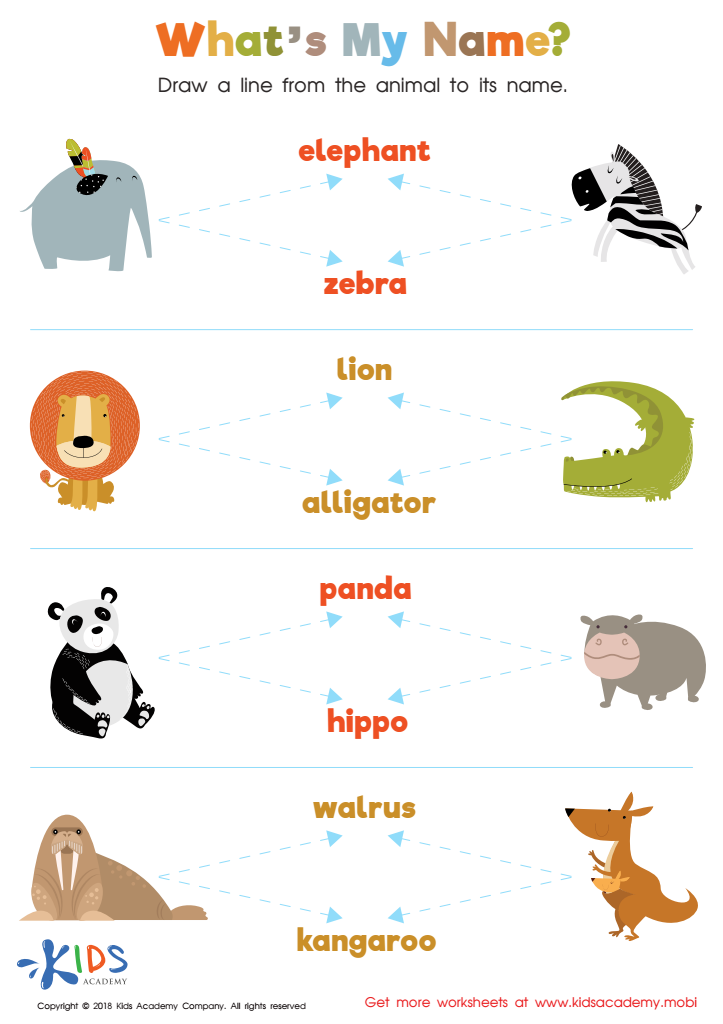
Match animals with their names with this worksheet! Draw a line from the word to its picture. Say the name of each animal. Later, search for these animals at the zoo - great for reinforcing learning!
Animals and Their Names Worksheet
Worksheet
Point of View Worksheet

Point of View Worksheet

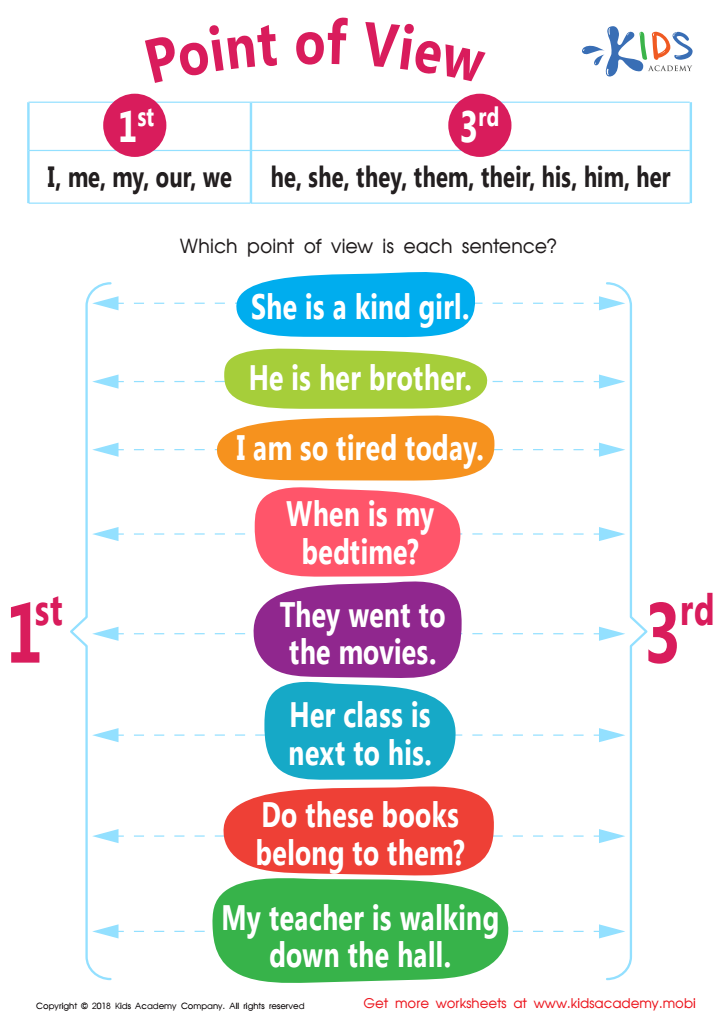
This printable worksheet helps kids understand Point of View by providing 1st and 3rd person choices. It's a fun way to practice differentiating between the two viewpoints and improve their reading comprehension. Match the sentences to 1st or 3rd person to strengthen understanding and enjoy the task!
Point of View Worksheet
Worksheet
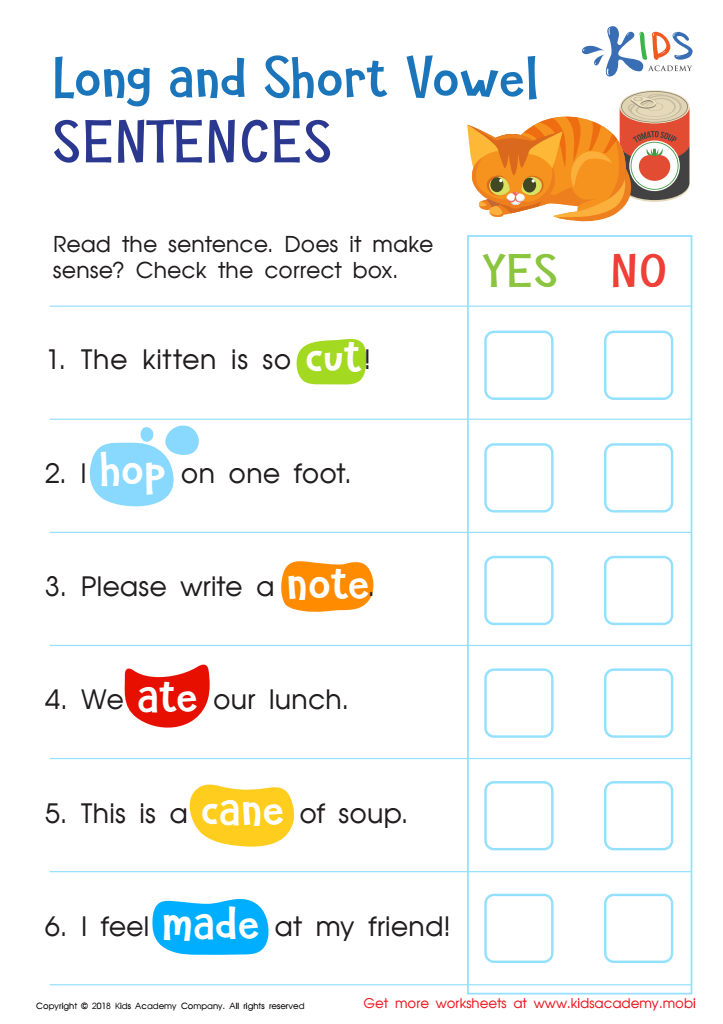
Long and Short Vowel Sentences: Assessment Worksheet

Long and Short Vowel Sentences: Assessment Worksheet

This printable worksheet helps kids practice differentiating between short and long vowel sounds. They'll use context clues to figure out which words make sense in simple sentences. A great way to build reading and writing skills!
Long and Short Vowel Sentences: Assessment Worksheet
Worksheet
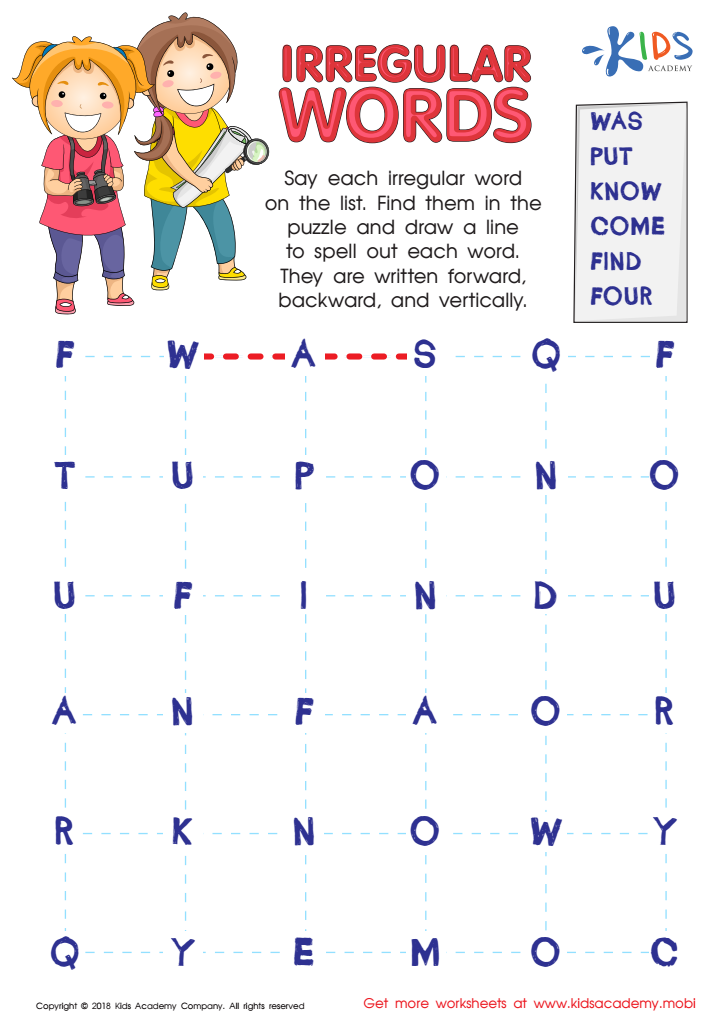
Irregular Words Worksheet

Irregular Words Worksheet

This fun word search worksheet helps kids practice reading irregular words and build their sight word banks. They'll also get practice with visual discrimination and fine motor skills as they hunt down the words.
Irregular Words Worksheet
Worksheet
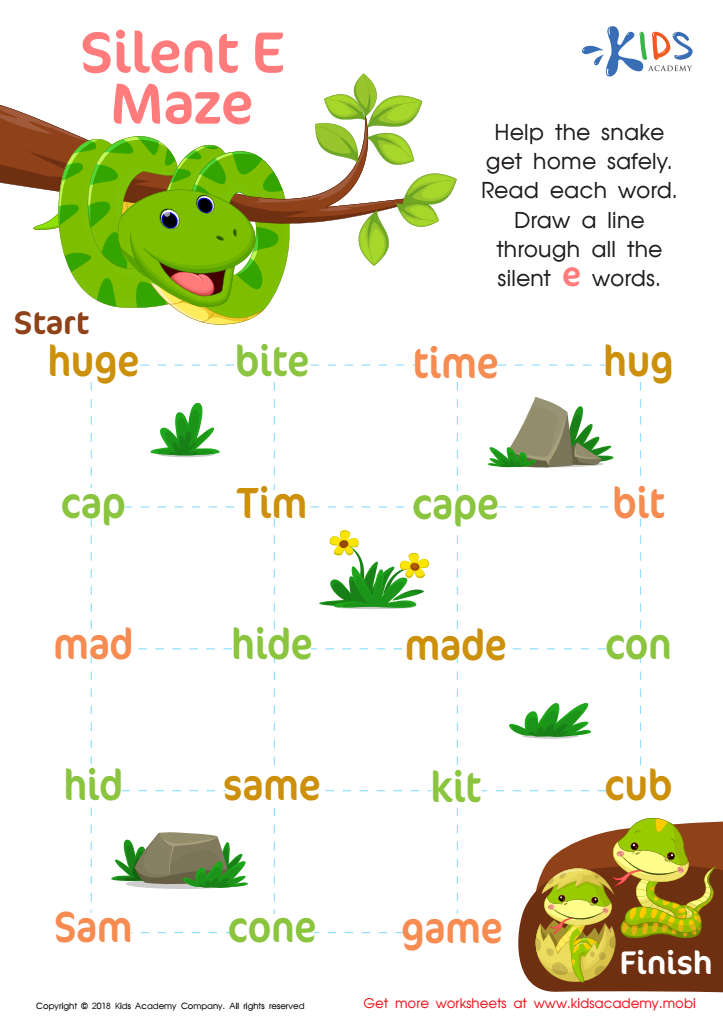
Silent E Maze Worksheet

Silent E Maze Worksheet

Kids love mazes! This fun printable worksheet lets them help a mama snake get home to her babies, using Silent E words. They'll practice fine motor skills, while they draw lines through words that have Silent E and words with closed syllables that don't. It's a great way to help them recognize Silent E words!
Silent E Maze Worksheet
Worksheet
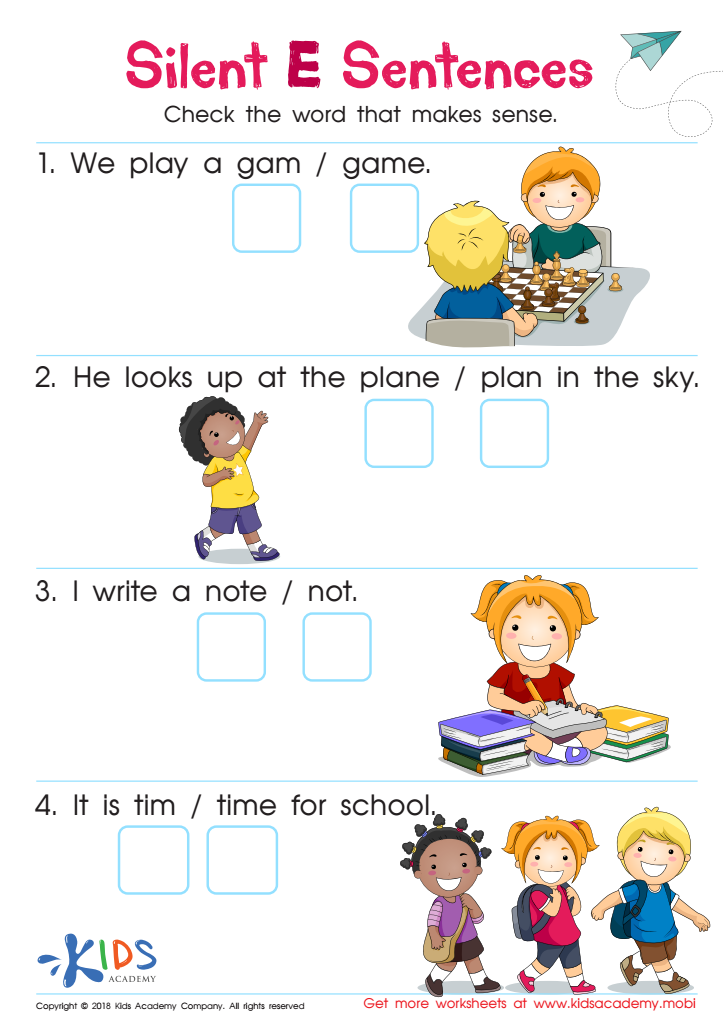
Silent E Sentences Worksheet

Silent E Sentences Worksheet

Young readers can find learning Silent E tricky, so this helpful worksheet can help! It teaches them to distinguish words that look the same but for the Silent E and choose the right word for sentence blanks. Kids can mark the correct answer and become familiar with closed syllables and words that require the E.
Silent E Sentences Worksheet
Worksheet
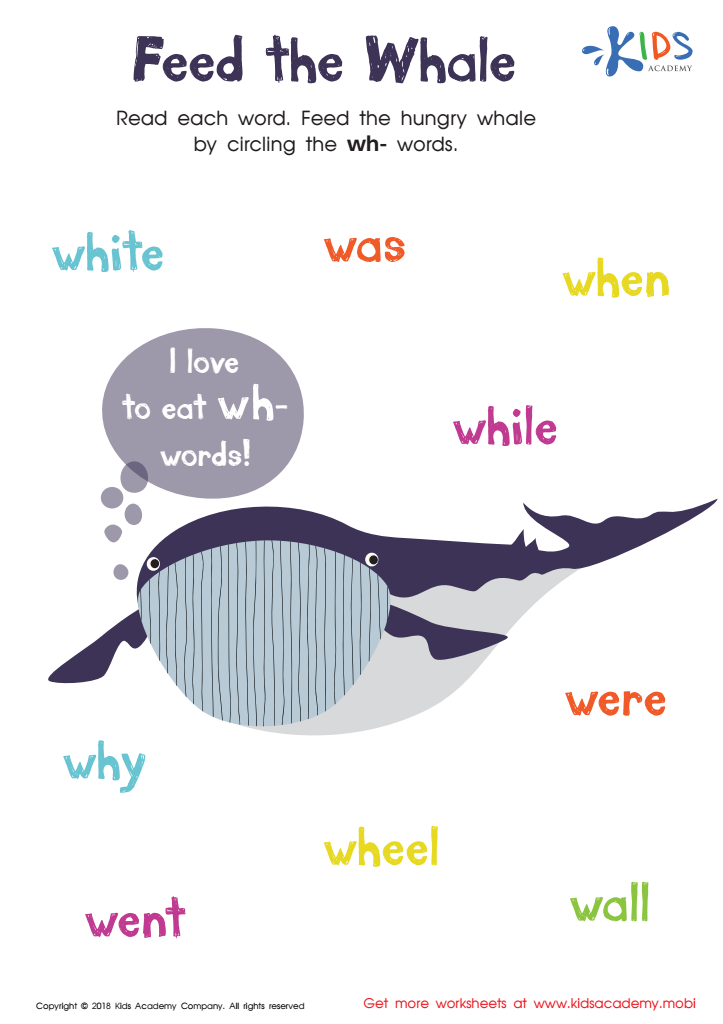
Feed the Whale Worksheet

Feed the Whale Worksheet

Help your early reader build beginning consonant and blend recognition with this fun whale worksheet! They'll feed the whale wh- words, circle sight words, and build fine motor skills—all while discriminating between differently colored words.
Feed the Whale Worksheet
Worksheet
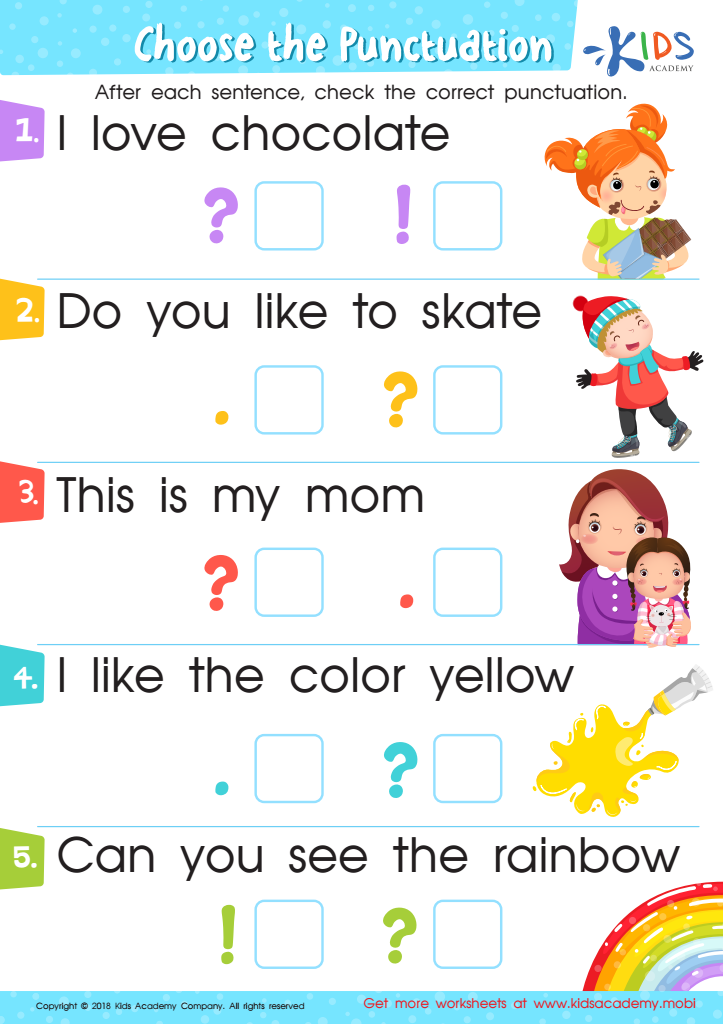
Choose the Punctuation: Assessment Worksheet

Choose the Punctuation: Assessment Worksheet

Does your child know punctuations? Found at the end of words, they signify the tone of the sentence. Ask them which punctuations they use daily. With your little one, look at a worksheet. Read each sentence aloud and ask them to identify the two punctuations given. Instruct them to choose the correct one. 80 words.
Choose the Punctuation: Assessment Worksheet
Worksheet
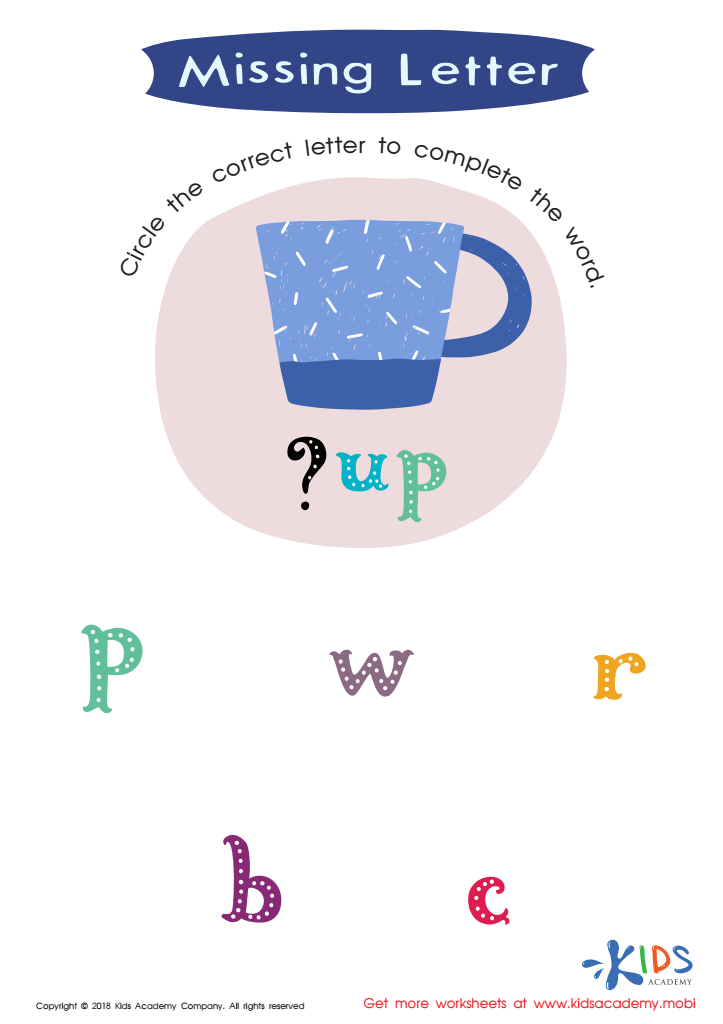
Missing Letter Worksheet

Missing Letter Worksheet

Congrats! If your kids can spell some small words, pat yourself on the back. Struggling with the alphabet? Help them learn with this simple worksheet. They'll have to find the missing letter to complete the word. Print this worksheet and help your little one find and circle the right letter.
Missing Letter Worksheet
Worksheet
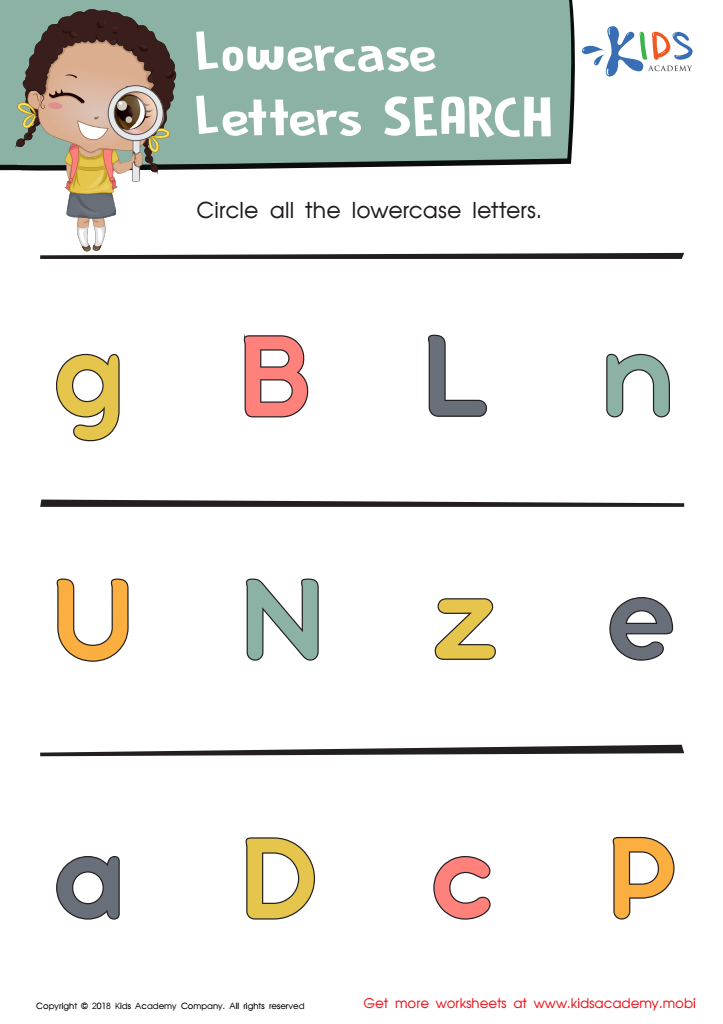
Lowercase Letters Search: Assessment Worksheet

Lowercase Letters Search: Assessment Worksheet

Circle all the lowercase letters in this worksheet. Identify them among a mix of uppercase and lowercase letters. Your child will have fun with this exercise thanks to its bright primary colors. Enjoyment and learning go hand-in-hand!
Lowercase Letters Search: Assessment Worksheet
Worksheet
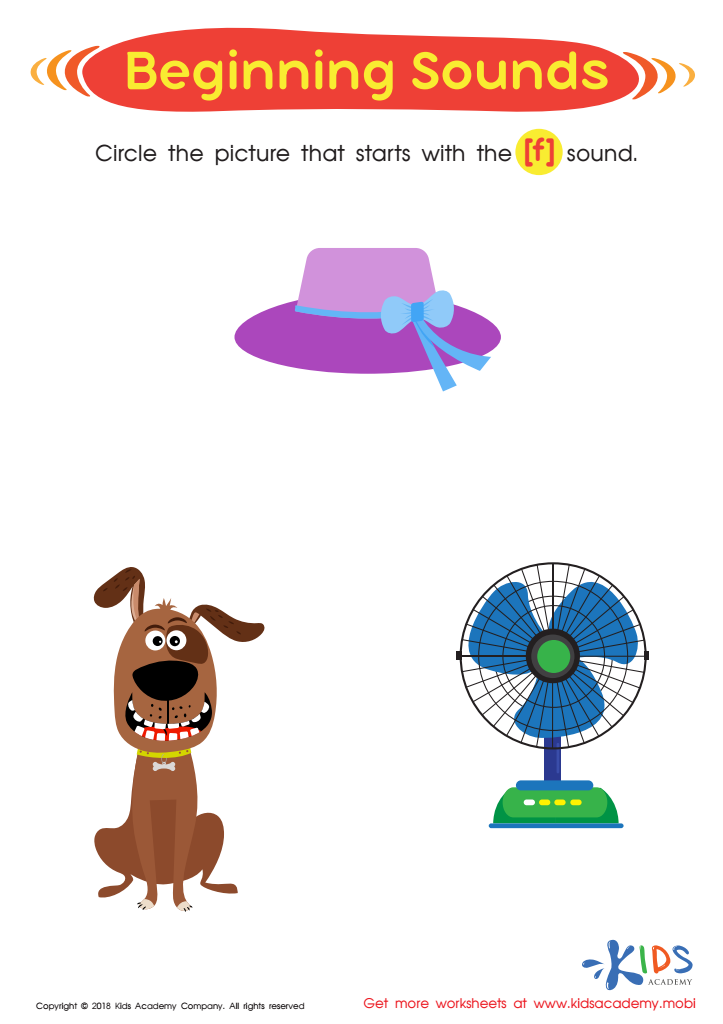
Beginning Sounds Assessment Printable

Beginning Sounds Assessment Printable

Test your child's knowledge of the alphabet. Ask them to recite the whole alphabet and the words for each letter. For example: A for apple, B for boy. Identify objects on this worksheet, then ask your child which one starts with the letter "f" and have them circle it.
Beginning Sounds Assessment Printable
Worksheet
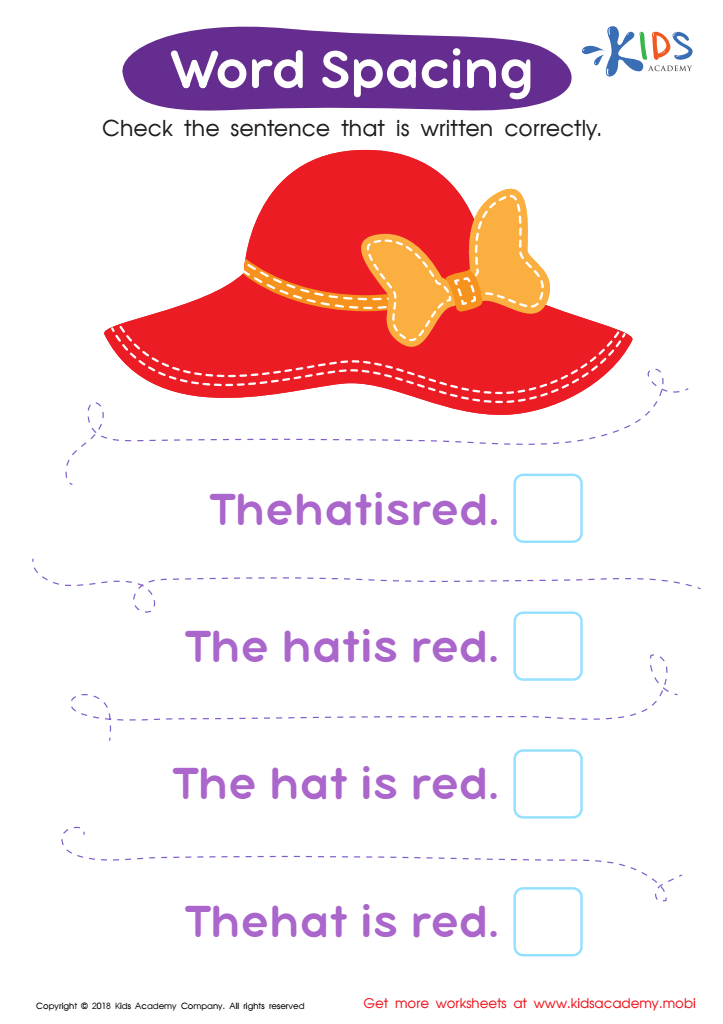
Word Spacing Worksheet

Word Spacing Worksheet

Can your child read and write simple sentences? Test their skills with this easy worksheet. Point to the four sentences under the picture; each conveying the same message but with different word spacing. Ask your child to select the sentence with proper spacing.
Word Spacing Worksheet
Worksheet
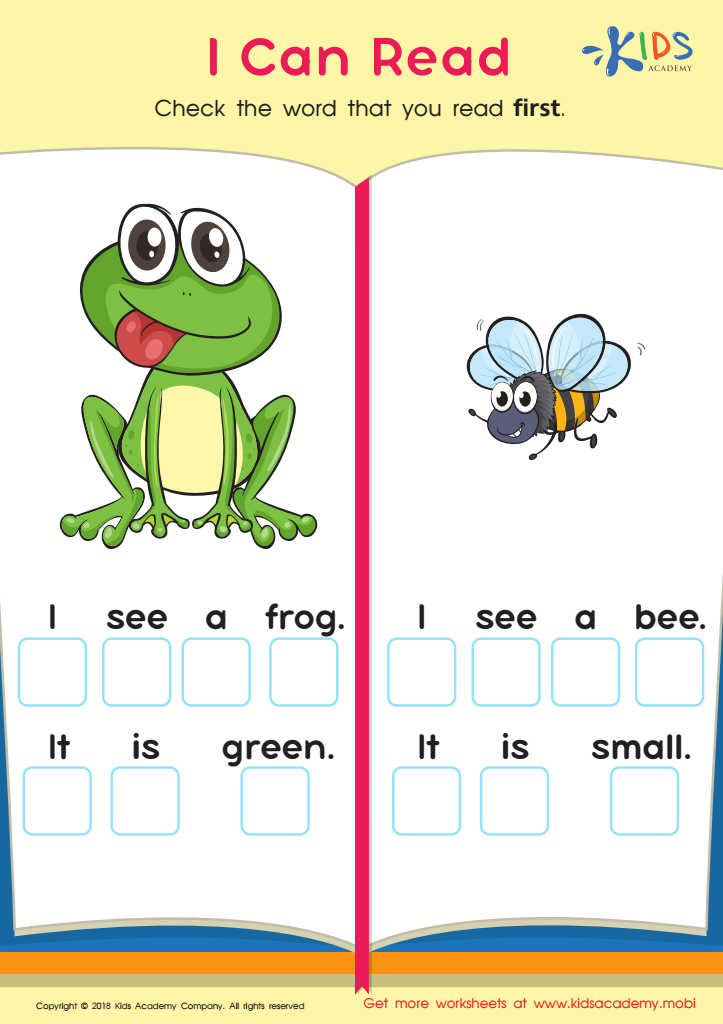
I Can Read Worksheet

I Can Read Worksheet

Test your child's reading skills with this fun worksheet. See how well they know one-letter, two-letter, and five-letter words. Ask your little one to read the sentences and tick the word they identify first. It's a great way to track their progress and help them become more confident readers.
I Can Read Worksheet
Worksheet
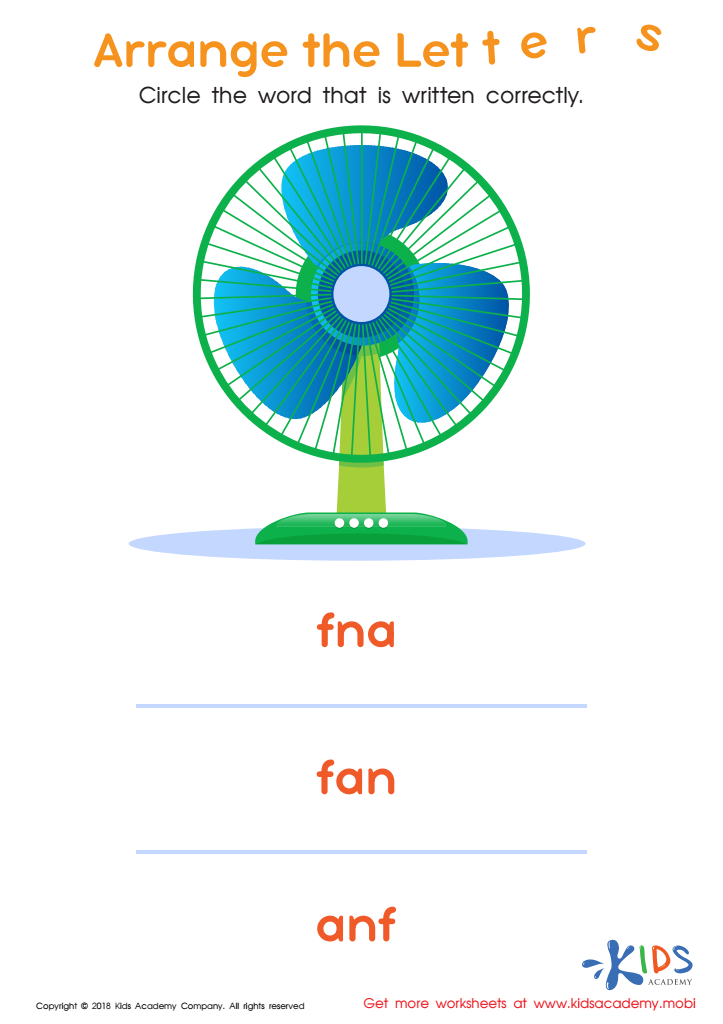
Arrange the Letters Worksheet

Arrange the Letters Worksheet

Test your kids' spelling skills with this worksheet! Show them the picture and ask what it stands for. Then, have them choose the correct spelling from the options given. Check their answer by circling the right one.
Arrange the Letters Worksheet
Worksheet
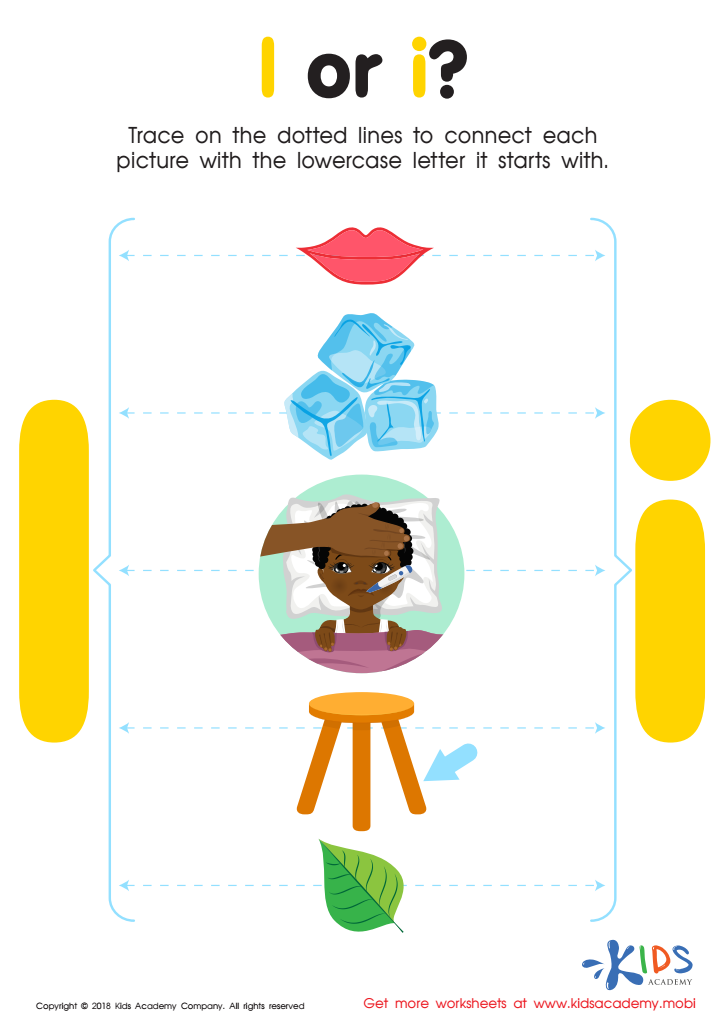
l or i? Worksheet
l or i? Worksheet

l or i? Worksheet

Trace the dotted lines on this worksheet to connect pictures with their lowercase letter. Ask your child what each picture is and the first letter of the word. Guide them to trace the letter with the dotted lines.
l or i? Worksheet
Worksheet
Recognize Letters l and i Worksheet

Recognize Letters l and i Worksheet

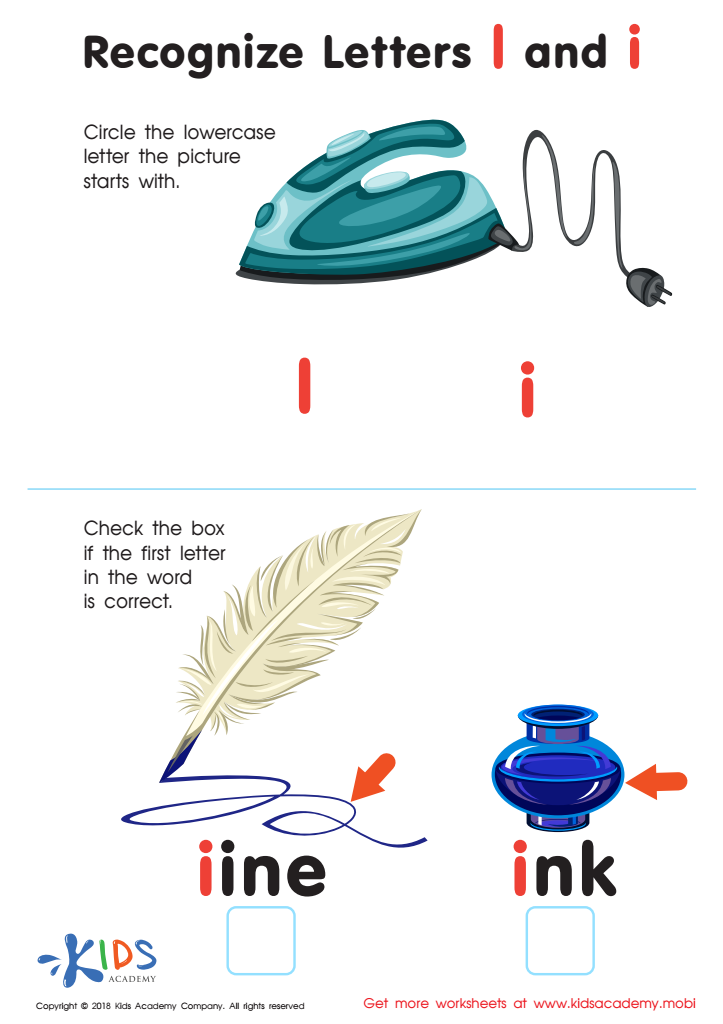
Help your child become familiar with uppercase and lowercase letters. Have them look at the pictures in the worksheet and circle the lowercase letter the picture starts with. For example: which one is the lowercase "i", the capital "I" or the small "i"?
Recognize Letters l and i Worksheet
Worksheet
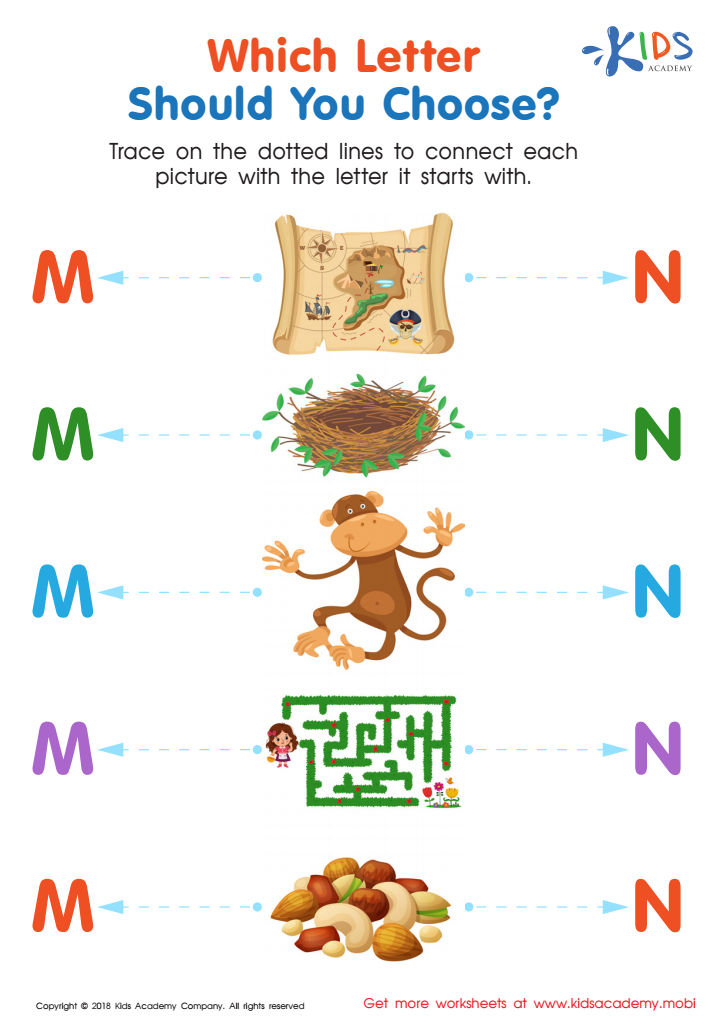
Which Letter Should you Choose? Worksheet

Which Letter Should you Choose? Worksheet

Trace the dotted lines to connect images with their first letter: "n" or "m." Challenge your child to name each picture, then identify the first letter and trace to the right letter! Five images in total.
Which Letter Should you Choose? Worksheet
Worksheet
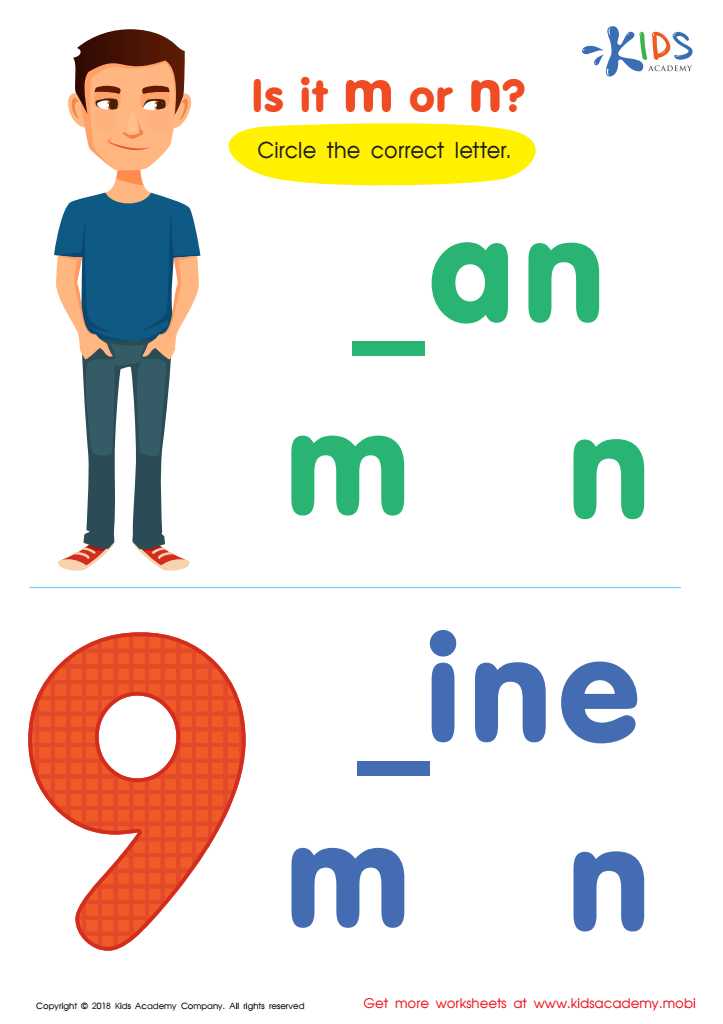
Is It m or n? Worksheet

Is It m or n? Worksheet

Help your child circle the letter that begins the words "man" and "nine" in the picture. This is a great way for them to learn the alphabet.
Is It m or n? Worksheet
Worksheet
Can you Guess Which Letter? Worksheet

Can you Guess Which Letter? Worksheet

Connect the pictures with their corresponding letters with this fun worksheet! Ask your child what each picture is, then what letter it begins with. Download the PDF for colorful images and engaging texts to hold their attention, making learning an enjoyable activity.
Can you Guess Which Letter? Worksheet
Worksheet
Is it b, p or d? Worksheet

Is it b, p or d? Worksheet

Test your child's identification skills with this worksheet. They must identify the image and then circle the letter it begins with: 'b', 'p', or 'd' (e.g. an image of the sun would mean they circle 's').
Is it b, p or d? Worksheet
Worksheet


Parents and teachers should pay close attention to the developmental needs and experiences of children ages 3-9 because these formative years lay the foundation for lifelong learning and personal development. During this critical period, children's brains are exceptionally receptive to new experiences, making them primed for acquiring essential skills in language, social interaction, emotional regulation, and problem-solving.

Providing a supportive and stimulating environment helps foster curiosity and creativity, essential elements for cultivating a love for learning. Positive experiences in early childhood, such as engaging in interactive reading, cooperative play, and hands-on activities, significantly contribute to cognitive development and academic readiness.

Furthermore, the social and emotional growth that occurs during these years is critical. Children learn to navigate relationships, express emotions appropriately, and develop self-esteem. Supportive adults who model and reinforce respectful behavior, empathy, and resilience help children build the social skills required for successful interactions throughout life.

Early investment in a child's education and well-being creates a robust groundwork for their future academic success and personal growth. As a result, ensuring a nurturing and enriched environment during ages 3-9 is pivotal, setting children on a trajectory toward becoming well-rounded, capable, and confident individuals.