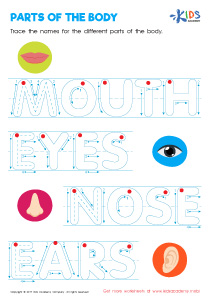
Physical Science Worksheets for Ages 3-9
3 filtered results
-
From - To
Explore our engaging and interactive Physical Science Worksheets for children ages 3-9! Designed to spark curiosity about the world around them, these worksheets cover essential concepts such as matter, energy, and basic physics. Each activity is tailored to develop critical thinking, observation, and problem-solving skills, fostering a love for science from an early age. Whether in the classroom or at home, our resources provide the perfect blend of fun and education. Encourage young learners to explore natural phenomena, conduct simple experiments, and discover the principles that shape their everyday experiences. Dive into the fascinating world of physical science with Kids Academy!
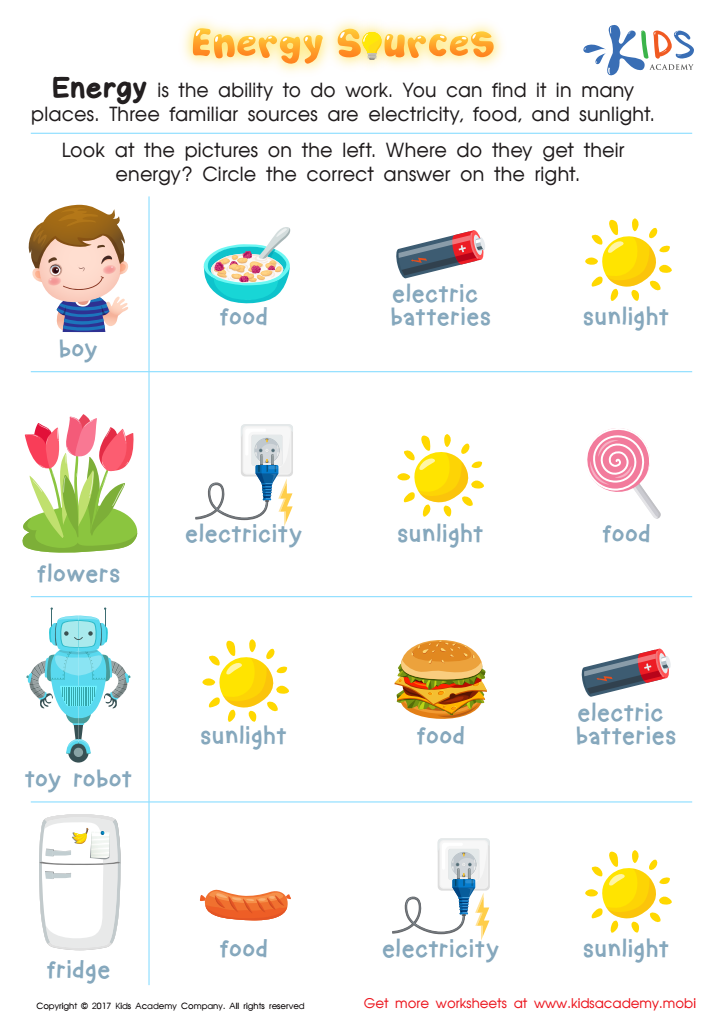
Energy Sources Printable
 Assign to My Students
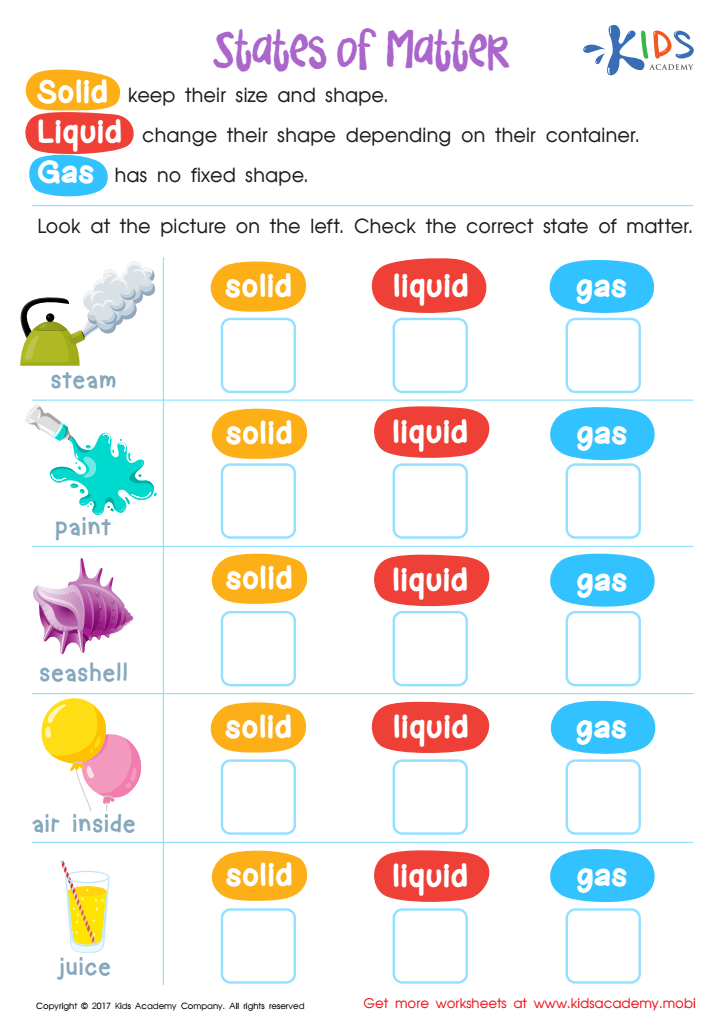
Physical Science: States of Matter Worksheet
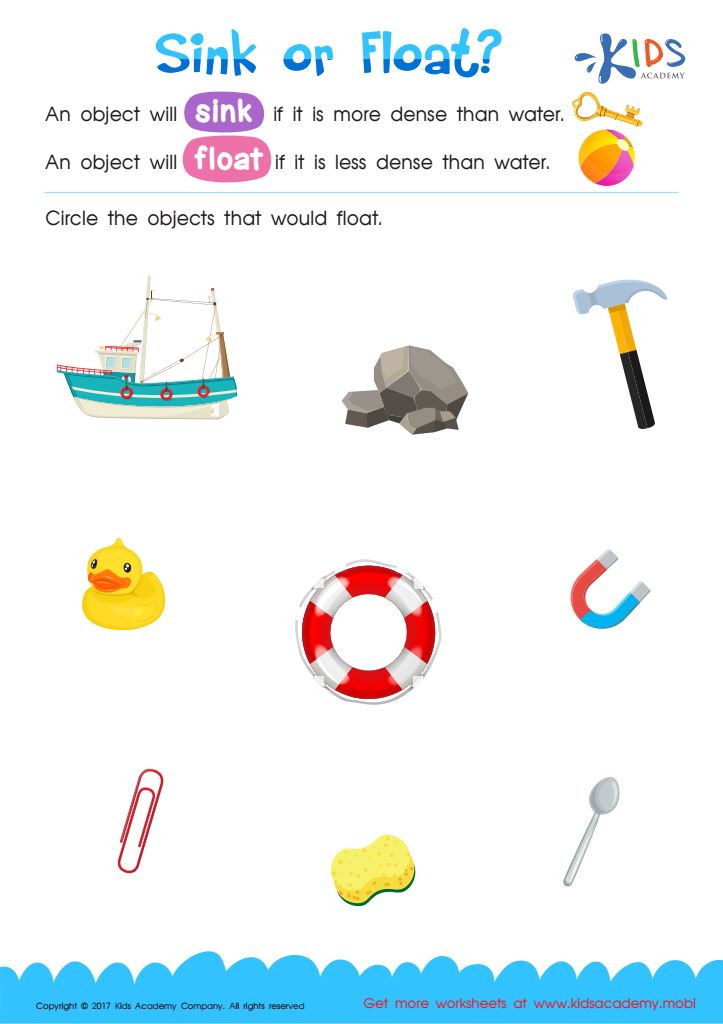
Sink or Float Printable






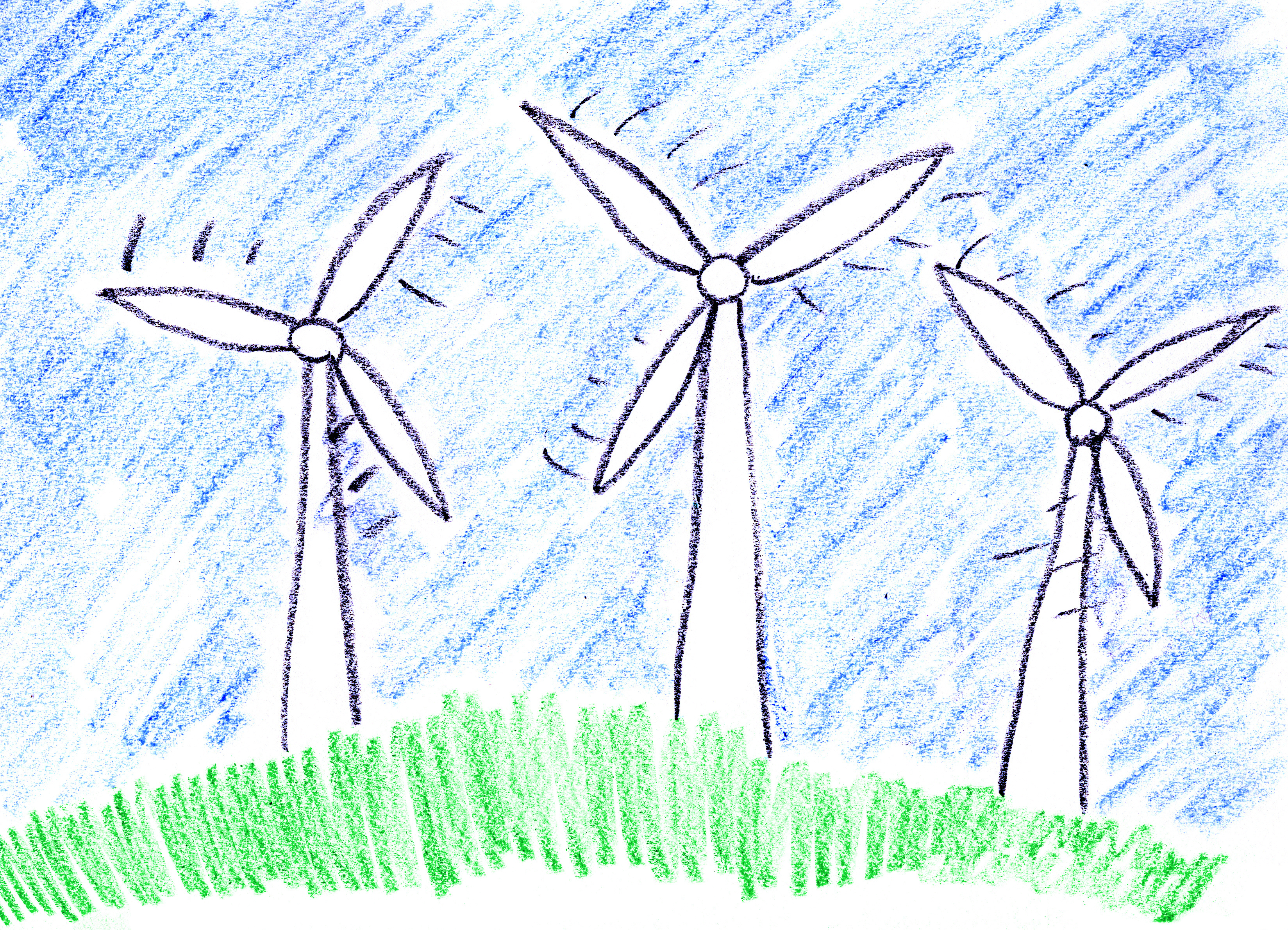

Parents and teachers should prioritize Physical Science for children ages 3-9 because it lays a crucial foundation for early cognitive development and critical thinking skills. At this young age, children are naturally curious and eager to explore the world around them. Introducing them to basic concepts of Physical Science helps nurture this curiosity, encouraging them to ask questions, explore, and discover.
Engaging with Physical Science concepts fosters essential skills, such as observation, experimentation, and problem-solving. Through hands-on activities, children learn to make predictions, conduct simple experiments, and draw conclusions, all of which are vital for understanding the scientific method. Additionally, physical science lessons incorporate elements like movement, materials, and forces, which can enhance motor skills and coordination.
Moreover, integrating Physical Science also promotes an understanding of the environment and the importance of sustainability. By studying basic principles such as balance, gravity, and energy, children become more aware of their surroundings, paving the way for responsible citizenship in an interconnected world.
Ultimately, early exposure to Physical Science not only cultivates a love for learning but also equips children with the tools necessary to succeed academically and understand their place in the natural world.