Geometry Worksheets for Ages 4-8 - Page 6
198 filtered results
-
From - To
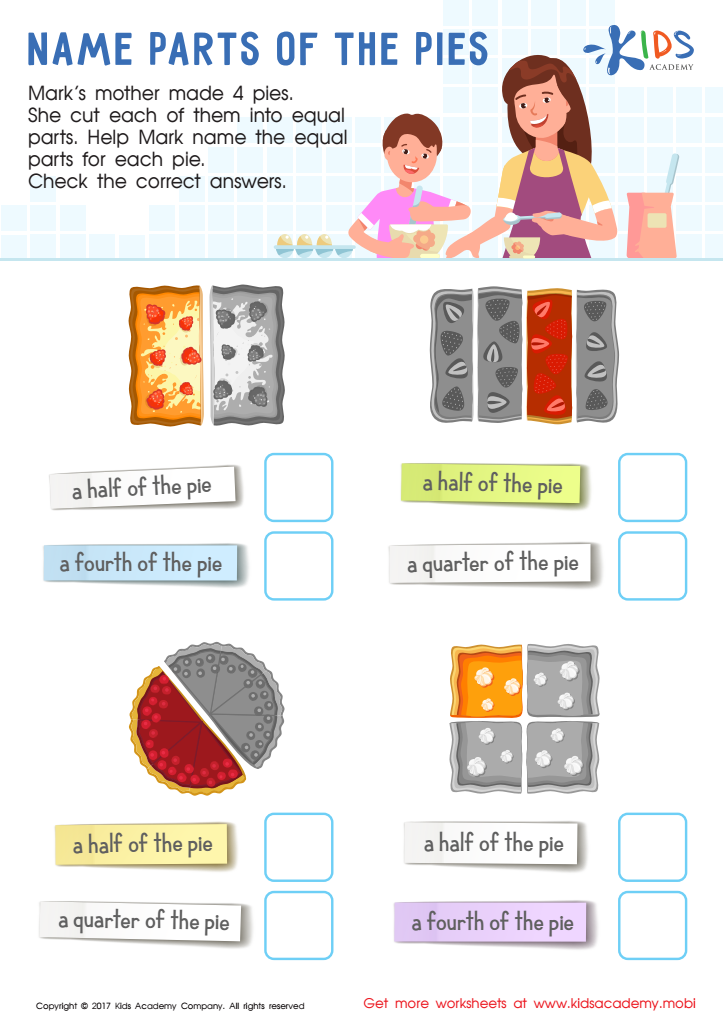
Name Parts of the Pies Worksheet
 Assign to My Students











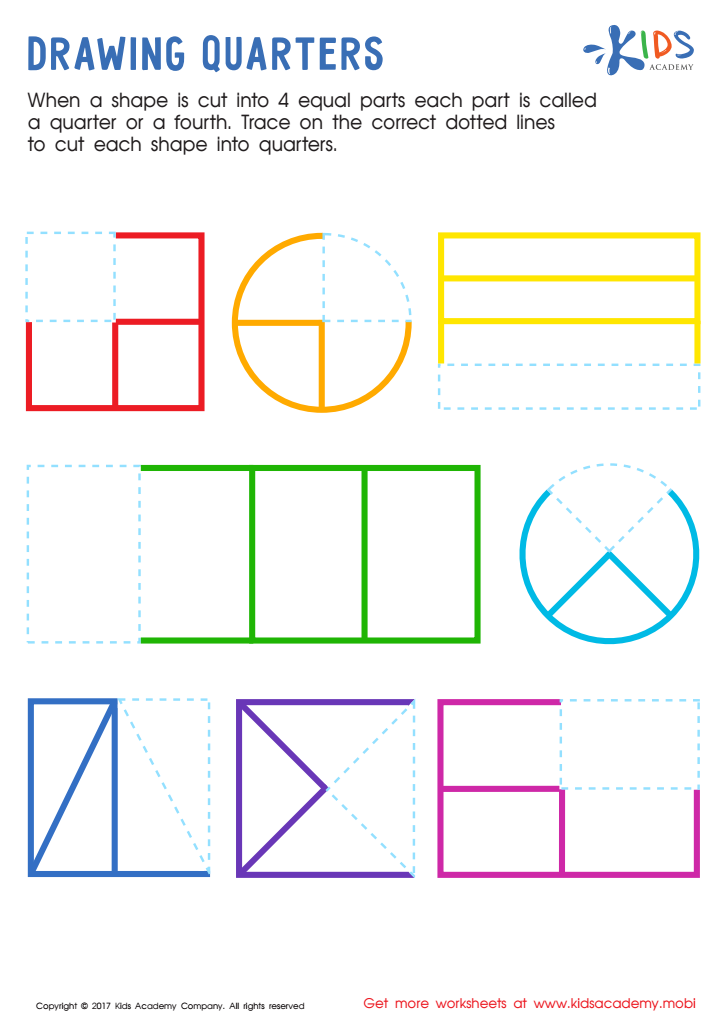
Drawing Quarters Worksheet
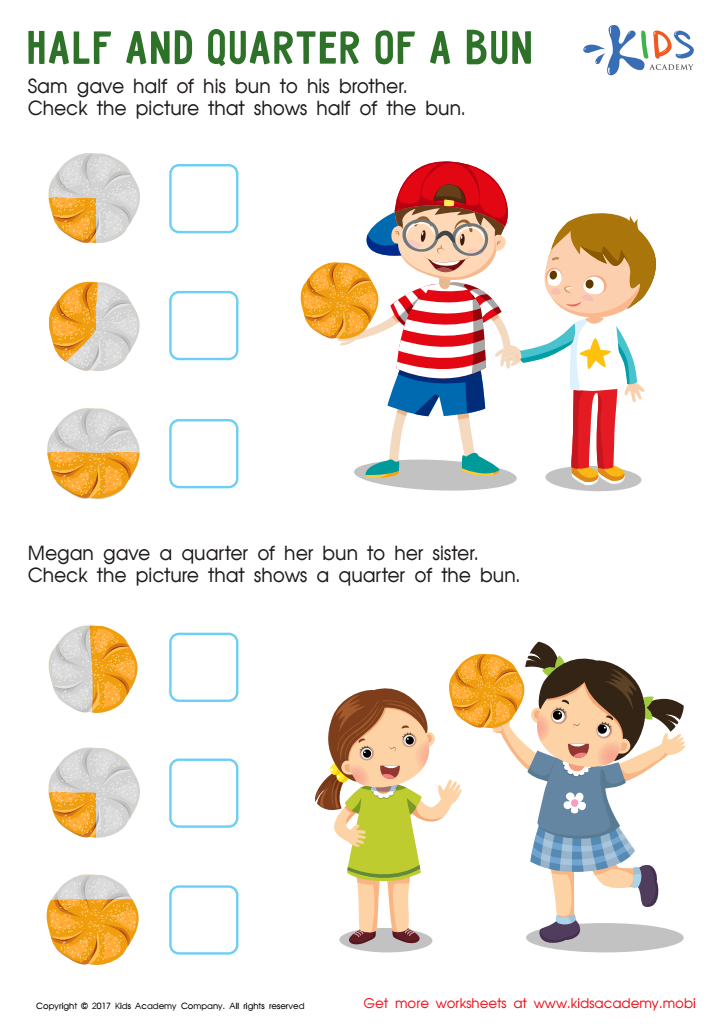
Half and Quarter of a Bun Worksheet
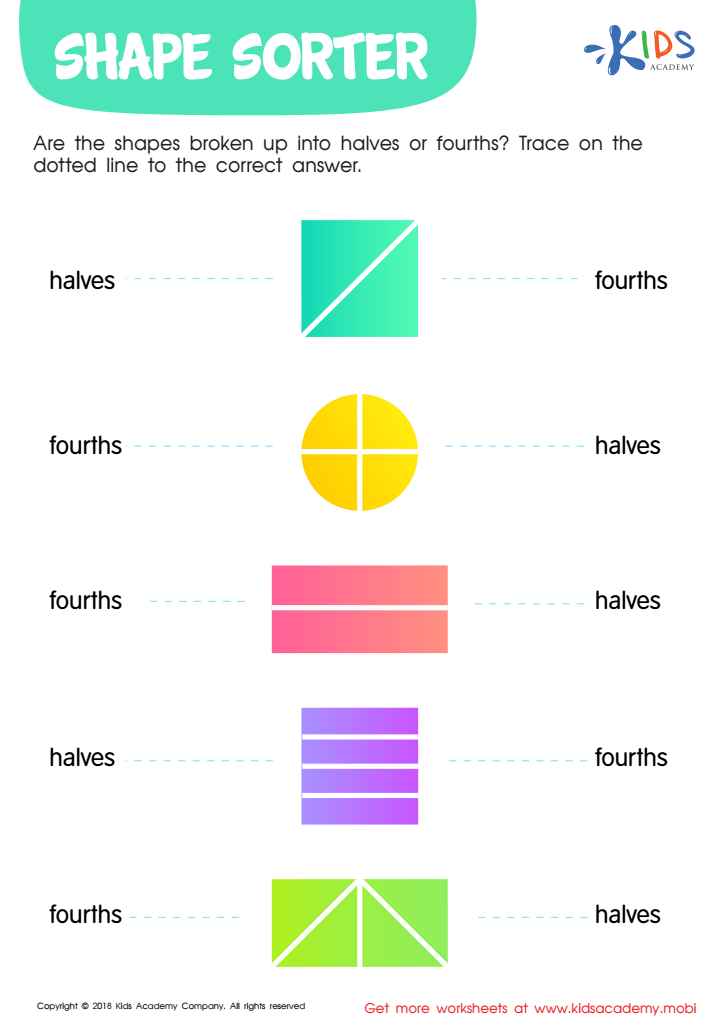
Shape Sorter Worksheet
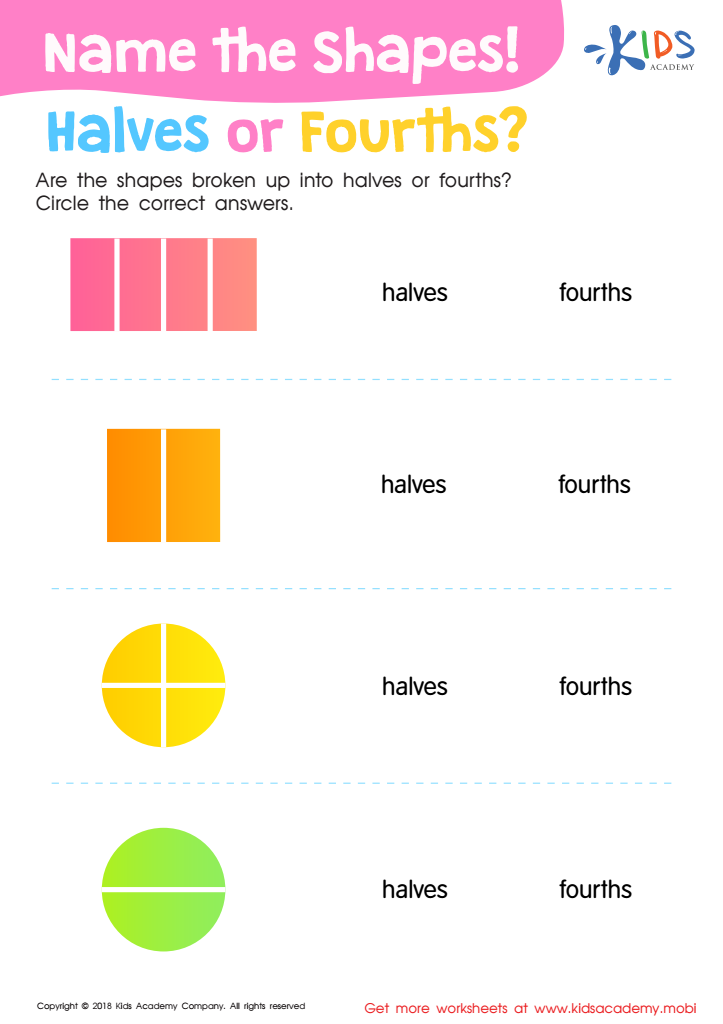
Name the Shapes Halves or Fourths? Worksheet
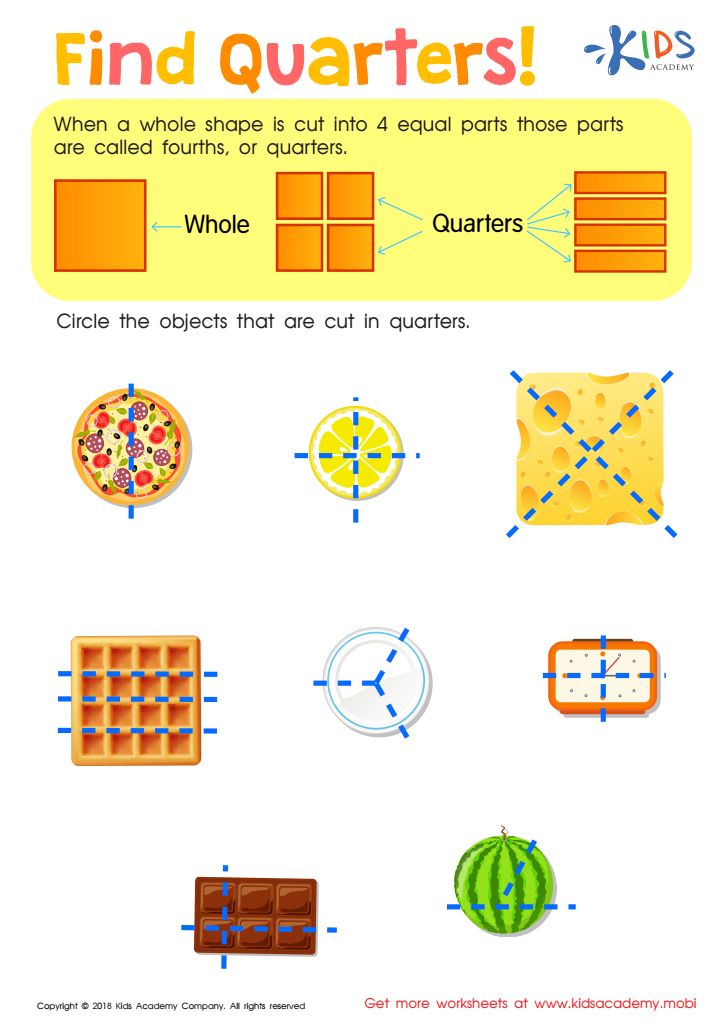
Find Quarters Worksheet
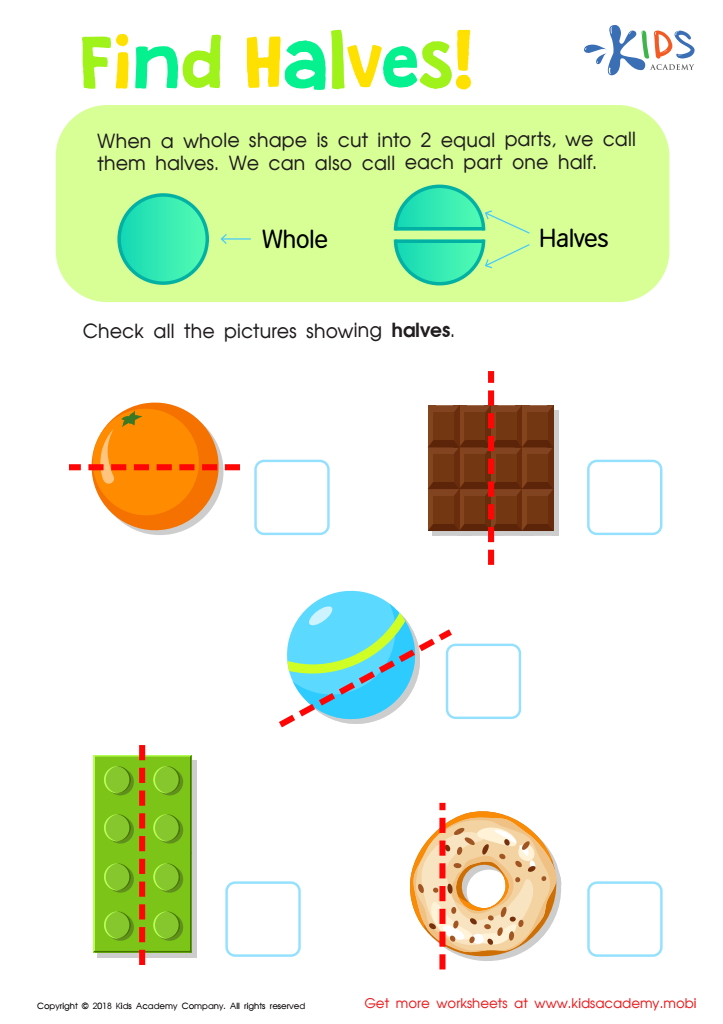
Find Halves Worksheet
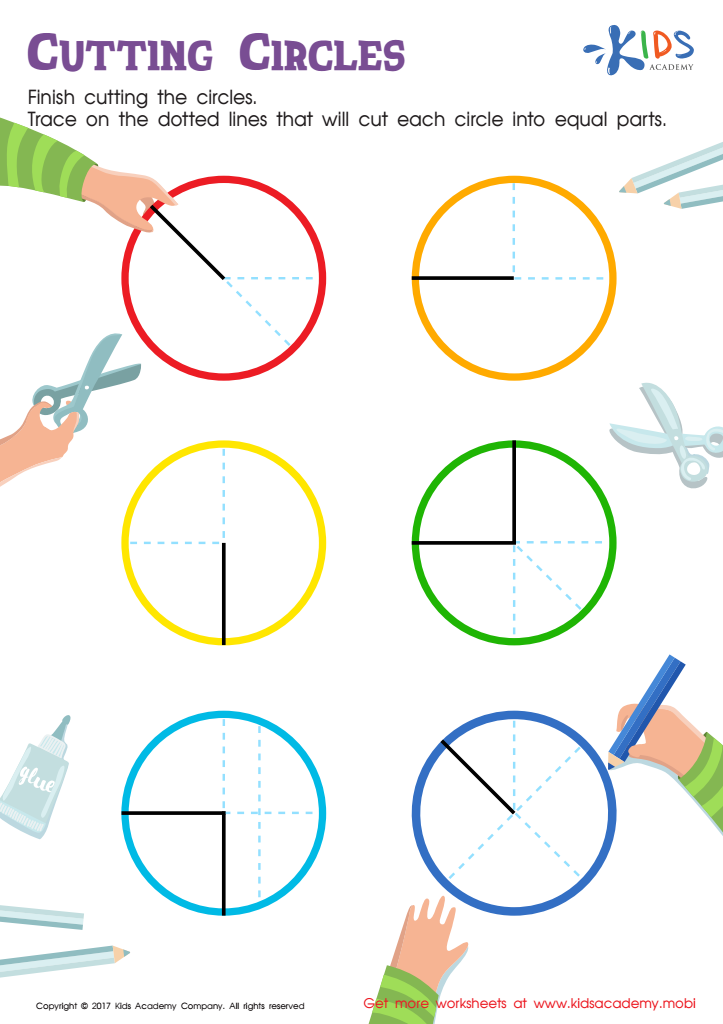
Cutting Circles Worksheet
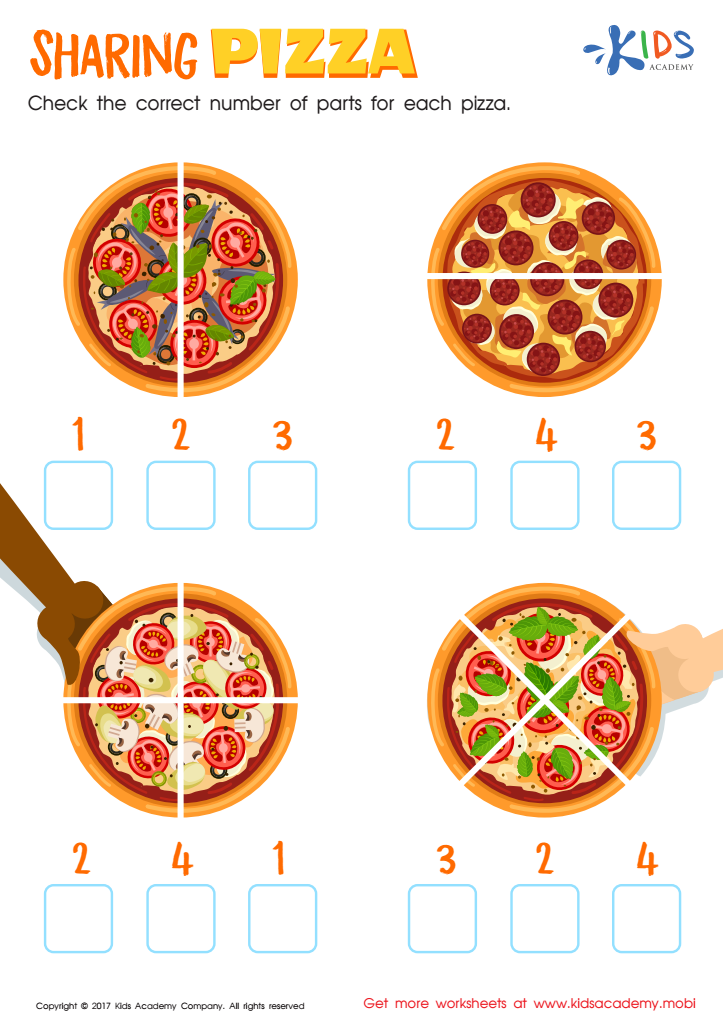
Sharing Pizza Worksheet
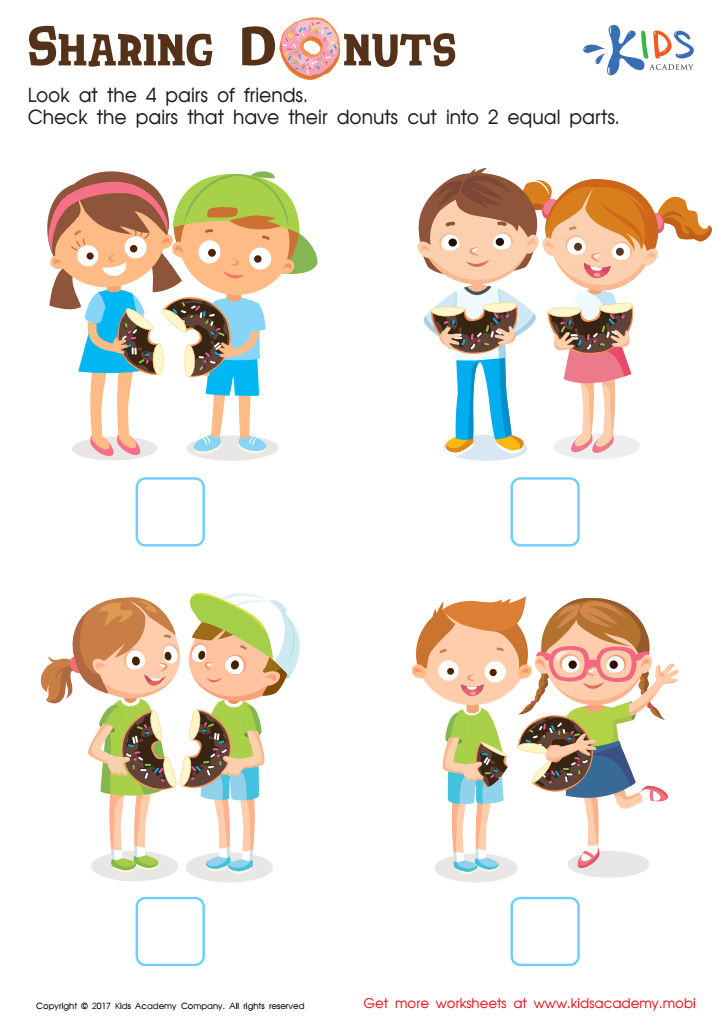
Sharing Donuts Worksheet
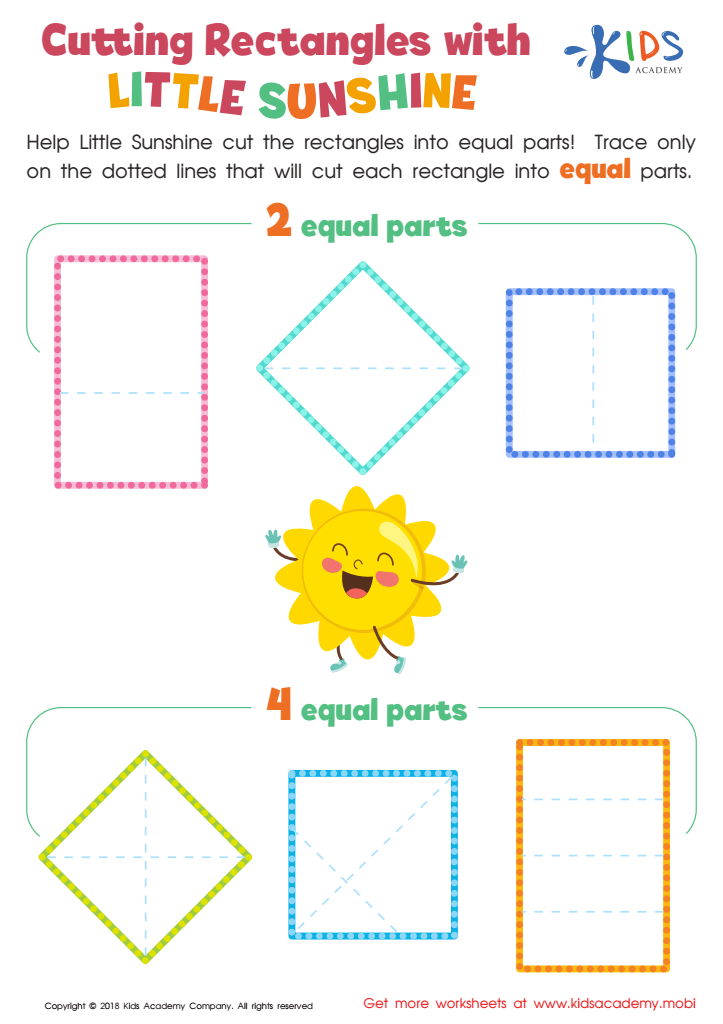
Cutting Rectangles with Little Sunshine Worksheet
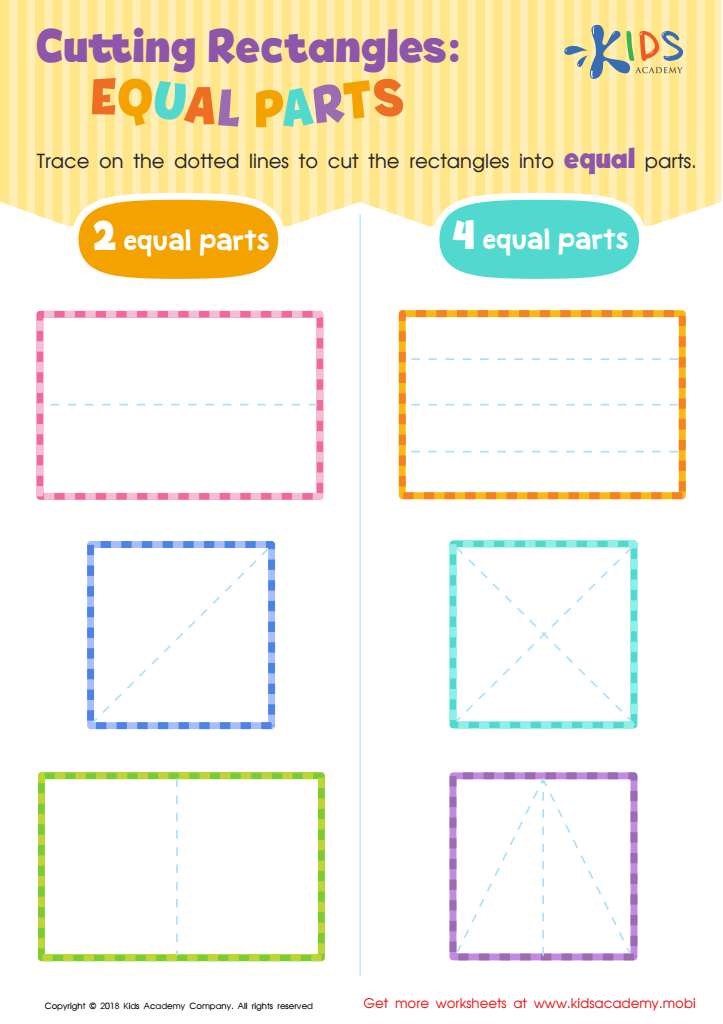
Cutting Rectangles: Equal Parts Worksheet
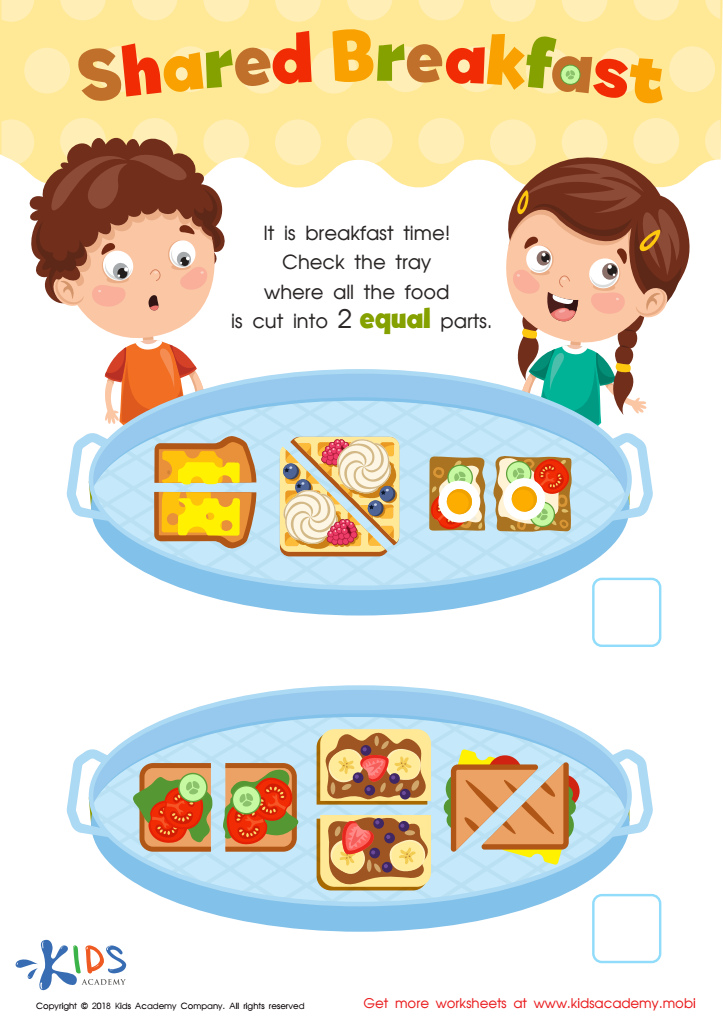
Shared Breakfast Worksheet
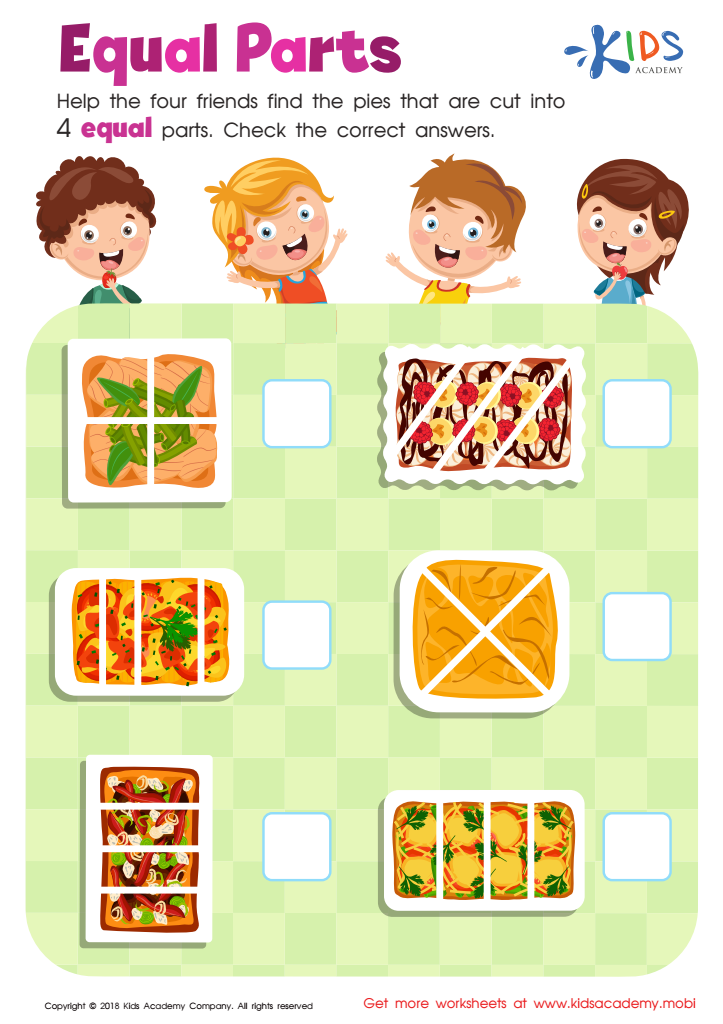
Equal Parts: Food Worksheet
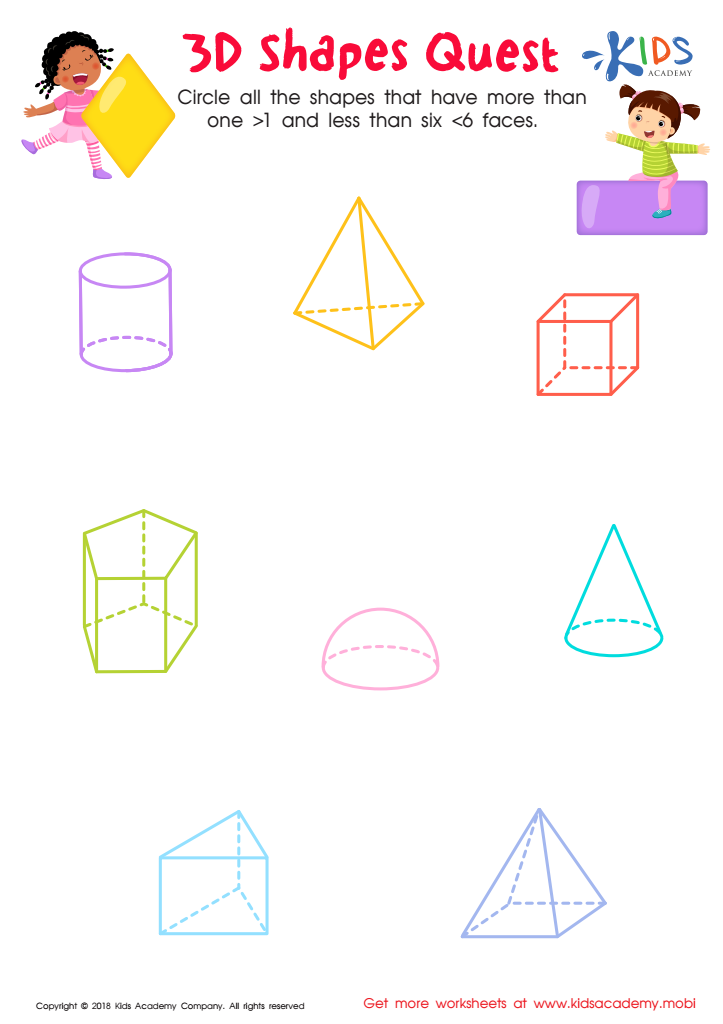
3D Shapes Quest Worksheet
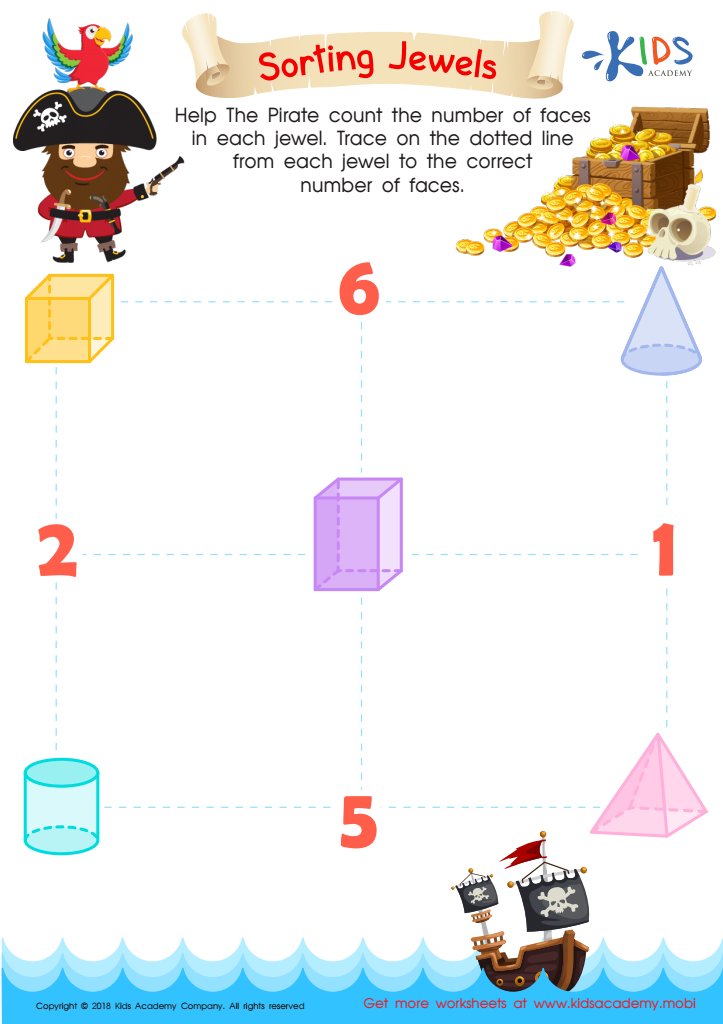
Sorting Jewels Worksheet
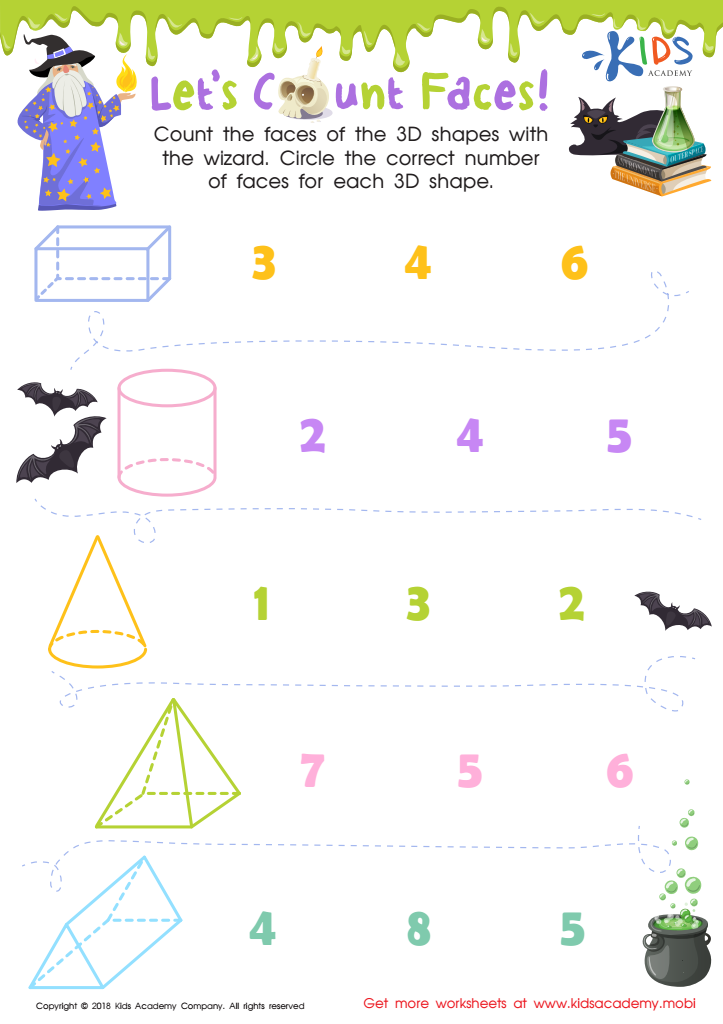
Let's Count Faces! Worksheet
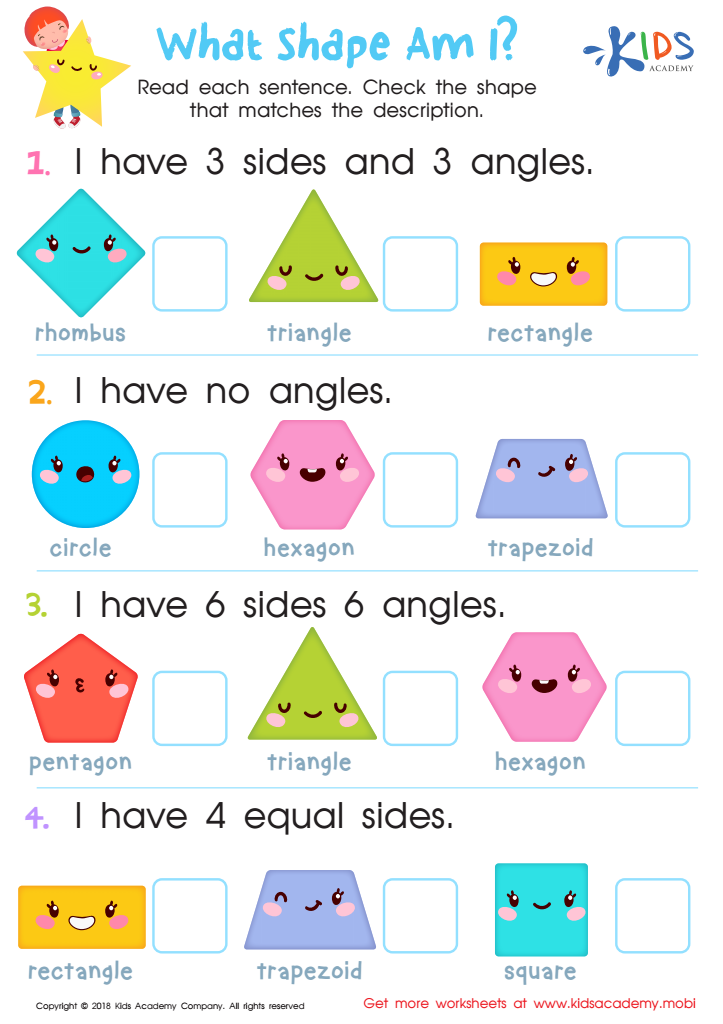
What Shape Am I? Worksheet
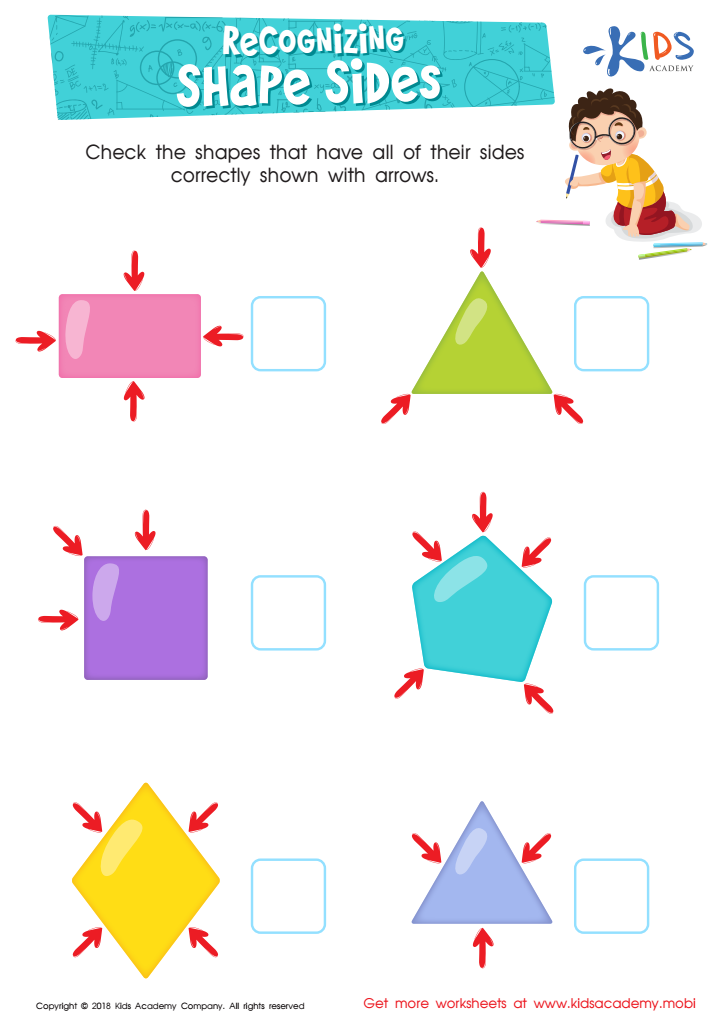
Recognizing Shape Sides Worksheet
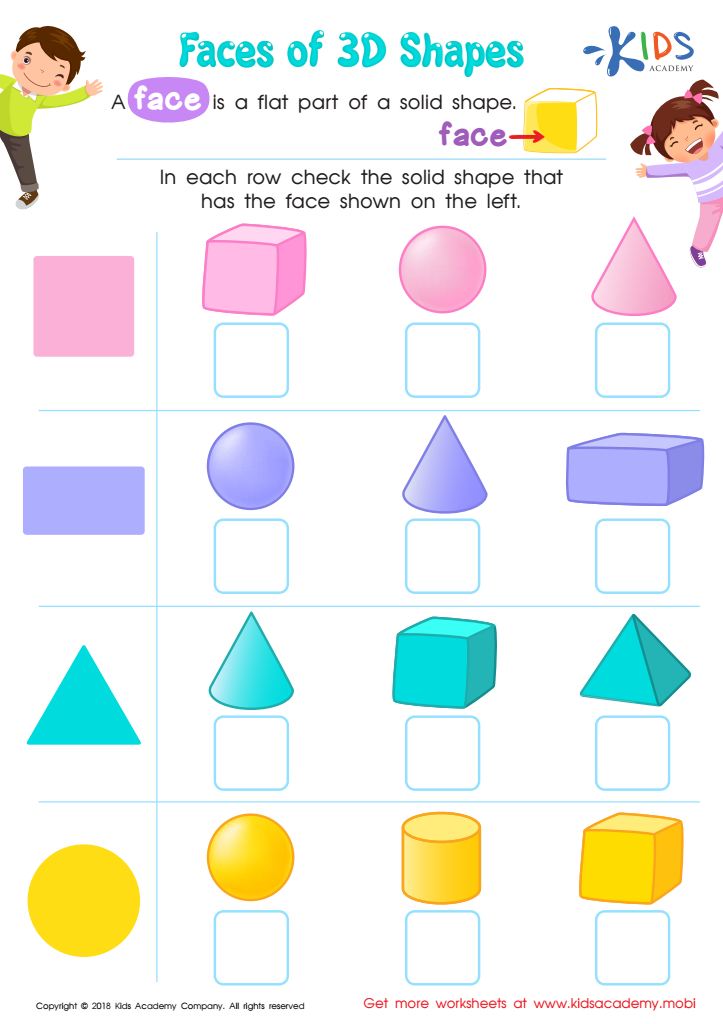
Faces of 3D Shapes Worksheet
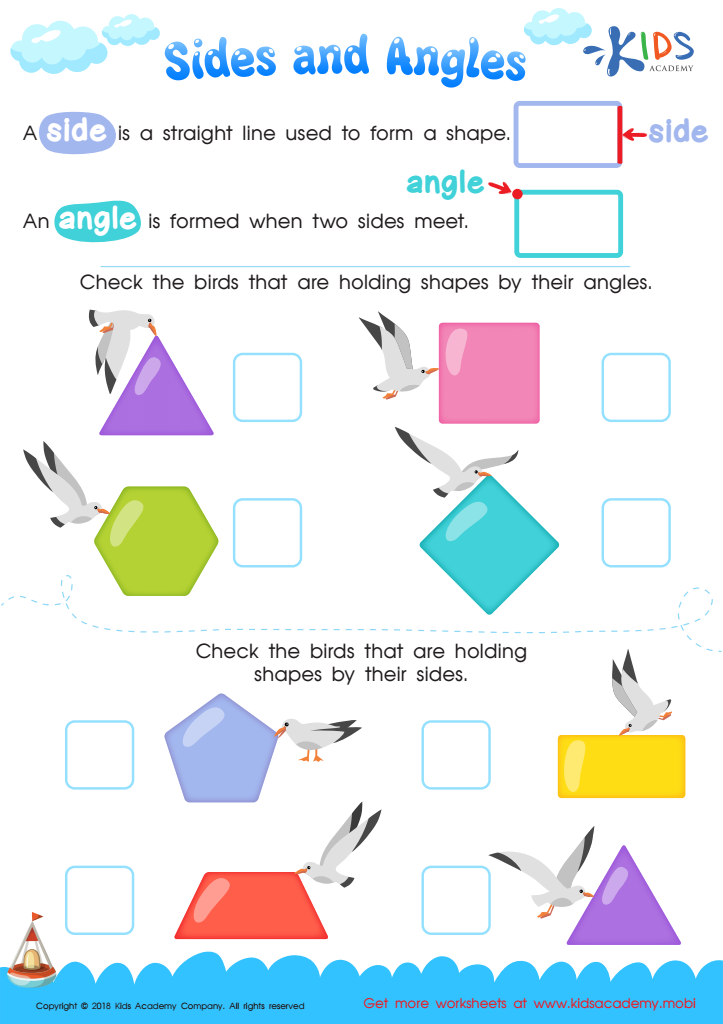
Sides and Angles Worksheet
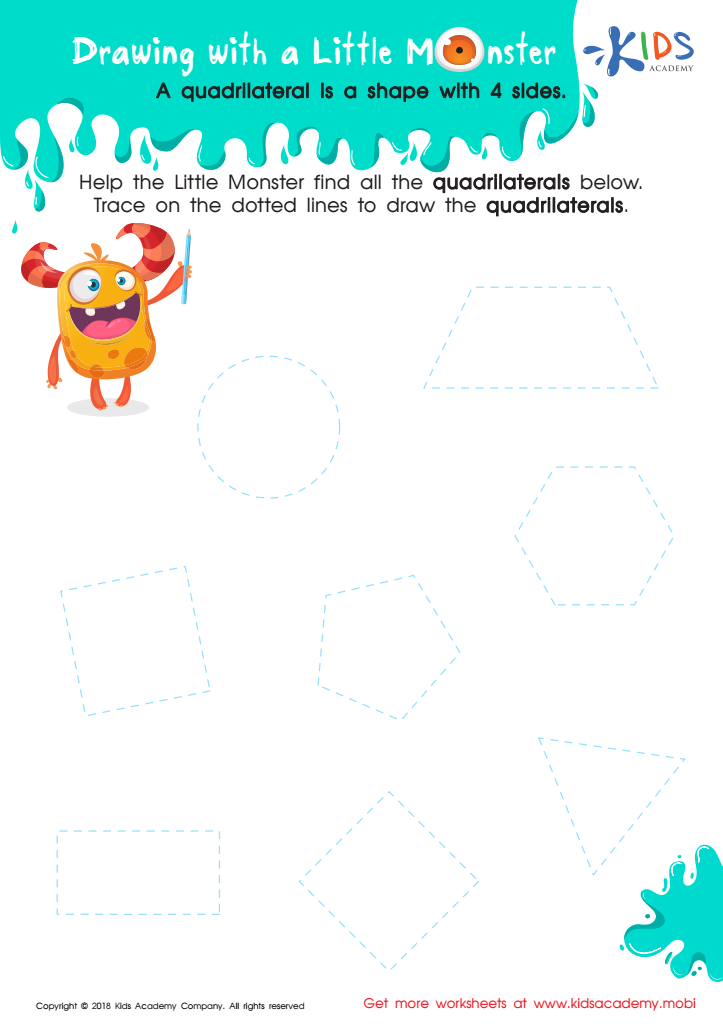
Drawing with a Little Monster Worksheet
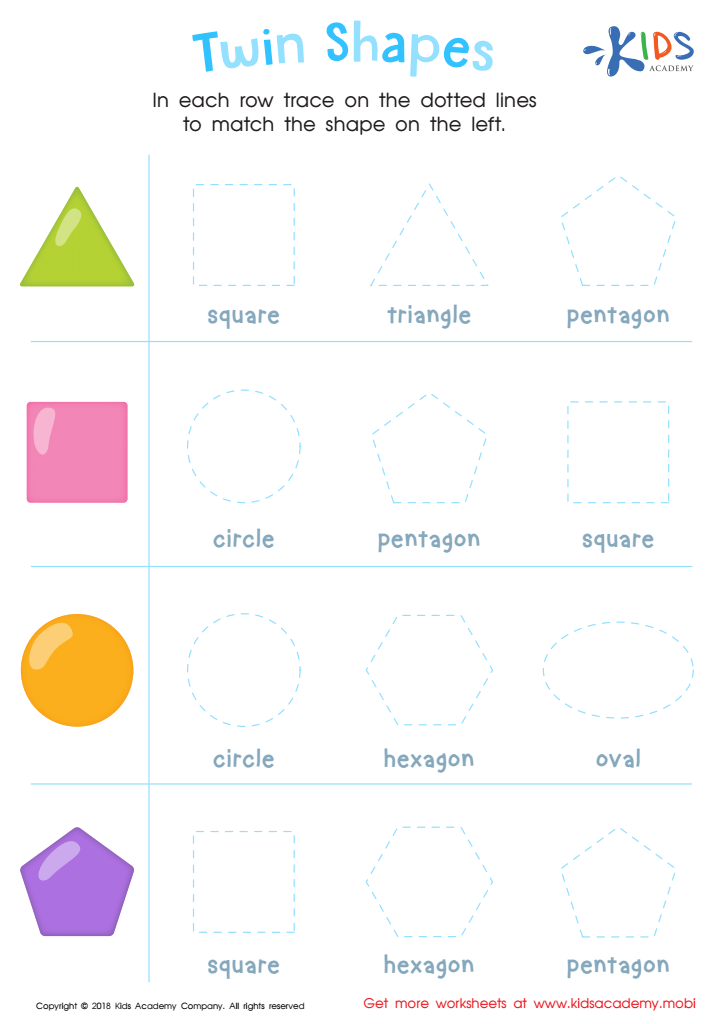
Twin Shapes Dot-to-Dot Worksheet
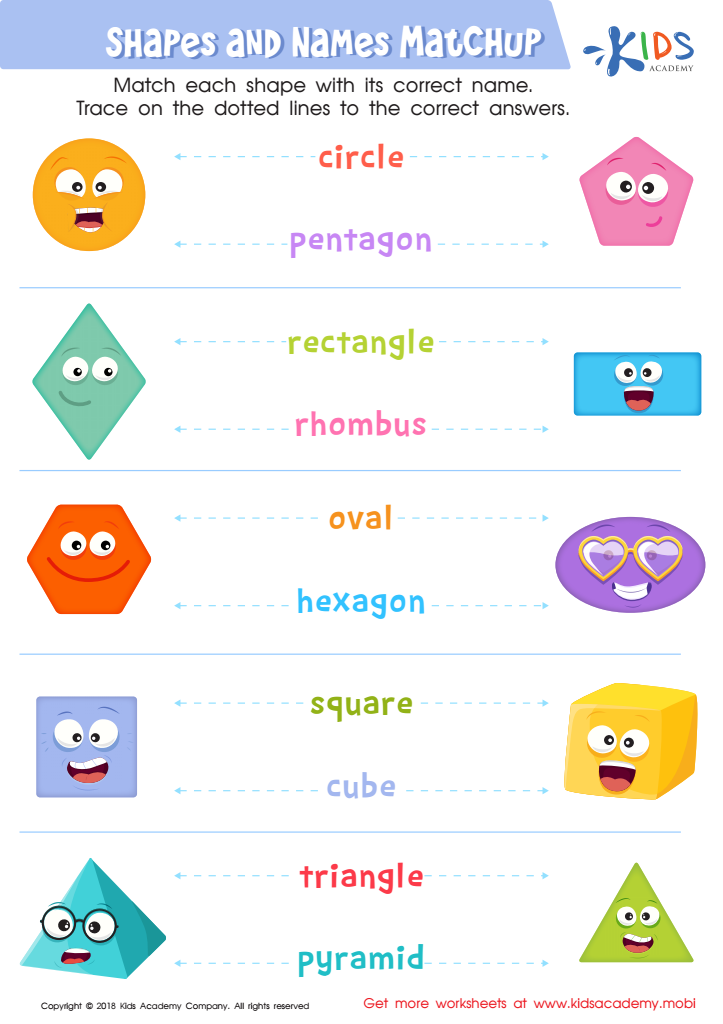
Shapes and Names Matchup Worksheet








Geometry is a foundational element of early childhood education that significantly shapes a child's cognitive development. For parents and teachers, fostering a solid understanding of geometric concepts in children aged 4-8 is crucial for several reasons.
Firstly, geometry enhances spatial awareness—a critical skill that influences problem-solving and critical thinking. By engaging in activities that involve shapes, sizes, and spatial relationships, children learn to visualize and manipulate objects in their minds, which is essential in daily life and future learning situations.
Secondly, geometric learning forms the basis for mathematical literacy. Recognizing shapes and understanding their properties develop essential skills for counting, measuring, and eventually algebra. Introducing geometric concepts lays the groundwork for more complex mathematical ideas, promoting a positive relationship with math from a young age.
Moreover, geometry is interconnected with art, science, and engineering. Teaching children about shapes through creative and exploratory activities fosters an appreciation for these disciplines, cultivating curiosity and raising interest in STEM fields.
Finally, incorporating geometry into playful activities nurtures social skills and cooperation through group challenges and spatial games, facilitating emotional and social development. In summary, geometry is vital not only for math success but also for holistic child development.








