Measurement Worksheets for Ages 6-9 - Page 5
105 filtered results
-
From - To
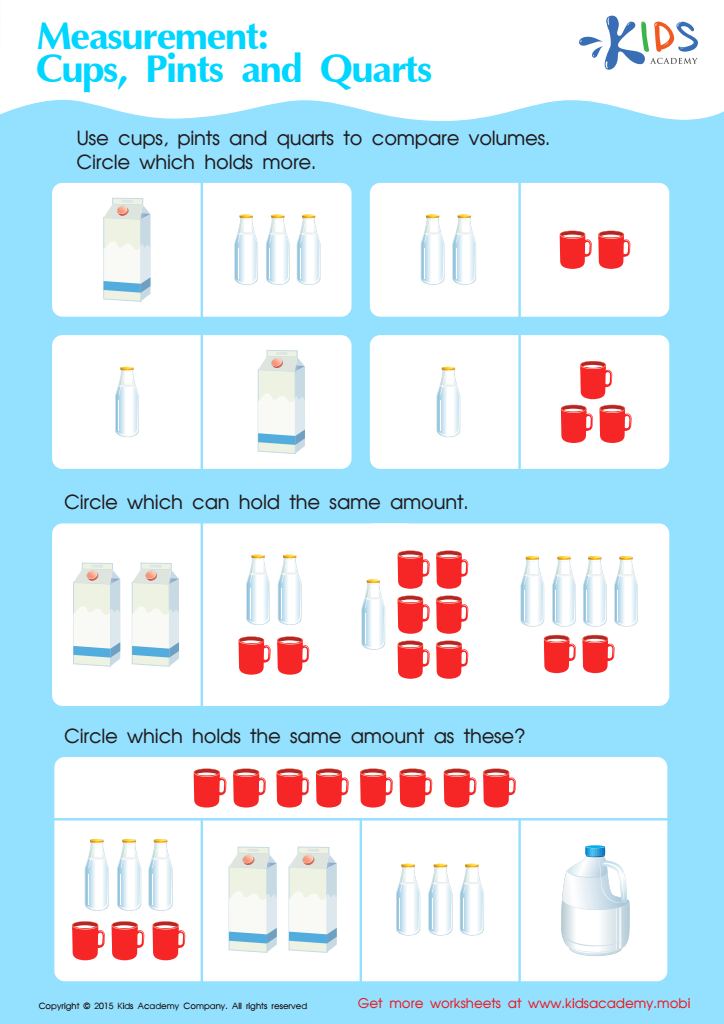
Measurement: Compare Volumes Worksheet
 Assign to My Students
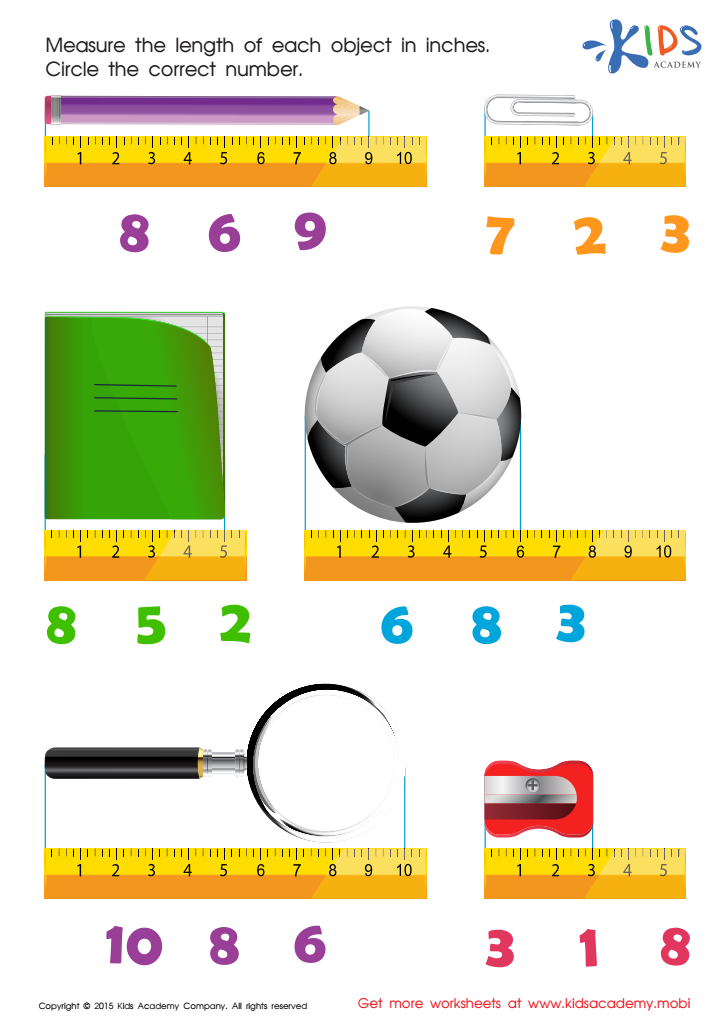
Learning measuring objects in inches Worksheet
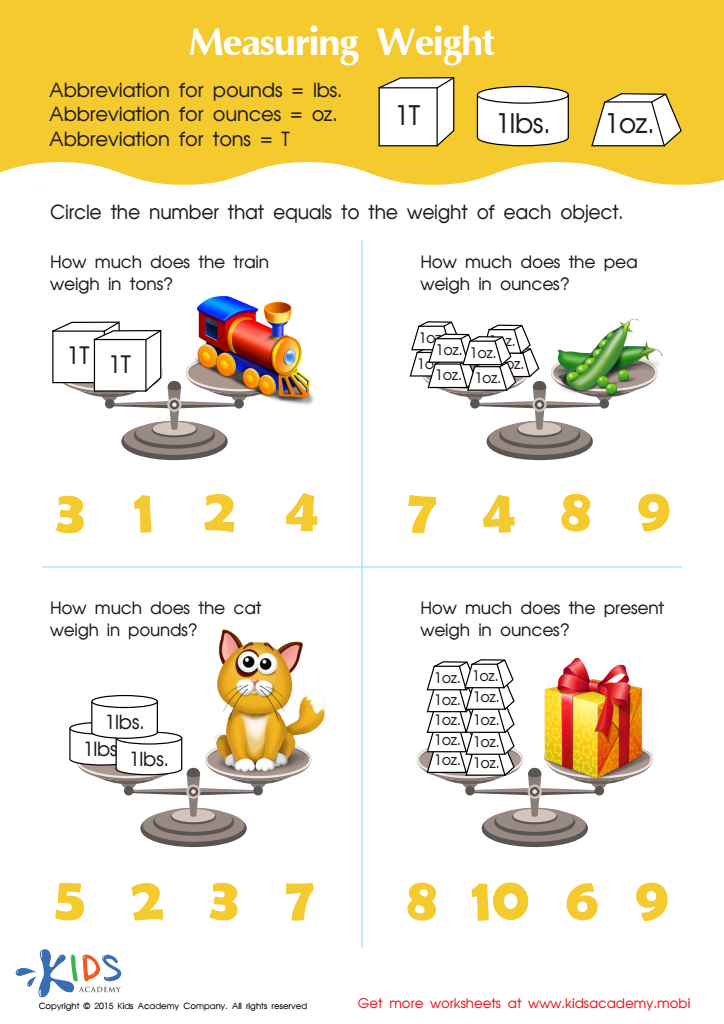
Measuring Weight in Ounces, Pounds and Tons Worksheet
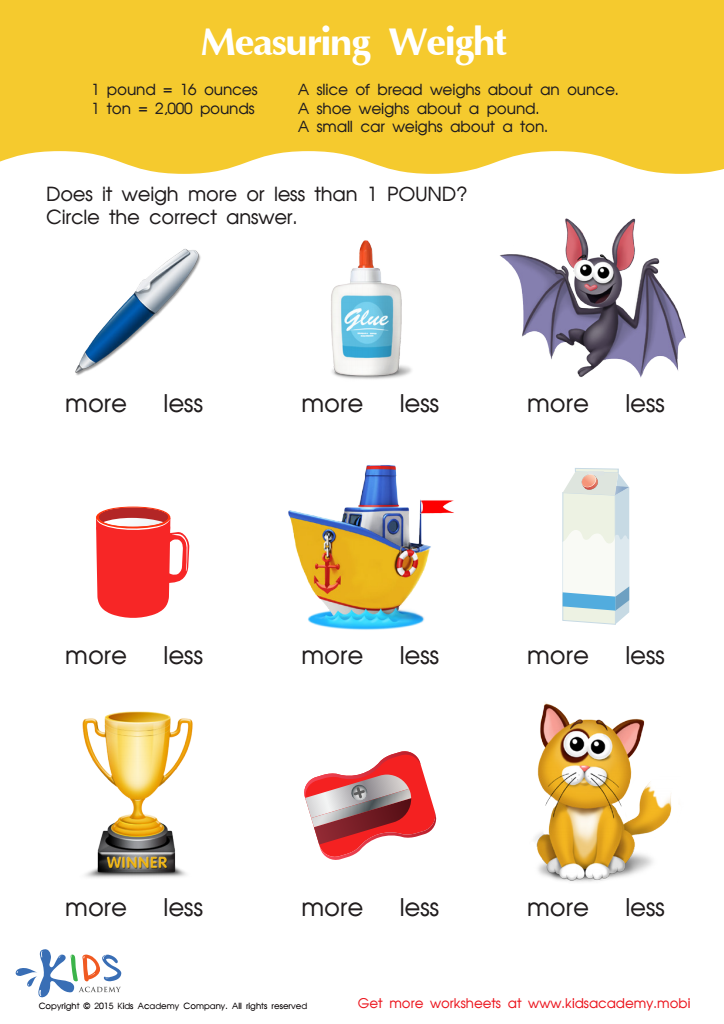
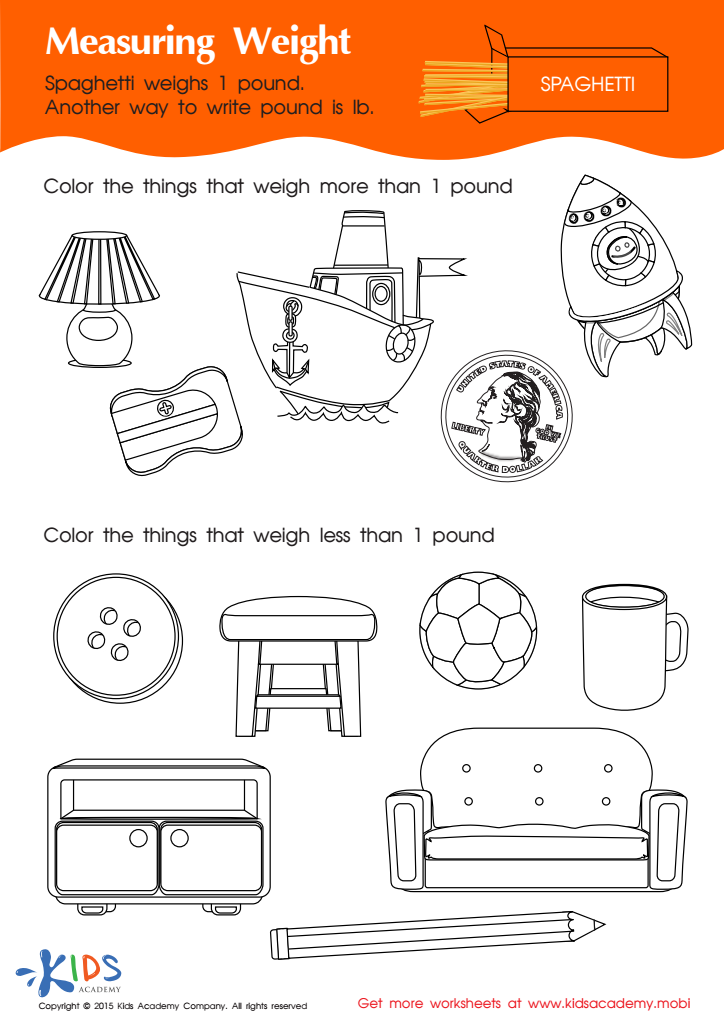
Measuring weight in pounds Worksheet
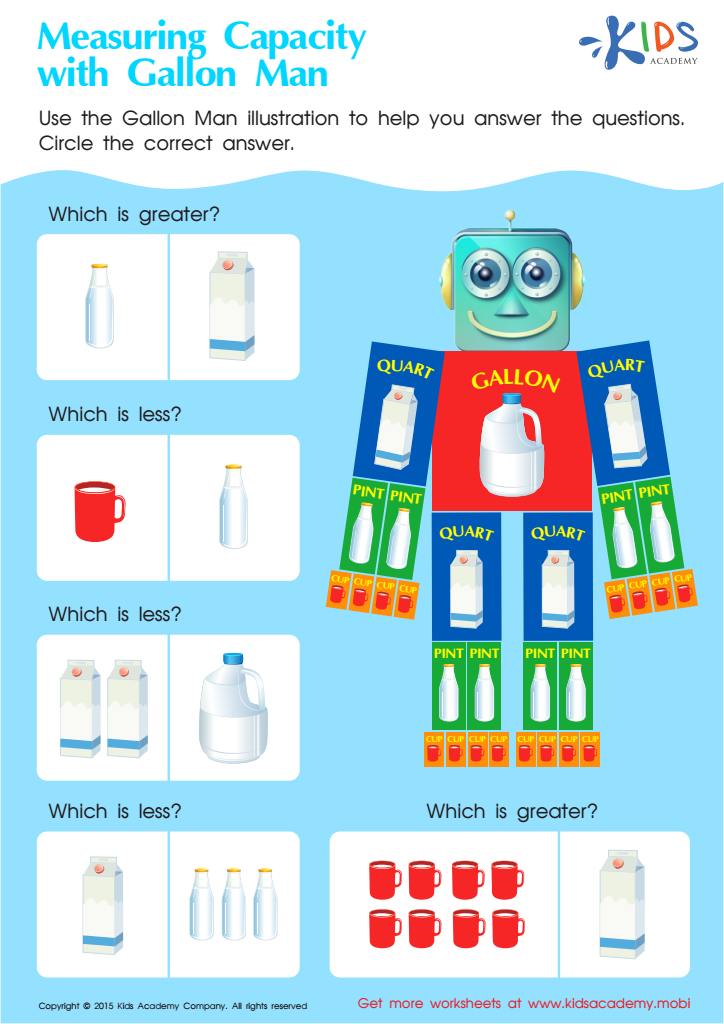
Measurement: Measuring Capacity with Gallon Man Worksheet
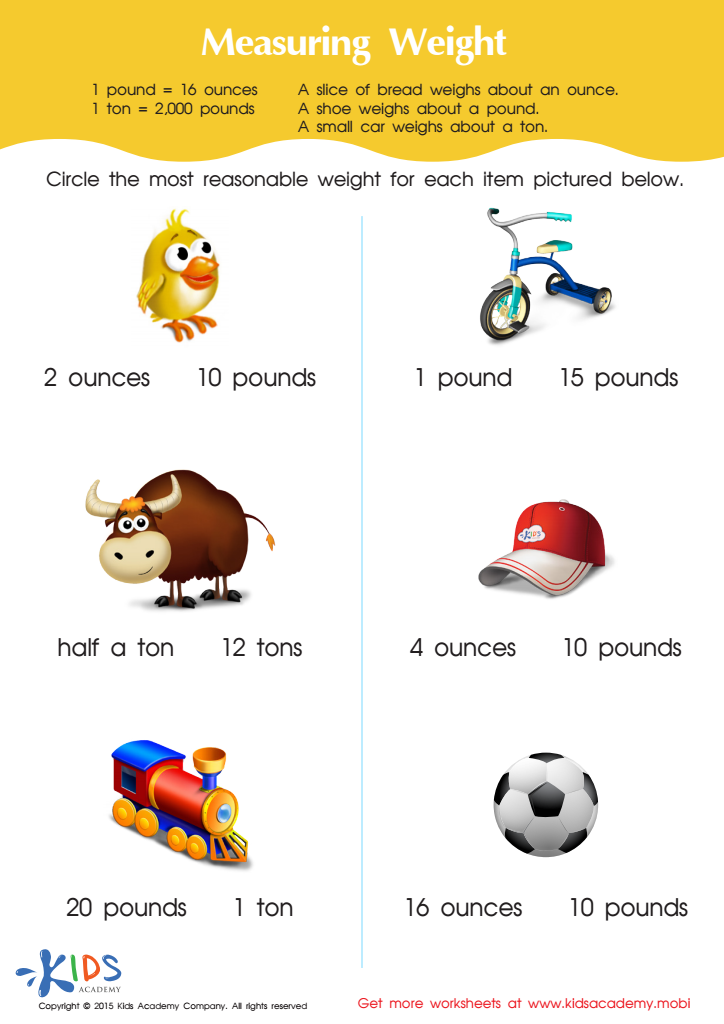
Measuring Weight in Ounces, Pounds and Tons (Part 2) Worksheet
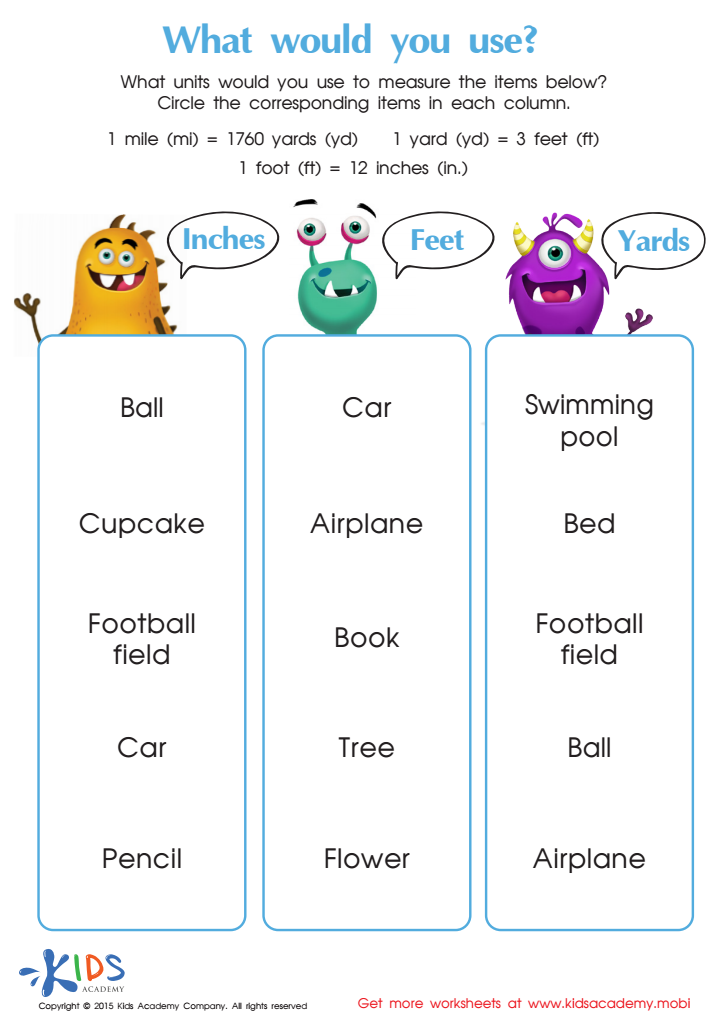
Learning about measuring objects in inches, feet and yards Worksheet
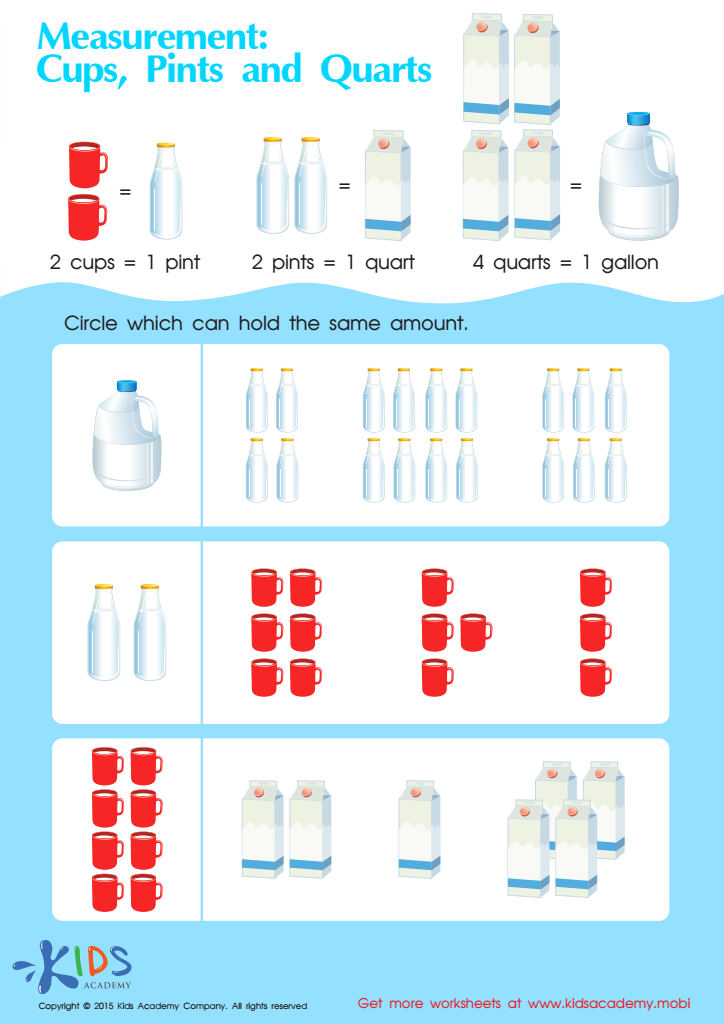
Cups, Pints and Quarts 2 Worksheet








Measurement is a crucial skill for children aged 6-9, as it lays the groundwork for their understanding of the world and enhances their critical thinking and problem-solving abilities. During this developmental stage, students are naturally curious and eager to explore, making it an ideal time to introduce concepts of measurement, such as length, weight, area, and volume.
Understanding measurement helps children comprehend relationships and comparisons, improving their spatial awareness and logical reasoning. For instance, when they measure objects, they not only learn about units like inches or grams, but also develop an aptitude for estimation and precision. These skills directly influence success in various subjects, including math, science, and even art.
Furthermore, incorporating measurement into daily activities allows parents and teachers to frame learning in a practical context, reinforcing its relevance. Whether it’s baking, gardening, or crafting, applying measurement in real-life situations helps children appreciate the importance of these skills in everyday life.
Ultimately, fostering a strong foundation in measurement promotes confidence and independence in young learners, enabling them to explore and engage meaningfully with their environment. By prioritizing measurement education, parents and teachers play a vital role in shaping proficient next-generation thinkers.








