Graphs Worksheets for Ages 7-9 - Page 2
27 filtered results
-
From - To
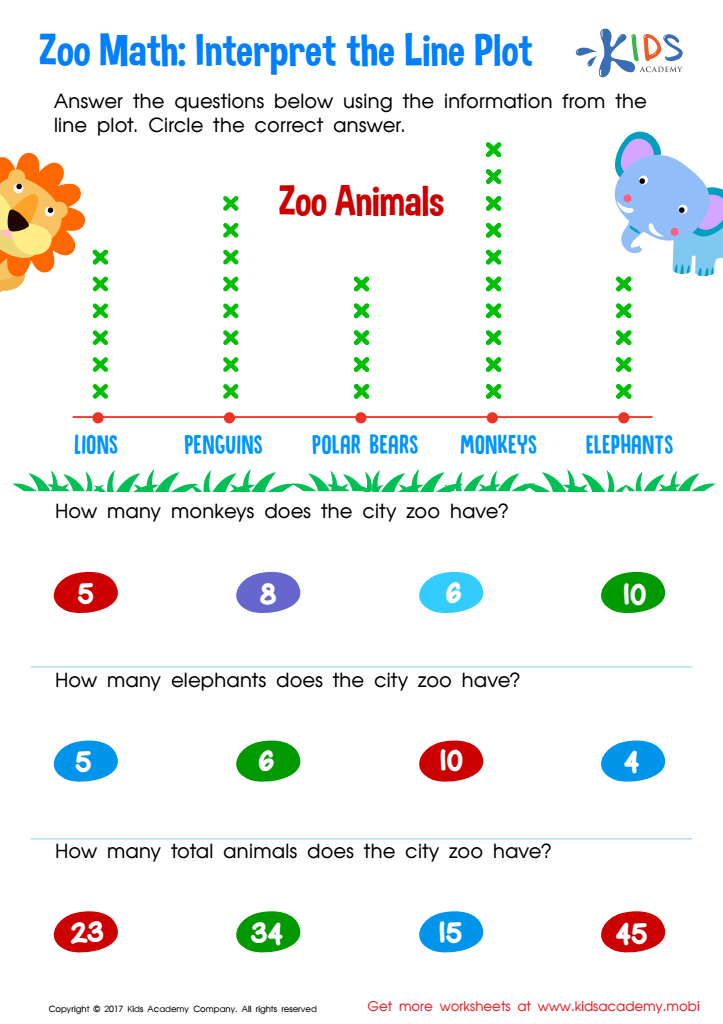
Interpret Line Plot Worksheet
 Assign to My Students
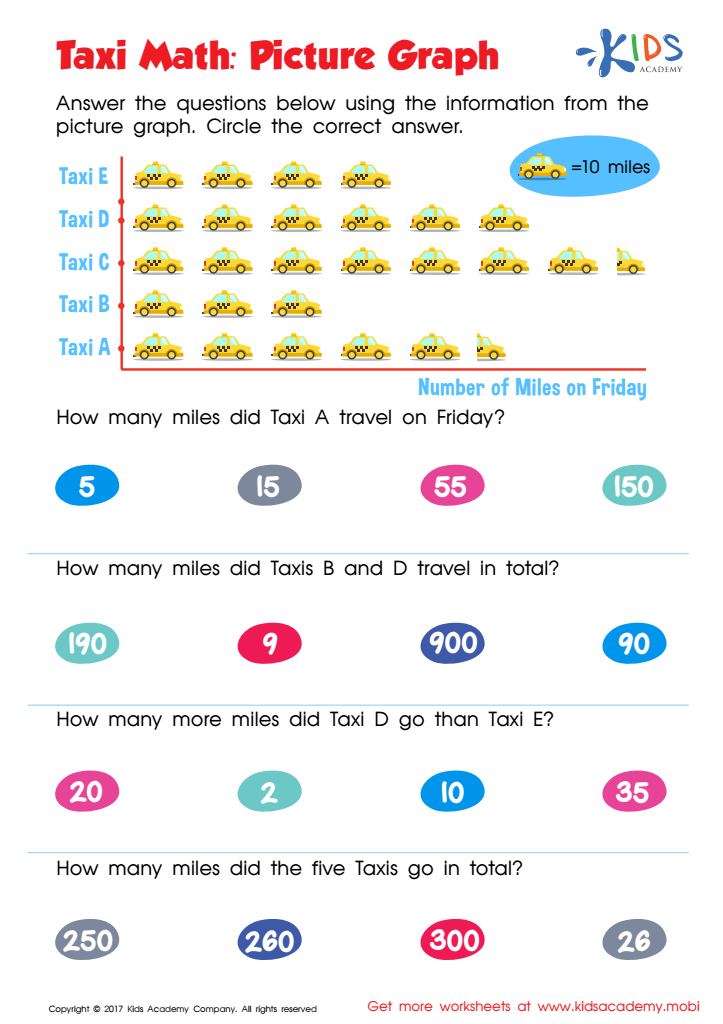
Taxi Math Worksheet
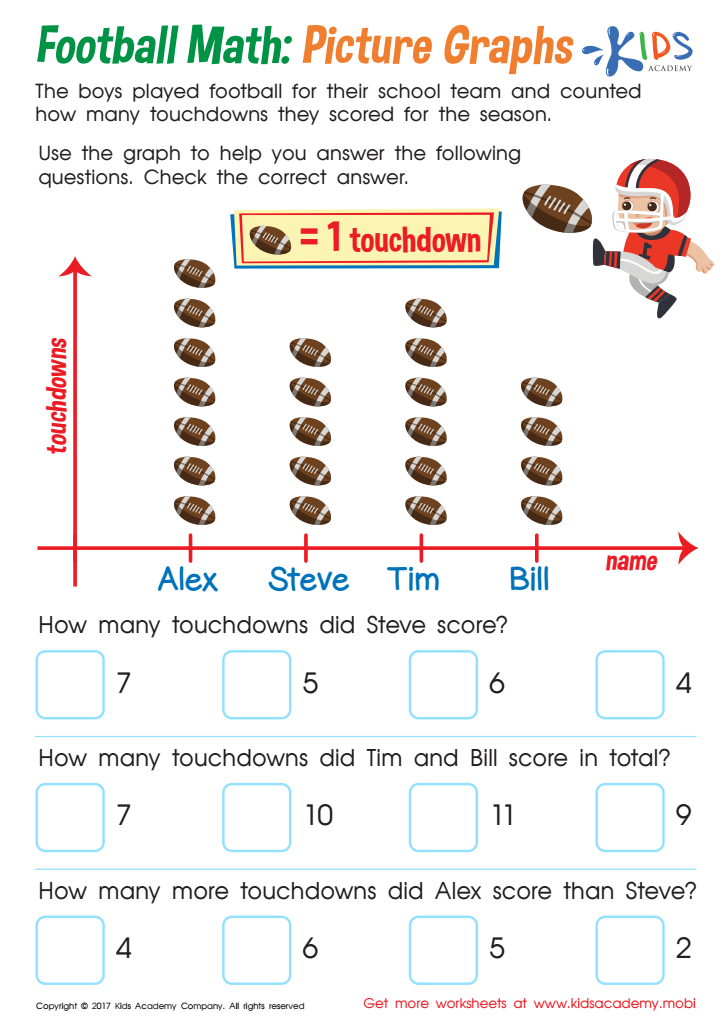
Football Math Worksheet



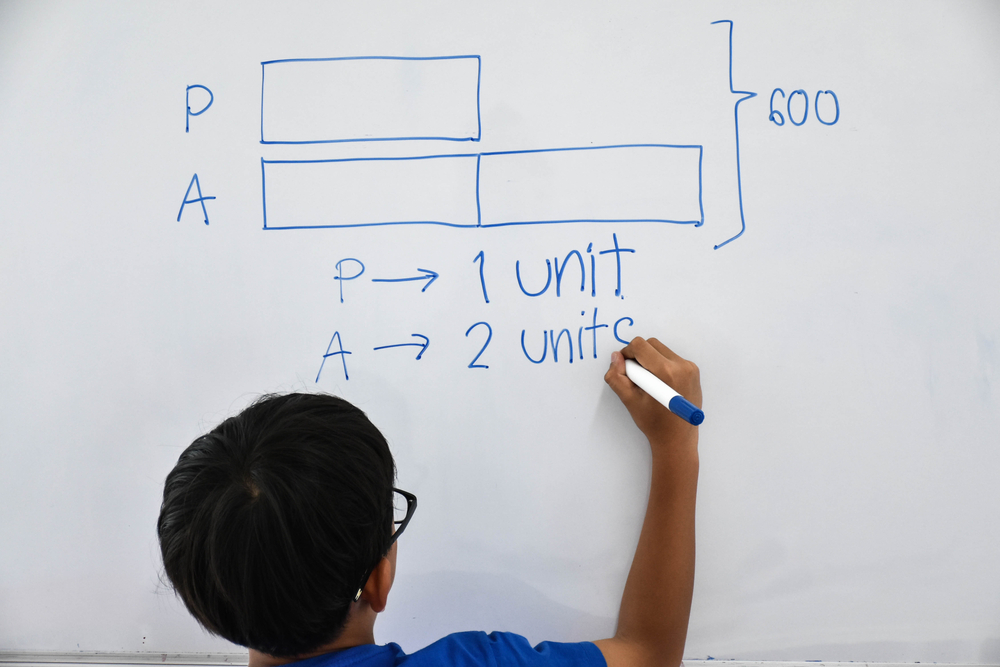




Graphs are essential tools that help children aged 7-9 develop critical thinking and essential mathematical skills. At this developmental stage, students are beginning to understand abstract concepts, and graphs serve as concrete visual aids that can make complex ideas more accessible. For parents and teachers, emphasizing the importance of graphs is vital for several reasons.
Firstly, graphs introduce basic data interpretation skills. By learning to read and create bar graphs, line plots, and pie charts, children enhance their ability to organize information logically. This is a foundational skill they will use not just in math, but in everyday decision-making and problem-solving.
Secondly, graphs help in the development of analytical skills. When children analyze data trends and patterns in graphs, they're learning to think critically. This fosters their ability to make predictions and draw conclusions, which translates to improved performance in science, social studies, and other subjects.
Lastly, incorporating graphs makes learning interactive and enjoyable. Presenting data visually can engage students more effectively than numbers on a page. This engagement is crucial for maintaining young learners’ interest and motivation.
Therefore, parents and teachers should prioritize teaching graphs to young children to solidify their understanding of mathematical concepts, improve analytical skills, and foster a love for learning.








