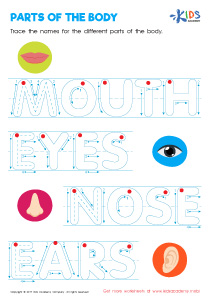
Physical Science Worksheets for Ages 7-9
3 filtered results
-
From - To
Unlock your child's curiosity with our engaging Physical Science Worksheets designed for ages 7-9. These activities blend fun and learning, covering essential topics such as energy, forces, and the properties of matter. Packed with colorful illustrations and hands-on experiments, our worksheets make complex concepts simple and enjoyable. Perfect for classroom use or homeschooling, they help young learners build a solid foundation in physical science through interactive, age-appropriate exercises. Ignite a passion for discovery and foster critical thinking skills with our expertly crafted worksheets, tailored specifically for curious minds.
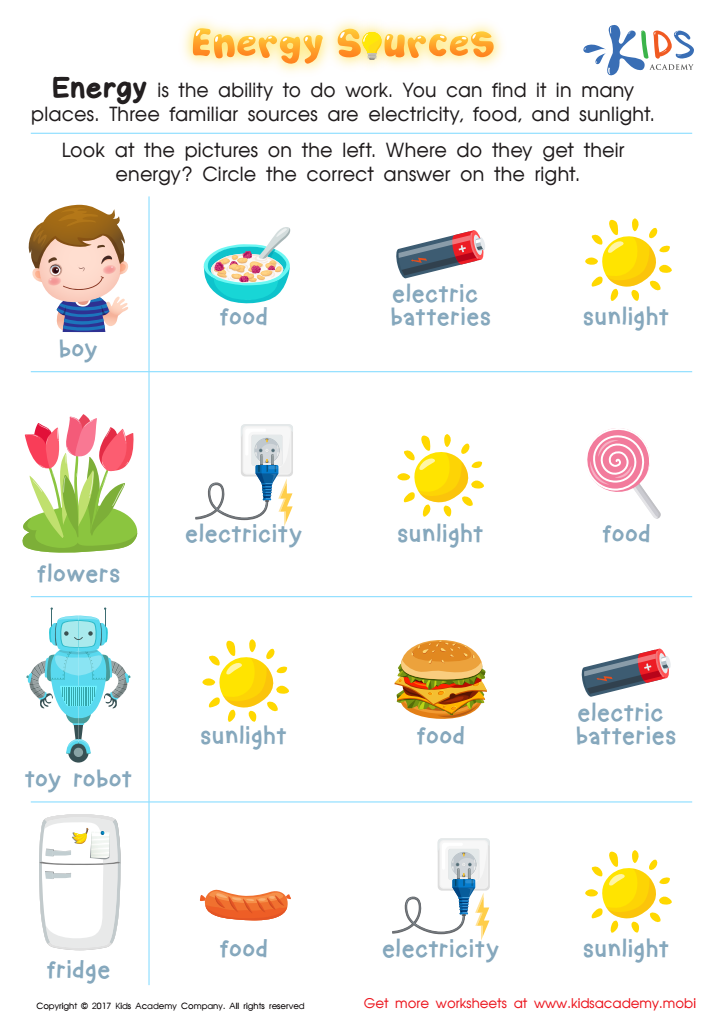
Energy Sources Printable
 Assign to My Students
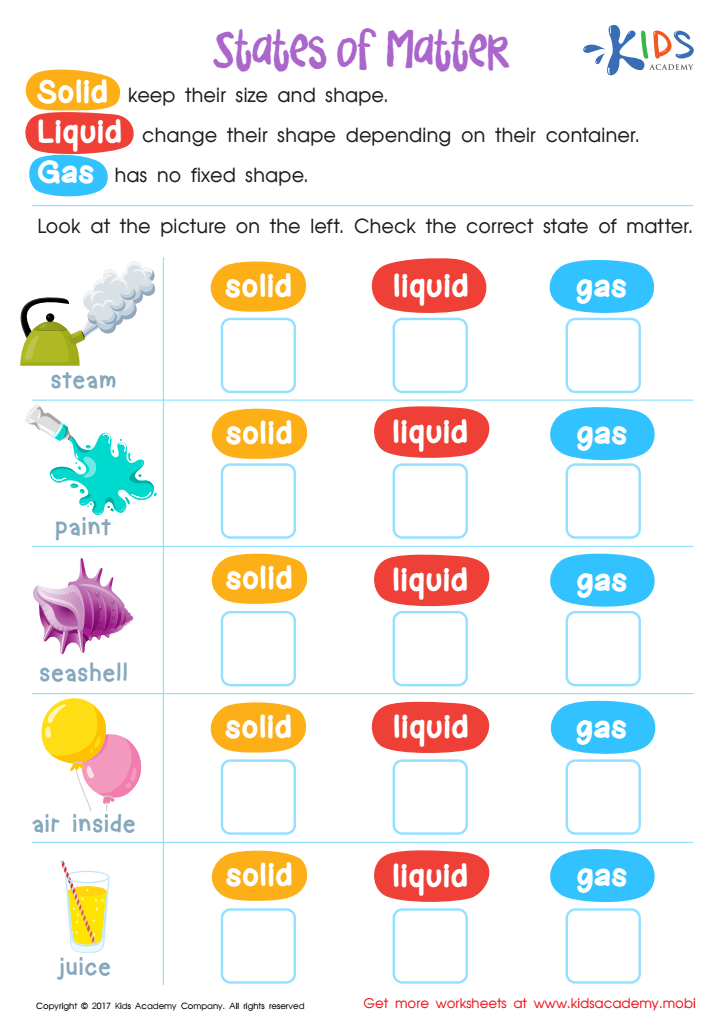
Physical Science: States of Matter Worksheet
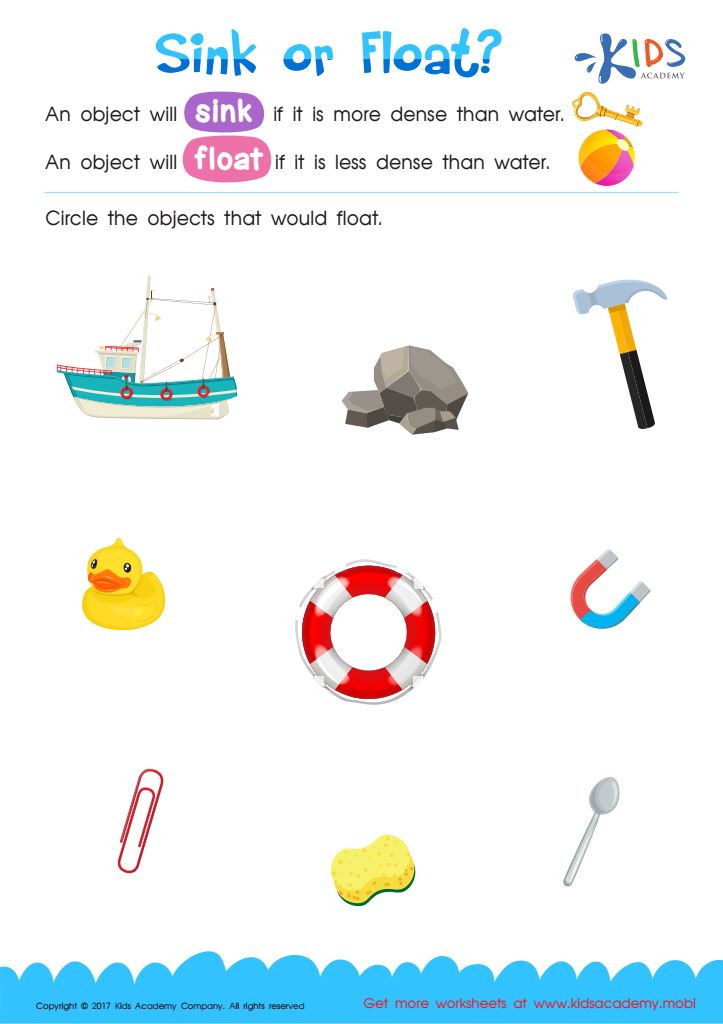
Sink or Float Printable







Encouraging an interest in physical science for children aged 7-9 is essential for several reasons. Firstly, physical science develops critical thinking and problem-solving skills. Kids engaging in simple experiments learn to make predictions, observe outcomes, and analyze results, fostering a scientific mindset that benefits all areas of learning. These foundational skills translate into better reasoning abilities and higher performance across subjects, including math and reading.
Moreover, teaching physical science at this age fuels natural curiosity. Young children constantly ask "why" and "how". Introducing them to physical science helps to answer these questions through hands-on activities and real-world applications. It nurtures their innate curiosity, making learning more enjoyable and keeping them engaged.
Physical science also strengthens foundational knowledge in areas like basic physics and chemistry, preparing children for more advanced concepts as they grow older. For example, simple lessons on gravity, motion, or states of matter lay the groundwork for future STEM (Science, Technology, Engineering, and Mathematics) learning, equipping children with the skills necessary for a technology-driven world.
Lastly, cooperative science activities encourage teamwork and communication. By working together on experiments, children learn valuable social skills such as collaboration, respect, and effective communication.
In summary, physical science education for ages 7-9 stimulates intellectual growth, nurtures curiosity, reinforces foundational knowledge, and fosters essential life skills, making it indispensable.