Vocabulary enhancement Worksheets for 7-Year-Olds - Page 4
153 filtered results
Difficulty Level
Grade
Age
-
From - To
Subject
Activity
Standards
Favorites
With answer key
Interactive
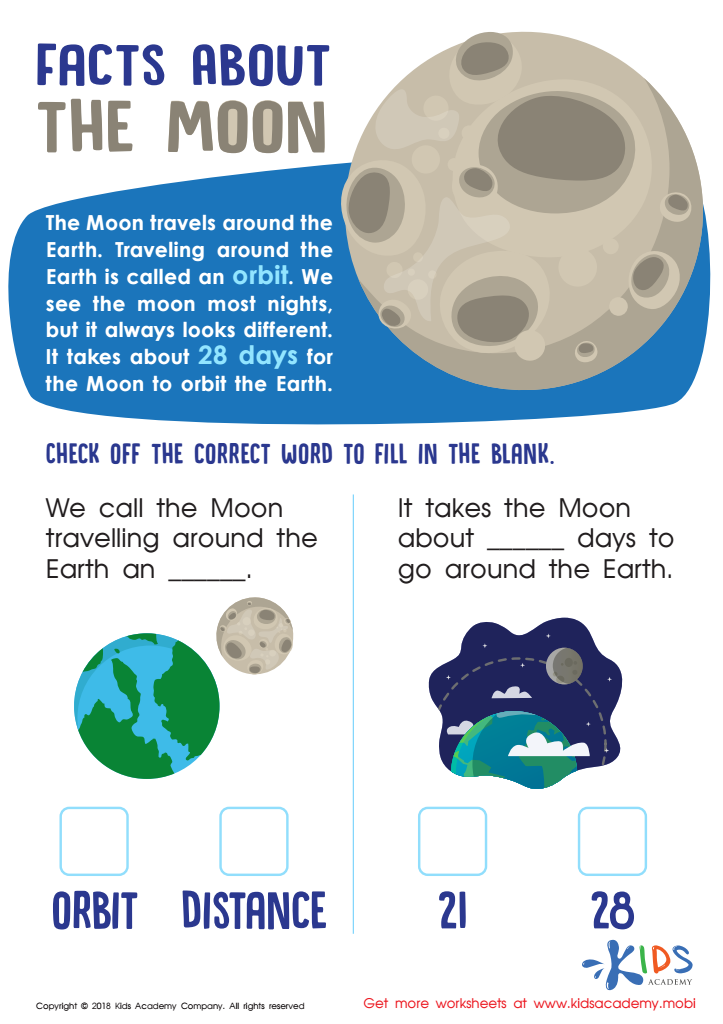
Facts About the Moon Worksheet
Have your child learn about our moon's orbit with this engaging worksheet! They can read the introductory paragraph for the required vocabulary, then read the sentences under the images and check off the correct boxes. Explore the wonders of the cosmos and our planet with this fun exercise!
 Assign to My Students
Facts About the Moon Worksheet
Worksheet
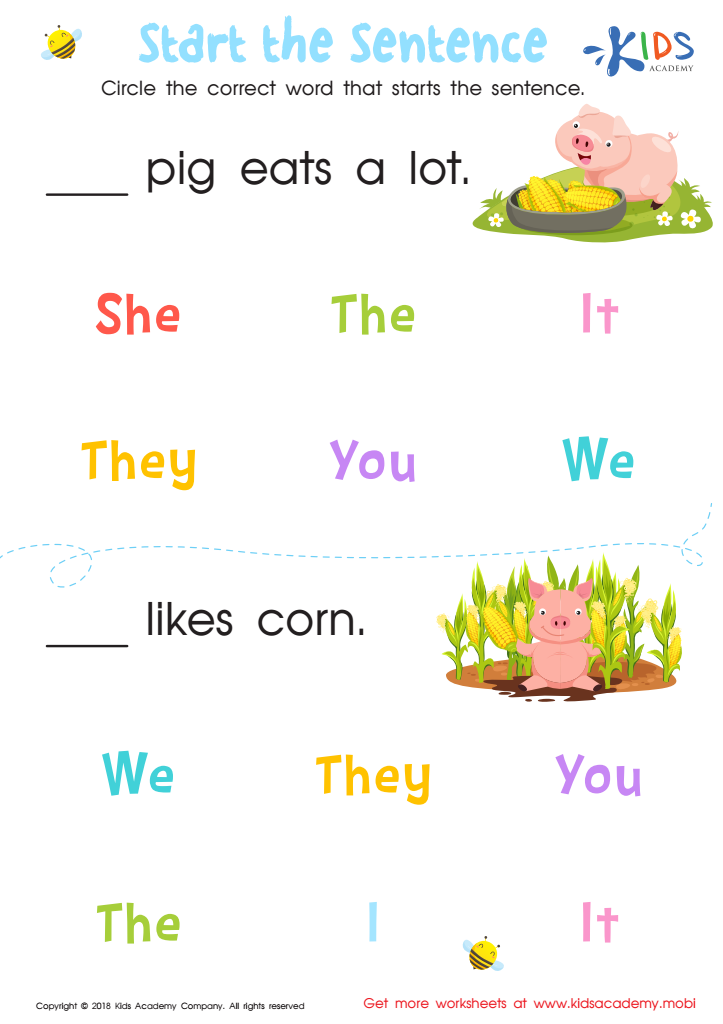
Start the Sentence Worksheet
Test your students' understanding of sentences with this easy worksheet. Ask them to read the sentences and circle the correct word that starts each. This will show how well their lessons have paid off and if they can construct short simple sentences.
Start the Sentence Worksheet
Worksheet
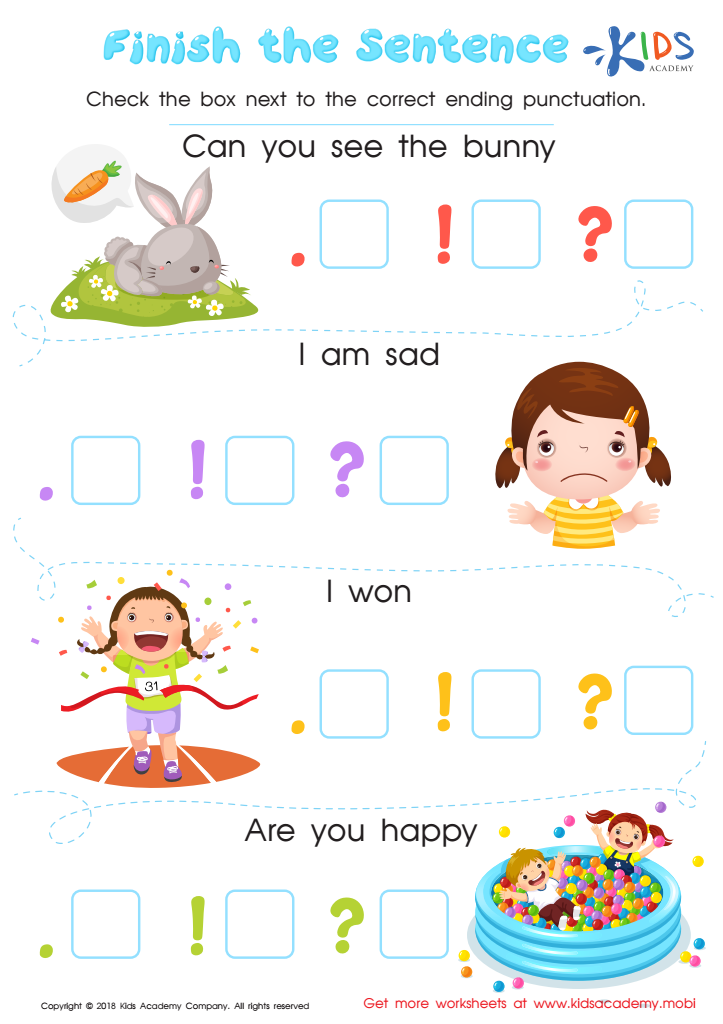
Finish the Sentence Worksheet
If your students have difficulty with punctuation, have them read sentences aloud and check the box next to the correct ending punctuation with this simple worksheet. Punctuation signals the tone and meaning of sentences. It helps students understand what is being communicated.
Finish the Sentence Worksheet
Worksheet
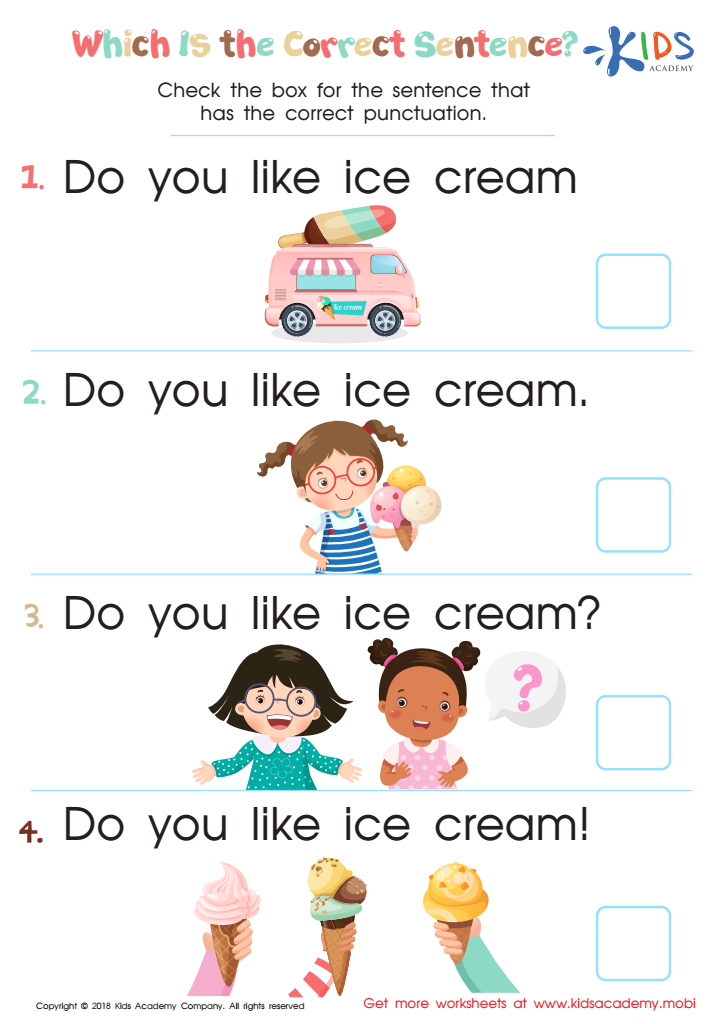
Which is the Correct Sentence? Worksheet
Punctuation is crucial in sentence formation. If your kid still doesn't grasp it, bigger hurdles await when writing sentences. Get them to read simple sentences, then ask if they know the right punctuation. Assist them in selecting the sentence that has the accurate punctuation.
Which is the Correct Sentence? Worksheet
Worksheet
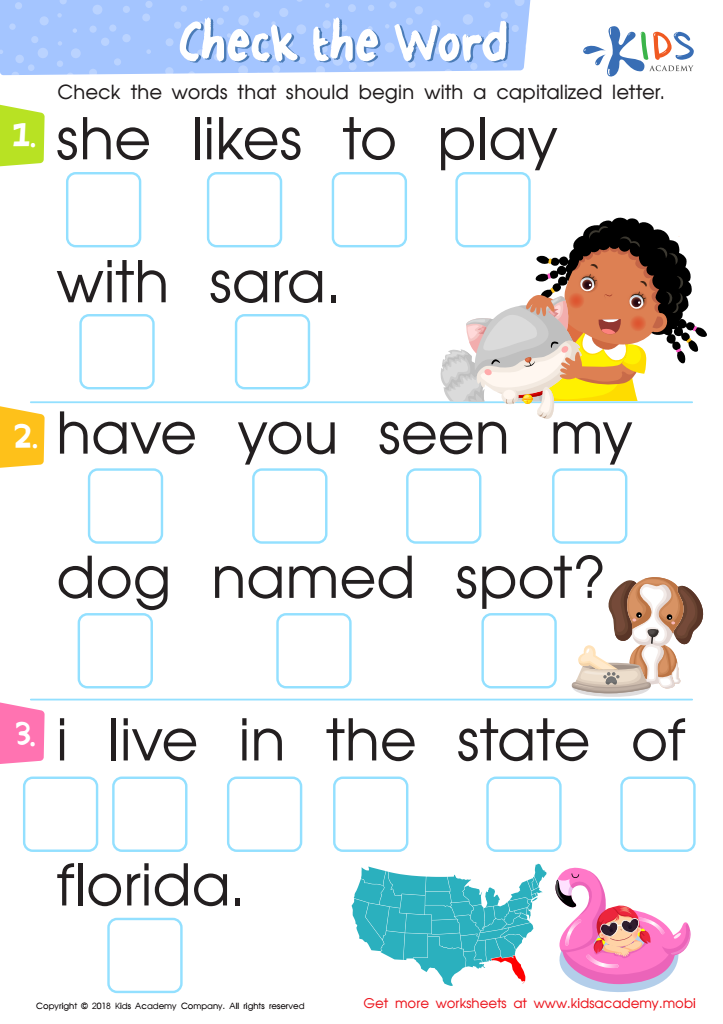
Check the Word Worksheet
Help your kids learn the rules of capitalisation - that the first word of each sentence and nouns must start with a capital letter. Use this worksheet to test their understanding: ask them to identify which words should begin with a capital.
Check the Word Worksheet
Worksheet
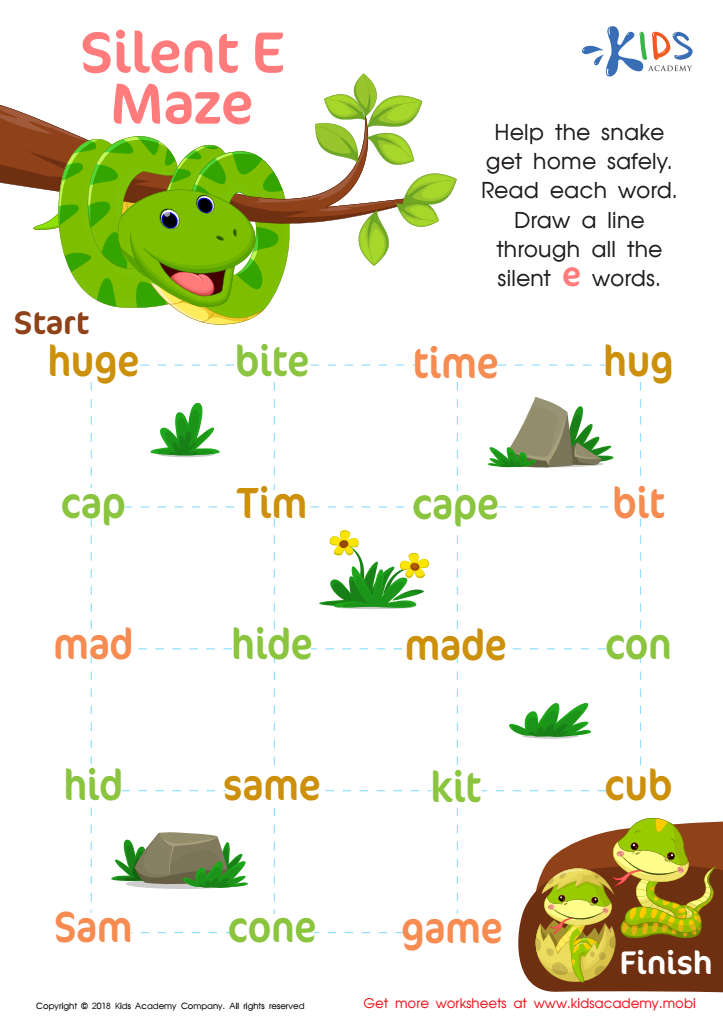
Silent E Maze Worksheet
Kids love mazes! This fun printable worksheet lets them help a mama snake get home to her babies, using Silent E words. They'll practice fine motor skills, while they draw lines through words that have Silent E and words with closed syllables that don't. It's a great way to help them recognize Silent E words!
Silent E Maze Worksheet
Worksheet
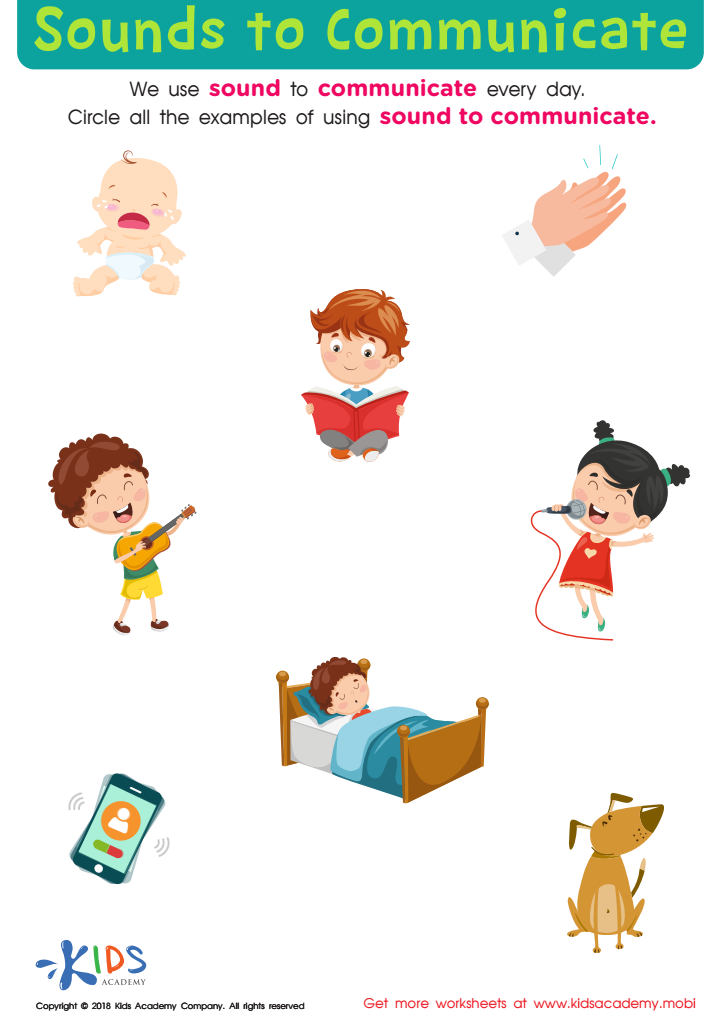
Sounds to Communicate Worksheet
Sounds are important for communication. Ask your students to name sounds people, animals and things make. Then, review this worksheet with them and see if they can identify the activities. Ask them to circle examples of sounds used to communicate.
Sounds to Communicate Worksheet
Worksheet
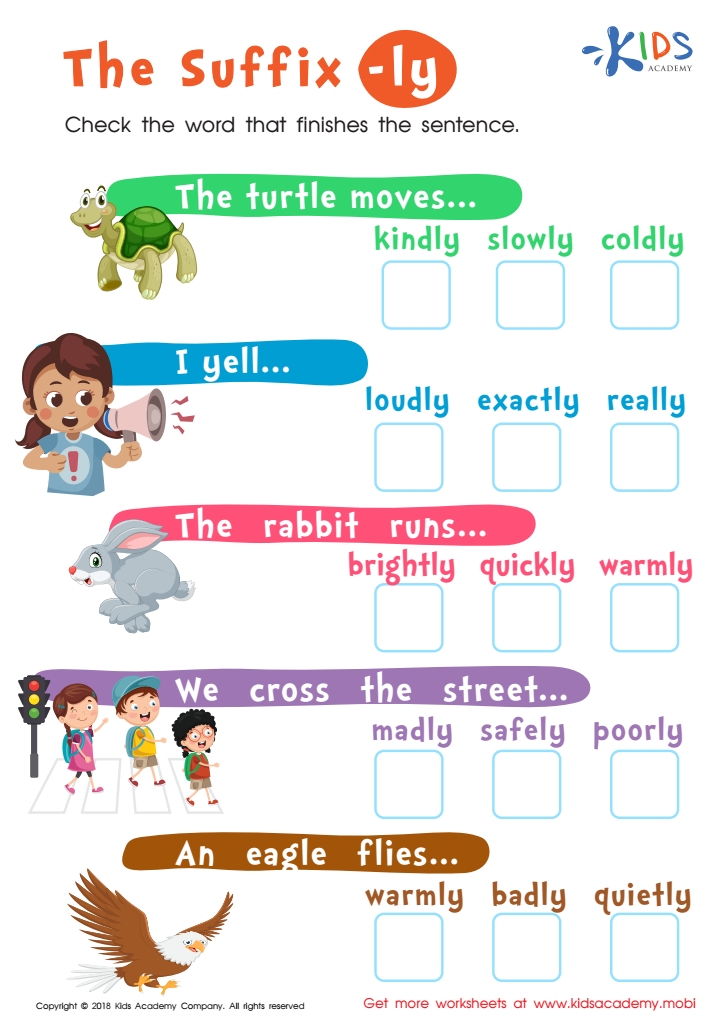
The Suffix -Ly Worksheet
Suffixes change the meaning of words: the -ly suffix usually describes how an action is done (e.g. slowly, quickly, loudly). Help your child understand this and then check out the fun worksheet. Ask them to identify the animals and people in the pictures, then read the sentences out loud and have them check the ones that finish the sentence.
The Suffix -Ly Worksheet
Worksheet
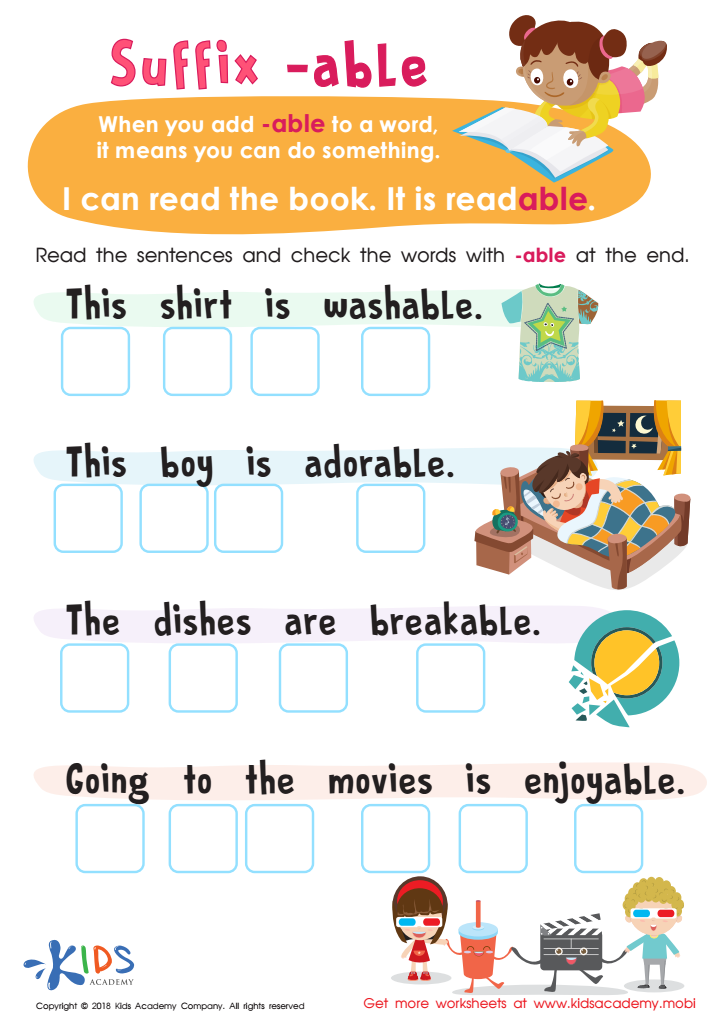
Suffix -Able Worksheet
Suffix -able means you can do something. Example: readable - means you can read it. Give kids examples then check this worksheet. Read sentences with kids, looking for words with -able at the end.
Suffix -Able Worksheet
Worksheet
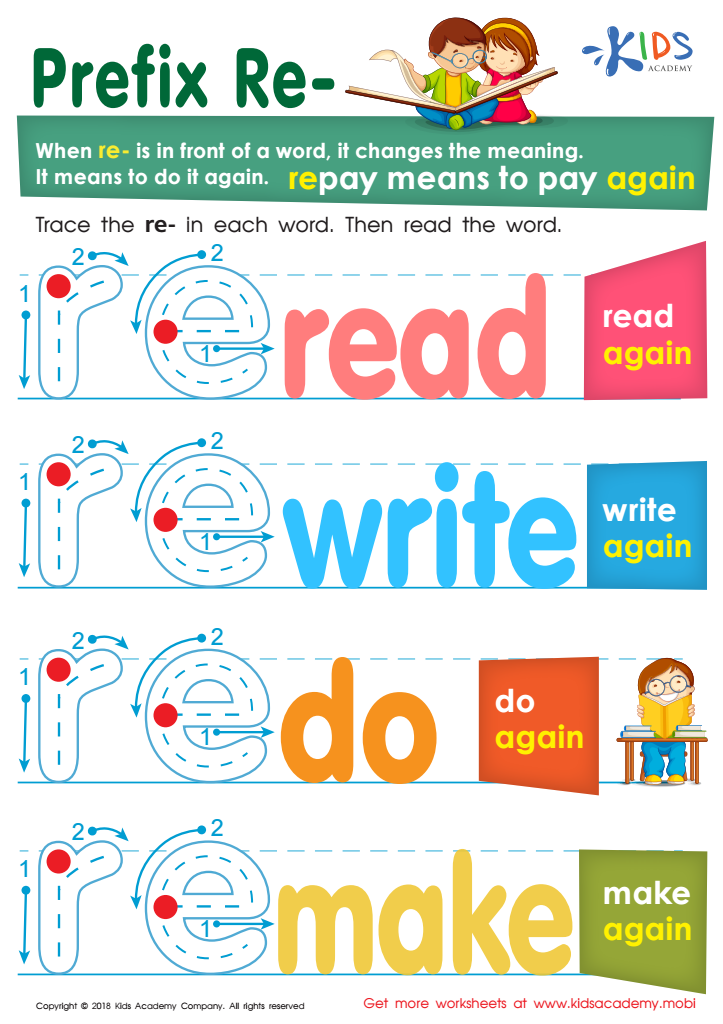
Prefix Re- Worksheet
Give your child examples of the re- prefix such as repay, restart, et cetera. Hold their hand and trace the re- in each word. Read the word aloud together and explain how it changes the meaning to 'to do again'. This worksheet will help your child see the re- prefix in action.
Prefix Re- Worksheet
Worksheet
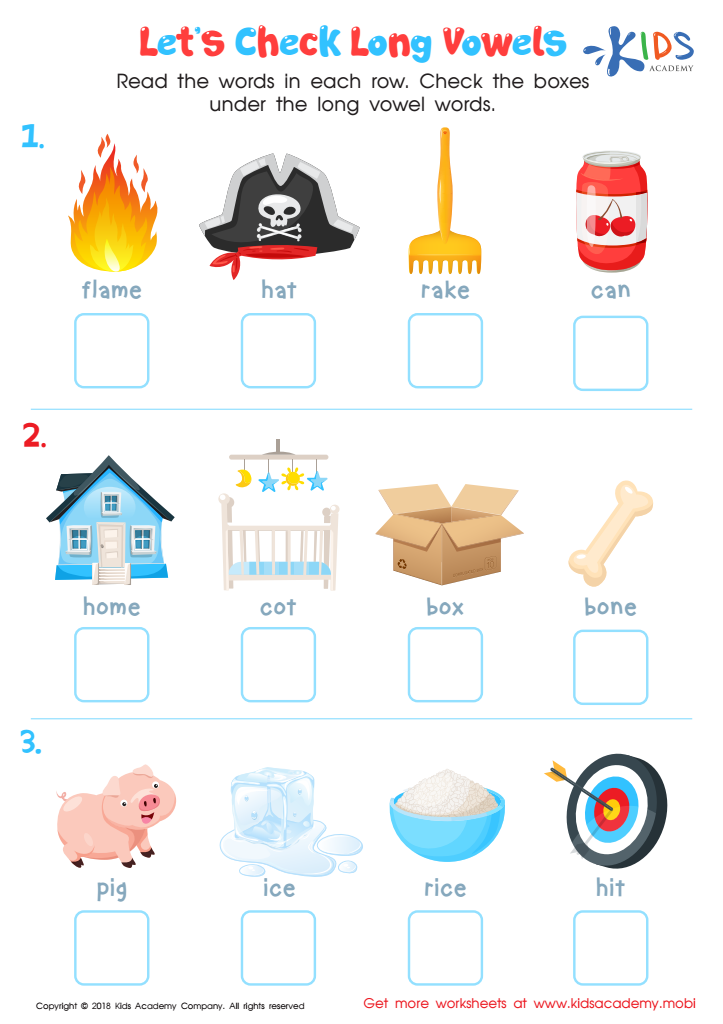
Let's Check Long Vowels: Assessment Worksheet
This worksheet helps your child identify objects and learn long vowel sounds. Ask them to say the names of the four objects in each row. Then, help them check the boxes to confirm they know the long vowel sounds. This will help them develop their reading skills.
Let's Check Long Vowels: Assessment Worksheet
Worksheet
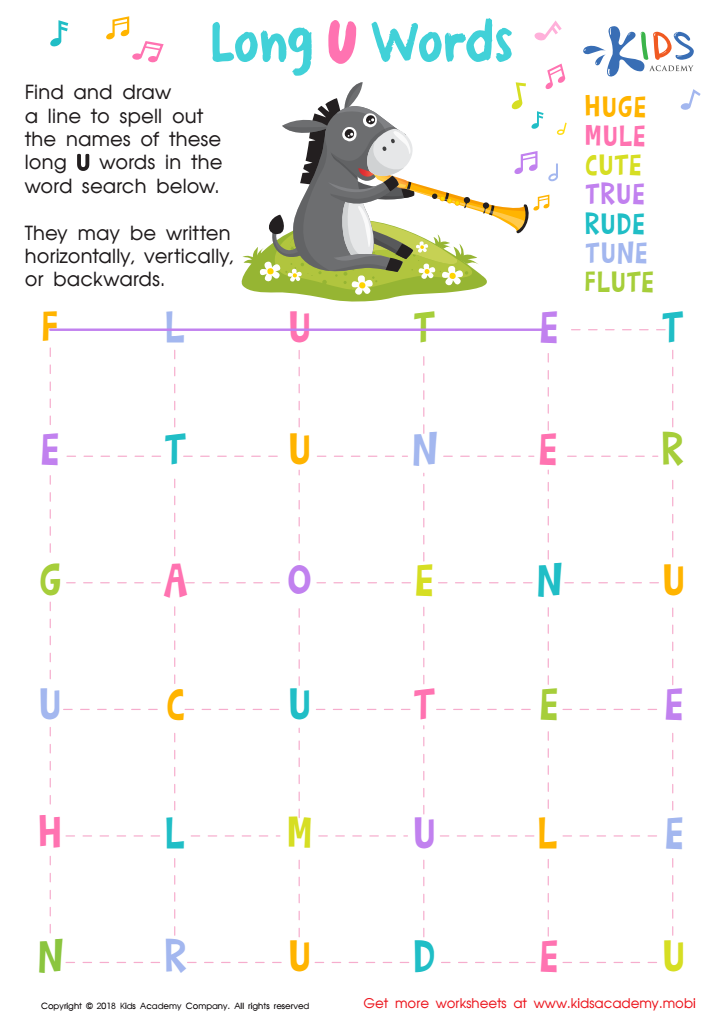
Long /u/ Words Worksheet
Your child needs to learn phonetics to enunciate and differentiate words. This fun worksheet encourages them to find and draw lines connecting the long 'U' words in the word search. Help them read the words on the right side of the picture, then look for them in the word search (horizontally, backwards or vertically).
Long /u/ Words Worksheet
Worksheet
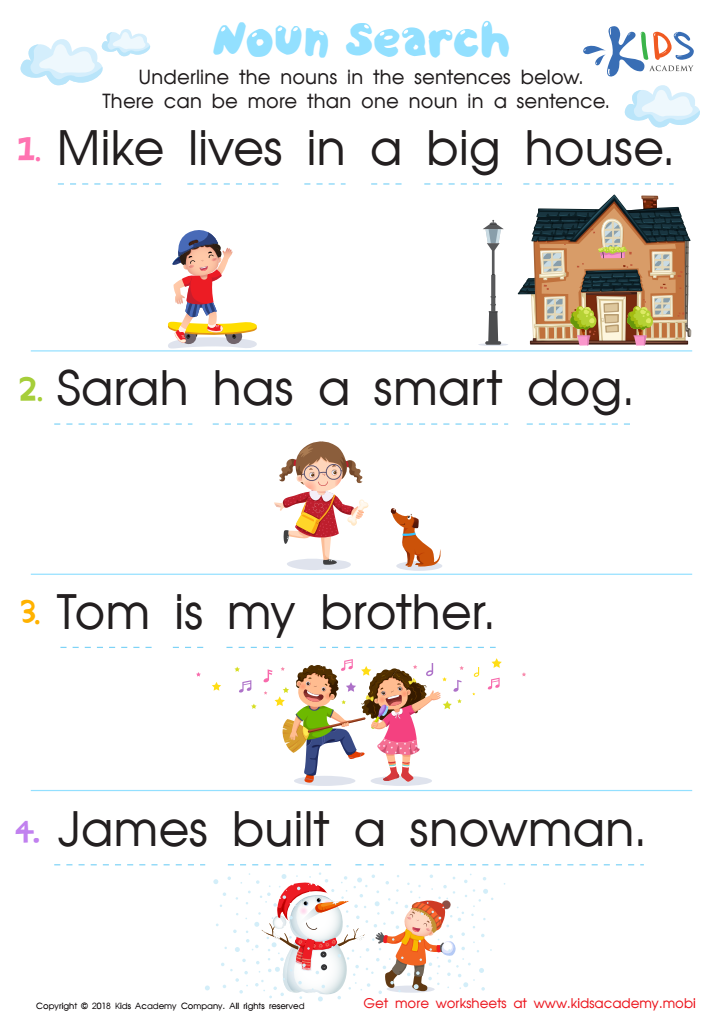
Noun Search Worksheet
To help your children learn the basics of grammar, start with nouns, verbs, adverbs and adjectives. This noun search worksheet will help your child understand the most common part of speech - the noun. Ask them to underline the nouns in each sentence. This is a great way to start learning proper grammar.
Noun Search Worksheet
Worksheet
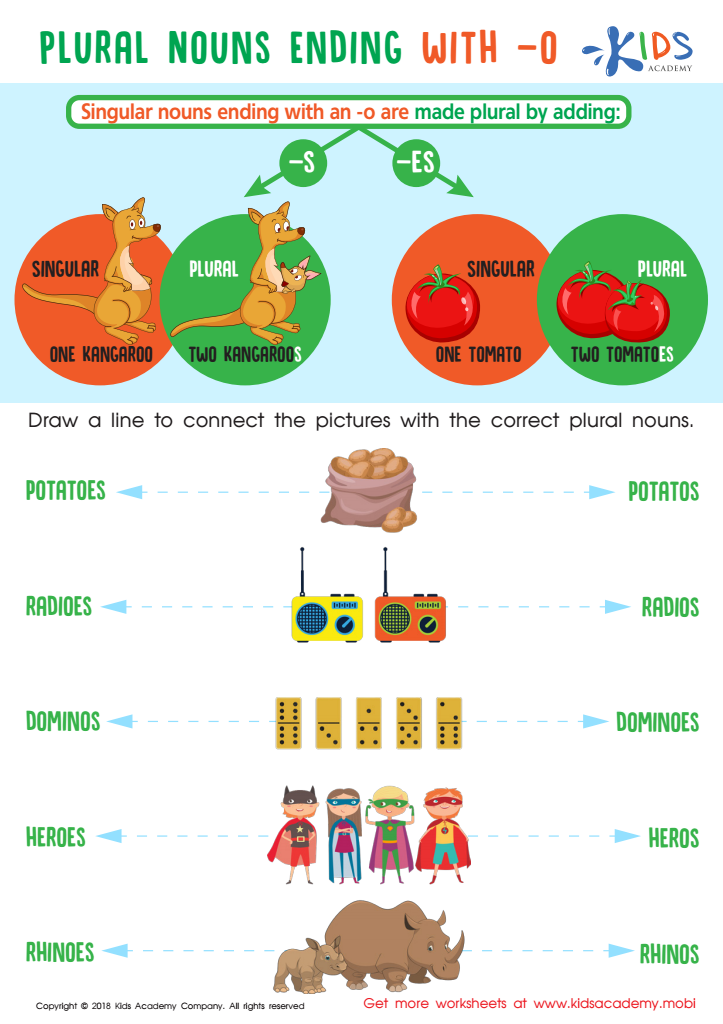
Plural Nouns Ending with -o Worksheet
Have your child use this printable sheet to learn how to make singular nouns plural. Ask them to draw a line from pictures to the correct plural forms, such as 'kangaroos' and 'tomatoes'. This worksheet provides an easy and fun way for your child to learn this important grammar concept.
Plural Nouns Ending with -o Worksheet
Worksheet
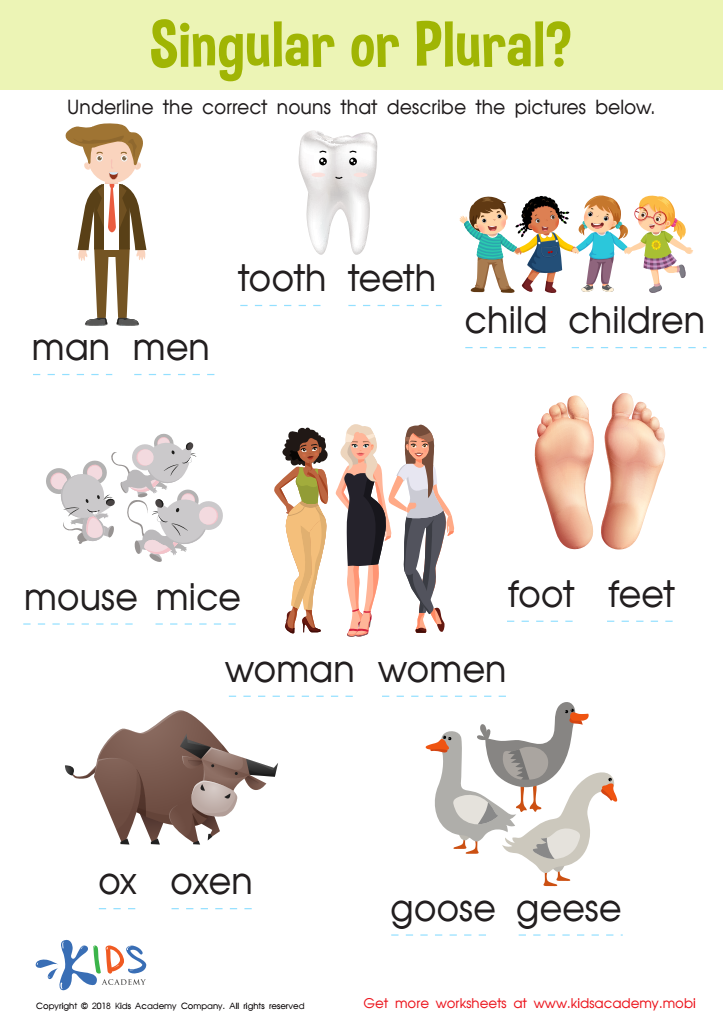
Singular or Plural? - Part 2 Worksheet
If your child knows their nouns, help them understand singular and plural words. Some are straightforward to make plural, but the rules can be tricky. Ease their confusion with this worksheet; they need to underline the correct nouns (singular or plural) that describe the pictures.
Singular or Plural? - Part 2 Worksheet
Worksheet
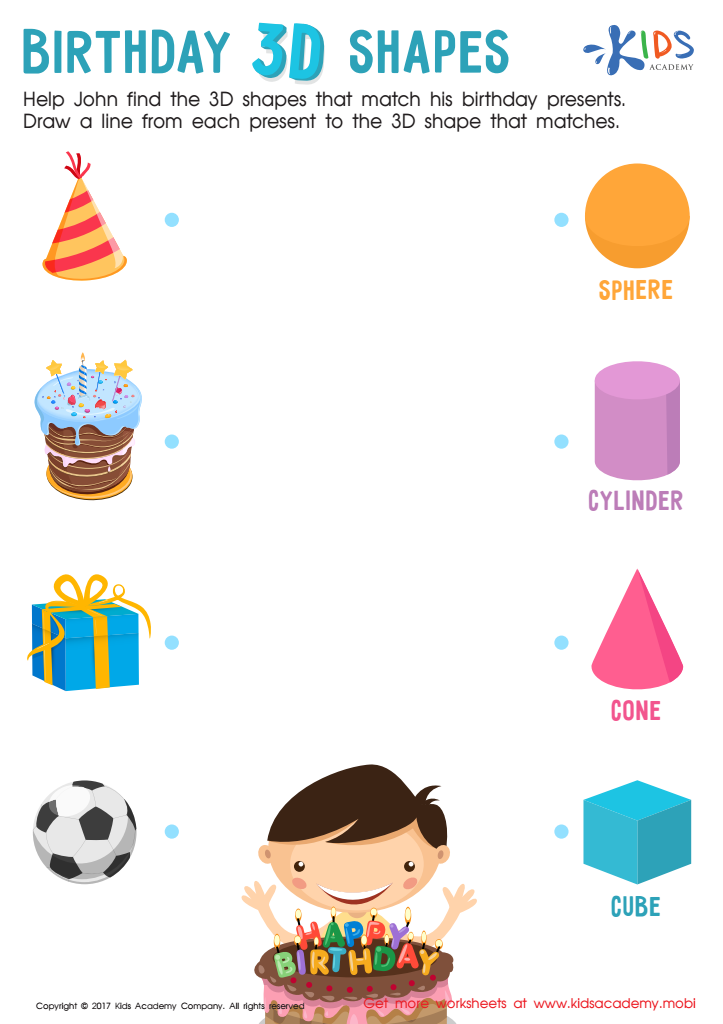
Birthday 3D Shapes Worksheet
It's John's birthday and he needs your help. Ask your kids to draw a line from each present to the matching 3D shape. First, check they understand the difference between 2D and 3D shapes. Then, they can help John figure out which 3D shape matches each present.
Birthday 3D Shapes Worksheet
Worksheet
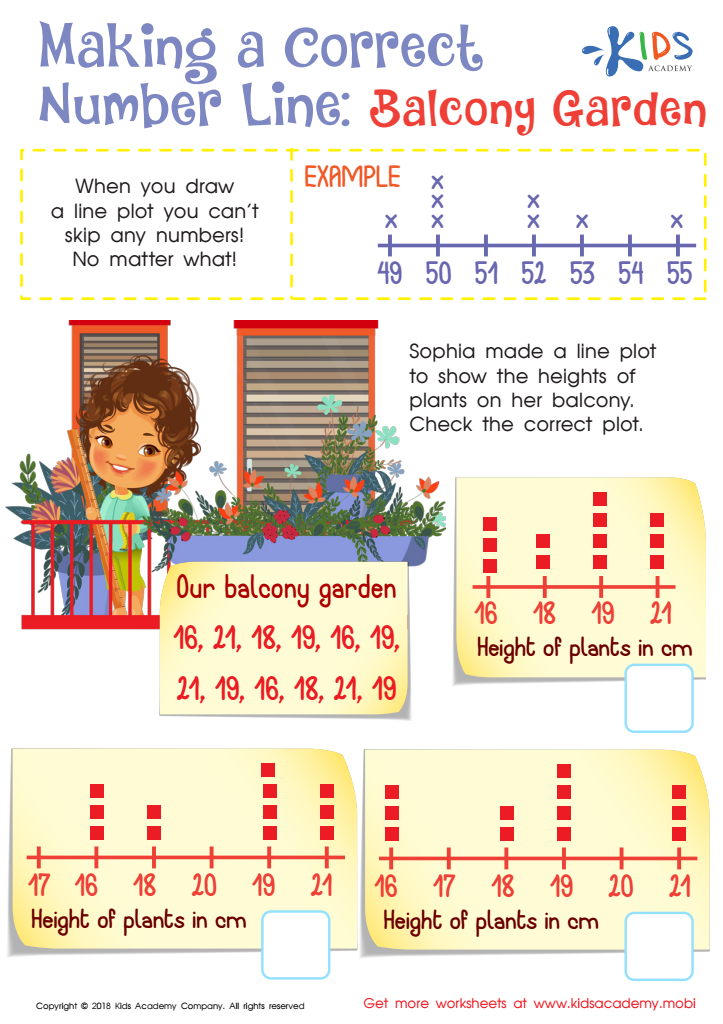
Making a Correct Number Line: Balcony Garden Worksheet
Teach your child to draw and identify a line plot with this worksheet. Have them help Sophia check her plot for the heights of plants in her balcony, ensuring no numbers are skipped. Line plots are a great way to quickly organize information and an essential skill your child needs.
Making a Correct Number Line: Balcony Garden Worksheet
Worksheet
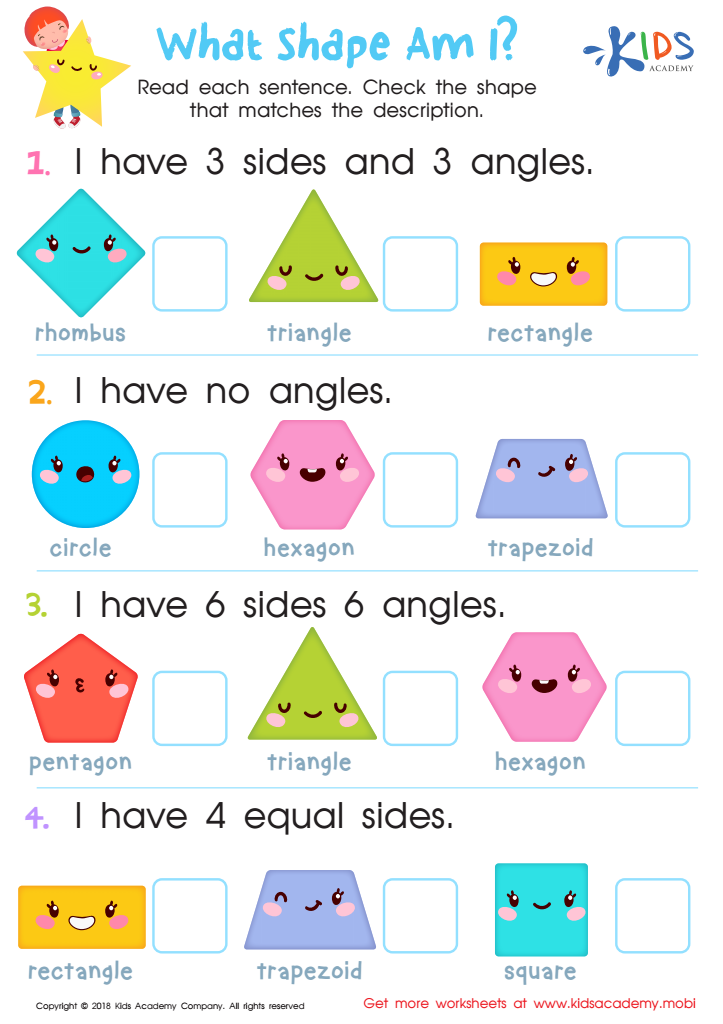
What Shape Am I? Worksheet
Help your child read each sentence in this colorful worksheet. Have them identify the shapes described and check the boxes. To prepare, ask simple questions like "How many sides does a triangle have?" and "Which shape has 4 equal sides?" Your child will become more skilled at shapes by the end of this activity.
What Shape Am I? Worksheet
Worksheet
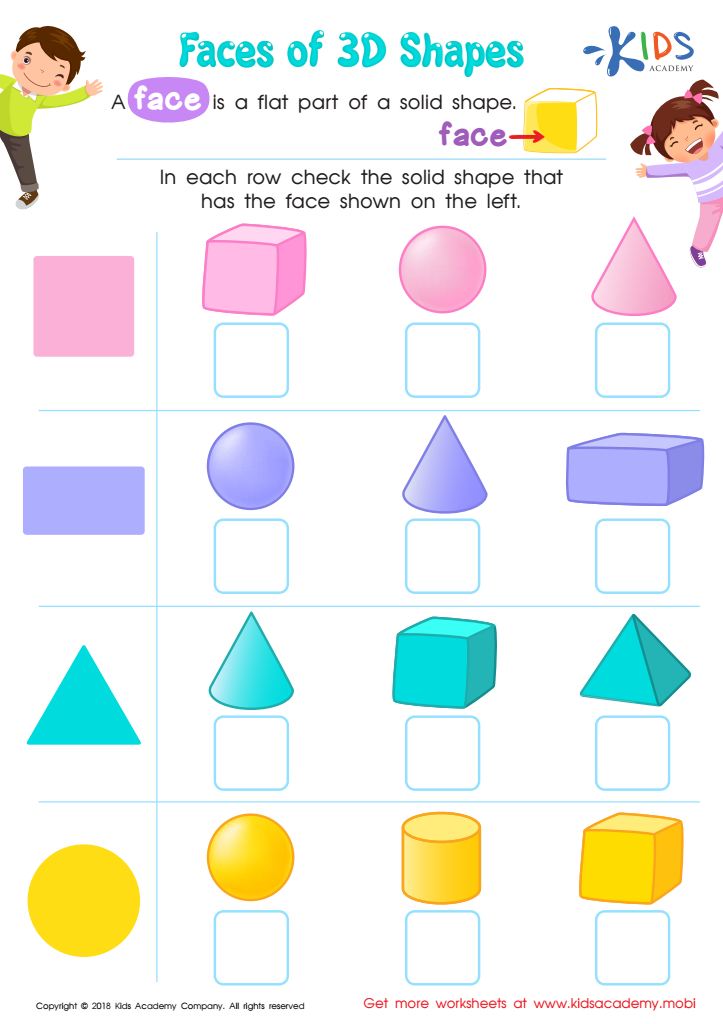
Faces of 3D Shapes Worksheet
Point at random body parts and ask your child to name them. Point to their face and ask them to identify it. Use this worksheet to show how "face" doesn't just refer to body parts - it can also mean the flat surface of a solid shape. Check the picture to find the matching solid shape for each face shown.
Faces of 3D Shapes Worksheet
Worksheet
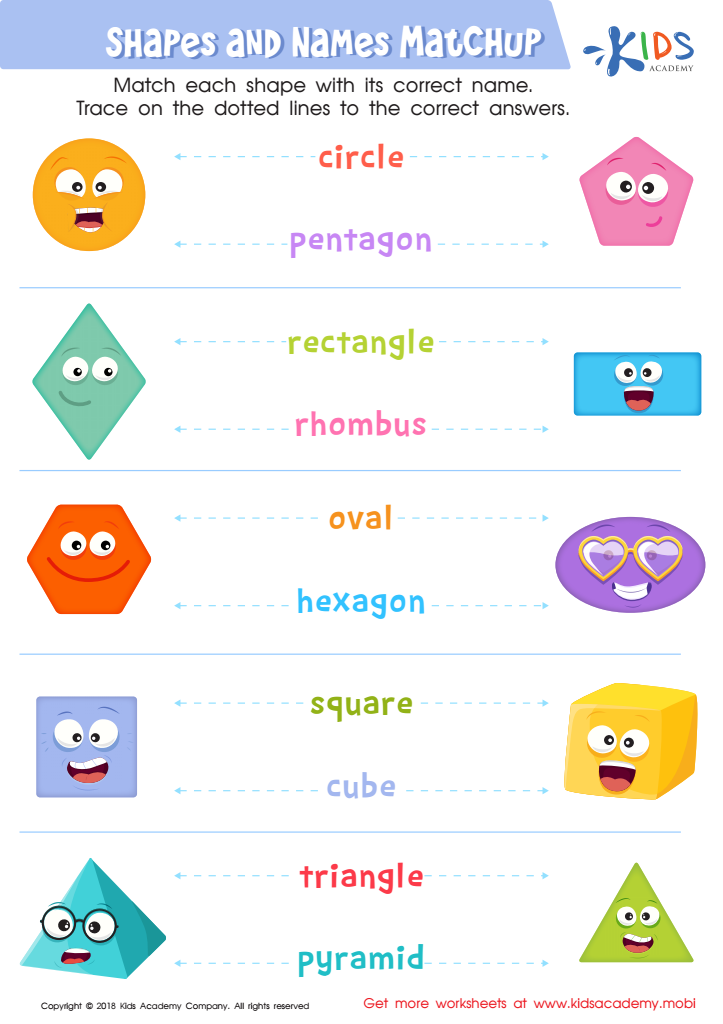
Shapes and Names Matchup Worksheet
Introduce your students to shapes if they aren't familiar. Look at the sheet with them and ask them to identify shapes. Help them match each shape to its name, then trace the dotted lines to the answers. Even if they haven't seen shapes before, this exercise will be easy - with your help!
Shapes and Names Matchup Worksheet
Worksheet
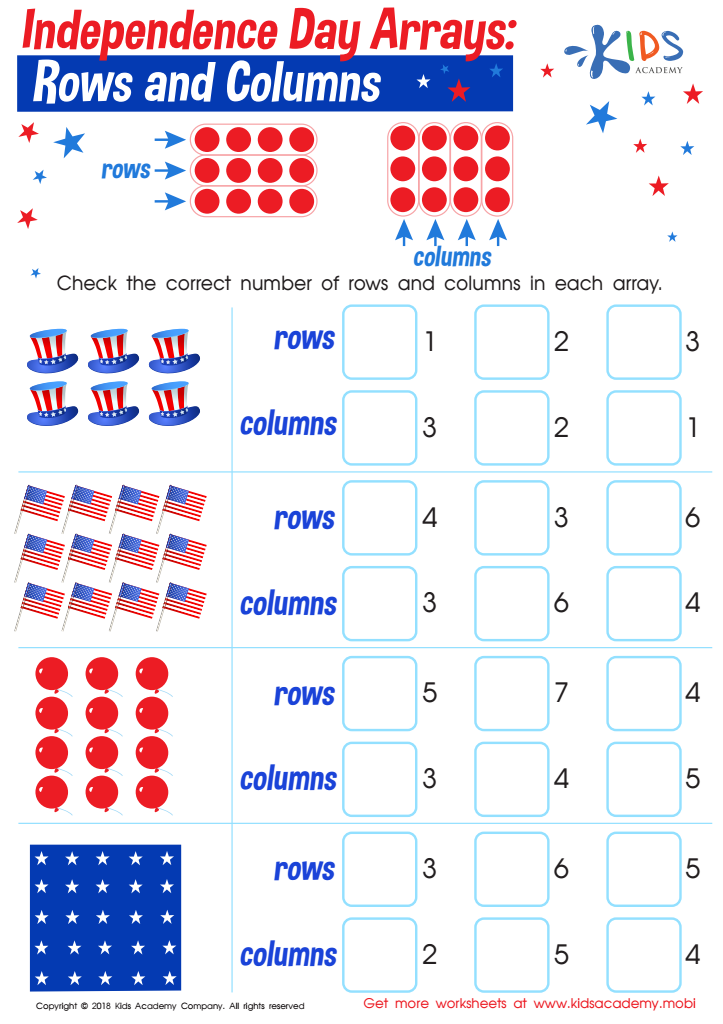
Independence Day Arrays: Rows and Columns Worksheet
Does your child know when Independence Day is? They might love the family picnics and fireworks, or they may not understand the significance of the holiday. After this worksheet, they'll comprehend it better. Help them look at the images and count the number of rows and columns in each array.
Independence Day Arrays: Rows and Columns Worksheet
Worksheet
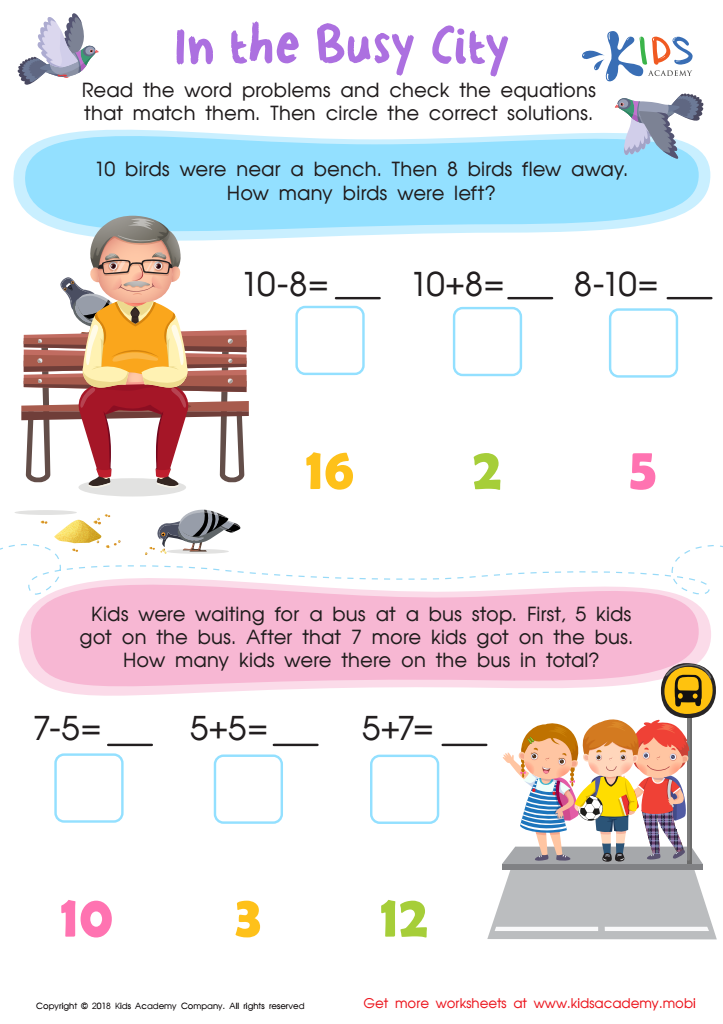
In the Busy City Word Problems Worksheet
Take a stroll and help your child solve math word problems with this fun printable from Kids Academy! Colorful images make the scenarios more enjoyable. Have them read the problem carefully and solve the matching equation. Check the box next to the answer to mark it as correct!
In the Busy City Word Problems Worksheet
Worksheet
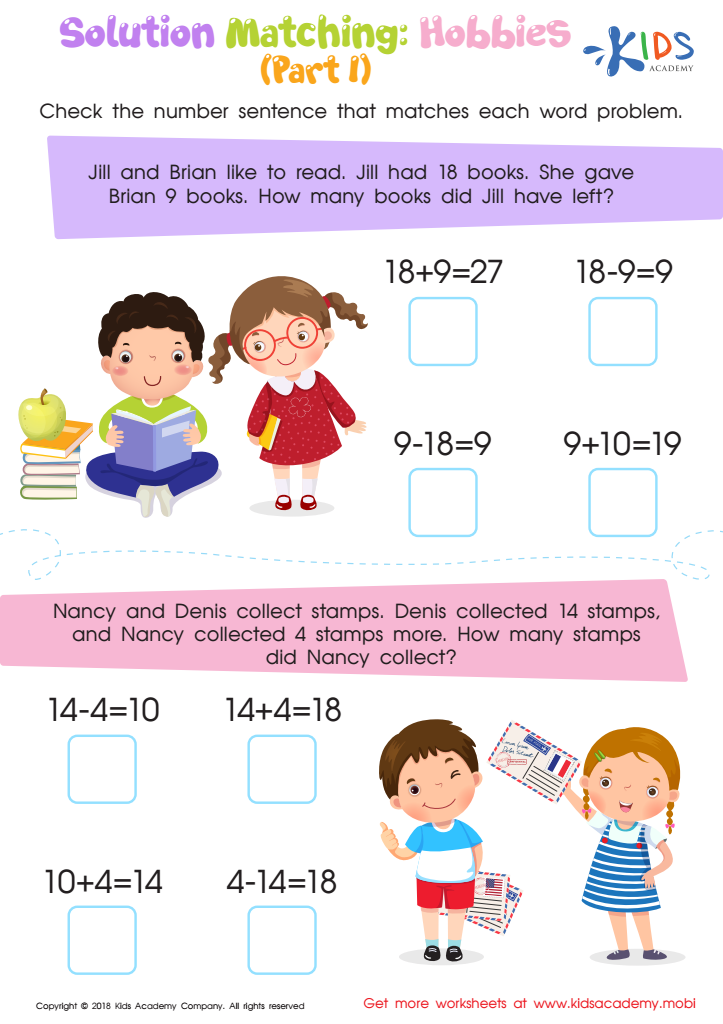
Solution Matching: Hobbies. Part 1 Worksheet
Math problems can be made more fun and easier to solve by relating them to real-life activities. Kids Academy's free printable worksheet helps your child to do this. Read each problem, paying attention to the numbers and terms, then choose the correct equation from the options given. This will help your child to understand the problem and get the right result!
Solution Matching: Hobbies. Part 1 Worksheet
Worksheet
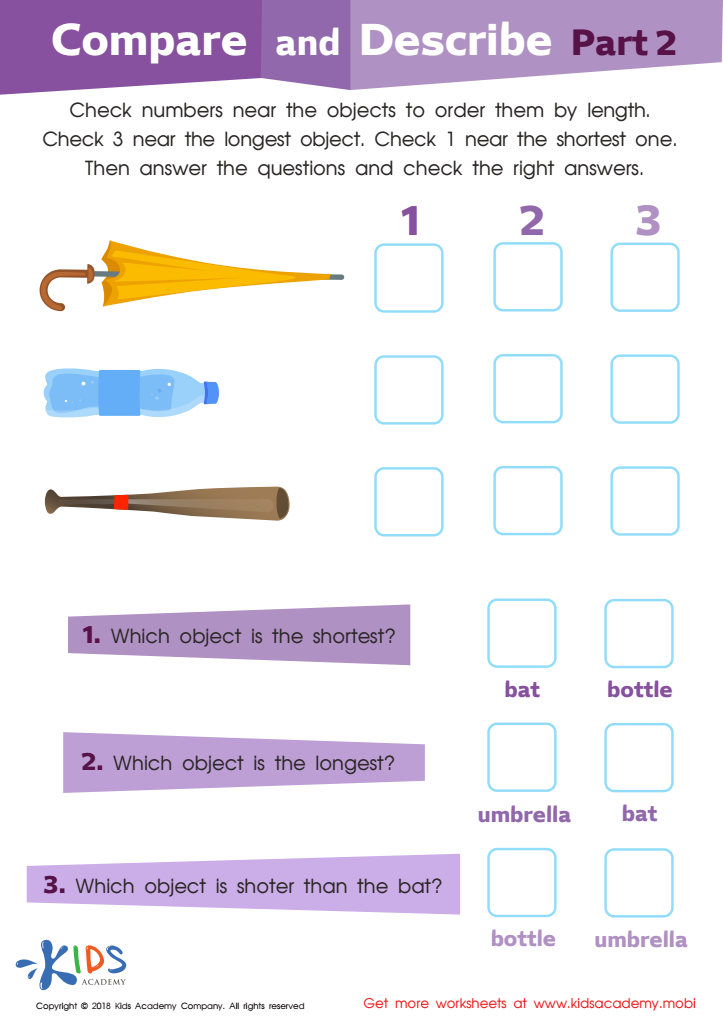
Compare and Describe: Part 2 Worksheet
Help kids hone their comparison skills with this fun measurement worksheet! Kids will sort objects by length and check off the boxes as they go. At the bottom, they'll read the questions and take a final look at the images to complete the exercise. An exciting way to learn measurement!
Compare and Describe: Part 2 Worksheet
Worksheet
Join Kids Academy for Free
Who is primarily going to use this learning content?