English Language Arts online worksheets - Page 15
704 filtered results
Difficulty Level
Grade
Age
-
From - To
Subject
Activity
Standards
Favorites
With answer key
Interactive
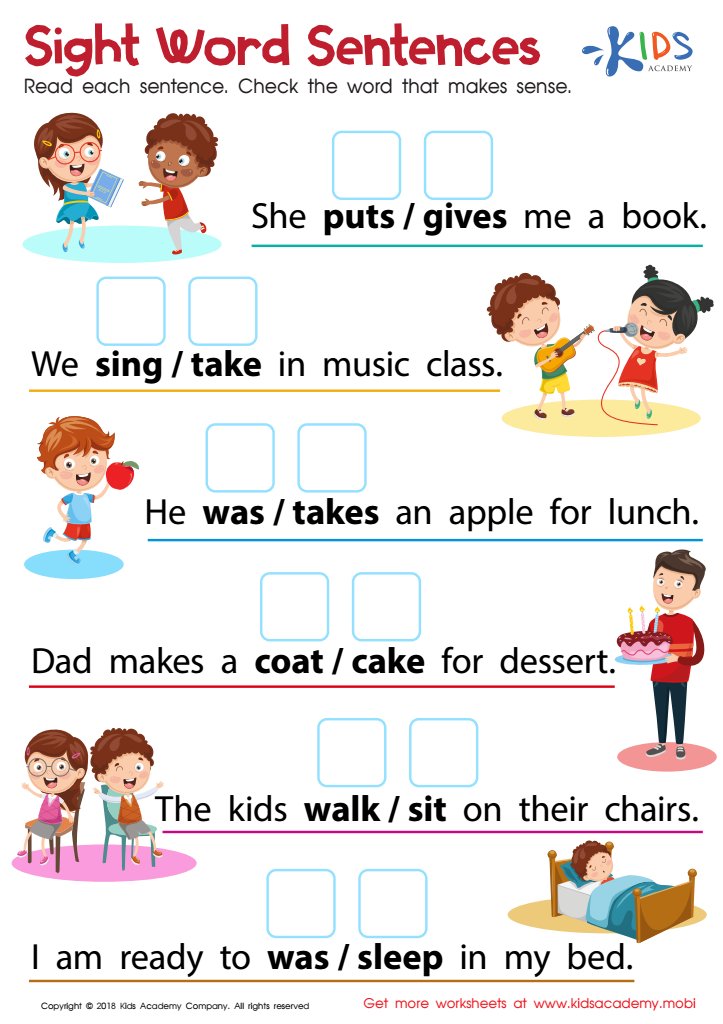
Sight Words Sentences Worksheet
It's important for kids to practice recognizing sight words in print. This PDF provides fun practice with sentences and engaging picture clues. As they work with sight words, they'll become more familiar and automatic. Help your kids build literacy skills!
 Assign to My Students
Sight Words Sentences Worksheet
Worksheet
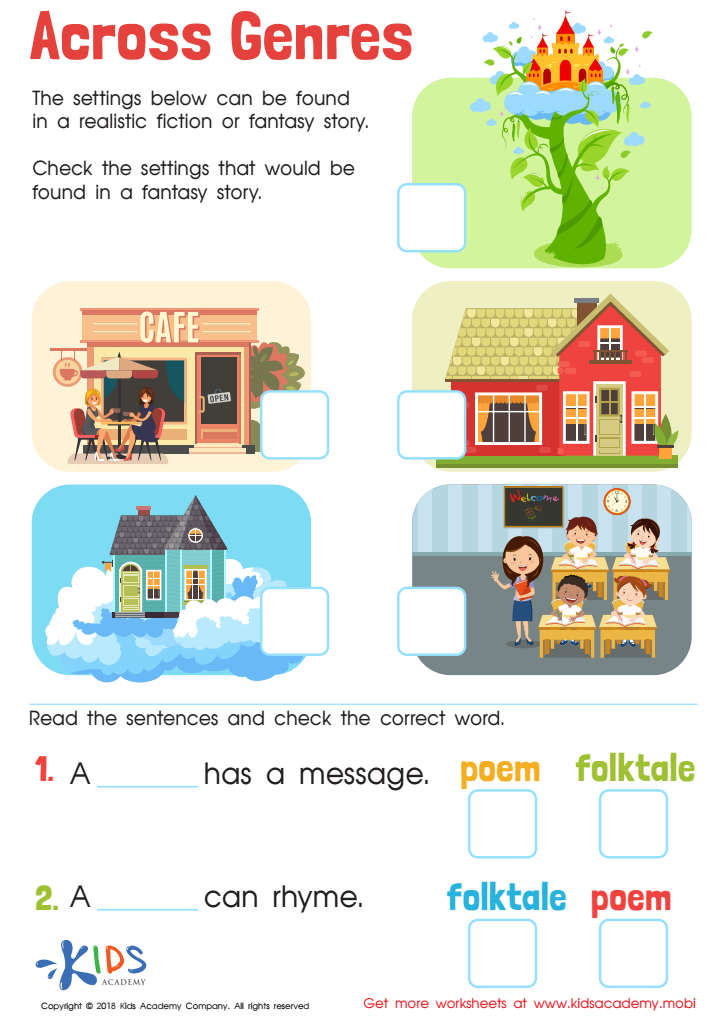
Across Genres Worksheet
Young readers can sharpen their reading skills by identifying elements of various literature genres. This PDF offers practice with realist stories, fantasies, poems and folktales. It will help them answer comprehension questions confidently, by recognizing settings and spotting which rhymes and which offers a traditional message.
Across Genres Worksheet
Worksheet
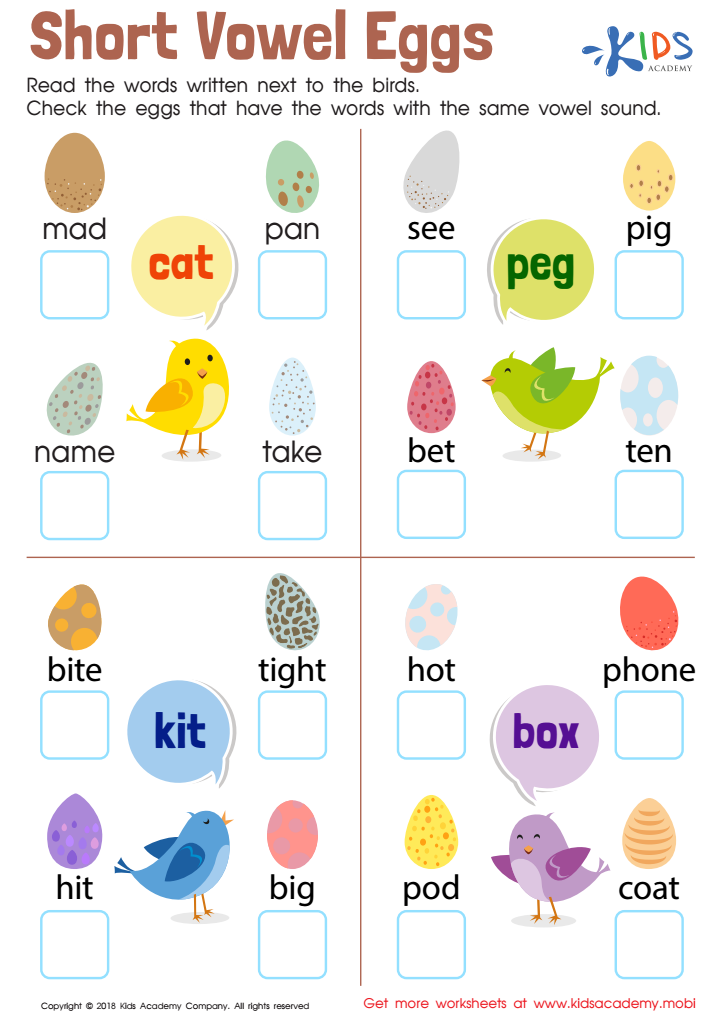
Short Vowel Eggs Worksheet
Your students will love helping these birdies pick the short vowel eggs! Have them read the words in the thought bubbles, then check off the boxes with the same short vowel sounds. The bright colors of this free Worksheet will draw them in and get them practicing their vowels!
Short Vowel Eggs Worksheet
Worksheet
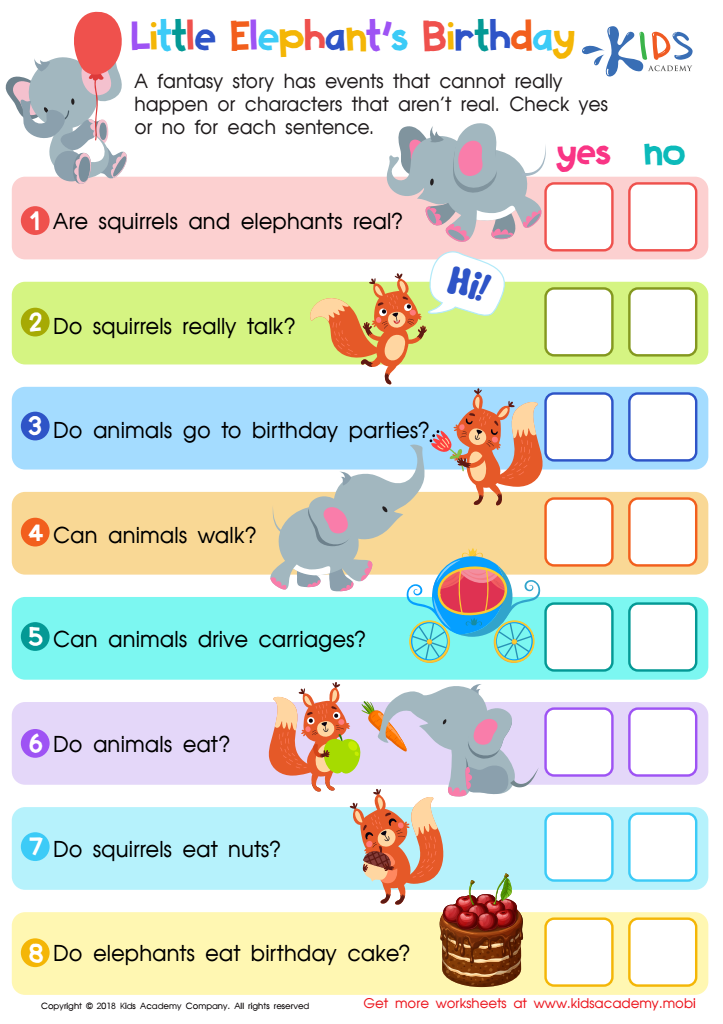
Little Elephant's Birthday Worksheet
It's Little Elephant's birthday! Help your students celebrate with this fun worksheet full of colors and pictures. Deciding which questions are facts and which are fiction will help them differentiate between fantasy stories and reality. Let them have fun learning why certain elements of fantasy can't be true!
Little Elephant's Birthday Worksheet
Worksheet
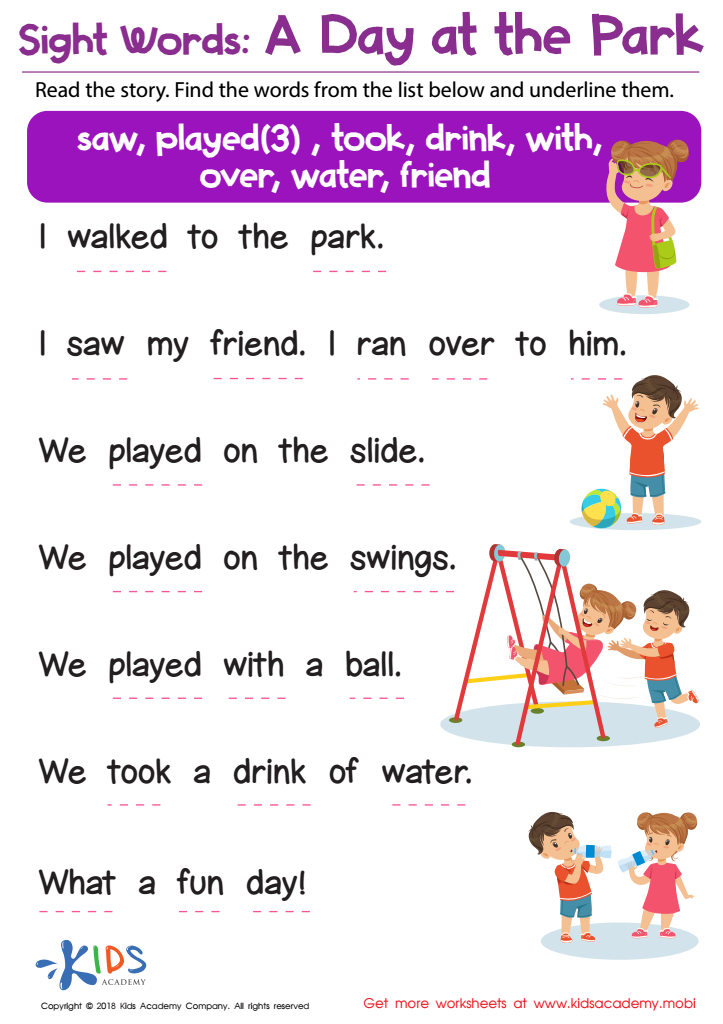
Sight Words: A Day at the Park Worksheet
This worksheet offers kids practice reading sight words in a story. With picture clues and repetitive wording, they'll work with words that can't be sounded out to reinforce their learning. This is an important step in the reading process that helps kids become more confident readers.
Sight Words: A Day at the Park Worksheet
Worksheet
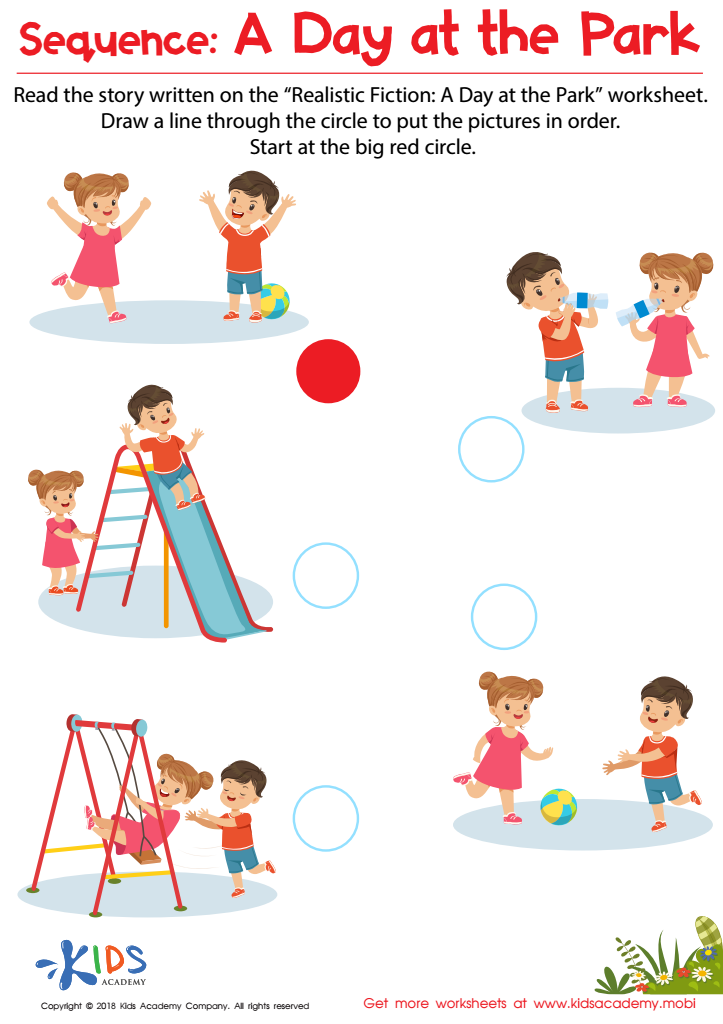
Sequence: A Day at the Park Worksheet
Help your child sequence the events of the story they just read with this activity! Start with the big red circle and draw lines to the other circles next to the images in the correct order. It's a great way to practice their reading skills! Try this downloadable worksheet today!
Sequence: A Day at the Park Worksheet
Worksheet
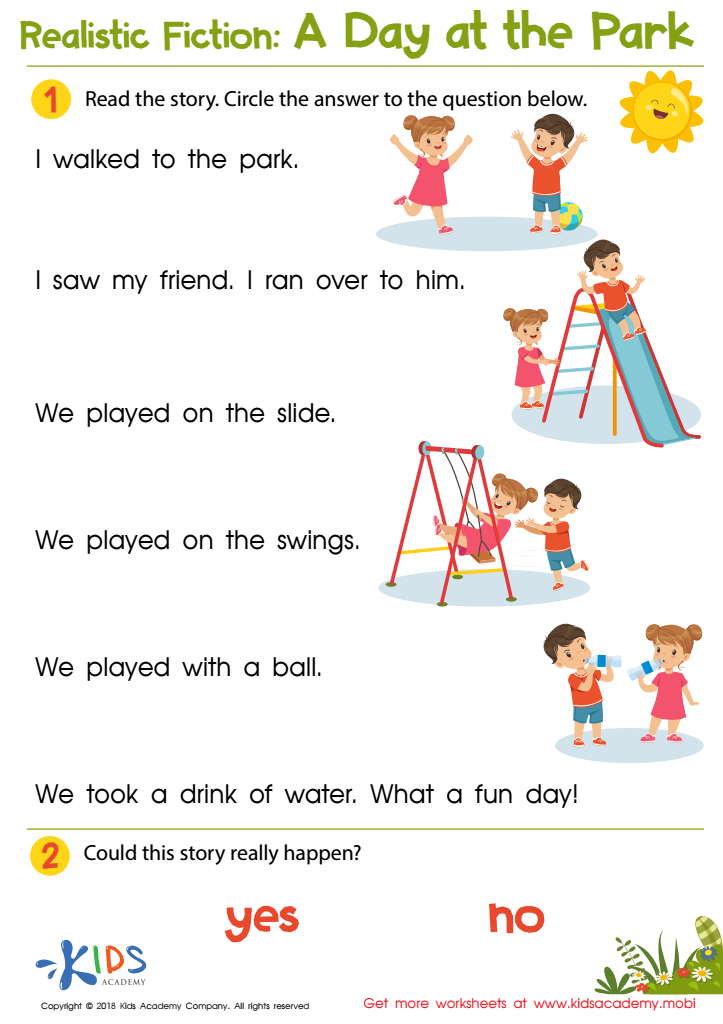
A Day at the Park Worksheet
Kids as young as preschool-age can be taught to evaluate stories! Use this fun worksheet about a day at the park. Read each sentence aloud, looking at the pictures. Ask your child if the events in the story could happen in real life - if yes, circle yes, otherwise circle no. When finished, discuss with them the genre, realistic fiction.
A Day at the Park Worksheet
Worksheet
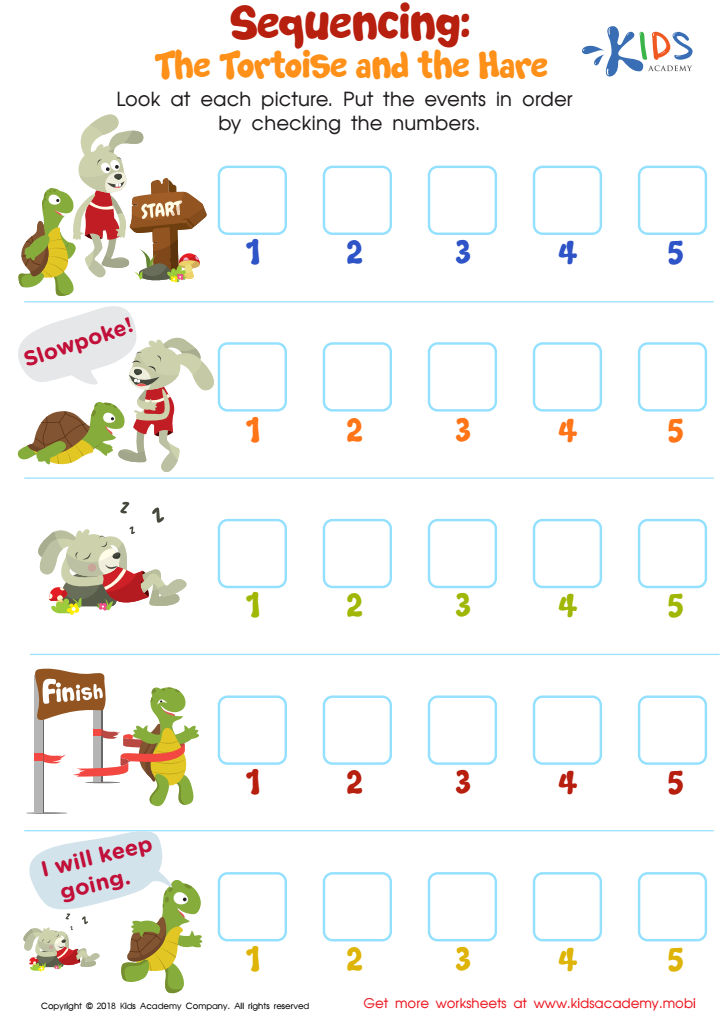
Sequencing: The Tortoise and the Hare Worksheet
Help your child become an independent reader and critical thinker with a sequencing worksheet from Kids Academy! Have them read the classic tale of the tortoise and the hare and use the accompanying worksheet to check their understanding of the story's sequence of events. Have kids identify the correct order of events by selecting the box next to the correct number for each image!
Sequencing: The Tortoise and the Hare Worksheet
Worksheet
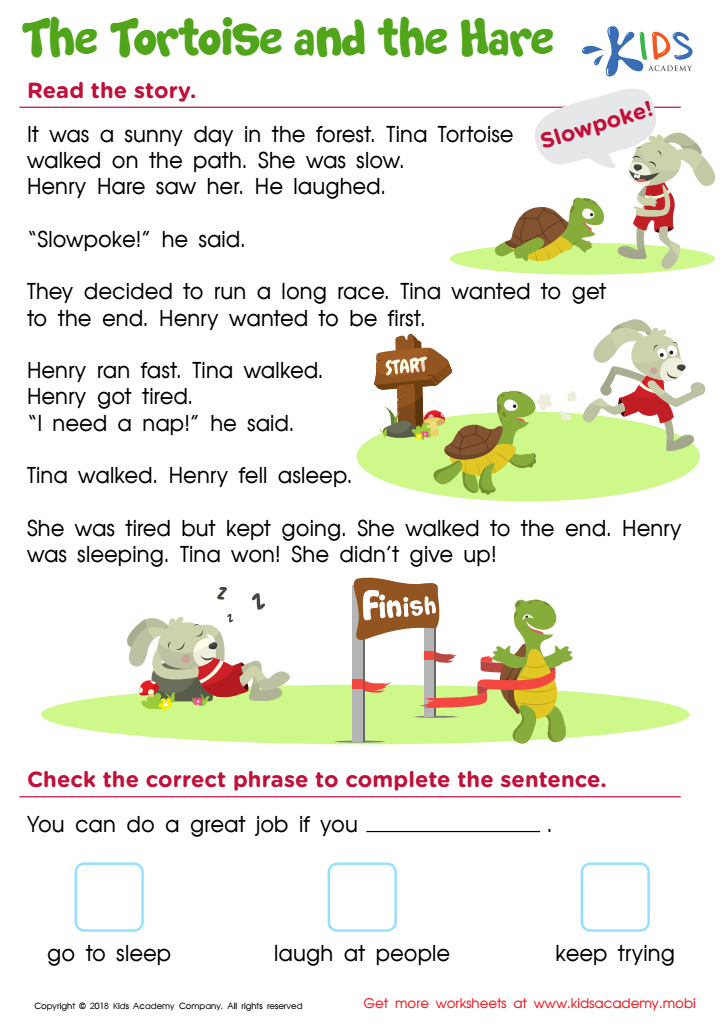
The Tortoise and the Hare Worksheet
Help your child uncover the hidden moral in a classic children's tale with this free downloadable worksheet. Joyful illustrations bring the story to life and help young readers visualize the events. With your help, they can answer the question and fill in the blank with the phrase that serves as the story's lesson. Check the box to complete the worksheet!
The Tortoise and the Hare Worksheet
Worksheet
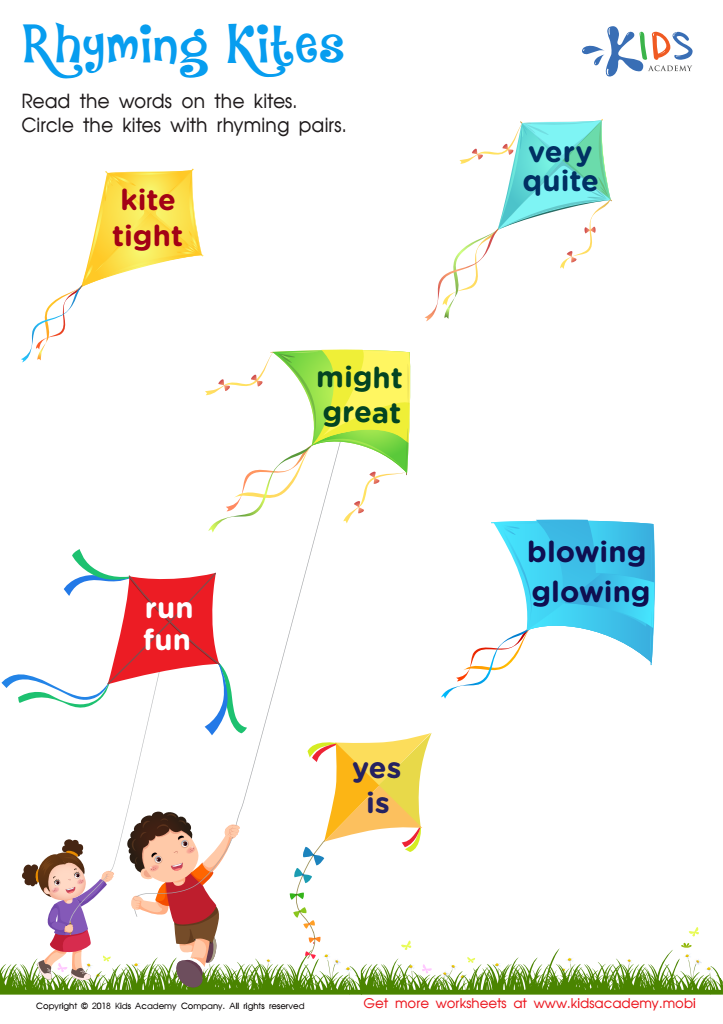
Rhyming Kites Worksheet
On a spring day, fly a kite! Kids Academy has a rhyming worksheet to boost your child's skills. Read the pairs of words aloud. Circle the kites if they rhyme, leave them blank if they don't. Listen carefully and find all the rhyming word pairs to complete this sheet!
Rhyming Kites Worksheet
Worksheet
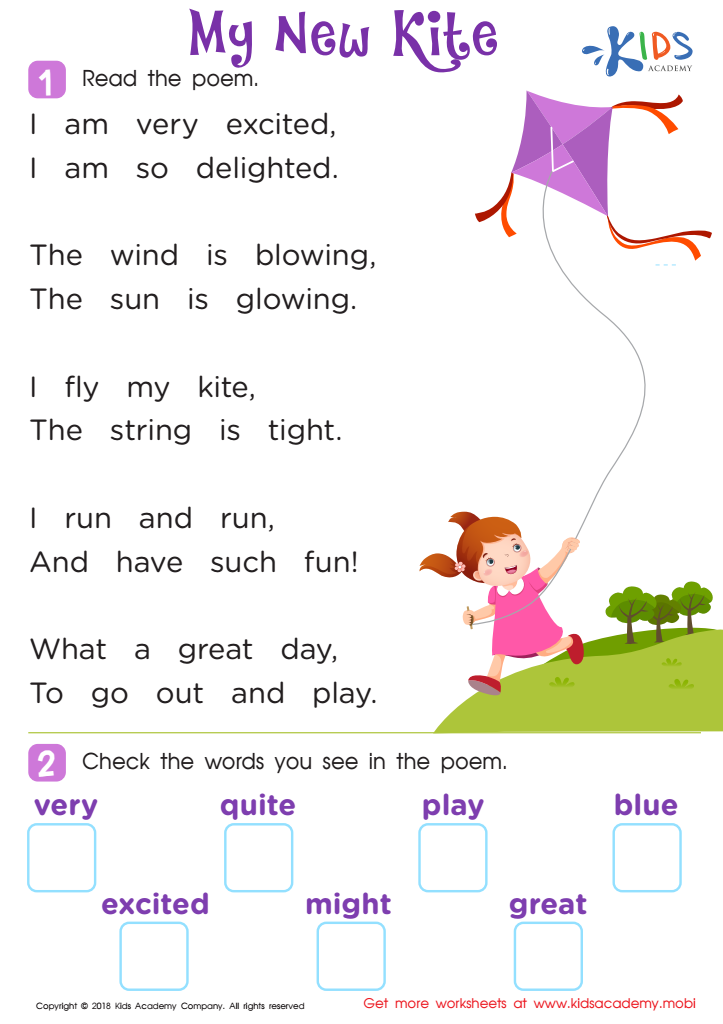
Poem: My New Kite Worksheet
Read a cheerful poem with your child and have them check the boxes next to the words that appear. Then, ask them to identify rhyming words, noting that these won't appear at the bottom of the page. This is a delightful reading activity to help your child remember what they read.
Poem: My New Kite Worksheet
Worksheet
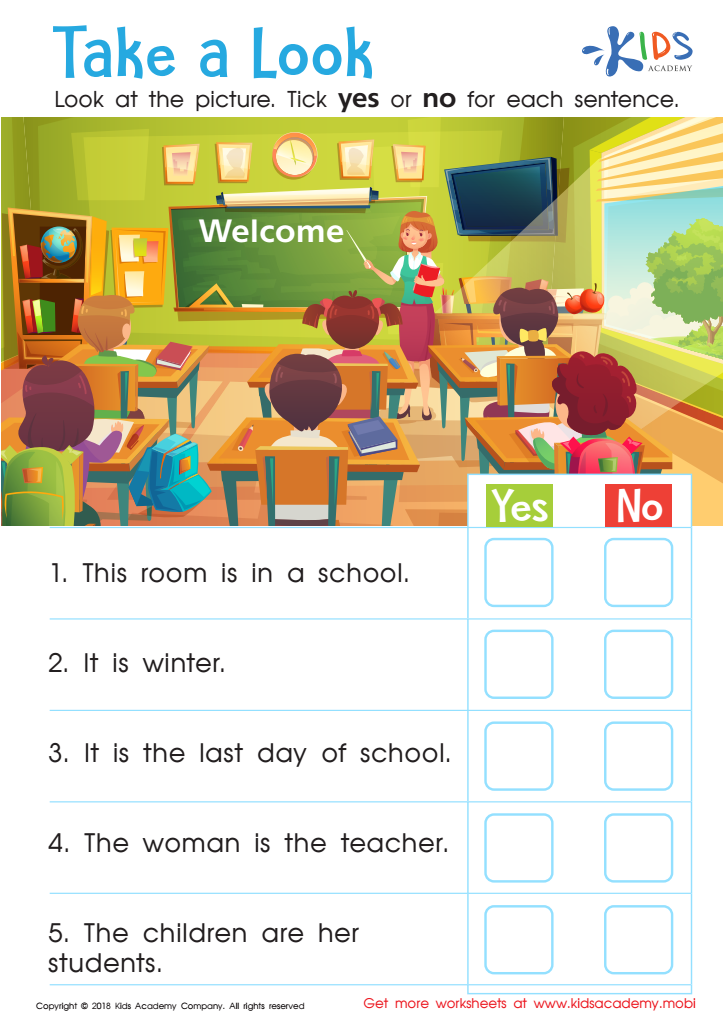
Take a Look - Part 2 Worksheet
Train children to be observant by having them look at a scene and noting all details. Then, read sentences and match them with the picture. Finally, answer whether the statement is true or false. This PDF worksheet helps kids with this skill. 80 words.
Take a Look - Part 2 Worksheet
Worksheet
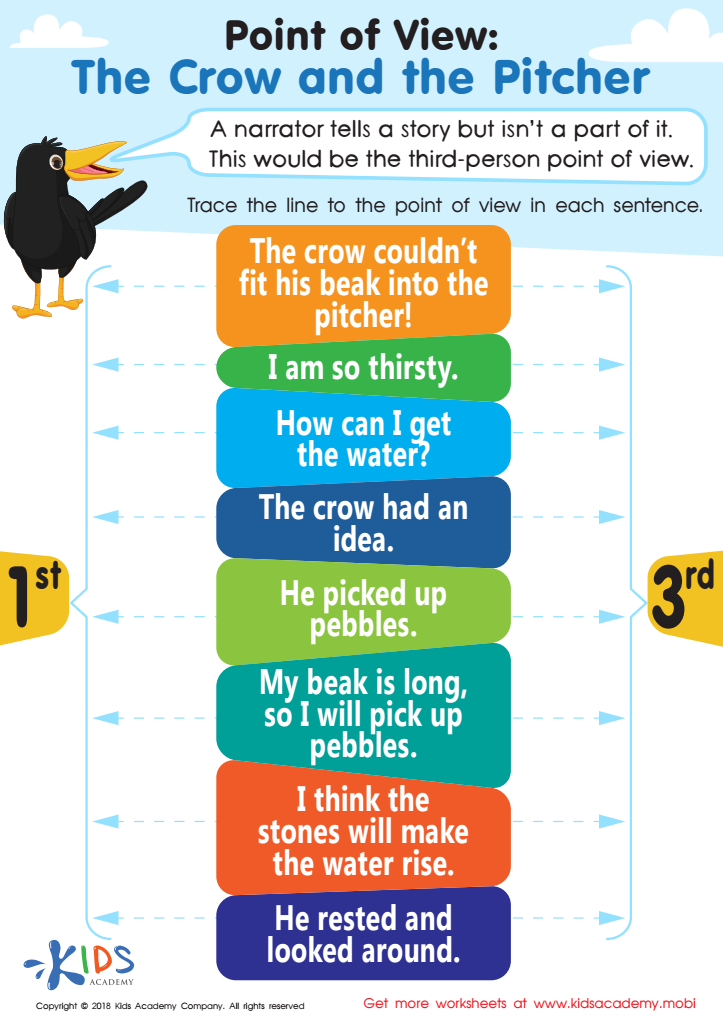
Point of View: The Crow and the Pitcher Worksheet
Help your child learn 1st and 3rd person point of view with our free downloadable worksheet! Using the fable The Crow and the Pitcher, learners read the sentences in each colorful box, then determine which ones are written in 1st or 3rd person. Trace a line from each box to its answer and complete!
Point of View: The Crow and the Pitcher Worksheet
Worksheet
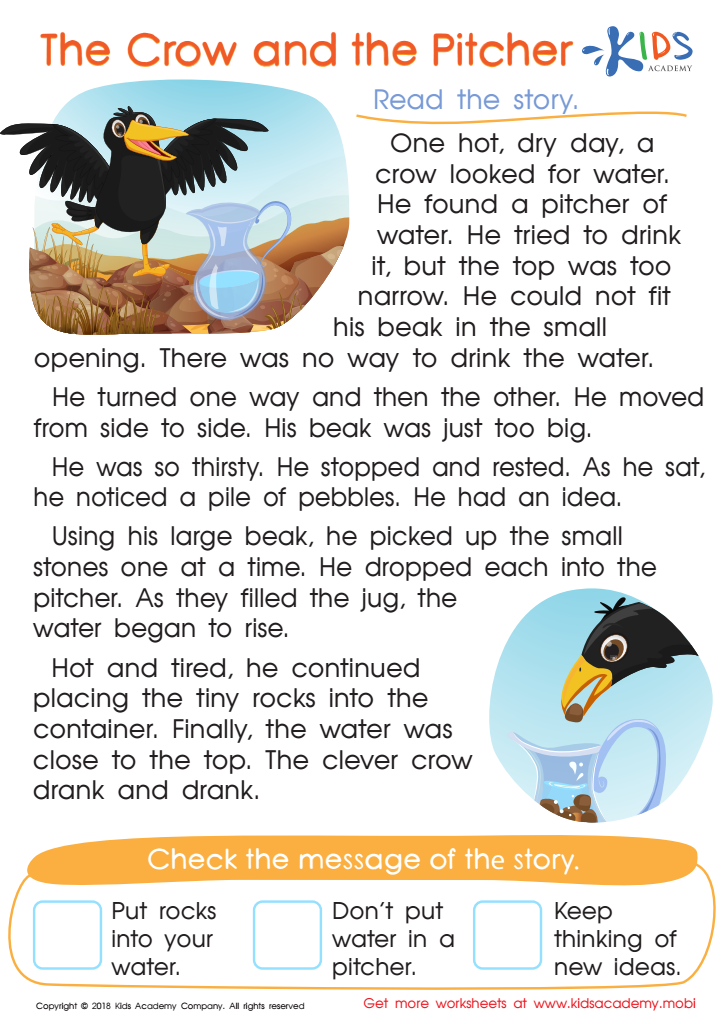
The Crow and the Pitcher Worksheet
Introduce your child to reading comprehension with this fascinating worksheet from Kids Academy! Featuring Aesop's fable of a thirsty crow, your child will enjoy reading and determining the central theme of the passage. This worksheet is a great way to give your child a purpose for reading while helping to build their comprehension skills.
The Crow and the Pitcher Worksheet
Worksheet
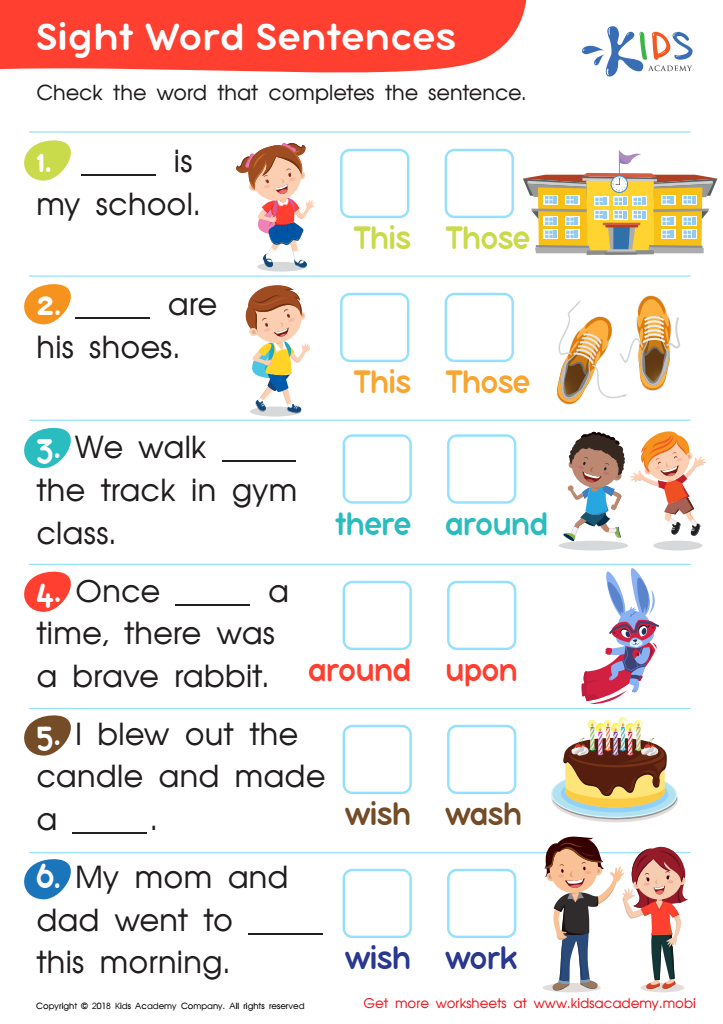
Sight Word Sentences Worksheet
Improve reading fluency! Have students fill in the blank with the correct sight word to complete sentences. Sight words are often tricky to decode - they don't follow phonics or spelling rules. To read smoothly, young learners must know them by memory. Use this printable and help kids master their sight words!
Sight Word Sentences Worksheet
Worksheet
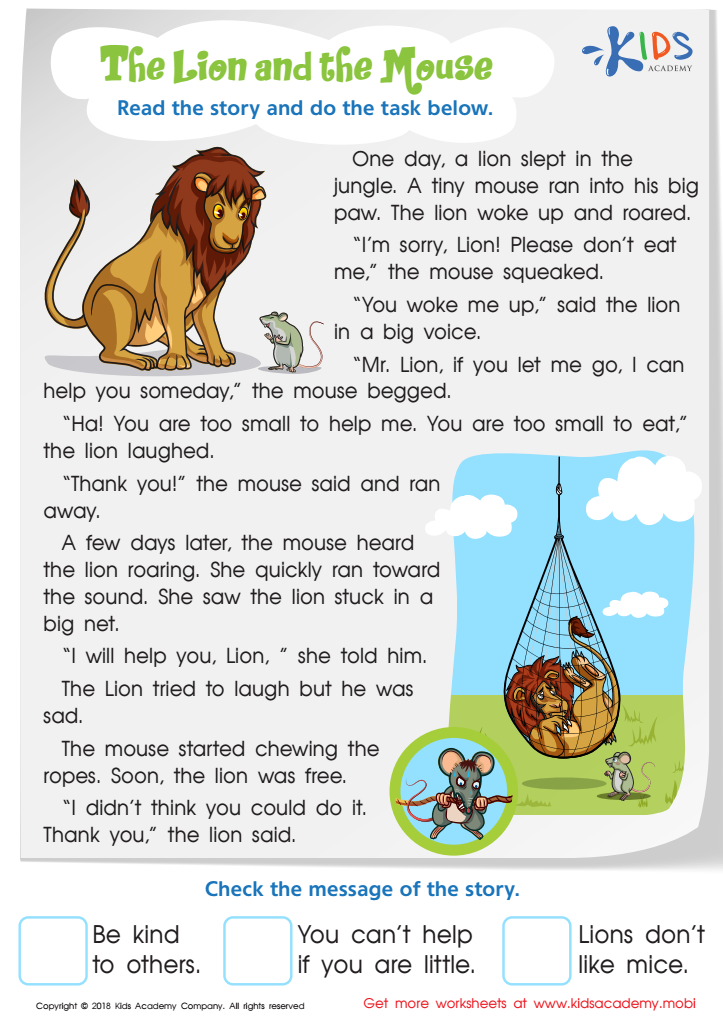
The Lion and the Mouse Worksheet
Writers often have a hidden message or theme in their stories. This printable worksheet helps readers uncover these themes by looking at what characters do and say in "The Lion and the Mouse". It's a great practice resource for learning to interpret stories.
The Lion and the Mouse Worksheet
Worksheet
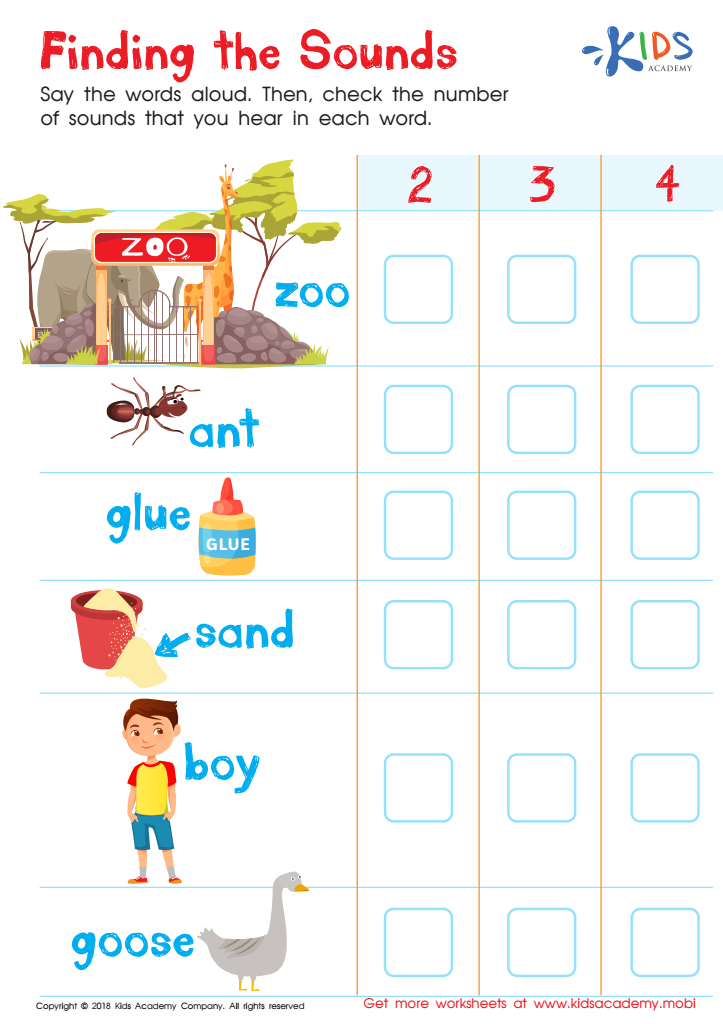
Finding the Sounds Worksheet
This free colorful worksheet assists children in learning words and breaking them down into sounds. It boosts auditory discrimination, phonological awareness and fine motor skills. Picture clues help them read confidently, and they can check the appropriate boxes to practice their reading skills.
Finding the Sounds Worksheet
Worksheet
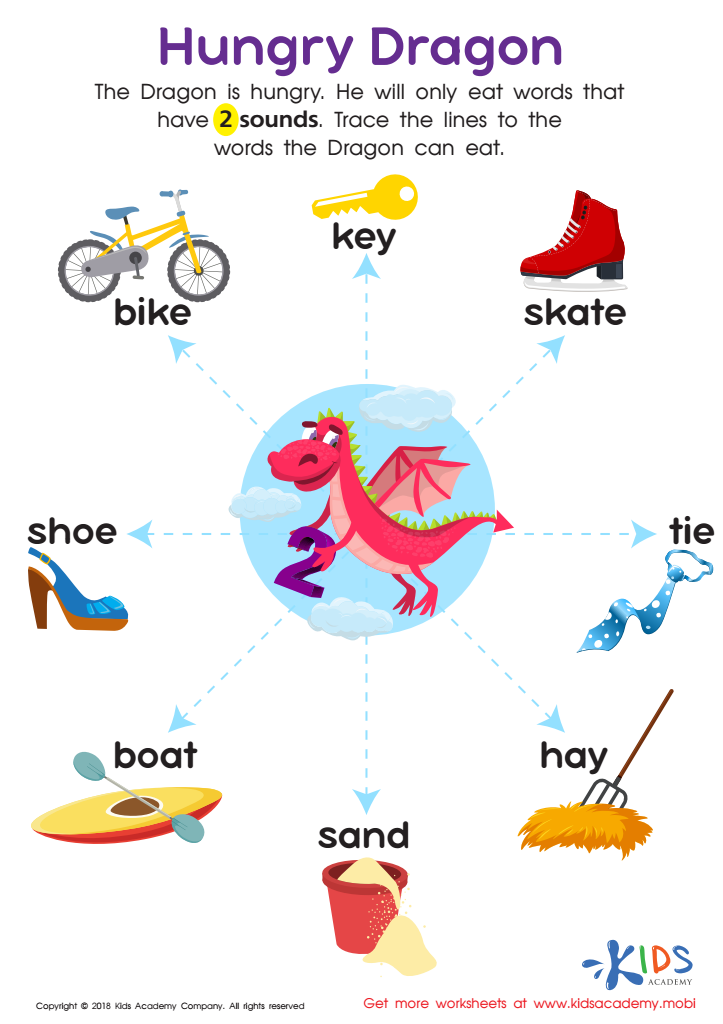
Hungry Dragon Worksheet
Feed the dragon words and watch your child strengthen their phonological awareness and auditory discrimination skills! Download this free PDF for tracing exercises that build their fine motor skills too. Kids will love spending time with the cute dragon while they unwittingly learn reading skills!
Hungry Dragon Worksheet
Worksheet
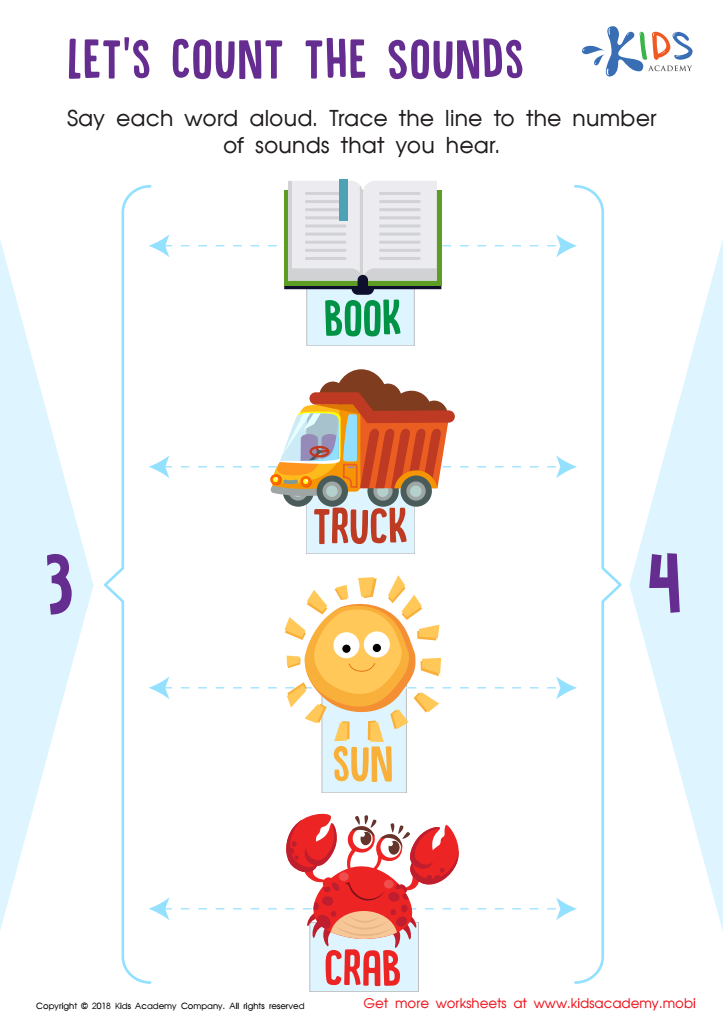
Let's Count the Sounds Worksheet
This bright and cheery traceable worksheet encourages children to practice auditory discrimination and phonological awareness. Using picture clues, they read each word and trace the line that represents the number of sounds heard. This builds decoding skills and helps them become successful readers.
Let's Count the Sounds Worksheet
Worksheet
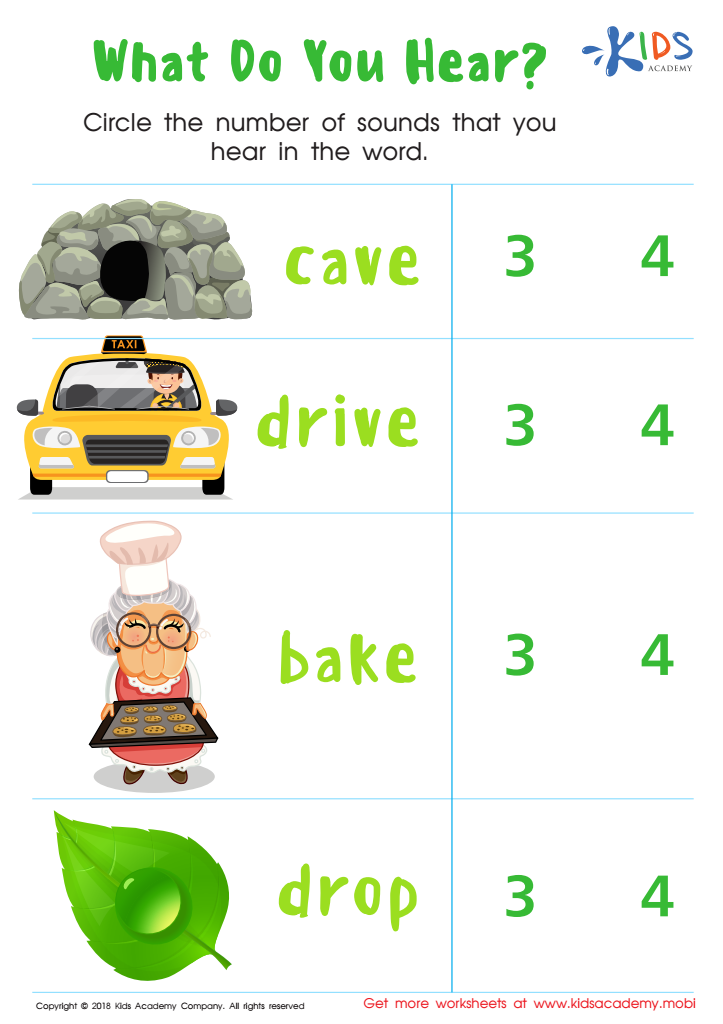
What Do You Hear? Worksheet
New readers can develop phonological awareness with this fun worksheet. They'll isolate sounds in words and count them, then circle the number of sounds heard. It'll help build their auditory discrimination and decoding skills, leading to more fluent reading. Without even knowing it, their reading skills are improving!
What Do You Hear? Worksheet
Worksheet
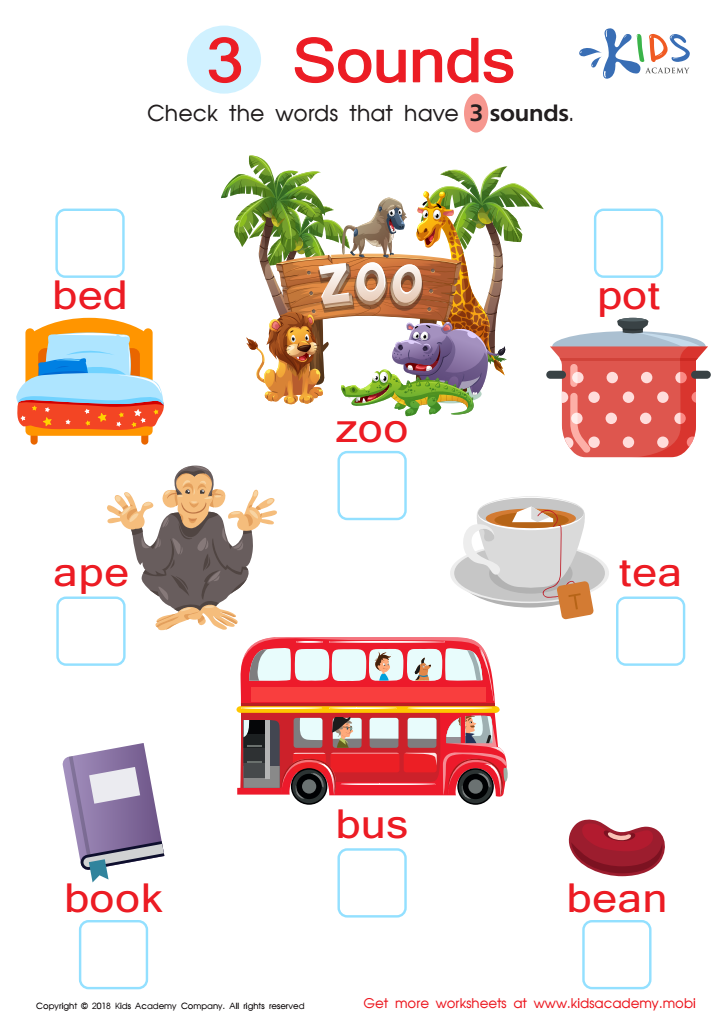
3 Sounds Worksheet
Kids will love learning with this free, colorful worksheet. It's full of familiar words they can name and sound out with three distinct sounds. This helps build decoding skills, plus they get to check off words they read. It's a fun way to teach children to identify and use sounds.
3 Sounds Worksheet
Worksheet
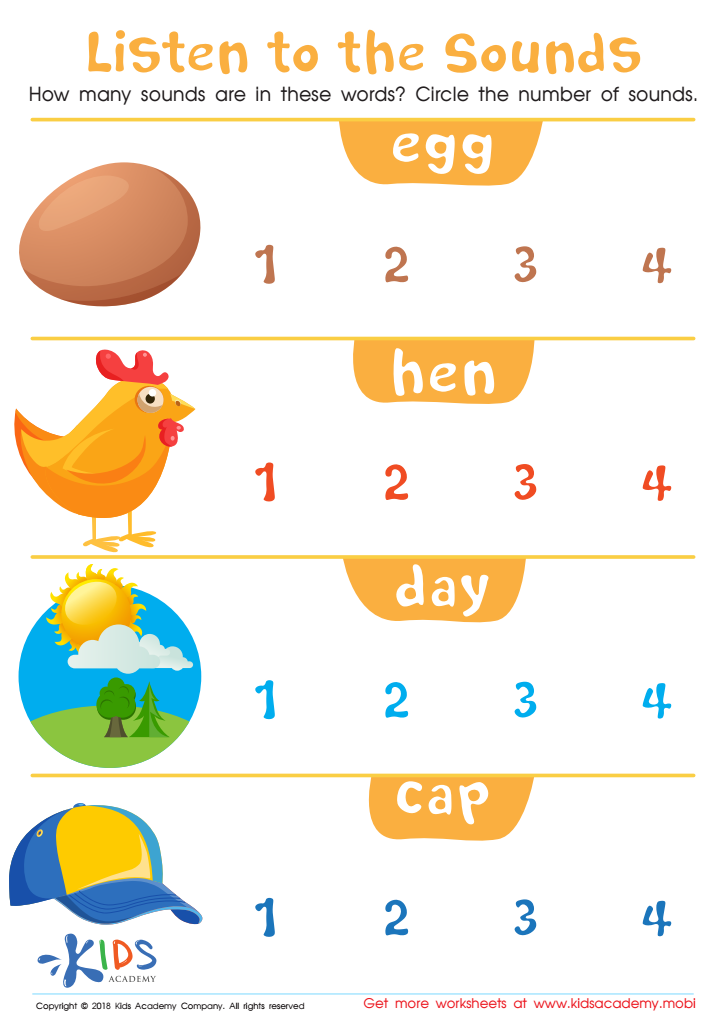
Listen to the Sounds Worksheet
This worksheet builds emerging readers' skills in using sounds for reading and spelling. It helps strengthen auditory processing by having them count the sounds in each word, then trace the corresponding number. Fun and cheerful!
Listen to the Sounds Worksheet
Worksheet
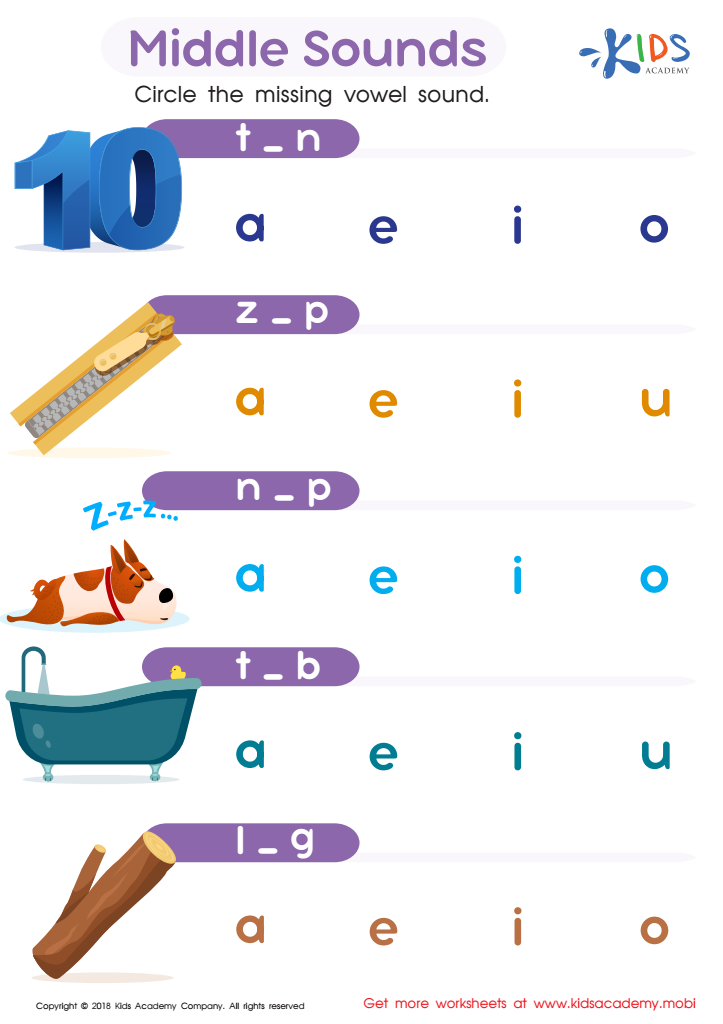
Middle Sounds Worksheet
Download this free worksheet and help your reader identify middle sounds in words. Pictures provide clues to the word, while tracing circles around the middle vowel sound strengthens fine motor and visual discrimination skills. It's a great way to teach sound discrimination between similar-sounding short vowels - a key component for proficient reading.
Middle Sounds Worksheet
Worksheet
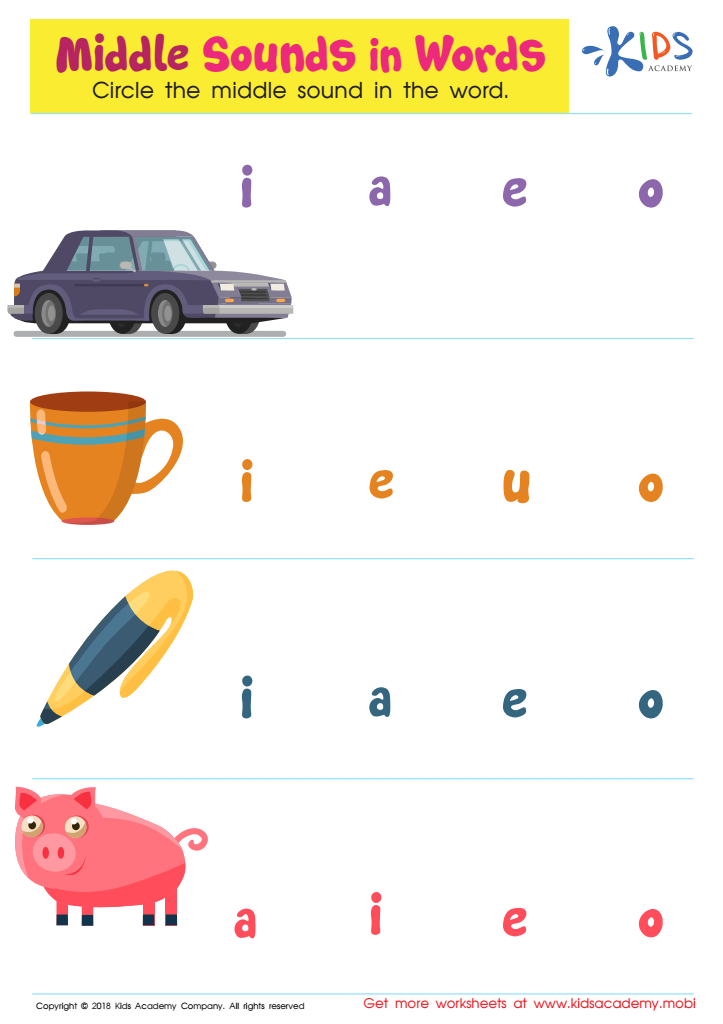
Middle Sounds in Words Worksheet
This worksheet helps emerging readers use picture clues to identify familiar words and practice tracing and fine-motor abilities. It also reinforces spelling by helping them distinguish middle sounds in words. A great way to build listening and literacy skills!
Middle Sounds in Words Worksheet
Worksheet
Join Kids Academy for Free
Who is primarily going to use this learning content?