Easy Geometry Worksheets for Ages 3-9 - Page 3
52 filtered results
-
From - To
 Assign to My Students











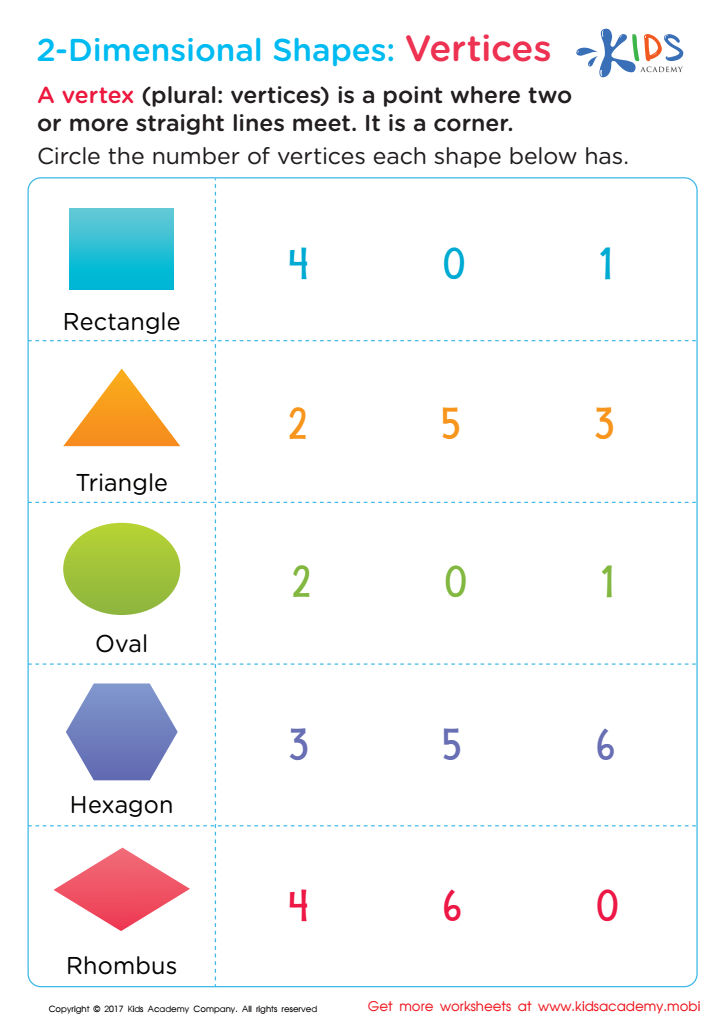
Two–Dimensional Shapes: Vertices Printable
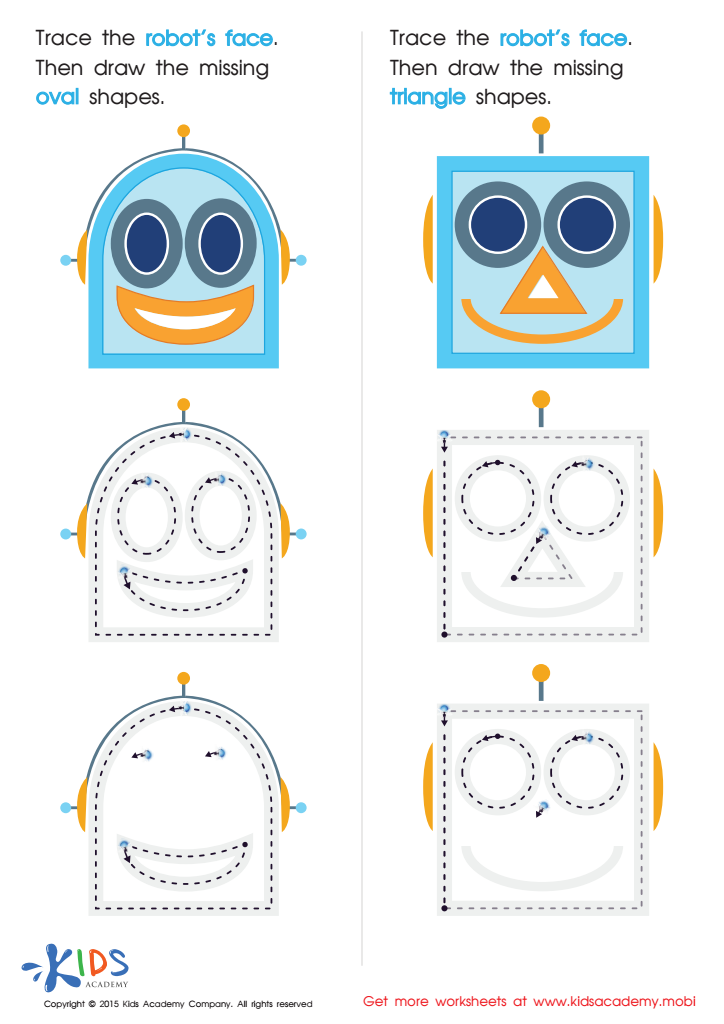
Drawing Ovals And Triangles with Fun Printable
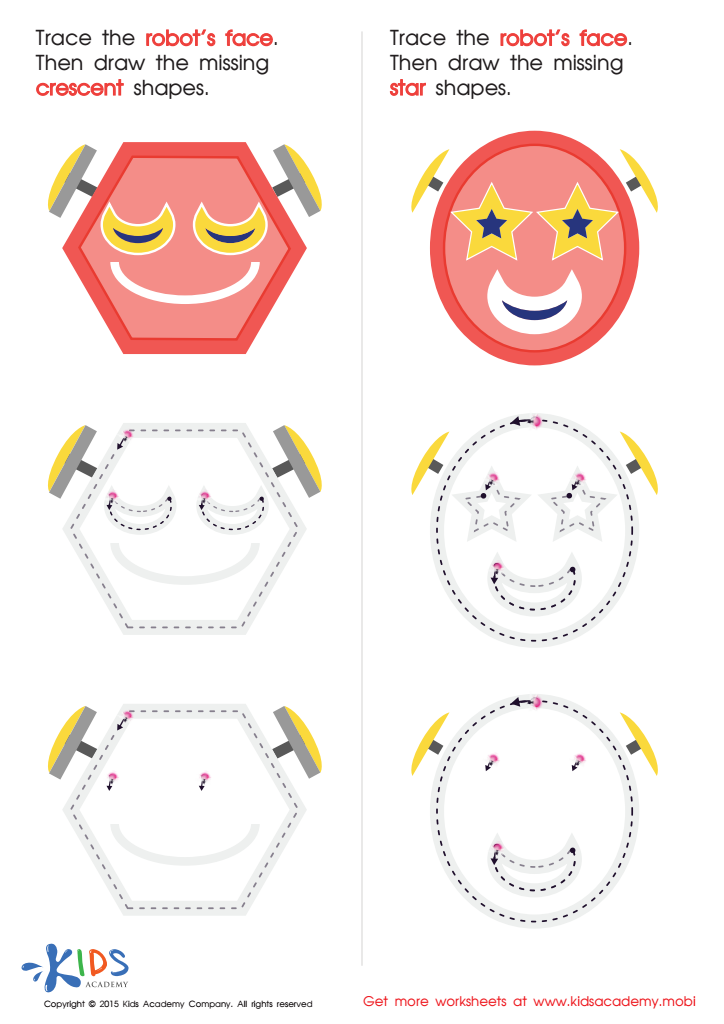
Composing a Robot's Face of Crescents And Stars Worksheet








Parents and teachers should care about Easy Geometry for Ages 3-9 because it lays a vital foundation for young children's mathematical understanding. Early exposure to geometric concepts promotes critical thinking, problem-solving, and spatial awareness—skills that are essential not just in math, but in real-life applications, such as navigation and organizing objects.
Introducing geometry at this age stimulates curiosity and encourages hands-on learning, making it a fun experience that fosters a positive attitude towards math. Young children are naturally inquisitive, and integrating geometric shapes into everyday activities—such as building with blocks or identifying shapes in their environment—can enhance their cognitive development.
Moreover, mastering basic geometric concepts provides children with the tools to tackle more complex mathematical ideas later in their education. As they learn about shapes, angles, and spatial relationships, they develop a structured way of thinking that will benefit them in various academic disciplines.
Furthermore, Easy Geometry encourages collaboration and communication among peers, fostering social skills and teamwork. It also provides opportunities for parents and teachers to engage with children in enriching discussions, thus strengthening the bond through shared learning experiences. In essence, early exposure to easy geometry paves the way for a lifetime of learning and problem-solving skills.








