Easy Fractions of Shapes Worksheets for Ages 4-7
23 filtered results
-
From - To
Discover our "Easy Fractions of Shapes Worksheets" designed for children ages 4-7! These engaging and interactive worksheets creatively introduce young learners to the fundamental concept of fractions through colorful, kid-friendly shapes. Perfect for early math enthusiasts, our resources simplify complex ideas into fun activities that promote understanding and retention. Through visual aids and hands-on exercises, children will explore halves, quarters, and other basic fractions, all while enhancing their problem-solving skills. Ideal for homeschooling, classroom use, or supplemental learning, these worksheets turn fraction learning into an enjoyable adventure. Get started today and watch your child develop a strong foundation in math!
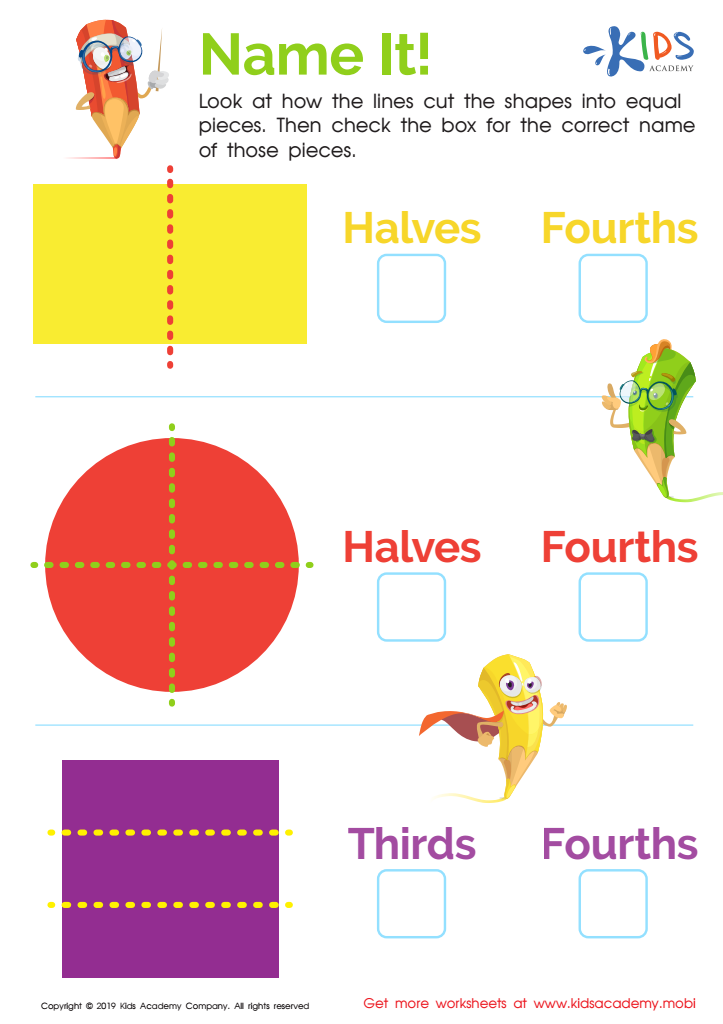
Name It! Worksheet
 Assign to My Students
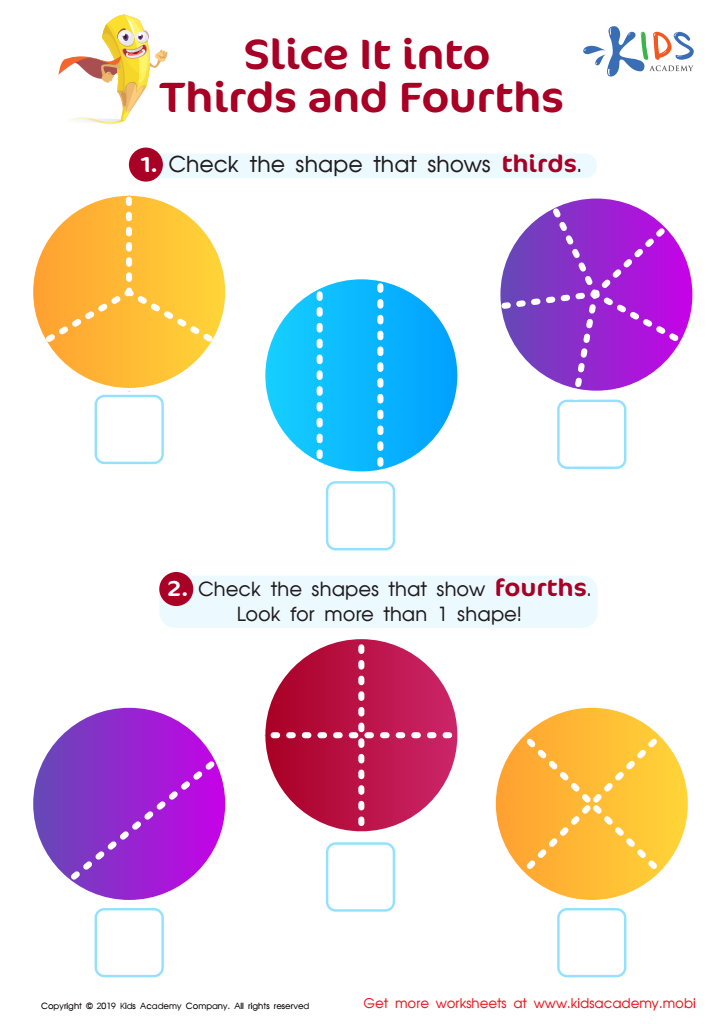
Slice in Thirds Fourths Worksheet
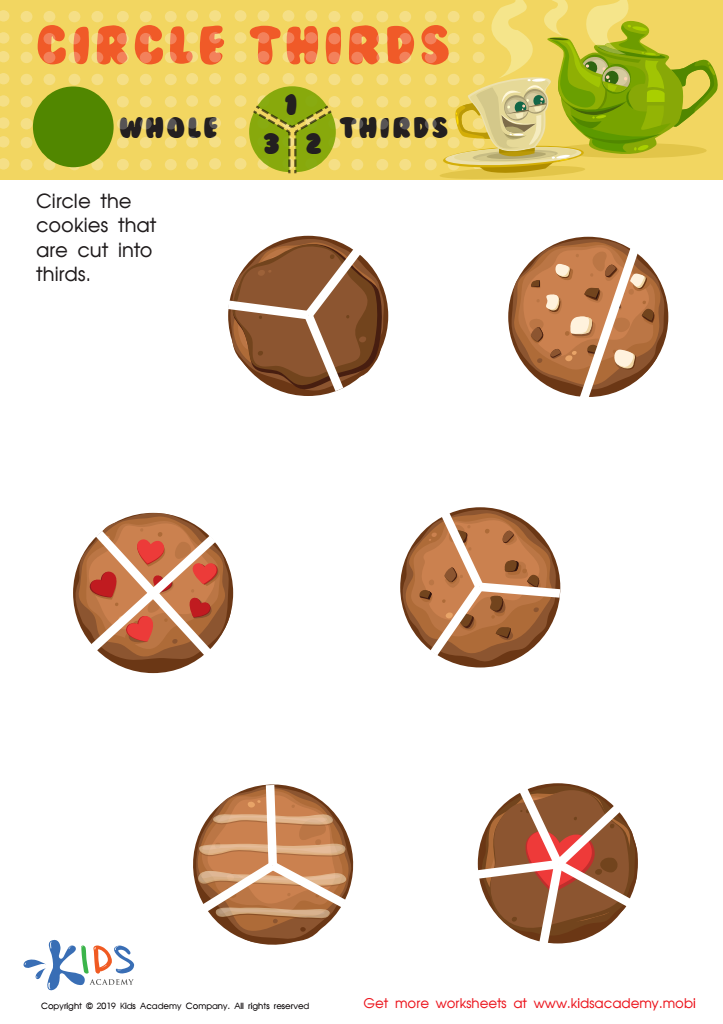
Circle Thirds Worksheet
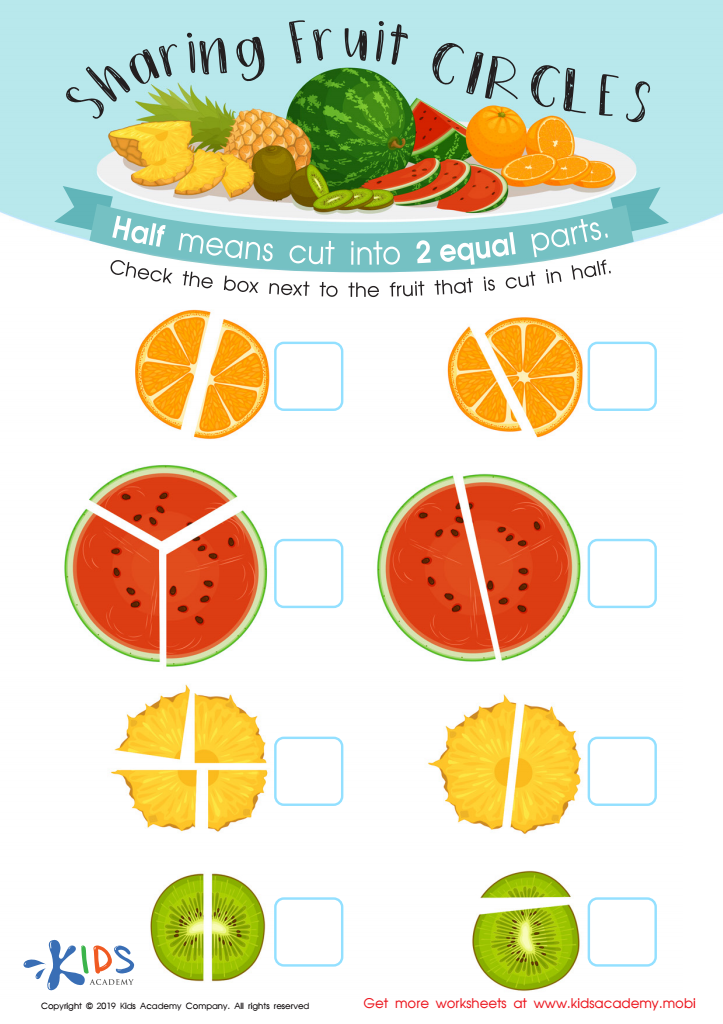
Sharing Fruit Circles Worksheet
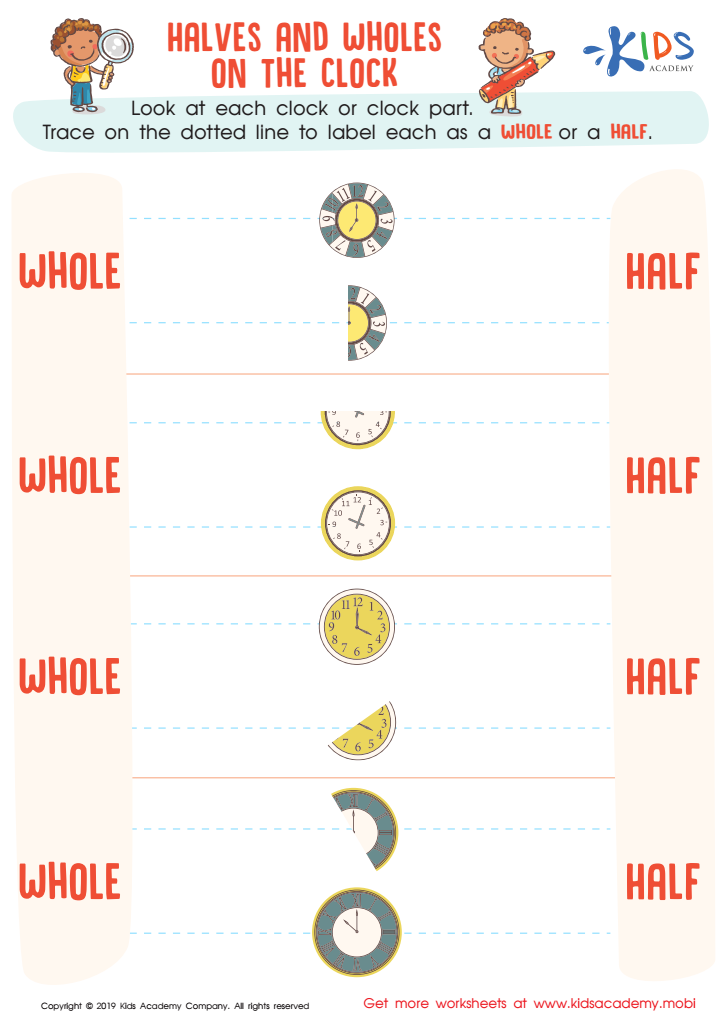
Halves and Wholes on the Clock Worksheet
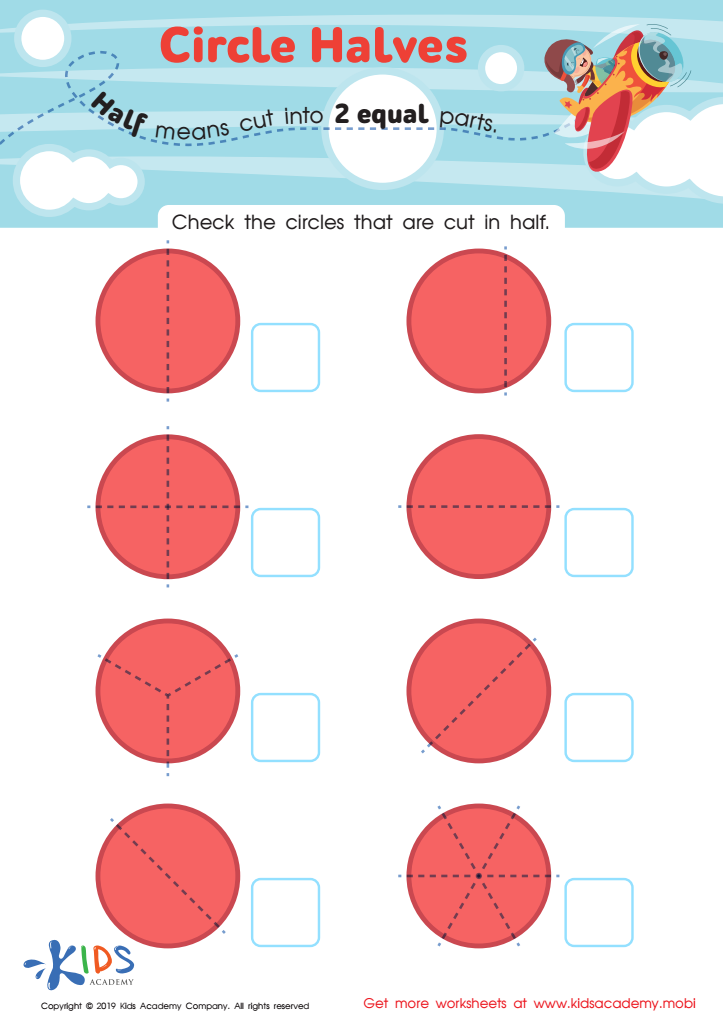
Circle Halves Worksheet
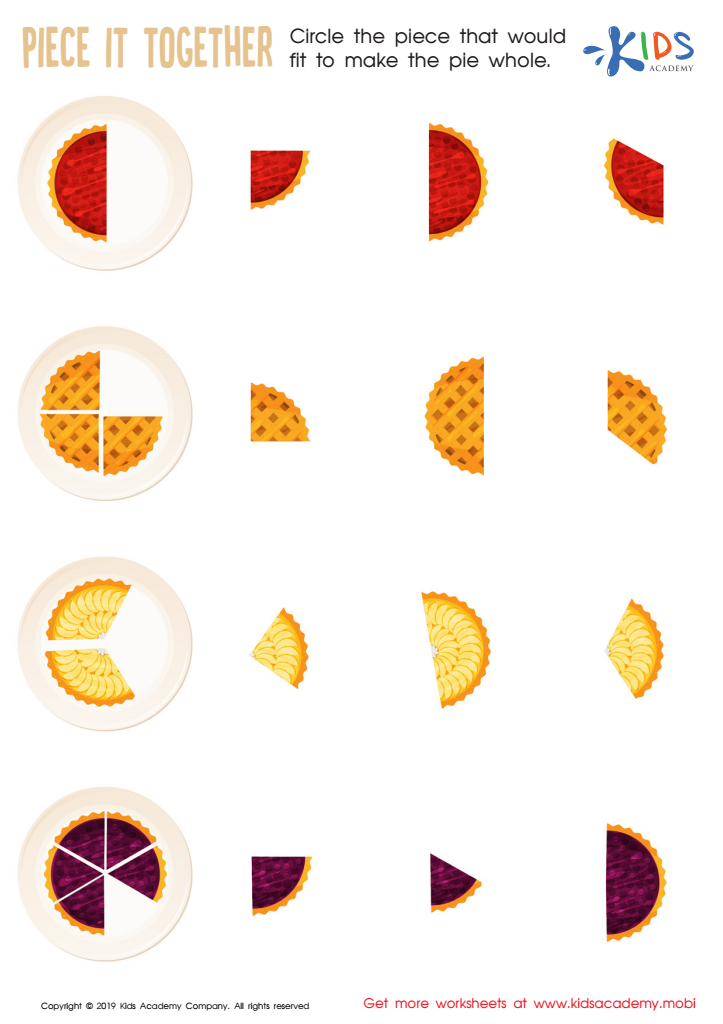
Piece it together Worksheet
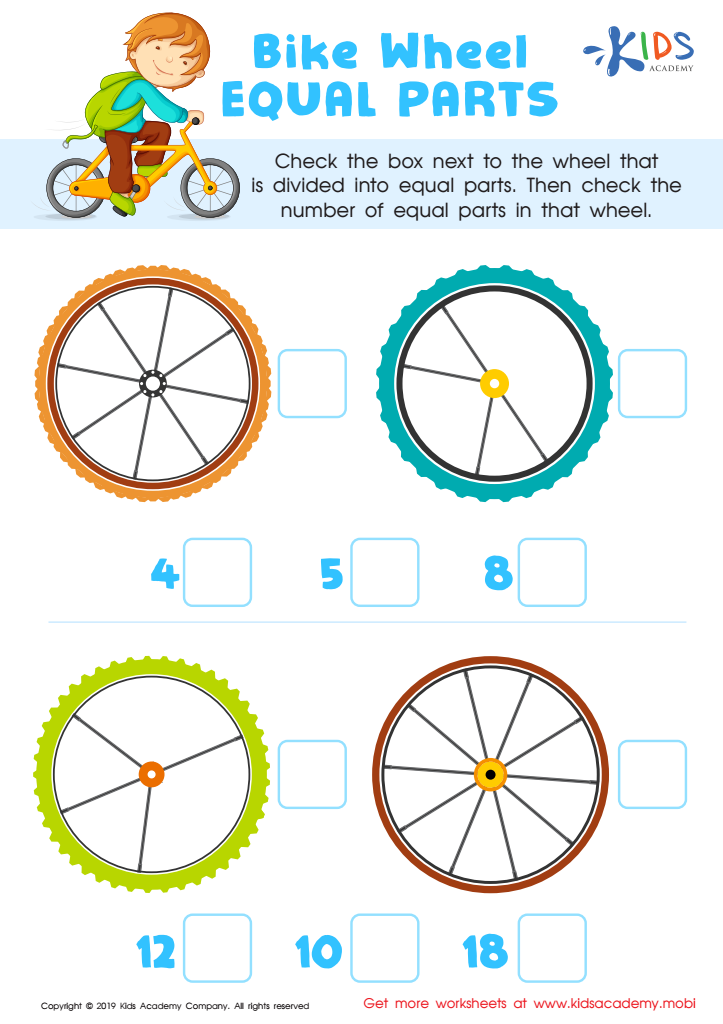
Bike Wheel Equal Parts Worksheet
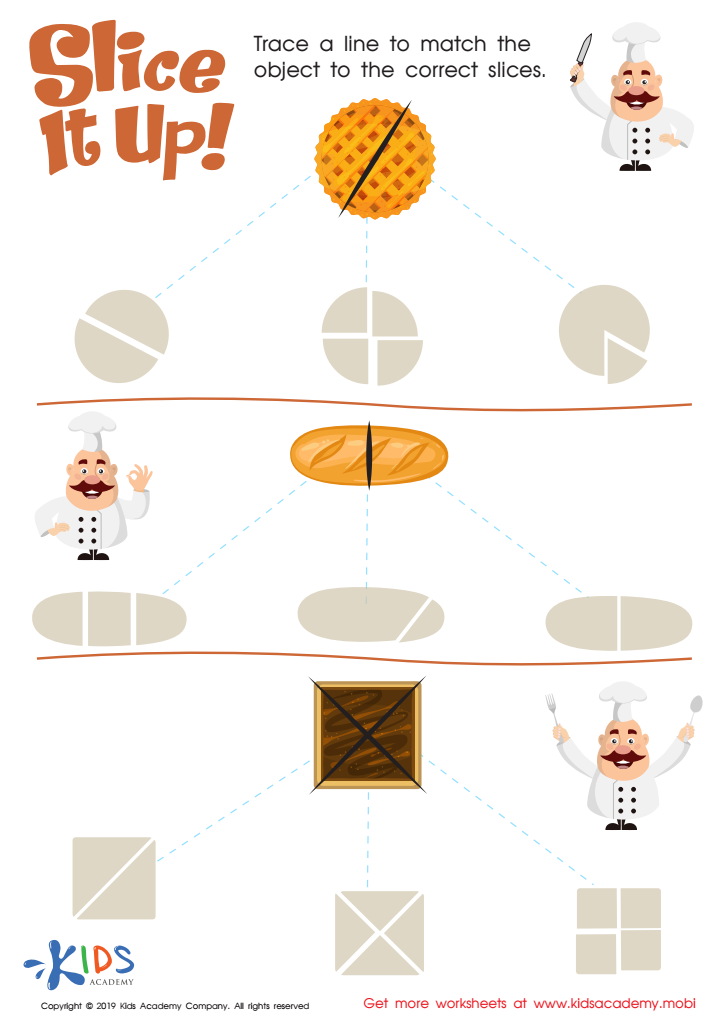
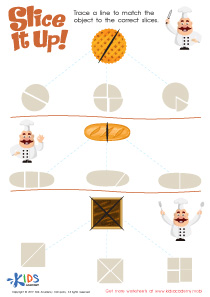
Slice It Up Worksheet
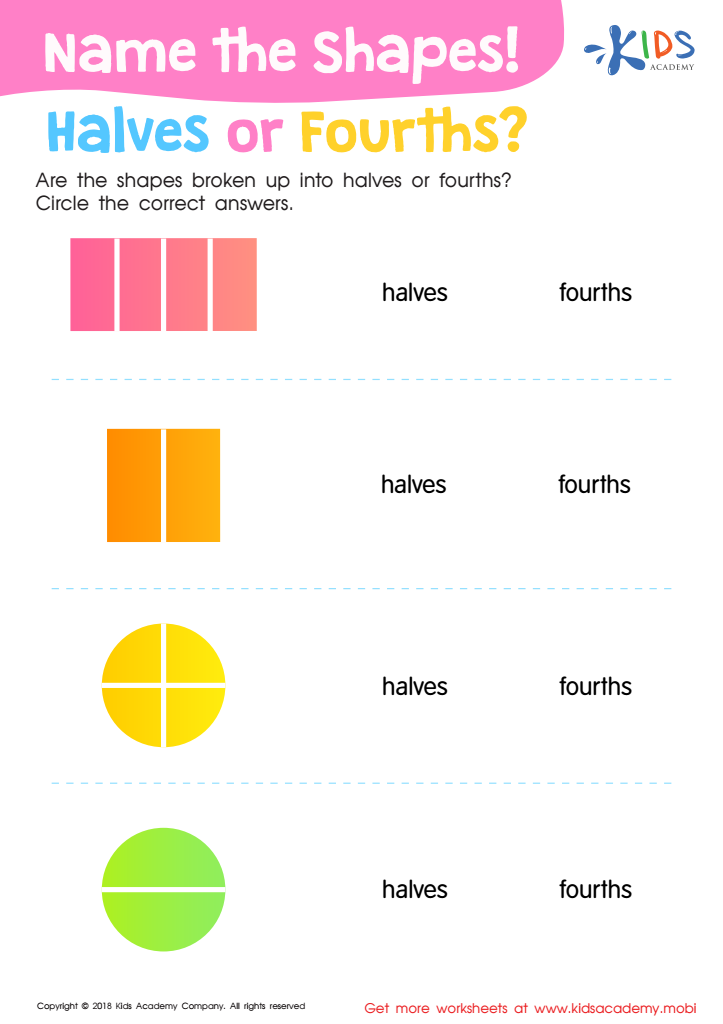
Name the Shapes Halves or Fourths? Worksheet
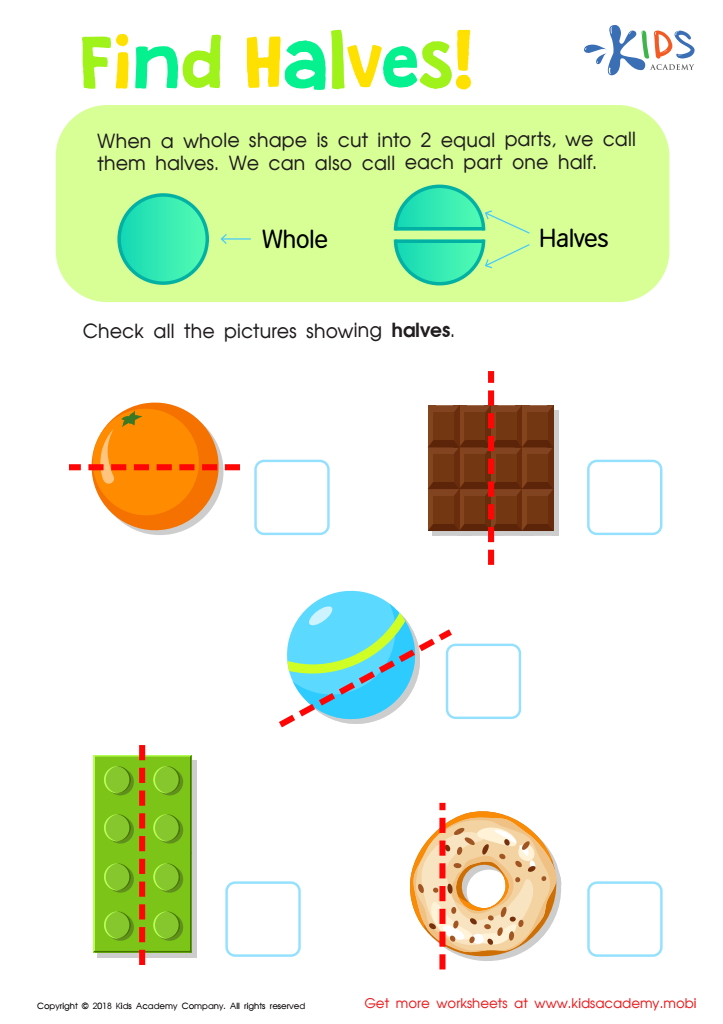
Find Halves Worksheet
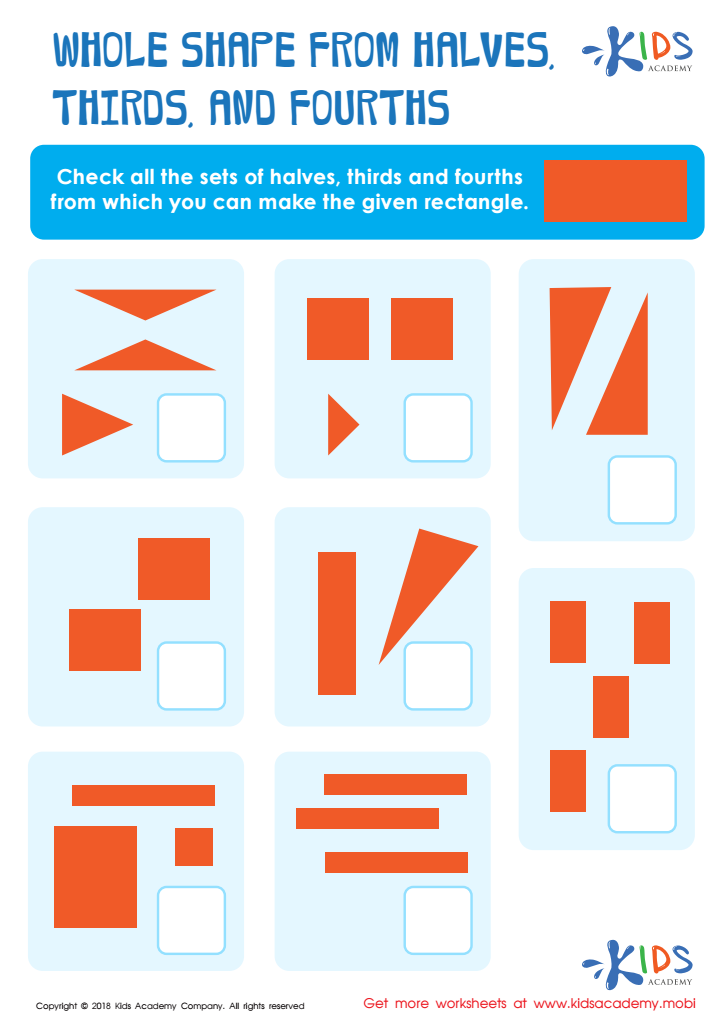
Whole Shape from Halves, Thirds and Fourths Worksheet
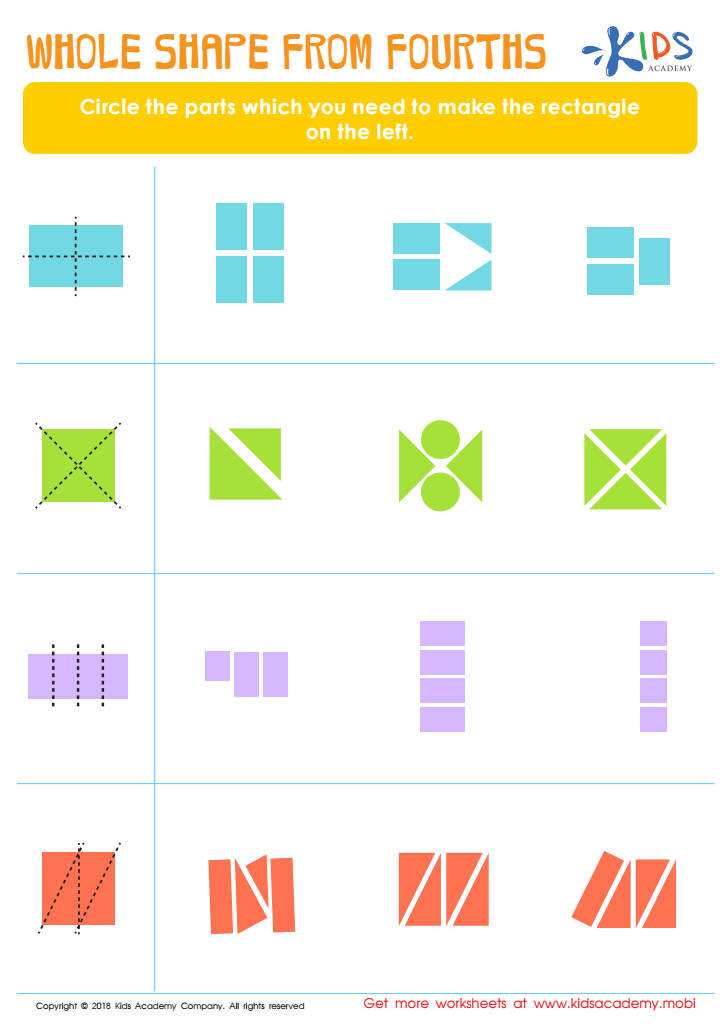
Whole Shape from Fourths Worksheet
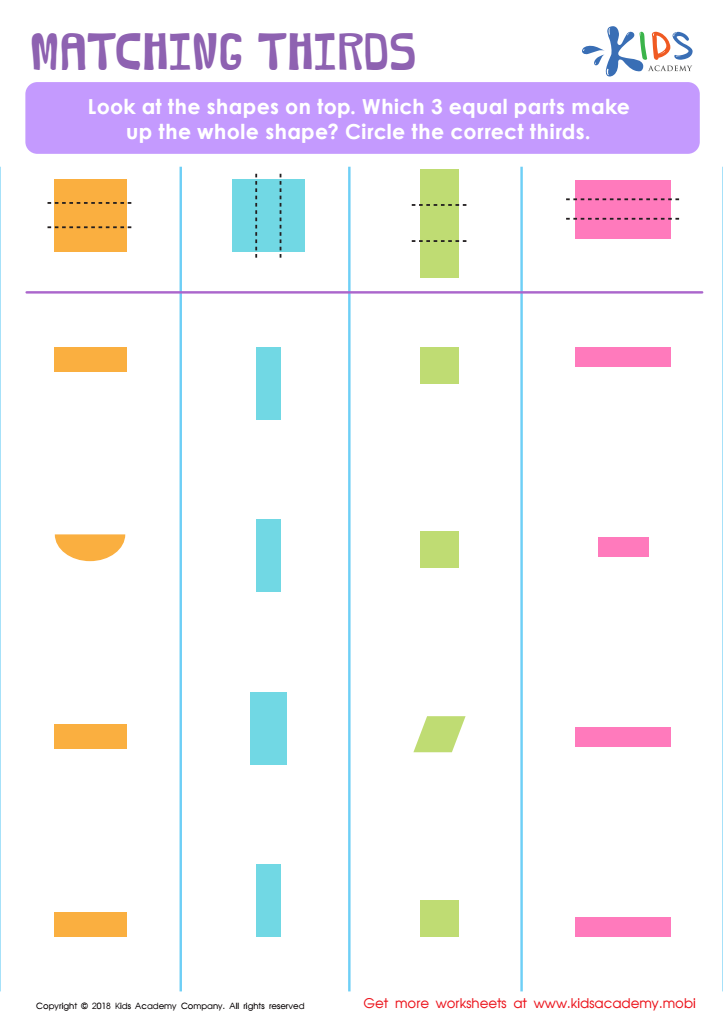
Matching Thirds Worksheet
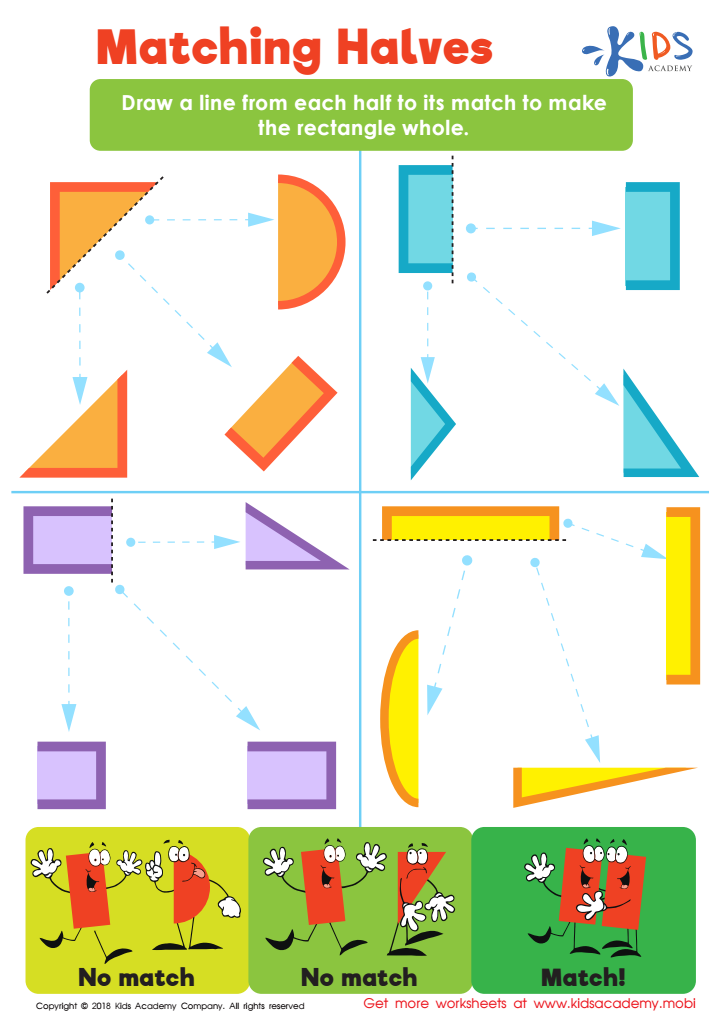
Matching Halves Worksheet
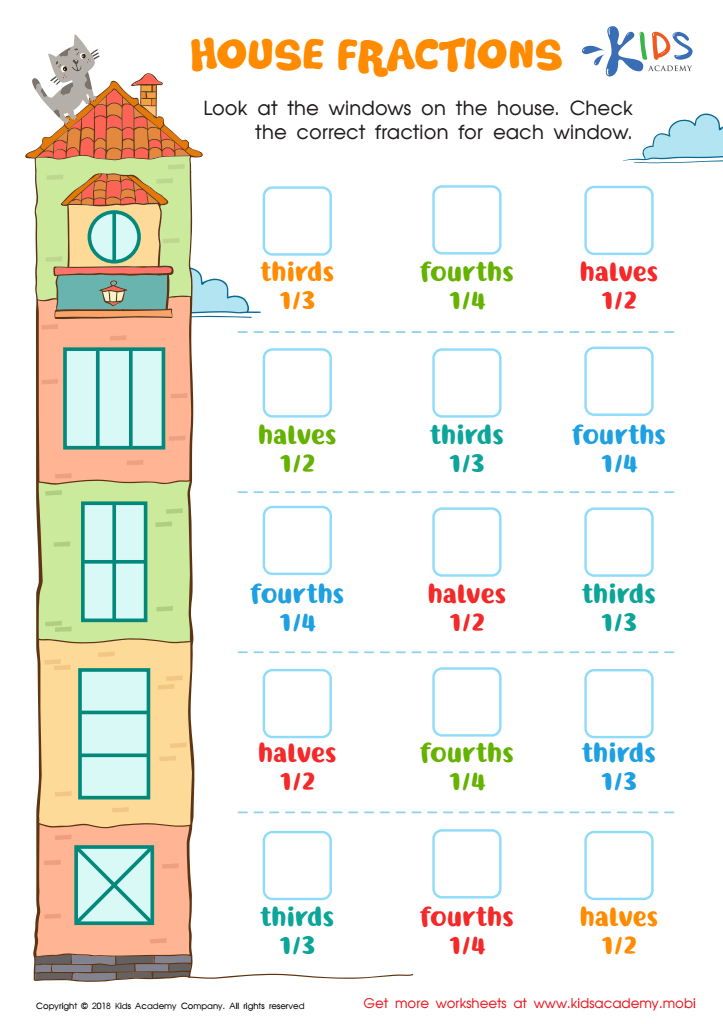
House Fractions Worksheet
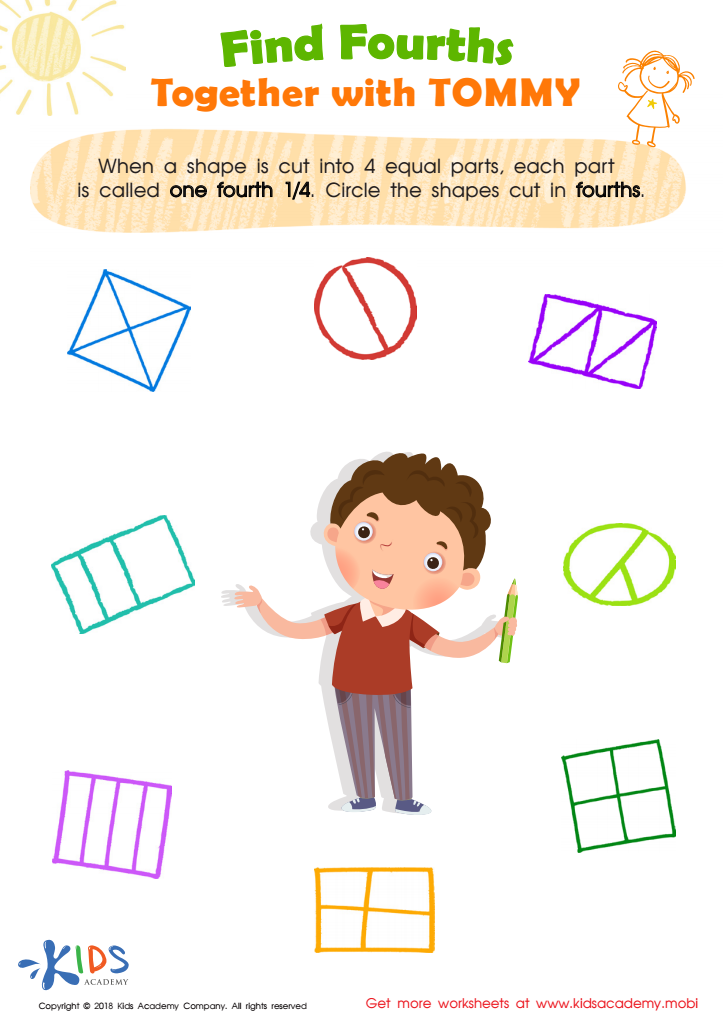
Find Fourths Together with Tommy Worksheet
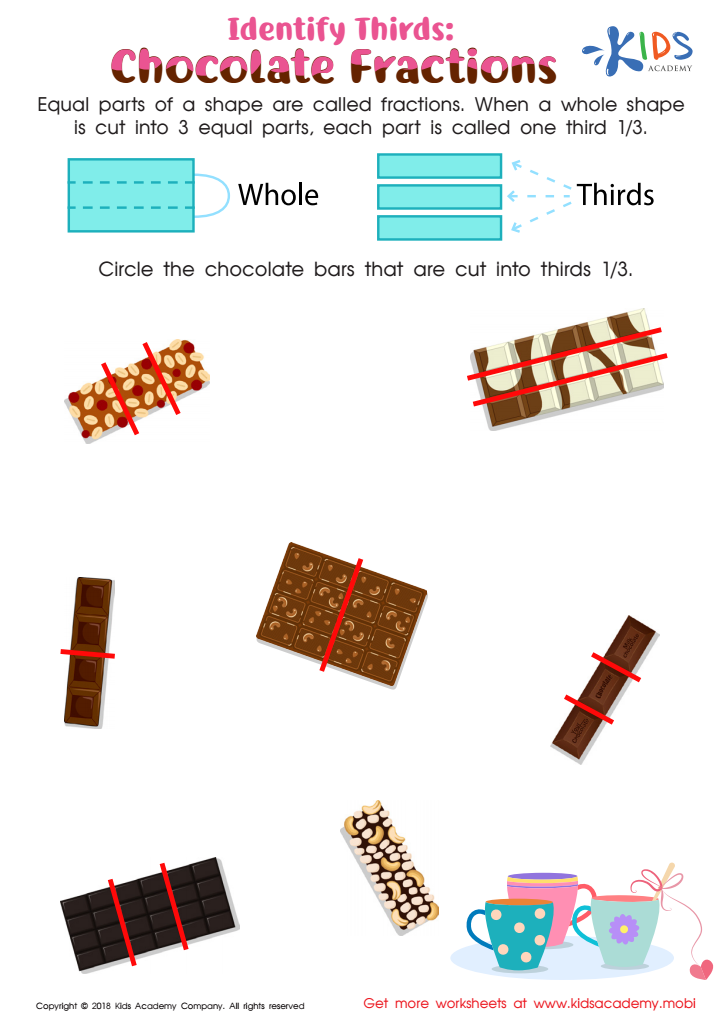
Identify Thirds: Chocolate Fractions Worksheet
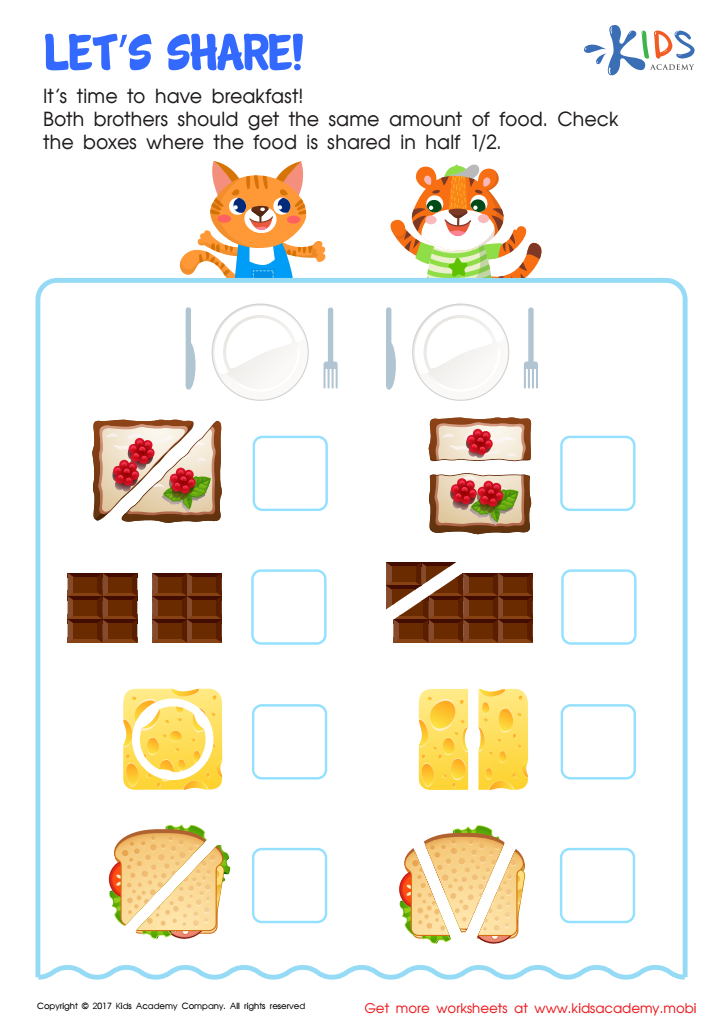
Let's Share Worksheet
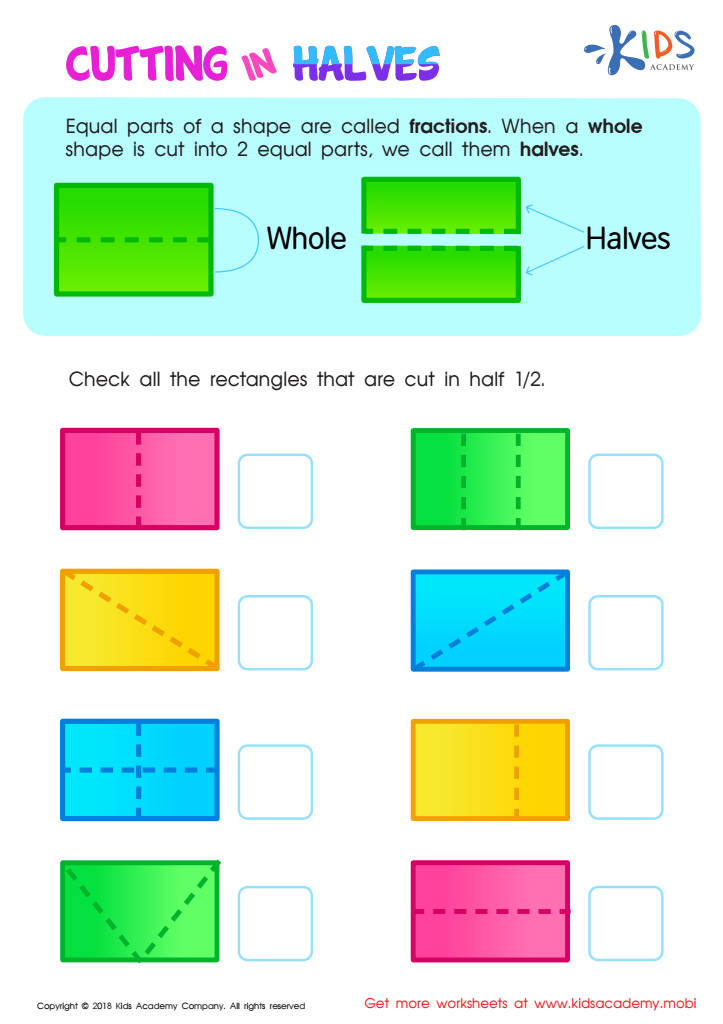
Cutting in Halves Worksheet
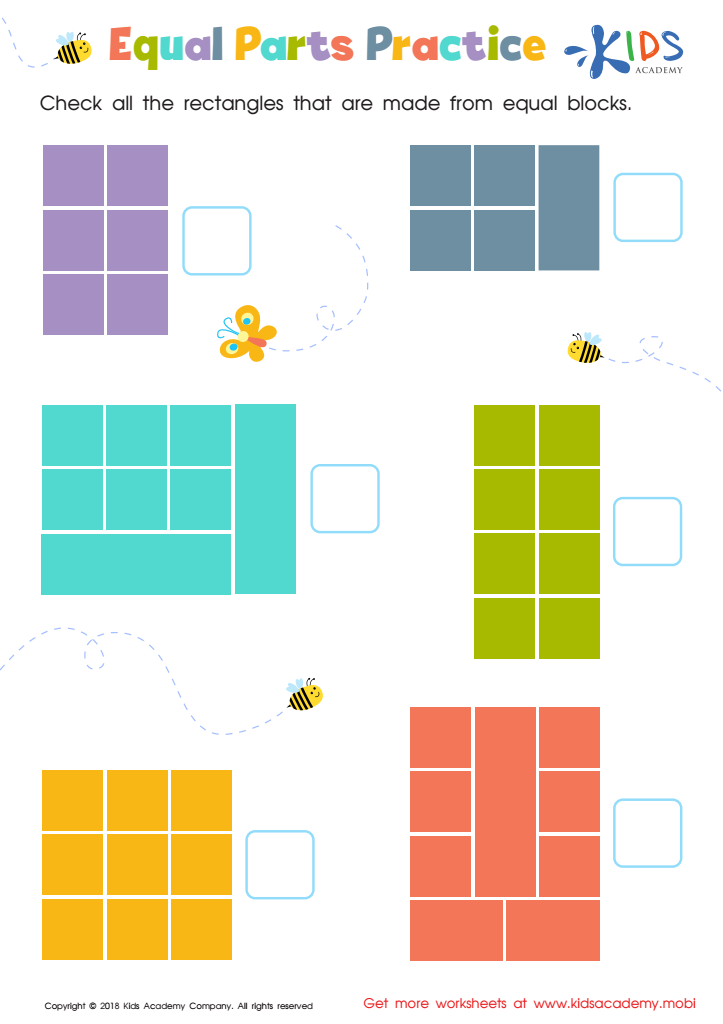
Equal Parts Practice Worksheet
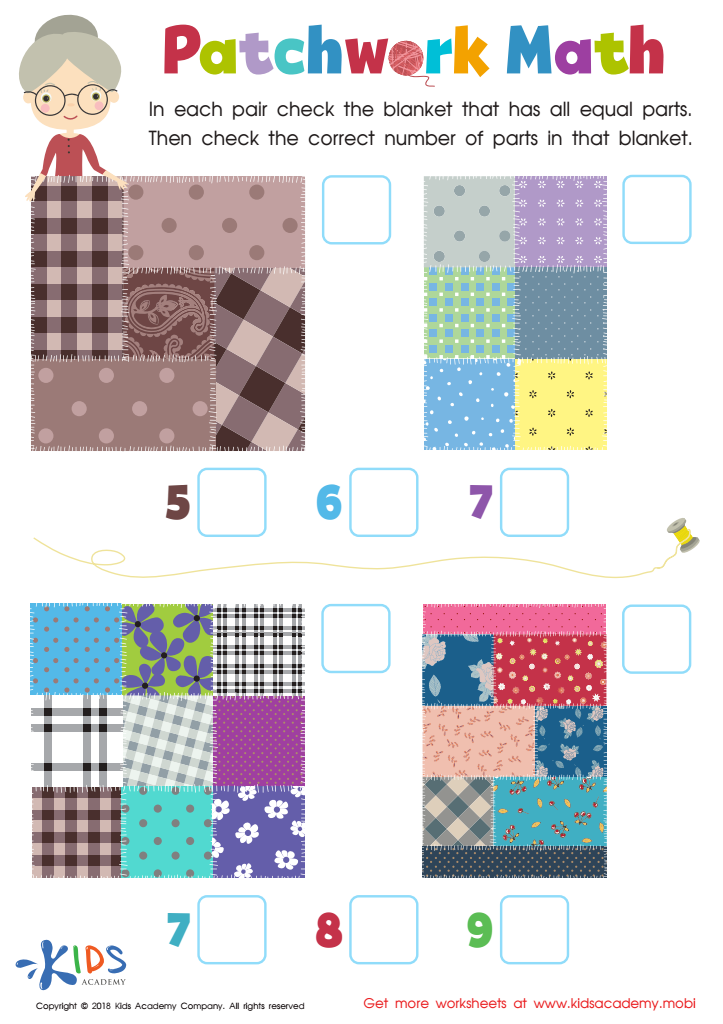
Patchwork Math Worksheet
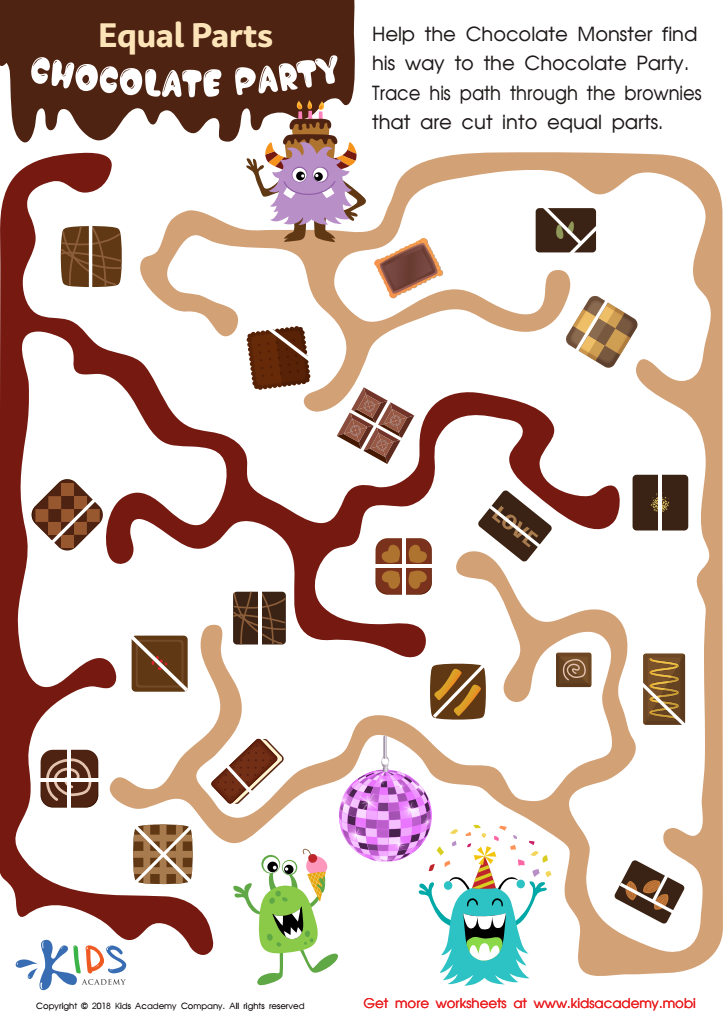
Equal Parts: Chocolate Party Worksheet








Teaching children aged 4-7 about easy fractions through shapes is essential for several reasons. First, this foundational concept helps young learners develop critical math skills by introducing them to basic properties of numbers and shapes. Understanding fractions prepares children for more complex mathematical concepts later on.
Second, using shapes to illustrate fractions makes learning visual and engaging. Children in this age group often learn best through hands-on experiences. By cutting shapes, coloring fractions, or using visuals, kids can grasp the concept of parts and wholes more effectively. This not only enhances their understanding but also keeps them motivated and interested in math.
Furthermore, learning about fractions encourages problem-solving and logical thinking. As children practice identifying and creating fractions, they refine their analytical skills, which are crucial for their overall academic development.
Lastly, discussing fractions involving shapes can foster social skills through group activities, promoting teamwork and communication. Overall, engaging children with easy fractions of shapes builds a strong mathematical foundation, boosts confidence in their abilities, and nurtures a lifelong positive attitude toward learning. Parents and teachers should prioritize these activities to ensure balanced and comprehensive early education.