Easy Geometry Worksheets for Ages 5-9 - Page 3
52 filtered results
-
From - To
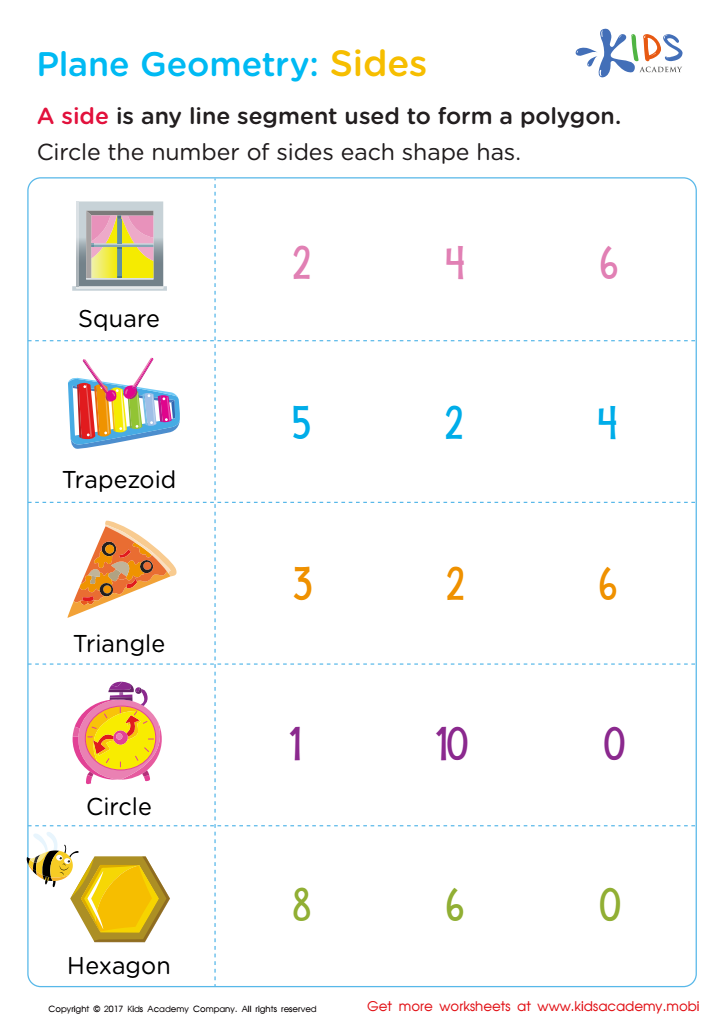
 Assign to My Students











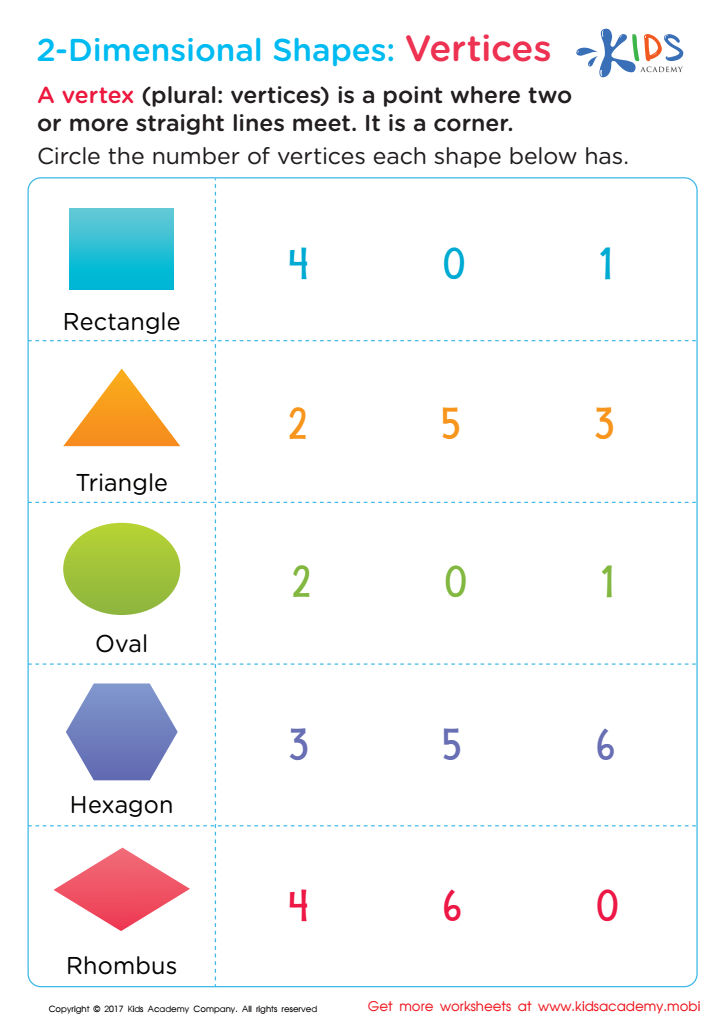
Two–Dimensional Shapes: Vertices Printable
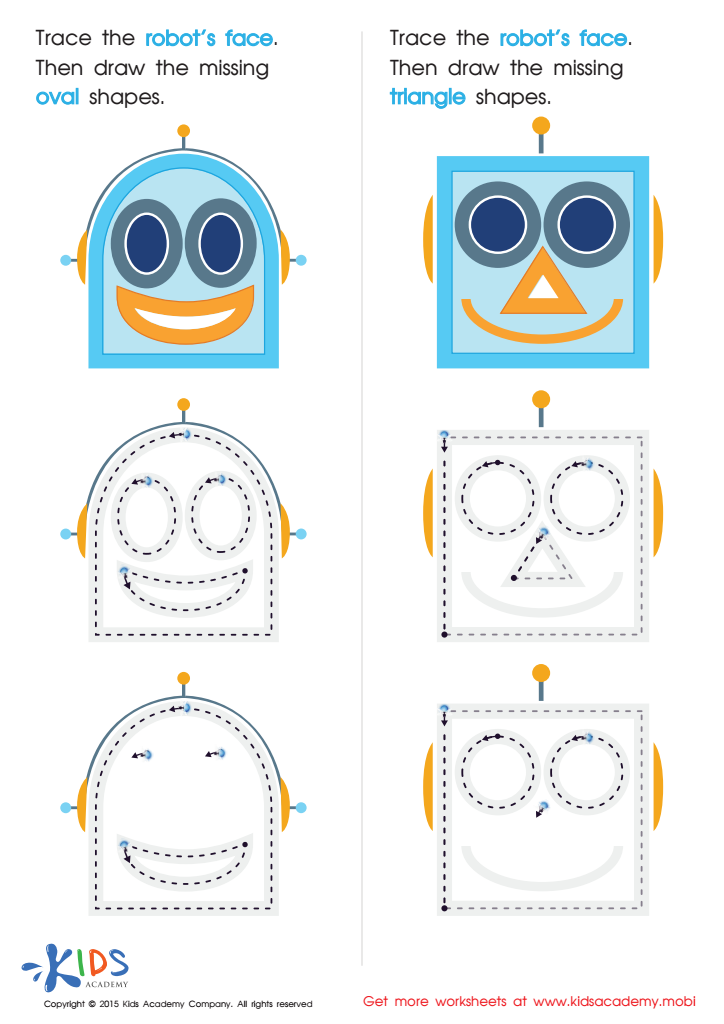
Drawing Ovals And Triangles with Fun Printable
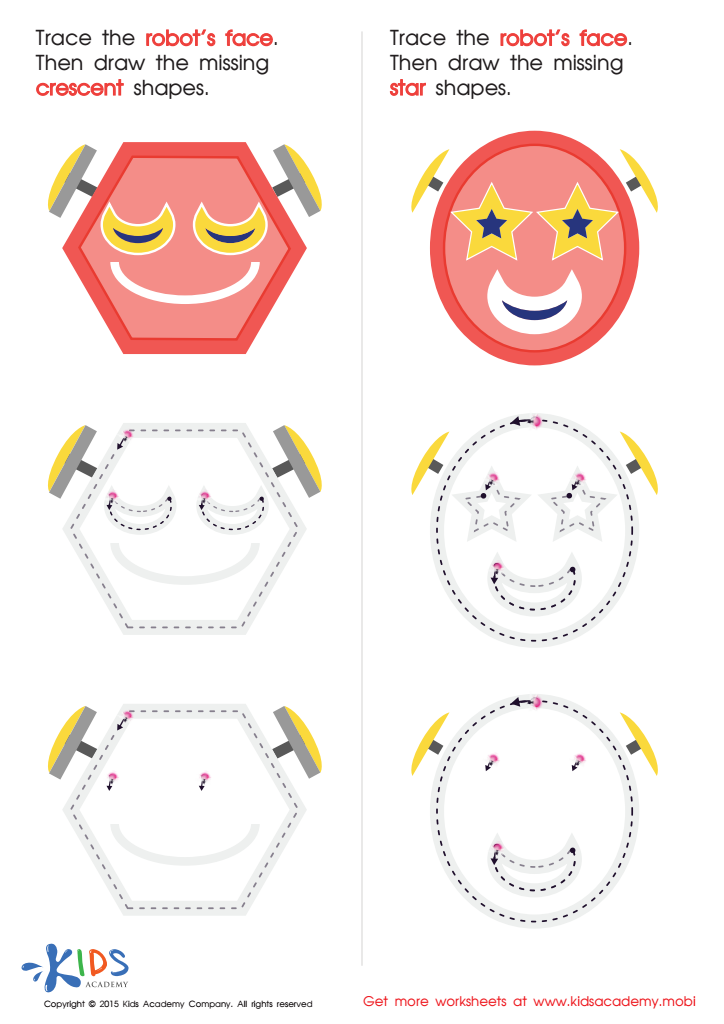
Composing a Robot's Face of Crescents And Stars Worksheet








Easy Geometry for ages 5-9 lays the foundation for critical thinking and problem-solving in young learners. Introducing geometry at an early age helps children develop spatial awareness, which is essential for understanding more complex mathematical concepts later on. By interacting with shapes, patterns, and figures, children enhance their visual perception and cognitive abilities.
Parents and teachers should recognize that geometry is not just about learning shapes; it nurtures logical reasoning and analytical skills. These skills are transferable to other areas of learning and everyday life. For example, identifying geometric shapes in their environment helps children make sense of the physical space around them, from the structure of buildings to the layout of their classrooms.
Moreover, early exposure to geometry cultivates a positive attitude towards mathematics. When children find joy and success in learning through hands-on activities and visual aids, it reduces math anxiety and builds confidence. Activities like drawing shapes, creating patterns, and solving puzzles can make learning engaging and enjoyable.
Incorporating Easy Geometry into the curriculum or home education routines ensures that children develop a strong mathematical foundation. This early investment pays off in their future academic endeavors, fostering a generation of learners who are not only proficient in math but also capable thinkers and problem solvers.








