Easy Addition Worksheets for Ages 6-8 - Page 2
36 filtered results
-
From - To
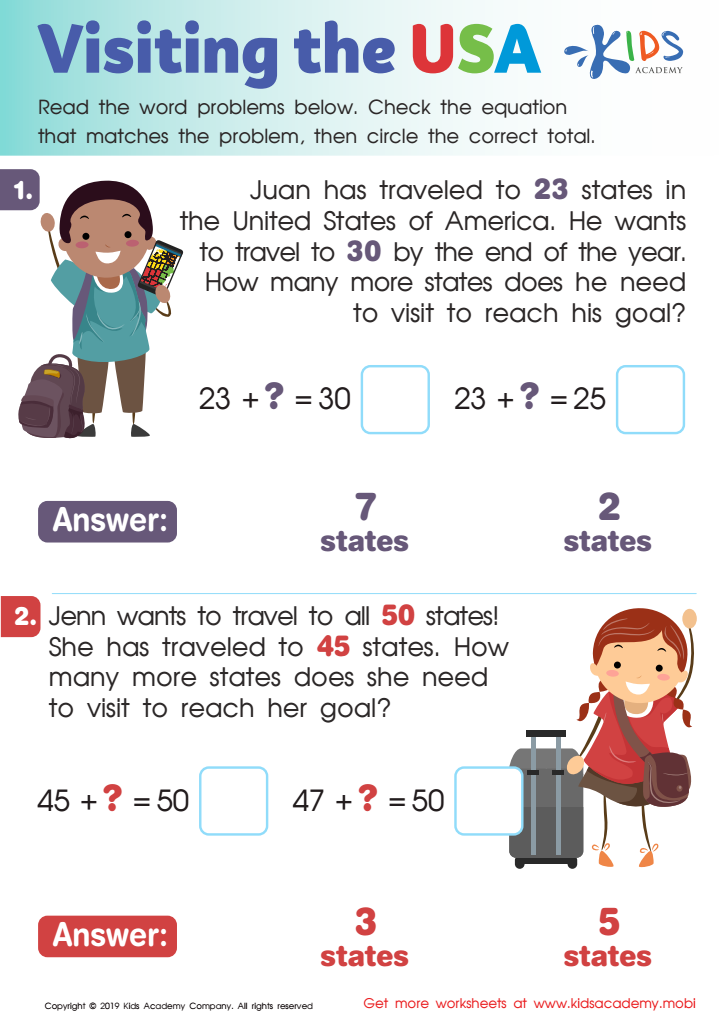
Visiting the USA Worksheet
 Assign to My Students
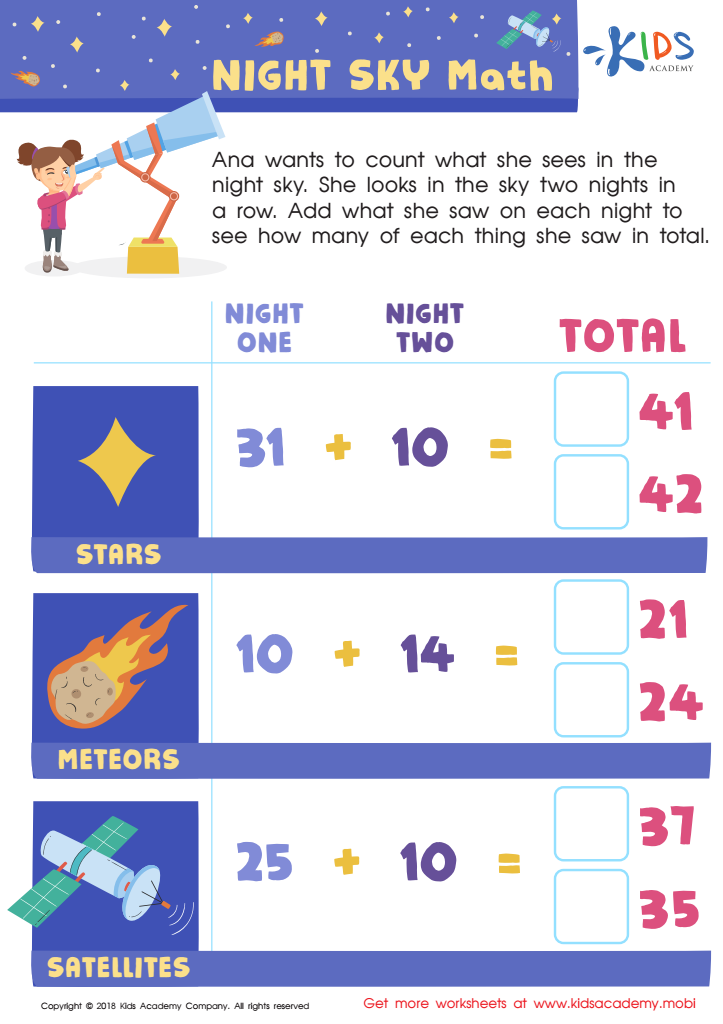
Night Sky Math Worksheet
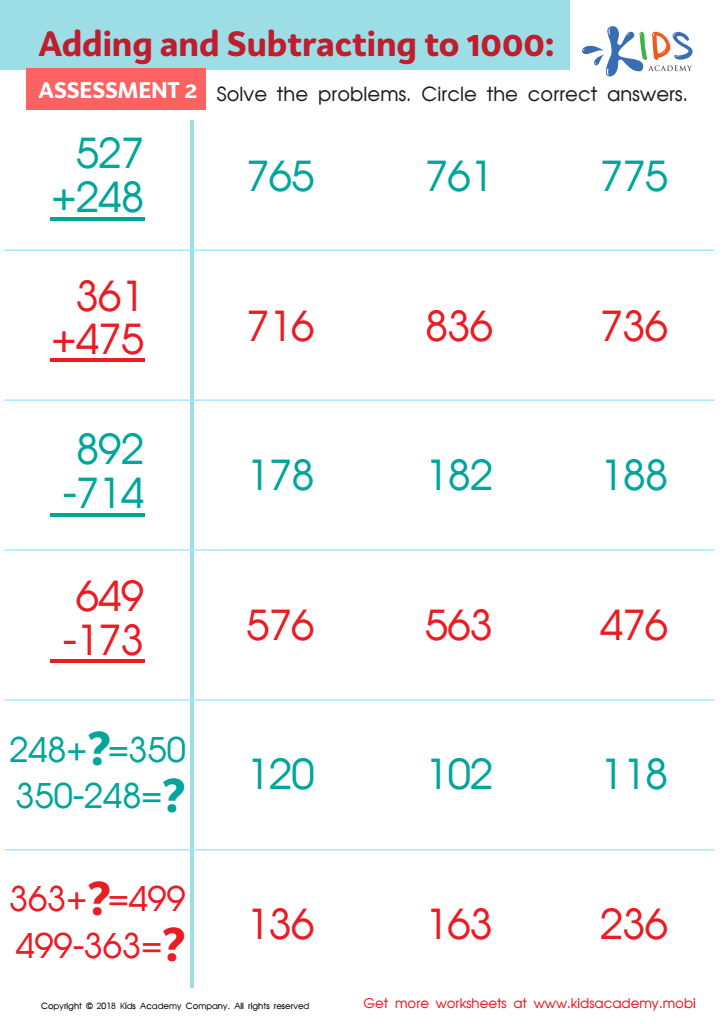
Adding and Subtracting to 1 Worksheet: Assessment 2
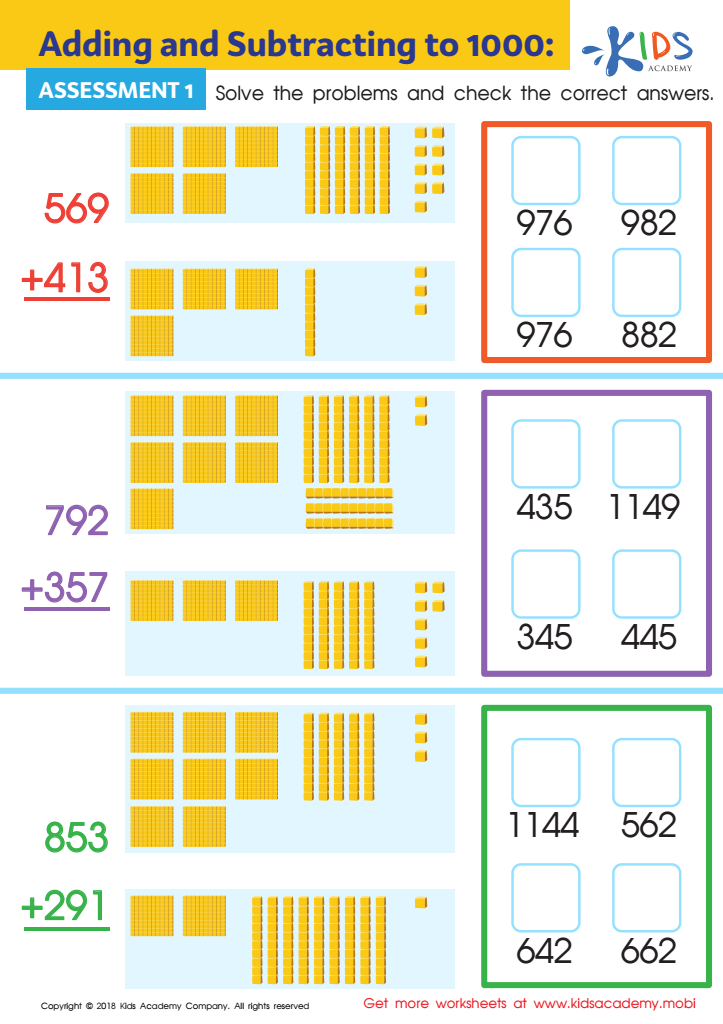
Adding and Subtracting to 1 Worksheet: Assessment 1
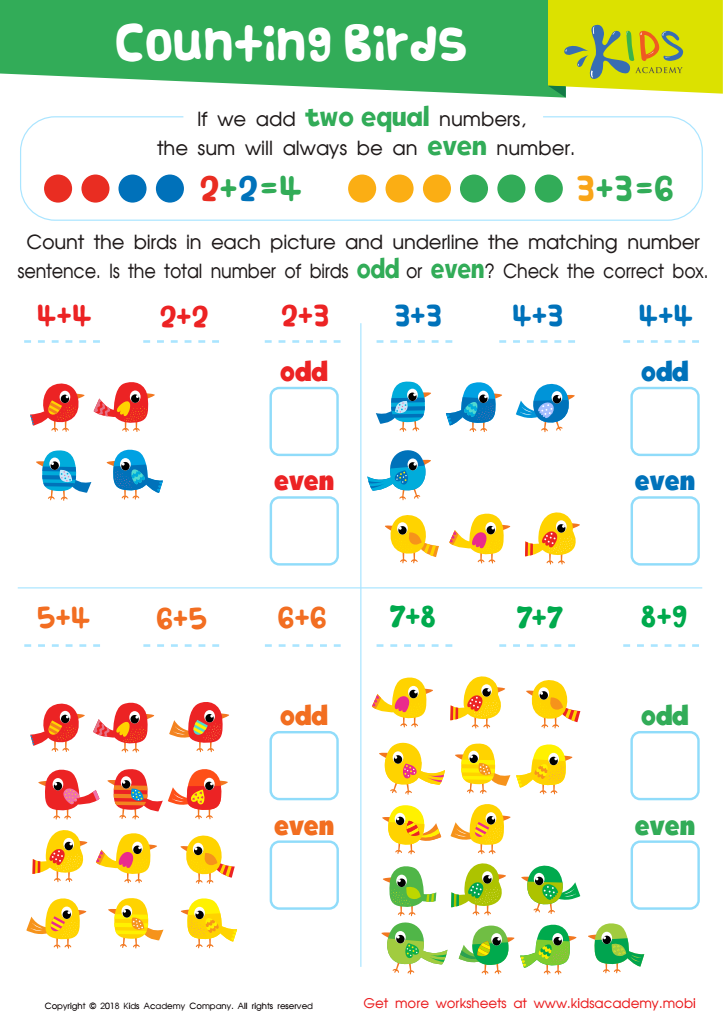
Counting Birds Worksheet
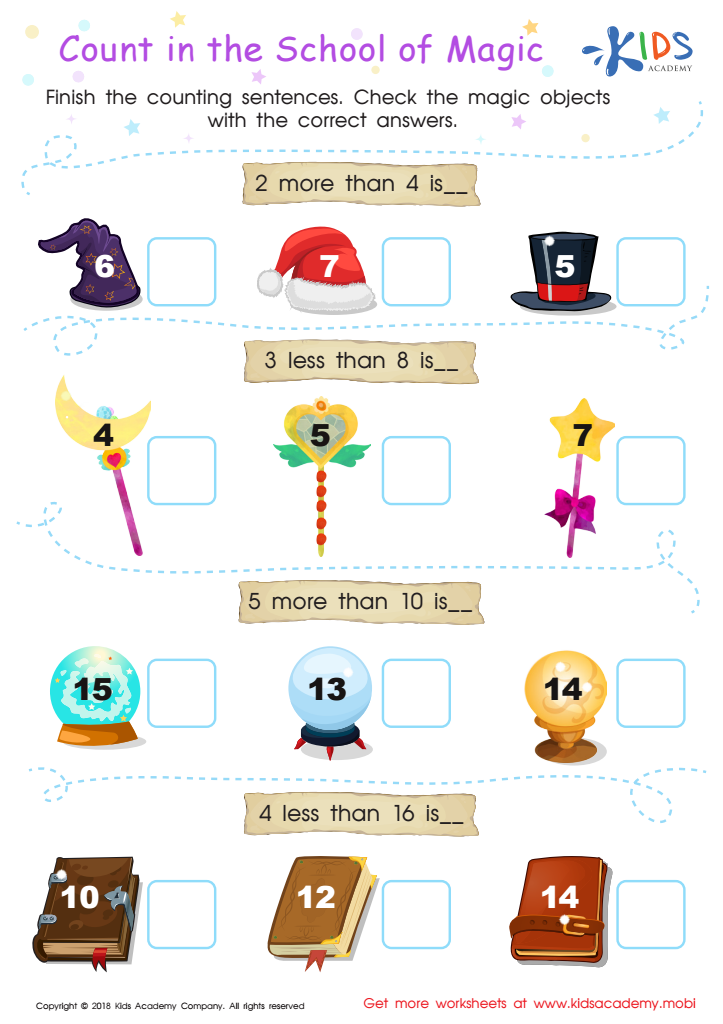
Count in the School of Magic Worksheet
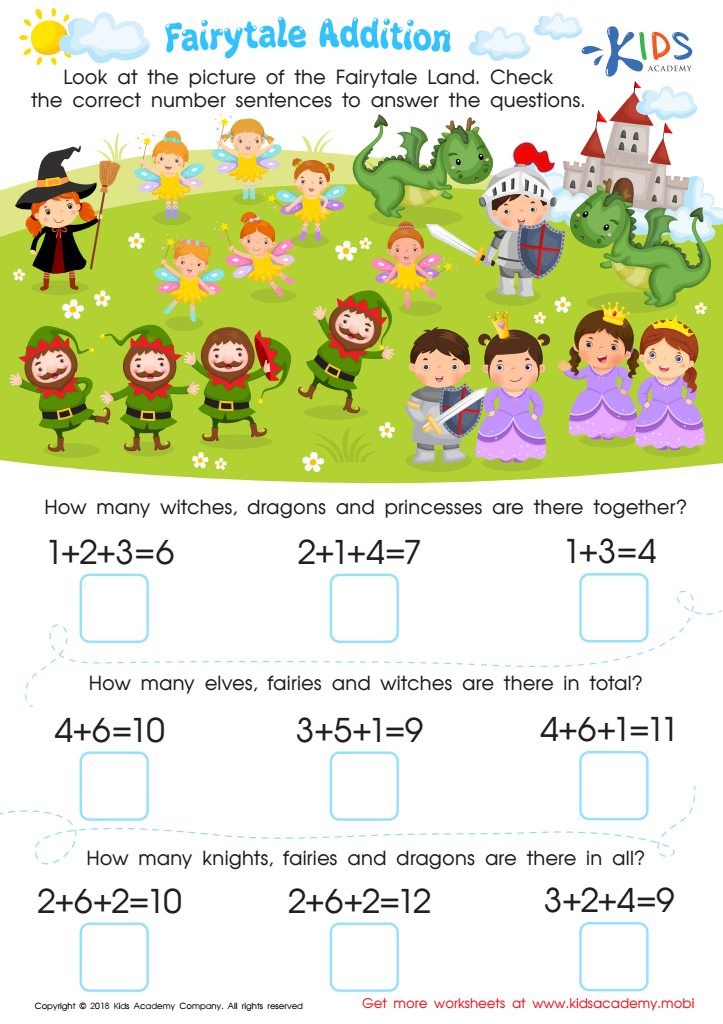
Fairytale Addition Worksheet
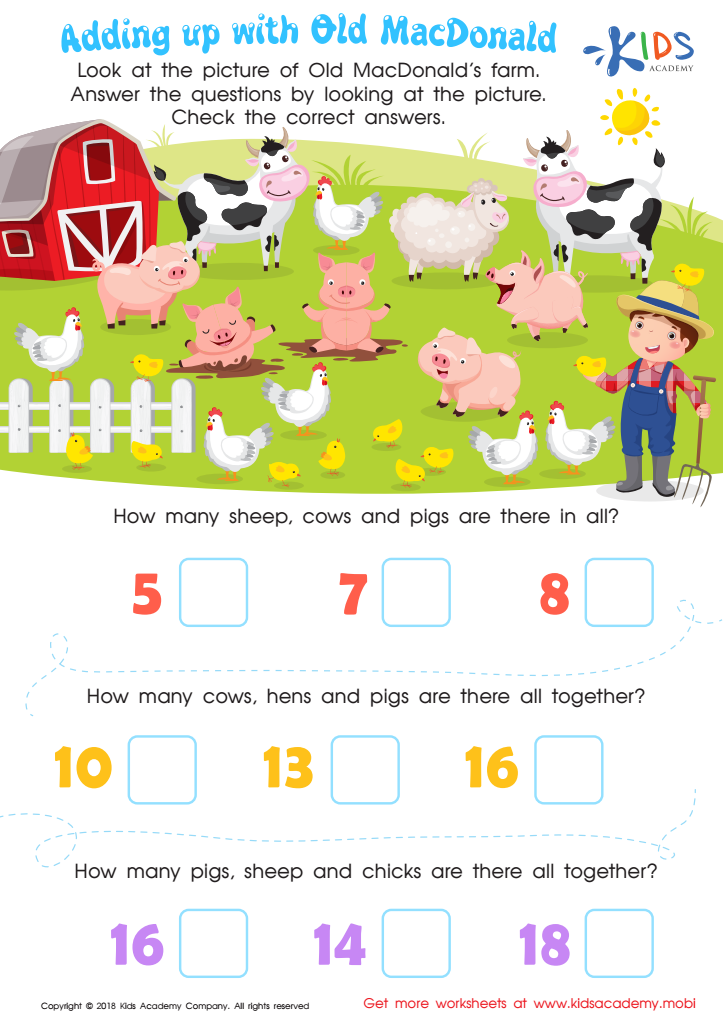
Adding Up with Old MacDonald Worksheet
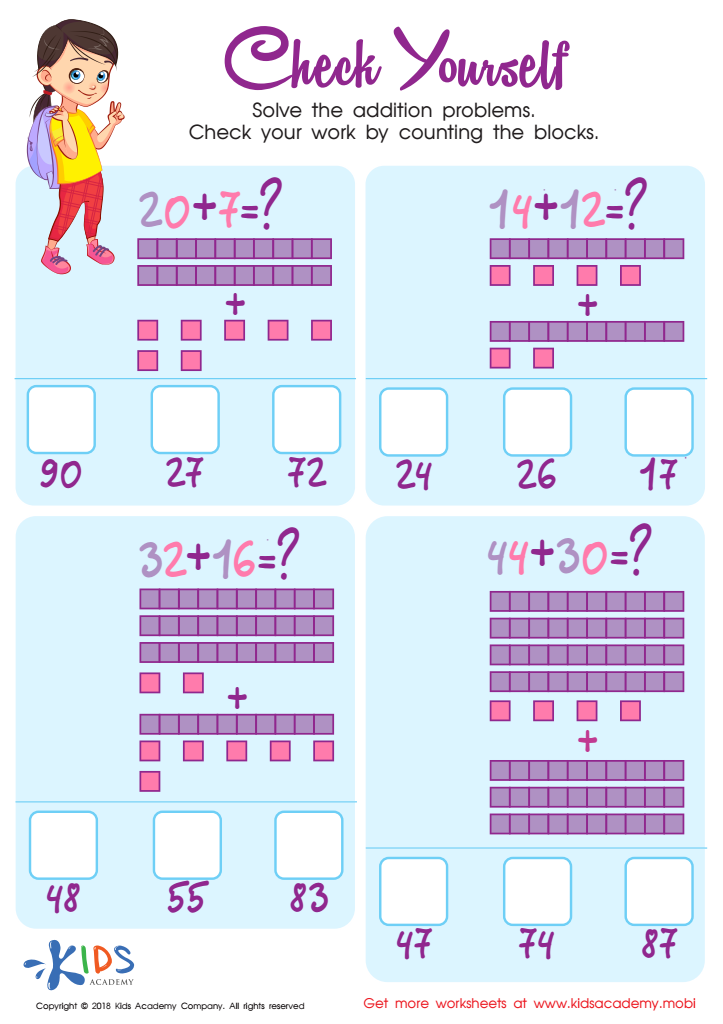
Adding with Base 1 Blocks Worksheet: Check Yourself
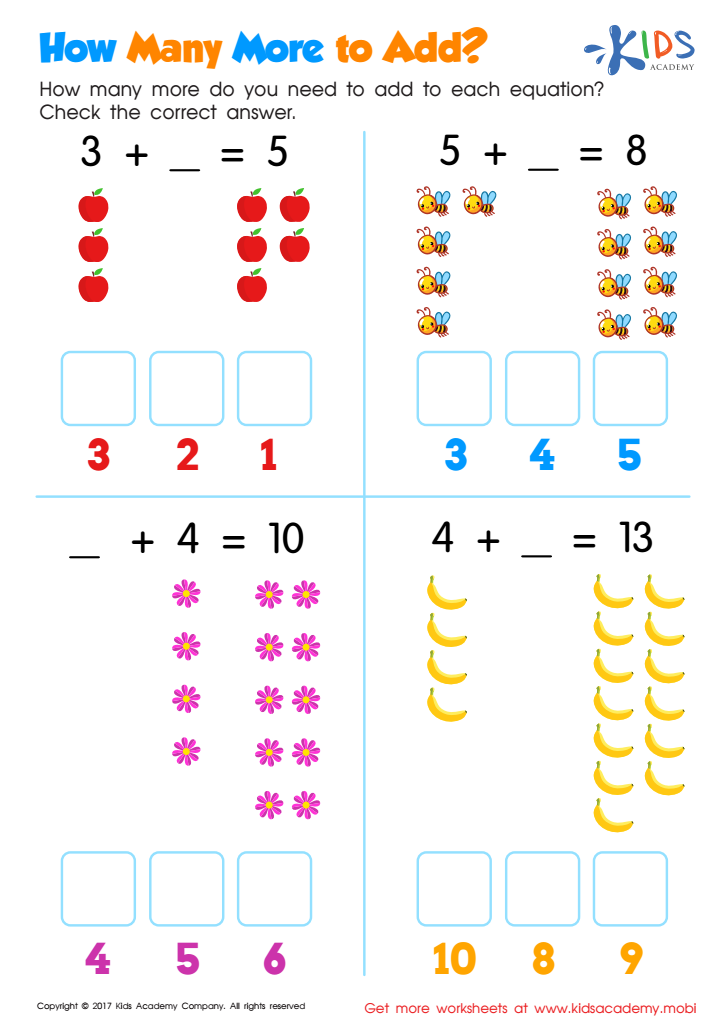
How Many More to Add Worksheet
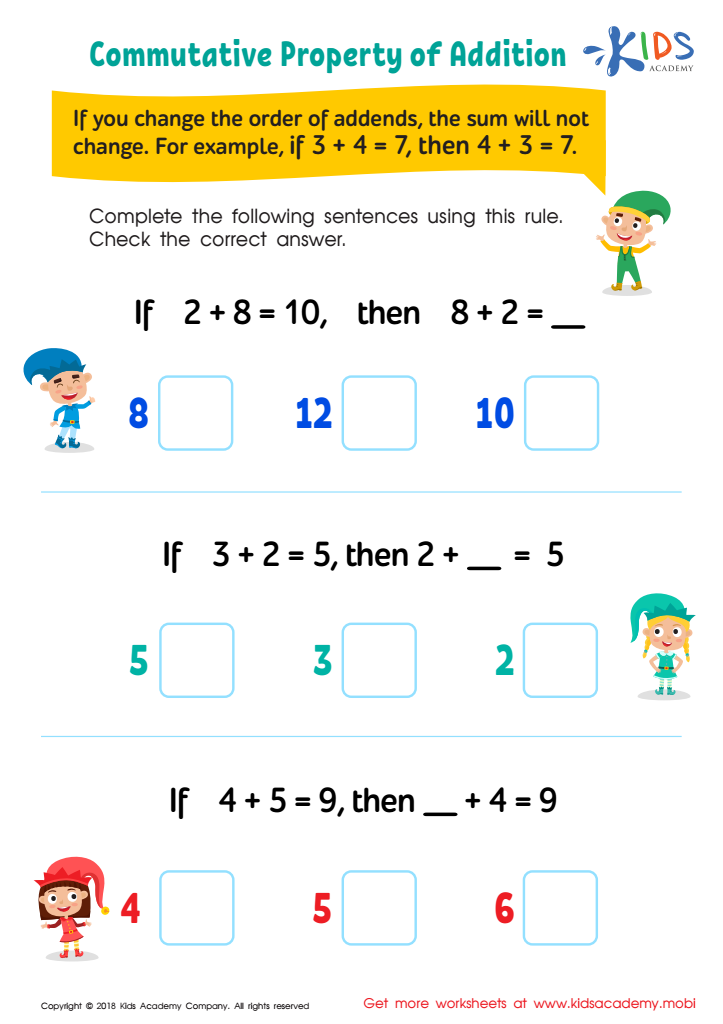
Commutative Property of Addition Worksheet
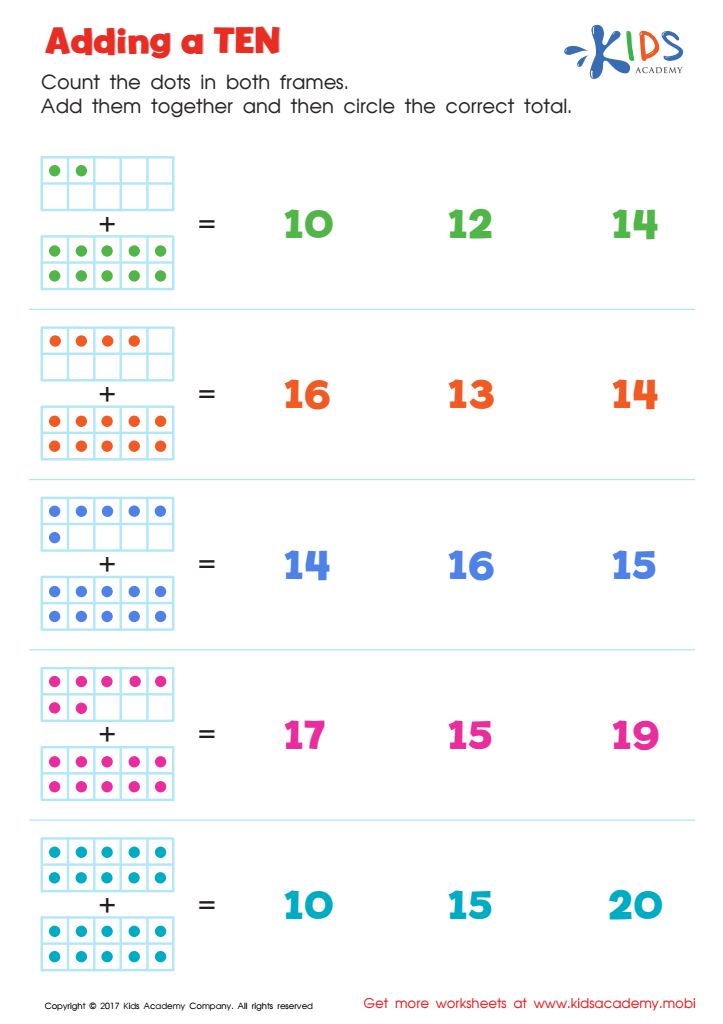
Adding a Ten Worksheet







.jpg)
Parents and teachers should care about Easy Addition for ages 6-8 because it lays the crucial foundation for a child's mathematical literacy. At this stage, children are not only developing basic arithmetic skills but are also building their confidence in problem-solving. Mastery of easy addition enables children to tackle more complex math concepts in the future.
Moreover, positive early experiences with math can foster a lasting interest in the subject, helping to combat math anxiety that can develop later. Engaging children with enjoyable, interactive learning methods—like games or hands-on activities—makes addition fun and relatable, enhancing retention. Educators and caregivers play a vital role in creating a supportive environment that nurtures a child's understanding, perseverance, and enthusiasm.
Easy Addition also promotes cognitive development, as children learn to recognize patterns, make connections, and think critically. It encourages teamwork and communication when engaged in group activities. Overall, focusing on easy addition not only enriches a child's immediate learning experience but also equips them with essential skills for future academic success and everyday problem-solving. Supporting children in these formative years lays the groundwork for a lifetime of effective learning and empowerment in mathematics and beyond.








