Easy Fractions of Shapes Worksheets for Ages 6-8
23 filtered results
-
From - To
Discover our "Easy Fractions of Shapes Worksheets" designed specifically for children ages 6-8! These engaging worksheets help young learners understand the concept of fractions through colorful and interactive shape visuals. Each activity is crafted to make learning about equal parts, halves, thirds, and more fun and accessible. Ideal for homeschooling or classroom use, our worksheets encourage hands-on practice and reinforce math skills in a playful way. With a variety of challenges including identifying, coloring, and solving fraction problems, your child will build confidence in their math abilities. Download our printable worksheets today and inspire a love of learning!
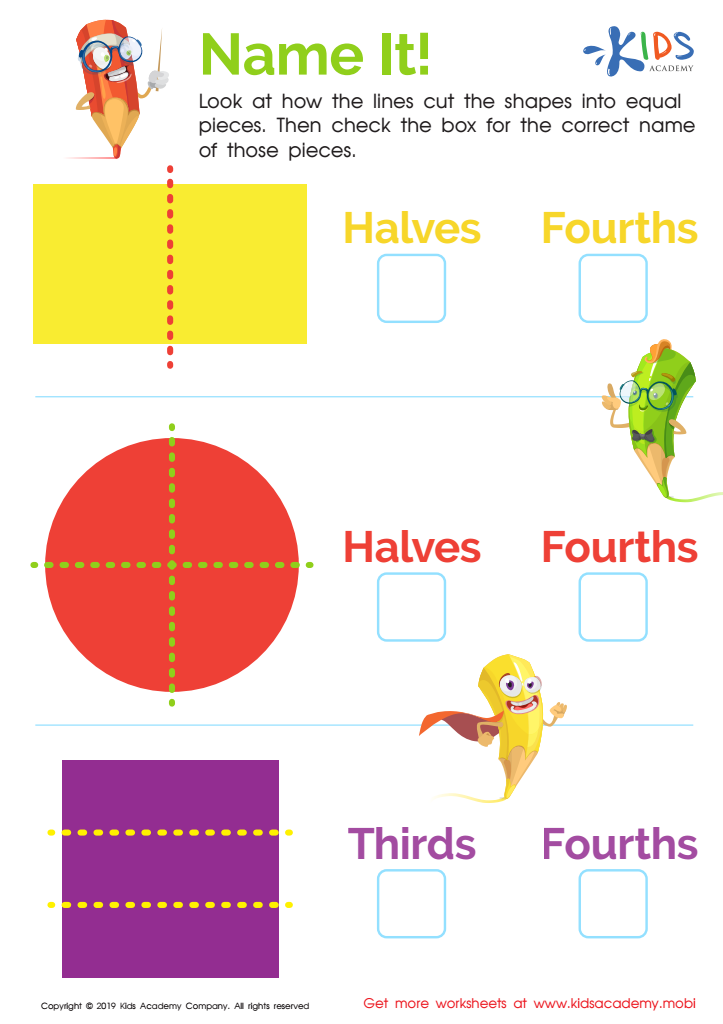
Name It! Worksheet
 Assign to My Students
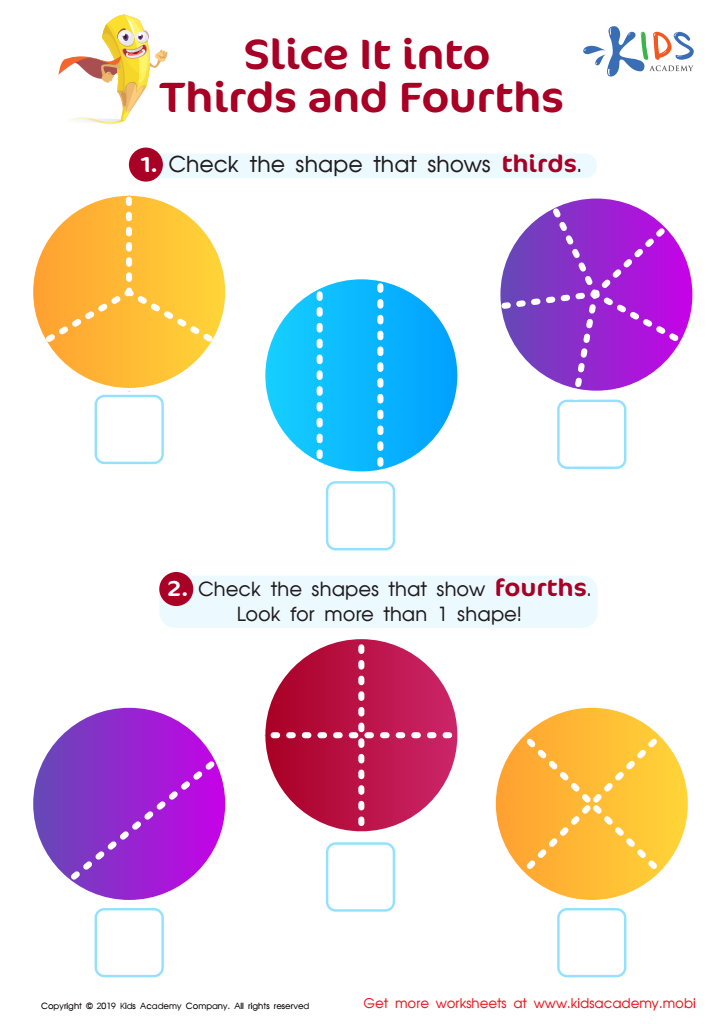
Slice in Thirds Fourths Worksheet
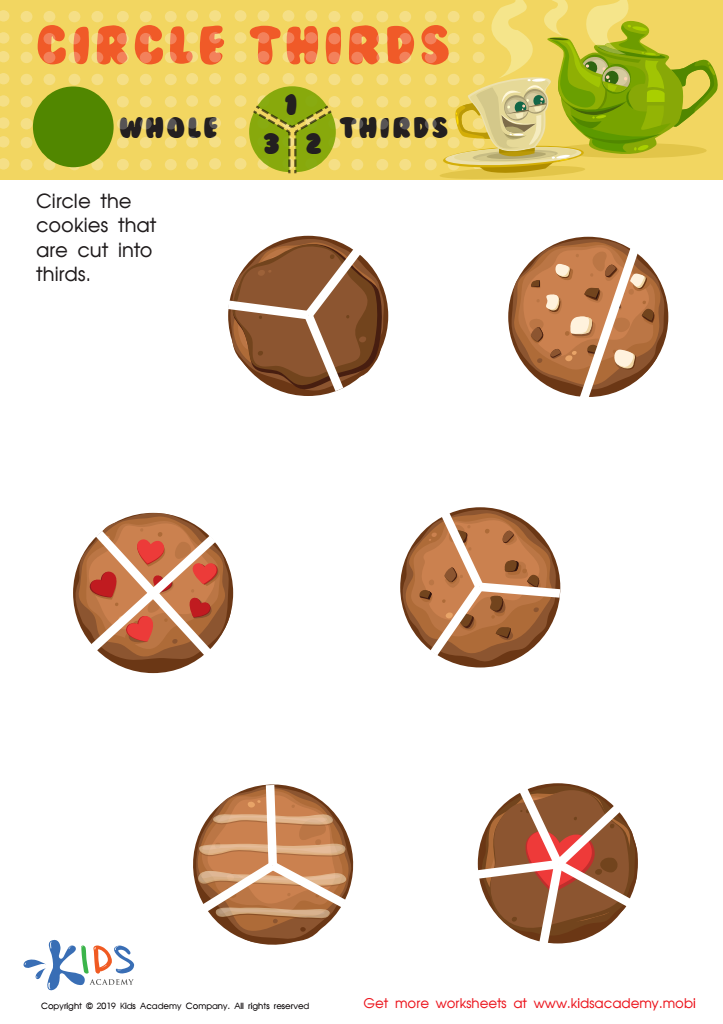
Circle Thirds Worksheet
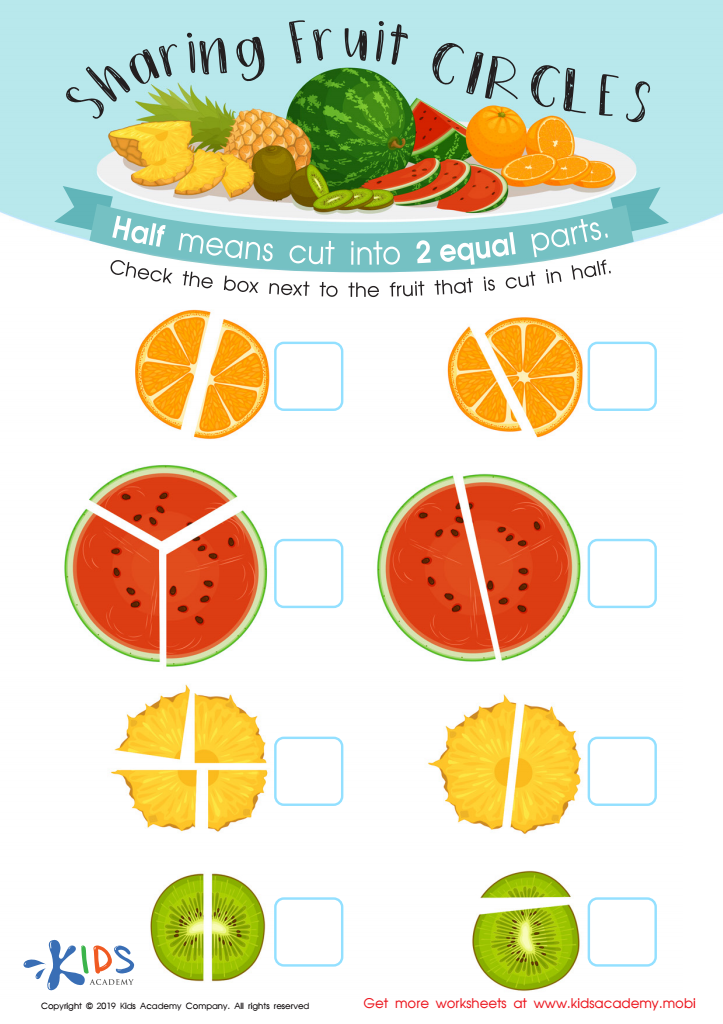
Sharing Fruit Circles Worksheet
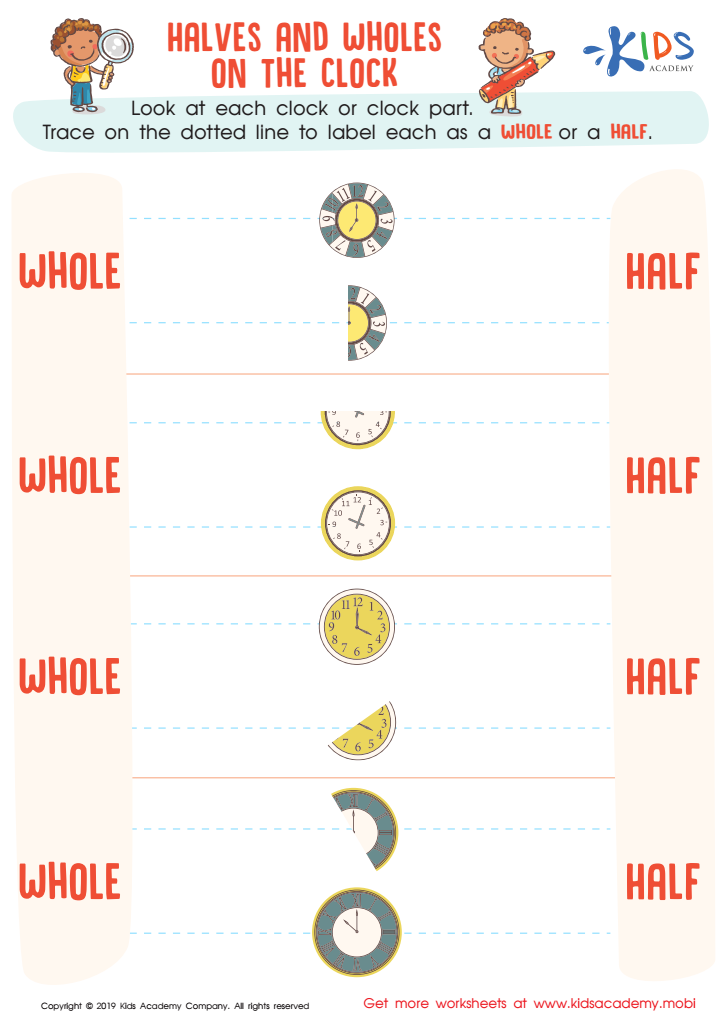
Halves and Wholes on the Clock Worksheet
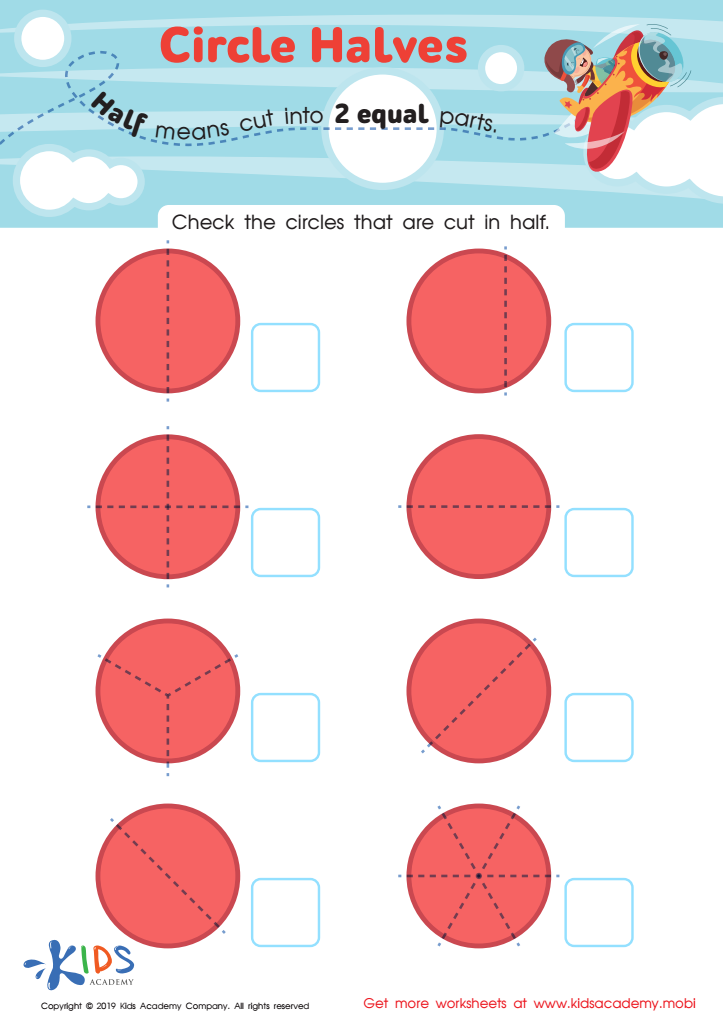
Circle Halves Worksheet
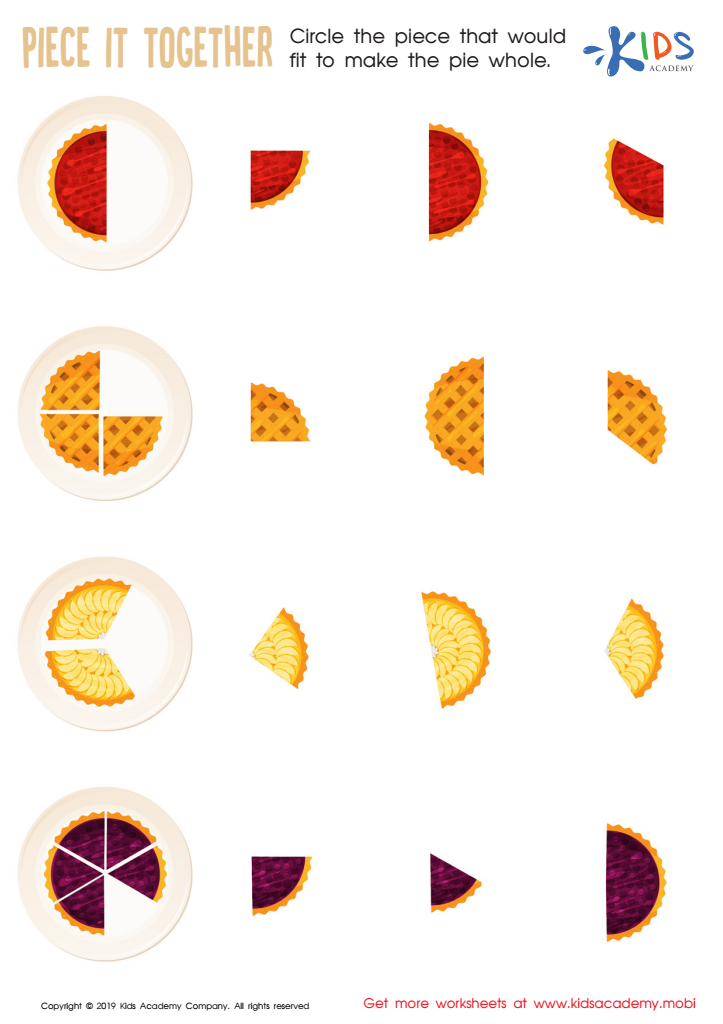
Piece it together Worksheet
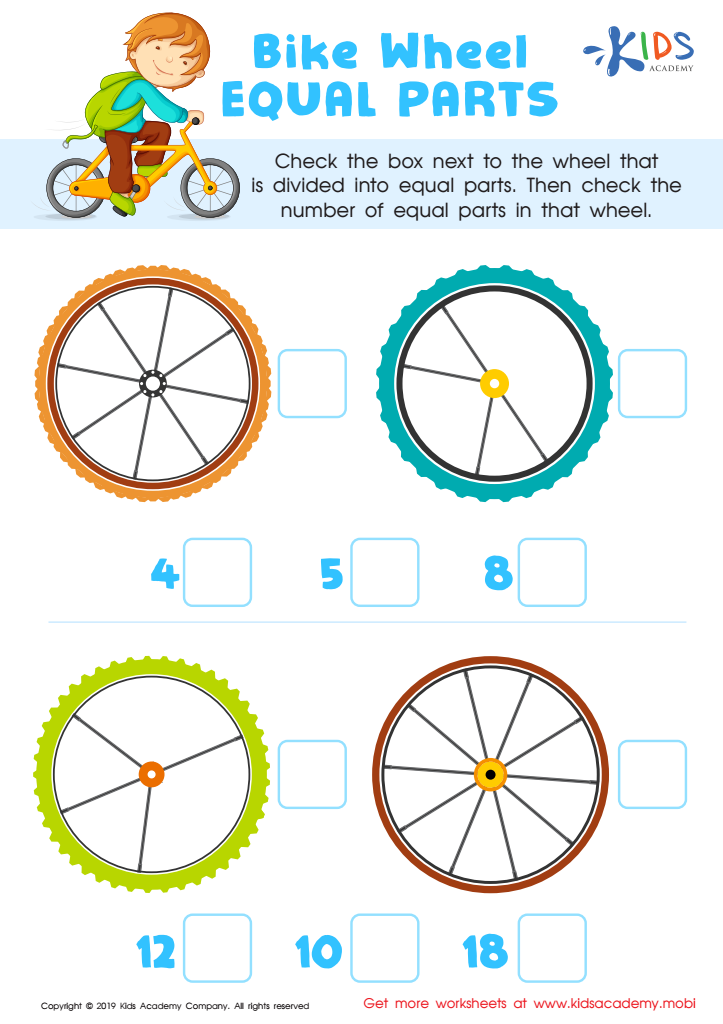
Bike Wheel Equal Parts Worksheet
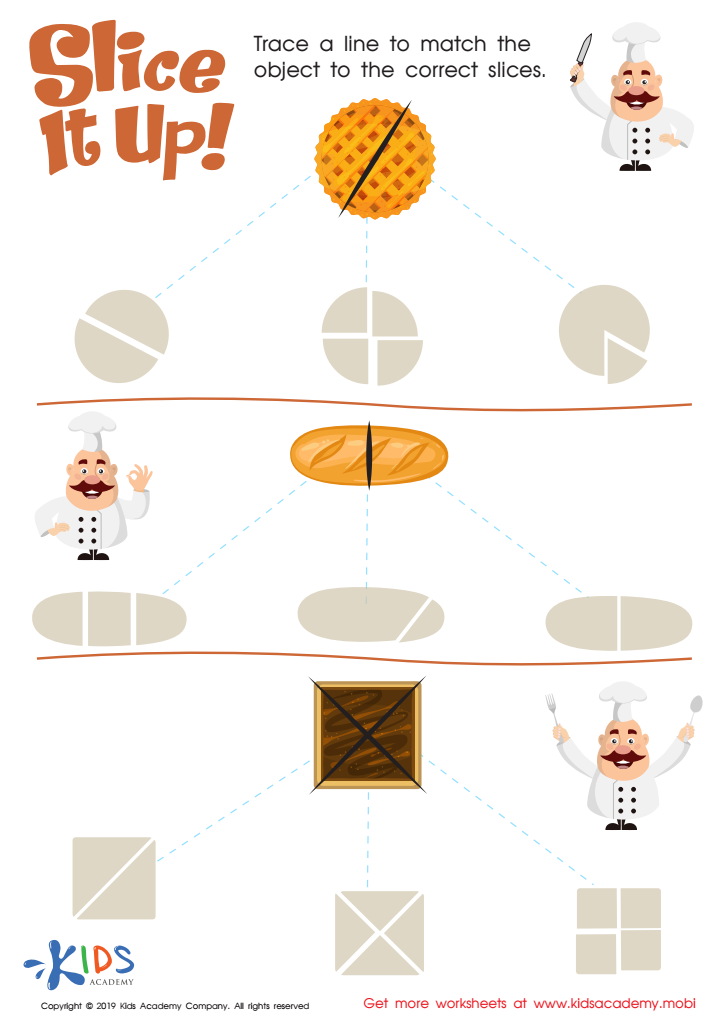
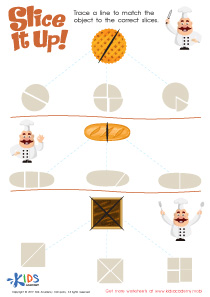
Slice It Up Worksheet
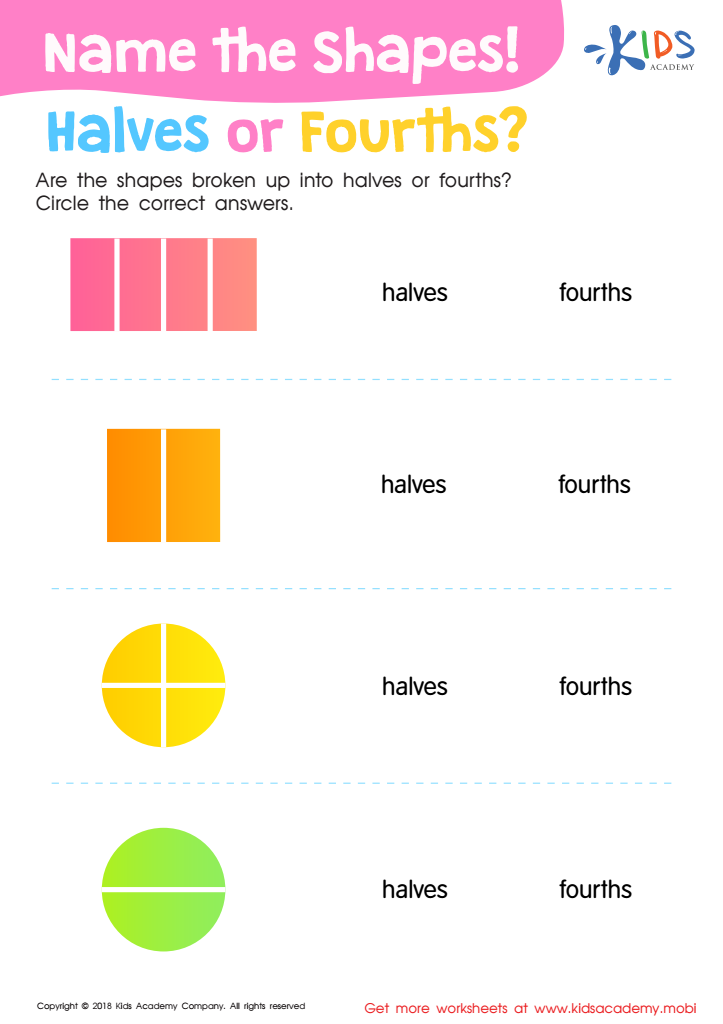
Name the Shapes Halves or Fourths? Worksheet
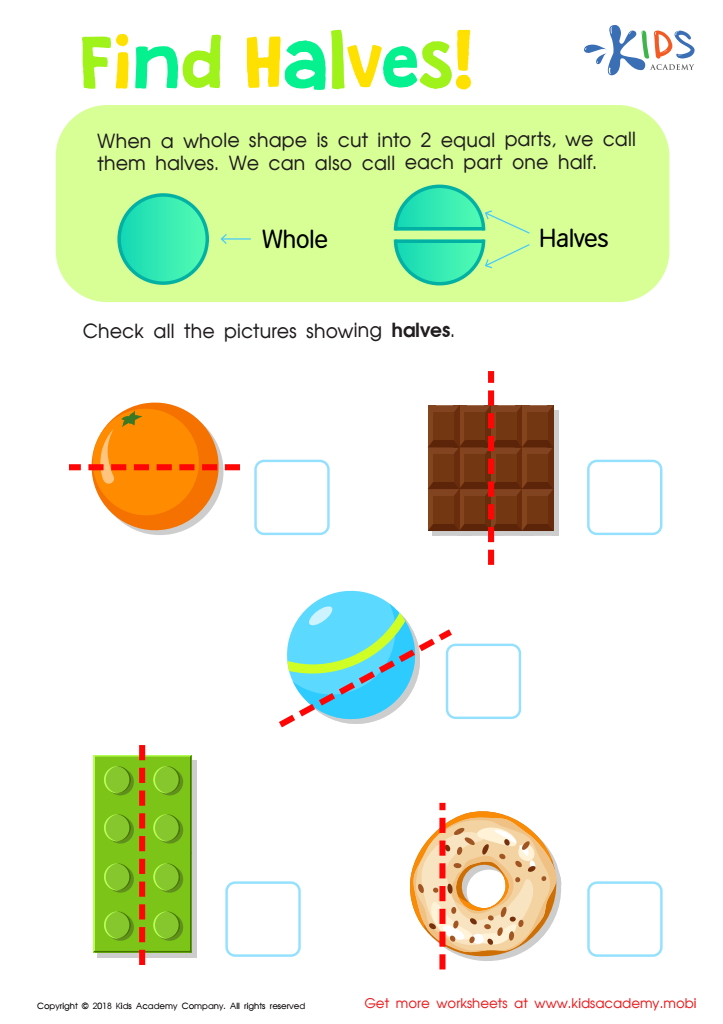
Find Halves Worksheet
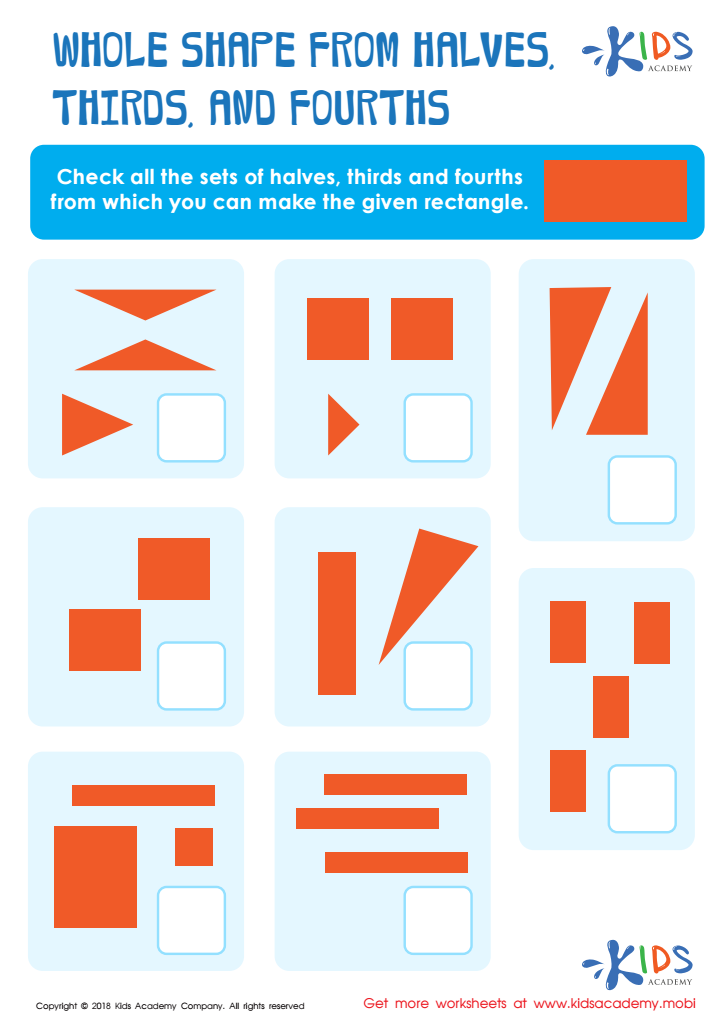
Whole Shape from Halves, Thirds and Fourths Worksheet
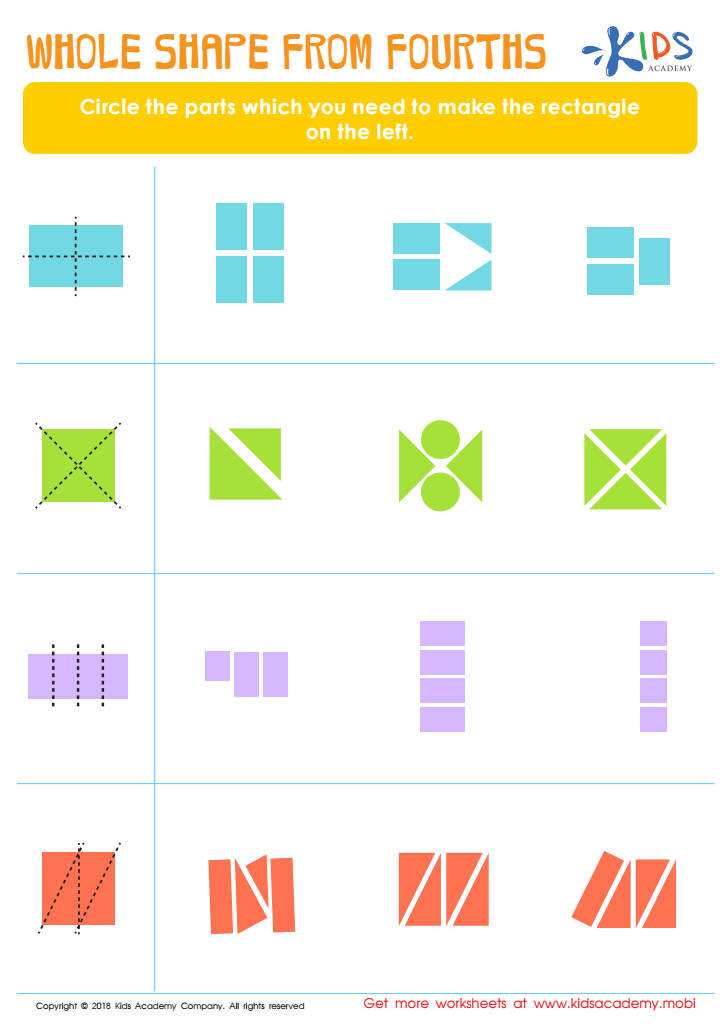
Whole Shape from Fourths Worksheet
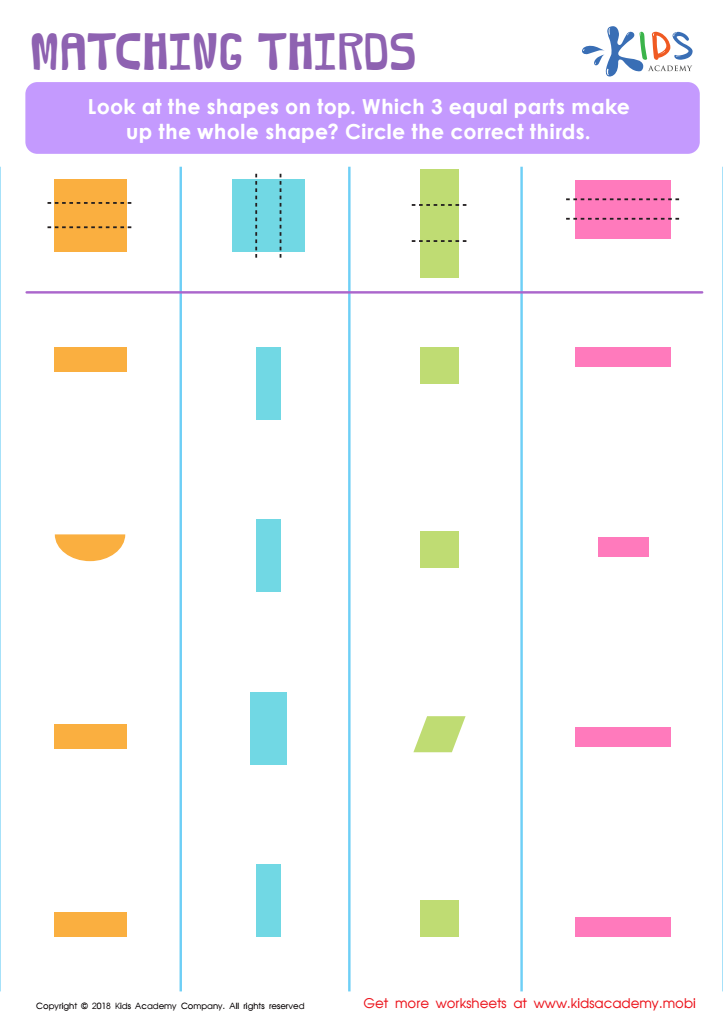
Matching Thirds Worksheet
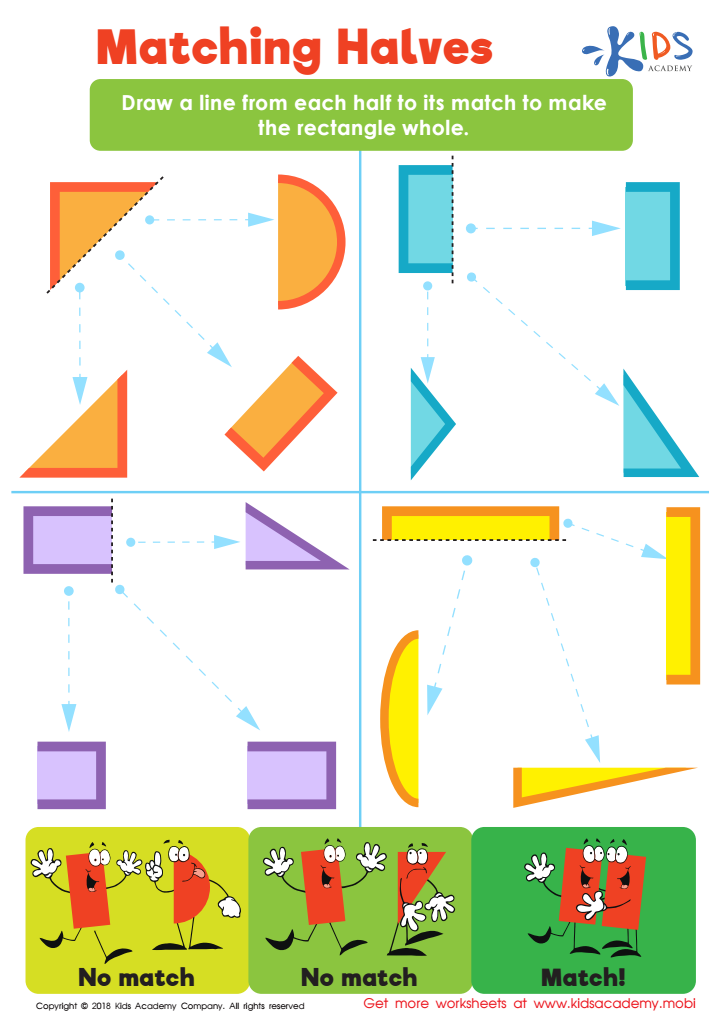
Matching Halves Worksheet
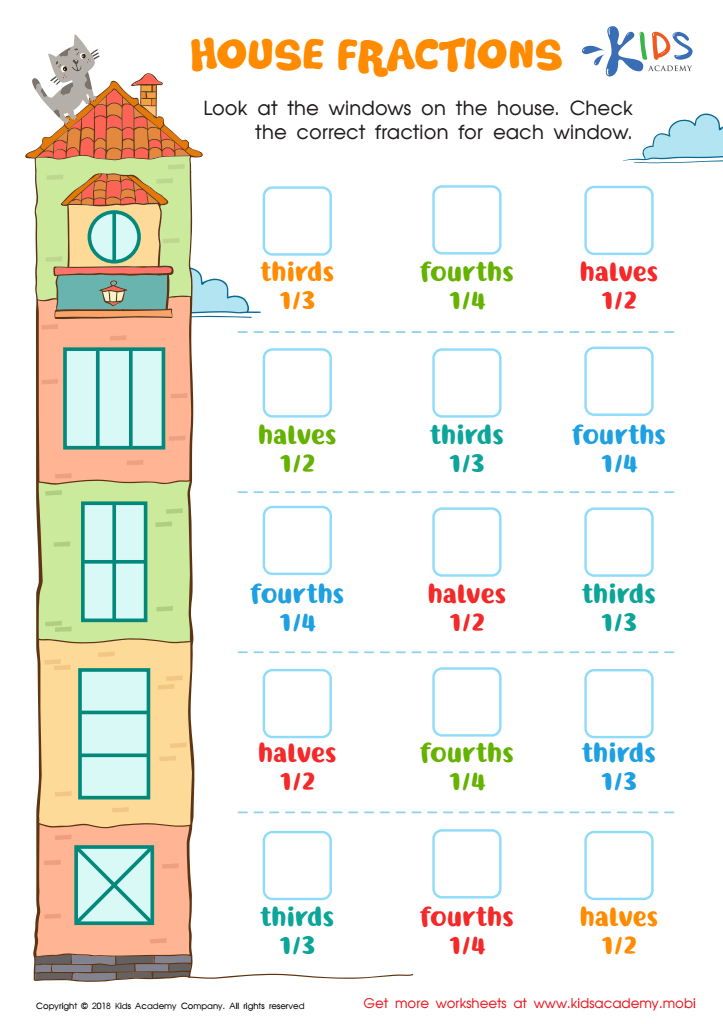
House Fractions Worksheet
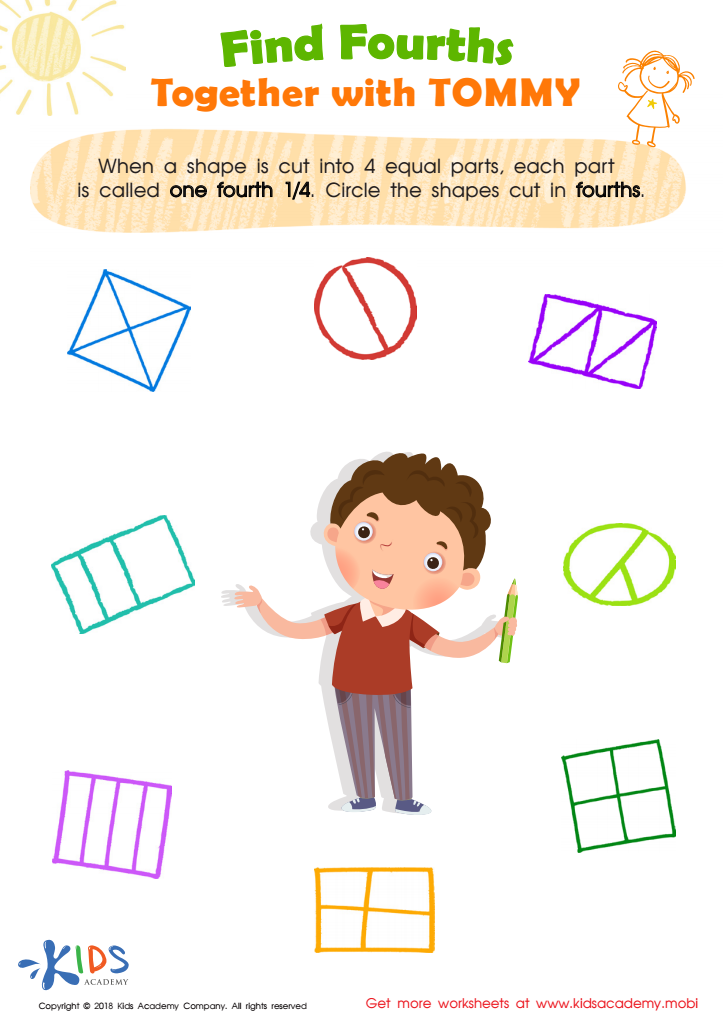
Find Fourths Together with Tommy Worksheet
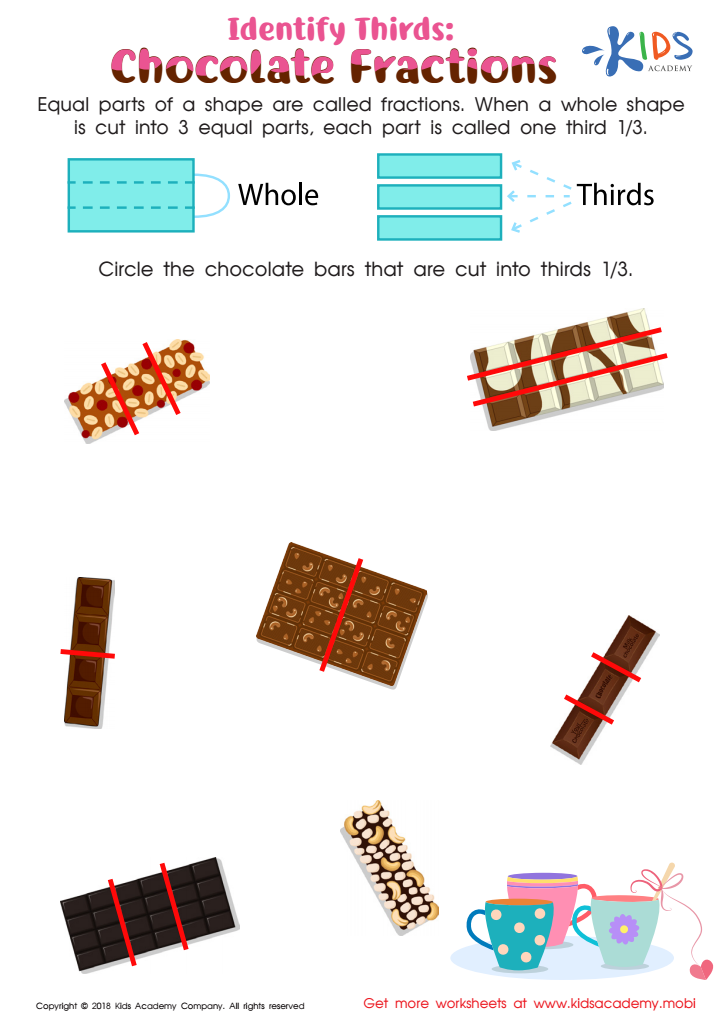
Identify Thirds: Chocolate Fractions Worksheet
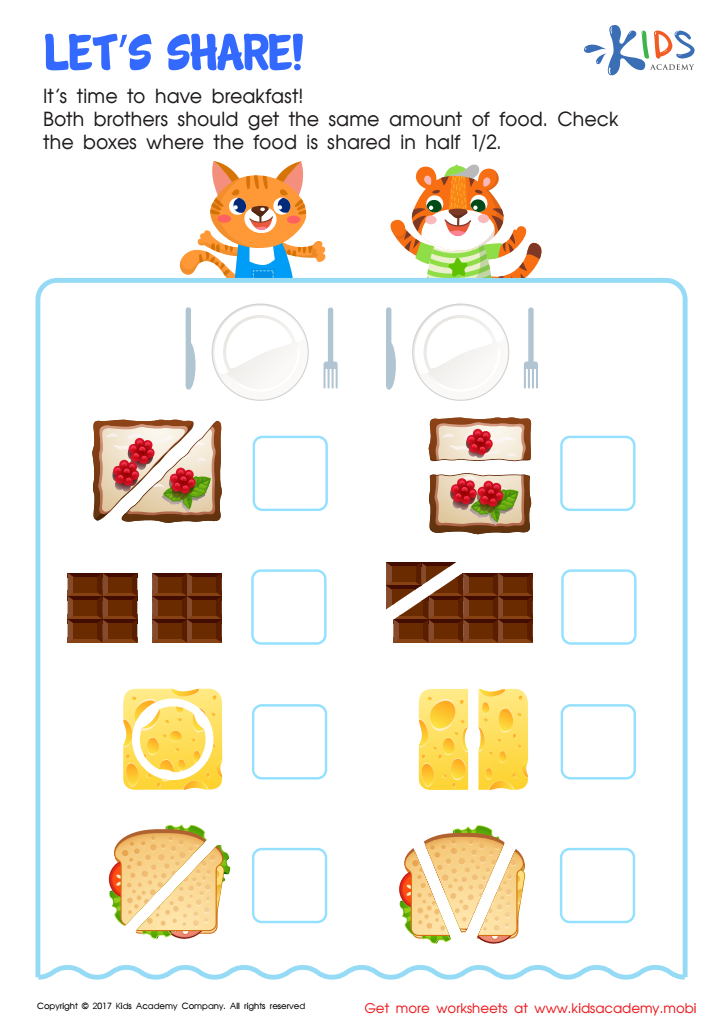
Let's Share Worksheet
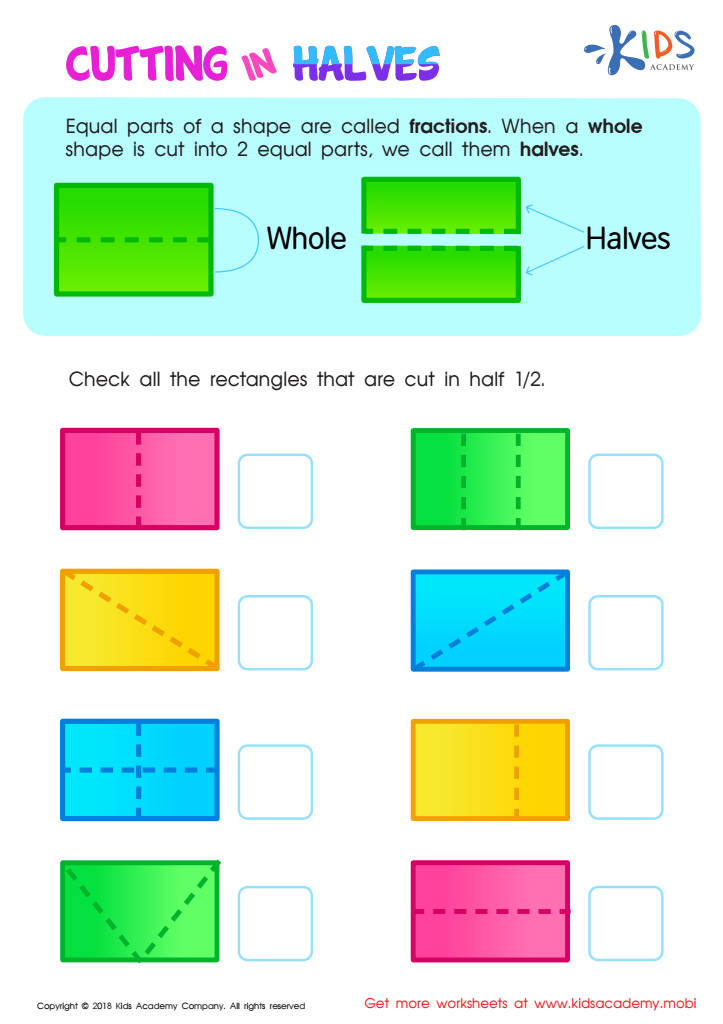
Cutting in Halves Worksheet
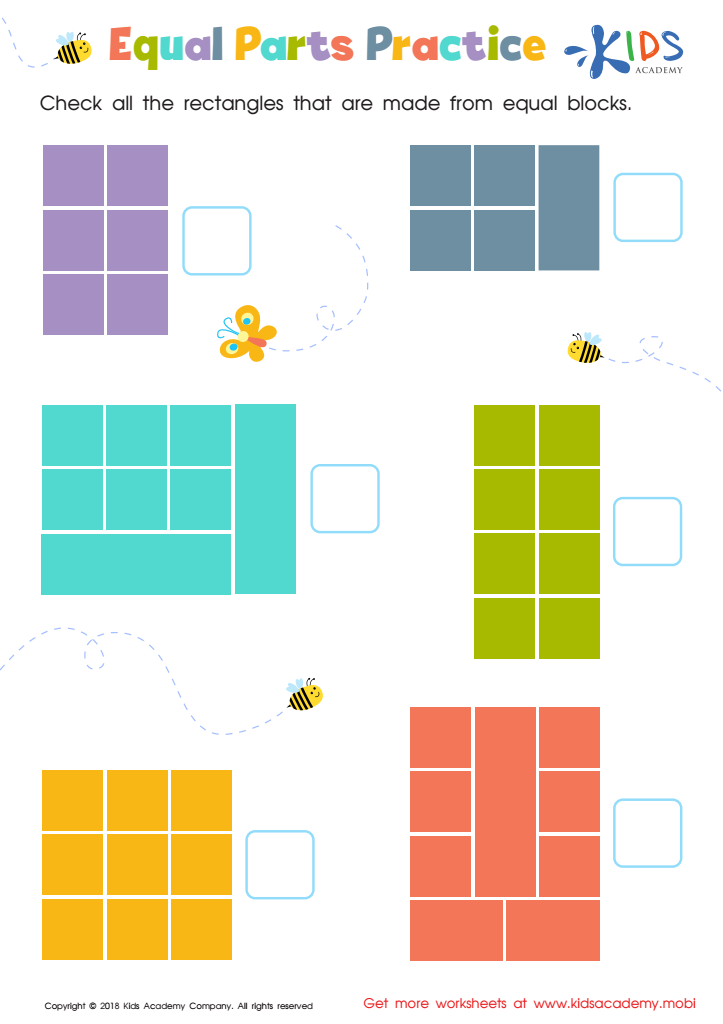
Equal Parts Practice Worksheet
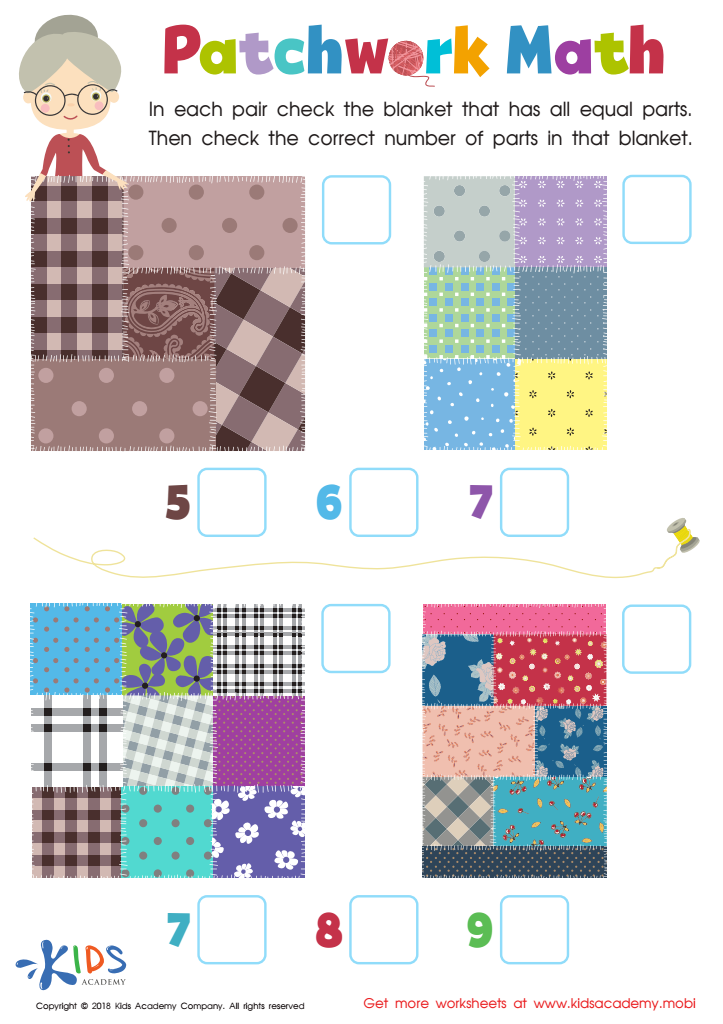
Patchwork Math Worksheet
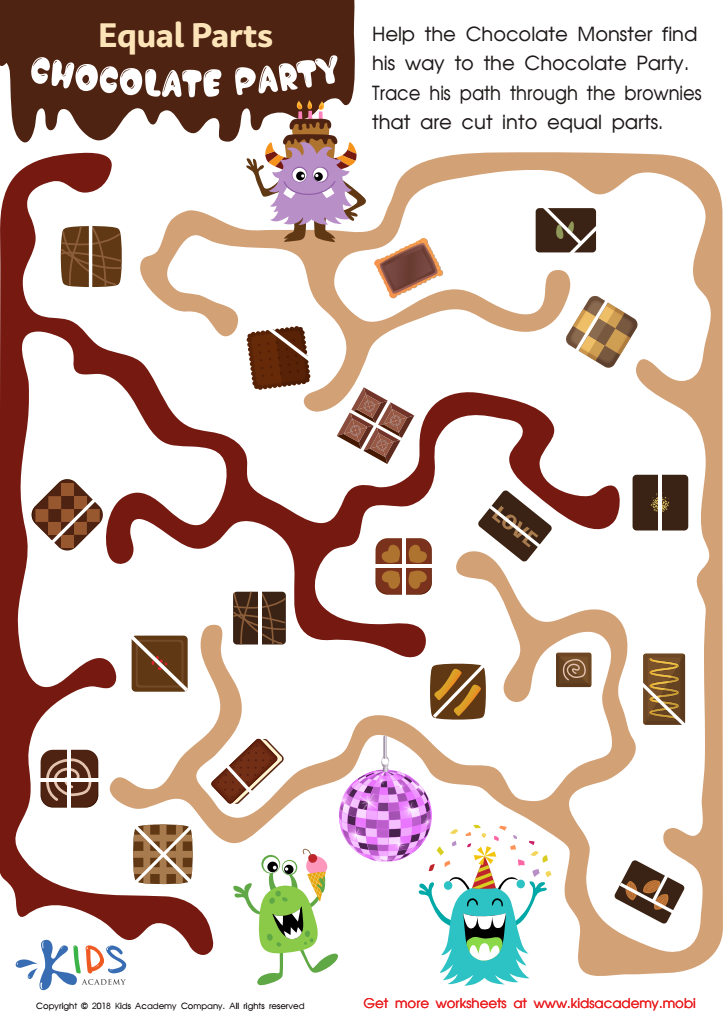
Equal Parts: Chocolate Party Worksheet








Understanding easy fractions of shapes is crucial for children aged 6-8, as it lays the foundation for more complex mathematical concepts they will encounter later. At this stage, children are developing critical thinking and analytical skills, and learning about fractions introduces them to the idea of division and part-whole relationships in a tangible way.
By engaging with shapes, such as circles and squares divided into equal parts, children can visualize fractions more effectively. This hands-on experience not only makes math enjoyable but also applies to real-world situations, like sharing food or dividing up toys, which fosters a practical understanding of mathematics in everyday life.
Parents and teachers should care about this topic because early intervention can significantly influence a child's confidence and success in math. Children who grasp these foundational concepts early are more likely to excel in future math education, as they develop a positive attitude towards learning. Moreover, discussions about fractions promote language skills and critical reasoning, enhancing overall cognitive development. Ultimately, supporting children in learning easy fractions of shapes creates a pathway for stronger mathematical literacy, problem-solving skills, and the ability to navigate a world increasingly influenced by quantitative reasoning.