Easy Geometry Worksheets for Ages 6-9
51 filtered results
-
From - To
Discover our easy geometry worksheets designed specifically for kids aged 6-9! Perfect for young learners, these engaging resources introduce fundamental geometry concepts in a fun and accessible way. From identifying shapes to understanding basic geometric terms, our worksheets foster critical thinking and problem-solving skills. Each worksheet encourages hands-on activities and interactive learning, making them ideal for both classroom and at-home use. Tailored to the developmental needs of children, our geometry exercises will help build confidence while mastering essential math skills. Explore our printable collection today and watch your child's understanding of geometry grow with every activity!
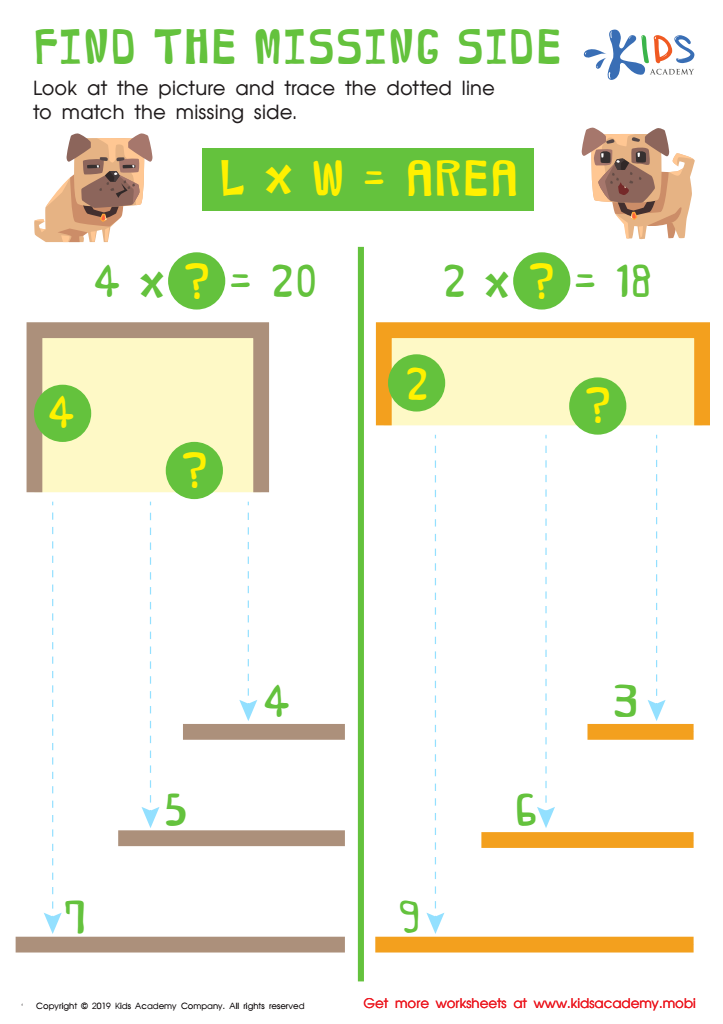
Find the Missing Side Worksheet
 Assign to My Students











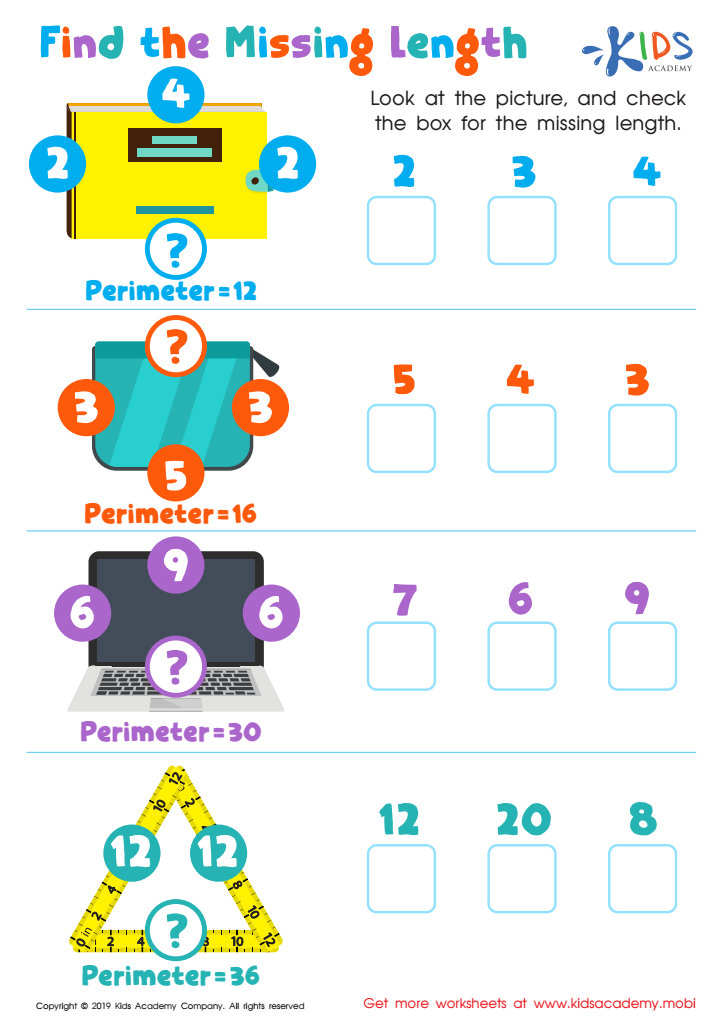
Find the Missing Length Worksheet
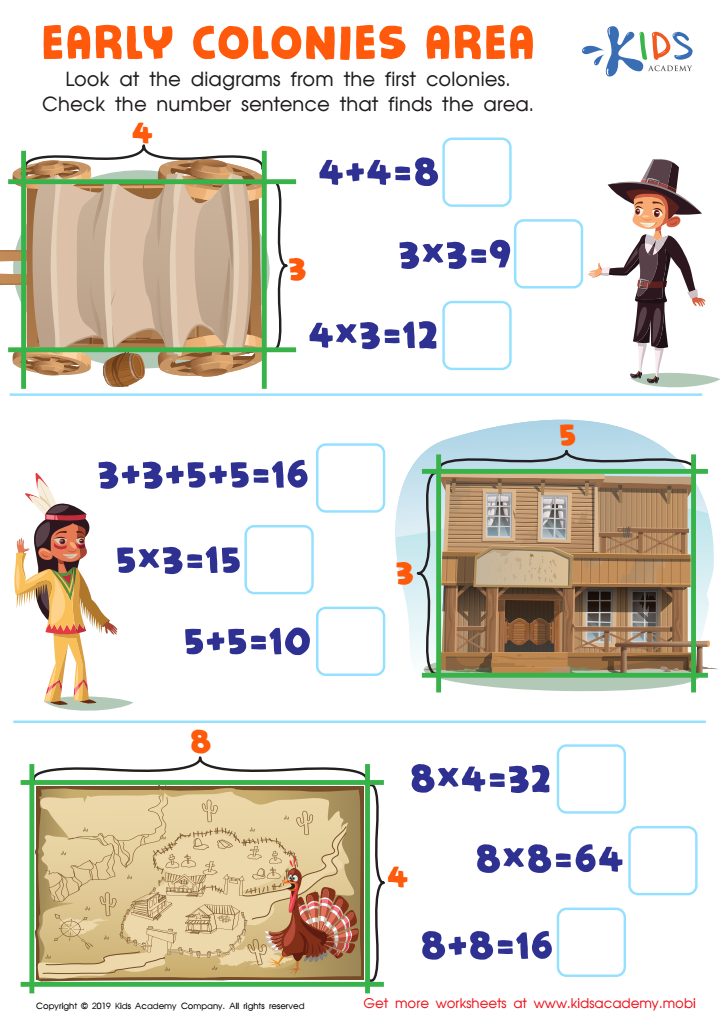
Early Colonies Area Worksheet
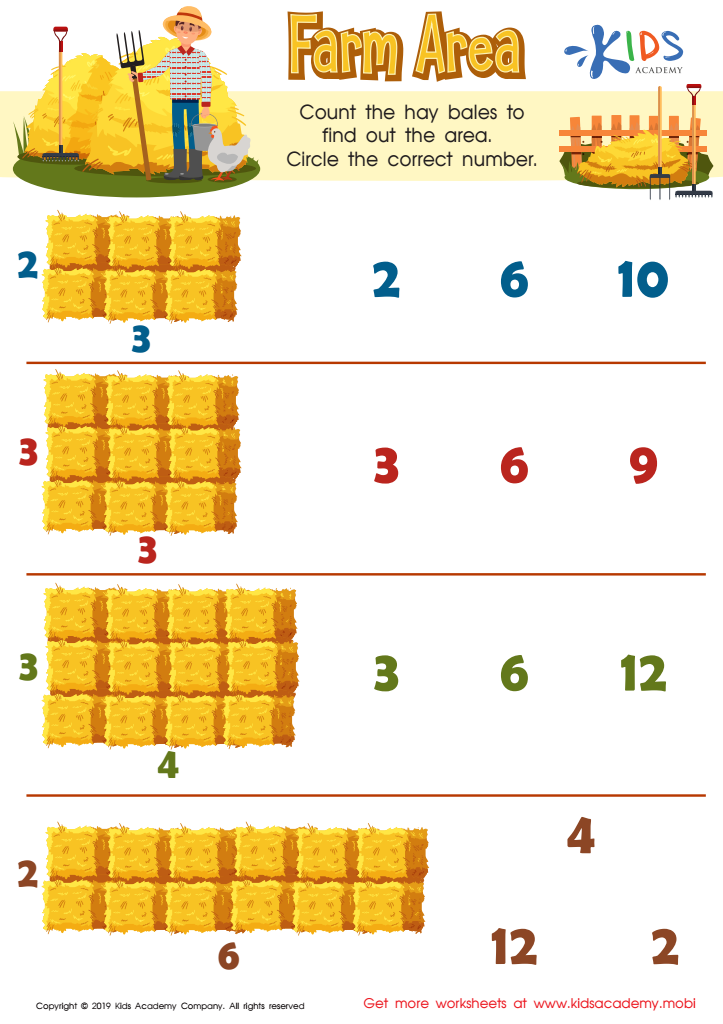
Farm Area Worksheet
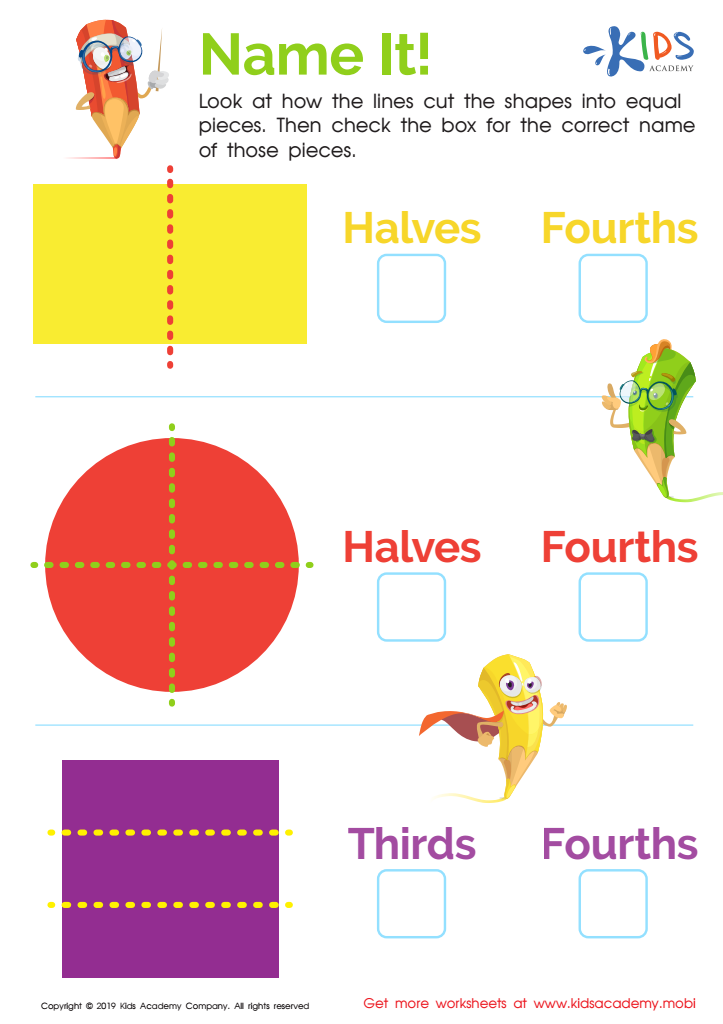
Name It! Worksheet
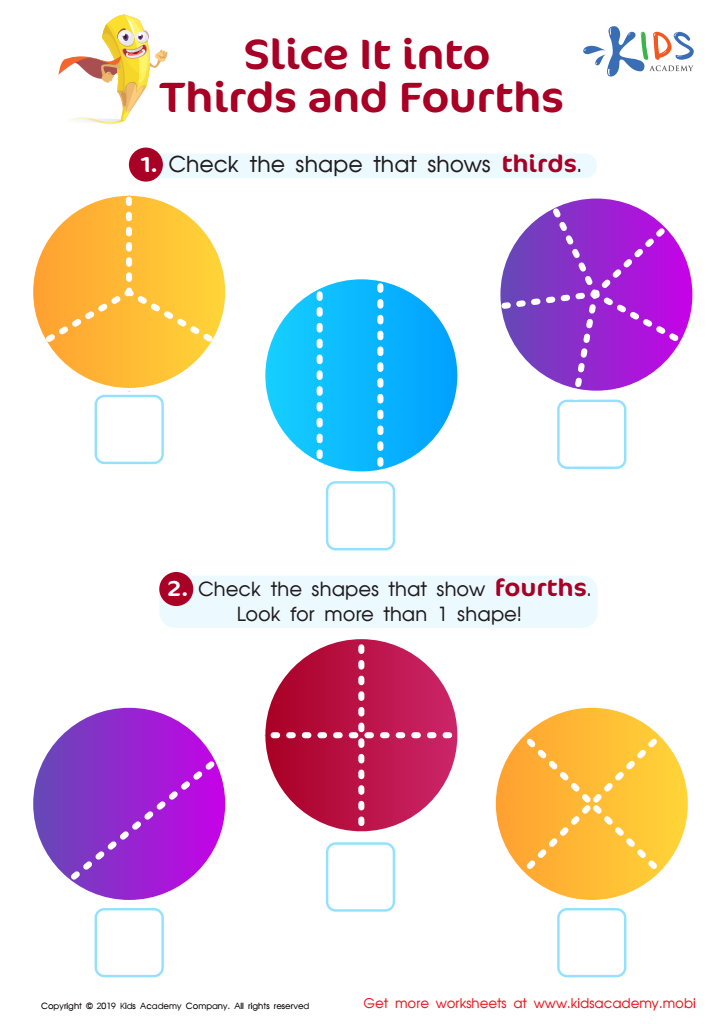
Slice in Thirds Fourths Worksheet
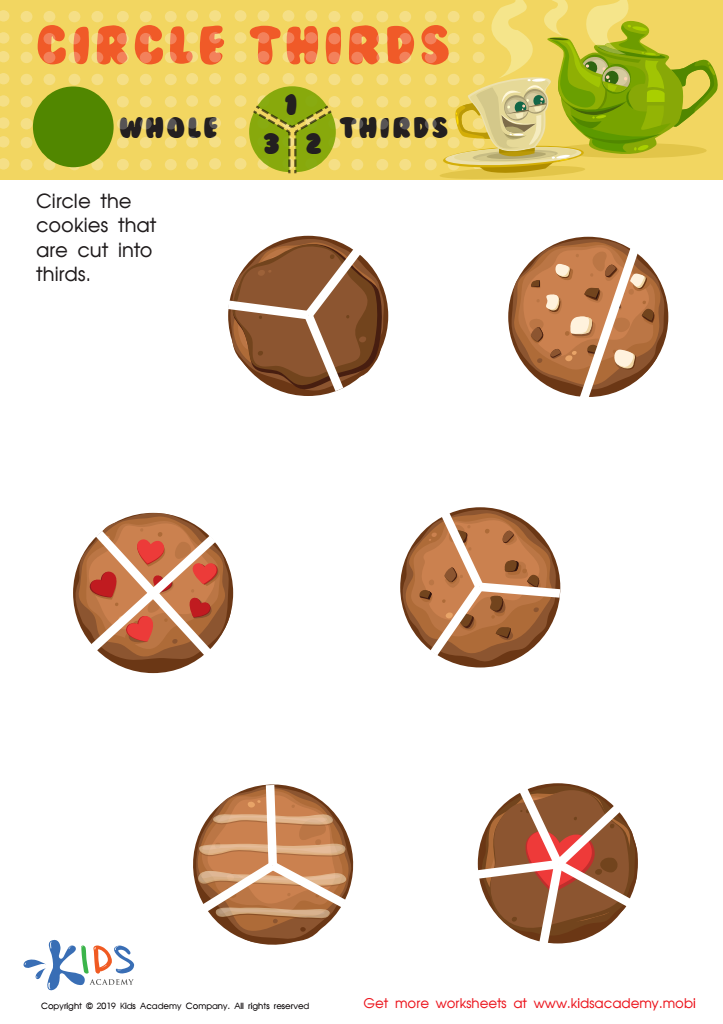
Circle Thirds Worksheet
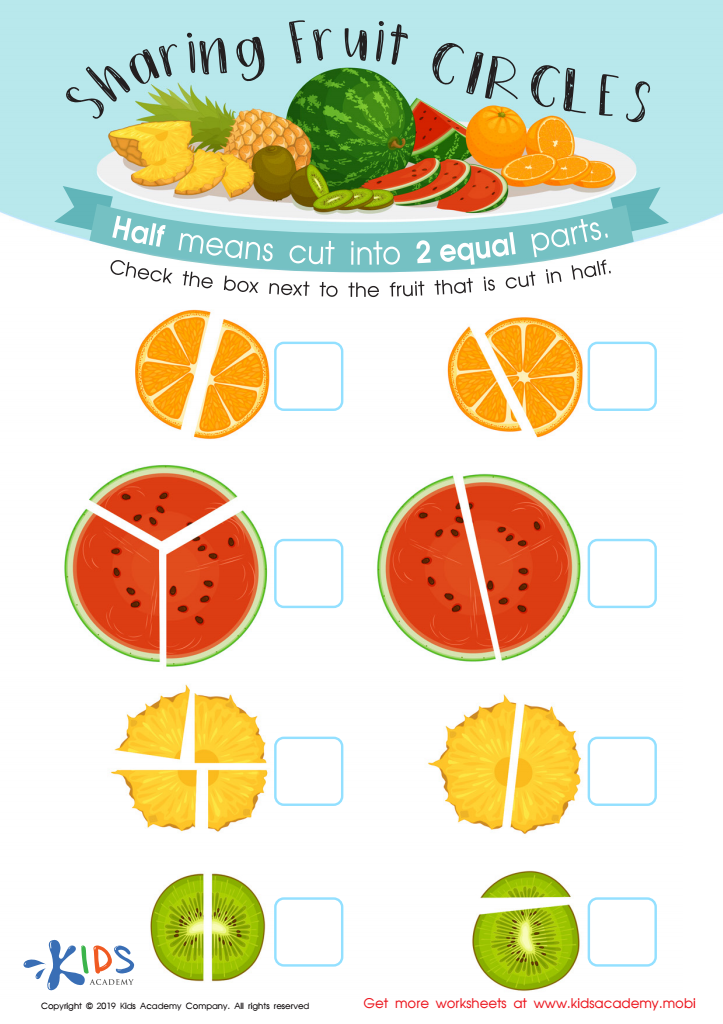
Sharing Fruit Circles Worksheet
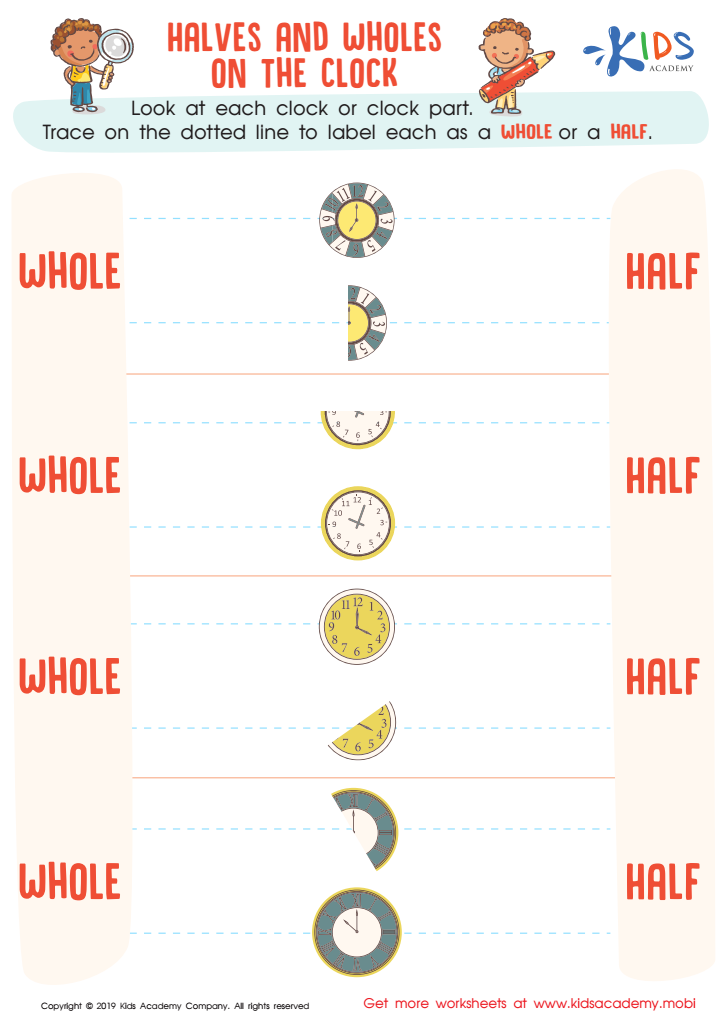
Halves and Wholes on the Clock Worksheet
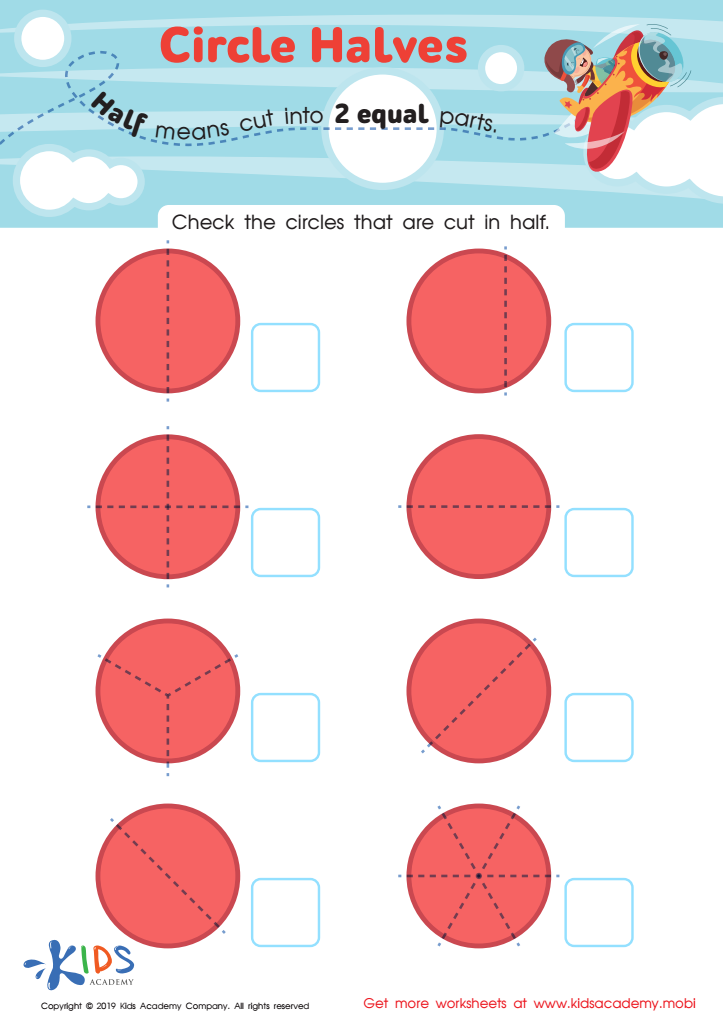
Circle Halves Worksheet
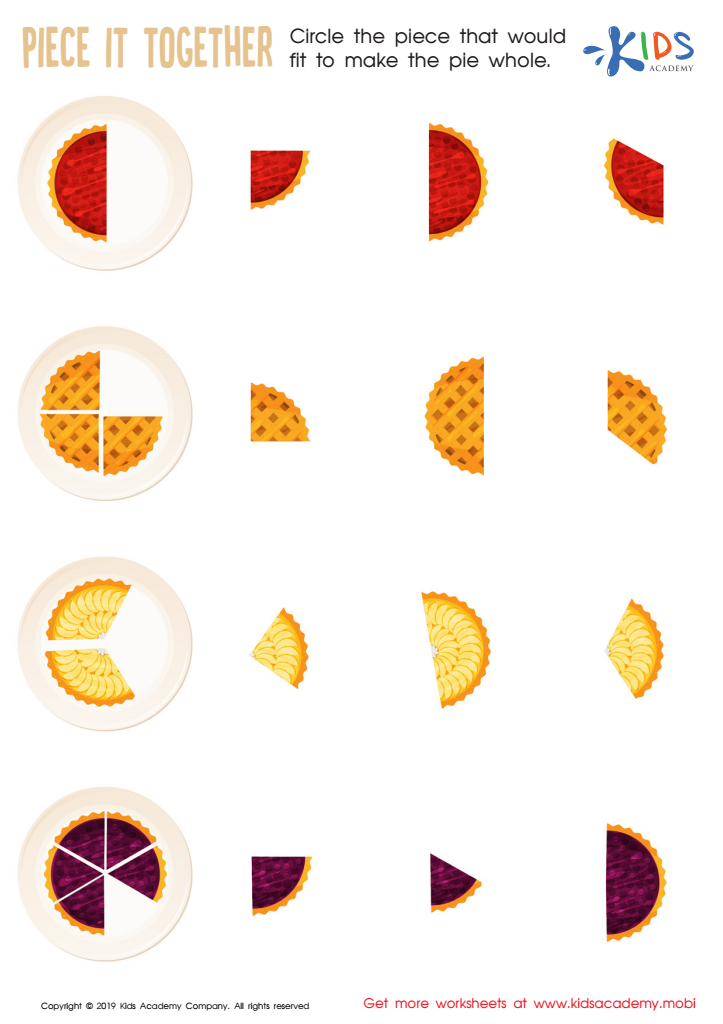
Piece it together Worksheet
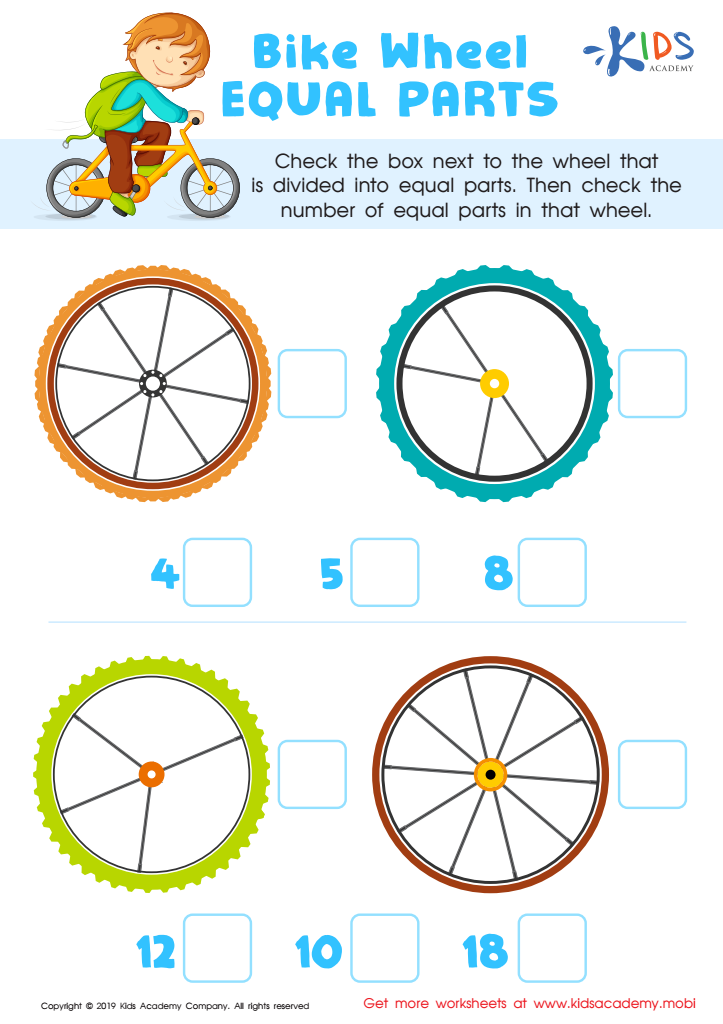
Bike Wheel Equal Parts Worksheet
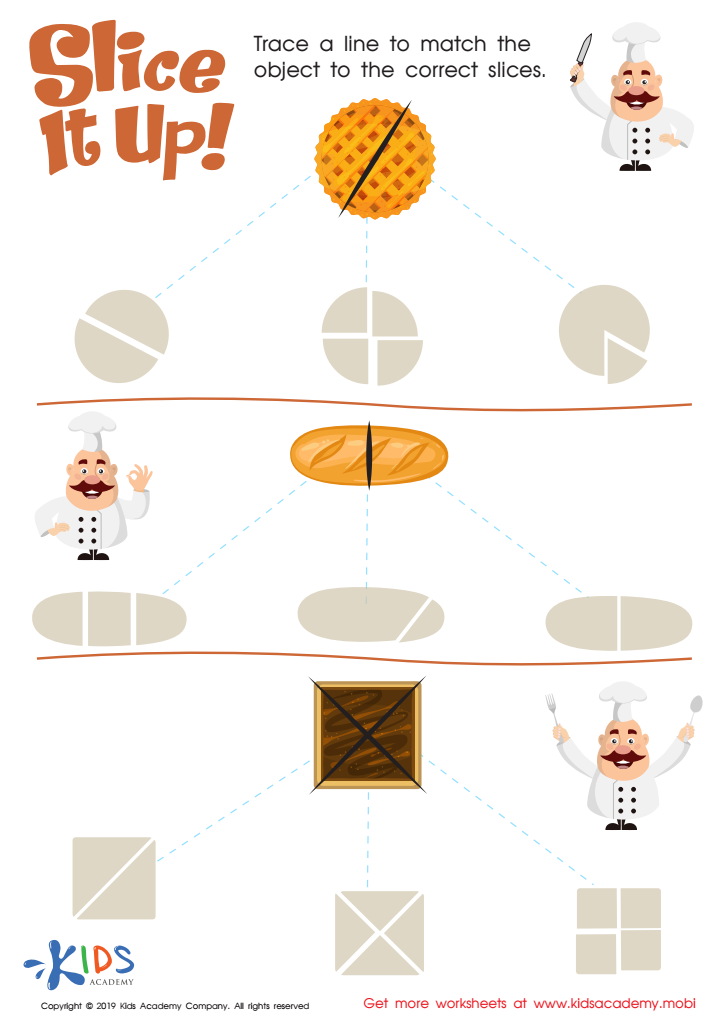
Slice It Up Worksheet
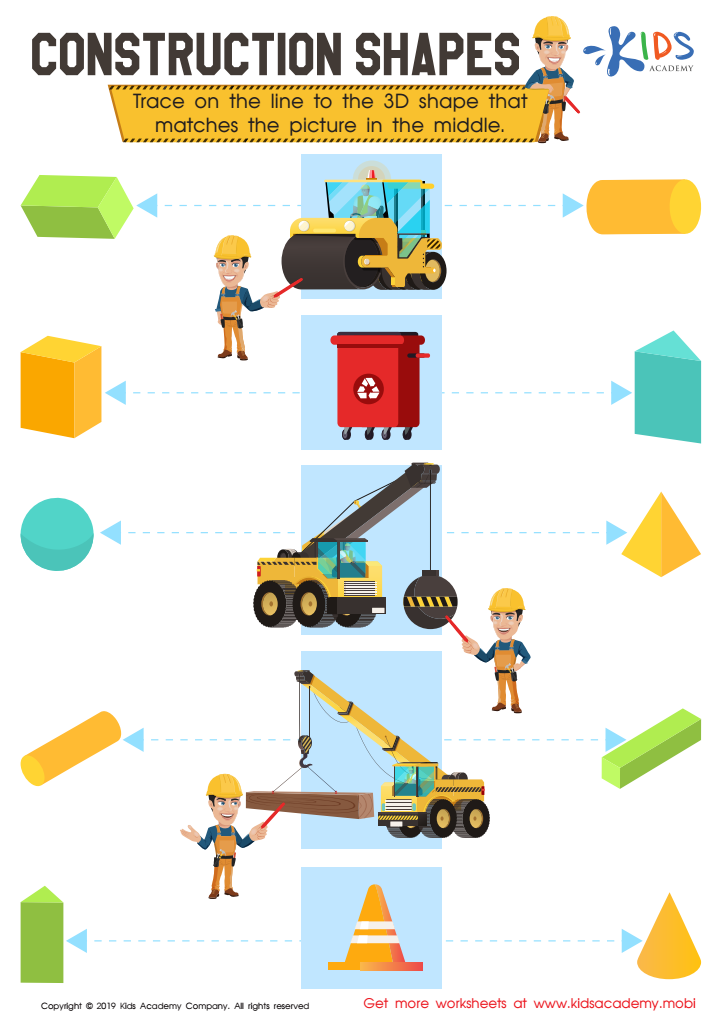
Construction Shapes Worksheet
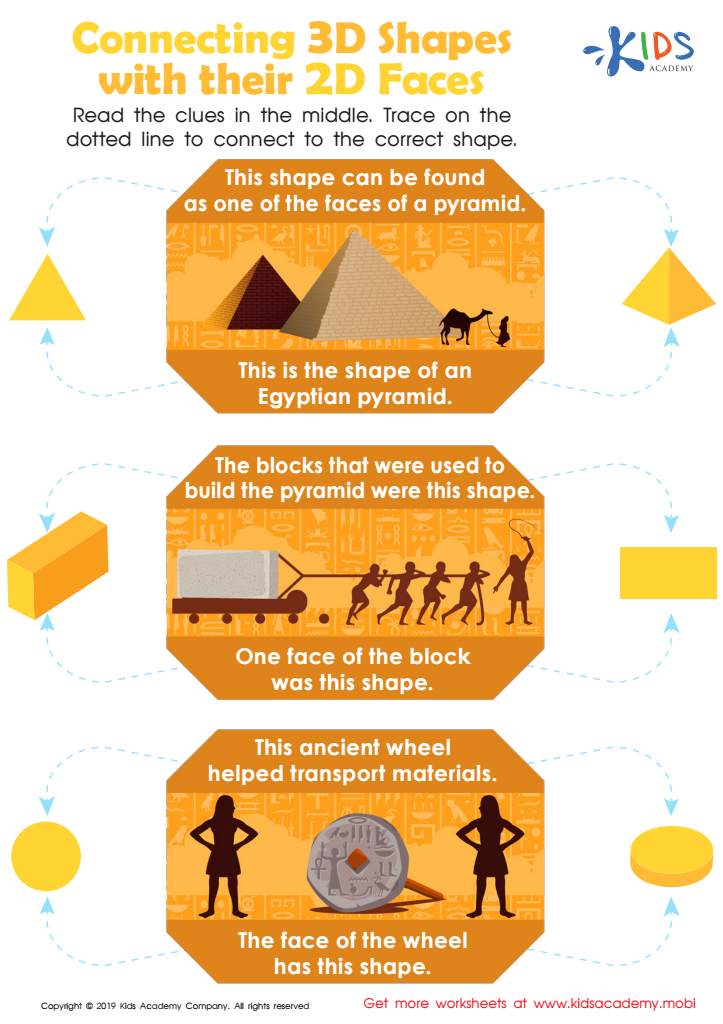
Connecting 3D Shapes with Their 2d Faces Worksheet
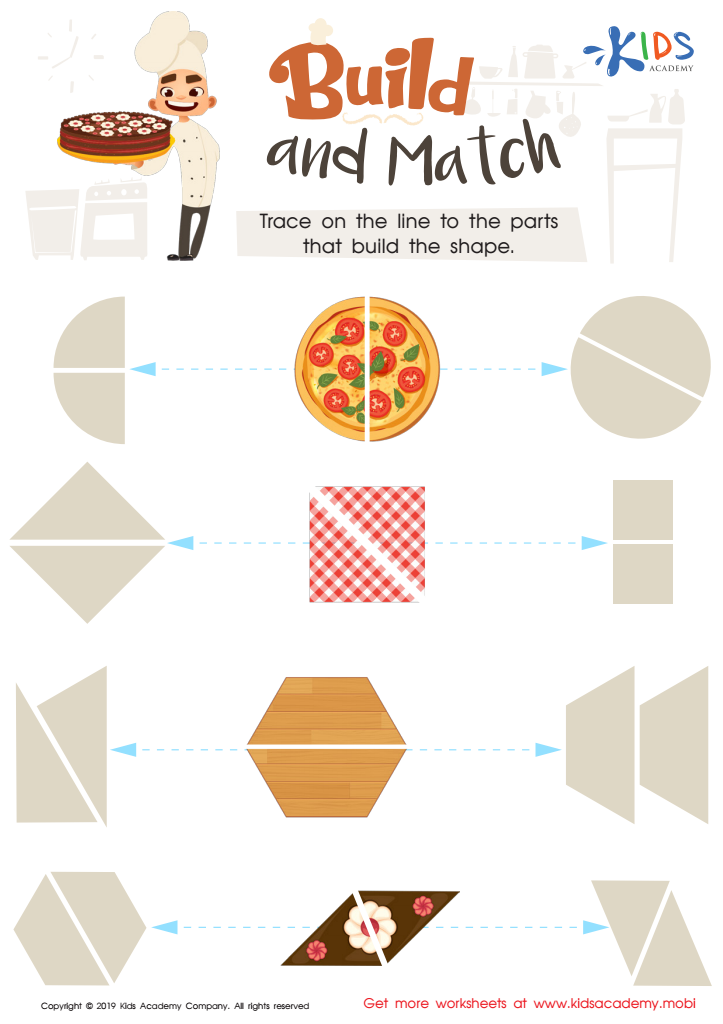
Build and Match Worksheet
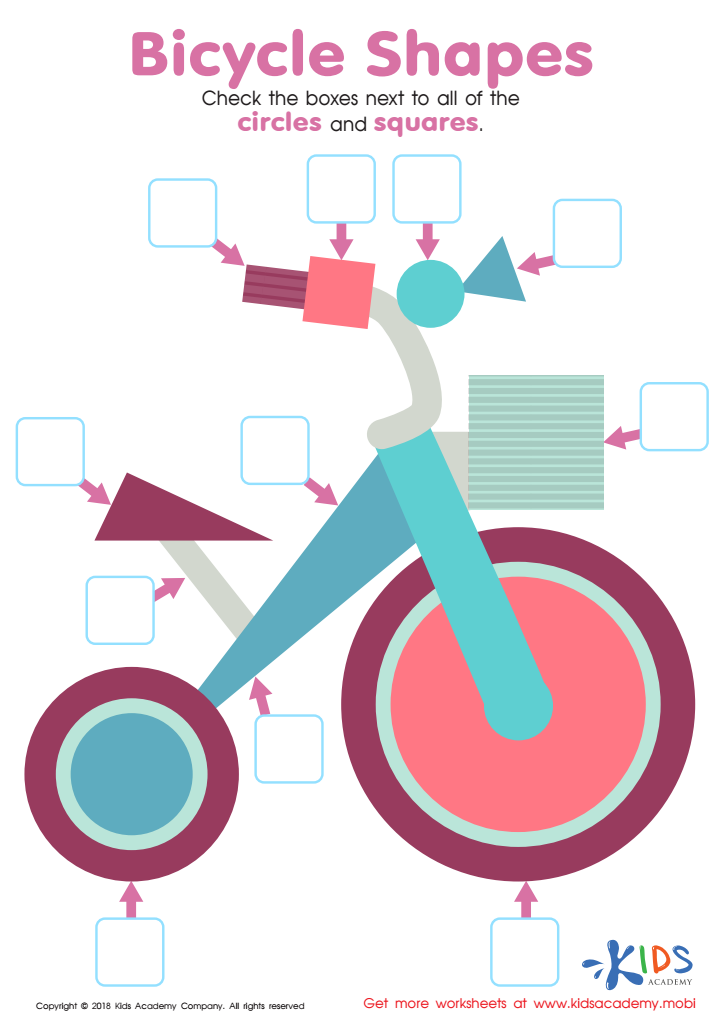
Bicycle Shapes Worksheet
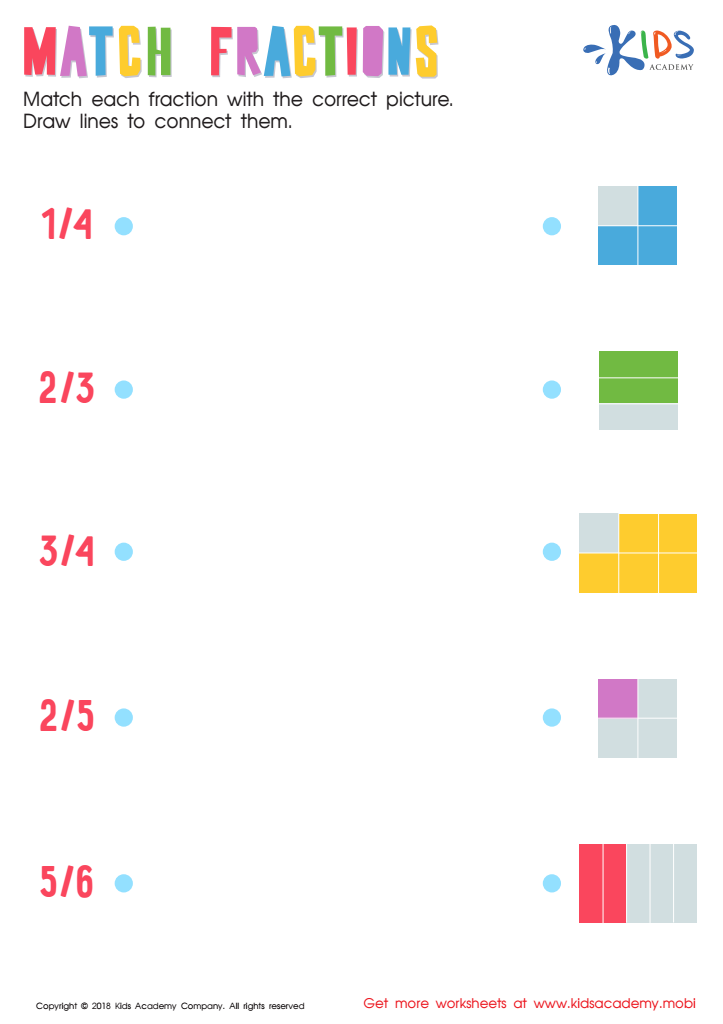
Match Fractions Worksheet
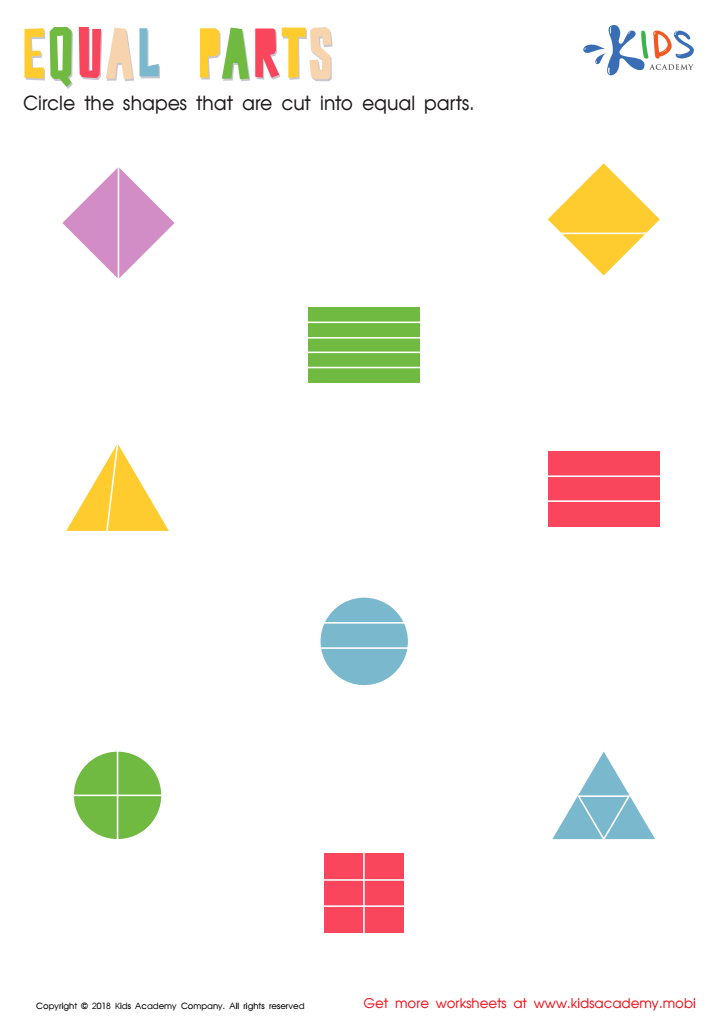
Equal Parts: Shapes Worksheet
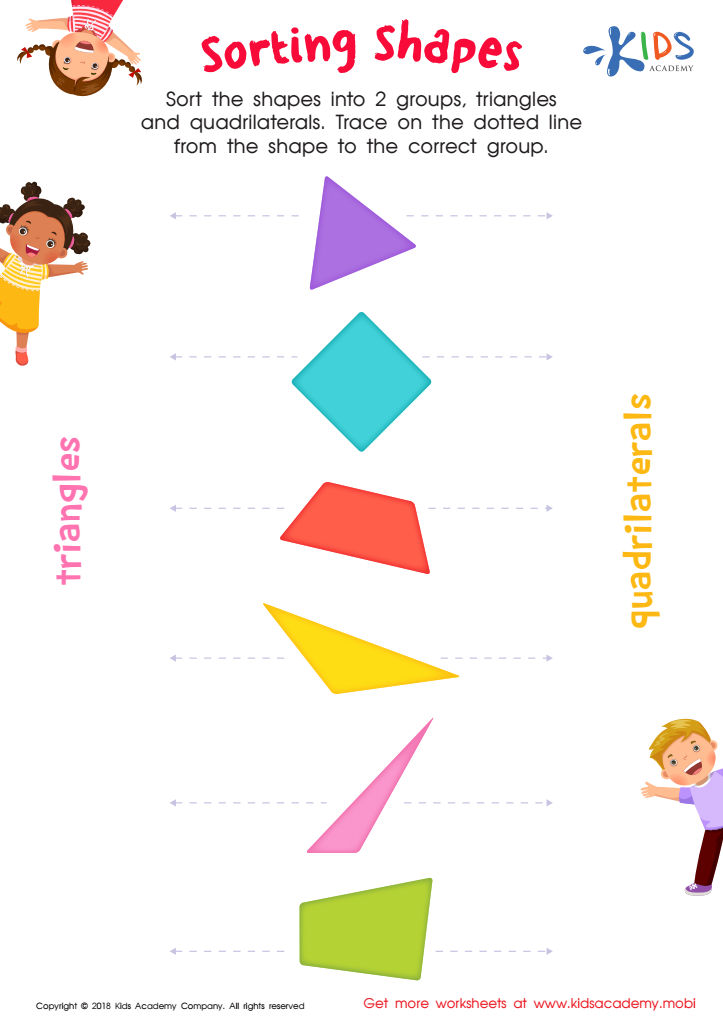
Sorting Shapes Worksheet
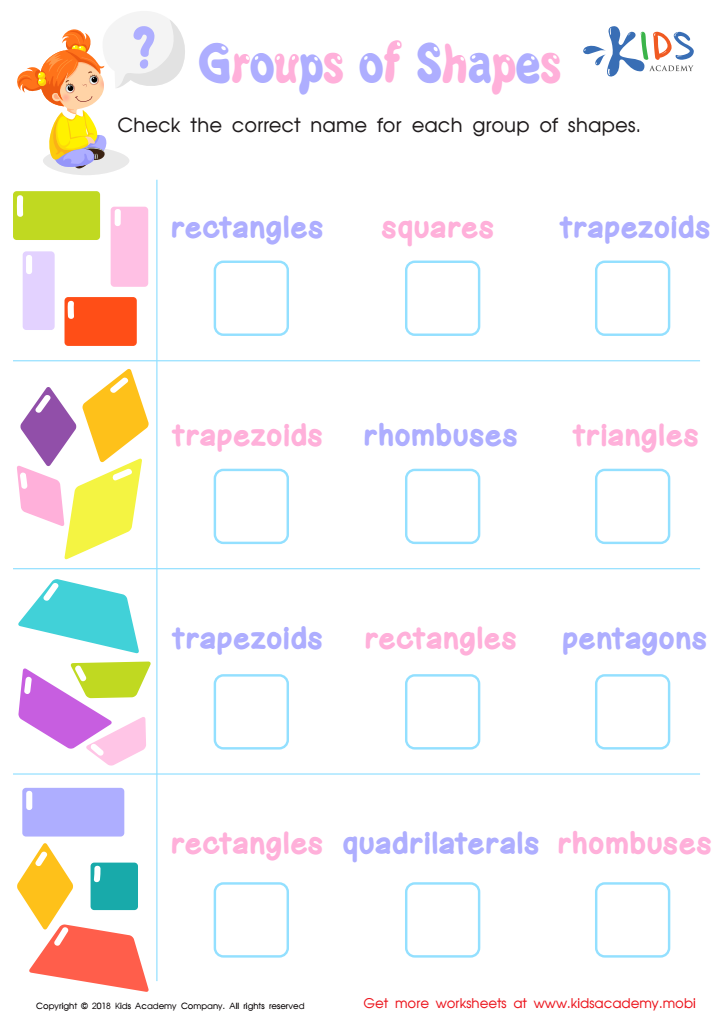
Groups of Shapes Worksheet
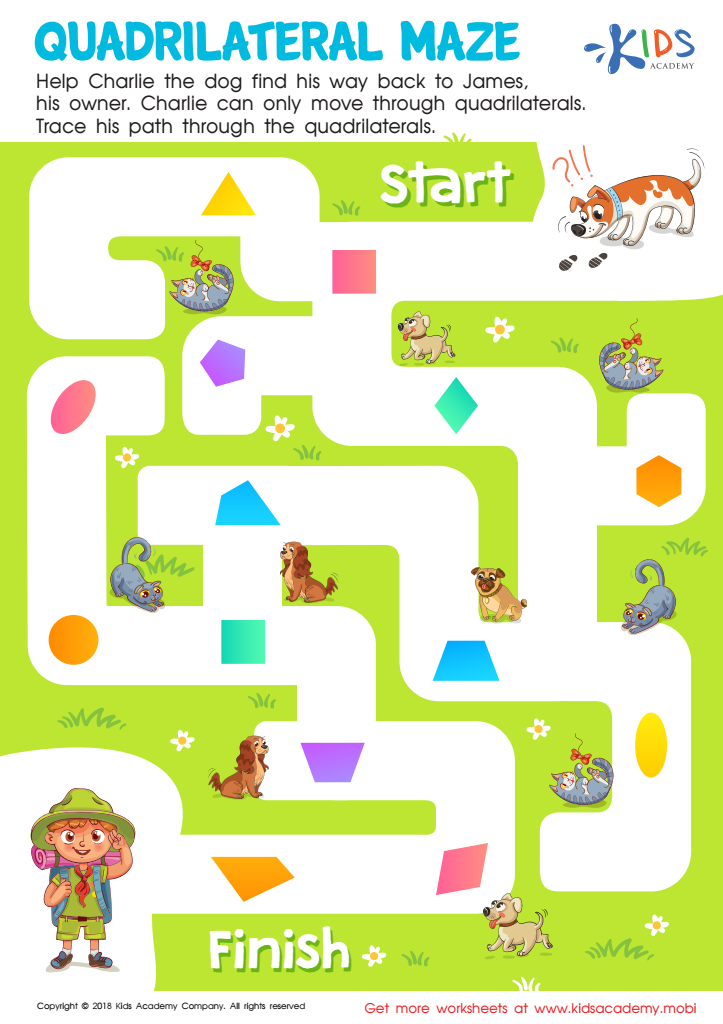
Quadrilateral Maze Worksheet
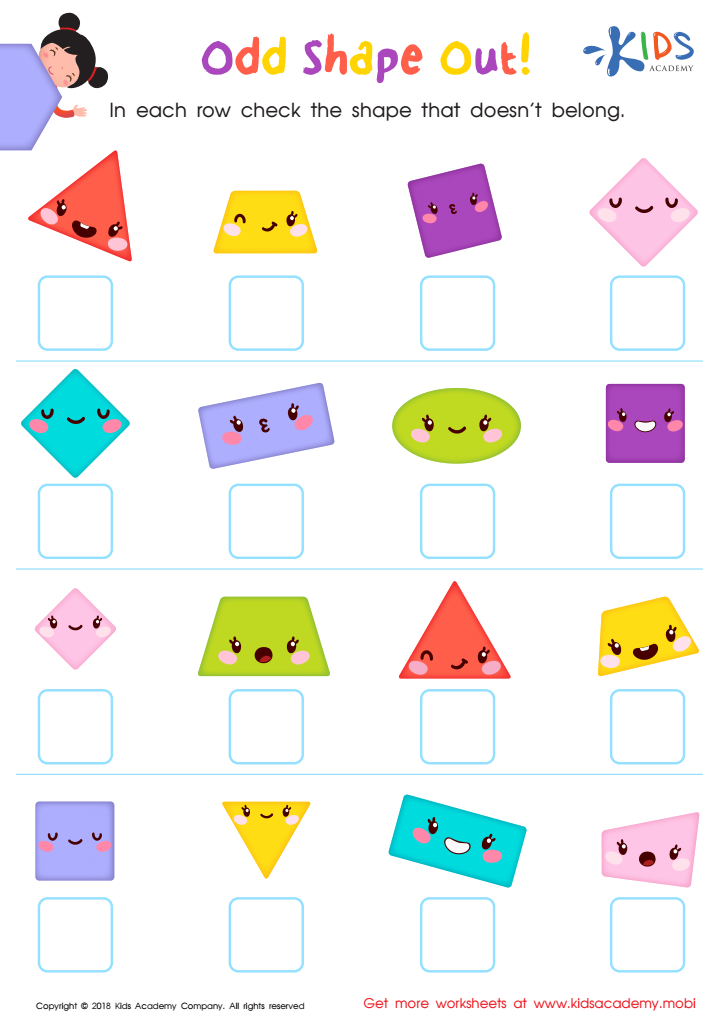
Odd Shape Out Worksheet for Grade 3
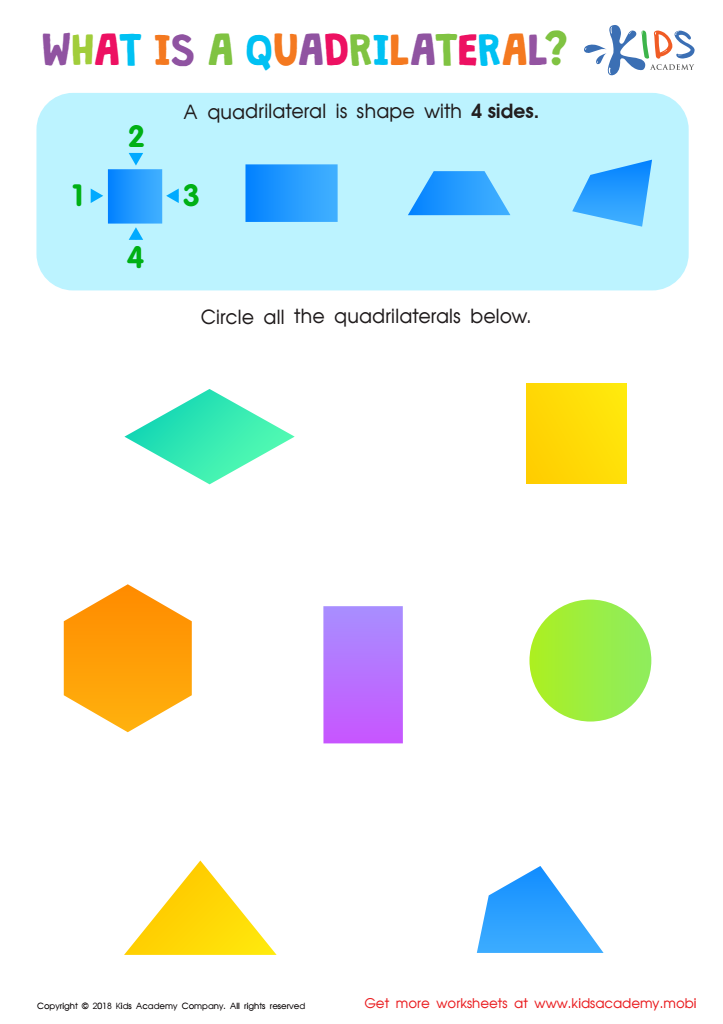
What Is a Quadrilateral? Worksheet








Easy Geometry for Ages 6-9 is essential for parents and teachers for several reasons. Firstly, this foundational phase of education is crucial for developing mathematical thinking. Geometry, with its focus on shapes, sizes, and spatial understanding, helps young learners build critical reasoning skills, which they will use throughout their academic journey.
Geometry also promotes hands-on learning. Engaging activities such as shape sorting, pattern recognition, and spatial reasoning tasks can enhance a child's curiosity and problem-solving abilities. These activities are not only fun but also help children visualize and understand mathematical concepts in a tangible way.
Moreover, an early introduction to geometry supports STEM learning, which is vital in today’s rapidly evolving world. By nurturing these skills early on, parents and teachers can cultivate a positive attitude toward mathematics, reducing anxiety and raising confidence.
Additionally, mastering geometric principles lays the groundwork for advanced math topics. Understanding basic shapes and spatial relationships provides a vital toolkit for future learning in algebra, calculus, and beyond.
Ultimately, investing time in Easy Geometry is an investment in cognitive development, critical thinking skills, and a child’s overall educational success. It sets the stage for a lifelong appreciation of mathematics and its importance in everyday life.








