Free & Fun Worksheets for Kids - Page 4
144 filtered results
Difficulty Level
Grade
Age
-
From - To
Subject
Activity
Standards
Favorites
With answer key
Interactive
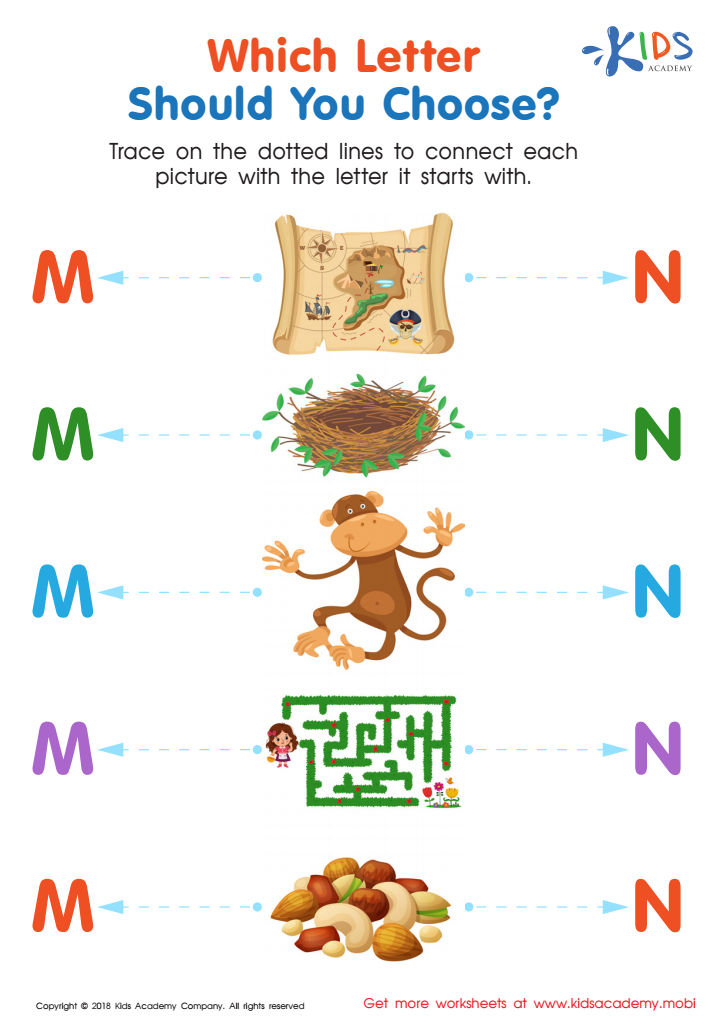
Which Letter Should you Choose? Worksheet
Trace the dotted lines to connect images with their first letter: "n" or "m." Challenge your child to name each picture, then identify the first letter and trace to the right letter! Five images in total.
 Assign to My Students
Which Letter Should you Choose? Worksheet
Worksheet
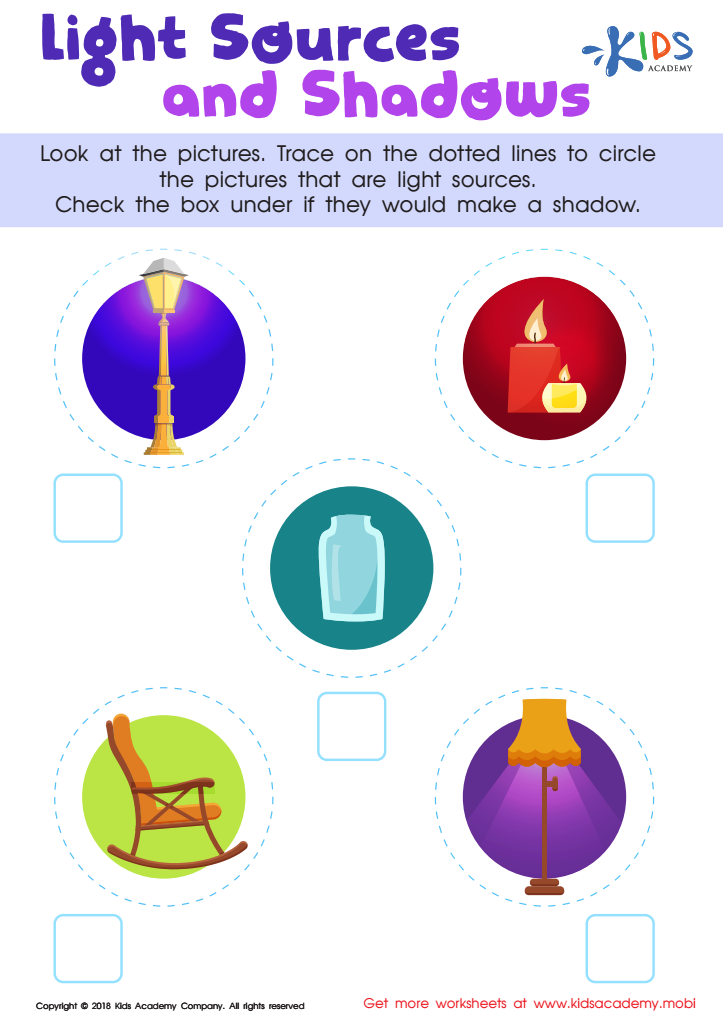
Light Sources and Shadows Worksheet
During the day, the sun radiates bright light. At night, when it's time for bed, the sun sets and darkness takes over. To light our way, we use other sources of light. With your students, trace the dotted lines around the pictures of light sources and check the boxes under the objects that will cast shadows.
Light Sources and Shadows Worksheet
Worksheet
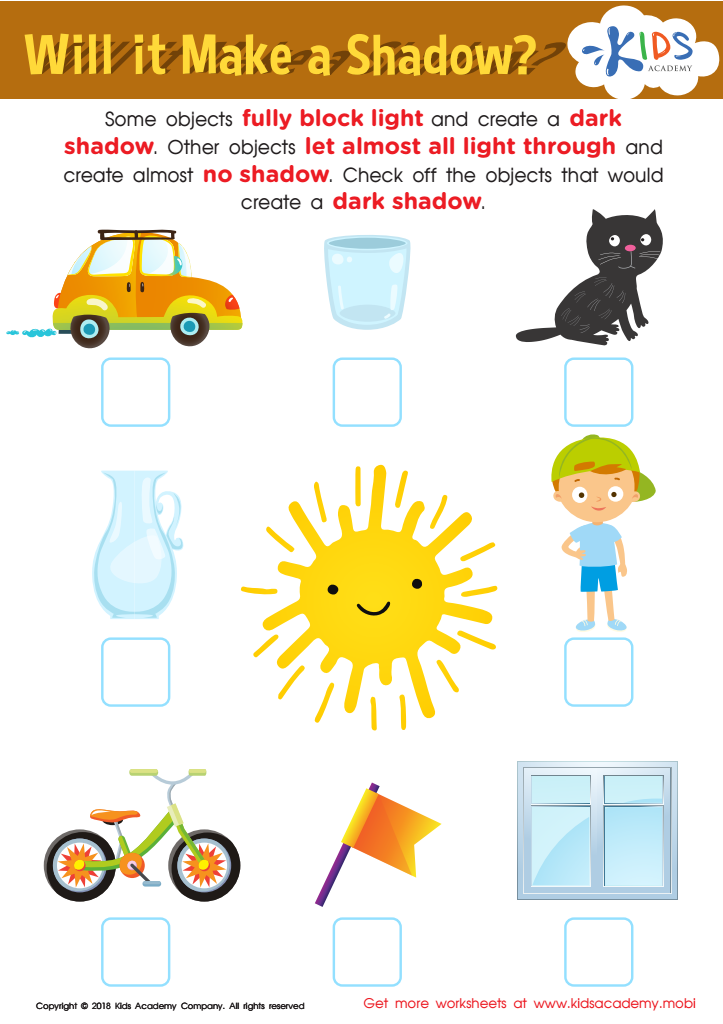
Will It Make a Shadow? Worksheet
Teach your students about shadows with this printout. Ask them to check off the boxes next to the pictures that create a shadow. Explain that some objects block light, forming a shadow, while others don't and thus don't create a shadow. Your students are likely already familiar with their own shadow.
Will It Make a Shadow? Worksheet
Worksheet
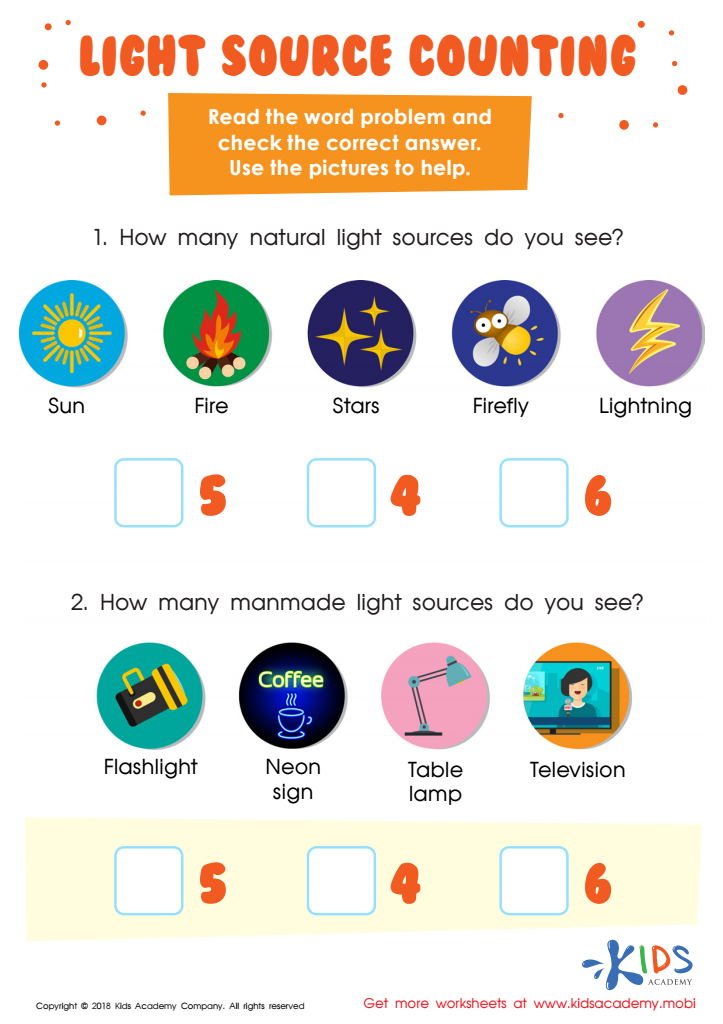
Light Source Counting Worksheet
Help your students properly understand and interpret word problems with this worksheet. Read each problem aloud and have them check the correct answers. Pictures are included to aid in problem-solving. If they're still struggling, be sure to provide guidance and support.
Light Source Counting Worksheet
Worksheet
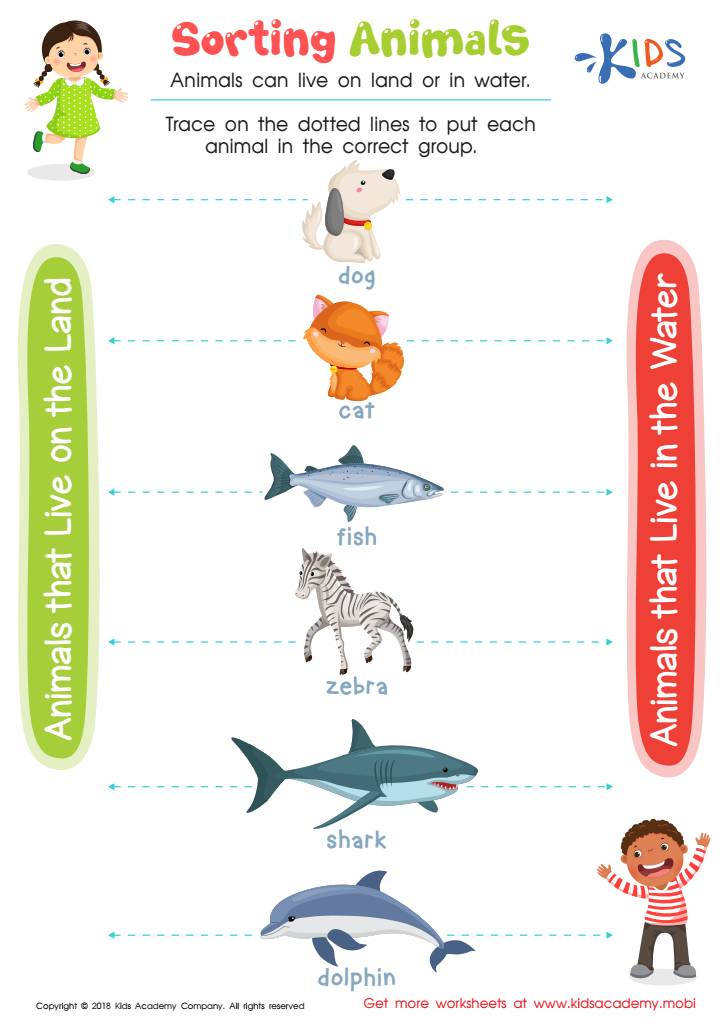
Sorting Animals Worksheet
Your kids will love this free, interactive worksheet! With image clues, they can read and trace the animal names, and then sort them into groups of land or water animals. It's an enjoyable way to boost their critical thinking, fine motor and prior knowledge skills.
Sorting Animals Worksheet
Worksheet
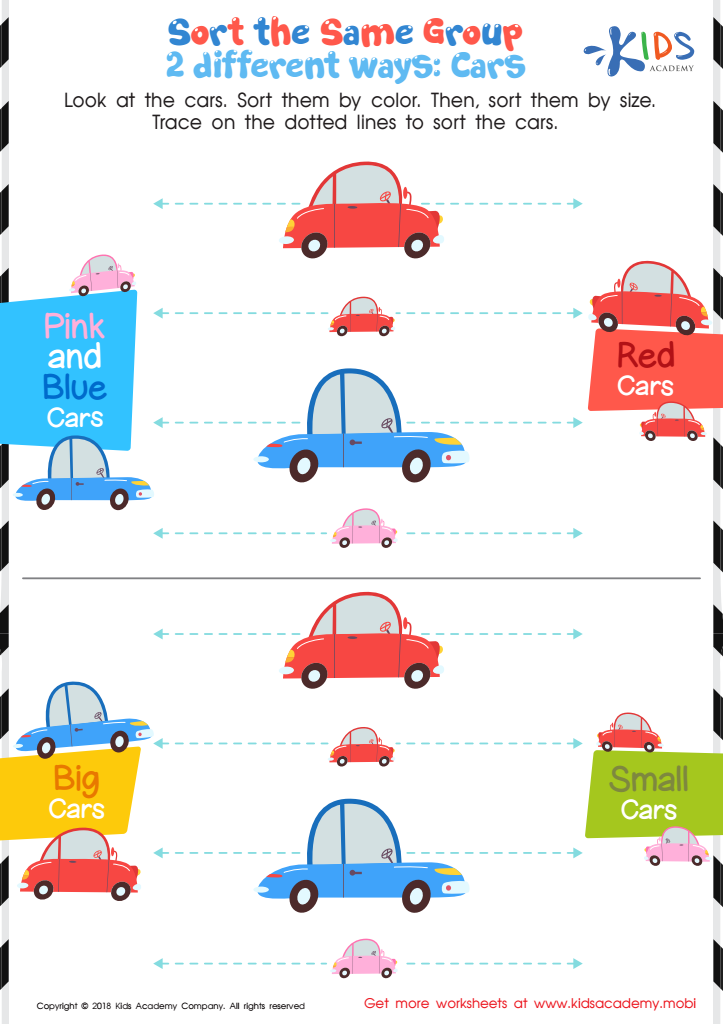
Sort the Same Group 2 Different Ways: Cars Worksheet
Look at the pictures with your child. Can they identify the objects? Ask them to sort the cars first by color and then size. Assist them to trace the dotted lines to sort the cars by color and size. This worksheet lets you easily assess your child's color and size organization skills.
Sort the Same Group 2 Different Ways: Cars Worksheet
Worksheet
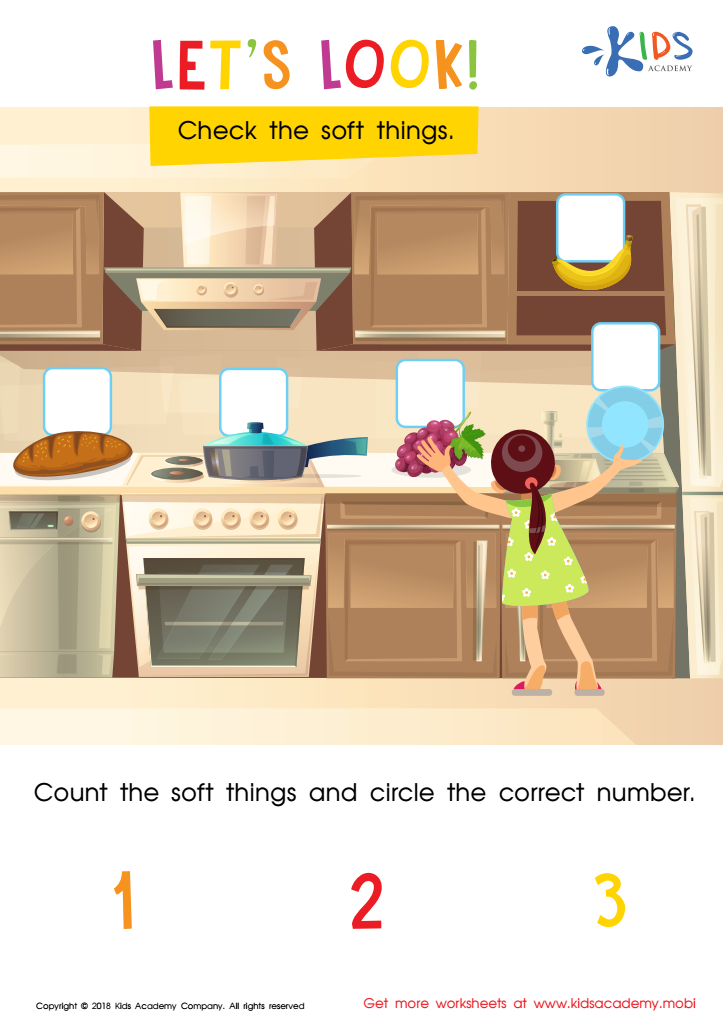
Let's Look! Assessment Worksheet
Have your child look at the picture in the printout and name the objects. Ask which ones are soft and hard and have them count the soft objects and circle the number. This worksheet will engage your child's thinking and teach them about texture.
Let's Look! Assessment Worksheet
Worksheet
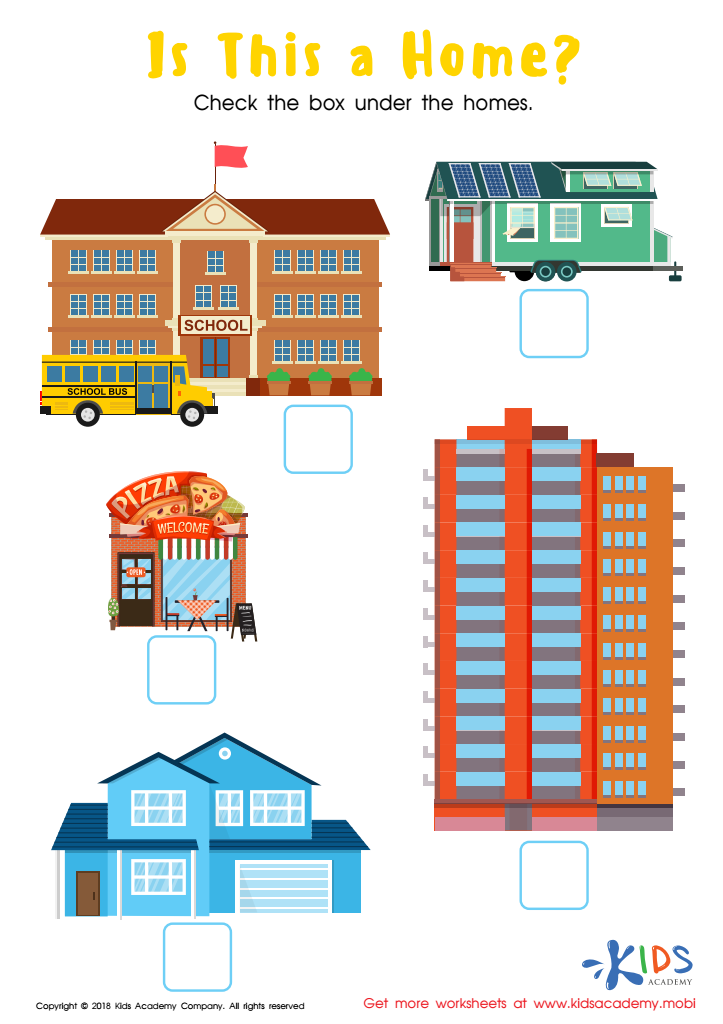
Is this a Home? Worksheet
Ask your child what the building you live in is called. Is it a home, restaurant or hospital? Then look at the pictures in the worksheet and ask them to identify which are homes - even if they don't look like yours. Check the box next to the homes in the pictures.
Is this a Home? Worksheet
Worksheet
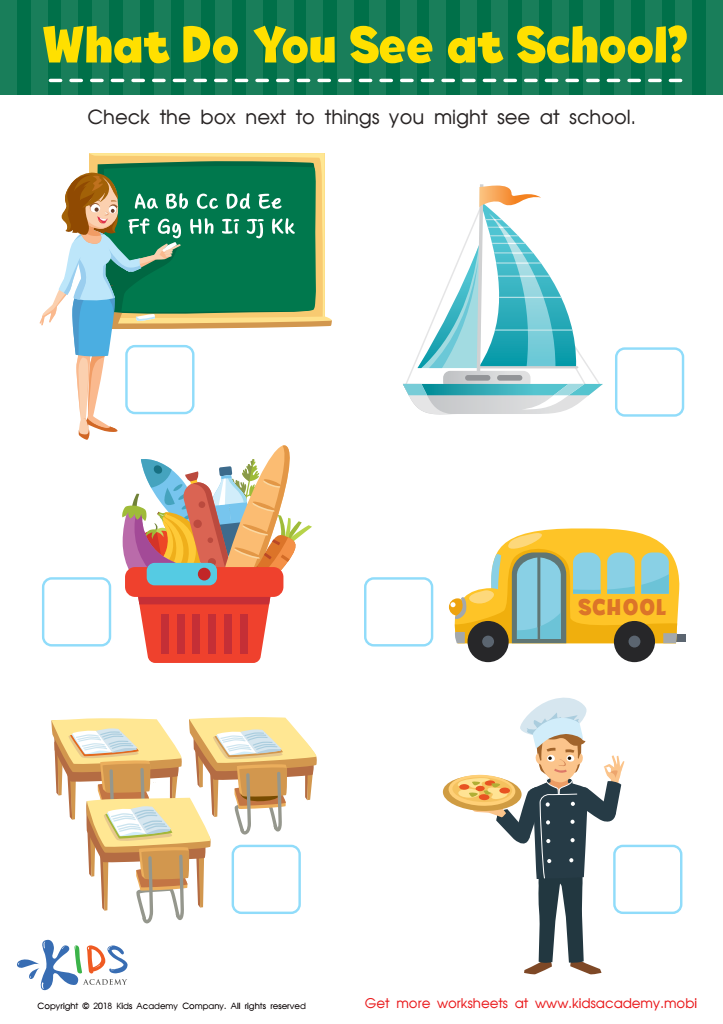
What Do you See at School? Worksheet
Have your kids give you a list of things they see at school. Then, view the worksheet together. Ask them to check the boxes next to the school items. Look for objects that can be found at school and those that don't belong. This is a great way to check their knowledge of what they see at school daily, except on weekends and holidays.
What Do you See at School? Worksheet
Worksheet
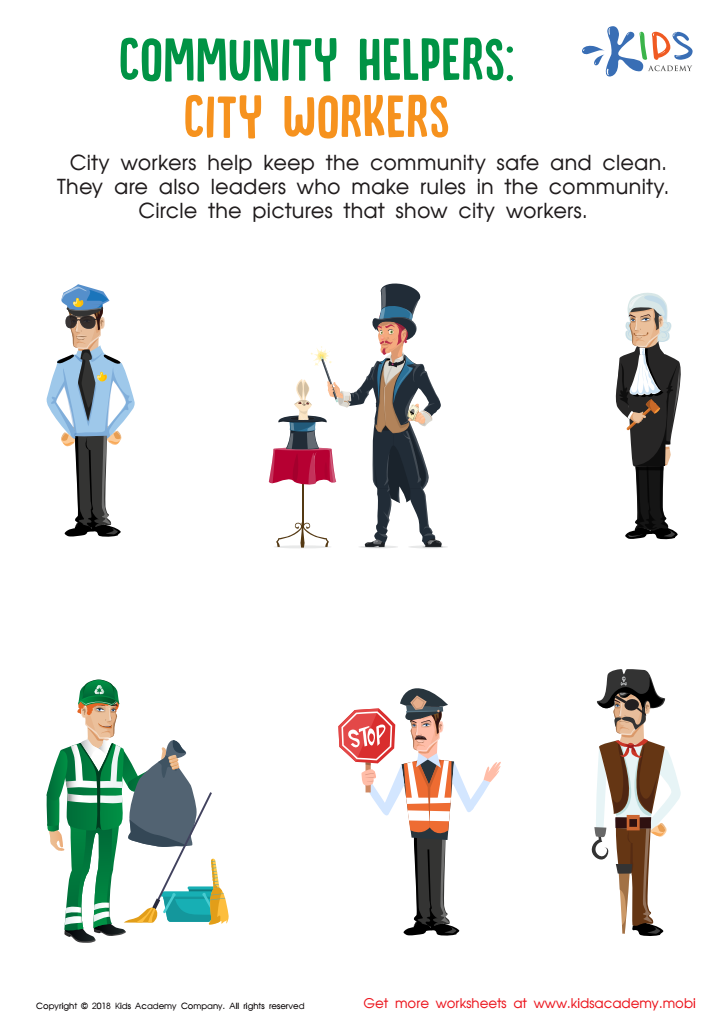
City Workers Community Helpers Worksheet
City workers help keep our communities clean, safe and well-run. They create and enforce rules and act as leaders. Use this worksheet with your child to learn more about the important roles they play. Check the pictures in the free PDF that accurately depict what they do.
City Workers Community Helpers Worksheet
Worksheet
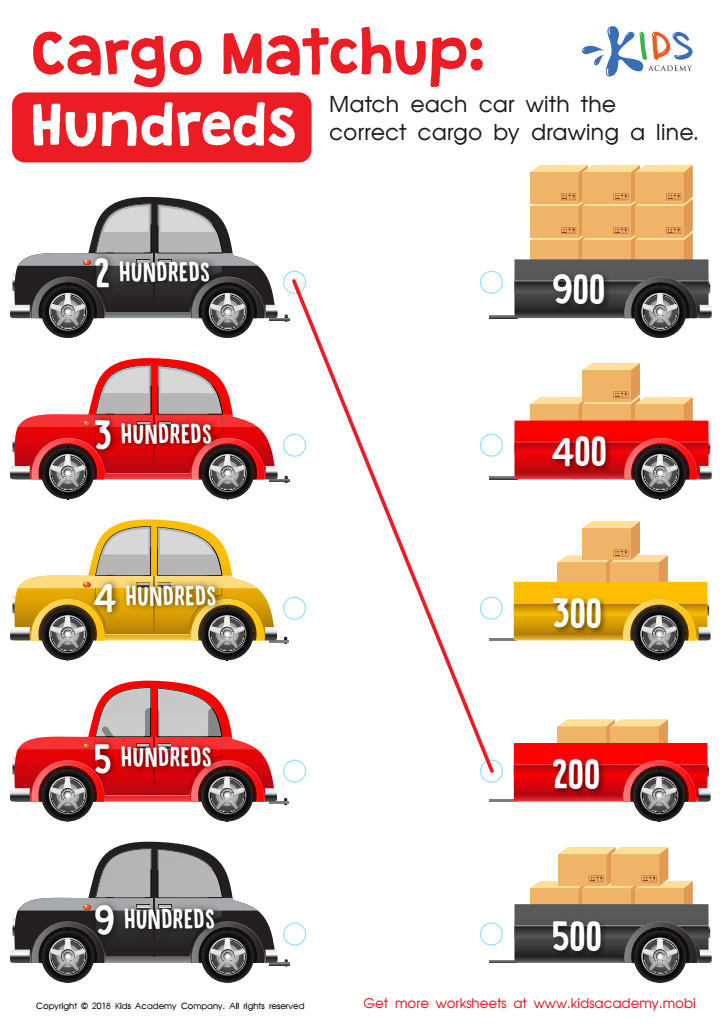
Cargo Matchup: Hundreds Worksheet
Introduce your child to counting in the hundreds using this simple worksheet. Match each car to its correct cargo by drawing a line. If they can count 1-100, they can learn to count in the hundreds! Help them master this skill with the worksheet and they'll be counting away in no time.
Cargo Matchup: Hundreds Worksheet
Worksheet
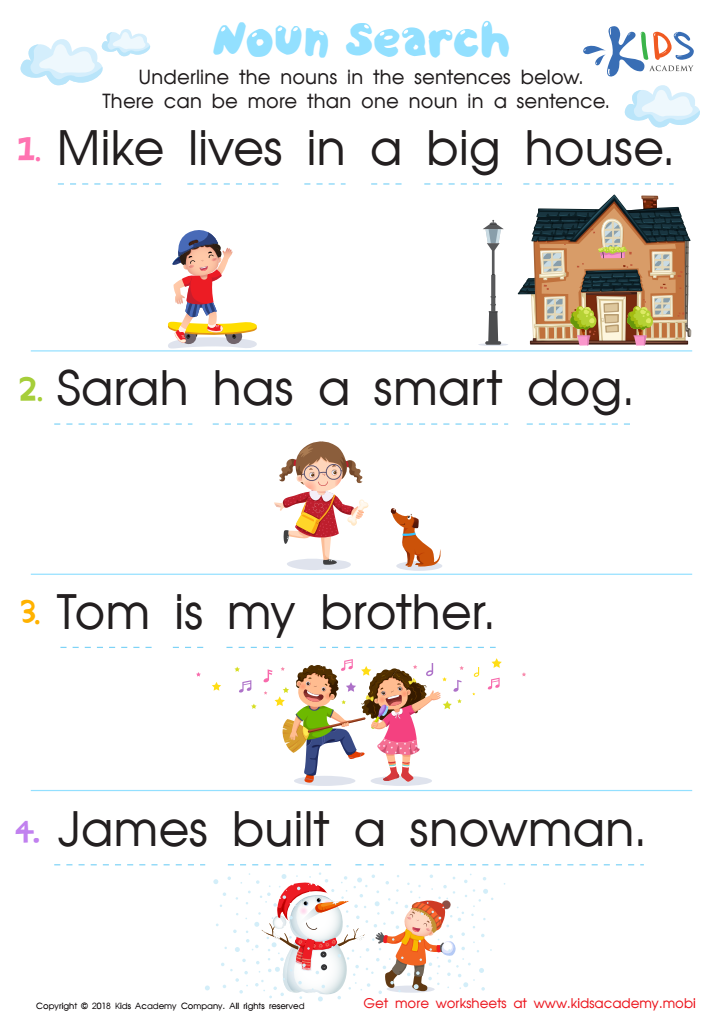
Noun Search Worksheet
To help your children learn the basics of grammar, start with nouns, verbs, adverbs and adjectives. This noun search worksheet will help your child understand the most common part of speech - the noun. Ask them to underline the nouns in each sentence. This is a great way to start learning proper grammar.
Noun Search Worksheet
Worksheet
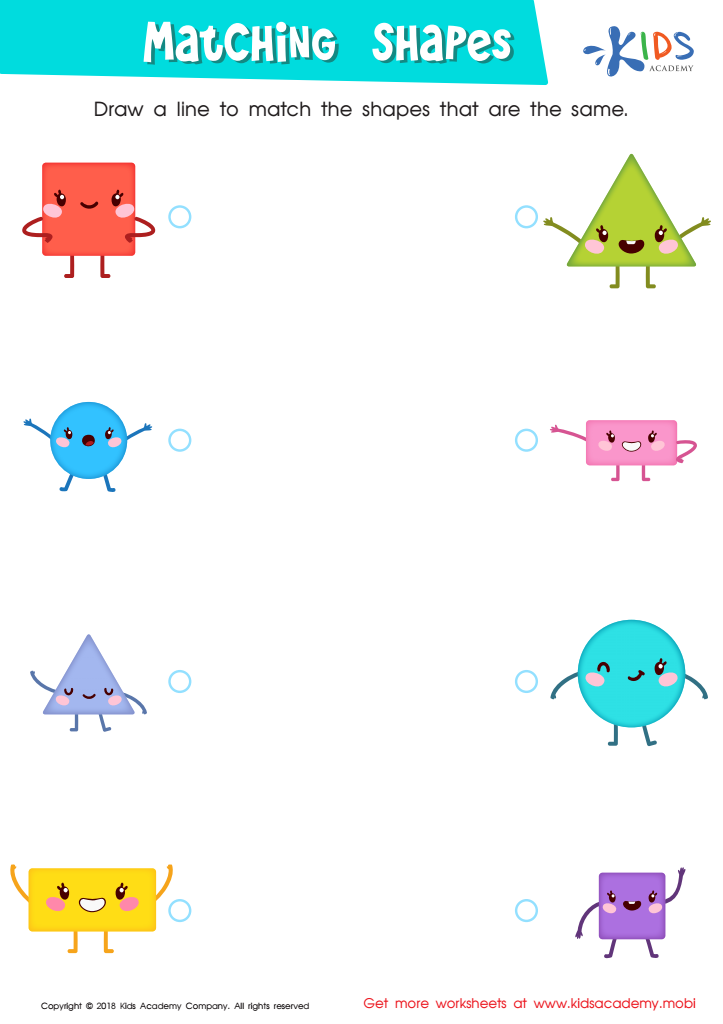
Matching Shapes Worksheet
Introduce your students to the 4 most common shapes: squares, triangles, rectangles and circles. When they progress, show them other shapes like rhombuses and parallelograms. Use this matching shapes worksheet to help them match two identical shapes. Print out the worksheet and instruct them to draw lines connecting them.
Matching Shapes Worksheet
Worksheet
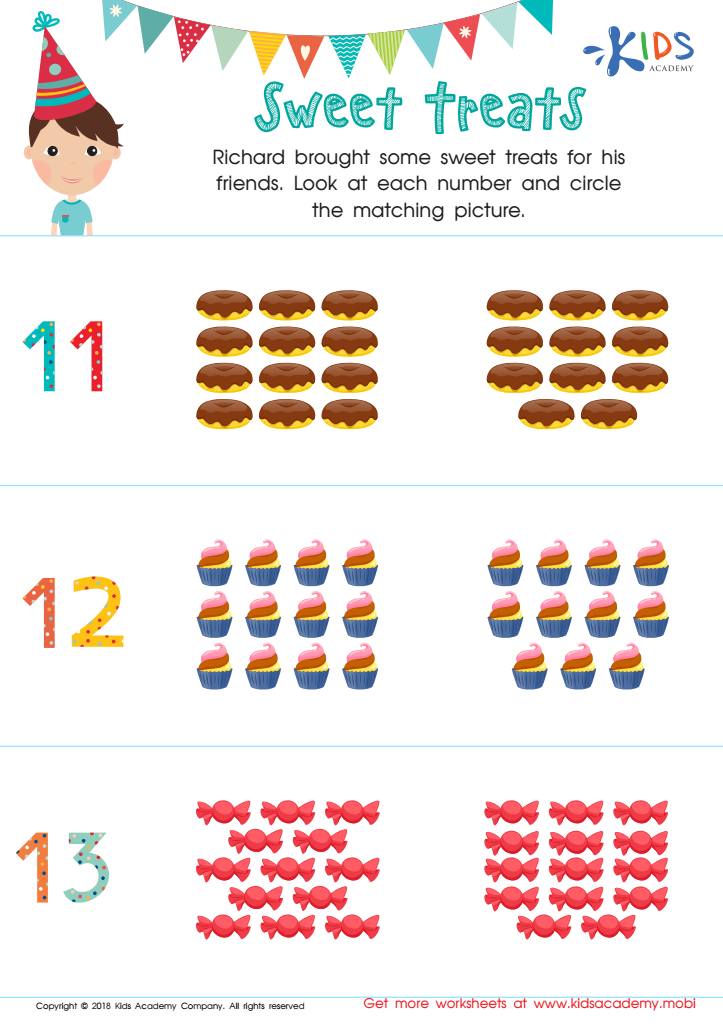
Kindergarten Math Worksheet Matching Numbers
Counting is fun with these kindergarten math worksheets! Richard brought cupcakes and candy - help your child count each treat and circle the picture that matches the number. Let the party begin!
Kindergarten Math Worksheet Matching Numbers
Worksheet
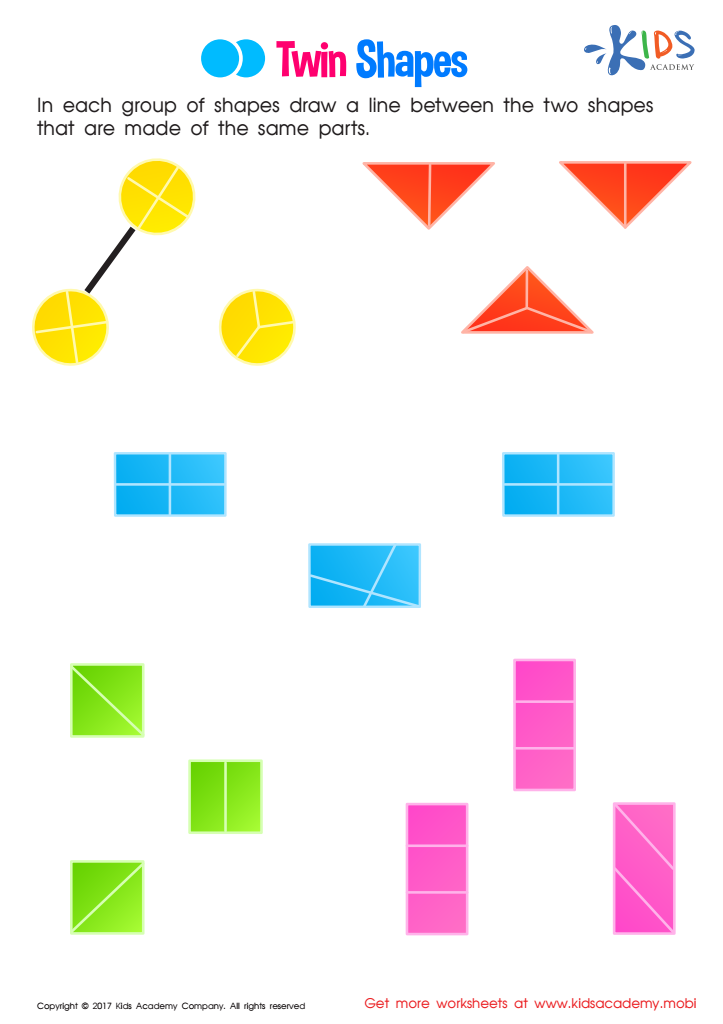
Twin Shapes Worksheet
Your students' goal in this worksheet is to find the twin shapes: drawing a line between two shapes made of the same parts. Likely, the first shapes encountered were circles, triangles, rectangles and squares - examples of which are seen frequently in everyday life. Encourage them to apply what they know and work out which is the twin shape!
Twin Shapes Worksheet
Worksheet
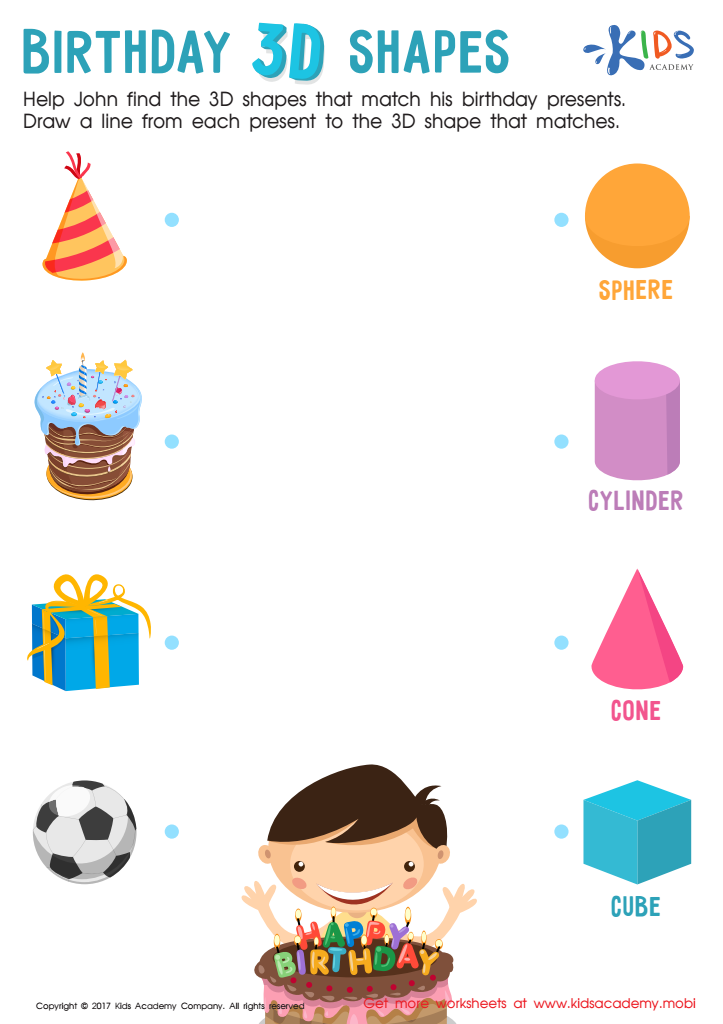
Birthday 3D Shapes Worksheet
It's John's birthday and he needs your help. Ask your kids to draw a line from each present to the matching 3D shape. First, check they understand the difference between 2D and 3D shapes. Then, they can help John figure out which 3D shape matches each present.
Birthday 3D Shapes Worksheet
Worksheet
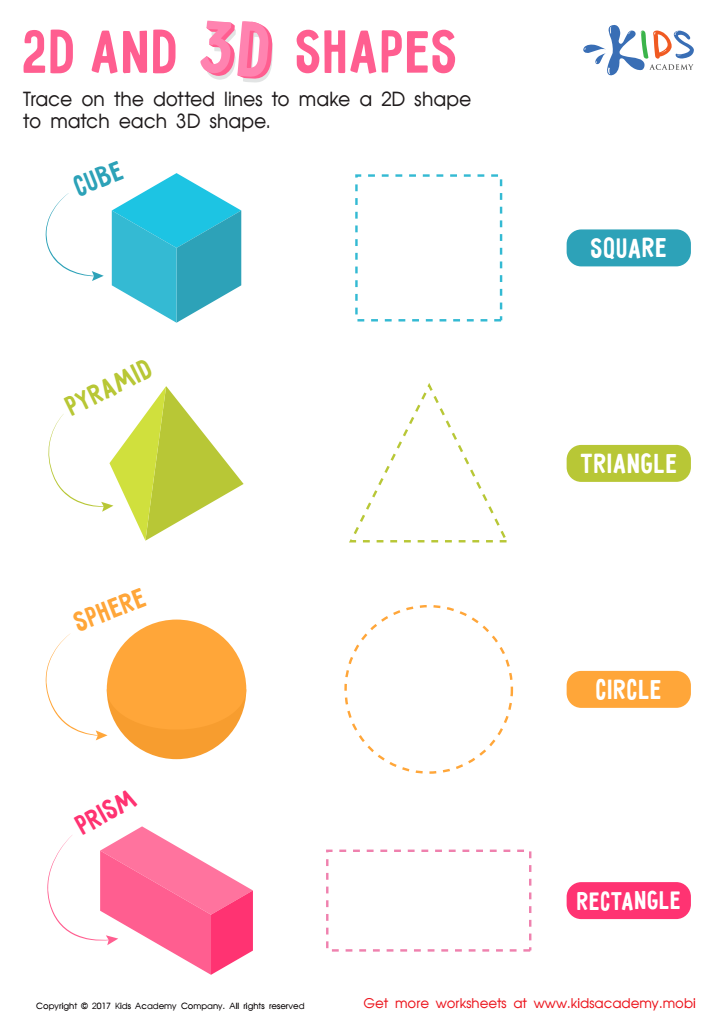
2D and 3D Shapes Worksheet
Introduce your child to 3D and 2D with this traceable worksheet. With dotted lines, help them trace and make a 2D shape for each 3D shape: square, triangle, rectangle, and circle. Show them there's more than one way to draw! You may have taken them to a 3D movie, or they've seen some fantastic 3D art. Now they can wonder no more.
2D and 3D Shapes Worksheet
Worksheet
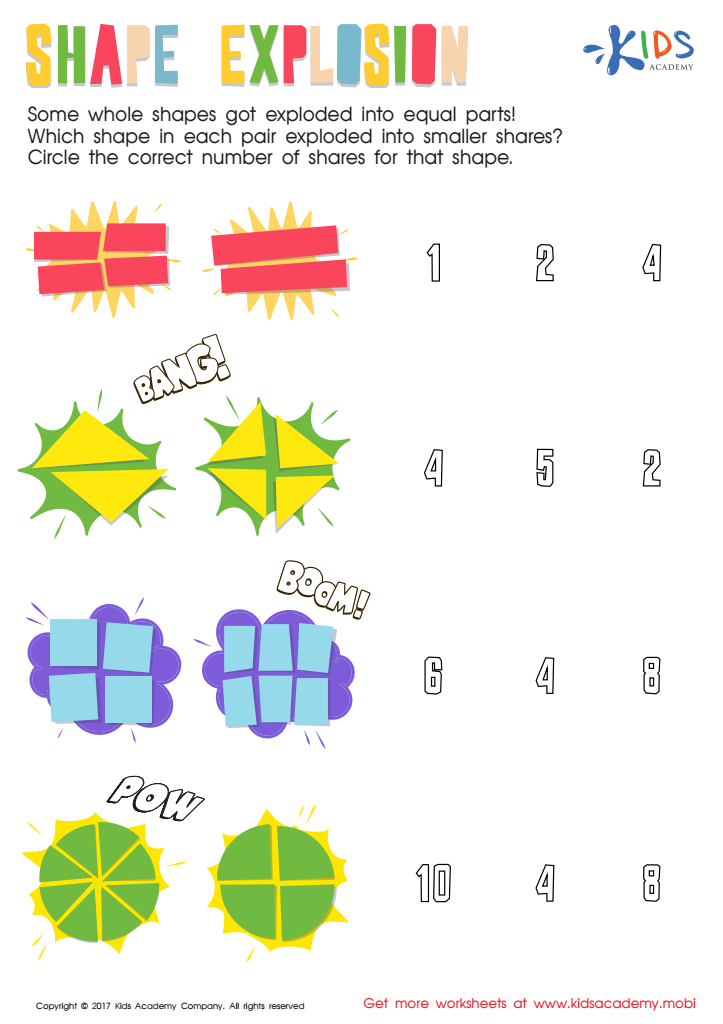
Shape Explosion Worksheet
This worksheet shows students how some shapes explode into two or more equal parts. On the left side are four shapes, each splitting into two or more parts. Ask your child to point out which shape has the smaller share, and help them circle the correct number of shares.
Shape Explosion Worksheet
Worksheet
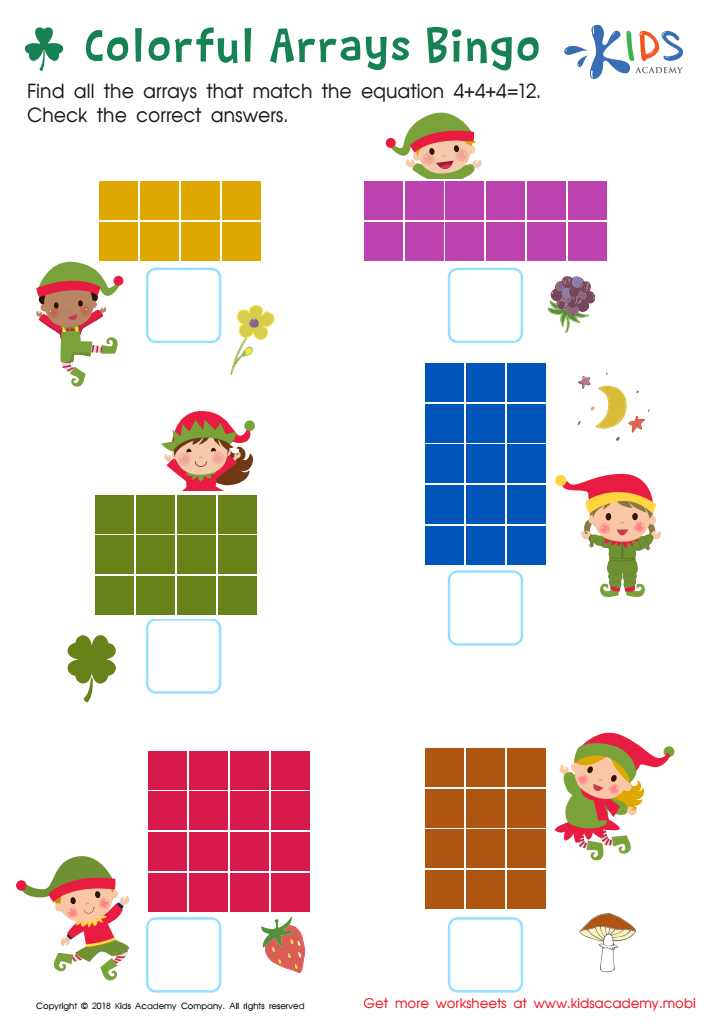
Colorful Arrays Bingo Worksheet
This worksheet stimulates thinking about arrays and how to represent them. Instruct students to count the 6 arrays and find which ones sum up to 12. Ask them to check the answers for accuracy.
Colorful Arrays Bingo Worksheet
Worksheet
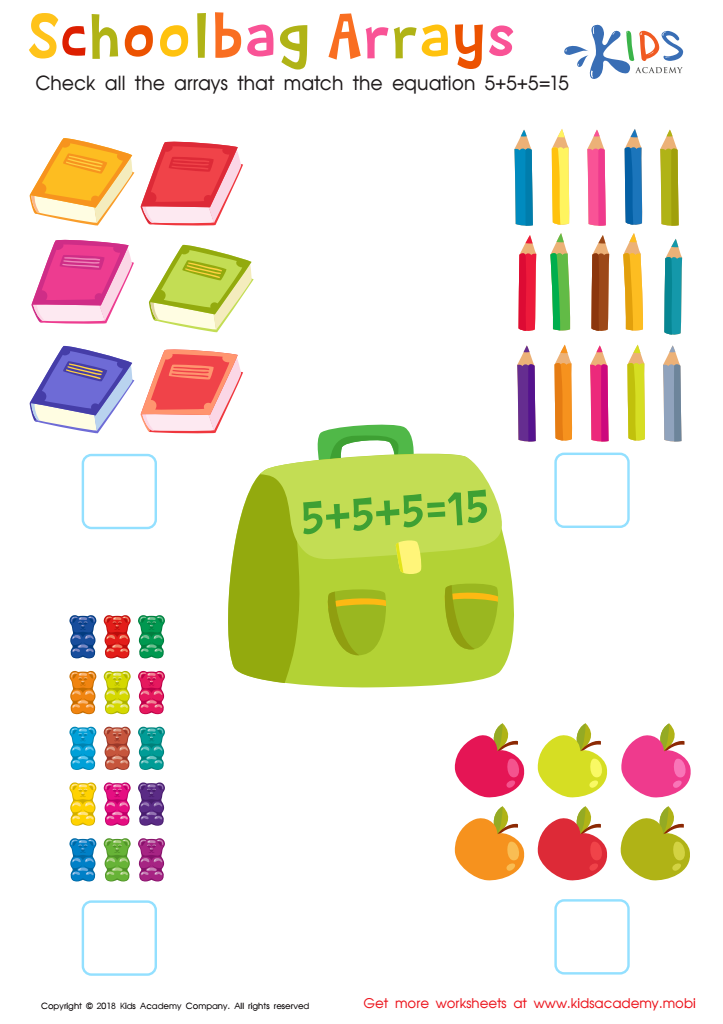
Schoolbag Arrays Worksheet
Help your child spot the correct arrays in this worksheet: having them count the items in each and check the boxes for the ones with 15 objects. Ask them to differentiate between rows and columns and explain which ones match the equation 5+5+5=15.
Schoolbag Arrays Worksheet
Worksheet
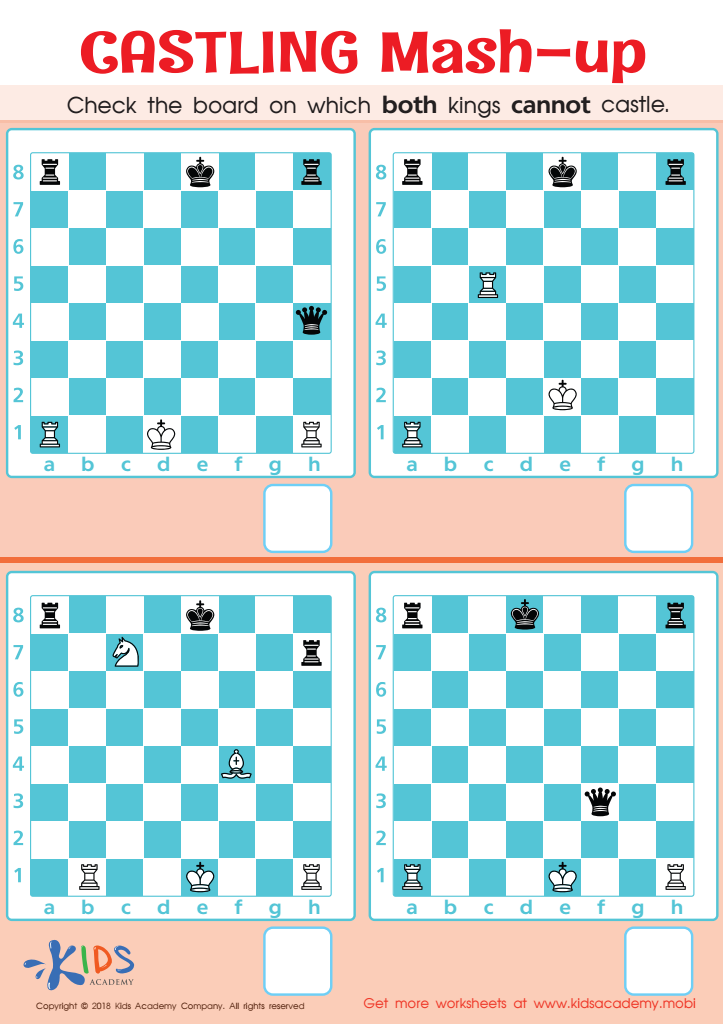
Castling Mash–up Worksheet
Before starting the worksheet, ensure your child understands castling in chess. If not, take time to explain it. Once they have a clear grasp of the rules, help them complete the exercise. Check the board to ensure that neither king can castle.
Castling Mash–up Worksheet
Worksheet
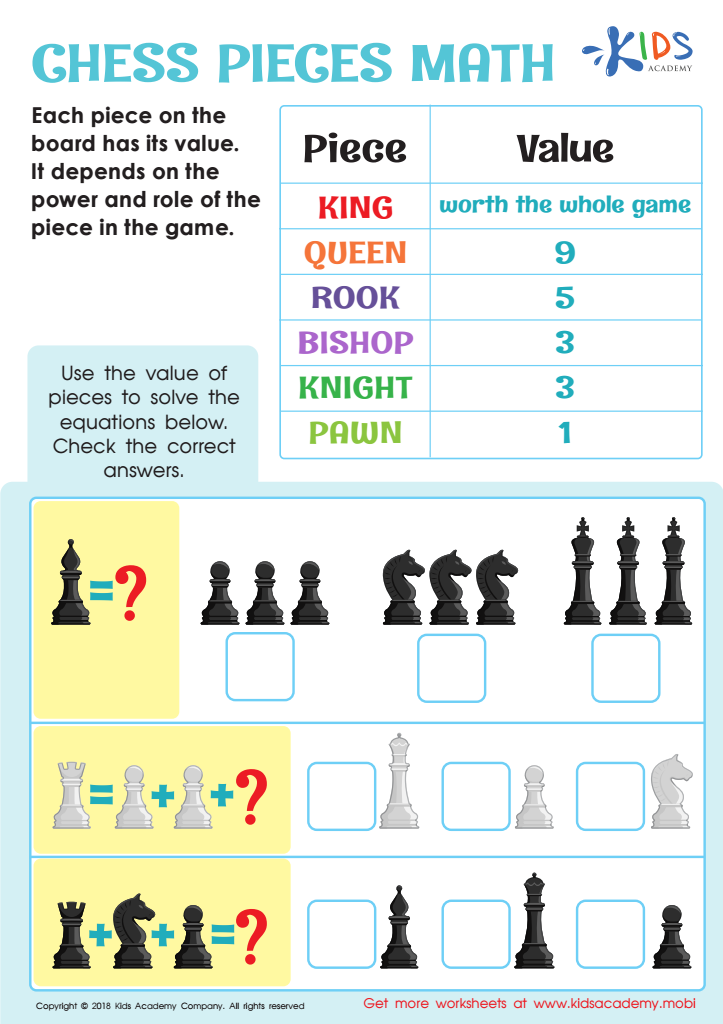
Chess Pieces Math Worksheet
Chess involves math! Each piece has its own value, from the king (worth the entire game) to the queen (9 points), varying according to their power and role. In the worksheet, your child must use these values to solve the equations at the bottom.
Chess Pieces Math Worksheet
Worksheet
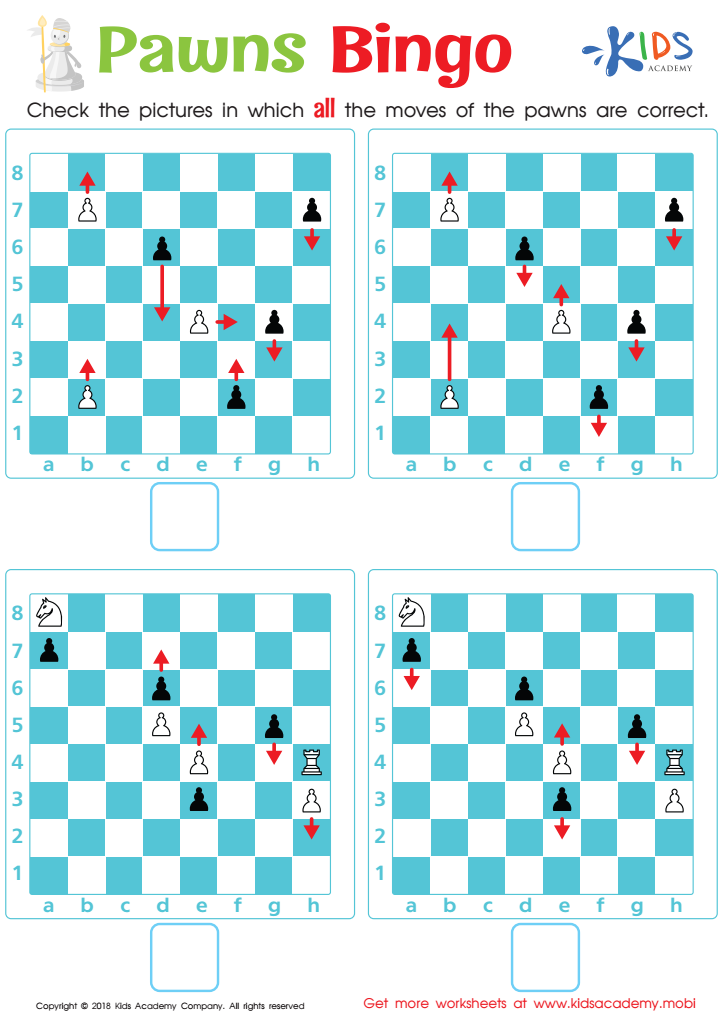
Pawns Bingo Worksheet
Test your students' knowledge of chess pawns. Present them with a worksheet featuring a picture, and ask them to identify the correct pawn moves. Afterward, they'll be better equipped to maneuver strategically on the chessboard.
Pawns Bingo Worksheet
Worksheet
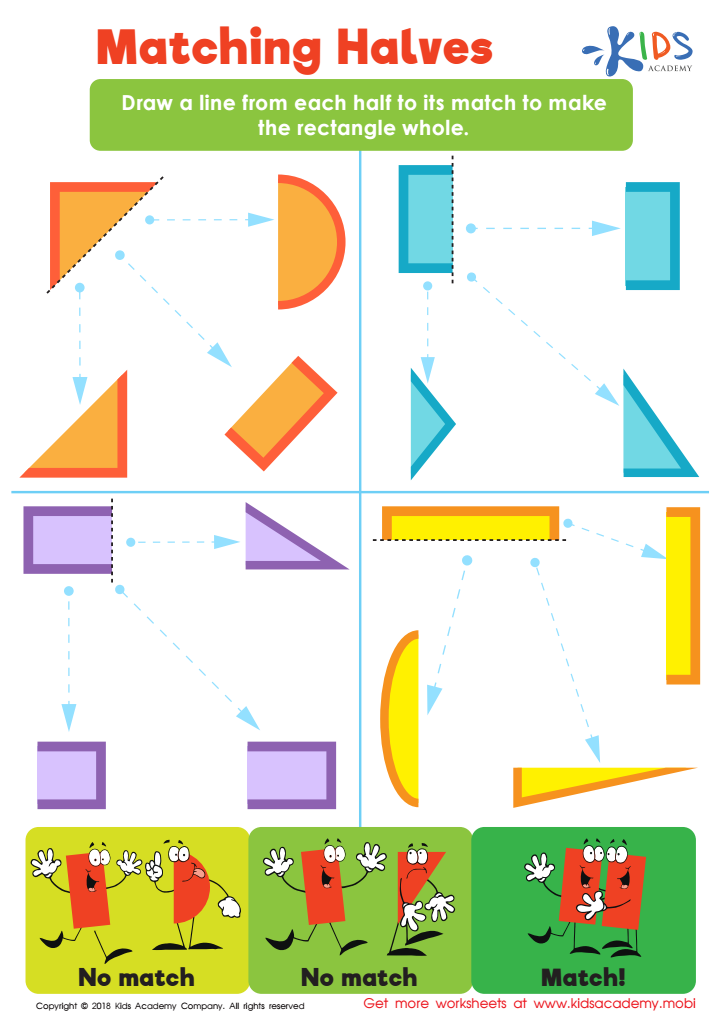
Matching Halves Worksheet
See how your child fares in matching two halves to form a complete rectangle. Provide them with four options, and ask them to draw a line connecting the two correct halves. Put their shape knowledge to the test with this simple worksheet!
Matching Halves Worksheet
Worksheet
Join Kids Academy for Free
Who is primarily going to use this learning content?