Filters

1048 filtered results

Clear all filters
Favorites
With answer key
Interactive

1048 filtered results

Difficulty Level

Grade


Check out this FREE Trial Lesson for age 3-6!

Key Details

Favorites
With answer key
Interactive
  • 3-6
  • Interactive
  • Normal
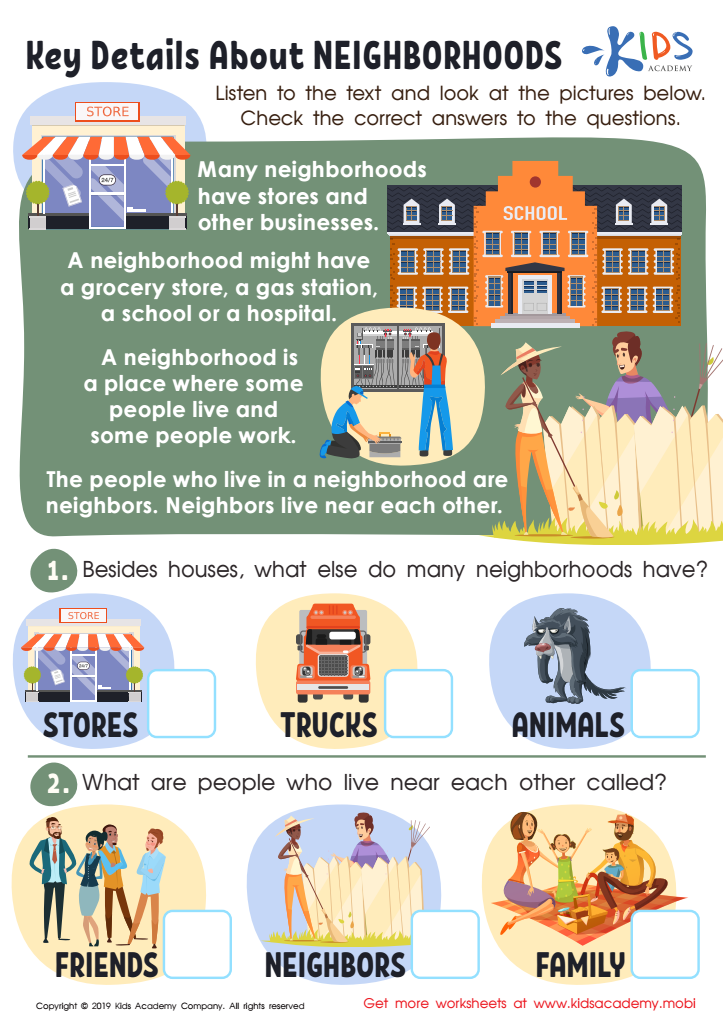
Key Details Neighborhoods Worksheet

Key Details Neighborhoods Worksheet

This worksheet helps your child strengthen reading comprehension by teaching them to pull out key details and store them in their memory. It includes words and pictures that demonstrate how the two can work together to create better understanding. As they learn about a neighborhood, they'll practice these skills by answering comprehension questions.
Key Details Neighborhoods Worksheet
Worksheet
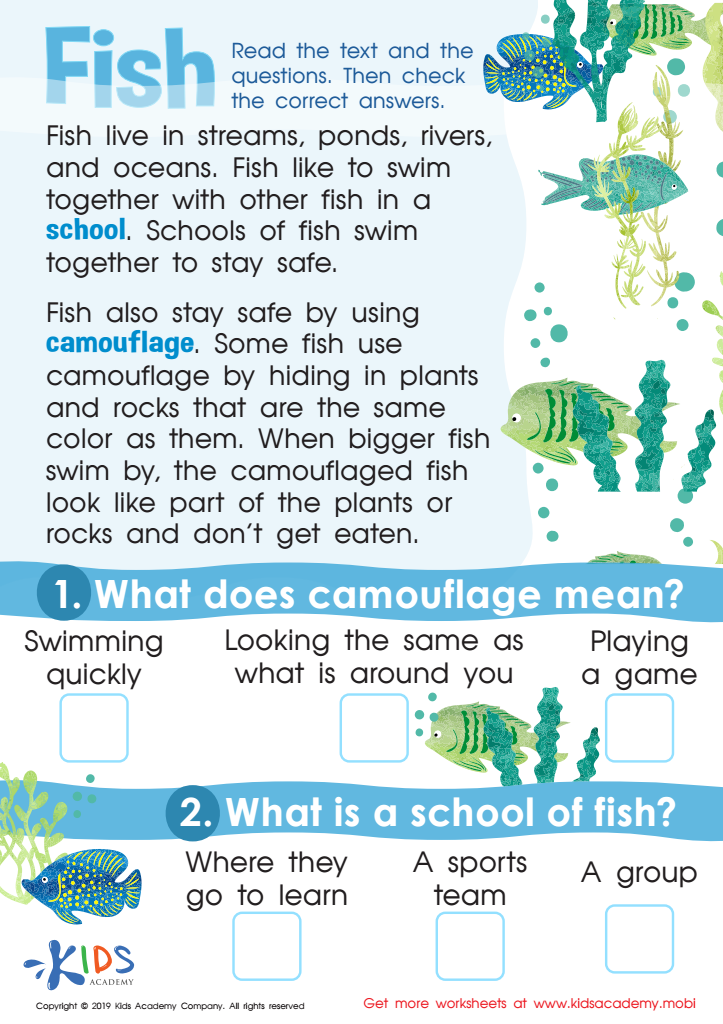
Fish Worksheet
Fish Worksheet

Fish Worksheet

Kids love learning about the creatures that live in water! This free PDF worksheet covers fish, teaching kids larger vocabulary and contextual reading comprehension. Questions prompt them to choose the right answer from multiple choices, just like in a classroom. It's a fun way to boost their reading skills and comprehension without them even realizing it!
Fish Worksheet
Worksheet
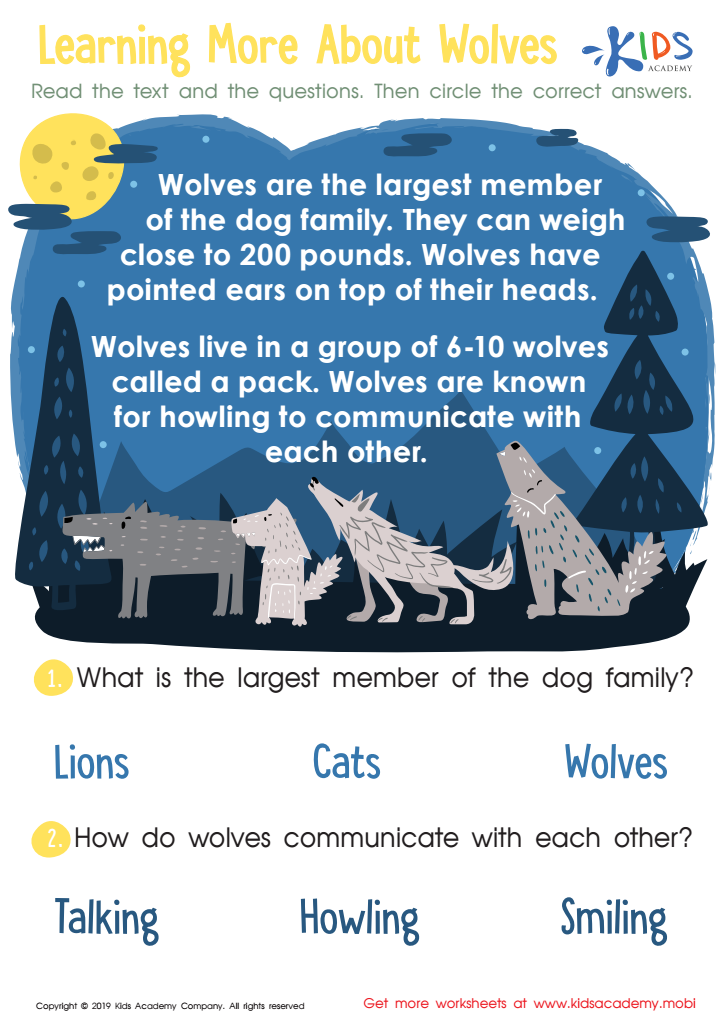
Learning More About Wolves Worksheet

Learning More About Wolves Worksheet

Kids love learning about wolves and their ancestors, our lovable dogs. This text engages them with new facts, then they can practice their recall skills by answering the accompanying questions. The free worksheet helps them focus on details to better understand the text. Even if they don't realize it, they're learning while they read and have fun!
Learning More About Wolves Worksheet
Worksheet
Learning More About Dogs Worksheet

Learning More About Dogs Worksheet

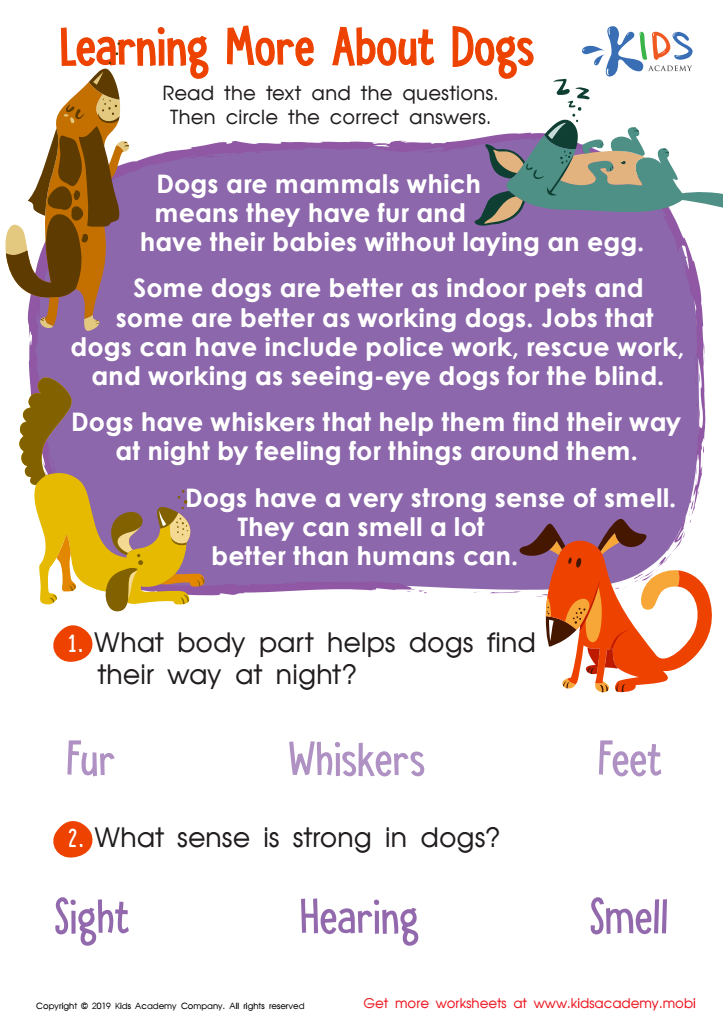
Kids love learning about dogs! This free comprehension passage is great for engaging them with interesting facts. From the text, they can learn about dogs and the work they do, then answer questions to test their understanding. It's an enjoyable worksheet with fast reading and comprehension practice.
Learning More About Dogs Worksheet
Worksheet
Dogs and Wolves Worksheet

Dogs and Wolves Worksheet

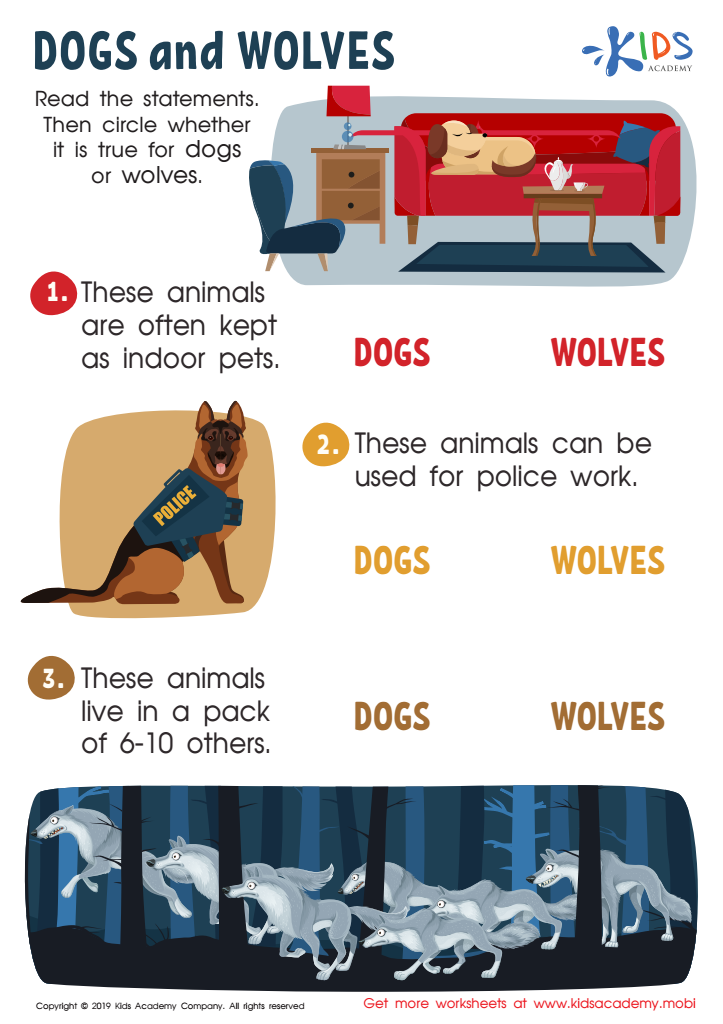
Kids love dogs and wolves, so engaging them with text about them is key. This free, downloadable worksheet allows kids to read statements about dogs and wolves and use picture clues and prior knowledge to decide if the statements are true or false, strengthening their reading comprehension.
Dogs and Wolves Worksheet
Worksheet
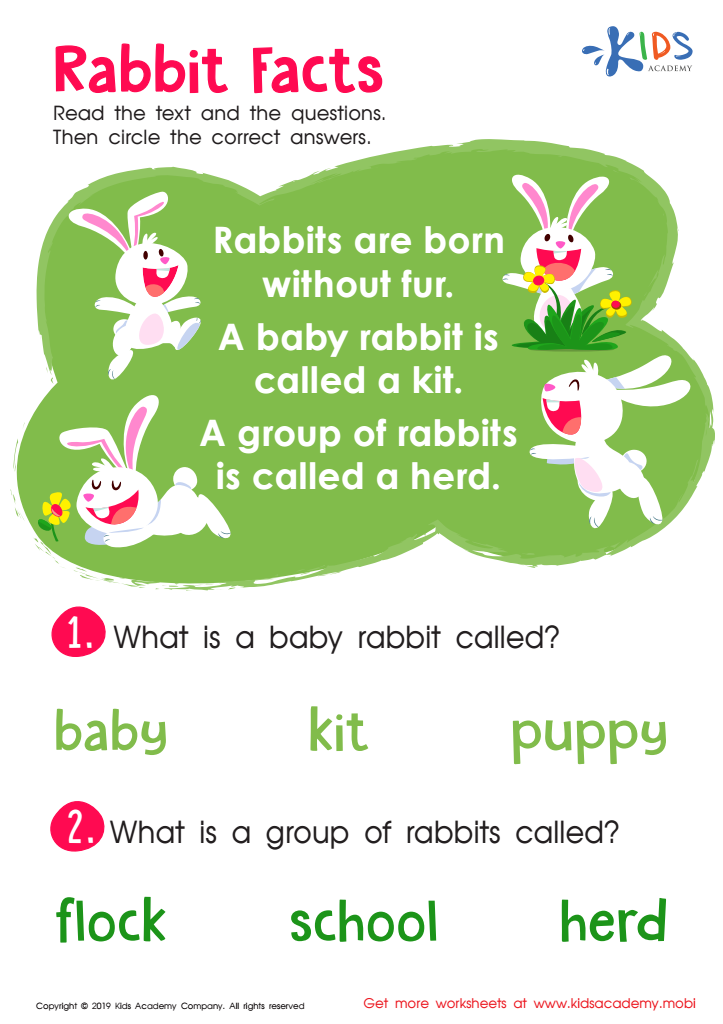
Rabbit Facts Worksheet

Rabbit Facts Worksheet

Reading comprehension skills can be strengthened with this fun PDF about fluffy rabbits. It helps kids recall and retell details from the text while engaging them in the topic. This encourages success in reading comprehension.
Rabbit Facts Worksheet
Worksheet
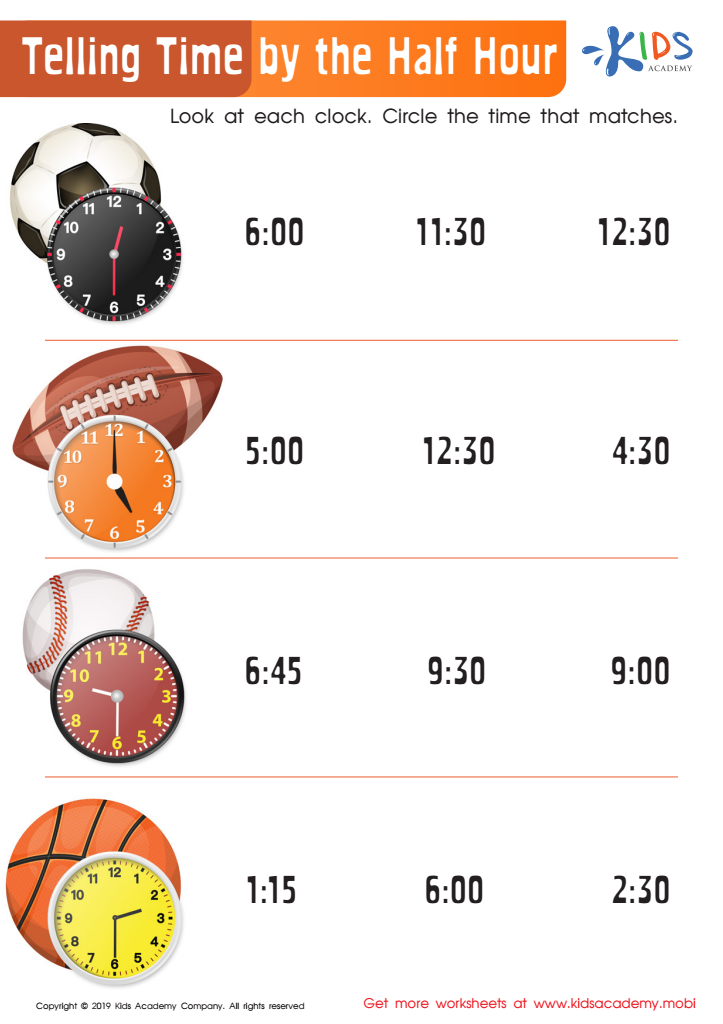
Telling Time by the Half Hour Worksheet

Telling Time by the Half Hour Worksheet

Teach kids to tell time with this worksheet! Four clocks are labeled with different times; help your child circle the right one. It's a great way to teach them to read analog and digital clocks, watches, and written times. Easy and fun learning!
Telling Time by the Half Hour Worksheet
Worksheet
Ordering Penguins Worksheet

Ordering Penguins Worksheet

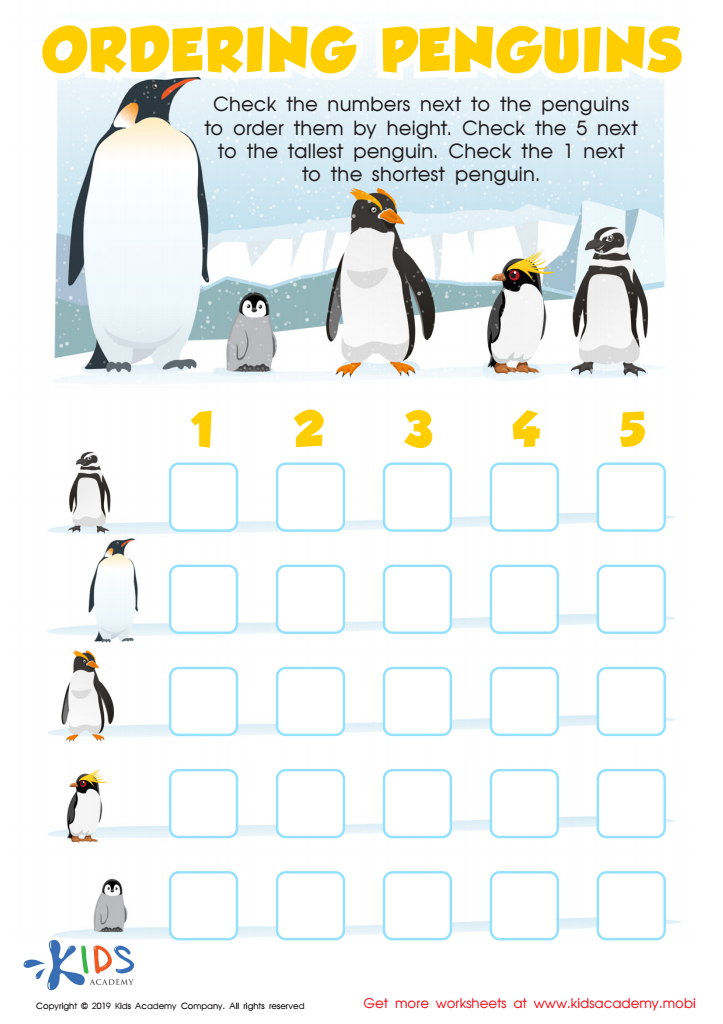
Check photos of penguins with your kids, then help them order by height. Tallest gets a 5, shortest gets a 1. Learn cool facts while having fun!
Ordering Penguins Worksheet
Worksheet
Measuring Musical Instruments Worksheet

Measuring Musical Instruments Worksheet

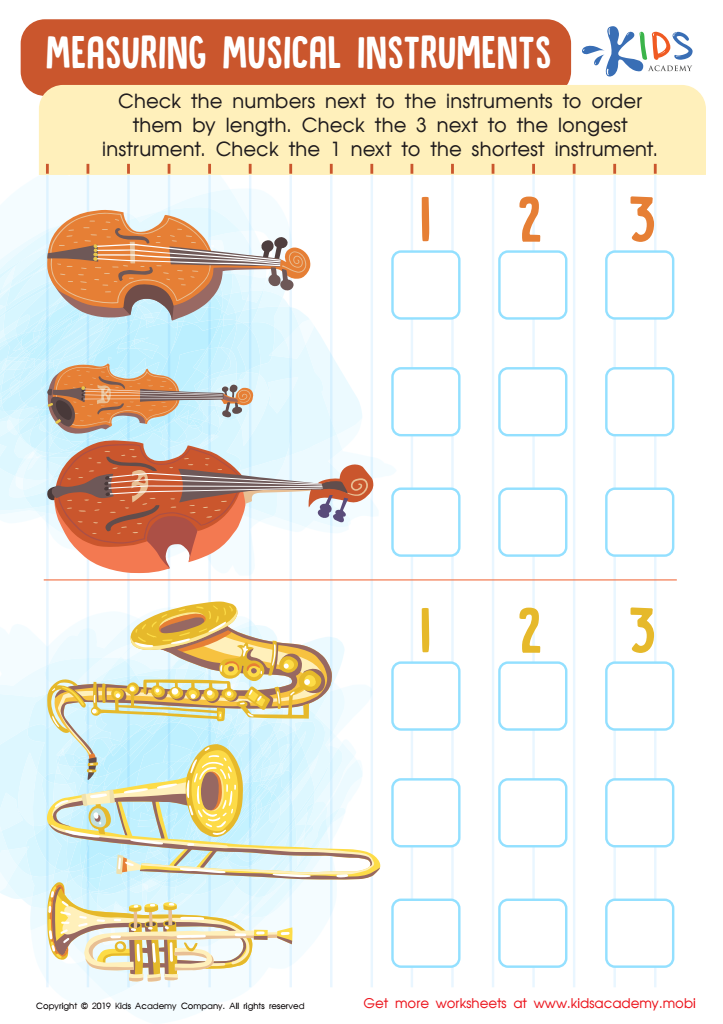
Learning measurements can be tricky, but this worksheet makes it easy. Ask your child to identify the instruments in the pictures. Then, order them by length using the numbers. 3 is the longest, 1 is the shortest. Simple exercises like this will help them understand the different metric systems.
Measuring Musical Instruments Worksheet
Worksheet
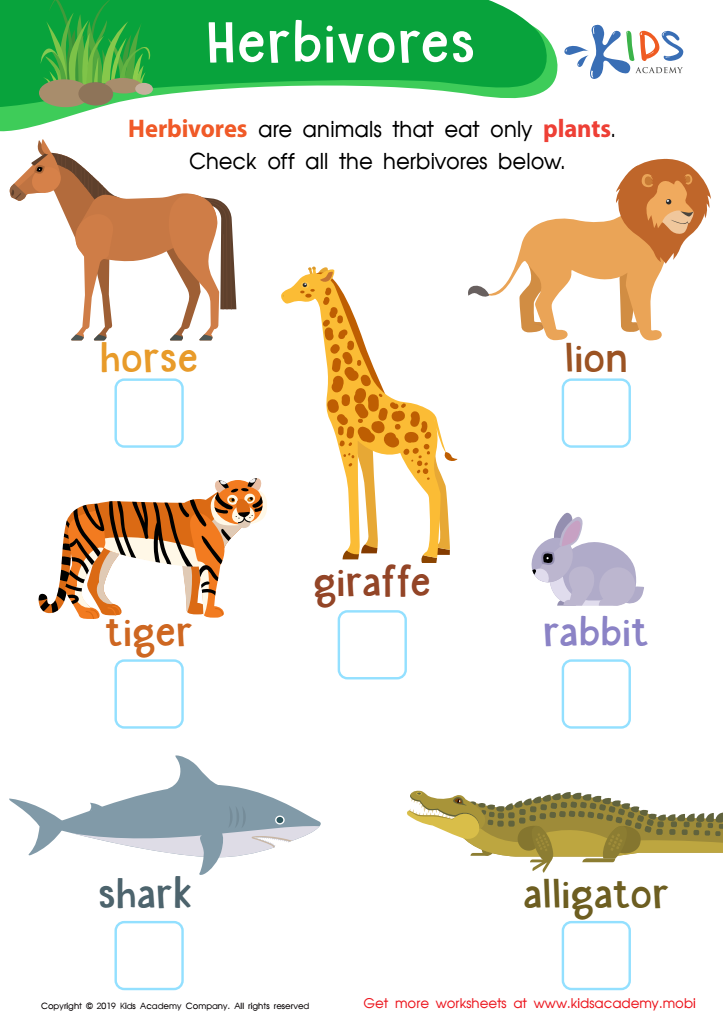
Herbivores Worksheet

Herbivores Worksheet

Explain to your kids what herbivores are: animals that survive on plants and grass. Examples include cows, rabbits, and deer. Ask them to identify the herbivores in the pictures and check them off.
Herbivores Worksheet
Worksheet
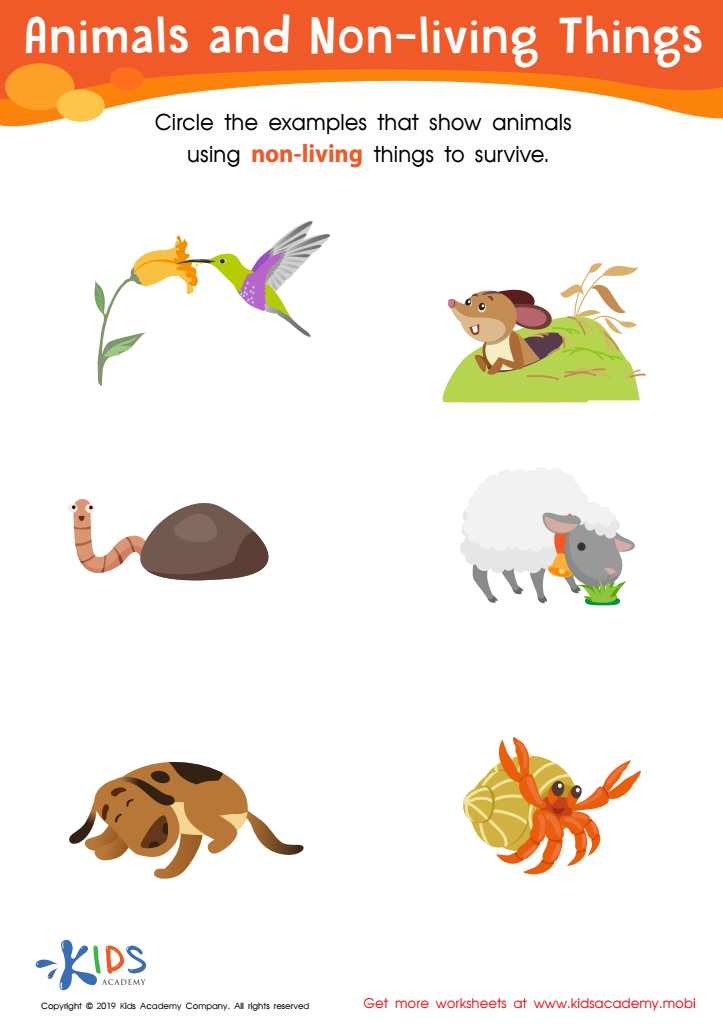
Animals and Non-Living Things Worksheet

Animals and Non-Living Things Worksheet

People and animals both require more than food to survive. We need shelter, clothing and water, while animals use non-living things like rocks and trees. Ask your kids what else is necessary to survive - then have them identify the objects in the worksheet and circle the examples of animals using non-living things.
Animals and Non-Living Things Worksheet
Worksheet
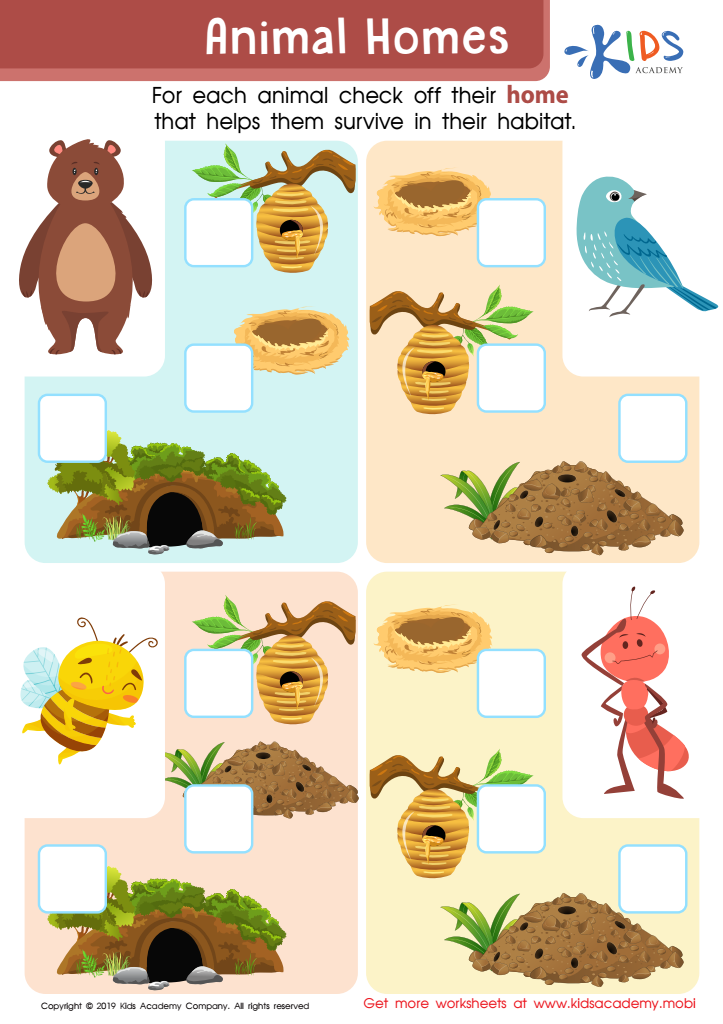
Animal Homes Worksheet

Animal Homes Worksheet

It's your duty as a teacher to protect, direct and guide your students while they're at school. Ask your kindergartners what a home means and why it's special. Use this worksheet to teach them that both people and animals have homes. Show them the pictures, and have them check off which is the home of each animal.
Animal Homes Worksheet
Worksheet
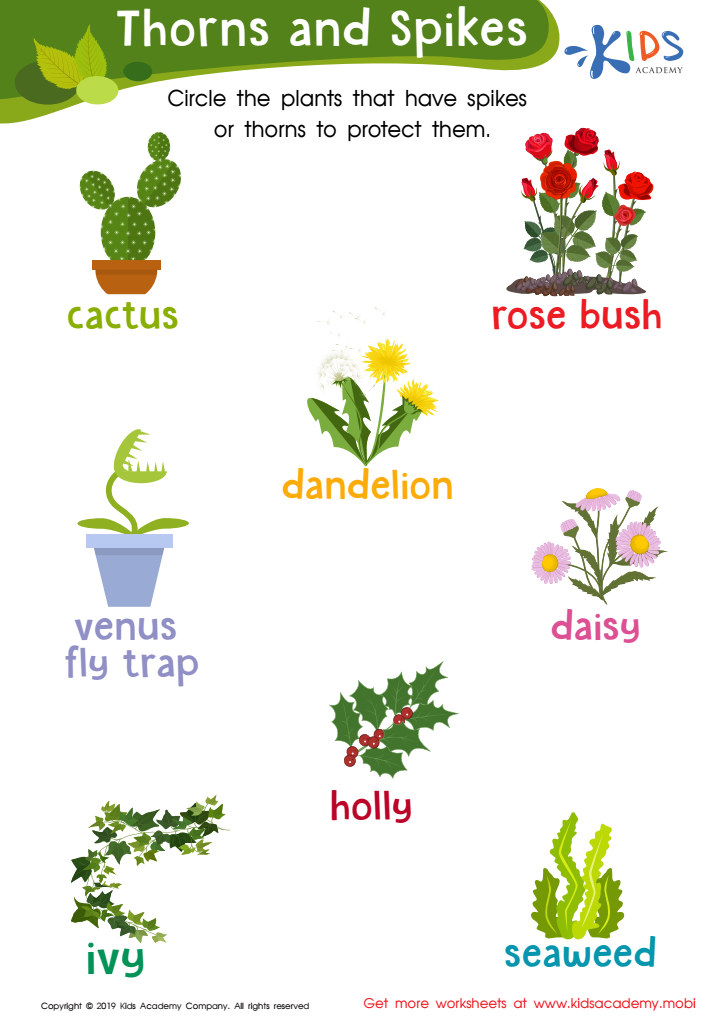
Thorns and Spikes Worksheet

Thorns and Spikes Worksheet

Can your students name and identify the plants and flowers in this worksheet? Ask them to read out the names and circle the ones with spikes or thorns. Help them appreciate nature's beauty and understand how plants protect themselves.
Thorns and Spikes Worksheet
Worksheet
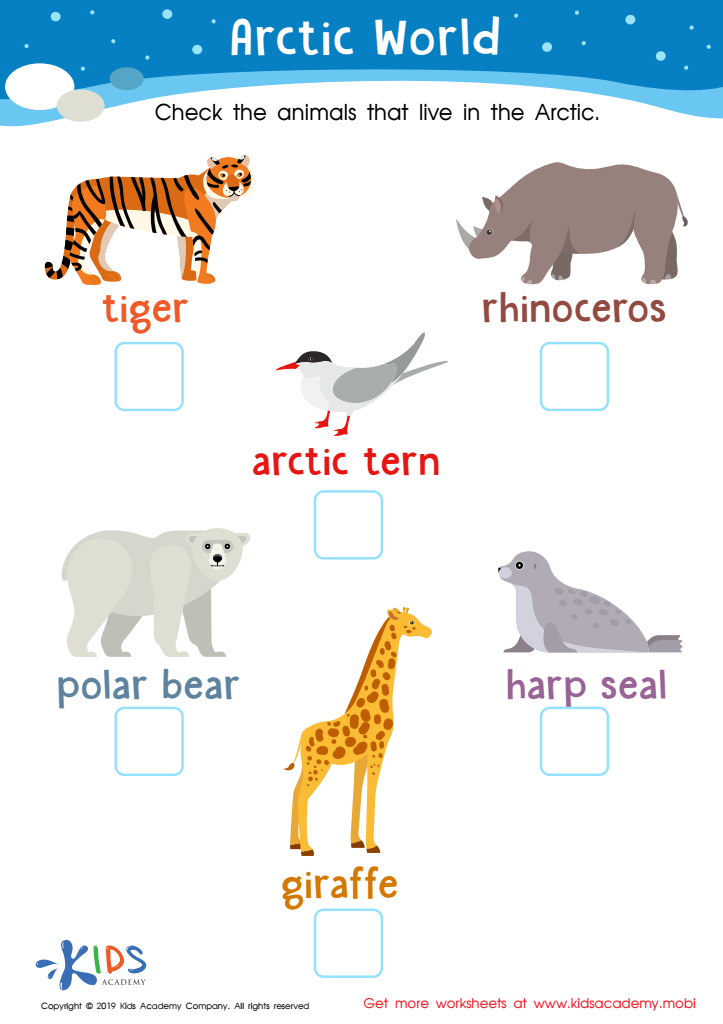
Arctic World Worksheet

Arctic World Worksheet

Ask your students if they know where the Arctic is located and what lives there. If not, use a world atlas to show them. The Arctic is very cold and snow-covered; native animals have adapted to survive the harsh conditions. Look at the animals in the worksheet and help your students decide which ones live in the Arctic.
Arctic World Worksheet
Worksheet
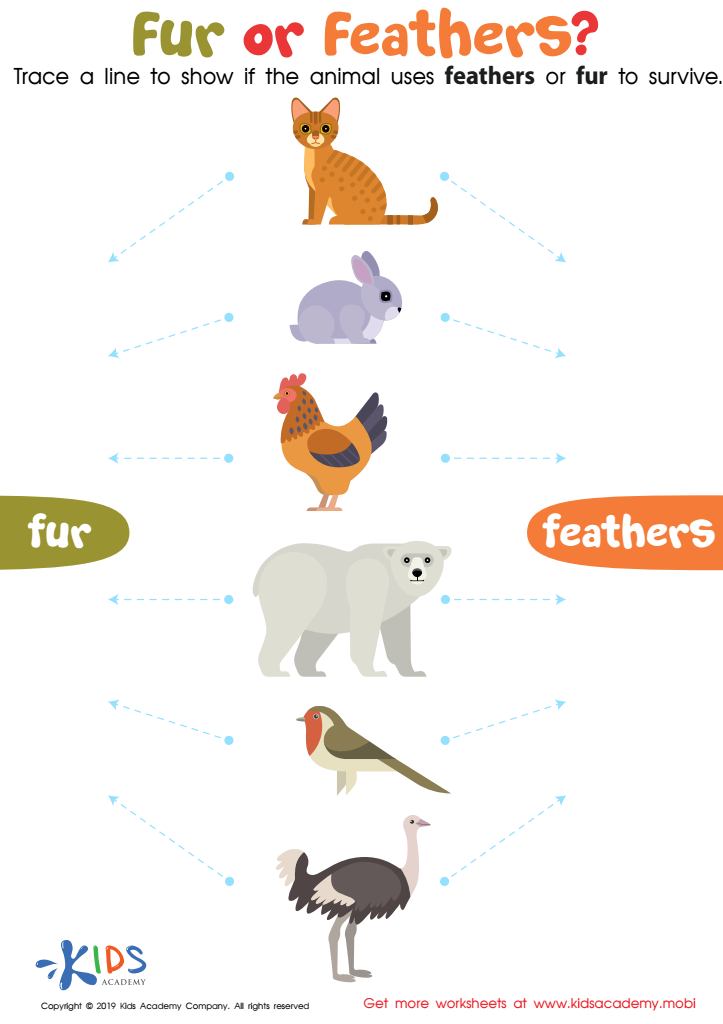
Fur or Feathers? Worksheet

Fur or Feathers? Worksheet

Examine animals you see daily. How do they differ from humans? With a pet in your home, ask your child to touch it and identify what covers the animal's body - fur or feathers? Birds have feathers, while mammals have fur. Guide your kids to identify animals in this worksheet and determine if fur or feathers keep them alive.
Fur or Feathers? Worksheet
Worksheet
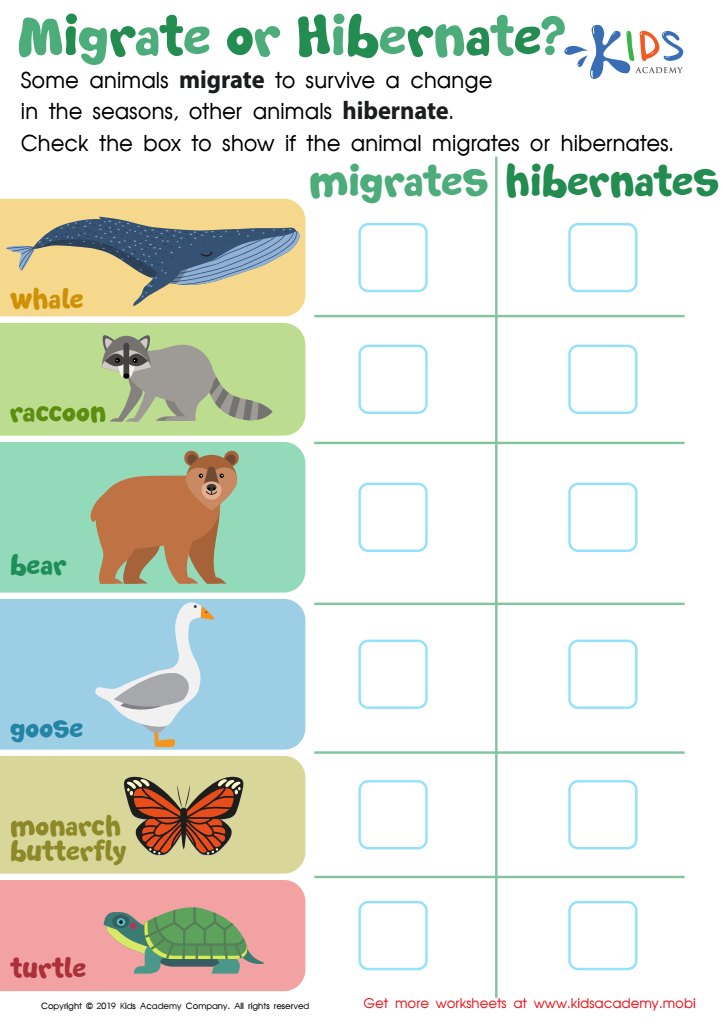
Migrate or Hibernate? Worksheet

Migrate or Hibernate? Worksheet

Many animals survive by either migrating or hibernating when the weather changes. Migration involves traveling in flocks or herds to a more temperate climate, while hibernation is when animals stay in their homes and eat and sleep for a long period of time. Show your kids this worksheet and help them decide which strategy animals use to cope with the changing weather.
Migrate or Hibernate? Worksheet
Worksheet
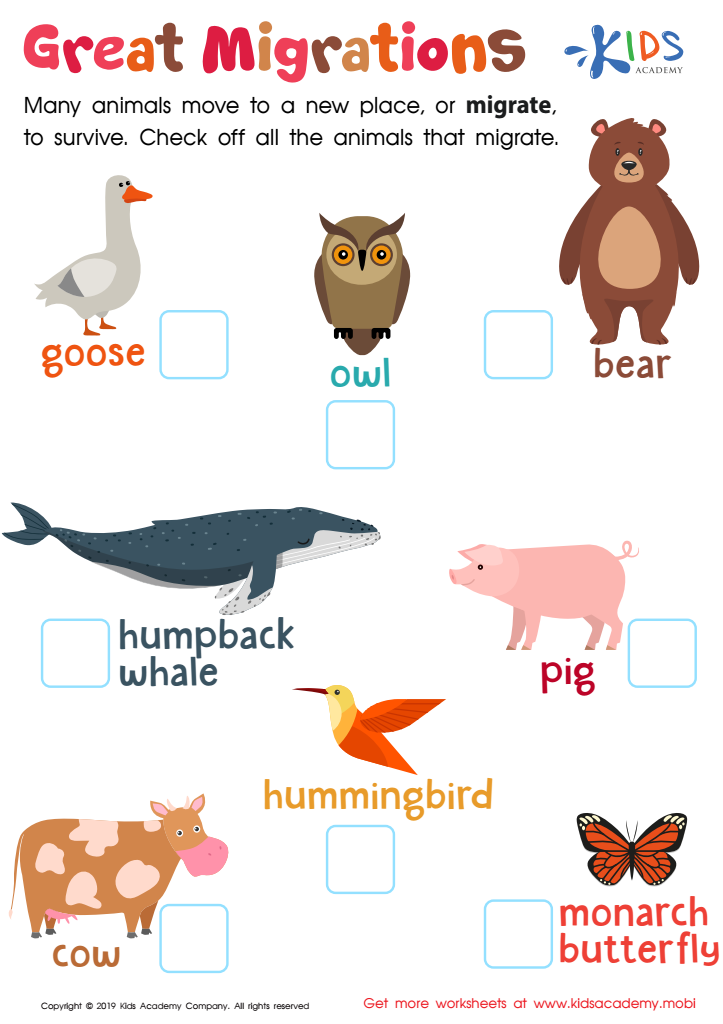
Great Migrations Worksheet

Great Migrations Worksheet

Identify animals in the worksheet with your kids. See which ones migrate: check the boxes! Migration is when birds and other animals only appear for certain seasons or long periods, then come back when the weather changes.
Great Migrations Worksheet
Worksheet
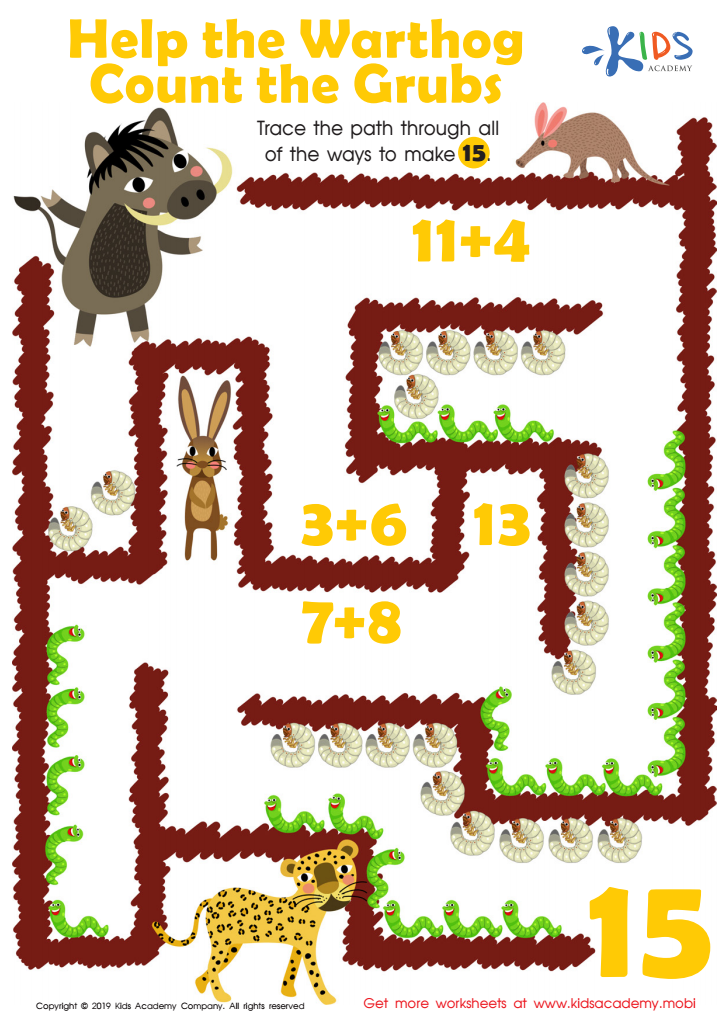
Help the Warthog Count the Grubs Worksheet

Help the Warthog Count the Grubs Worksheet

Test your kids' knowledge of wild animals. Ask them to name some they know, then have them identify the animals on this worksheet. If they can't, take the time to tell them the names. Finally, trace the warthog's path through the maze by solving the equations and going through paths that make 15.
Help the Warthog Count the Grubs Worksheet
Worksheet
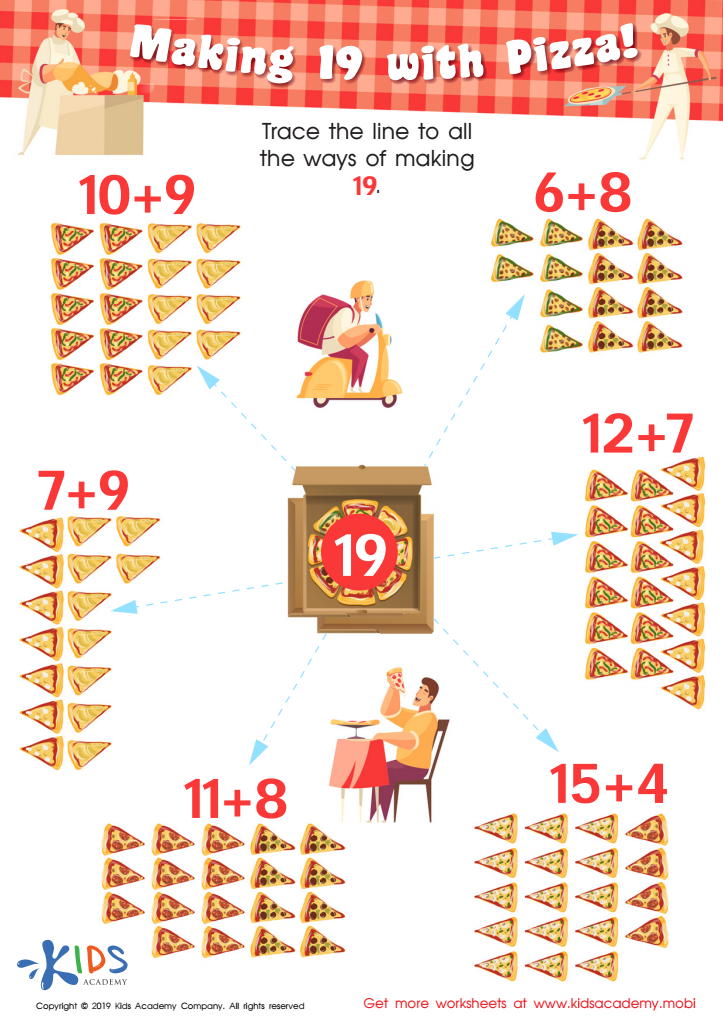
Making 19 with Pizza! Worksheet

Making 19 with Pizza! Worksheet

Who loves pizza? Your kids do! Next time you need to teach them math, make it fun by combining it with something they enjoy. This worksheet uses a pizza-themed problem to help them practice solving equations. Have them trace the line to figure out how to make 19. It's a great way to make learning math fun!
Making 19 with Pizza! Worksheet
Worksheet
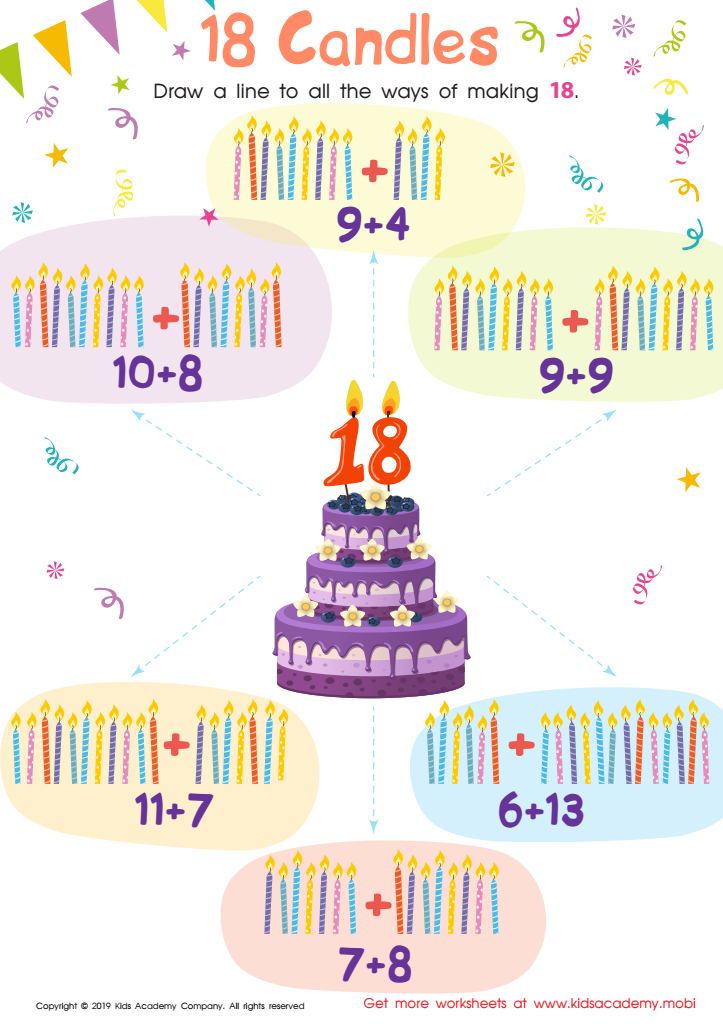
18 Candles Worksheet

18 Candles Worksheet

This worksheet is great for introducing your students to addition and subtraction. Help your kids solve the simple equations on it and draw a line from the birthday cake with 18 on it to all the solutions. Practice like this will prepare them to tackle more complex math problems.
18 Candles Worksheet
Worksheet
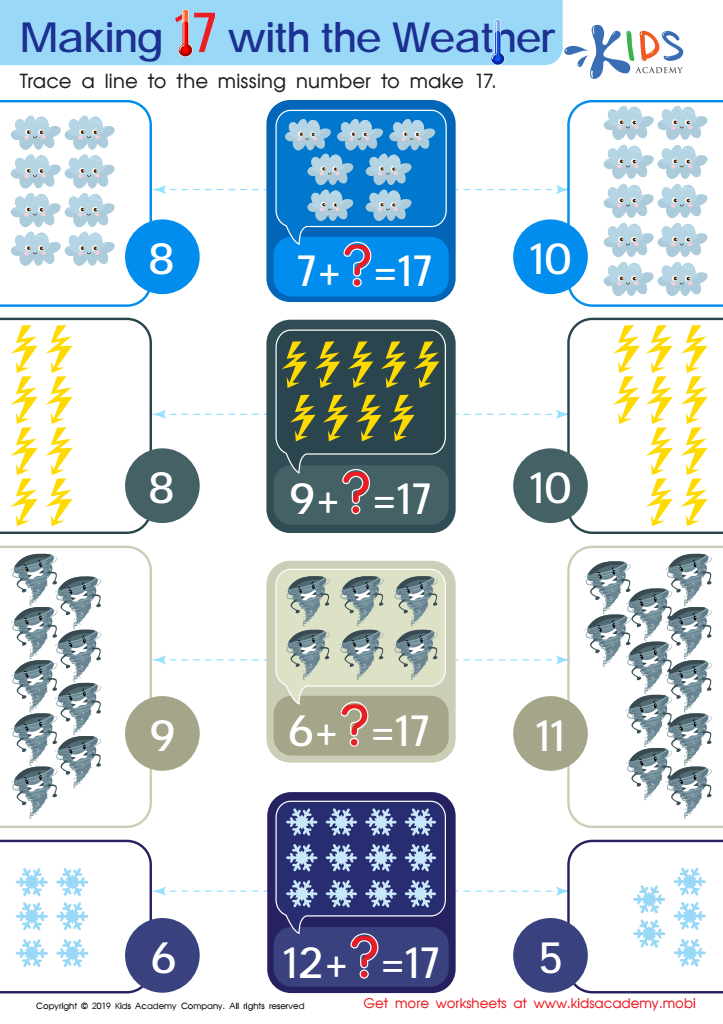
Making 17 with the Weather Worksheet

Making 17 with the Weather Worksheet

Show your kids the pictures in the worksheet and identify the weather. This exercise is to help them add simple numbers. There are 4 equations in the printout. Help them figure out the numbers to make 17, then trace a line to the missing number to complete the equation.
Making 17 with the Weather Worksheet
Worksheet
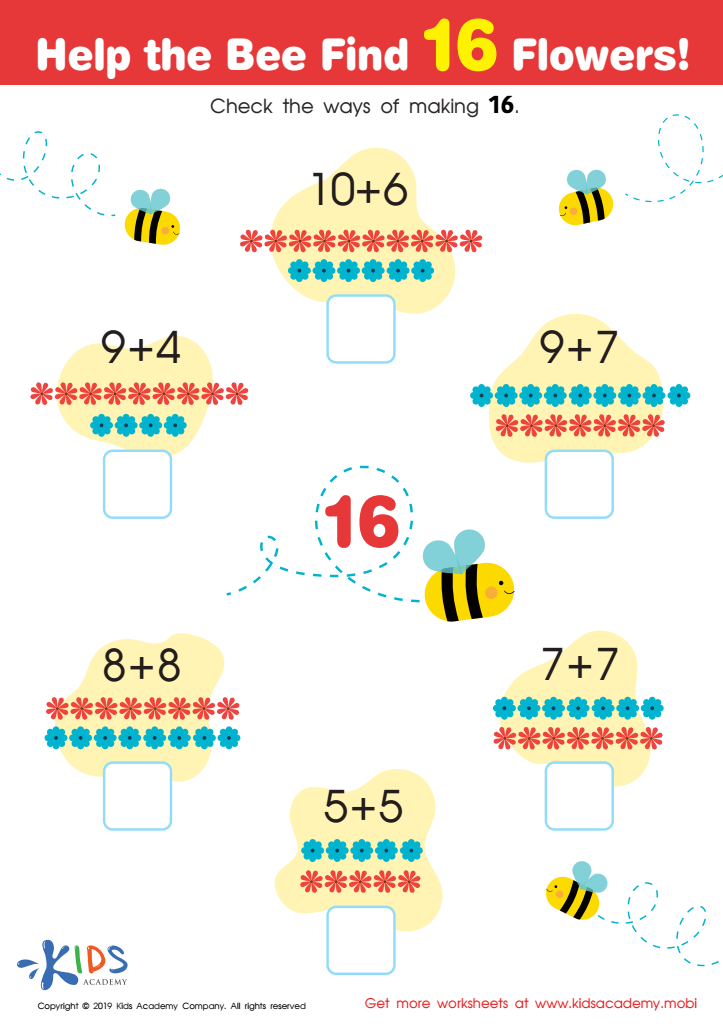
Help the Bee Find 16 Flowers Worksheet

Help the Bee Find 16 Flowers Worksheet

Ask your students to count as high as they can. Show them that different numbers can equal the same figure with examples like 2+2=4 and 3+1=4. Ask for more examples, then help the bees find 16 flowers by checking the ways of making 16.
Help the Bee Find 16 Flowers Worksheet
Worksheet
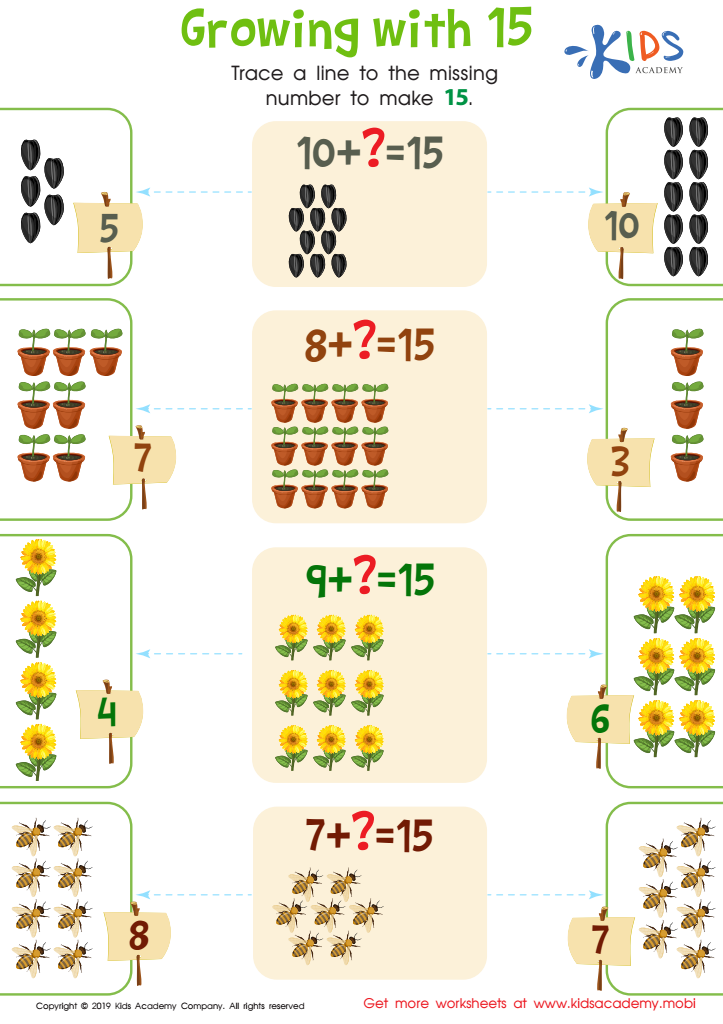
Growing with 15 Worksheet

Growing with 15 Worksheet

Remind your kids that adding different sets of numbers can give the same total (e.g. 2+3=5, 4+1=5). Test their understanding by asking them for more examples. Move onto the worksheet: count objects, then trace the line to the number making a total of 15.
Growing with 15 Worksheet
Worksheet
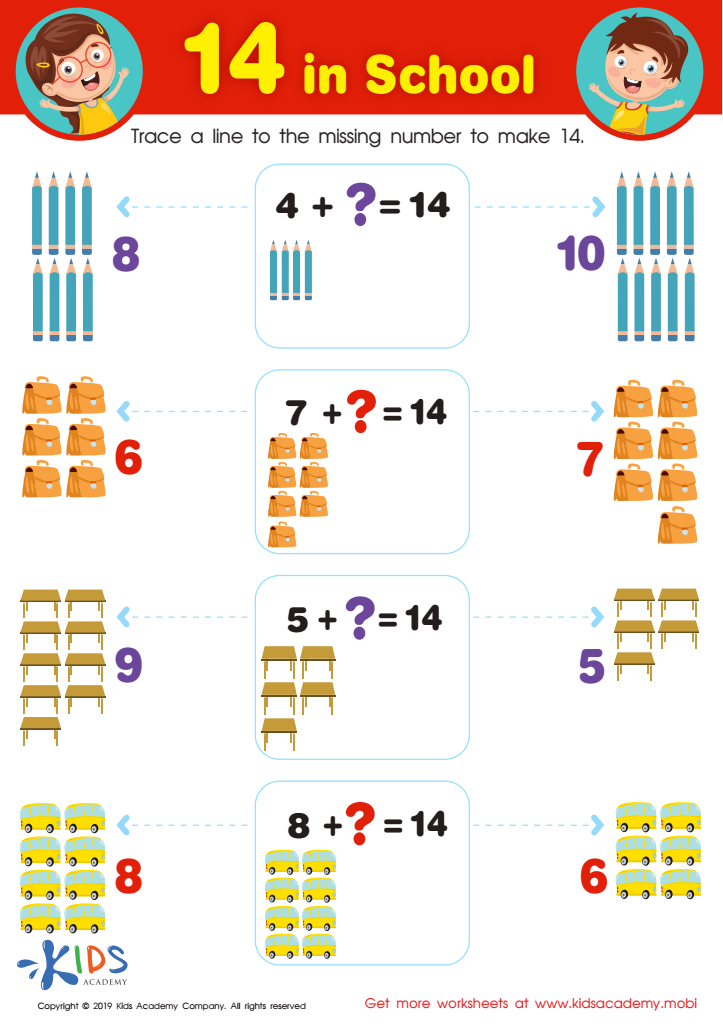
14 in School Worksheet


14 in School Worksheet

Remind your kids that adding different sets of numbers can give the same total (e.g. 2+3=5, 4+1=5). Ask them for more examples. Afterwards, work through the exercise. Help them count the objects and trace a line to the missing number that makes the total 14.
14 in School Worksheet
Worksheet


Understanding developmental milestones in children aged 3-6 is crucial for parents and teachers, as this period is foundational for cognitive, social, and emotional growth. Children in this age range exhibit rapid changes; they begin to develop language skills, engage in imaginative play, and establish social relationships. Recognizing what is considered "normal" for this age helps caregivers identify potential areas of concern early on.

For instance, if a child is not meeting these milestones, it may indicate a need for additional support, intervention, or resources. Furthermore, being aware of common behaviors enables parents and teachers to nurture positive development actively, encouraging a love for learning and exploration.

Additionally, fostering routines and providing enriched experiences, such as reading together or engaging in arts and crafts, is vital during these years, as they promote creativity and critical thinking. This understanding also empowers teachers to tailor their instructional strategies appropriately, catering to diverse learning styles. In summary, being informed about normal development during ages 3-6 enables adults to create supportive, enriching environments that not only ensure children thrive but also build a strong foundation for lifelong learning.