Normal Missing Letters Worksheets for Ages 3-6
4 filtered results
-
From - To
Discover our "Normal Missing Letters Worksheets for Ages 3-6"! Tailored for early learners, these captivating worksheets from Kids Academy are designed to enhance letter recognition and alphabetical order. The activities challenge your child's mind, strengthening their understanding of the alphabet as they identify and fill in the missing letters. Perfect for preschool and kindergarten, these fun and engaging resources support literacy development and pave the way to reading success. Spark your child’s curiosity and joy of learning with our professionally crafted educational materials. Download now and watch your little ones excel!
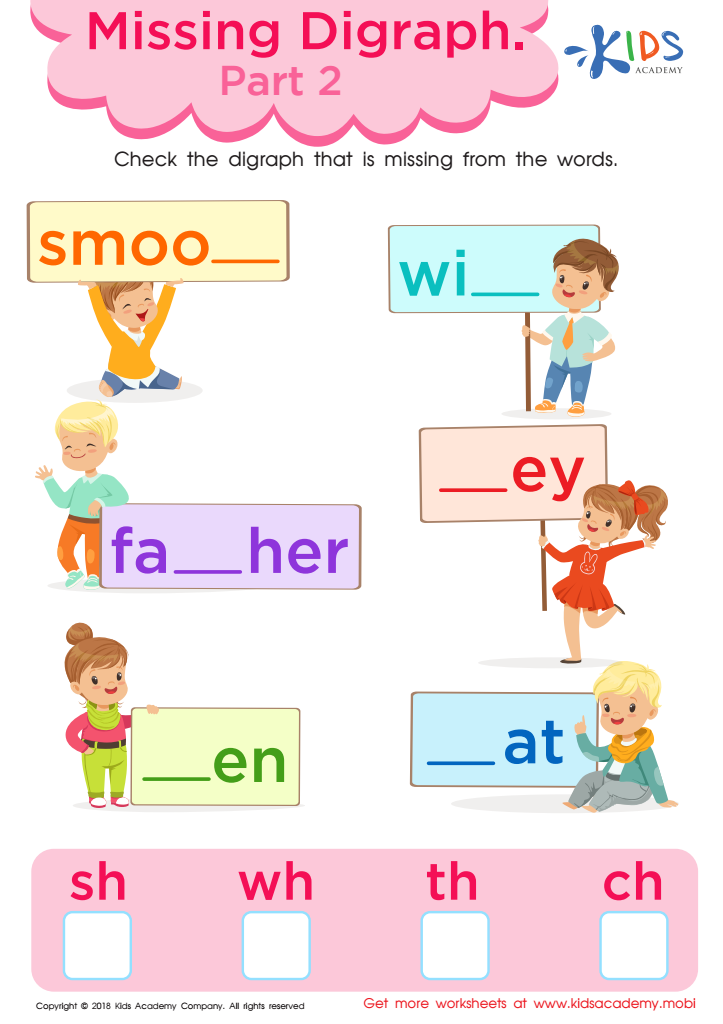
Missing Digraph: Part 2 Worksheet
 Assign to My Students
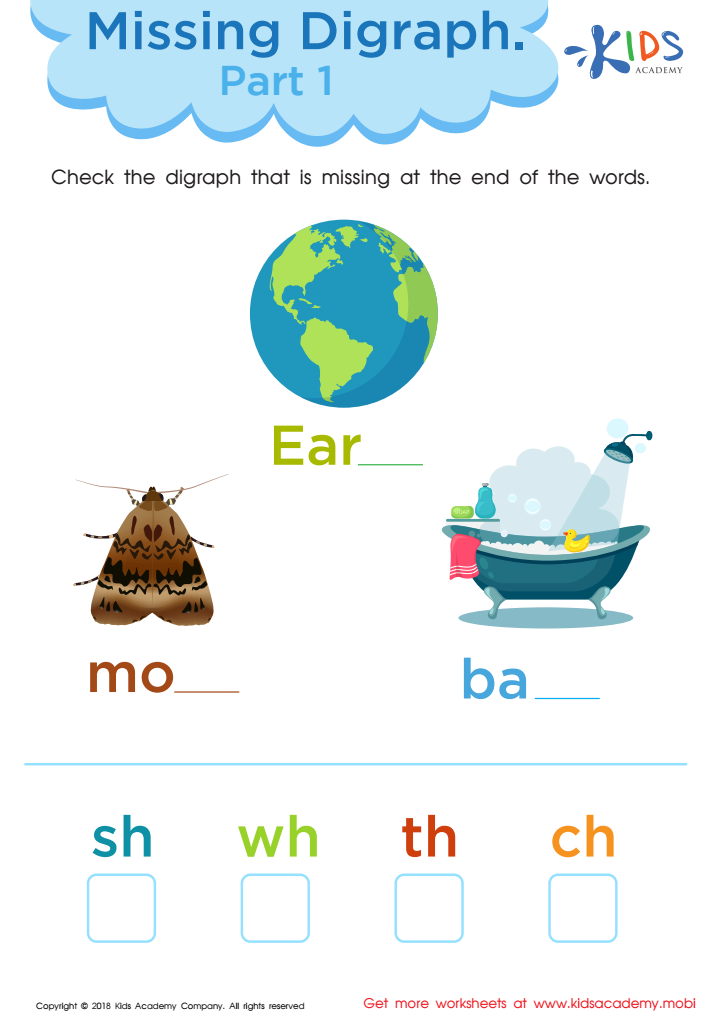
Missing Digraph: Part 1 Worksheet
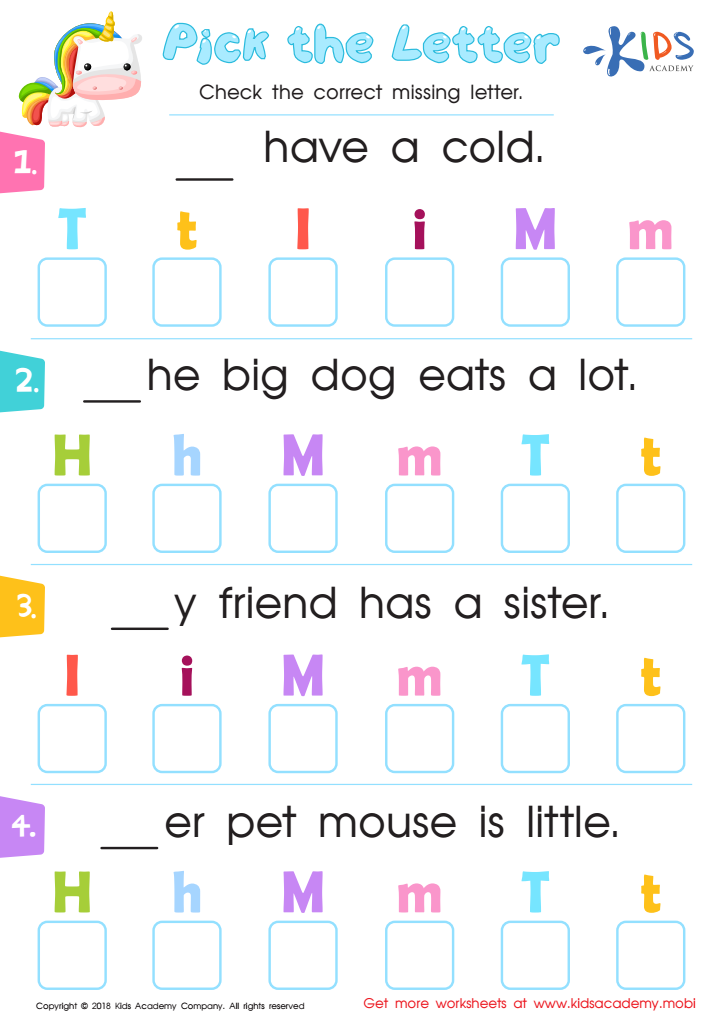
Pick the Letter Worksheet
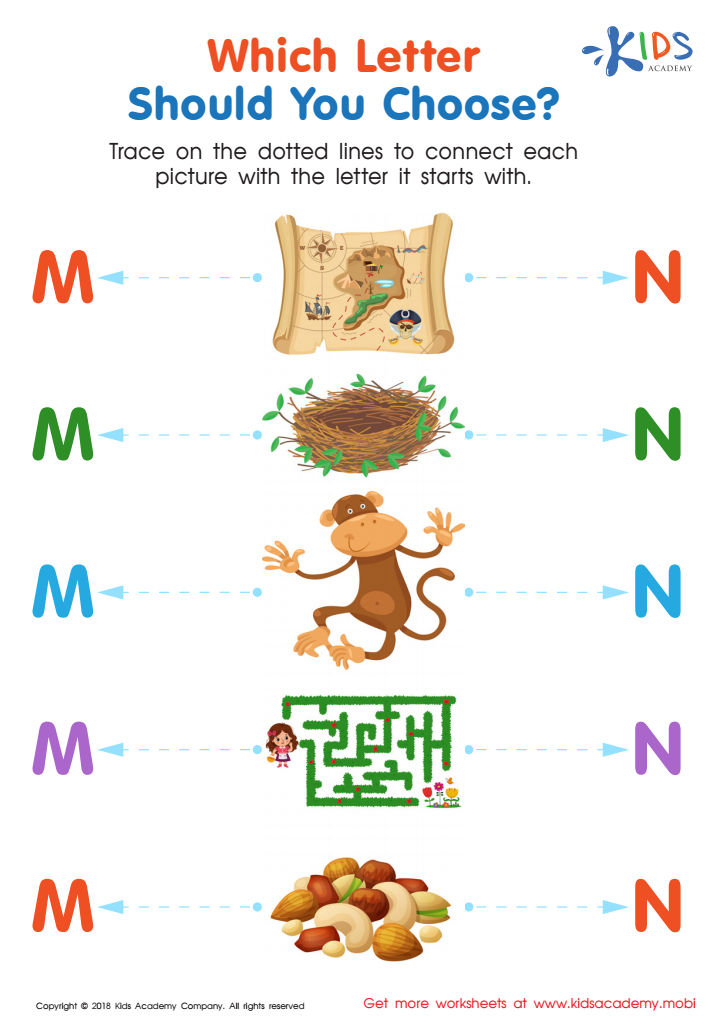
Which Letter Should you Choose? Worksheet



Normal Missing Letters exercises, crucial for ages 3-6, aid vital early language skills shaping future learning. These tasks enhance phonemic awareness, critical for children learning letters and sounds. Identifying missing letters helps children analyze words into individual sounds, crucial for reading and spelling. This foundational skill promotes reading fluency and comprehension.
Missing Letters activities encourage attention to detail and critical thinking as children discern the correct letters to complete words. These exercises foster problem-solving skills and mental flexibility, facilitating learning in various areas like math and science. Recognizing patterns and sequences in letters prepares children for structured learning.
Such tasks, even playful and engaging, cultivate a love for learning. Enjoyable activities capture young learners’ attention, making complex literacy skills approachable and fun, instilling a positive learning attitude.
Parents and teachers find these exercises perfect for individualized attention at home or in school, organically integrating learning into daily routines. Support from conscious efforts enhances academic growth.
Overall, Normal Missing Letters activities are pivotal tools, blending literacy skill development with cognitive growth, harnessing lifelong learning skills setting a solid educational foundation.







