Normal Geometry Worksheets for Ages 3-9 - Page 4
75 filtered results
-
From - To
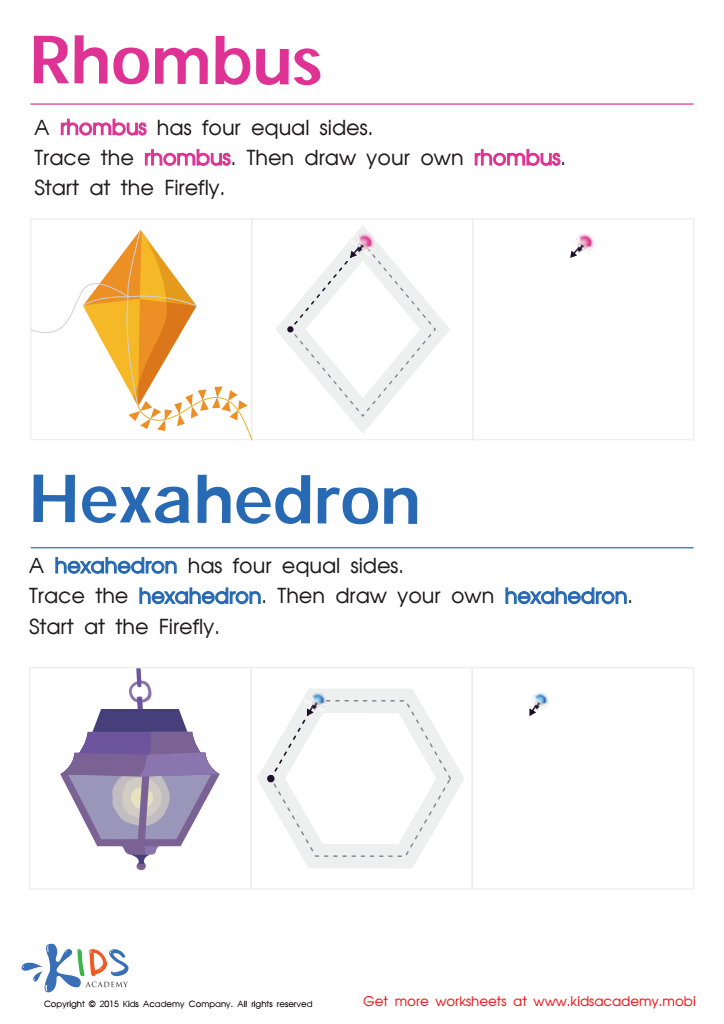
Draw a Rhombus And a Hexahedron Printable
 Assign to My Students











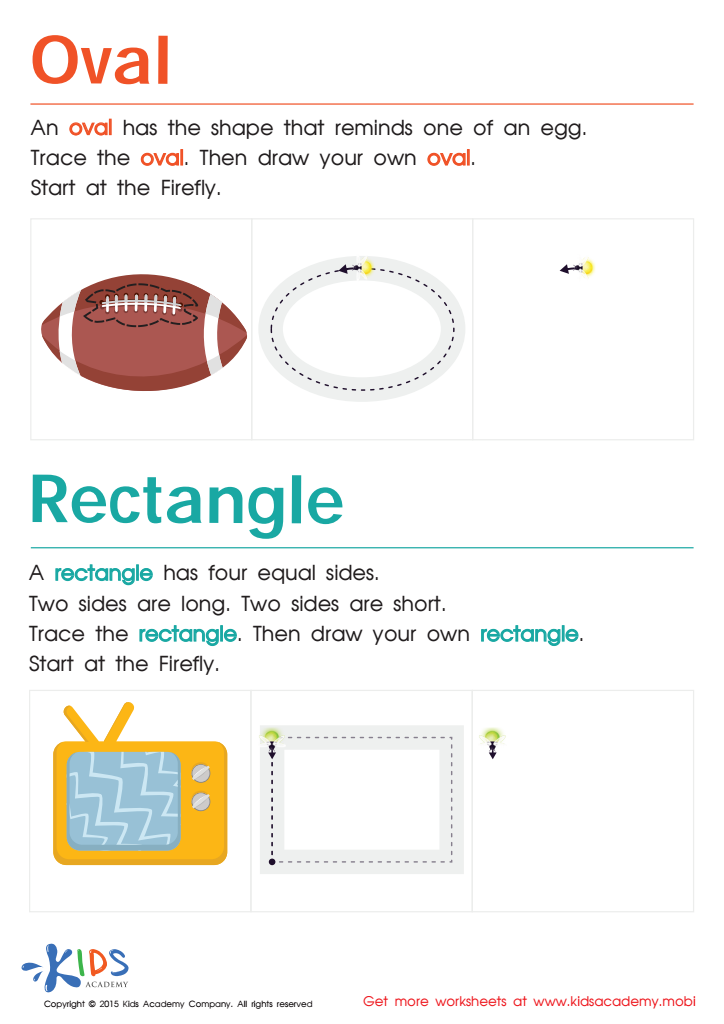
Easy Drawing of Ovals And Rectangles Worksheet
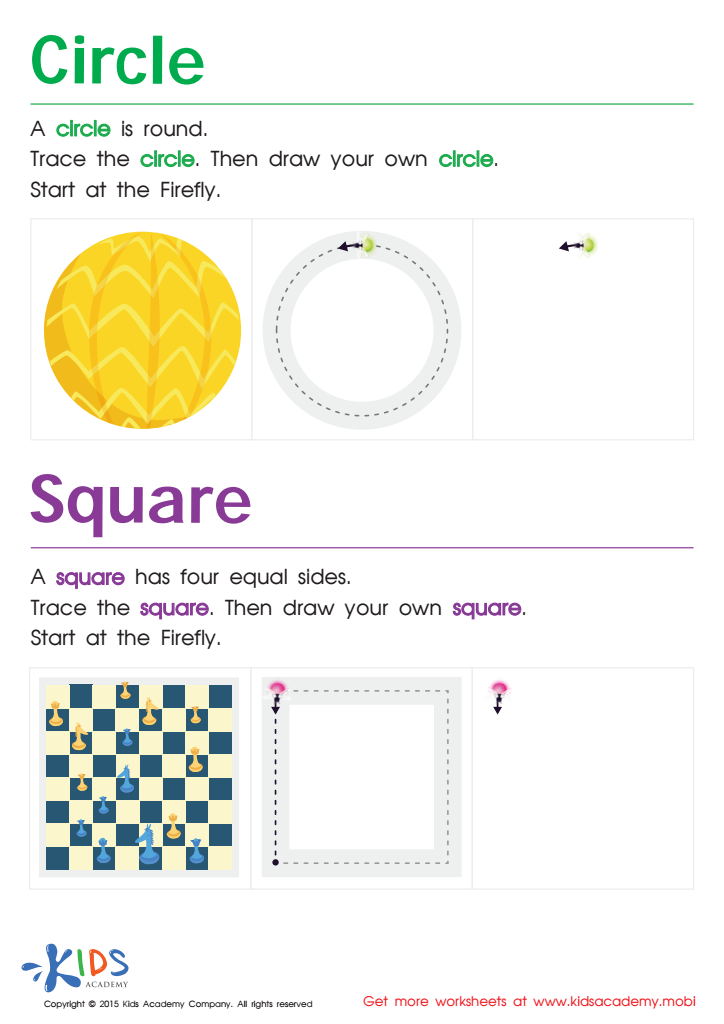
Trace And Draw a Circle And a Square Worksheet








Normal Geometry involves fundamental geometric concepts like shapes, sizes, and spatial relationships, which are vital in early childhood development, making it essential for parents and teachers to care about it for children ages 3-9. At this developmental stage, children are highly receptive to visual and spatial learning, and engaging with geometry fosters critical thinking and problem-solving skills.
When children manipulate shapes, for instance, they learn to recognize patterns and relationships, building a strong mathematical foundation. This is crucial not only for future success in higher-level math but also for everyday tasks requiring spatial awareness, such as navigating spaces or understanding the physical world. Learning geometry enhances fine motor skills as children draw, cut, and build with various materials.
Exposure to geometric concepts also improves language skills; children learn names and properties of shapes, which enriches their vocabulary and ability to describe objects and their environment. Moreover, early experiences with geometry boost confidence and curiosity about math, making learning more enjoyable and less intimidating.
Parents and teachers play a critical role by incorporating playful, hands-on geometry activities into daily routines, demonstrating the subject's relevance and creating a foundation that supports continued academic success and positive attitudes towards learning.








