Normal Consonants Worksheets for Ages 4-9 - Page 2
26 filtered results
-
From - To
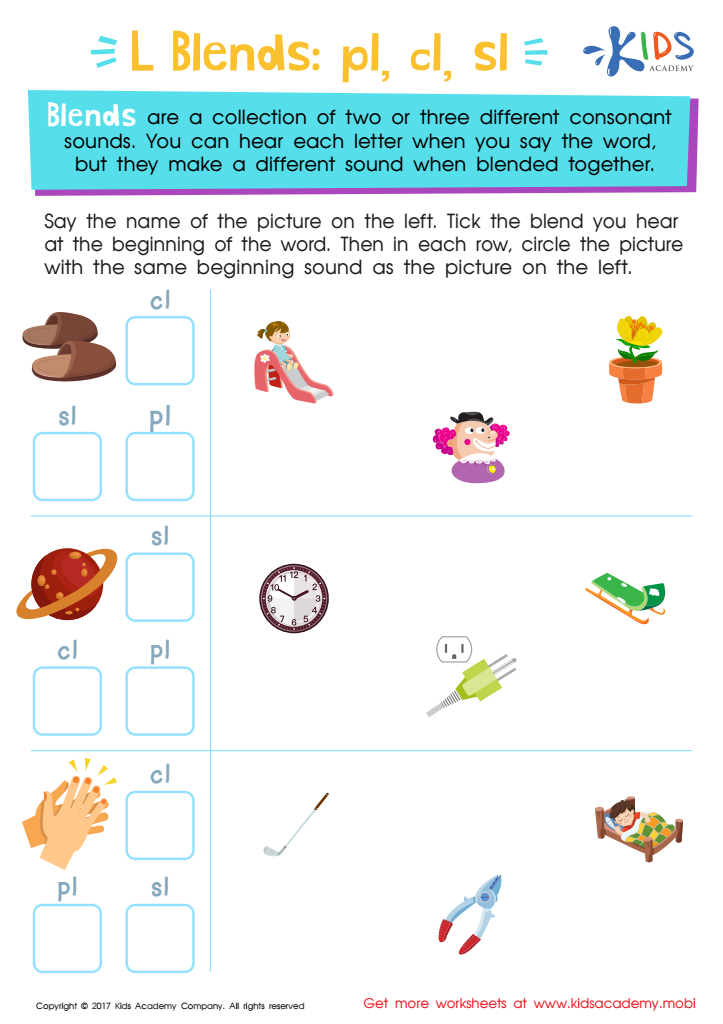
L Blends: "Pl", "Cl" and "Sl" Printable
 Assign to My Students
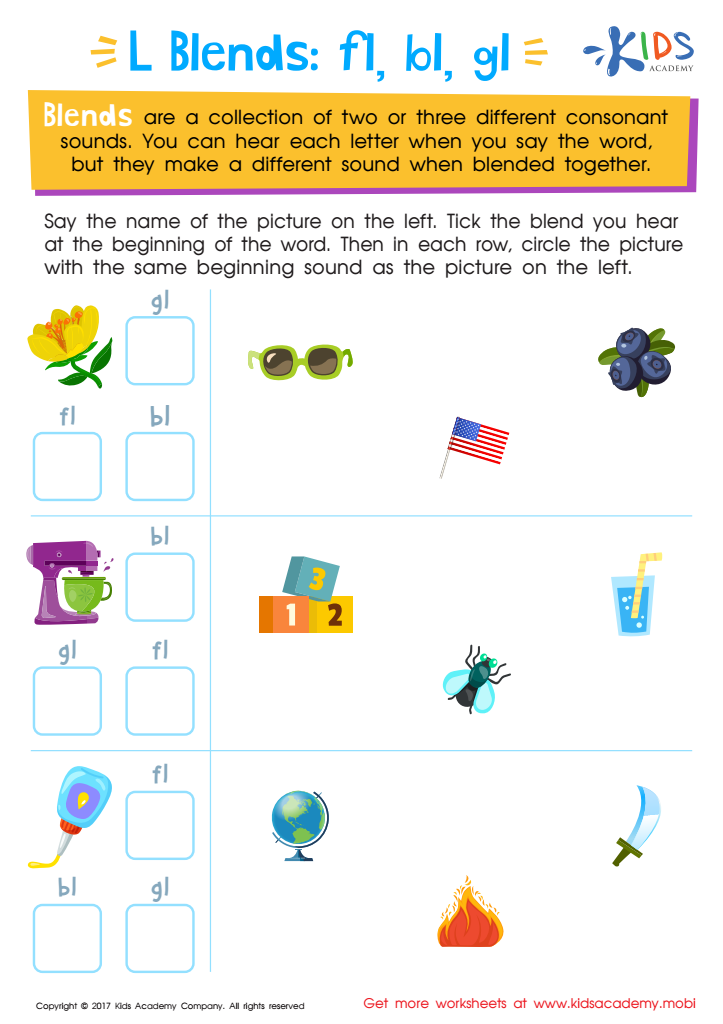
Blending Consonants: "Fl", "Bl" and "Gl" Printable



Normal consonants play a crucial role in the language development of children aged 4 to 9, making it essential for parents and teachers to prioritize their understanding and use. During this formative stage, children are building the foundation for reading and writing skills. Mastering the sounds of normal consonants allows them to manipulate words, creating a solid basis for phonemic awareness, which is critical for literacy acquisition.
When children grasp the sounds associated with normal consonants, they can decode words more effectively, leading to improved reading fluency. This, in turn, boosts their confidence and fosters a love for reading. Additionally, strong consonant recognition aids in vocabulary development, as children learn to blend sounds and explore new words.
Moreover, teachers and parents can access learning opportunities through engaging activities that enhance children's phonetic skills. These activities promote active participation and make learning enjoyable. When adults support and model the proper use of normal consonants during interactions, they significantly contribute to children's early literacy and communication skills.
Ultimately, investing time in helping children understand normal consonants nurtures their linguistic abilities, setting them up for future academic success and enriching their overall cognitive development.