Normal Middle Vowel Worksheets for Ages 4-9
4 filtered results
-
From - To
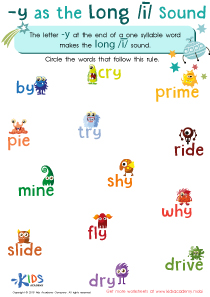
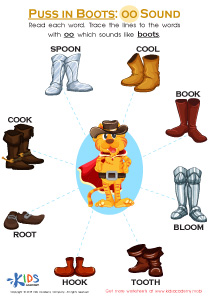
Welcome to our engaging "Normal Middle Vowel Worksheets for Ages 4-9"! Designed specifically for early learners, these worksheets help young children master the concept of middle vowels in words through fun and interactive activities. Each worksheet features bright illustrations, clear instructions, and various exercises that reinforce vowel recognition and phonemic awareness. Perfect for parents and educators, our printable resources support reading development and improve spelling skills. Whether used at home or in the classroom, these worksheets provide an enjoyable way for children to explore the world of vowels and strengthen their literacy foundations. Unlock your child's potential today!
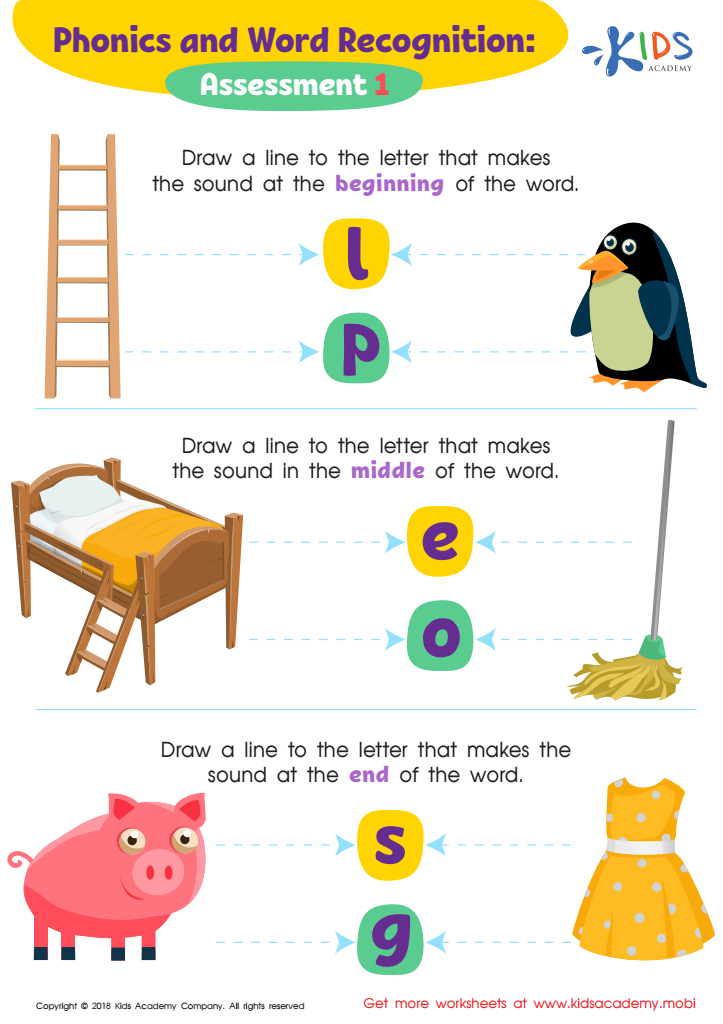
Phonics and Word Recognition: Assessment 1 ELA Worksheet
 Assign to My Students
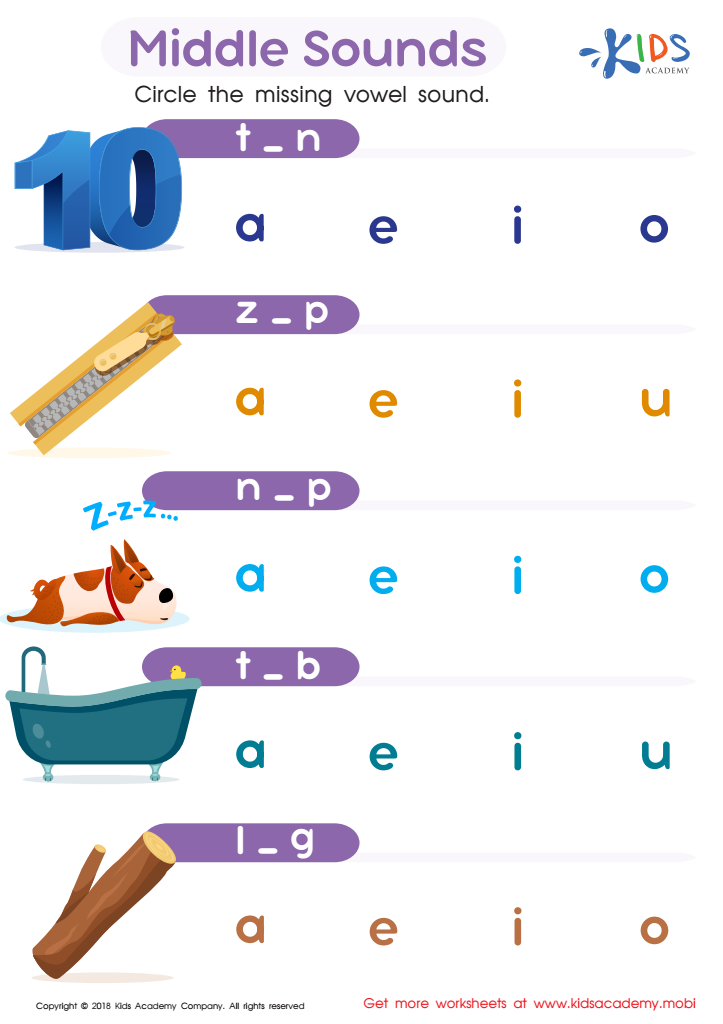
Middle Sounds Worksheet
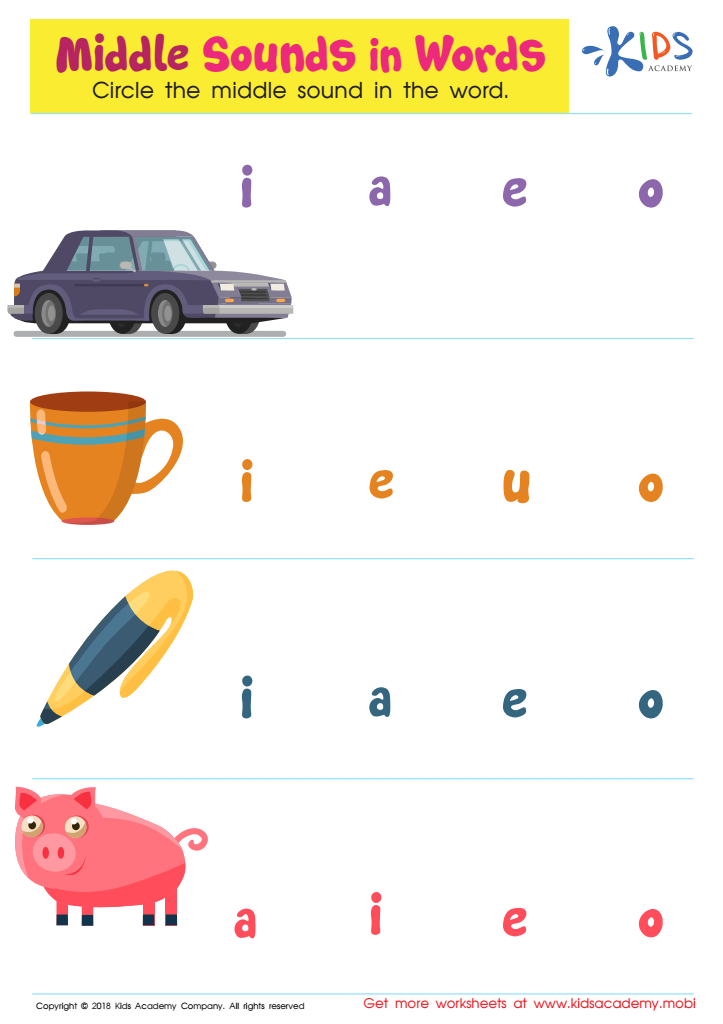
Middle Sounds in Words Worksheet
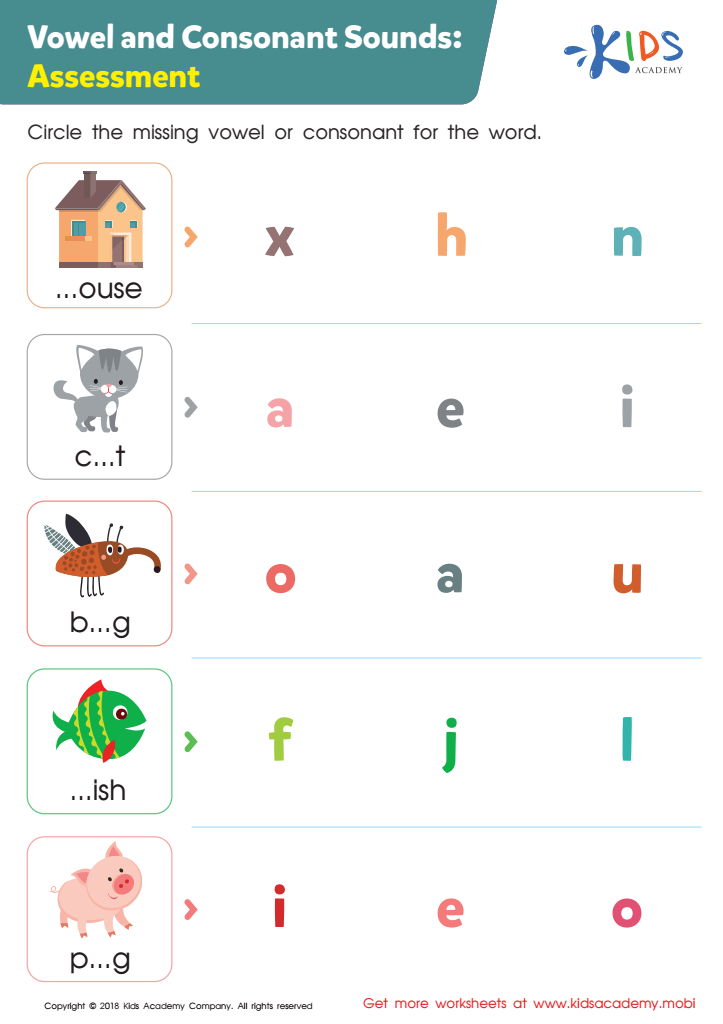
Vowel and Consonant Sounds: Assessment Worksheet



Normal middle vowels are a crucial aspect of early literacy development for children aged 4 to 9. These vowels, such as those in words like "cat," "bed," and "dog," help children build cognitive connections between sounds and letters. As parents or teachers, understanding and emphasizing these vowel sounds fosters phonemic awareness, which is fundamental for reading and writing.
When children grasp the concept of middle vowels, it enhances their ability to decode words, improving reading fluency and comprehension. This skill directly contributes to greater confidence in literacy, which is essential during these formative years. Moreover, knowledge of middle vowels helps in spelling and vocabulary development; as students learn to recognize patterns, they become more adept at forming words and using them in context.
Teaching normal middle vowels also encourages engagement and participation. By incorporating fun activities, games, and songs that focus on these vowels, educators and parents can cultivate a love for learning, setting the foundation for long-term academic success. Ultimately, a strong grasp of normal middle vowels empowers children not just in their current education but also equips them with essential skills for lifelong learning. Thus, prioritizing this aspect of language is an essential investment in a child's future educational journey.