Normal Vowel Diphthongs Worksheets for Ages 4-9 - Page 2
25 filtered results
-
From - To
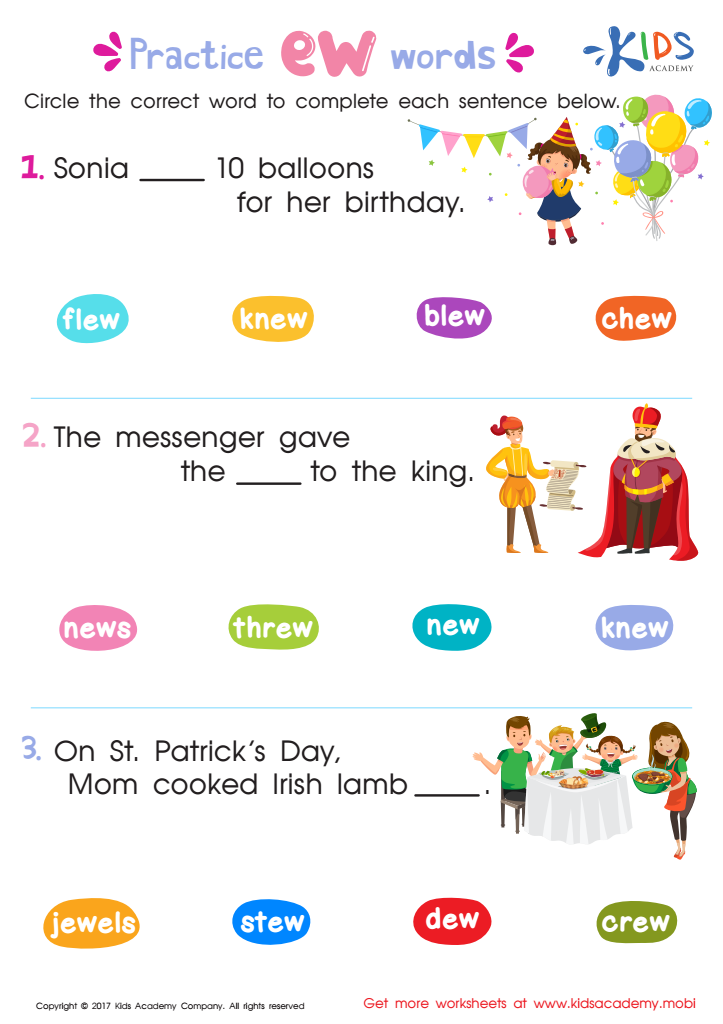
EW Words Worksheet
 Assign to My Students


Parents and teachers should care about normal vowel diphthongs for children aged 4-9 because understanding them is crucial for early literacy development. During these formative years, children acquire foundational reading and pronunciation skills, which greatly impact their future academic success. Vowel diphthongs are combinations of two vowel sounds within the same syllable, and mastering them helps children decode words more efficiently and boosts their reading fluency.
When children understand diphthongs, they can better grasp the variability and richness of the English language. This understanding aids in improving their spelling, reading comprehension, and oral communication. Since many common words contain diphthongs, failing to recognize them could lead to mispronunciations and misunderstandings, which in turn might lower a child's confidence in reading and speaking activities.
Moreover, exposure to and practice with diphthongs enriches phonemic awareness, which is the ability to hear, identify, and manipulate individual sounds in spoken words — a key skill for learning to read. By focusing on this aspect of language early on, parents and teachers give children the tools they need for more complex literacy tasks later on, such as reading for meaning, writing stories, and expanding their vocabulary. Thus, paying attention to diphthongs is a meaningful step in ensuring a child's overall linguistic development.