Normal Vowels Worksheets for Ages 4-9 - Page 4
73 filtered results
-
From - To
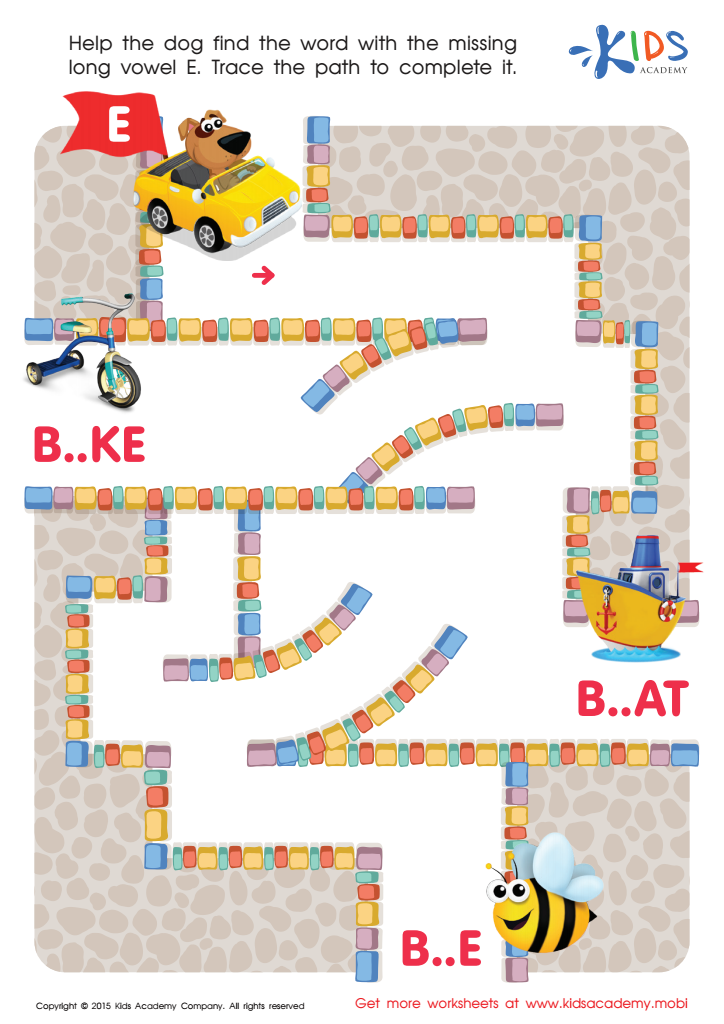
Long Vowel Sound E Worksheet
 Assign to My Students





Normal vowels—A, E, I, O, U—are the foundation of reading and writing skills in children aged 4-9. Understanding normal vowels is crucial because they provide the essential building blocks for phonemic awareness, which is the ability to hear, identify, and manipulate sounds in spoken language. When children learn to recognize and articulate vowel sounds, they become more adept at decoding words, which is a key skill for reading fluency.
Parents and teachers should care about normal vowels because they enhance vocabulary development and improve overall literacy. Mastering vowel recognition allows children to progress from simple sound blending and manipulation to reading complex texts. The knowledge of vowels also helps in spelling as well, granting them the ability to form words more accurately.
Moreover, an emphasis on vowels fosters confidence in children as they step into the world of language, encouraging a love for reading and storytelling. Creating engaging and playful experiences around vowel sounds, like songs and games, can make learning enjoyable and effective. Investing time in teaching normal vowels ultimately sets a strong educational foundation, benefiting children's academic journeys and empowering them to become proficient communicators.