Normal Addition and Subtraction Word Problems Worksheets for Ages 4-9 - Page 2
29 filtered results
-
From - To
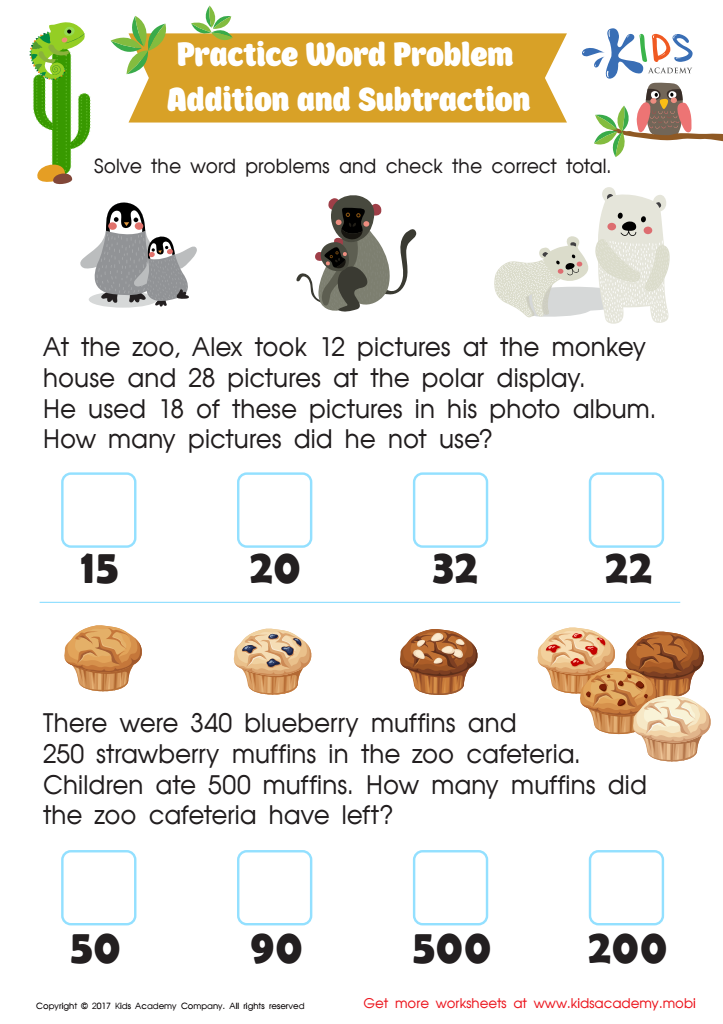
Addition and Subtraction: Word Problems Worksheet
 Assign to My Students
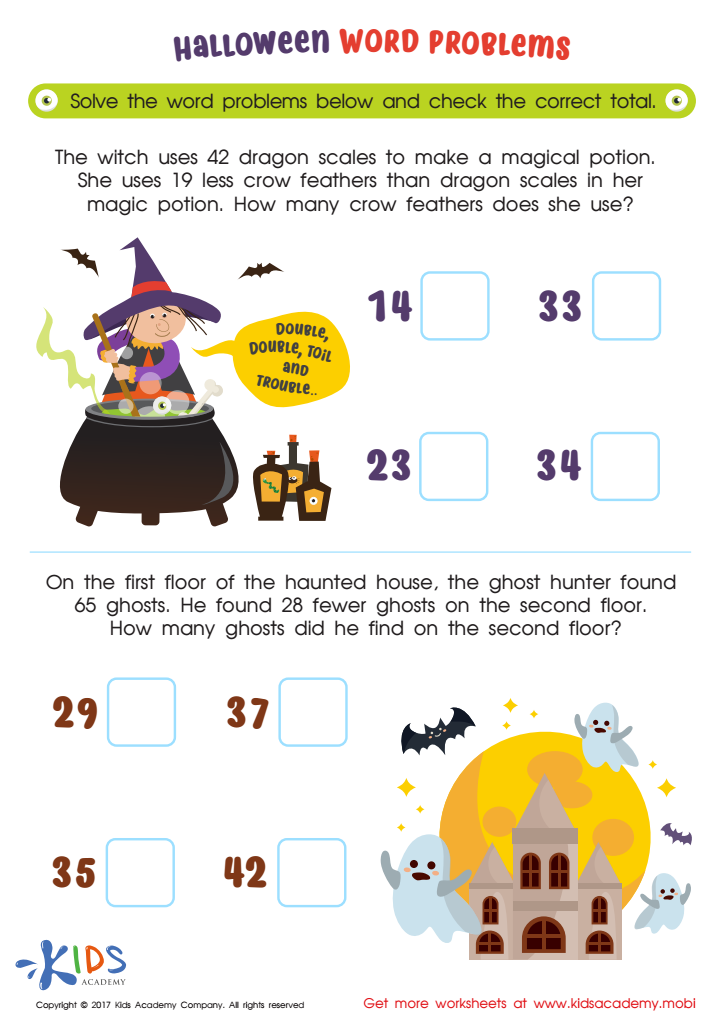
Halloween Word Problems Printable
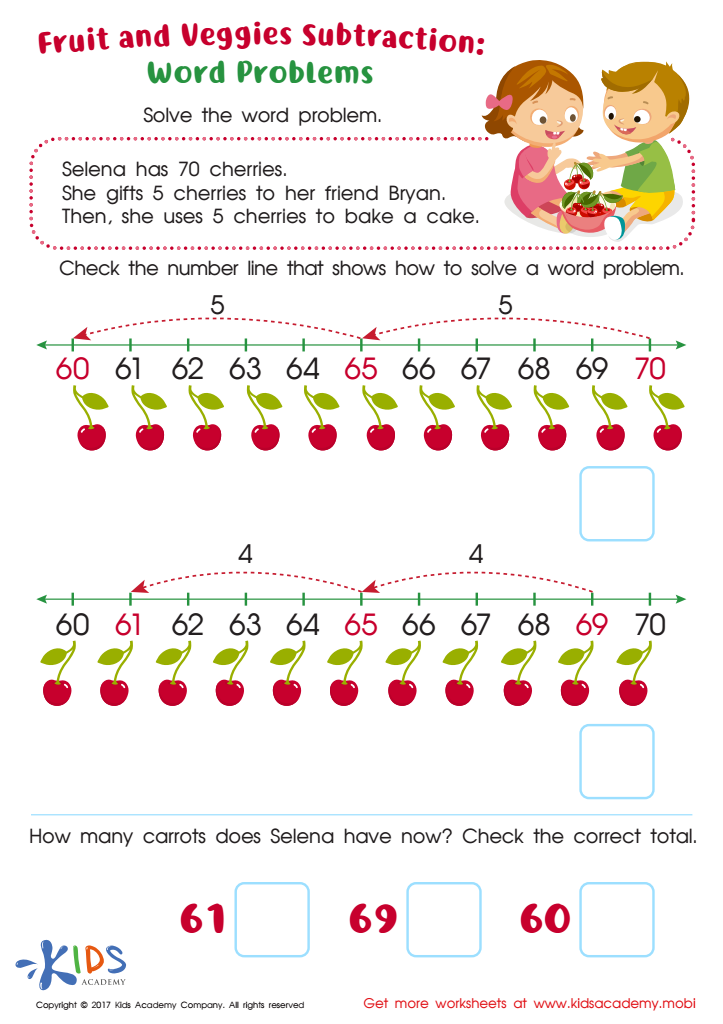
Subtraction Word Problems Free Printable
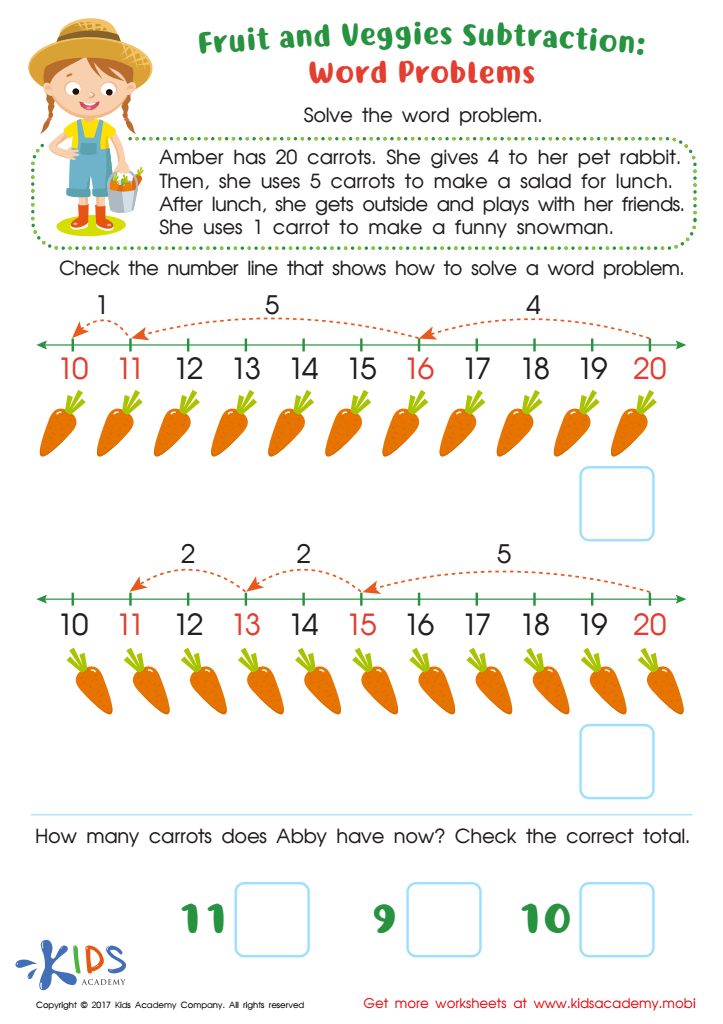
Subtraction Word Problems Printable
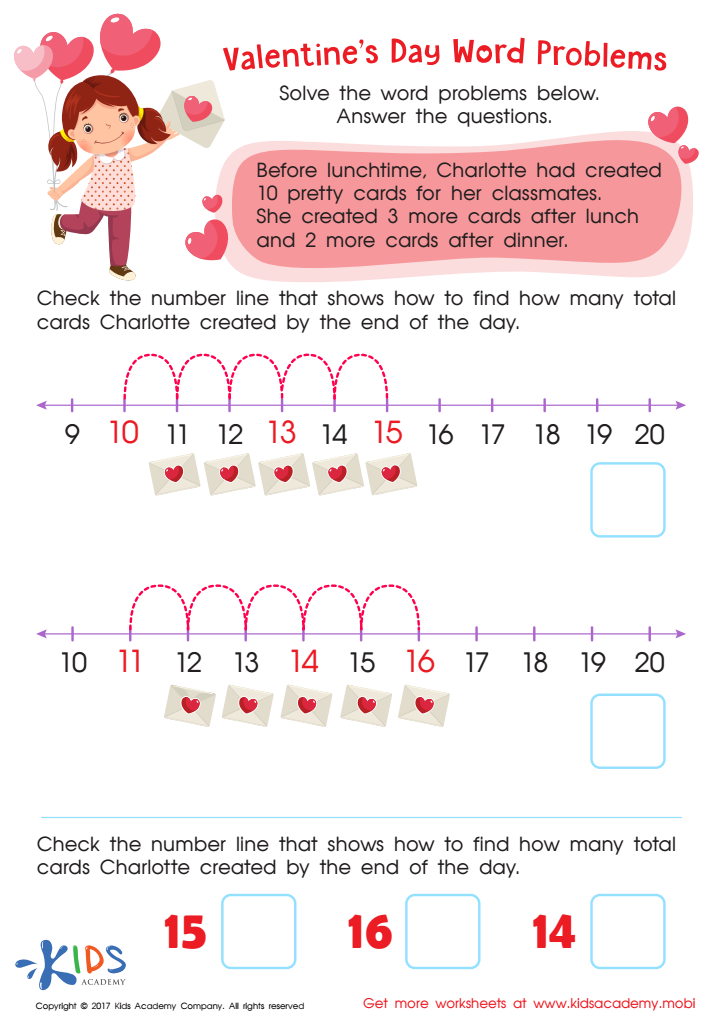
Valentines Day Word Problem Worksheet








Parents and teachers should prioritize normal addition and subtraction word problems for children aged 4-9 due to their fundamental role in early math proficiency and cognitive development. At this formative stage, children develop the foundational skills crucial for higher mathematics and problem-solving abilities. Engaging with addition and subtraction word problems allows them to apply abstract math concepts to real-world scenarios, making the learning process tangible and relevant.
These early math problems help children develop essential critical thinking and reasoning skills. By navigating the logical steps required to solve word problems, they enhance their ability to follow sequences, recognize patterns, and apply taught strategies, ultimately building a solid base for more advanced mathematical concepts.
Moreover, solving word problems supports language development by encouraging children to interpret text and comprehend scenarios, thus promoting dual-literacy in math and language arts. This dual integration is instrumental as most subjects intertwine various skills.
Lastly, a positive mathematic foundation reduces math anxiety, often seen in older students, by nurturing confidence and competence early on. It creates a climate of inquisitiveness and resilience, fostering a growth mindset advantageous well beyond the classroom. Thus, early mastery of these problems equates to nurturing well-rounded learners who are better prepared for future academic and life challenges.