Normal Place Value Worksheets for Ages 6-8 - Page 2
43 filtered results
-
From - To
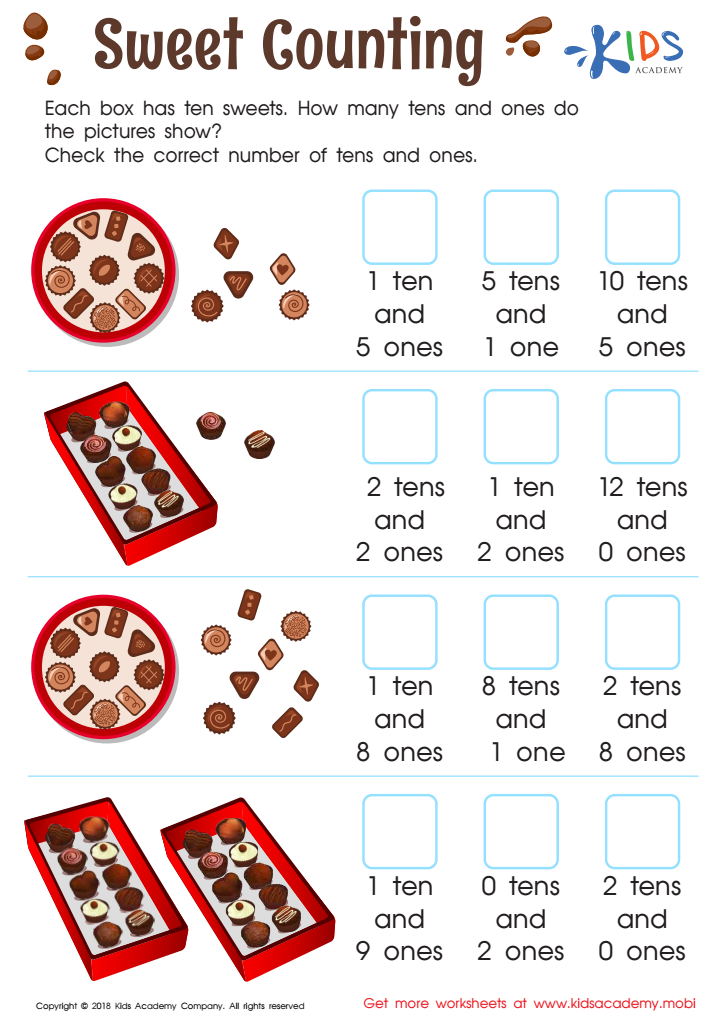
Sweet Counting - Part 2 Worksheet
 Assign to My Students
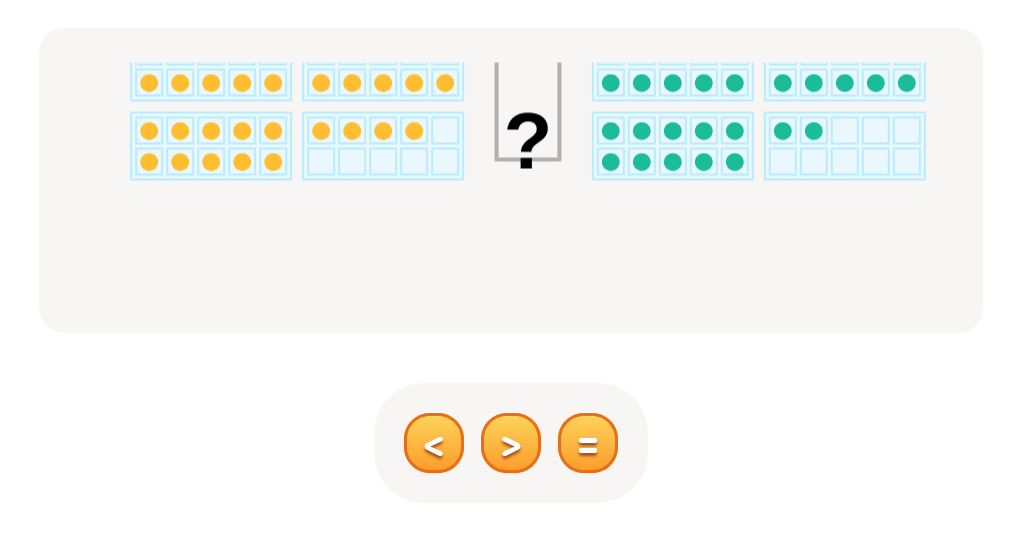

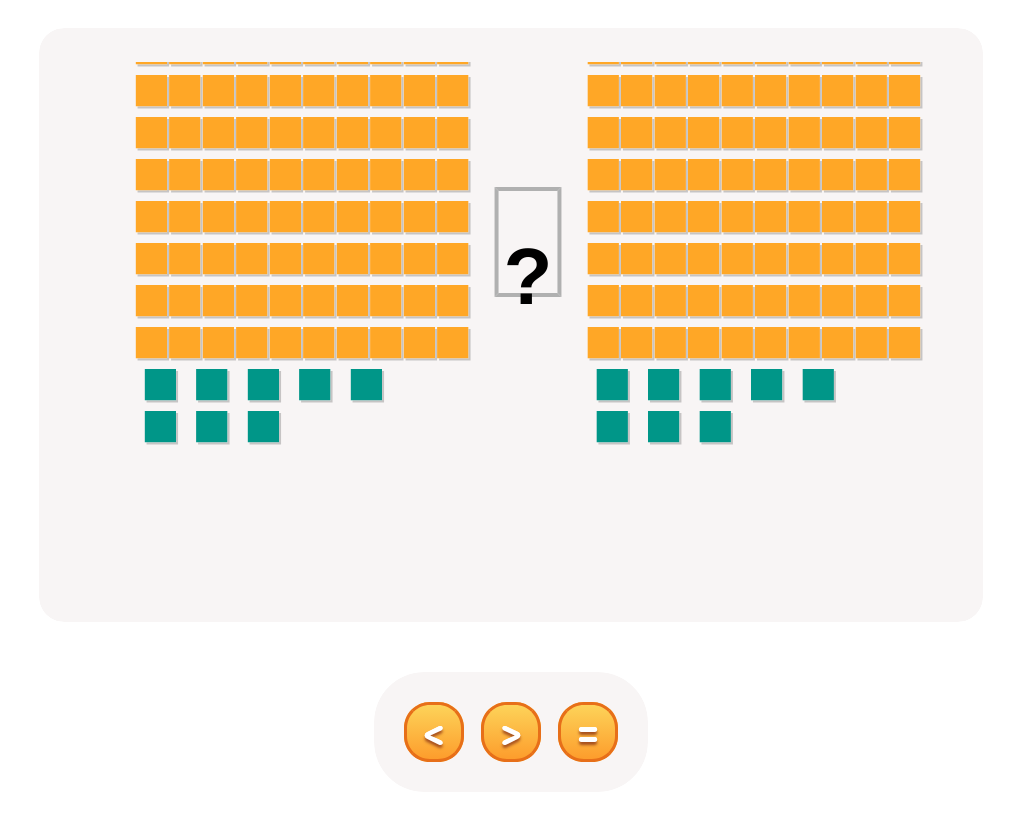
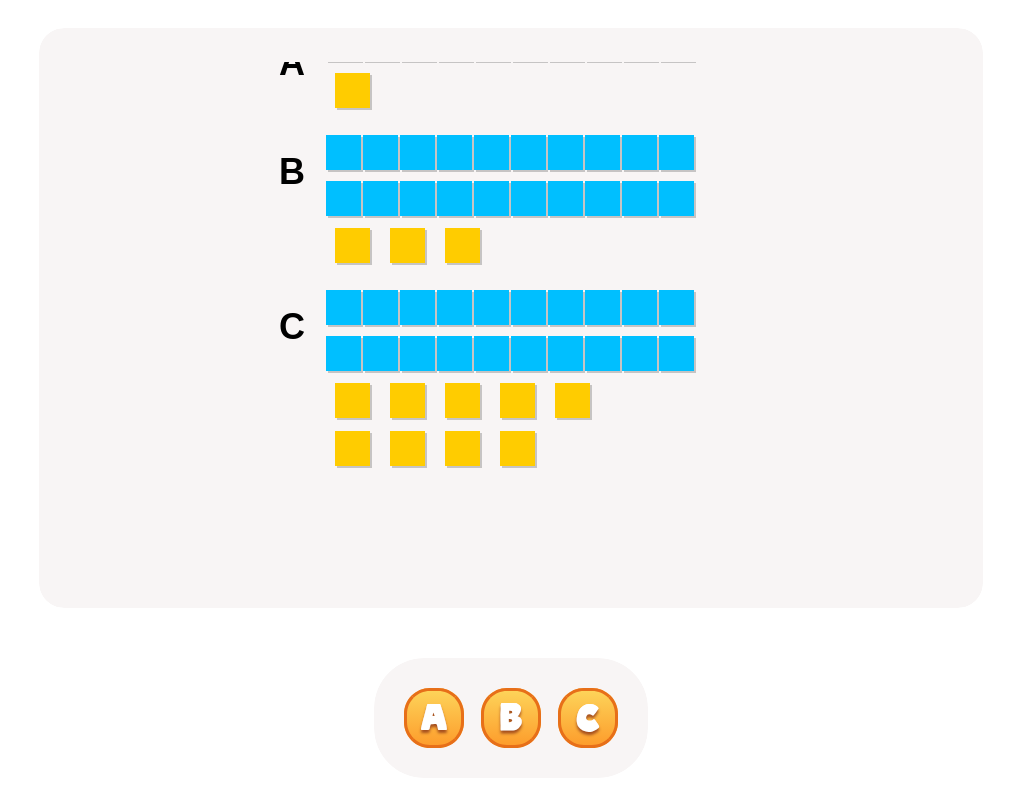
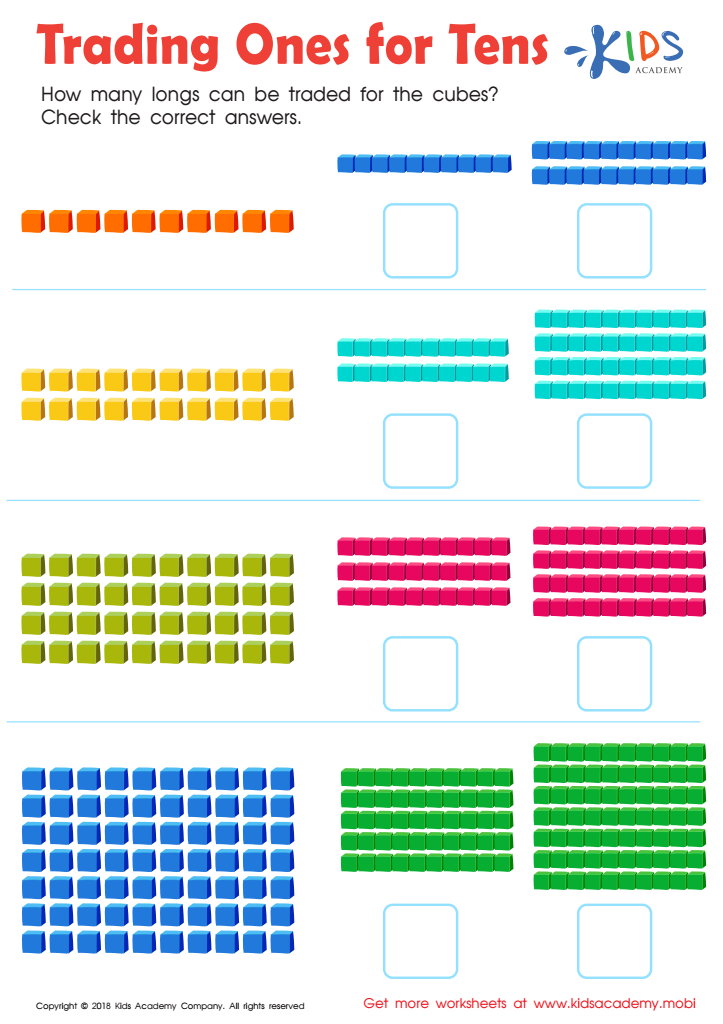
Trading Ones for Tens Worksheet: Part 2
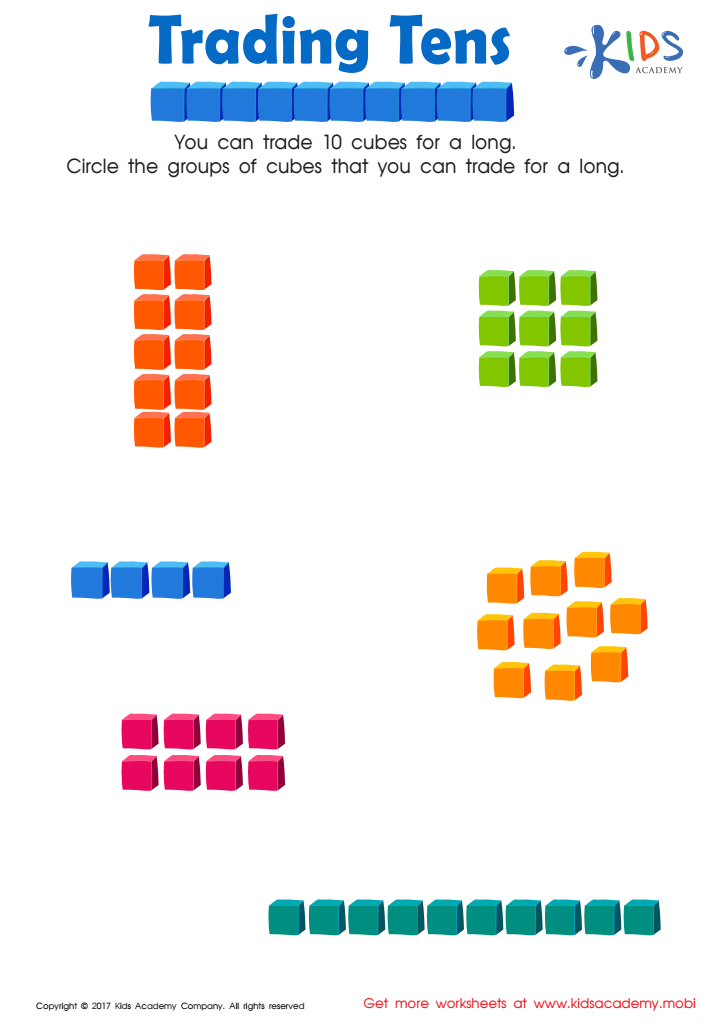
Trading Tens Worksheet
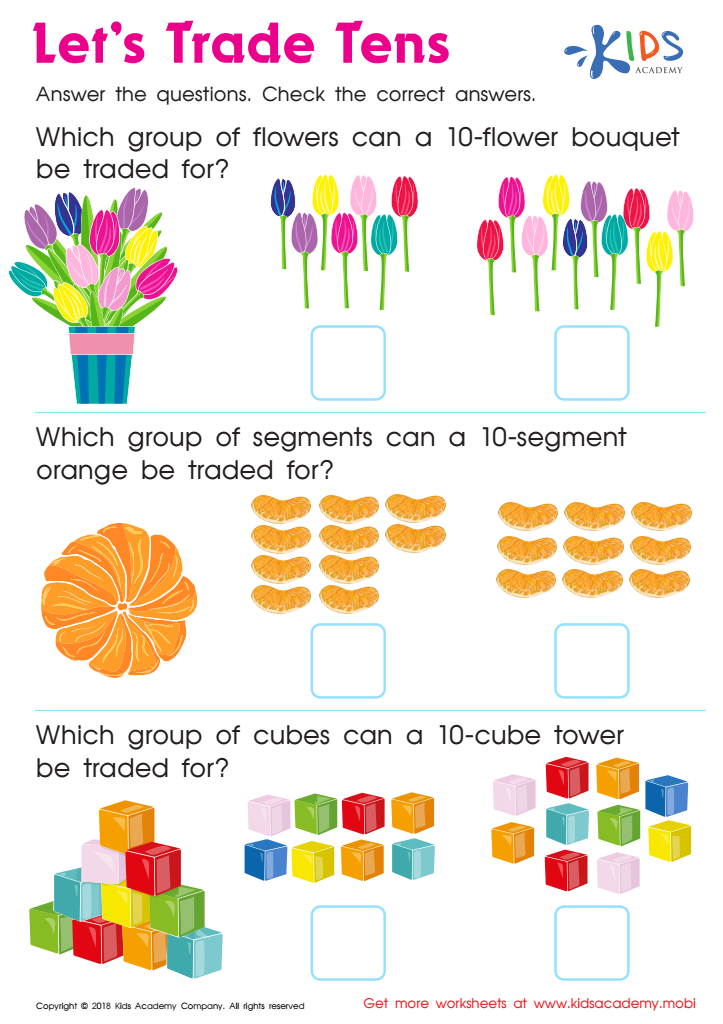
Lets Trade Tens Worksheet
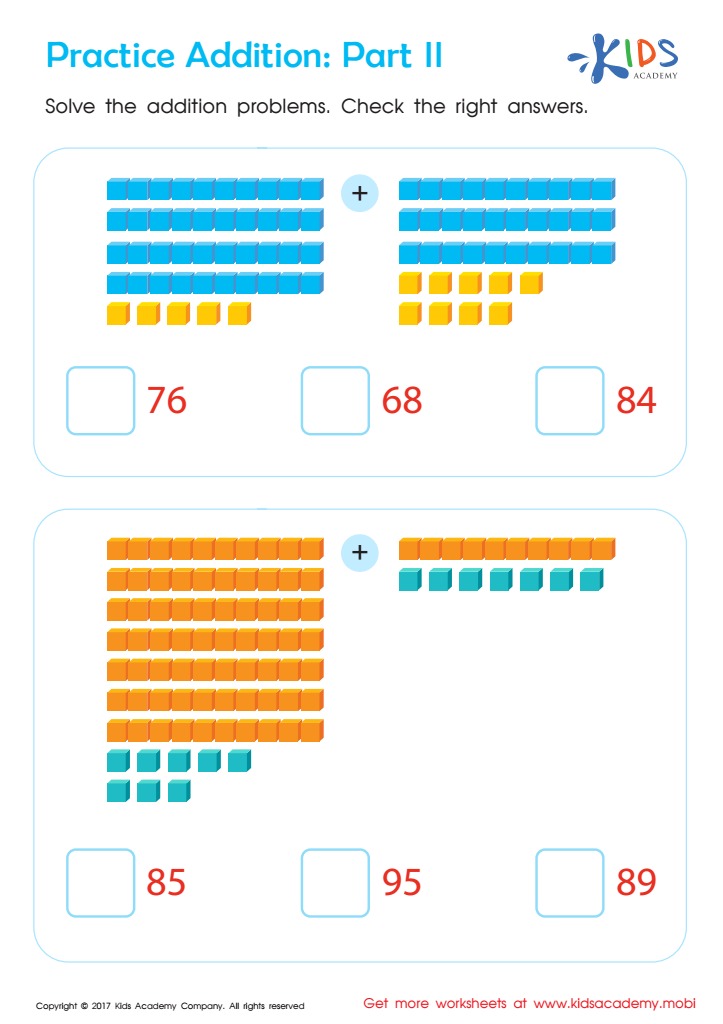
Practice Addition: Part 2 Worksheet
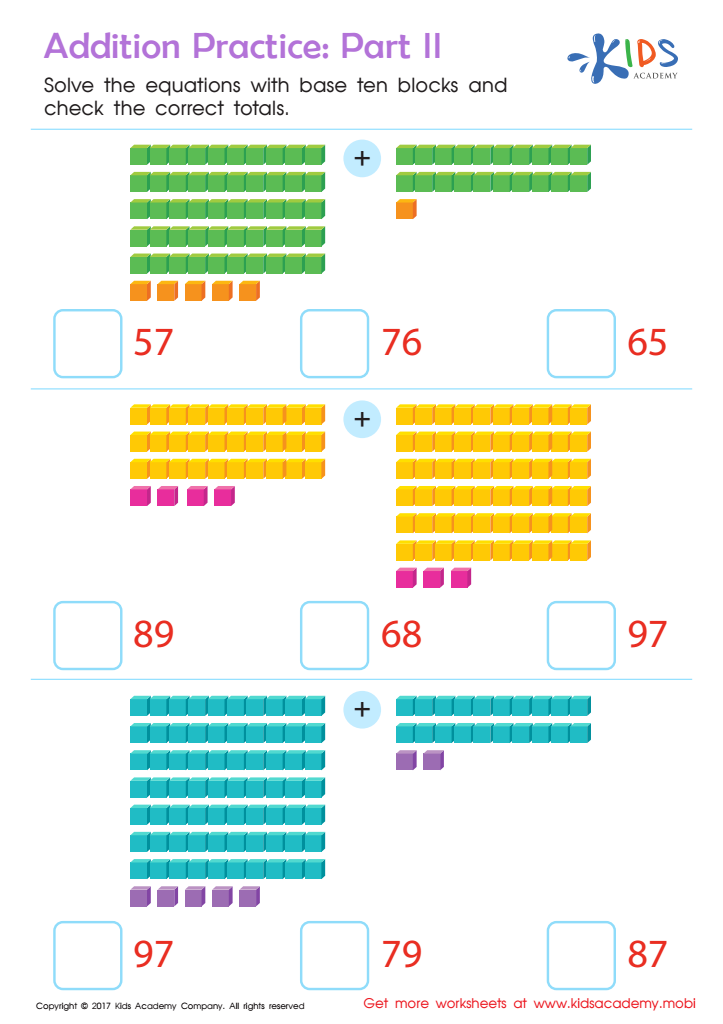
Addition Practice Sheet: Part 2
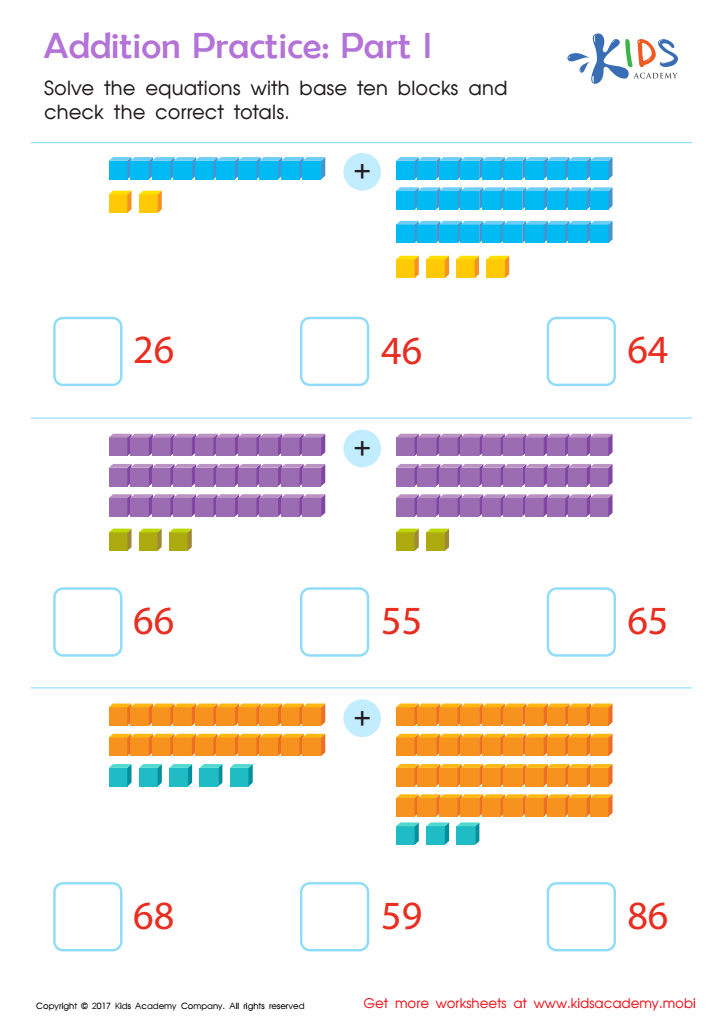
Addition Practice Sheet: Part 1
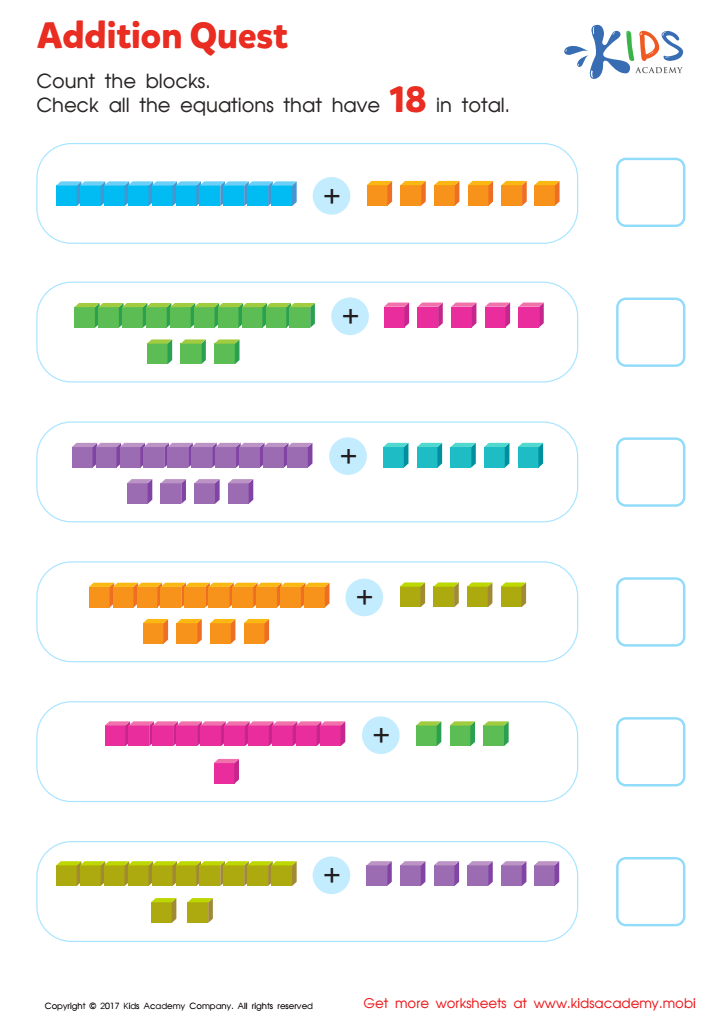
Addition Quest Worksheet: Part 2
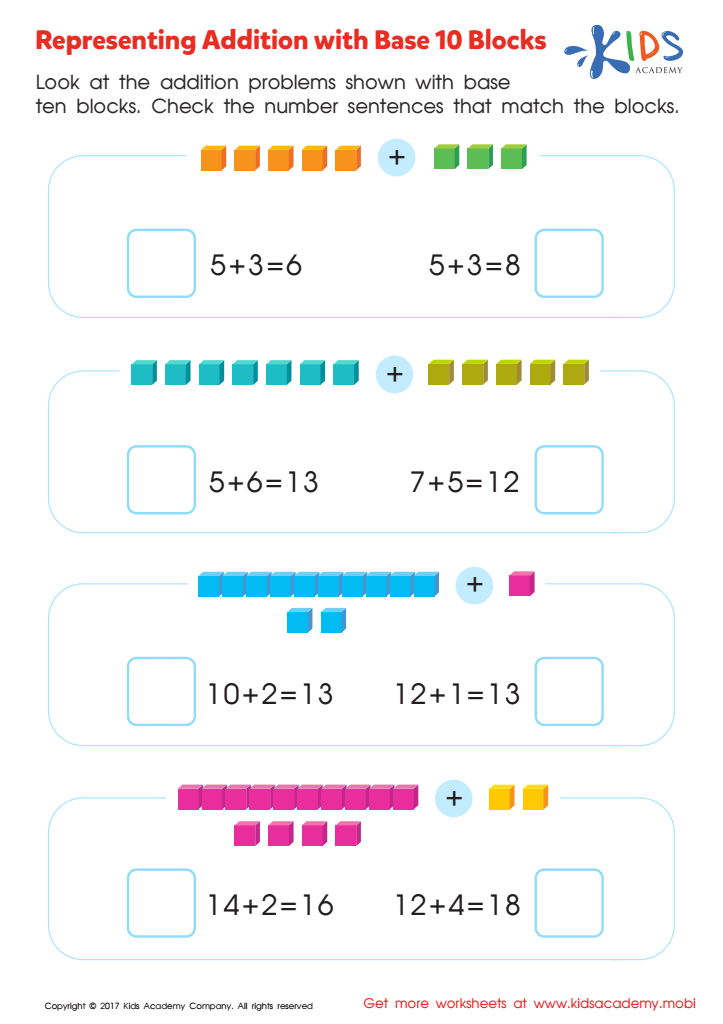
Representing Addition with Base 10 Blocks Worksheet
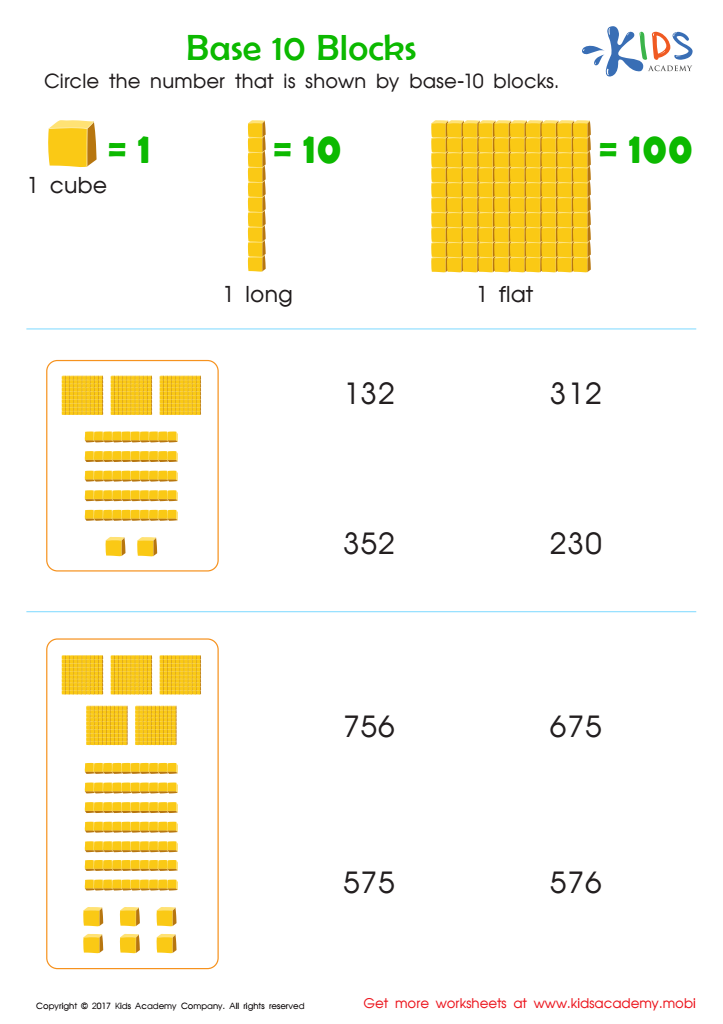
Base Ten Blocks Worksheet
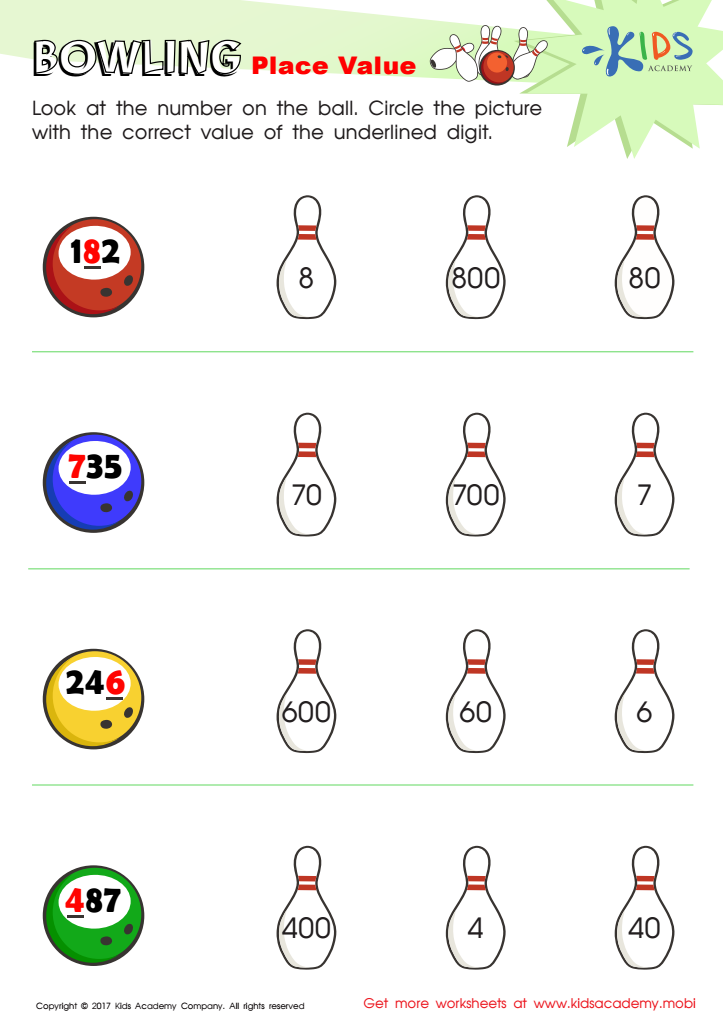
Place Value Worksheet
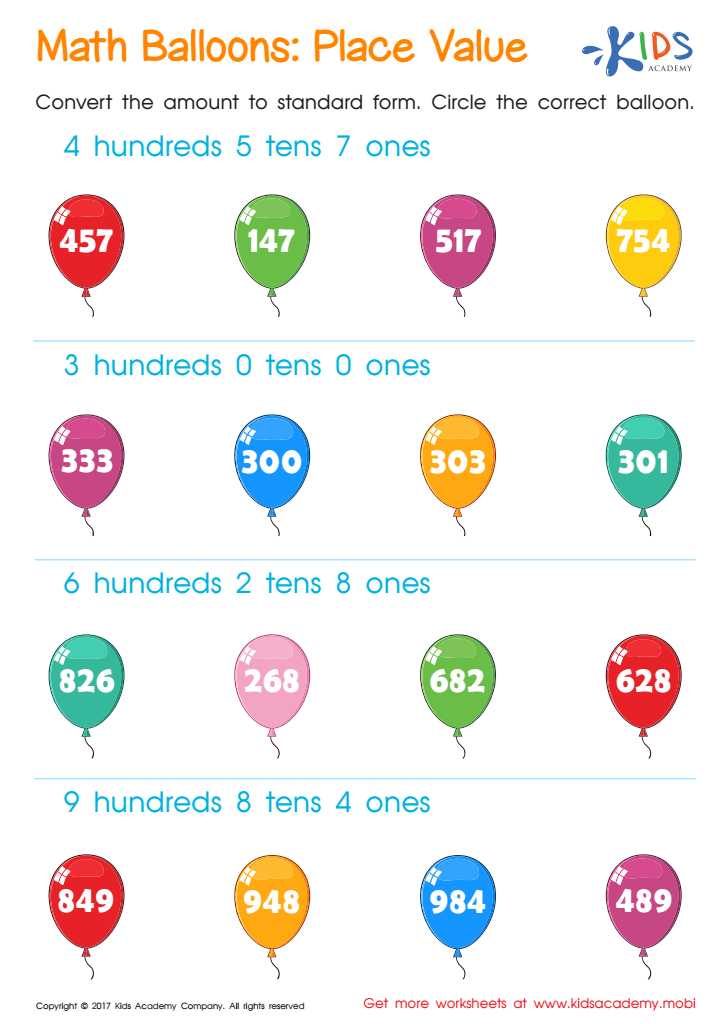
Place Value Printable Worksheet
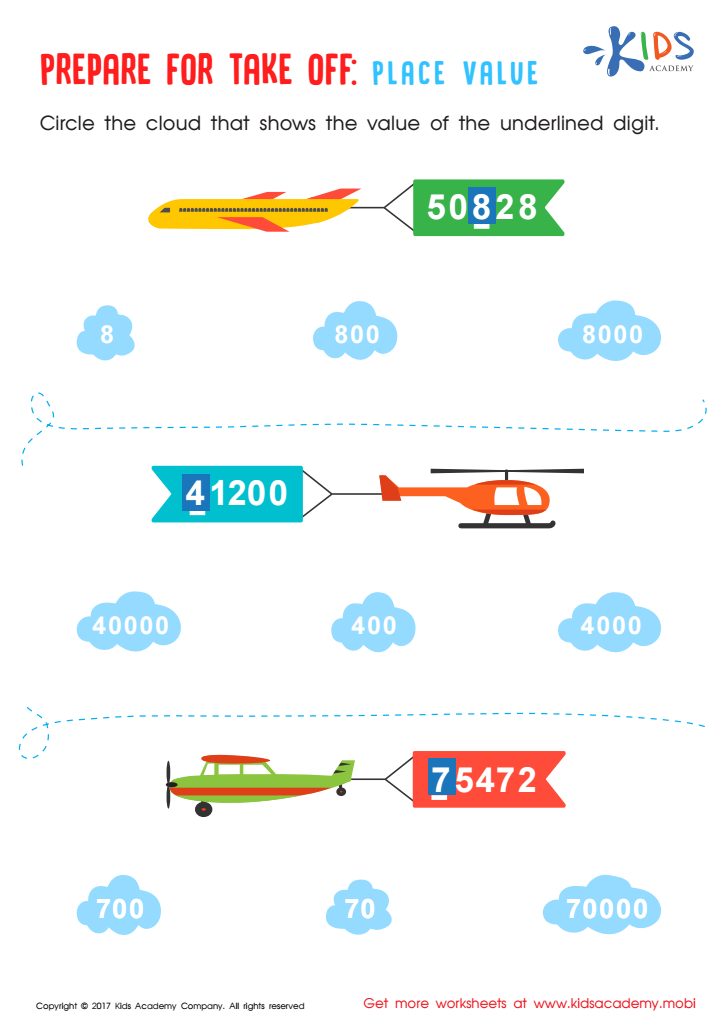
Free Place Value Worksheet for 3rd Grade
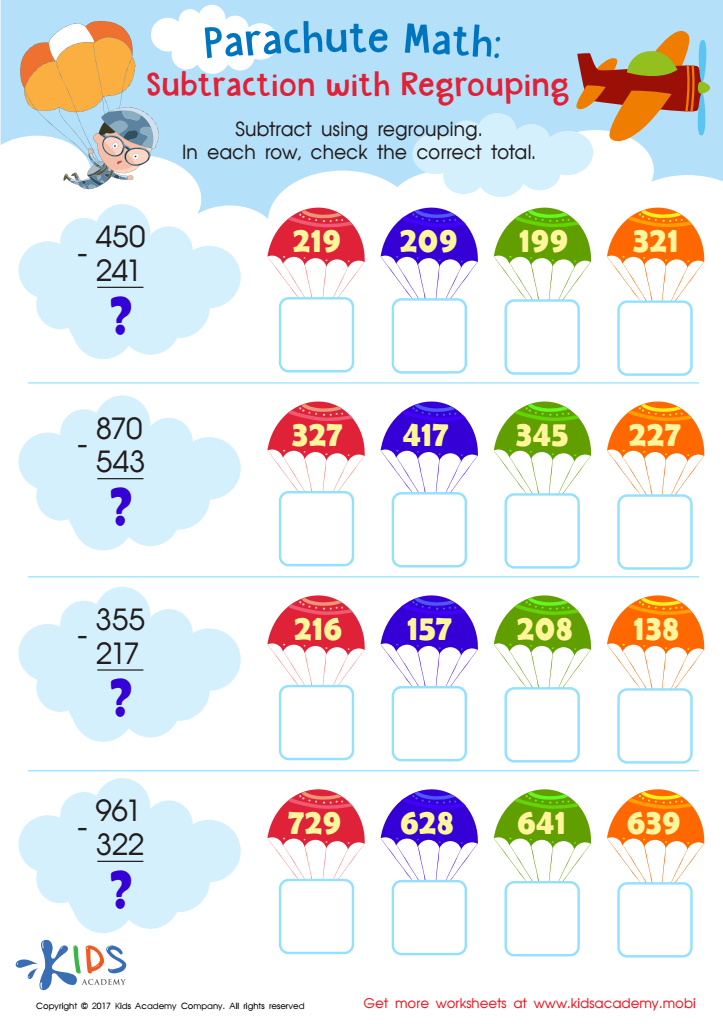
Subtraction with Regrouping for 3rd Grade Worksheet
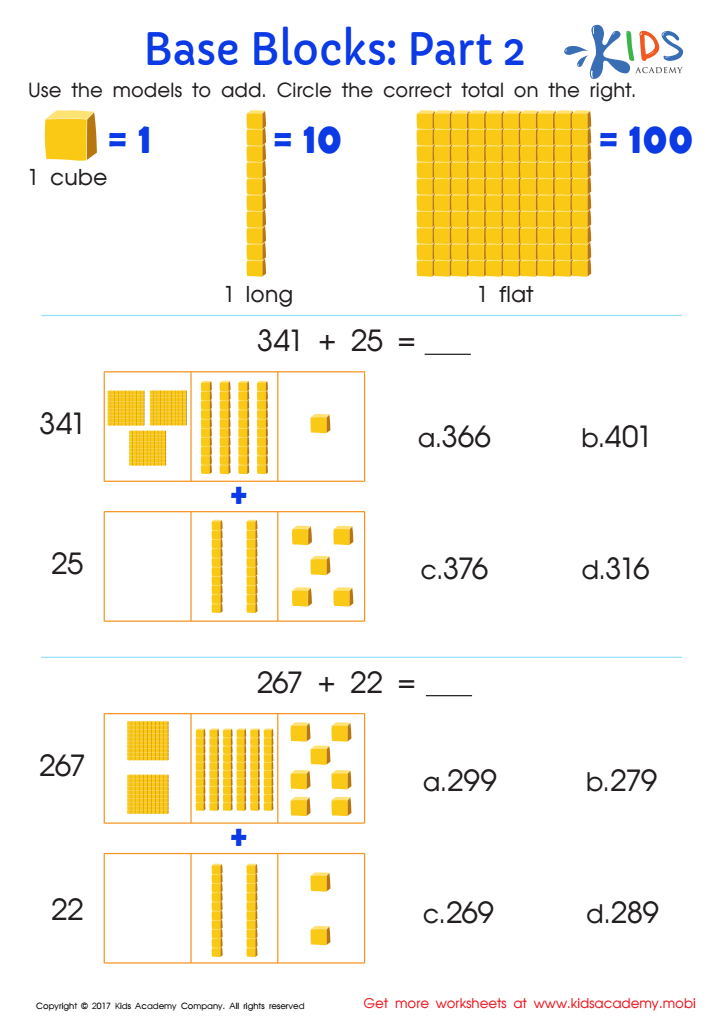
Base Ten Blocks Worksheet: Part 2
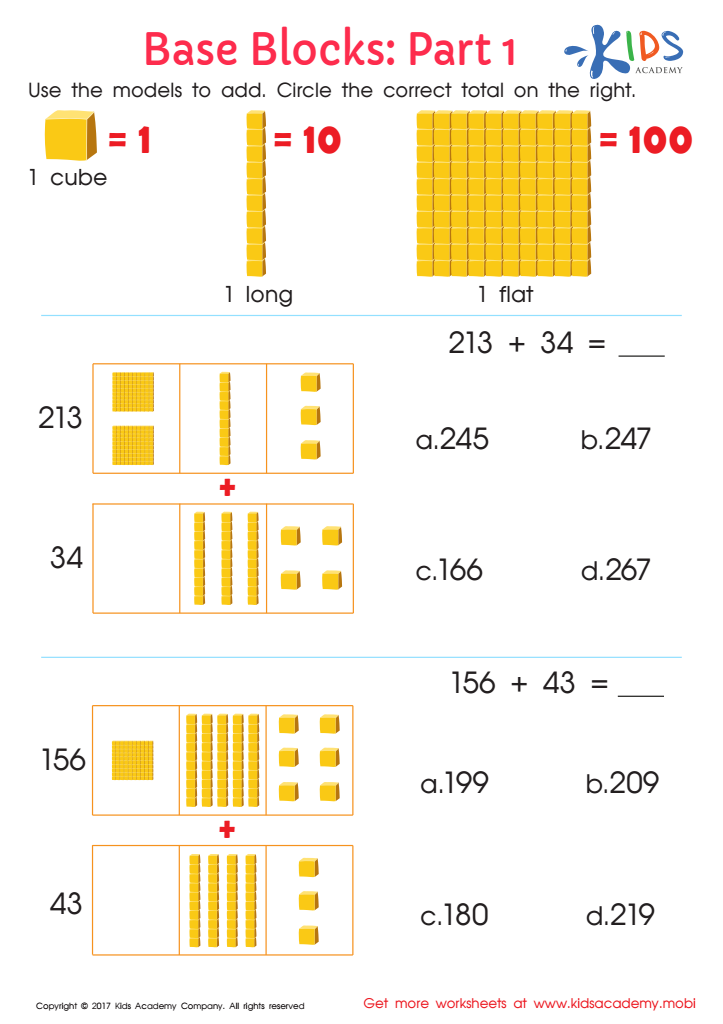
Base Ten Blocks Worksheet: Part 1
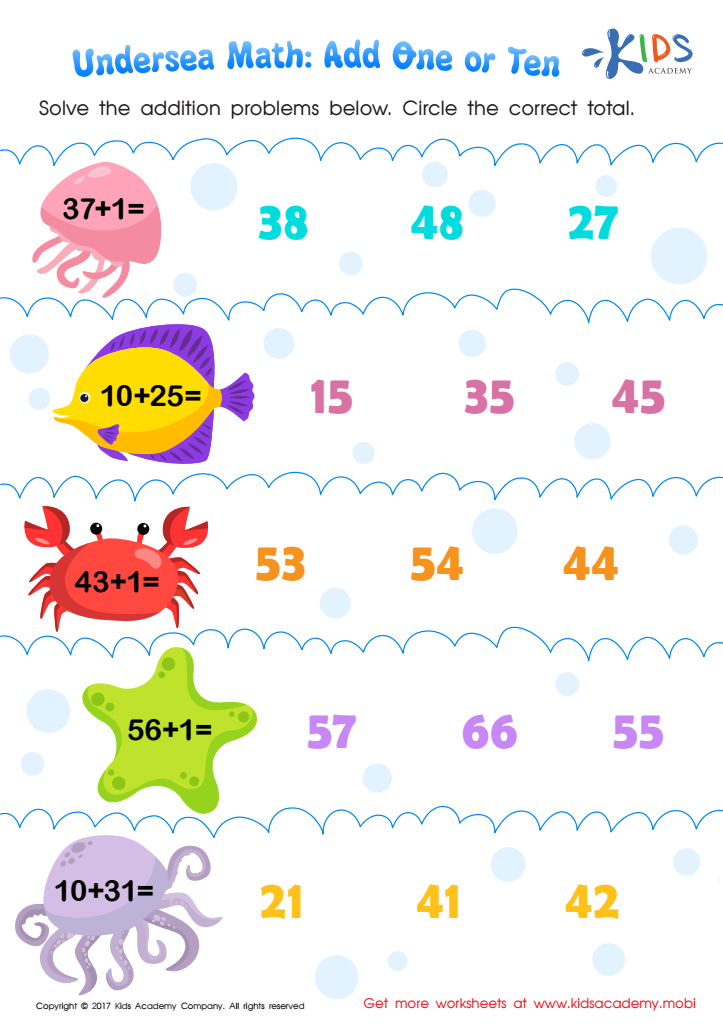
Undersea Math Worksheet
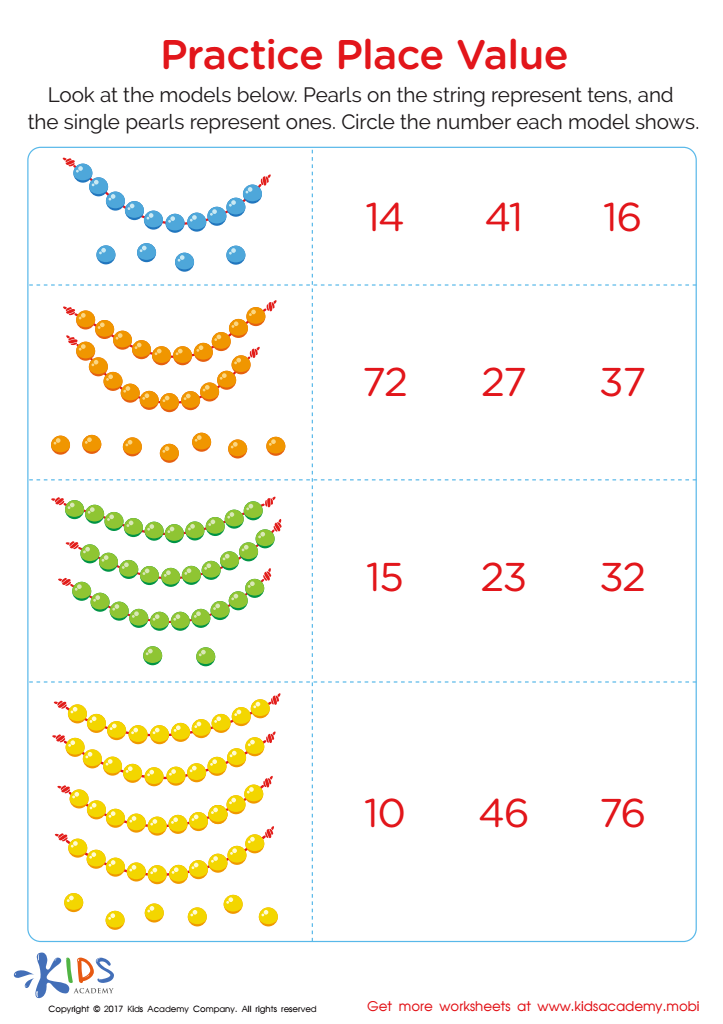
Practice Place Value Printable
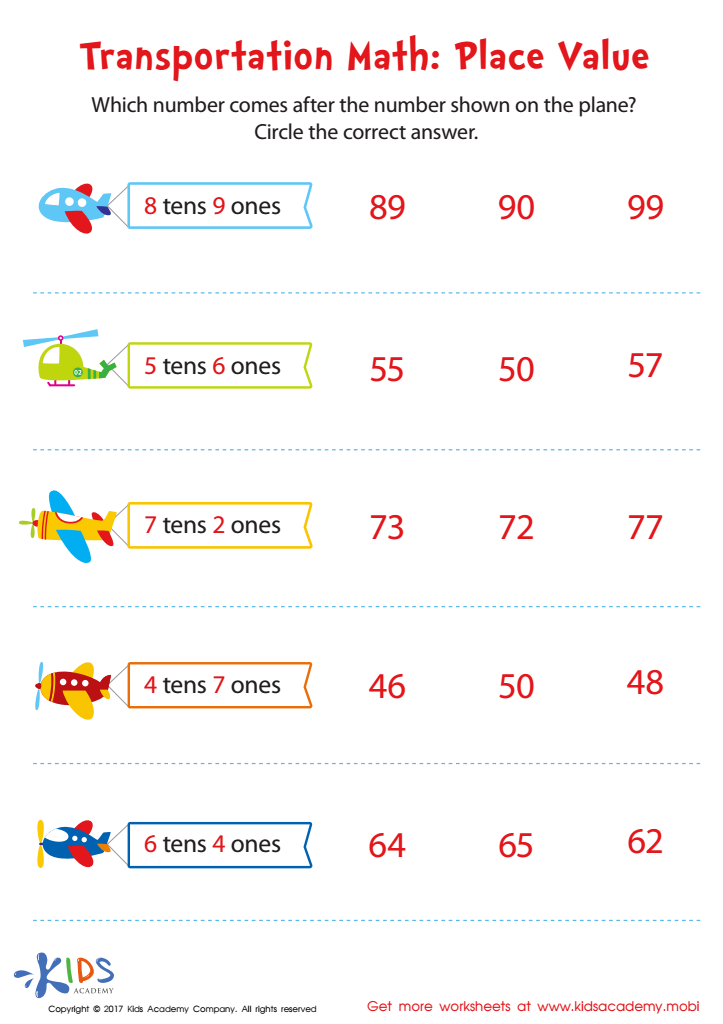
Transportation Math Printable








Parents and teachers should care about normal place value for ages 6-8 because it forms the foundation for all future mathematical understanding. Mastering place value is critical as it enables children to comprehend the value of each digit in a number based on its position, thereby allowing them to move beyond simple counting to more complex mathematical operations like addition, subtraction, multiplication, and division. For instance, understanding that in the number 123, the digit '1' represents 100, '2' represents 20, and '3' represents 3, equips children with the numeracy skills necessary for higher-level math concepts.
Moreover, a strong grasp of place value enhances problem-solving abilities and logical thinking. Kids who understand place value can break down numbers into more manageable parts, making mental calculation easier and more accurate. This understanding also underpins estimation skills, which are vital for everyday tasks and real-life situations such as shopping or time management.
Lastly, confidence in math at a young age tends to promote a positive attitude towards the subject, which is essential for lifelong learning. Early proficiency in place value supports not just academic achievement but also empowerment and independence, encouraging children to approach math challenges with enthusiasm and confidence. Ultimately, setting this strong foundation early facilitates educational success and nurtures a lifelong love for learning and critical thinking.