Normal Good Citizenship Worksheets for 6-Year-Olds
6 filtered results
-
From - To
Explore our "Normal Good Citizenship Worksheets for 6-Year-Olds," designed to introduce young learners to the values of responsibility, kindness, and respect. These engaging worksheets help children understand the importance of being good citizens in their communities. With fun activities, colorful illustrations, and age-appropriate exercises, kids will learn about sharing, helping others, and following rules. Our carefully crafted materials not only promote social skills but also encourage critical thinking and creativity. Ideal for home or classroom use, these worksheets ensure that children develop a strong foundation in good citizenship and character building. Perfect for fostering a sense of community and belonging!
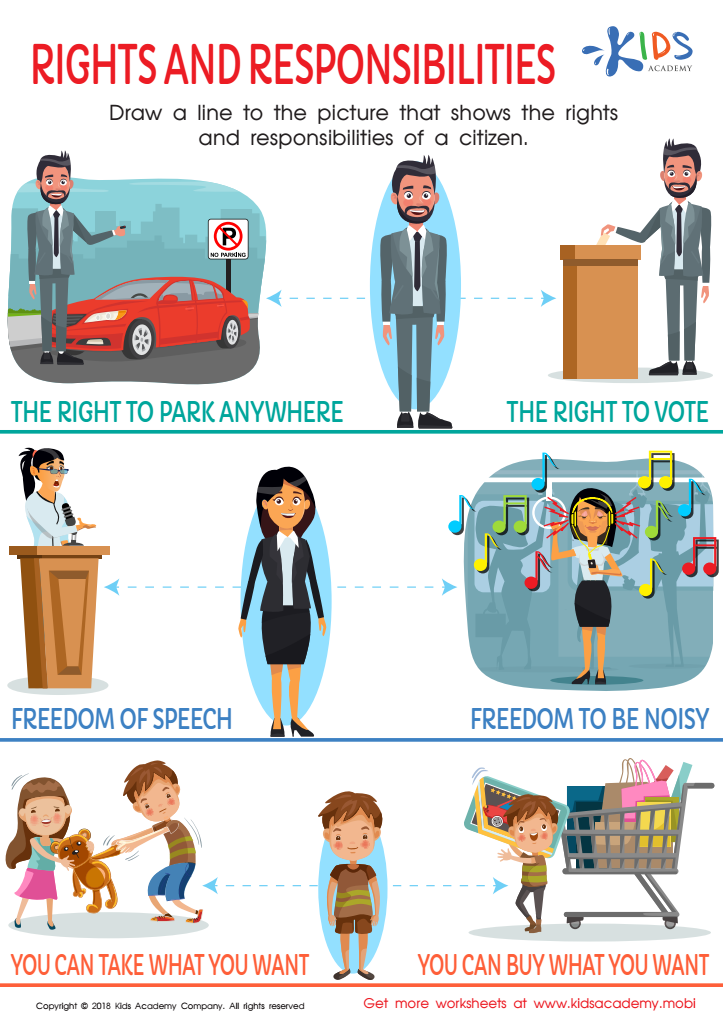
Rights and Responsibilities Worksheet
 Assign to My Students
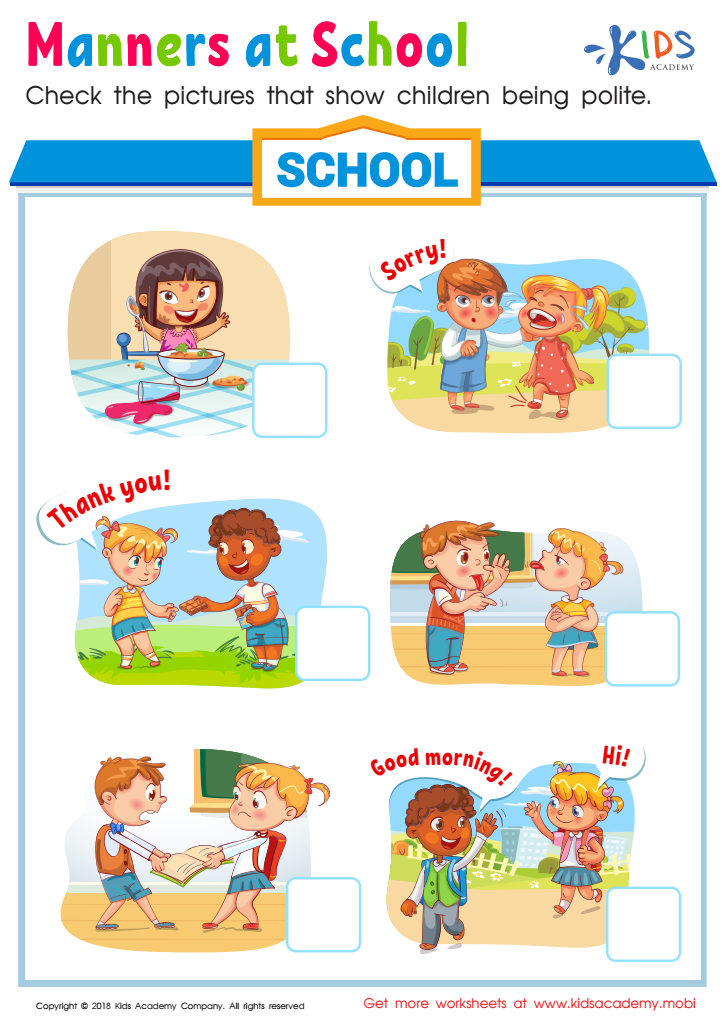
Manners at School Worksheet
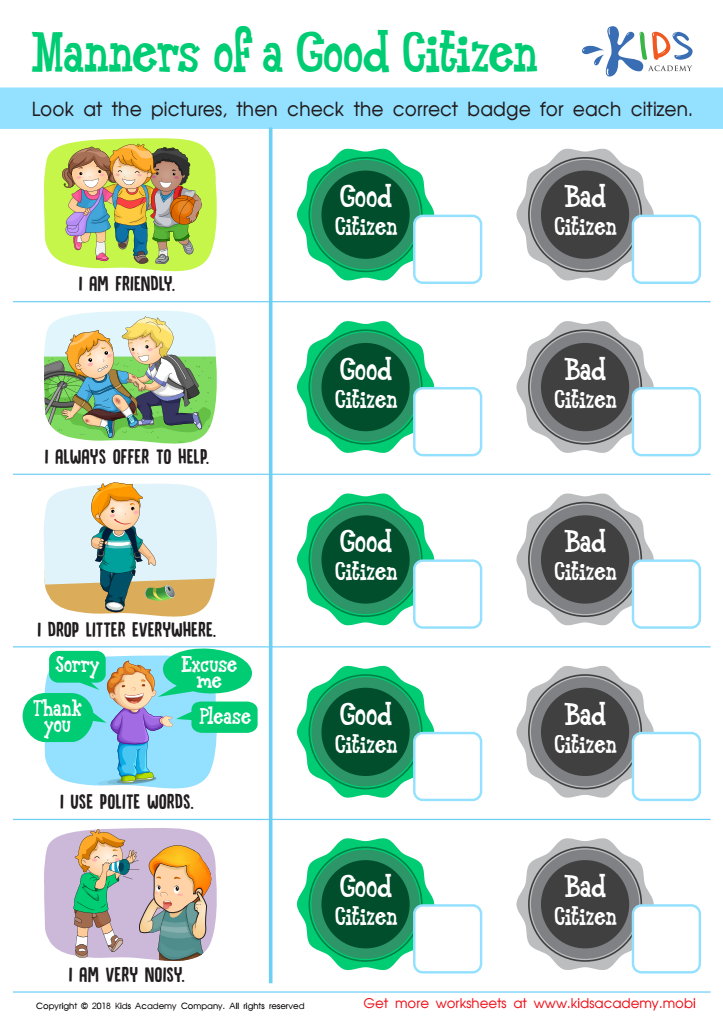
Manners of a Good Citizen Worksheet
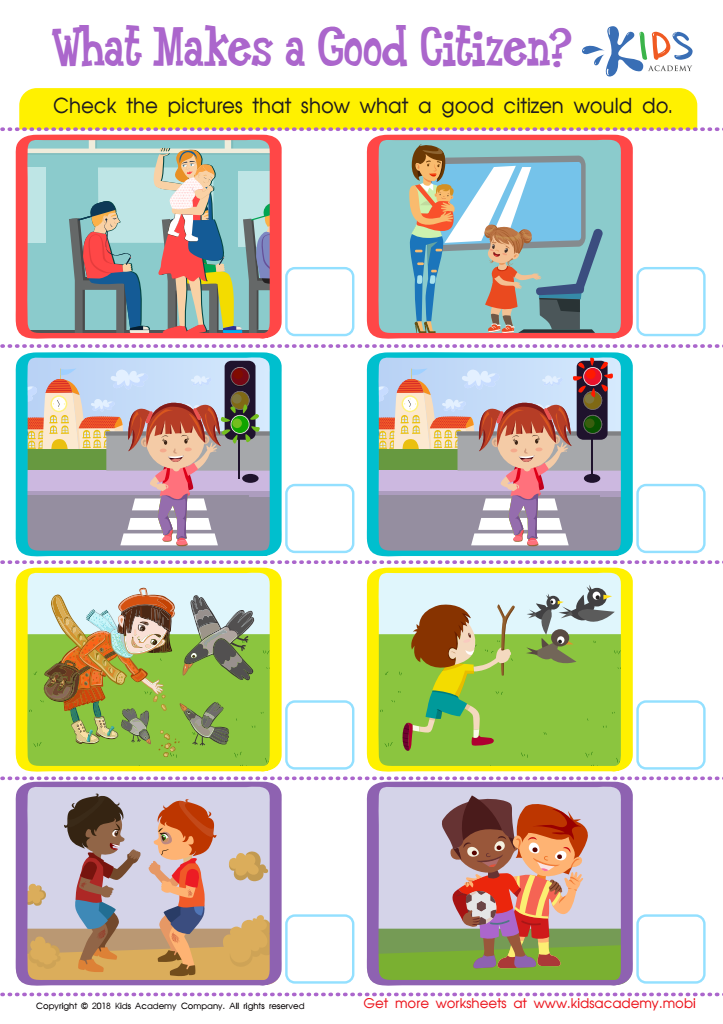
What Makes a Good Citizen? Worksheet
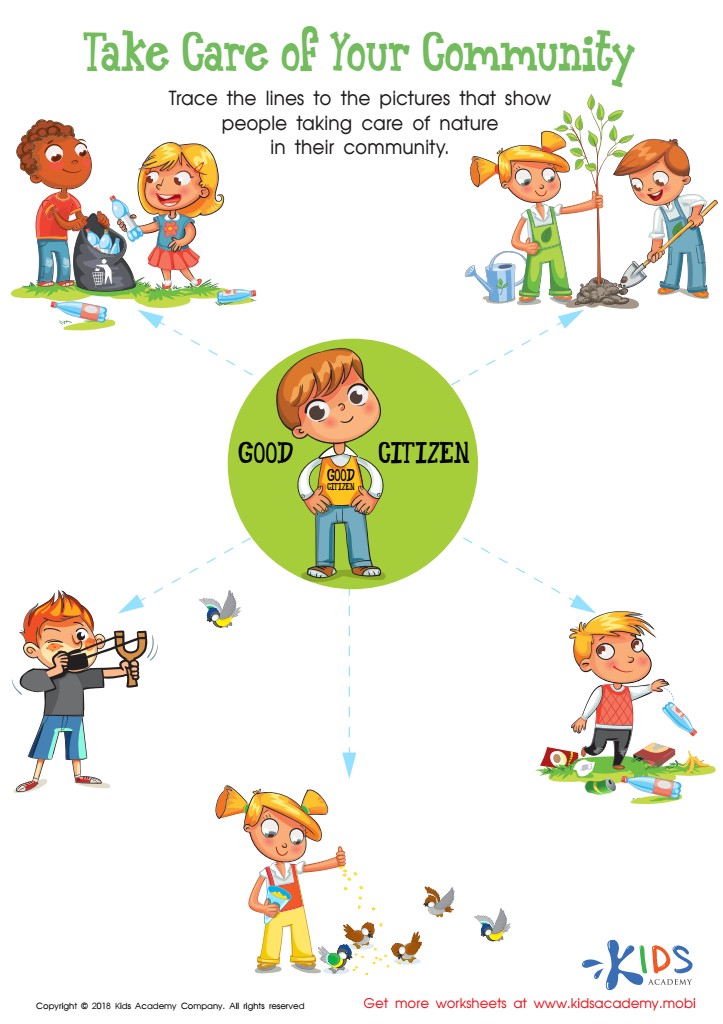
Take Care of your Community Worksheet
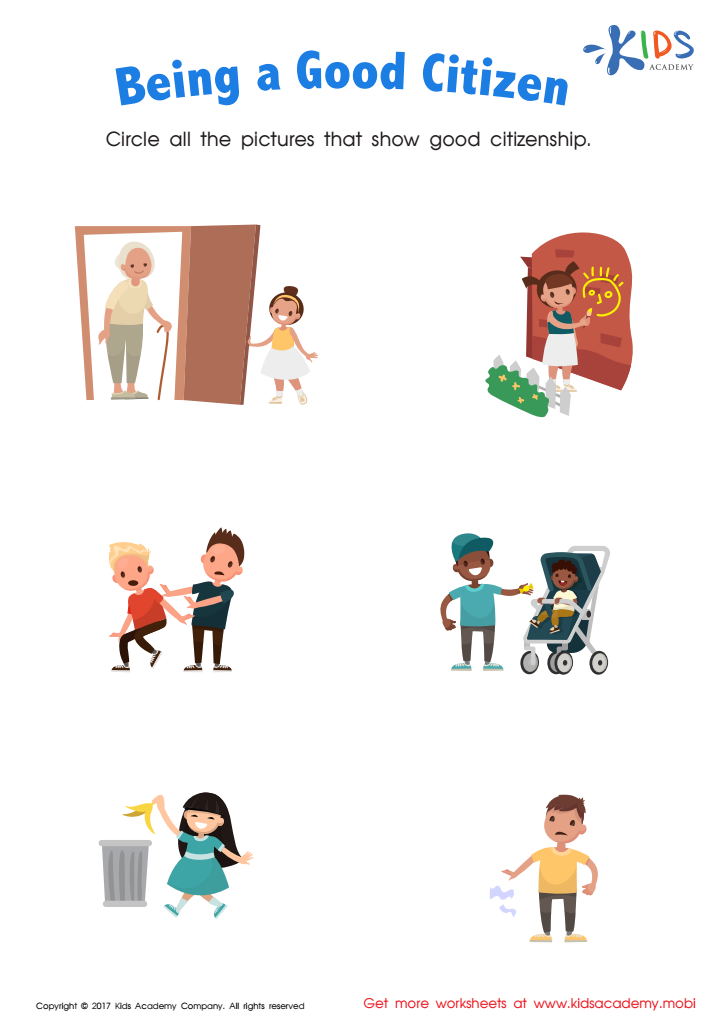
Being a Good Citizen Printable


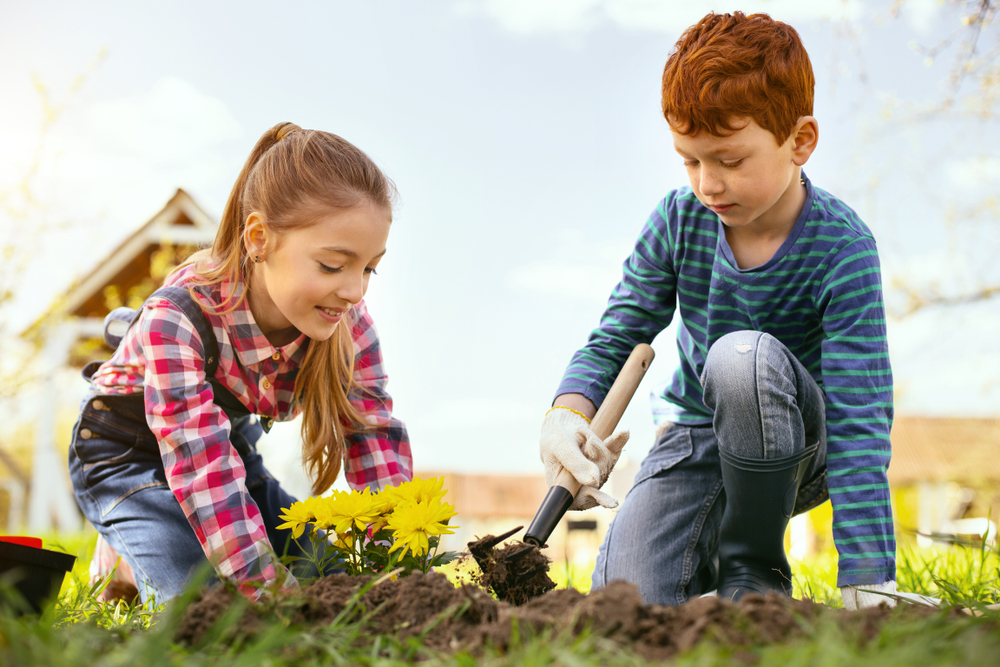
Normal Good Citizenship instills essential values in 6-year-olds that shape their character and future interactions with others. At this formative age, children are impressionable and begin to understand concepts of community, responsibility, and respect. By nurturing good citizenship, parents and teachers can help children learn the importance of empathy, sharing, and conflict resolution, fostering positive social skills.
Encouraging qualities such as kindness, honesty, and cooperation lays the groundwork for strong interpersonal relationships. Children who learn to be active participants in their community—whether through helping others, respecting rules, or being involved in group activities—develop a sense of belonging and responsibility early on. This knowledge not only influences their behavior in school but also guides their decisions in life as they grow.
Moreover, cultivating good citizenship can create a ripple effect, promoting a supportive environment. When children witness adults exemplifying these values, they are more likely to emulate them. Parents and teachers should prioritize teaching Normal Good Citizenship to ensure that children not only contribute positively to their immediate surroundings but also develop a lifelong commitment to making the world a better place. Ultimately, fostering these principles promotes a more caring, respectful, and engaged society.








