Filters

270 filtered results

Clear all filters
Favorites
With answer key
Interactive

270 filtered results

Difficulty Level

Grade


Check out this FREE Trial Lesson on Reading for age 7-9!

Decode Multi-syllabic Words

Favorites
With answer key
Interactive
  • 7-9
  • Interactive
  • Reading
  • Normal
Read It! Worksheet
Read It! Worksheet

Read It! Worksheet

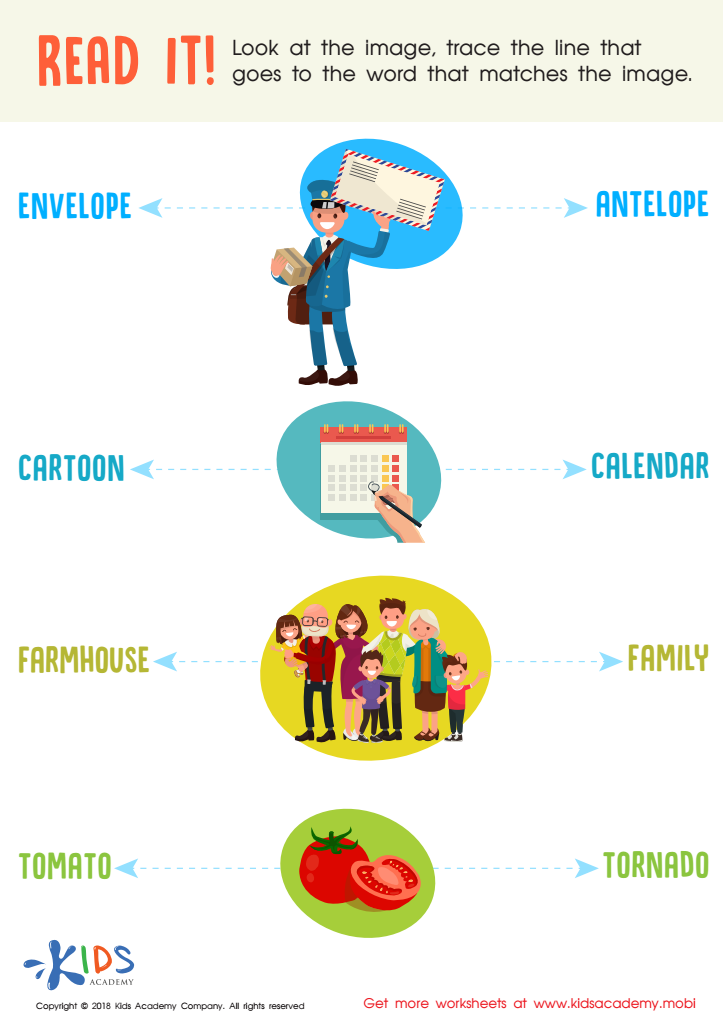
Point to each image on this worksheet, asking your child what it is. Read the 2 options then help your child trace the line to the correct word. It'll keep them engaged and provide visual stimulation.
Read It! Worksheet
Worksheet
Decoding Multisyllabic Words Worksheet

Decoding Multisyllabic Words Worksheet

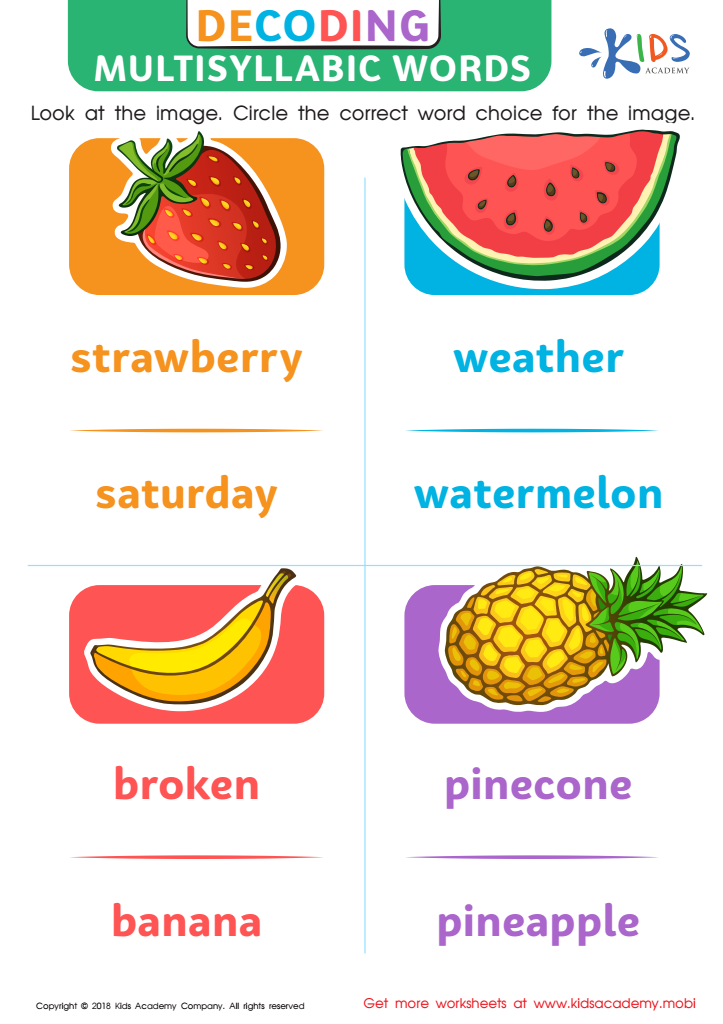
Ask your kids what their favorite fruits are. Show them the 4 images and point to each one, asking them what it's called. Help them circle the correct word choice for each one. Fruits are a healthy and delicious way to eat; get your kids to identify them!
Decoding Multisyllabic Words Worksheet
Worksheet
Count Them Up Worksheet

Count Them Up Worksheet

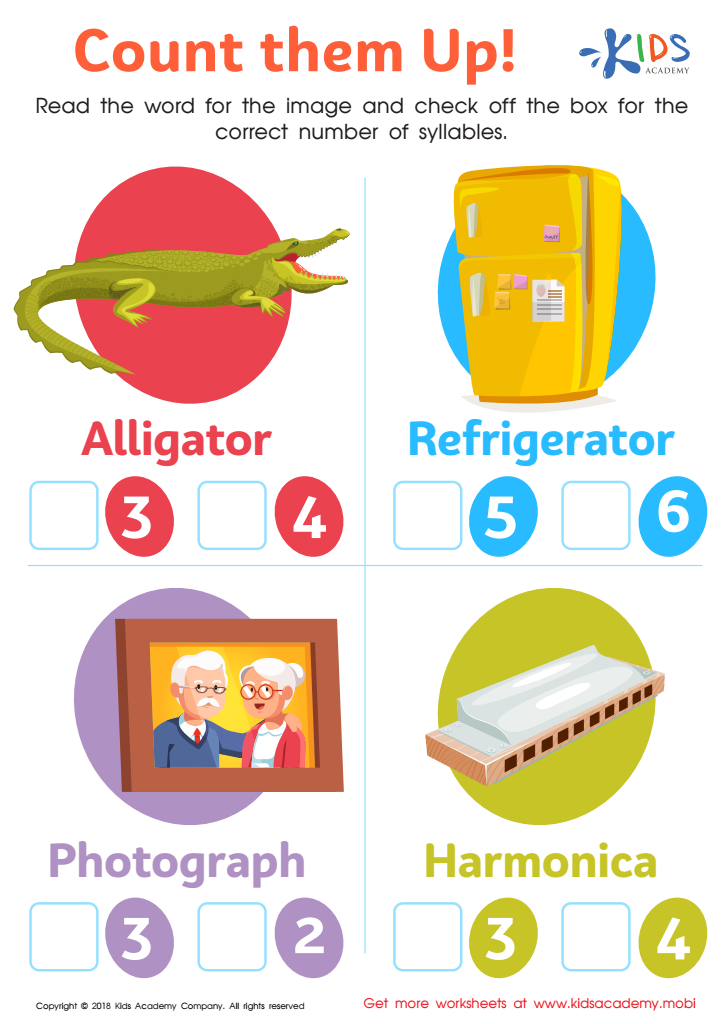
This worksheet has four colorful pictures. Ask your students to identify and name each image, then count the syllables in the word. Make them repeat the word after you, and check off the box with the correct number of syllables. Mastering the art of counting goes beyond numbers. Get your students counting syllables with this activity!
Count Them Up Worksheet
Worksheet
Tommys Test Worksheet

Tommys Test Worksheet

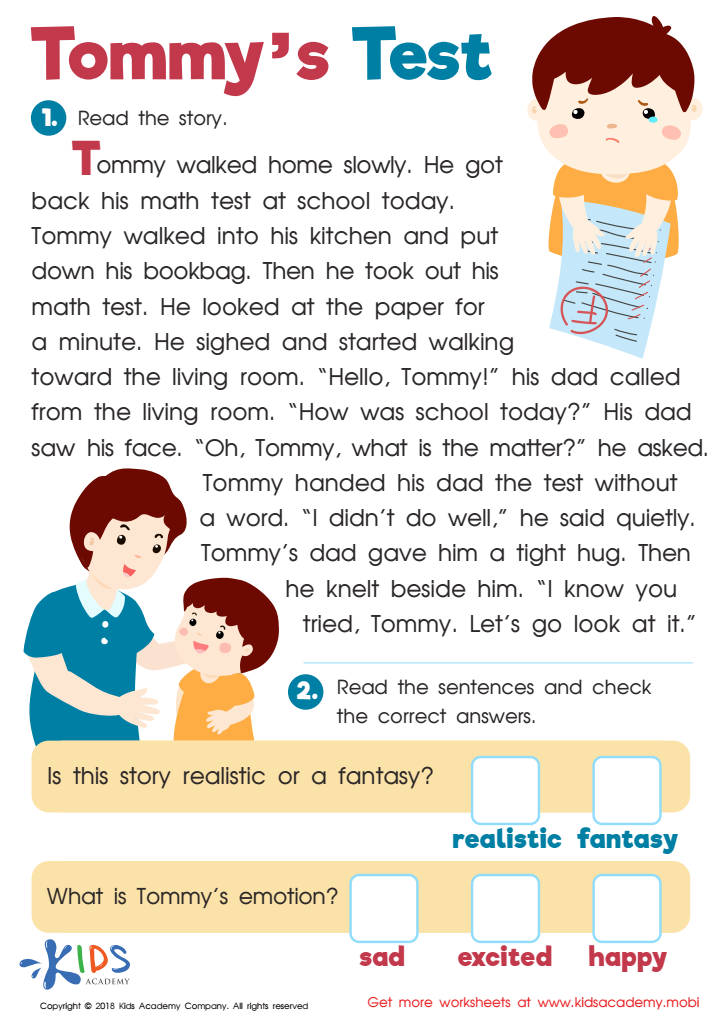
Reading short stories to your students builds a bond, teaches new words and lessons. Read the story aloud and then have them listen for details. Ask them the questions at the bottom and help them check the answers.
Tommys Test Worksheet
Worksheet
Synonyms or Antonyms: Assessment Worksheet

Synonyms or Antonyms: Assessment Worksheet

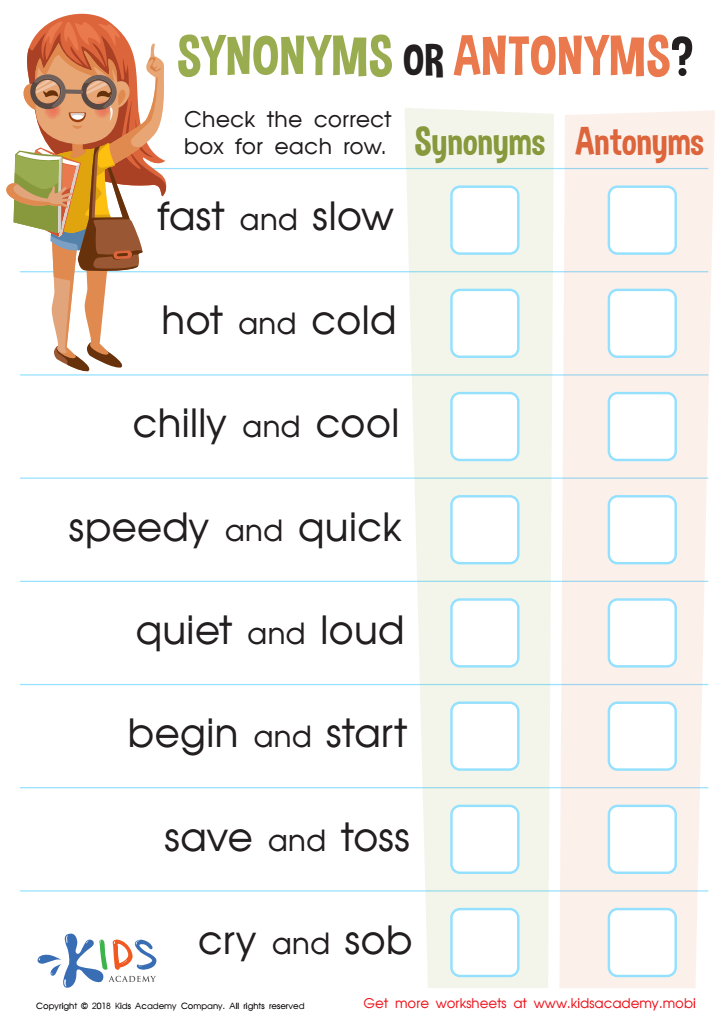
Test your child's knowledge with this fun worksheet! Ask them to read the words and select if they are synonyms or antonyms - e.g. 'happy' is a synonym and 'bad' is an antonym. For an extra challenge, ask them to provide two synonyms and two antonyms for each word.
Synonyms or Antonyms: Assessment Worksheet
Worksheet
Think About It: Assessment Worksheet

Think About It: Assessment Worksheet

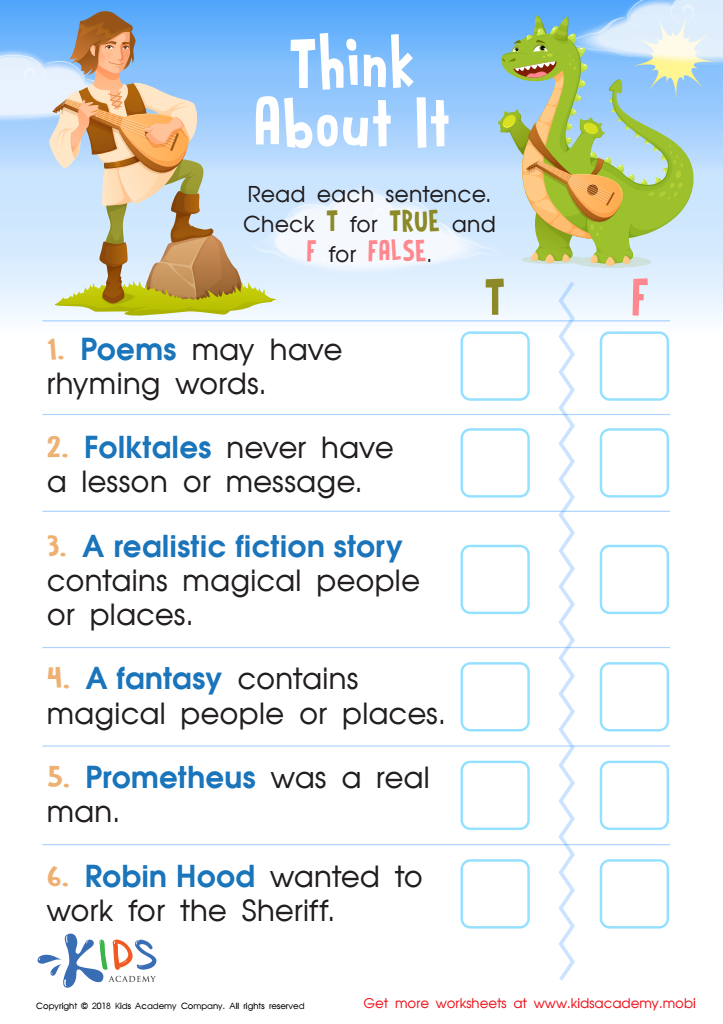
Reading is a fun and important way to learn. Help your students become better readers with this simple yet colorful worksheet. Read each sentence aloud, then have them read it by themselves. Ask them to check T for True and F for False. It's a great way to practice their reading skills!
Think About It: Assessment Worksheet
Worksheet
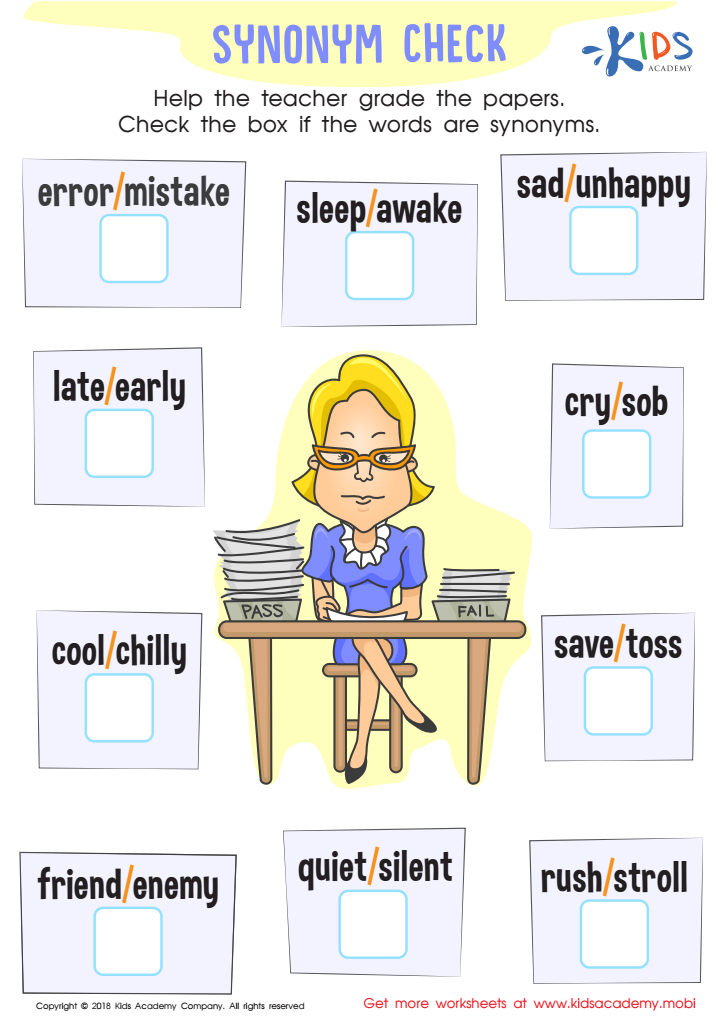
Synonym Check Worksheet

Synonym Check Worksheet

Ask your kids what a synonym is, and listen to their definitions. If needed, explain it's a word that has a similar meaning to another. Give examples, then ask them to do the same. For this worksheet, get them to help grade the papers. Have them check the boxes if the words are synonyms.
Synonym Check Worksheet
Worksheet
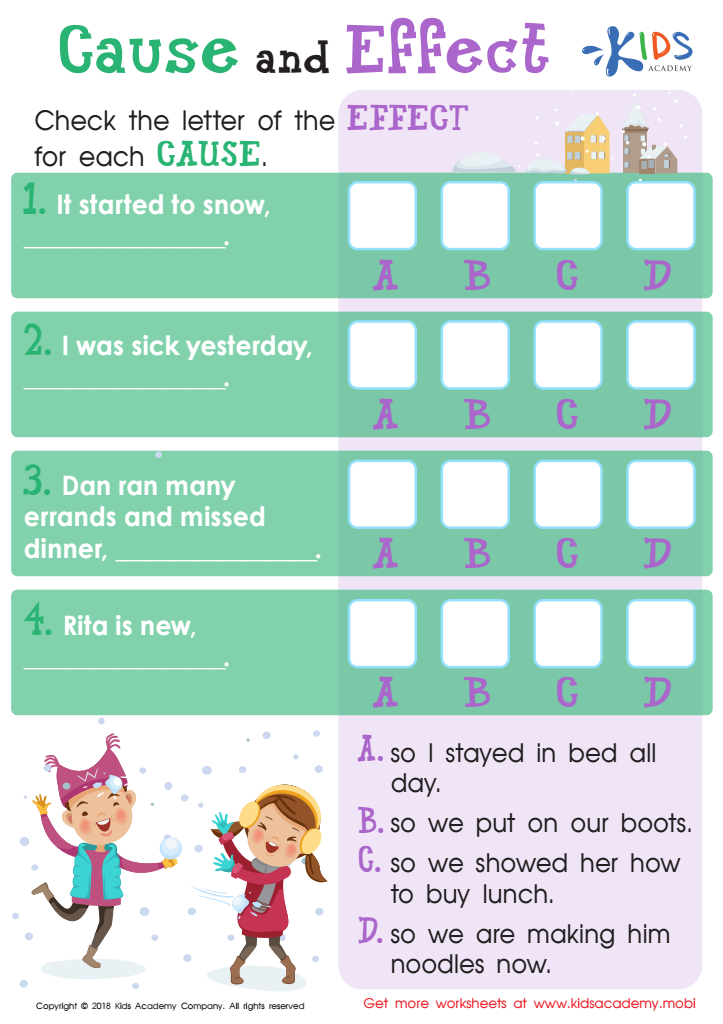
Cause and Effect Worksheet

Cause and Effect Worksheet

Help your kids understand the cause-effect relationship of sentences by having them complete this worksheet. There are four incomplete sentences at the top and four options at the bottom. Have them select the appropriate letter for the effect of each cause. This will be the first step to their future of composing grammatically correct and meaningful sentences.
Cause and Effect Worksheet
Worksheet
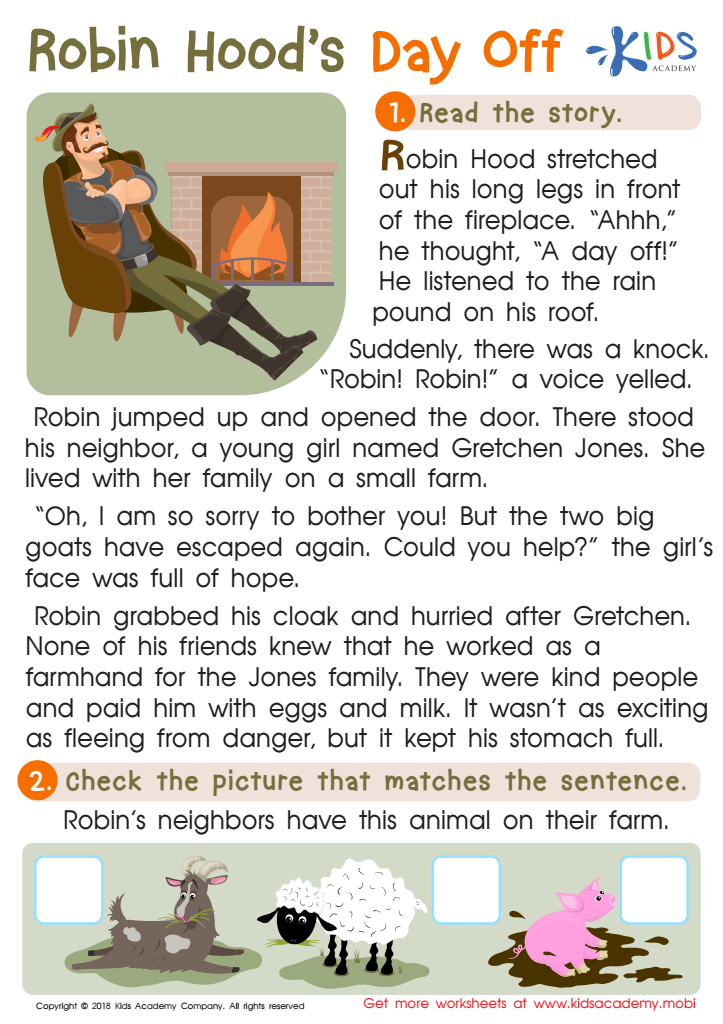
Robin Hood's Day Off Worksheet

Robin Hood's Day Off Worksheet

Encourage your child to express their personality by writing stories. Show them this worksheet's short story about Robin Hood and read it slowly and carefully. Read it again if needed and ask the question below the story. This will help your child use their knowledge to answer it.
Robin Hood's Day Off Worksheet
Worksheet
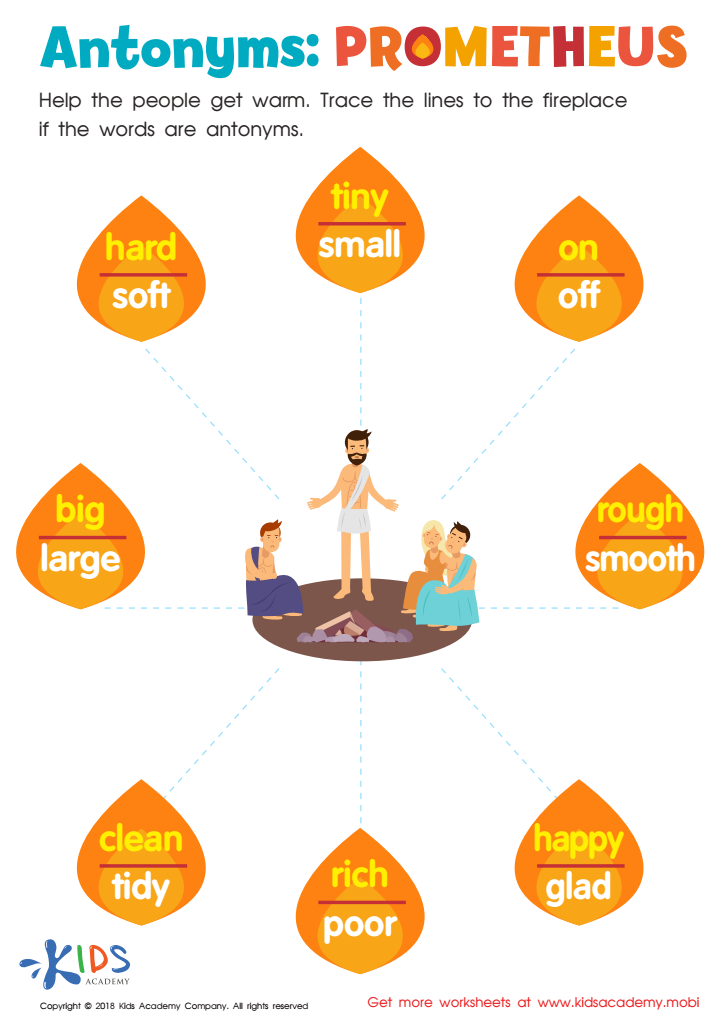
Antonyms: Prometheus Worksheet

Antonyms: Prometheus Worksheet

Antonyms are words with opposite meanings to another. For example, the antonyms of 'good' are 'bad', 'poor' and 'wicked'. Ask your child to give you antonyms for 'Prometheus', which relates to fire. Invite your kids to trace the lines to the fireplace if the words are antonyms, helping the people in the tracing sheet get warm.
Antonyms: Prometheus Worksheet
Worksheet
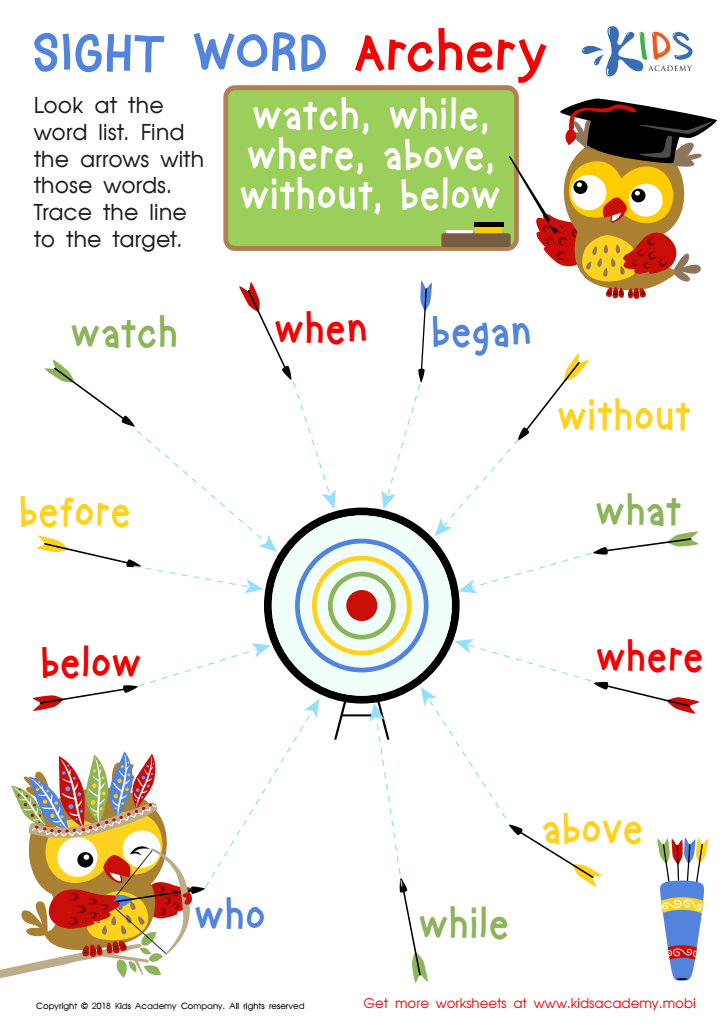
Sight Word Archery Worksheet

Sight Word Archery Worksheet

Read the words list with your kids, pointing at each one. Ask them to do the same. Help them find the arrows with those words and trace the line to the target in the centre.
Sight Word Archery Worksheet
Worksheet
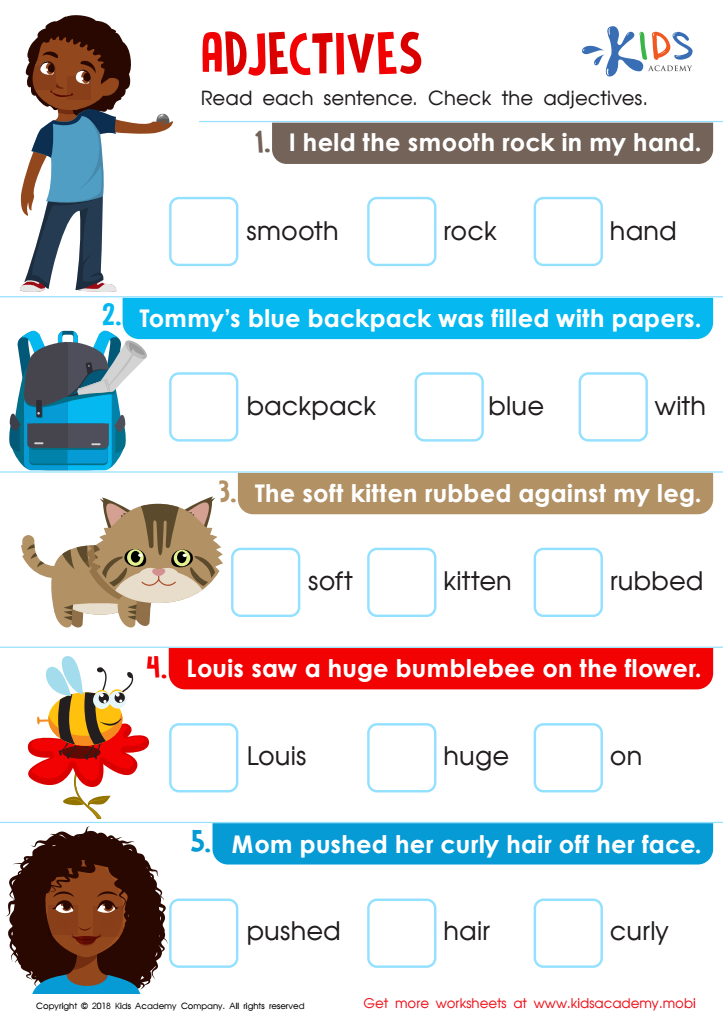
Adjectives Worksheet

Adjectives Worksheet

Adjectives are words that describe a noun. Examples include "beautiful" and "good". Ask your students to use these adjectives in a sentence and have them identify the adjectives in five sentences on a worksheet. Point out that adjectives are essential to understand, and have them check their answers.
Adjectives Worksheet
Worksheet
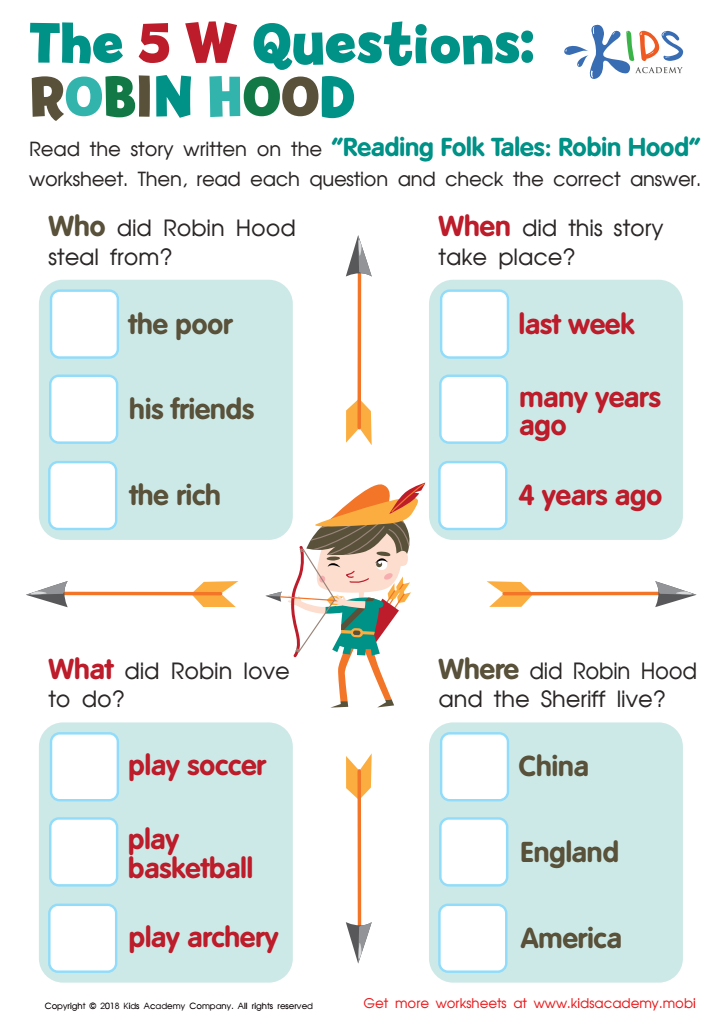
The 5 W Questions: Robin Hood Worksheet

The 5 W Questions: Robin Hood Worksheet

Before embarking on this Robin Hood adventure, ensure your child reads and comprehends the 'Reading Folk Tales: Robin Hood' worksheet. Have them consider the story's lessons, and observe the details. Read the questions and help your kids select the correct answers.
The 5 W Questions: Robin Hood Worksheet
Worksheet
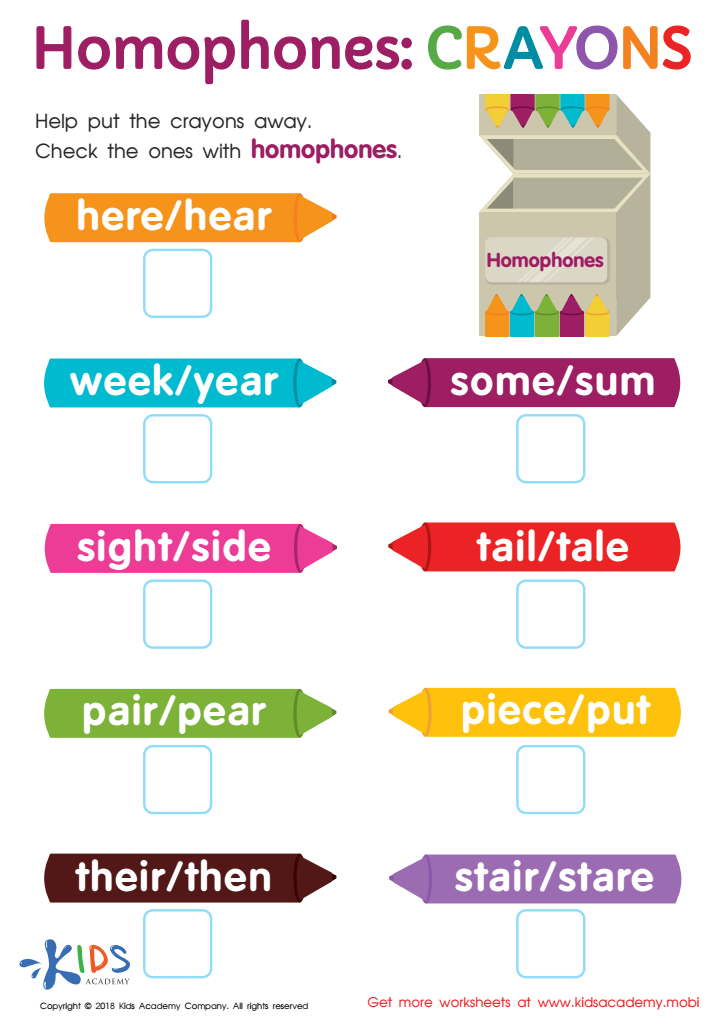
Homophones: Crayons Worksheet

Homophones: Crayons Worksheet

Ask your kids: "What are homophones?" Explain that homophones are words that sound alike but have different meanings, like 'dare' and 'deer'. Ask them to identify homophones by putting the crayons in this printout away according to the words.
Homophones: Crayons Worksheet
Worksheet
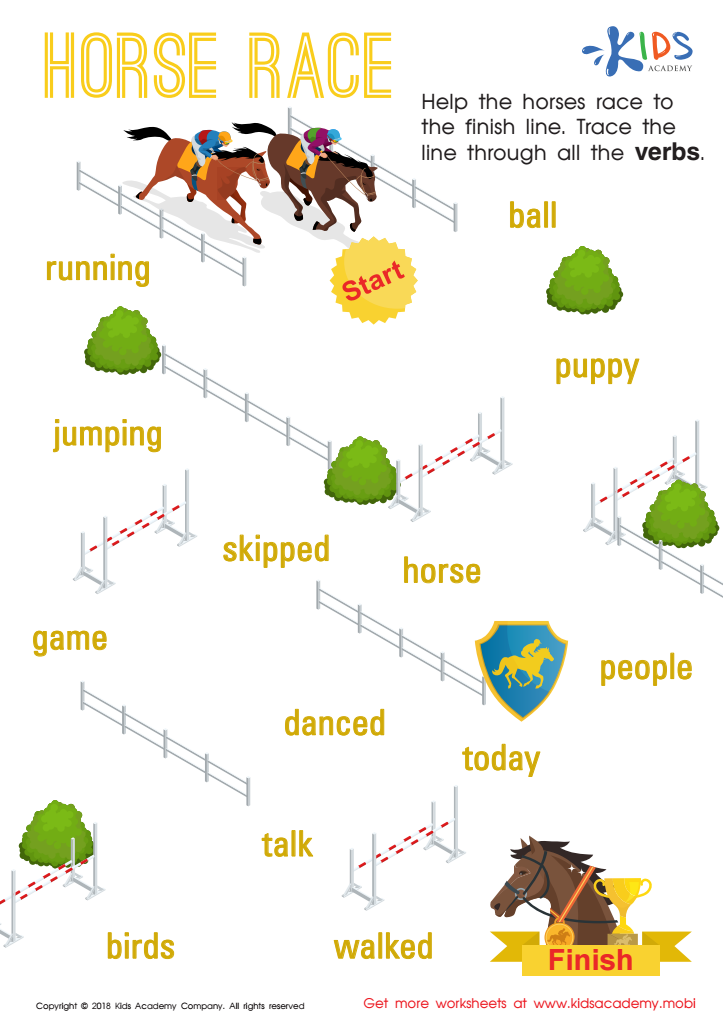
Horse Race Worksheet

Horse Race Worksheet

This tracing sheet is perfect for horse-loving kids! Start by confirming they know what a verb is - it's a word that shows an action (e.g. jump, talk, walk, play, read). Then ask them to give you some more examples. Finally, help them trace the line through all the verbs. They'll be delighted!
Horse Race Worksheet
Worksheet
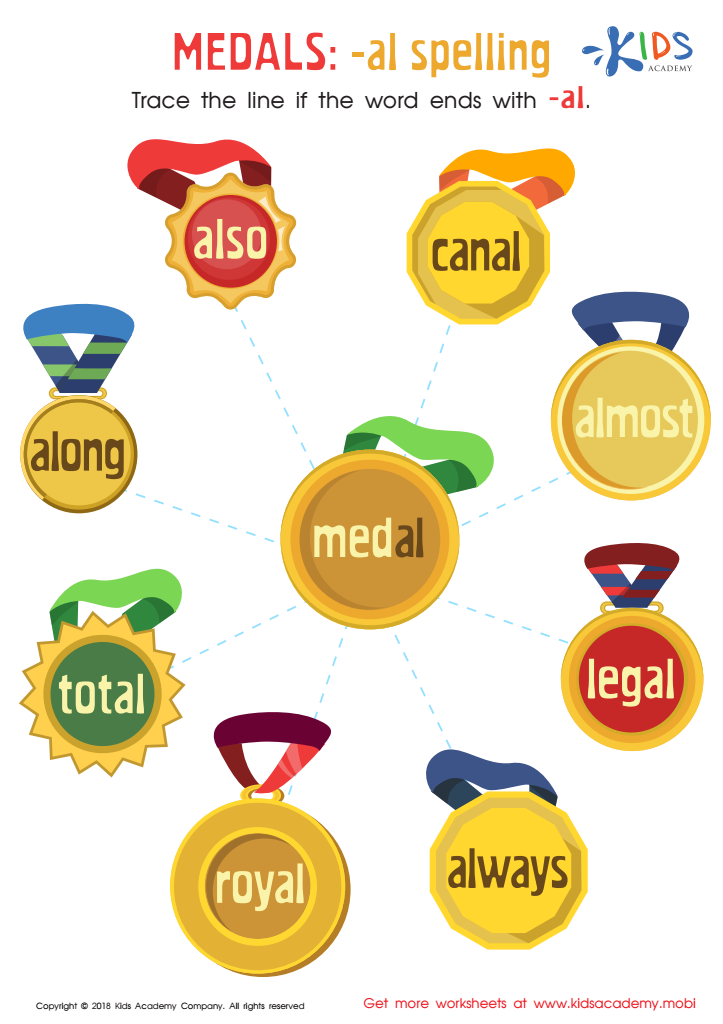
Medals: Al Spelling Worksheet

Medals: Al Spelling Worksheet

Have your students list common words ending with -al. See how many they can give and spell. Give examples of your own, assisting with spelling. Now review the words in the worksheet. Guide students to trace the line for each word ending with -al. 80 words
Medals: Al Spelling Worksheet
Worksheet
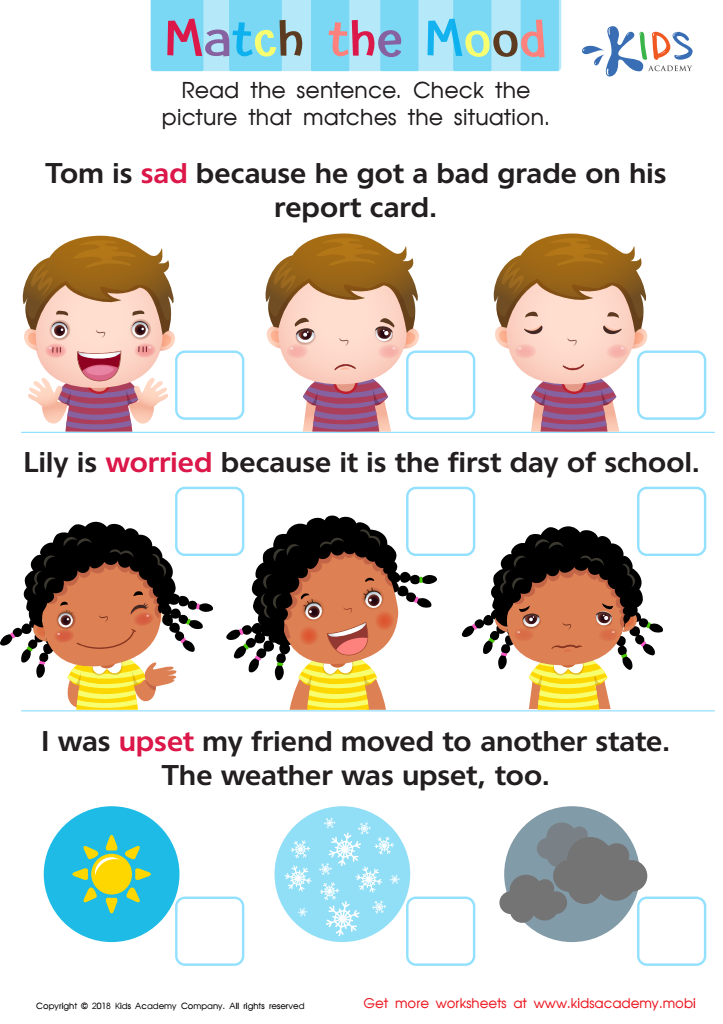
Match The Mood Worksheet

Match The Mood Worksheet

Ask your kid what kind of moods they usually experience; e.g. sad, happy, hurt or worried. Read aloud the sentences in the worksheet and help them match the situation to the picture. Max 80 words.
Match The Mood Worksheet
Worksheet
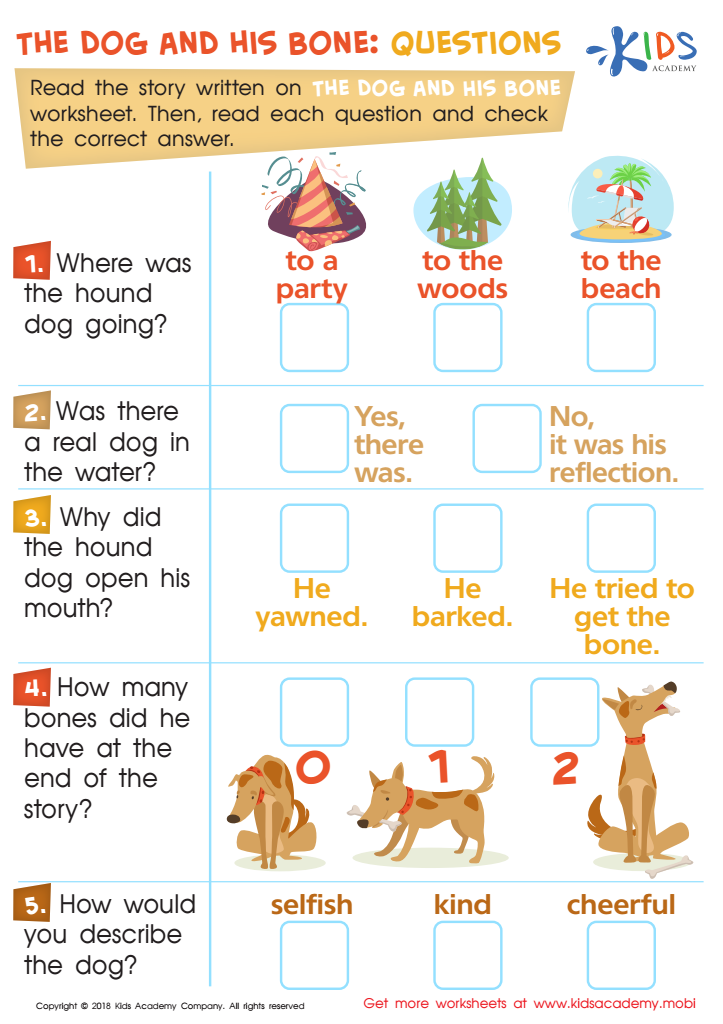
The Dog and His Bone: Questions Worksheet
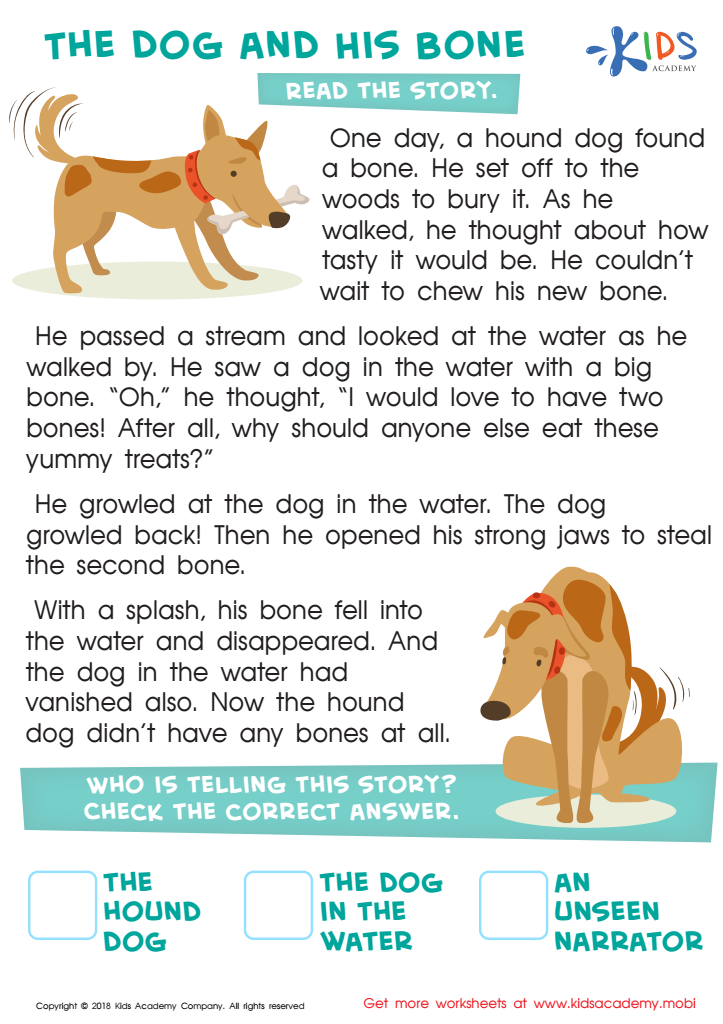

The Dog and His Bone: Questions Worksheet

Read the story of The Dog and His Bone to your child and help them understand it. Have them read it aloud if possible. Then, read the five questions on the worksheet and guide them to select the correct answers.
The Dog and His Bone: Questions Worksheet
Worksheet
The Dog and His Bone Worksheet

The Dog and His Bone Worksheet

Read the story of The Dog and His Bone to your kids, making sure they take in the details. Ask them the questions in this worksheet and help them check the answers. Encourage them to think carefully.
The Dog and His Bone Worksheet
Worksheet
Pronouns Worksheet
Pronouns Worksheet

Pronouns Worksheet

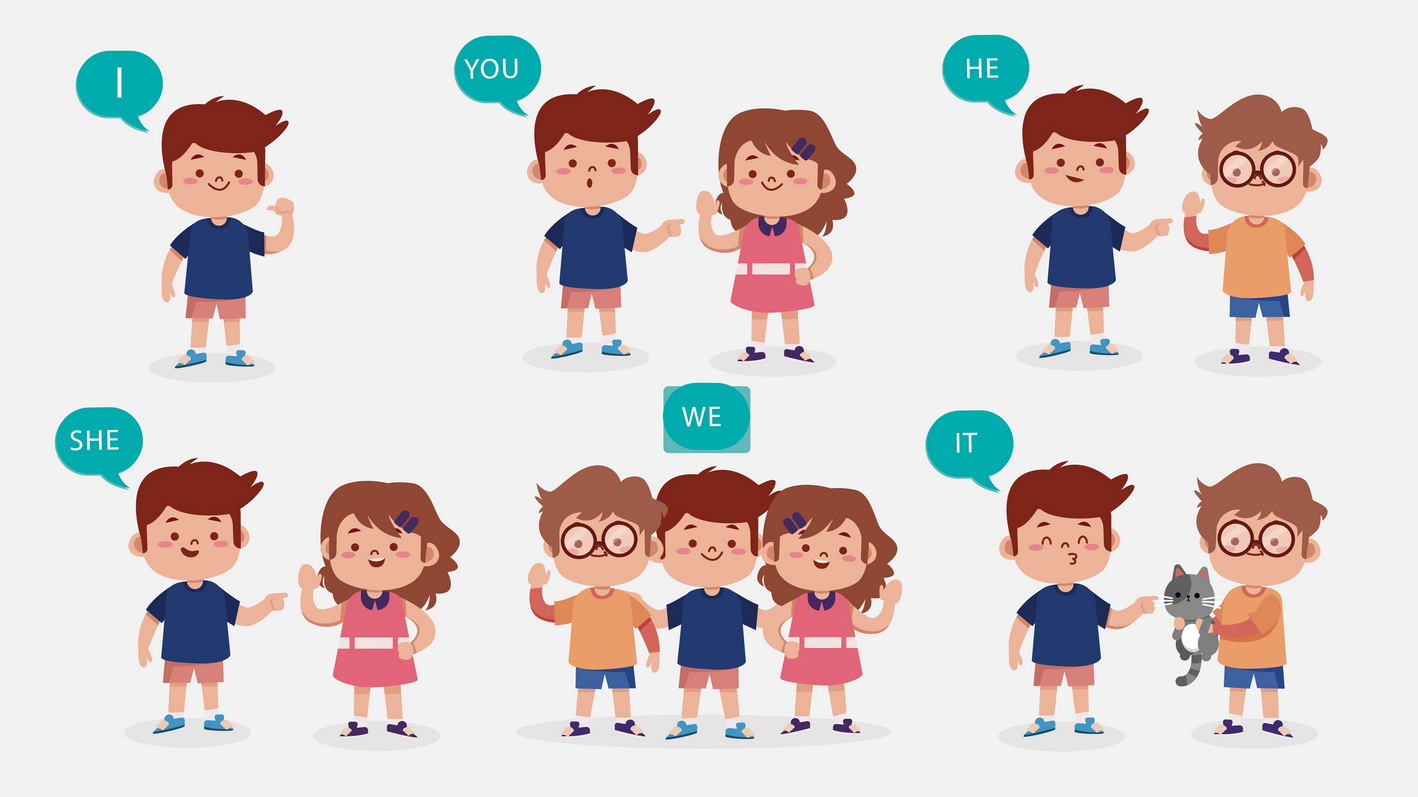
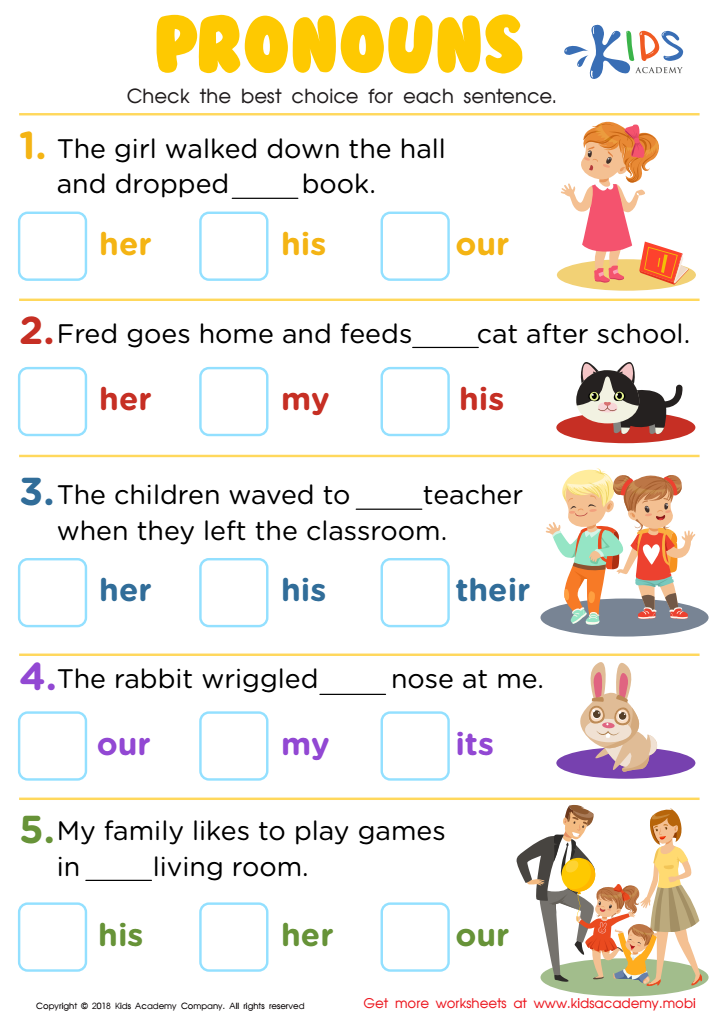
Help your child explore pronouns with this worksheet: start by asking them which pronouns they know. Then, read the sentences and their options aloud together, and ask your child to choose the best pronoun for each sentence. This worksheet should be easy for them if they can already read short sentences.
Pronouns Worksheet
Worksheet
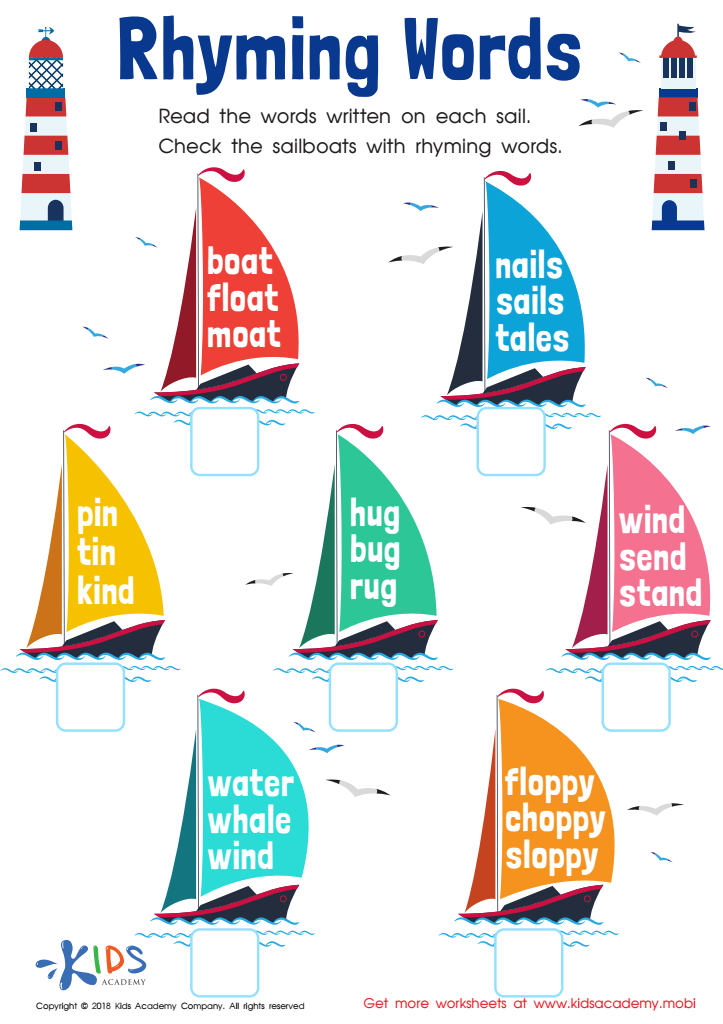
Rhyming Words Worksheet

Rhyming Words Worksheet

Does your child know about rhyming words? Get them interested in poetry and explain that these words have similar sounds when pronounced. Read the words on each sailboat to your child and ask them to identify the rhyming pairs. Guide them to check the sailboats.
Rhyming Words Worksheet
Worksheet
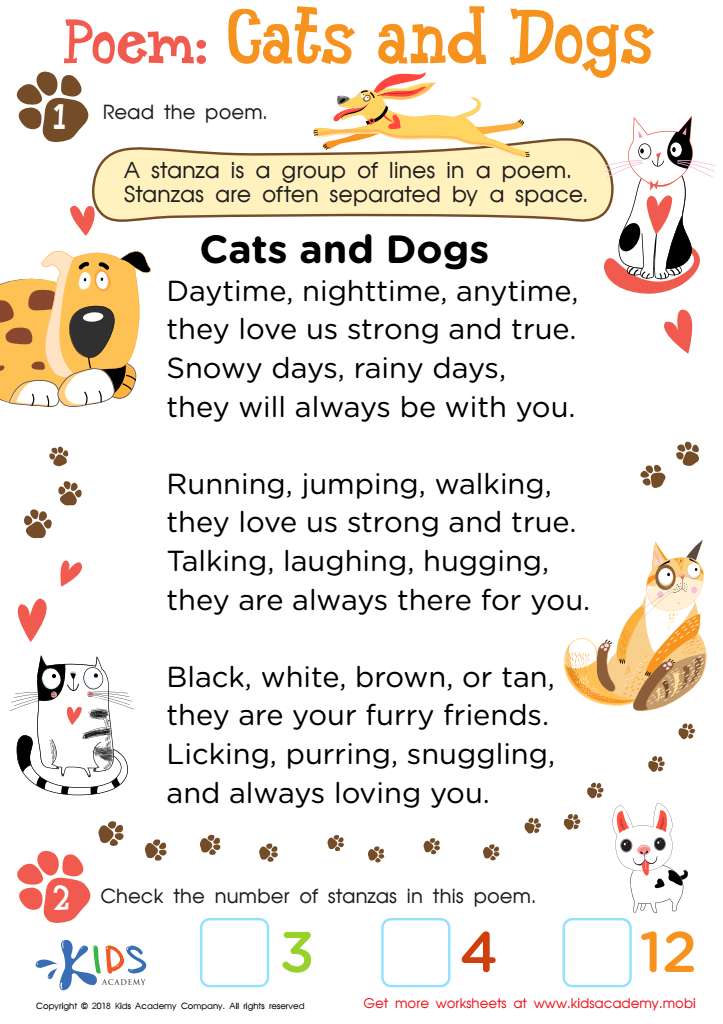
Poem: Cats and Dogs Worksheet

Poem: Cats and Dogs Worksheet

Read the poem to your child and point out where each stanza ends. Ask if they know what a stanza is (if not, explain it's a group of lines in a poem). Help them answer the question at the bottom of the printout. This simple, sweet poem about cats is easy for your child to relate to.
Poem: Cats and Dogs Worksheet
Worksheet
Poem: The Swing Worksheet

Poem: The Swing Worksheet

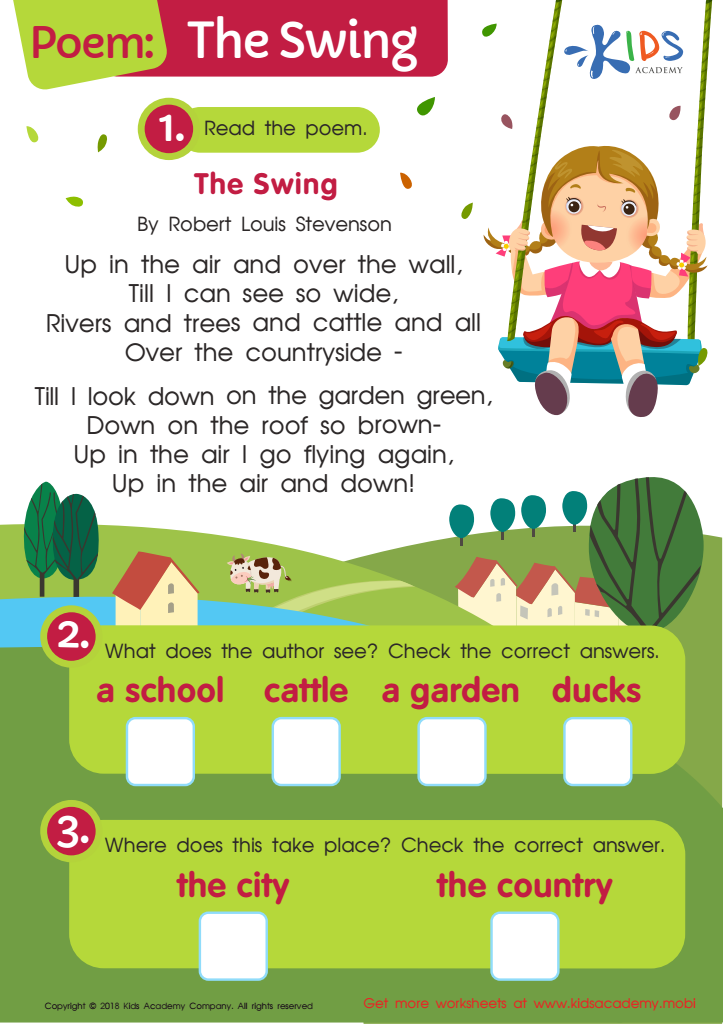
Encourage your child's love of writing by displaying their poems on the fridge or walls. This worksheet focuses on a swing, something your child enjoys, and contains questions to help your child think more deeply about the poem. Read it together, then answer the questions and watch as your child's creativity and writing skills blossom!
Poem: The Swing Worksheet
Worksheet
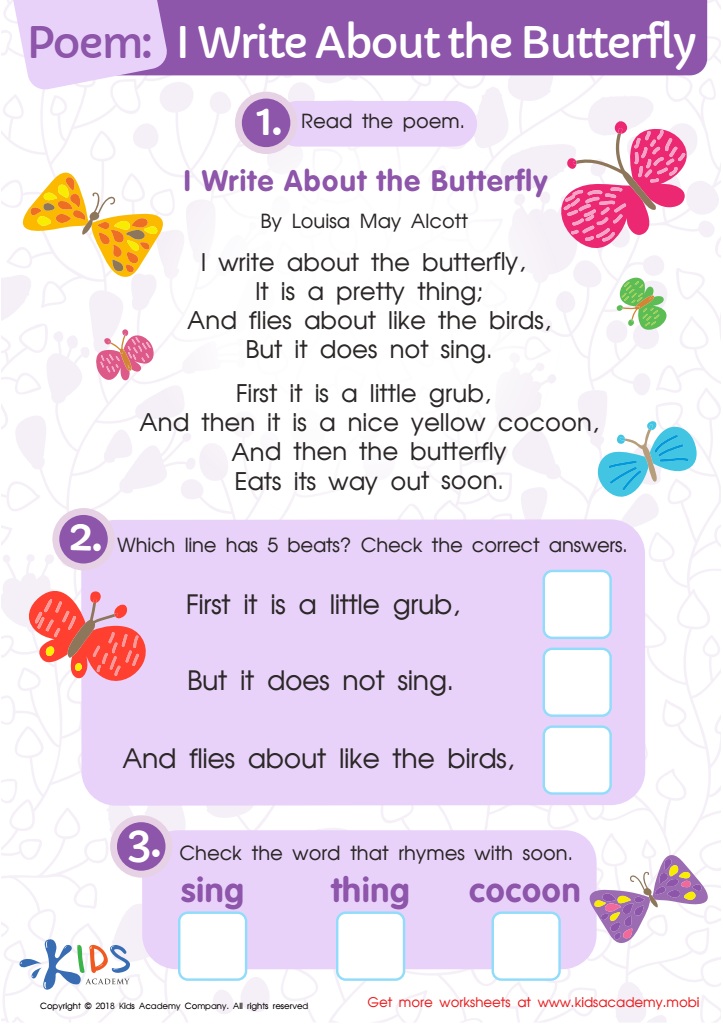
Poem: I Write About The Butterfly Worksheet


Poem: I Write About The Butterfly Worksheet

Do your kids like poetry? Encourage them to explore and connect with their poetic side! Read the butterfly poem from this worksheet aloud, then help them answer the questions. It's a great way to grow their appreciation of poetry and of the natural world.
Poem: I Write About The Butterfly Worksheet

Worksheet


Parents and teachers should care about normal reading development for ages 7-9 because this stage is crucial for building strong literacy skills that form the foundation for future academic success. During these years, children transition from learning to read to reading to learn, making it essential for them to develop fluency, comprehension, and critical thinking abilities.

At this age, children encounter a wider variety of texts, including biographies, fiction, and informational texts. Engaging with diverse literature not only enhances their vocabulary but also fosters a love for reading, encouraging lifelong learning. If children struggle during this phase, it could result in challenges that affect their performance in other subjects, leading to a cycle of frustration and disengagement.

Moreover, normal reading skills help bolster self-esteem and confidence. When children experience success in reading, they are more likely to participate actively in discussions and express their ideas clearly. Educators and parents can track progress through assessments, while catering to individual needs with tailored strategies or resources, promoting a supportive atmosphere conducive to growth. By prioritizing reading development in this critical age group, caregivers can empower children with the skills they need to thrive academically and socially throughout their lives.