Normal Difficulty Online Math Worksheets for Grade 2 - Page 4
142 filtered results
Difficulty Level
Grade
Age
-
From - To
Subject
Activity
Standards
Favorites
With answer key
Interactive
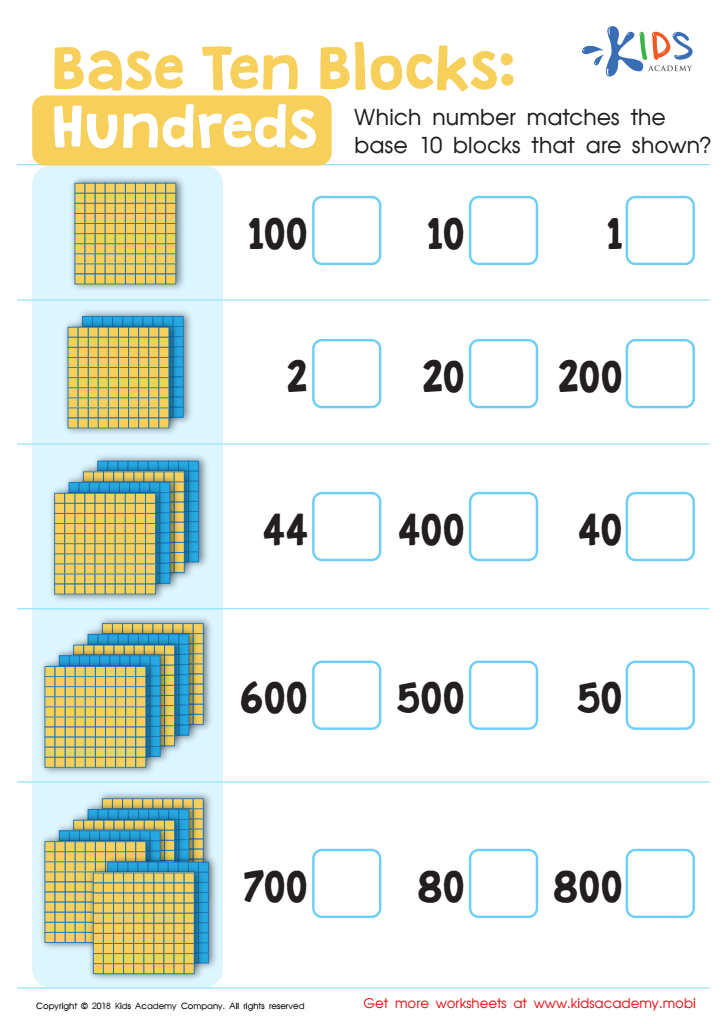
Base Ten Blocks: Hundreds Worksheet
Help your child overcome their dislike of math by guiding them with this base ten blocks worksheet. Count the blocks and answer the questions together. Ask them which number matches the base ten blocks shown. This will help them solve math problems more easily.
 Assign to My Students
Base Ten Blocks: Hundreds Worksheet
Worksheet
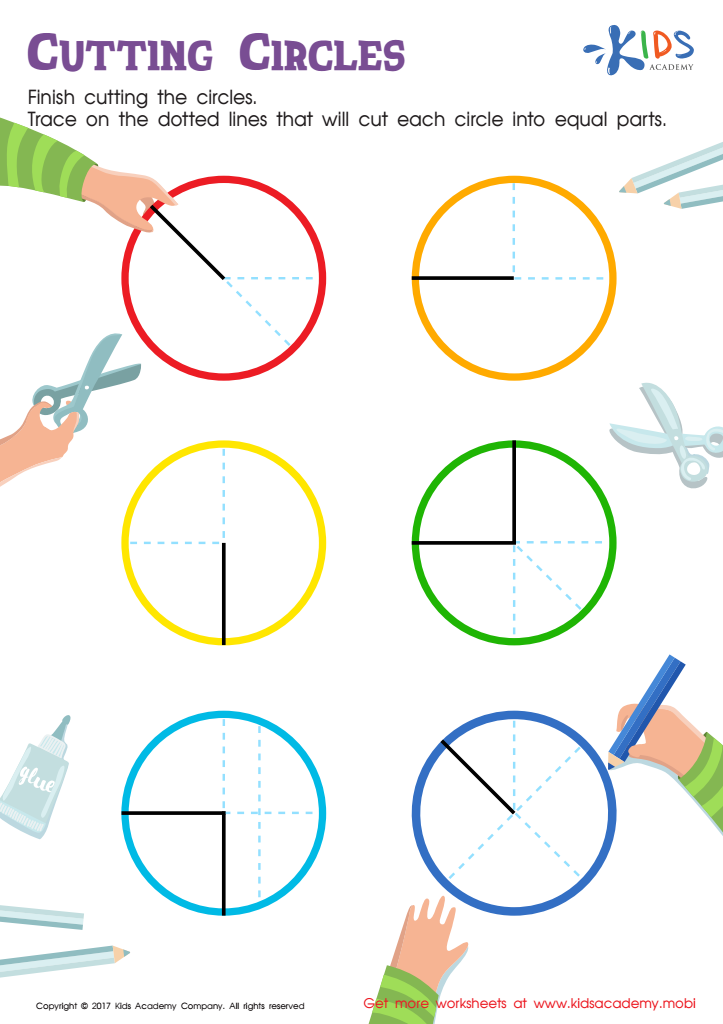
Cutting Circles Worksheet
Allow your child to refresh their memory by asking them what two equal halves, four equal parts and three equal parts are called. Then, look at the picture pdf with them. Challenge them to cut up the circles into equal parts, by tracing the dotted lines. This exercise will help them with their math skills!
Cutting Circles Worksheet
Worksheet
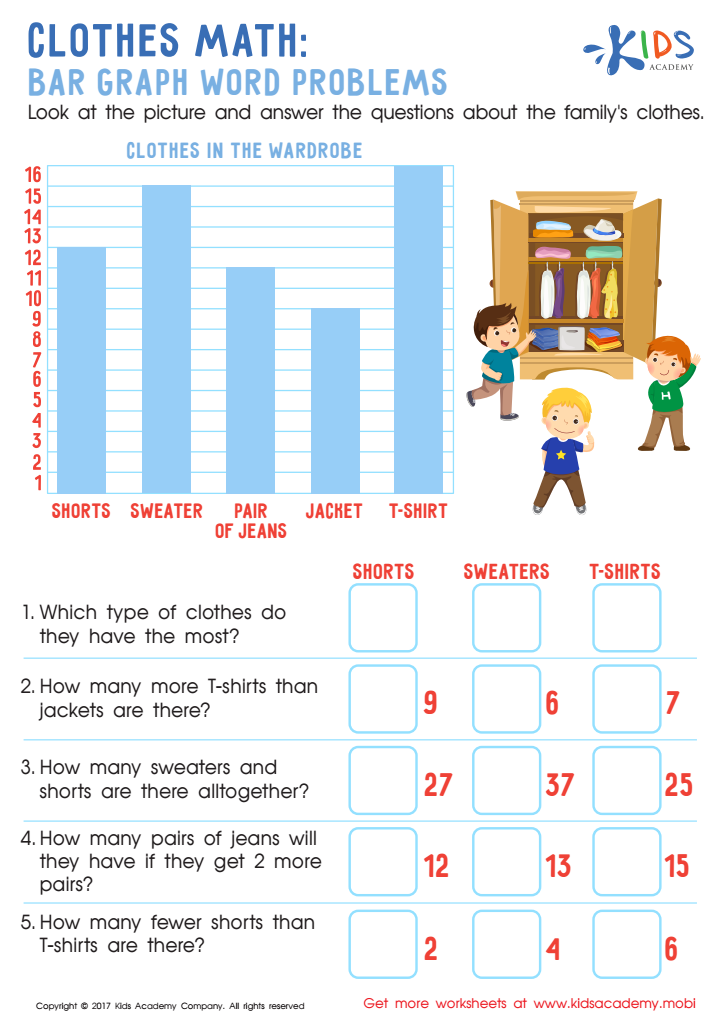
Clothes Math: Bar Graph Word Problems Worksheet
Introduce your kids to a family like theirs with this worksheet. They'll look at the picture of three children in front of a wardrobe and the graph of clothes inside. Ask them questions about the number of items like jeans, sweaters, shorts, jackets, and t-shirts. Let them explore their understanding of counting and family similarity.
Clothes Math: Bar Graph Word Problems Worksheet
Worksheet
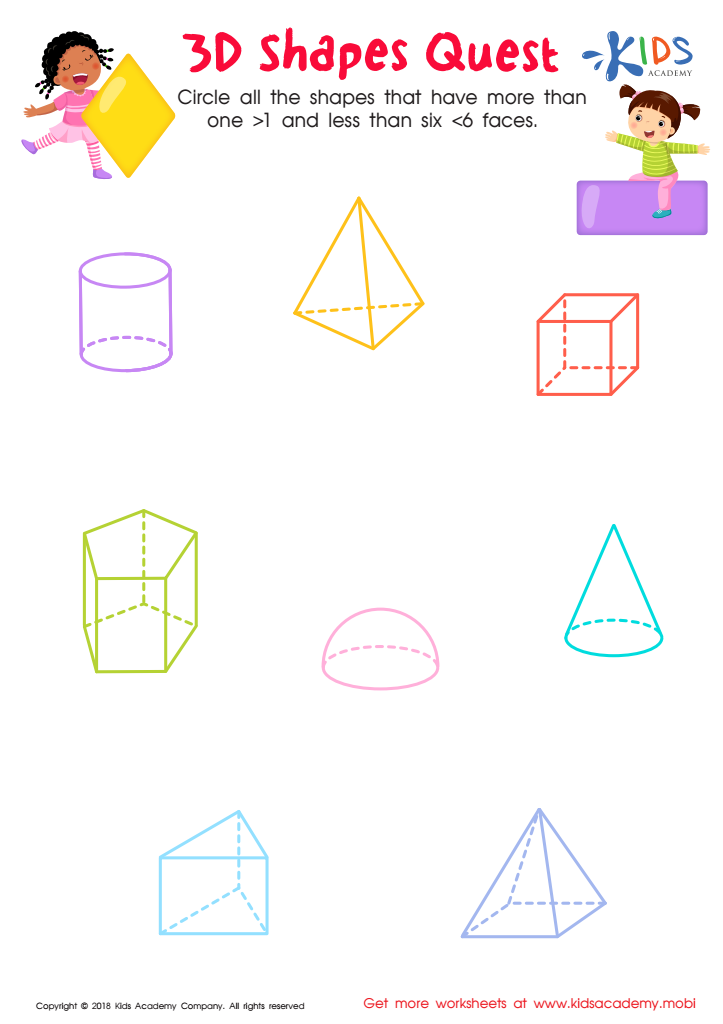
3D Shapes Quest Worksheet
Ask your child if they know what faces of shapes are. If not, explain that faces are flat surfaces on shapes. Ask what a square and rectangle have in common - both have four faces. Your child's task is to circle shapes with more than 1 and less than 6 faces in this exercise.
3D Shapes Quest Worksheet
Worksheet
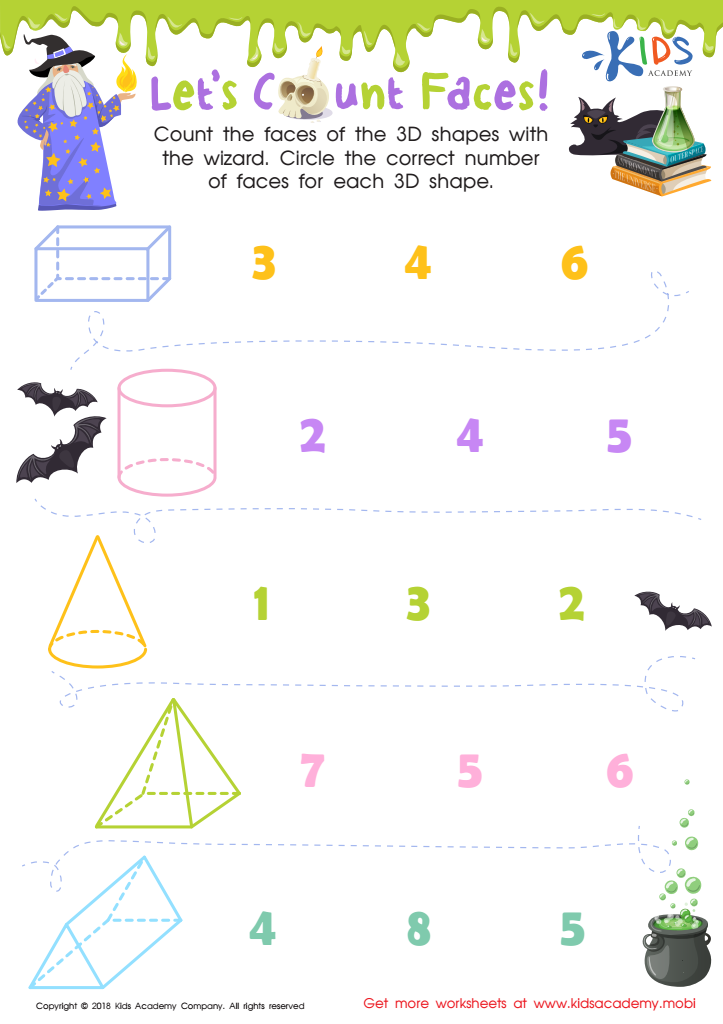
Let's Count Faces! Worksheet
Help the wizard count the faces of 3D shapes! Ask your kids to identify the shapes before beginning, then have them circle the correct number of faces. Enjoy this fun wizard-themed worksheet with your kids!
Let's Count Faces! Worksheet
Worksheet
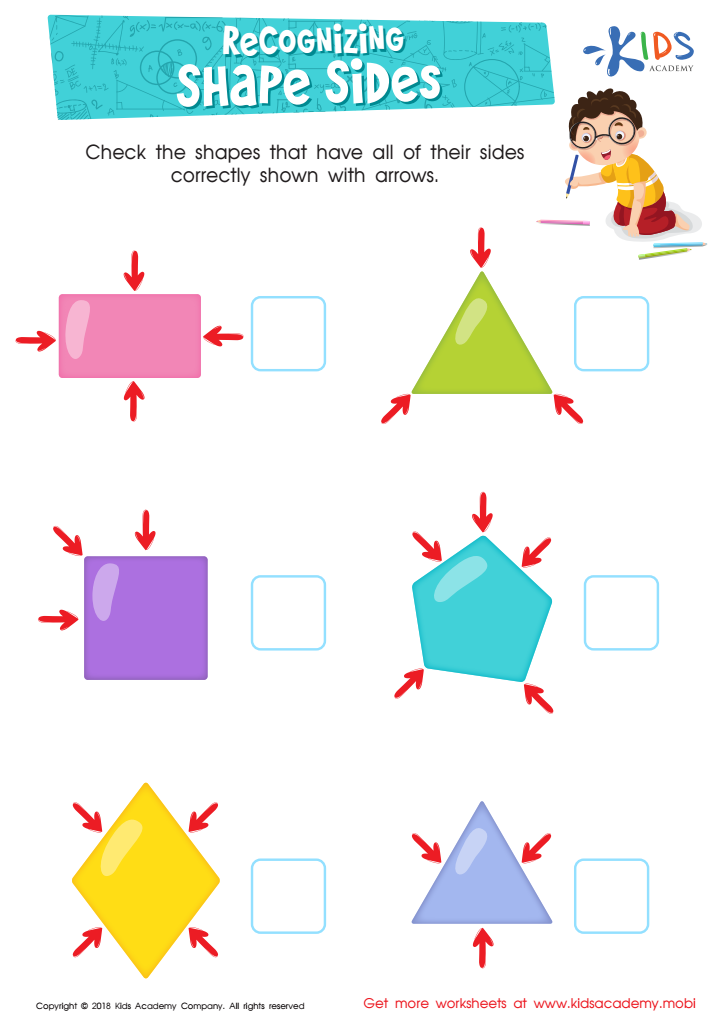
Recognizing Shape Sides Worksheet
This exercise will help your child recognize shape sides. Go over the difference between sides and angles first, then have them check the shapes with arrows to show the sides. They'll quickly get the hang of it and find it much easier after completing the colorful worksheet.
Recognizing Shape Sides Worksheet
Worksheet
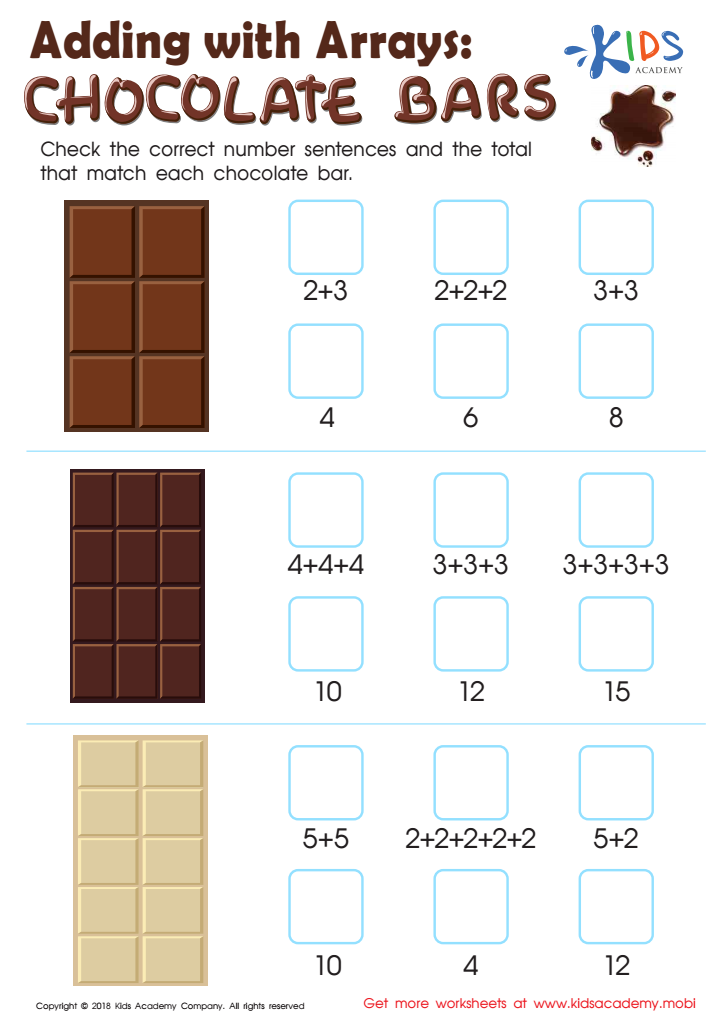
Adding with Arrays: Chocolate Bars Worksheet
Kids love chocolates! Gauge how enthused your kids get when you mention them. This worksheet is a fun exercise about chocolates - get your kids to check the correct number sentences and totals for each chocolate bar. Reward their hard work with some chocolates - extra incentive for a job well done!
Adding with Arrays: Chocolate Bars Worksheet
Worksheet
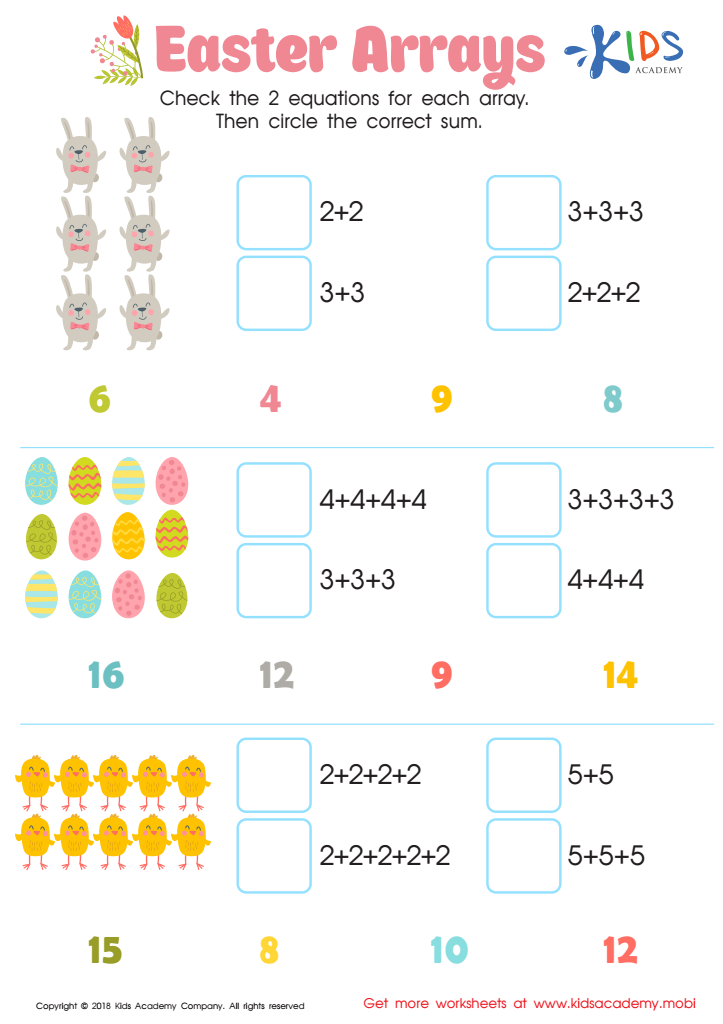
Easter Arrays Worksheet
Does your child love Easter? Do they adore the Easter bunny and egg hunts? Help them have fun with this worksheet! Go through it with them and check the equations for each array. Then, have them circle the correct sum. It's a great way to make the holiday extra exciting!
Easter Arrays Worksheet
Worksheet
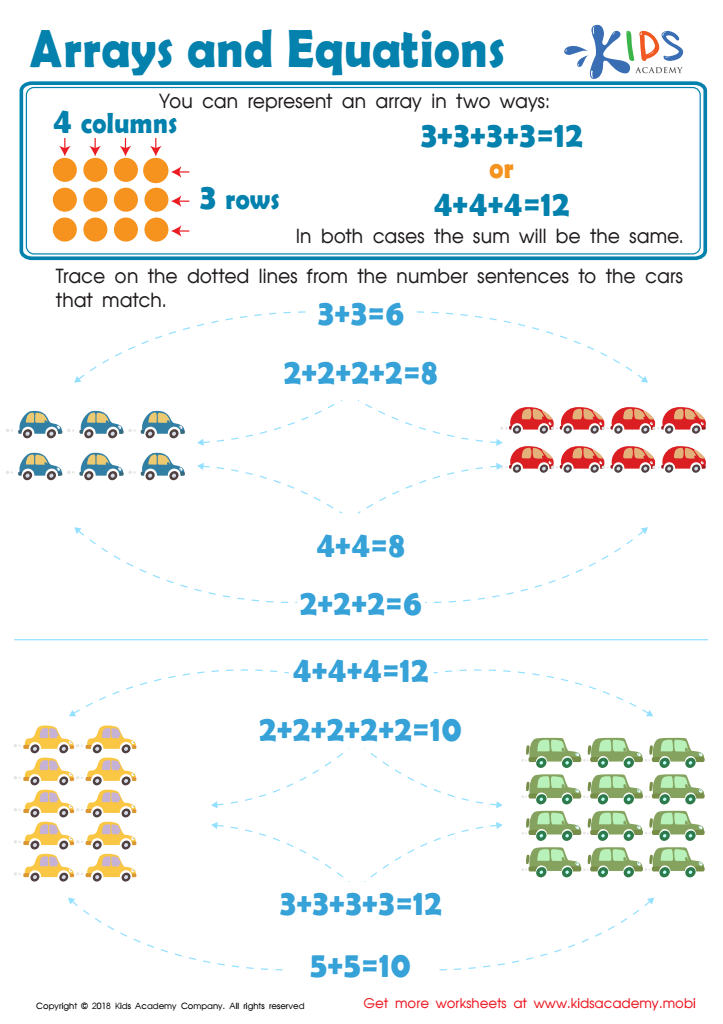
Arrays and Equations Worksheet
An array is objects, pix, or numbers organized in rows and columns. Show kids two ways to interpret this: 3 rows in 4 places = 12 and 4 columns in 3 places = 12. Help your child trace the number sentences to the matching cars. All equations always add up to the same amount.
Arrays and Equations Worksheet
Worksheet
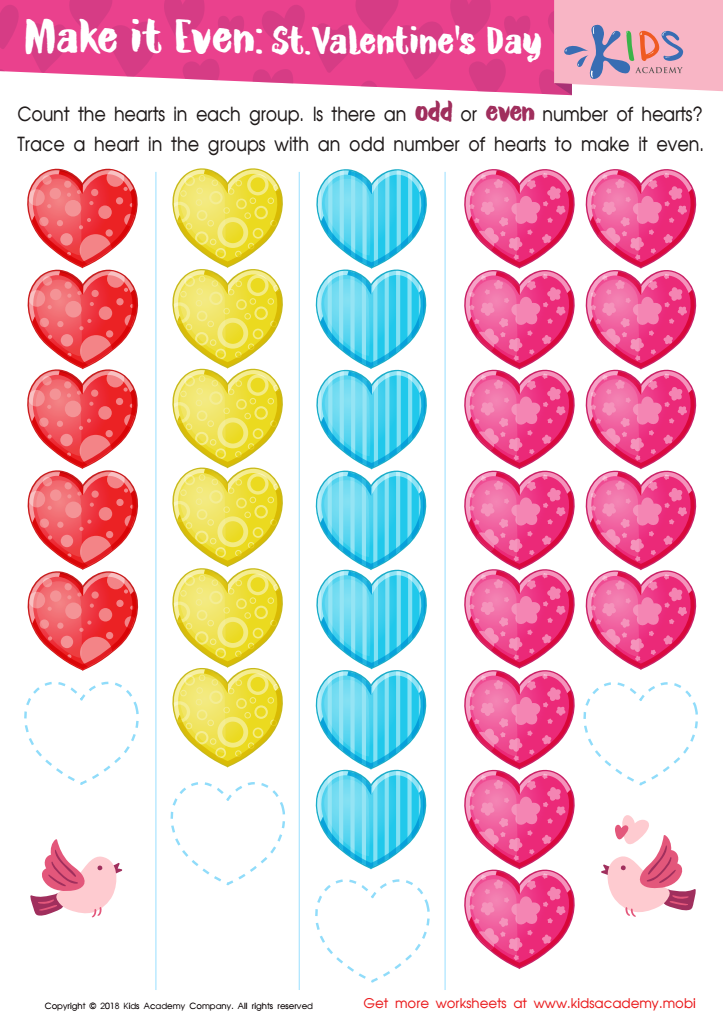
Make it Even: St. Valentine's Day Worksheet
Does your child love Valentine's Day? Make it special with this worksheet! Kids can use their counting skills to determine if each group has an even or odd number of hearts, then trace a heart in the odd groups. Help them make it even and have fun!
Make it Even: St. Valentine's Day Worksheet
Worksheet
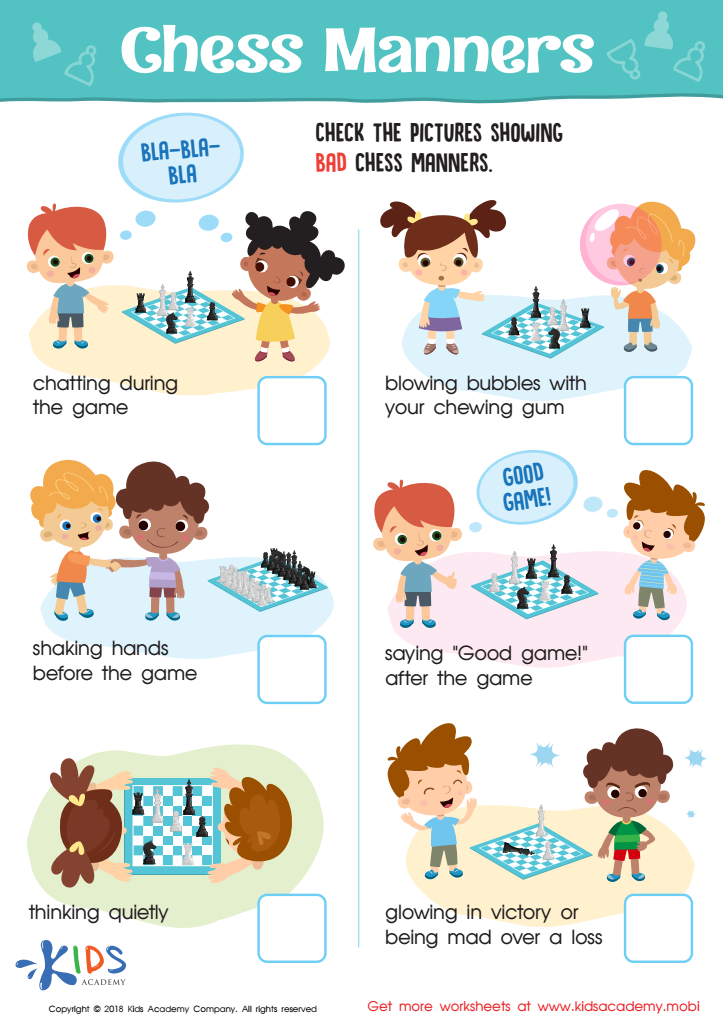
Chess Manners Worksheet
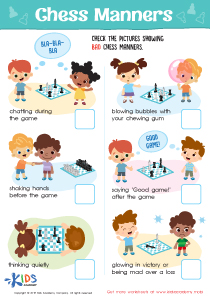
Teach your child chess manners in addition to table and social ones. Chess has clear rules and etiquette which must be followed for a proper game. Review this worksheet with your kid and discuss the pictures that show inappropriate behaviours. This will help them understand how to play the game correctly and with good manners.
Chess Manners Worksheet
Worksheet
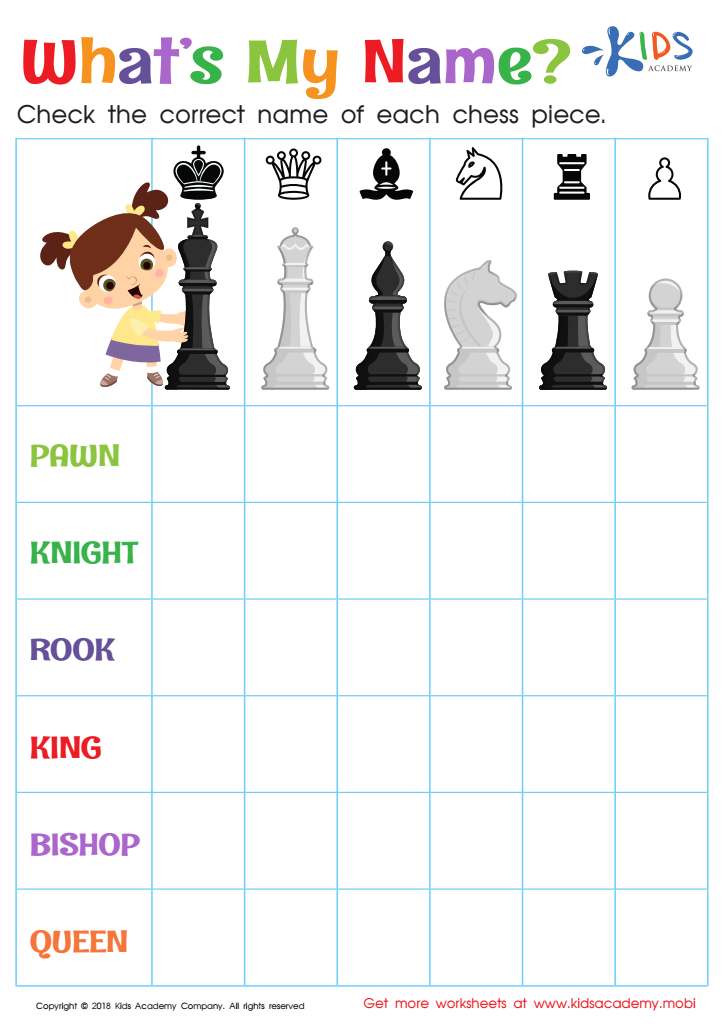
What's My Name? Worksheet
Test your child's chess knowledge with this colorful worksheet! There are six pieces lined up with names underneath. Ask your child to name each piece, then check if it's correct. Help them succeed by brushing up on the different pieces and their names.
What's My Name? Worksheet
Worksheet
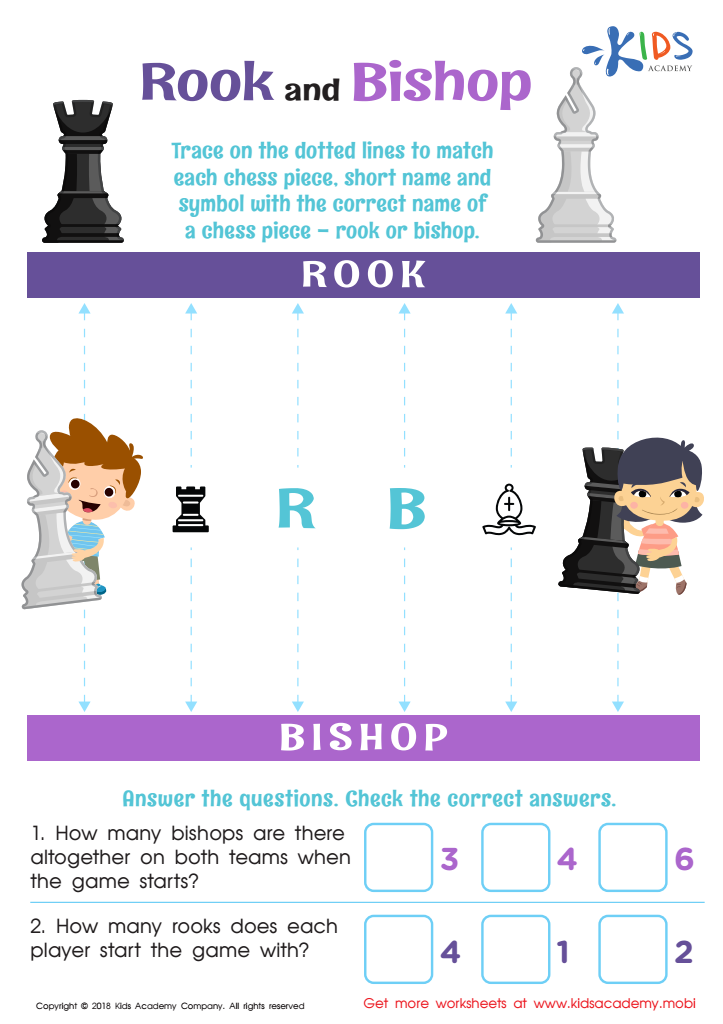
Rook and Bishop Worksheet
This tracing sheet helps your child learn chess pieces by matching each piece, short name and symbol to the correct name. After tracing, have them answer the questions and check their answers. It's a great way for them to become familiarized with chess.
Rook and Bishop Worksheet
Worksheet
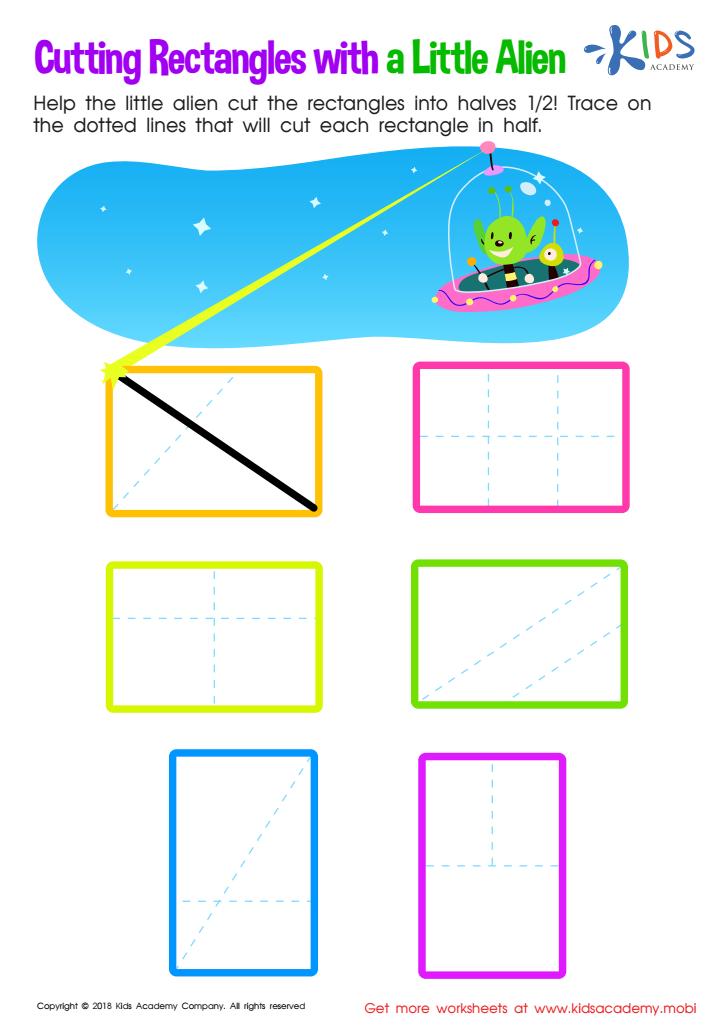
Cutting Rectangles with Alien Worksheet
If your students are interested in aliens and otherworldly events, they'll love this exercise! It requires them to help a small alien cut rectangles into halves (½). They must trace the dotted lines to accurately cut each rectangle.
Cutting Rectangles with Alien Worksheet
Worksheet
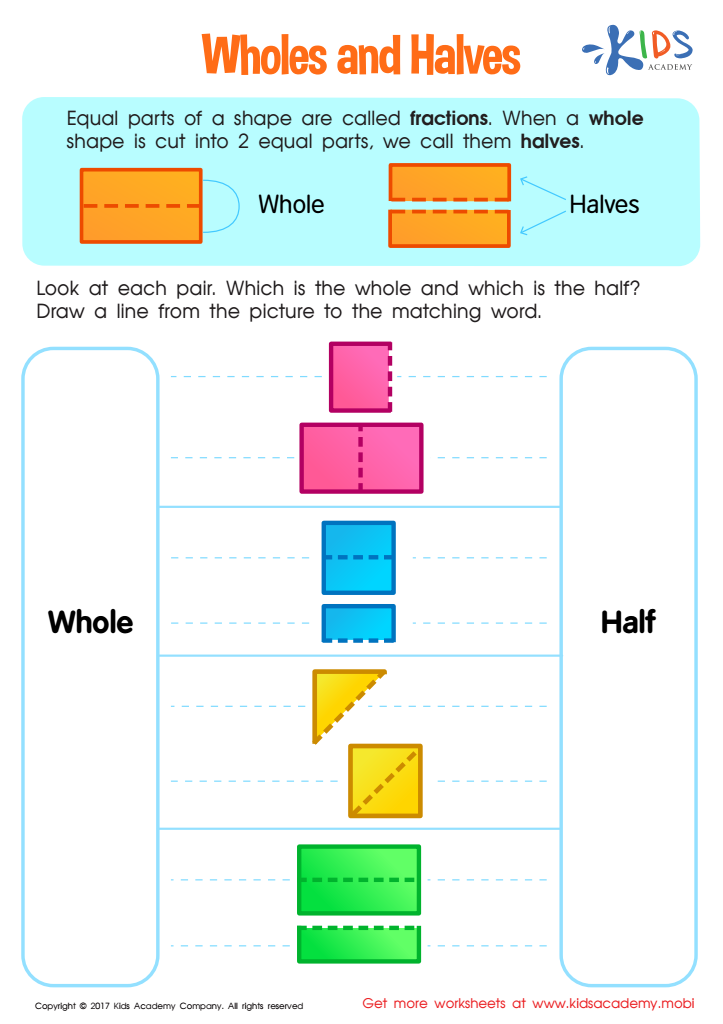
Wholes and Halves Worksheet
Students can feel overwhelmed with fractions. Help take the stress off by using a colorful worksheet to explain whole shapes and how to find halves. Ask them to identify the whole and point to the matching word for the half. A free printout can help guide them.
Wholes and Halves Worksheet
Worksheet
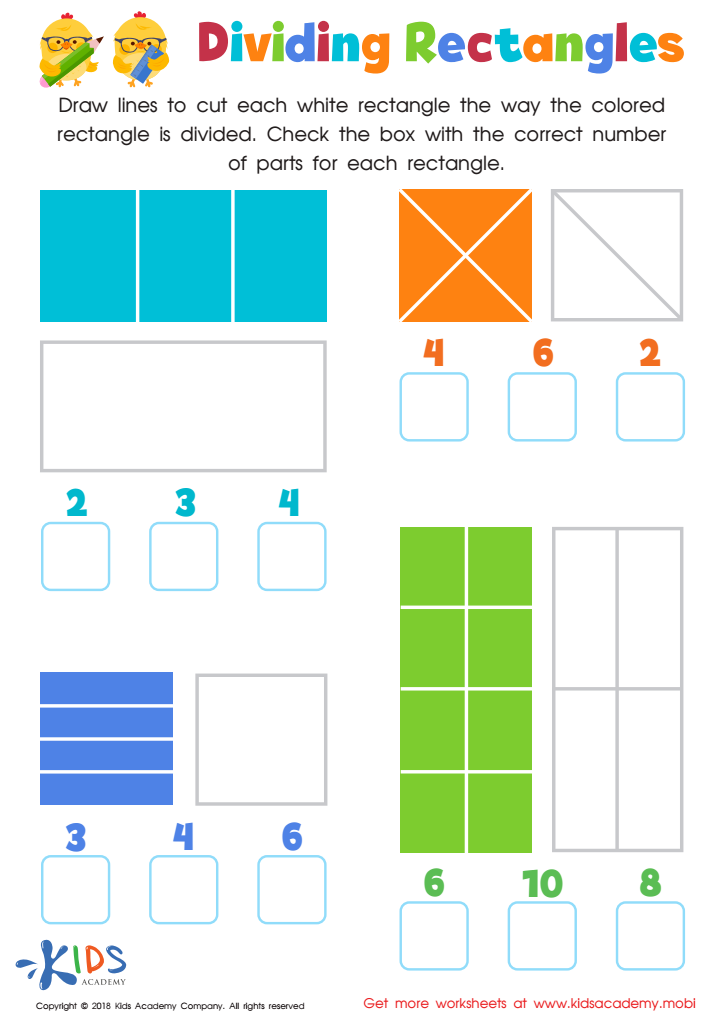
Dividing Rectangles Worksheet
Ask your child to draw lines to divide the white rectangles like the colored ones. Then, have them count the parts in each and choose the correct number. This worksheet will help them practice counting and dividing.
Dividing Rectangles Worksheet
Worksheet
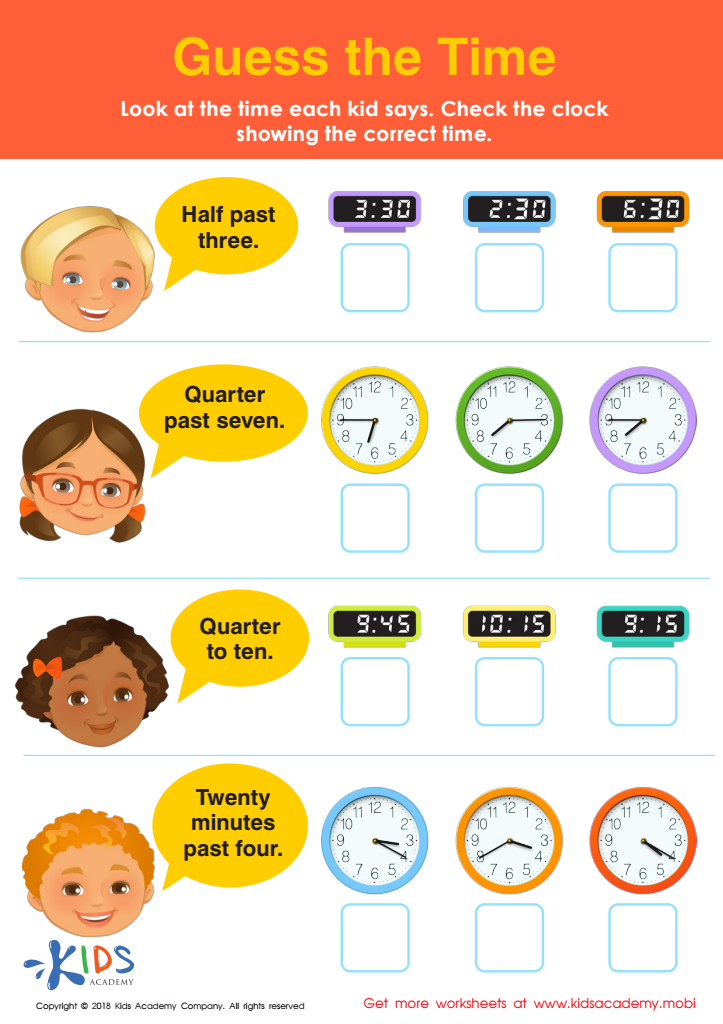
Guess the Time Worksheet
Help students tell the time accurately with this fun exercise. Read the time each person says and find the corresponding clock. Check the options on the left and have students guess the right time. This worksheet is sure to sharpen their time-telling skills.
Guess the Time Worksheet
Worksheet
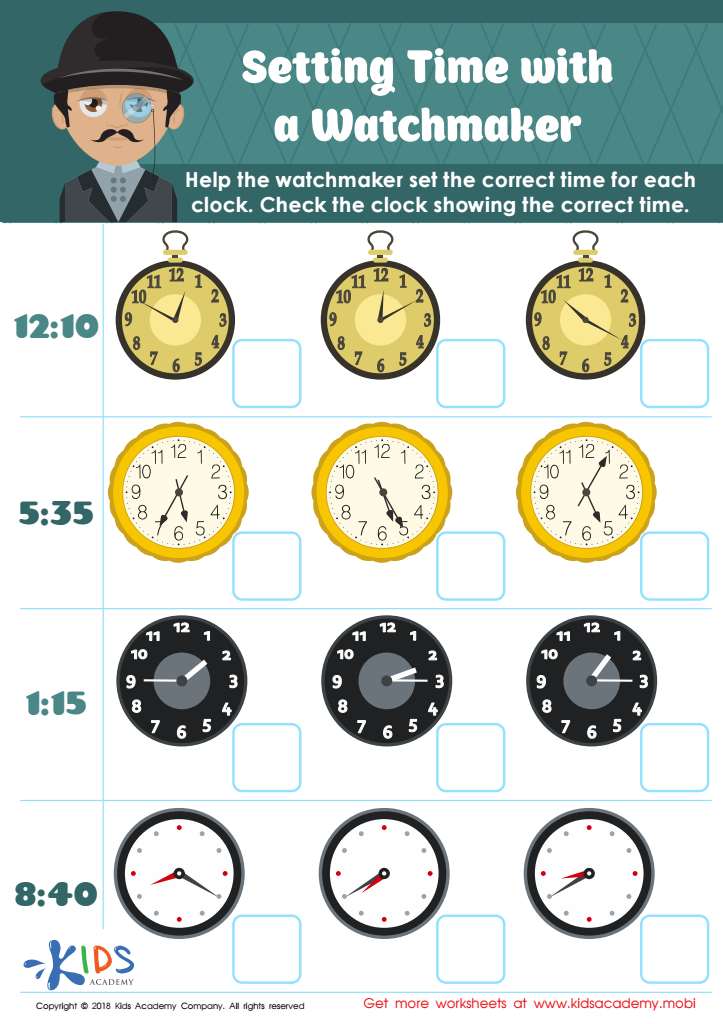
Setting Time with Watchmaker Worksheet
Can your kids tell the time? If so, this worksheet should be easy. Help them set the time for each clock: look at the time written on the left side and find the clock on the right side that matches.
Setting Time with Watchmaker Worksheet
Worksheet
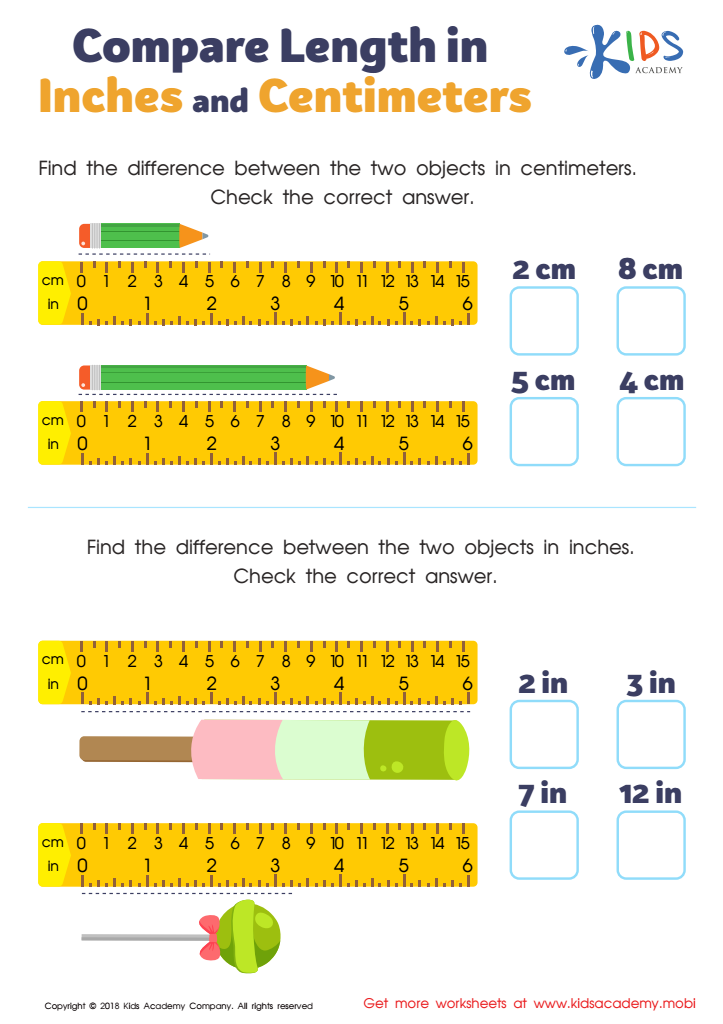
Compare Length in Inches and Centimeters Worksheet
This worksheet has your child measuring objects in both centimeters and inches. The first task requires measuring both objects in centimeters, then finding their difference. The second task is the same but in inches.
Compare Length in Inches and Centimeters Worksheet
Worksheet
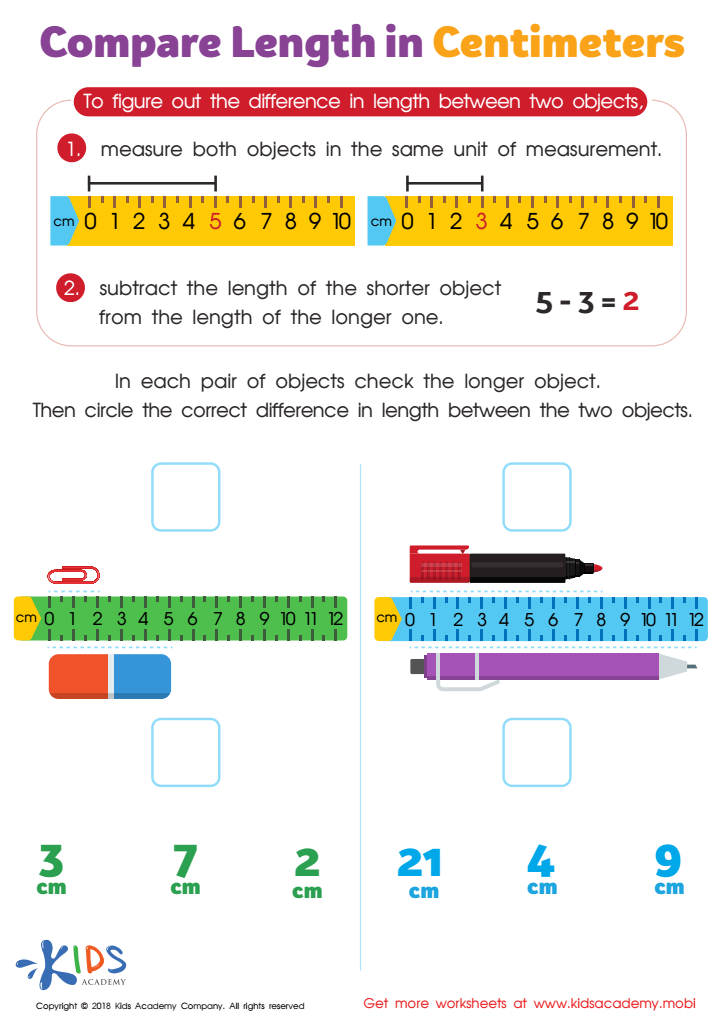
Compare Length in Centimeters Worksheet
To do this worksheet, your child needs to be able to measure accurately, add and subtract. They must measure both items and subtract the shorter from the longer to work out the difference in length.
Compare Length in Centimeters Worksheet
Worksheet
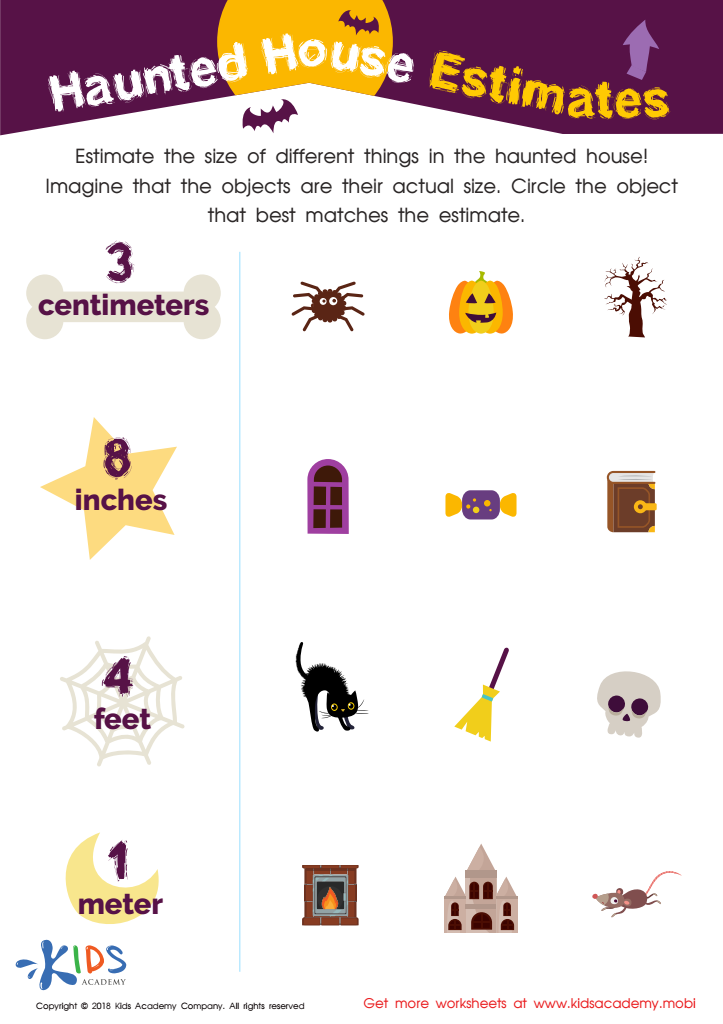
Haunted House Estimates Worksheet
Enliven your kid's learning with this printable worksheet! Have them estimate the size of objects and creatures in a haunted house, then circle the ones that match their estimates. They'll need to understand different measuring units beforehand. It's an exciting way to learn!
Haunted House Estimates Worksheet
Worksheet
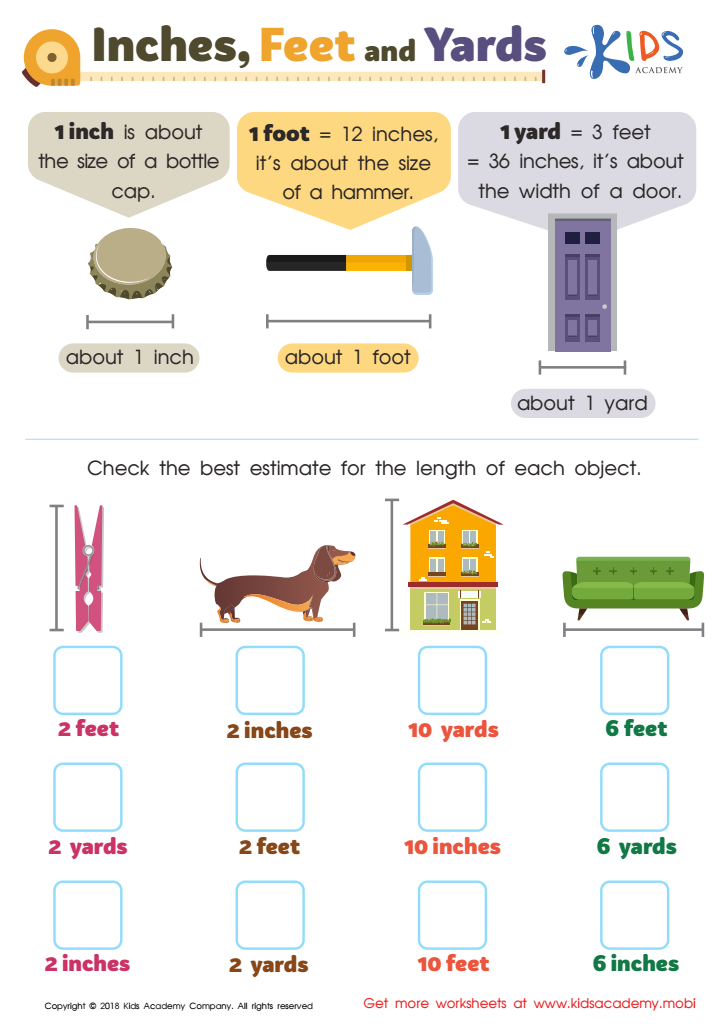
Inches, Feet and Yards Worksheet
Explain the size of measurements to your child by comparing them to objects they can visualize. For example, one inch is a bottle cap and one foot is the size of a hammer. Then, explain that one yard is the width of a door. Then, go through worksheets, circling the best estimates for each object's length.
Inches, Feet and Yards Worksheet
Worksheet
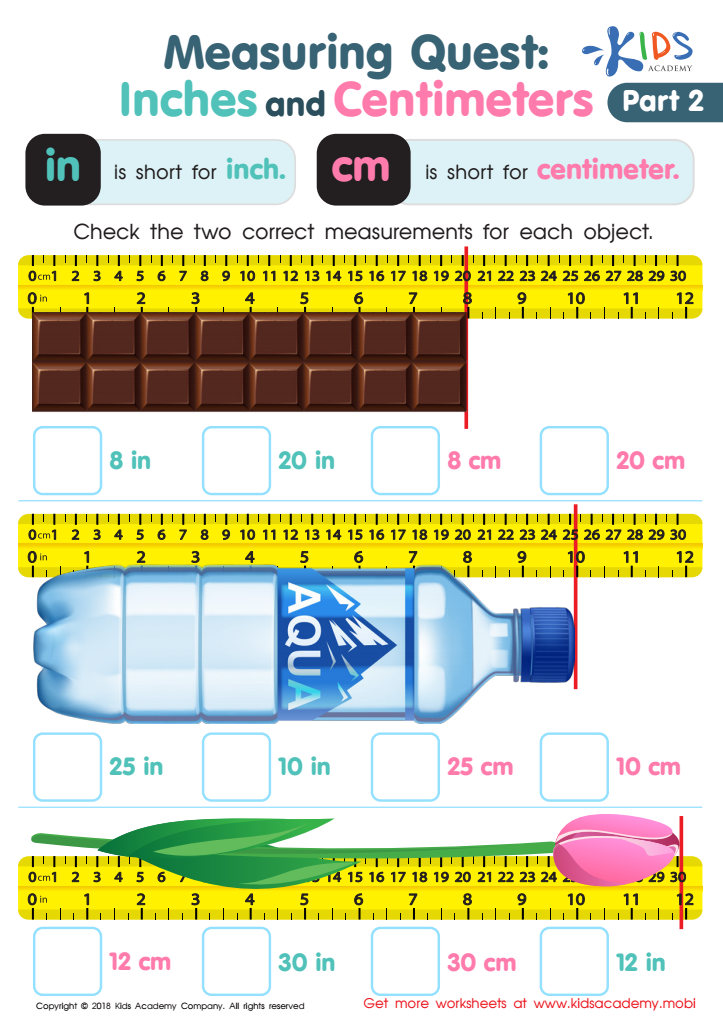
Measuring Quest: Inches and Centimeters - Part 2 Worksheet
This worksheet teaches kids how inches and centimeters measure up. It features rulers with centimeter measurements at the top, and inches at the bottom. Kids must choose the correct measurement for each object among the options provided.
Measuring Quest: Inches and Centimeters - Part 2 Worksheet
Worksheet
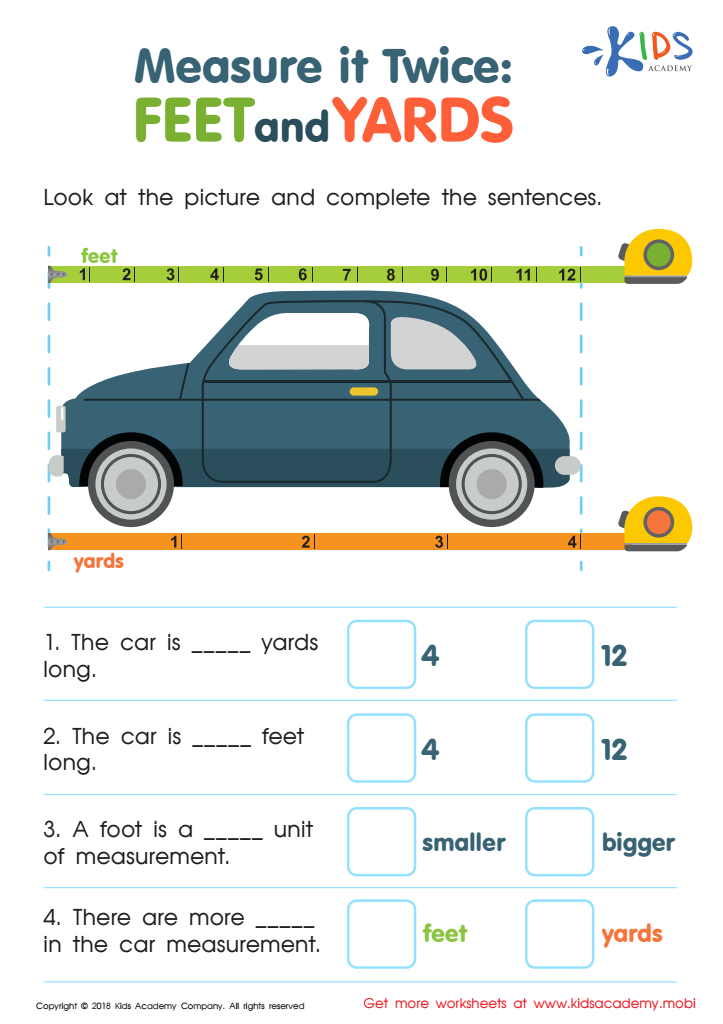
Measure It Twice: Feet and Yards Worksheet
A car is pictured with a metric ruler in feet at the top and a yard ruler at the bottom. Get your child to look at the picture and complete sentences about it; for example, how many yards long is the car? Is a foot a bigger or smaller unit of measurement? It'll teach them that 1 yard is equal to 3 feet.
Measure It Twice: Feet and Yards Worksheet
Worksheet
Join Kids Academy for Free
Who is primarily going to use this learning content?