Understanding symmetry Science Worksheets
3 filtered results
-
From - To
Discover the fascinating world of symmetry with our "Understanding Symmetry Science Worksheets"! Designed for young learners, these engaging activities make learning symmetry fun and interactive. Through various hands-on exercises, children will explore the concept of symmetry, identify symmetrical shapes, and understand the importance of this concept in nature and everyday life. Each worksheet is crafted to enhance cognitive skills, encourage critical thinking, and spark curiosity in science. Ideal for classroom use or at-home practice, our printable worksheets are perfect for building a strong foundation in fundamental science concepts. Download now and watch your child’s love for learning grow!
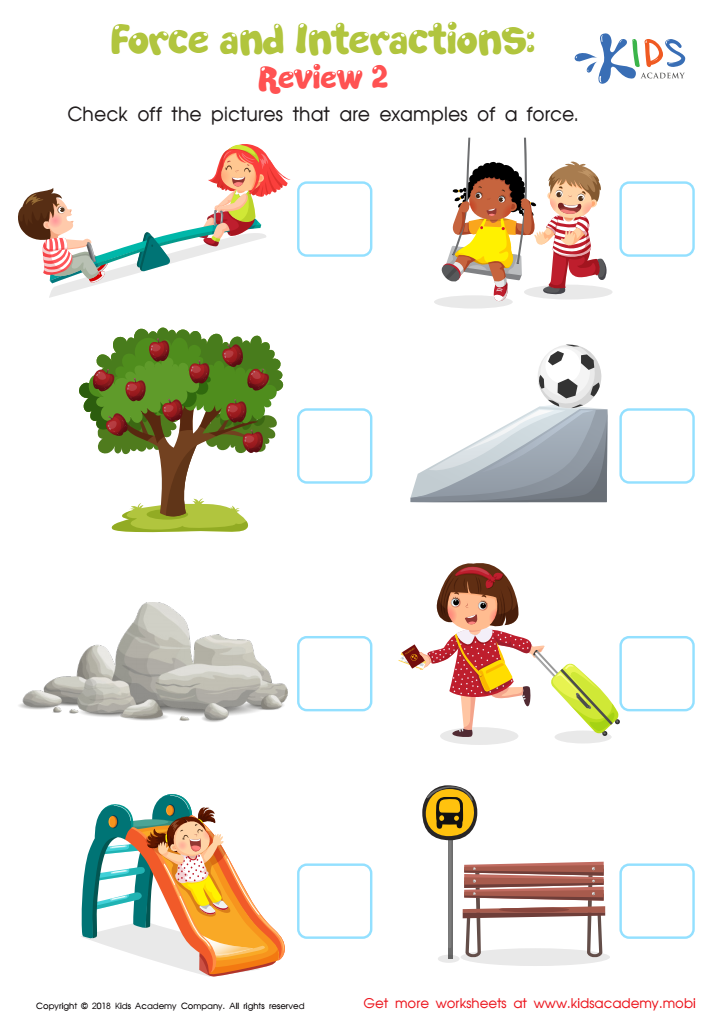
Force and Interactions: Review 2 Worksheet
 Assign to My Students
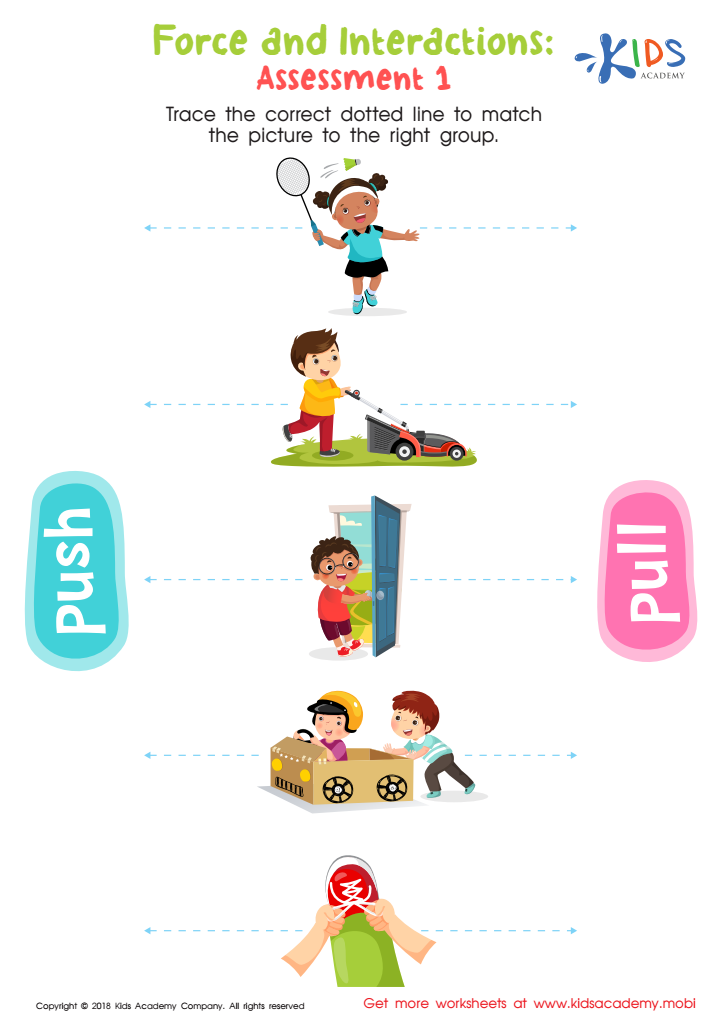
Force and Interactions: Assessment 2 Worksheet
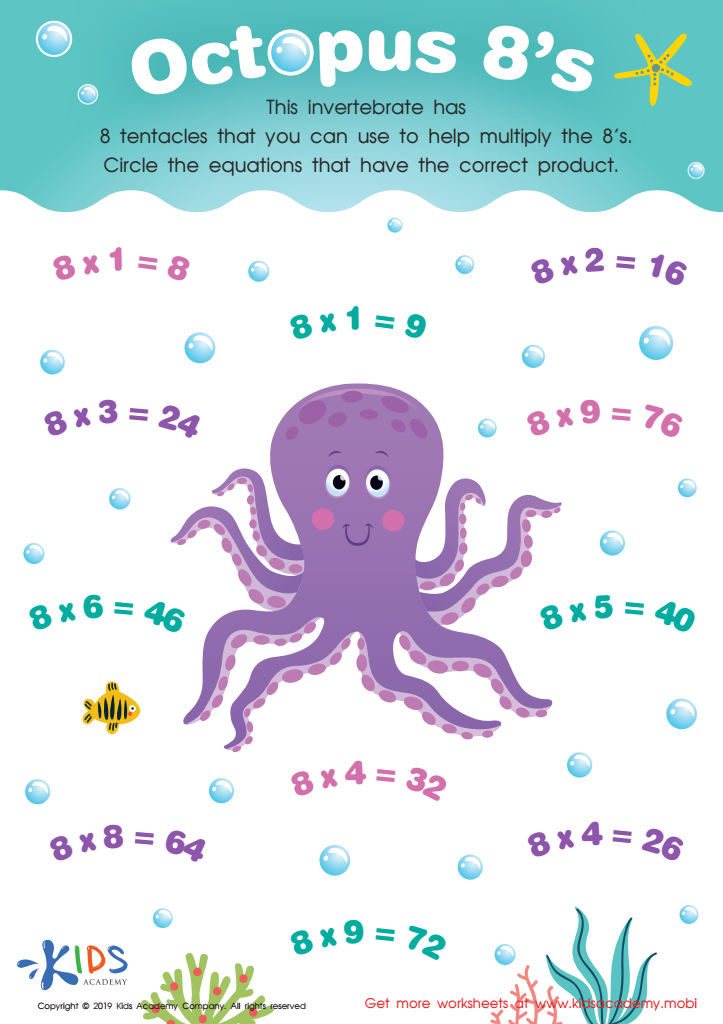
Octopus 8’s Worksheet








Understanding symmetry in science is vital for both parents and teachers because it lays a foundational block for a child’s cognitive and academic development. Symmetry is not only visually pleasing but also instills a sense of balance and harmony, essential for various scientific and mathematical principles. When children learn about symmetry, they enhance their spatial awareness, a critical skill that helps in understanding basic geometry, patterns, and structures relevant not just in mathematics but in biology, chemistry, and physics as well.
From a cognitive development perspective, grasping the concept of symmetry can improve problem-solving and critical thinking skills. It prompts children to observe, compare, and analyze objects and patterns in their environments, fostering a methodical approach to learning. It also includes practice in identifying patterns, which is a critical component of both logic and creativity.
Moreover, symmetry is omnipresent, from the structure of crystals to the balanced design in architecture, art, and nature. Recognizing these patterns can inspire a deeper interest and appreciation of the natural world and human-made structures, promoting interdisciplinary learning. Teachers and parents focusing on symmetry can thus provide their children with a holistic educational experience that bridges conceptual understanding and real-world application. This rounded approach bolsters a child's confidence and success across various subjects and everyday situations.







