Phonics worksheets activities for Ages 4-9 - Page 2
25 filtered results
-
From - To
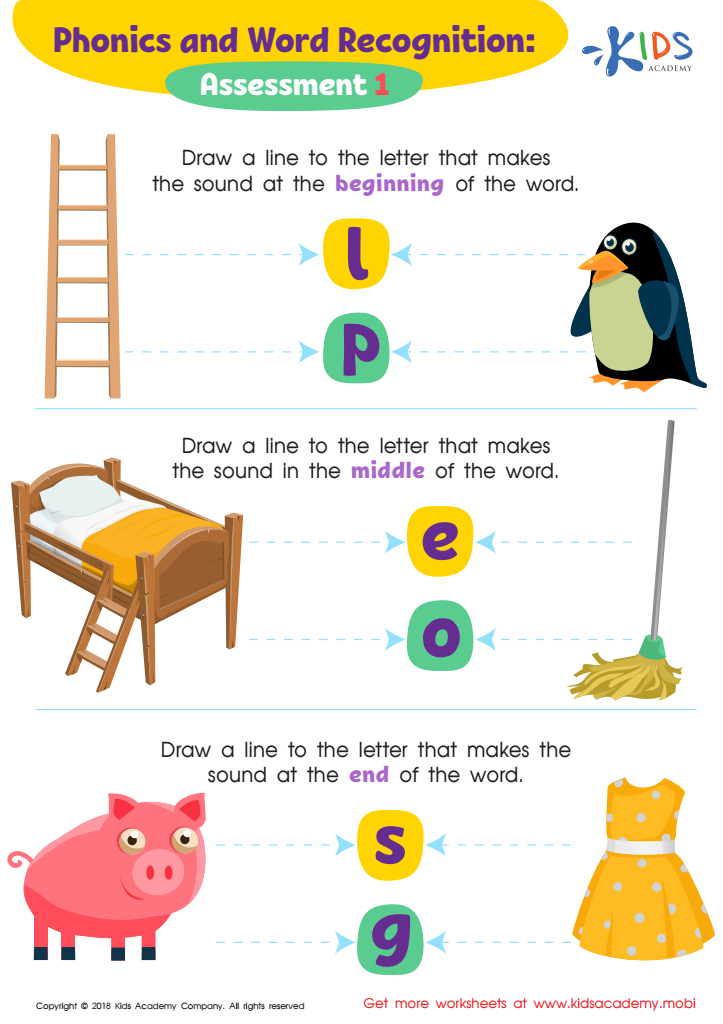
Phonics and Word Recognition: Assessment 1 ELA Worksheet
 Assign to My Students








Phonics activities are crucial for the literacy development of children aged 4-9, as they form the foundation for reading and writing skills. Understanding phonics—the relationship between letters and sounds—enables children to decode words, enhancing their ability to read independently and with confidence. Engaging in phonics activities helps children recognize sound patterns, promoting phonemic awareness, which is the ability to hear, identify, and manipulate sounds.
For parents and teachers, investing time in phonics activities yields long-term benefits. Children who grasp phonics concepts early are more likely to experience reading success, strengthening their language skills and boosting academic performance across subjects. Additionally, as they become proficient readers, children tend to develop a greater love for reading, fostering imagination and critical thinking.
Moreover, phonics instruction offers a structured approach to learning, making it easier for educators to assess progress and tailor interventions for struggling readers. The reinforcement of phonics skills also cultivates a strong vocabulary, further enhancing communication skills. Therefore, parents and teachers should prioritize phonics activities—they are essential for setting children on a path towards literacy, self-esteem, and lifelong learning success.








