
Pattern recognition Math Worksheets for Ages 3-5
16 filtered results
Difficulty Level
Grade
Age
-
From - To
Subject
Activity
Standards
Discover our engaging Pattern Recognition Math Worksheets designed specifically for children aged 3-5! These worksheets introduce young learners to foundational math skills by focusing on patterns—essential for developing critical thinking and problem-solving abilities. With vibrant visuals and fun activities, children will delight in identifying, creating, and extending patterns involving shapes, colors, and numbers. Our resources support early childhood development by fostering cognitive growth, enhancing concentration, and promoting a love for learning. Perfect for parents and educators, these interactive worksheets make learning enjoyable and effective. Encourage your little ones to explore the world of patterns today!
Favorites
With answer key
Interactive
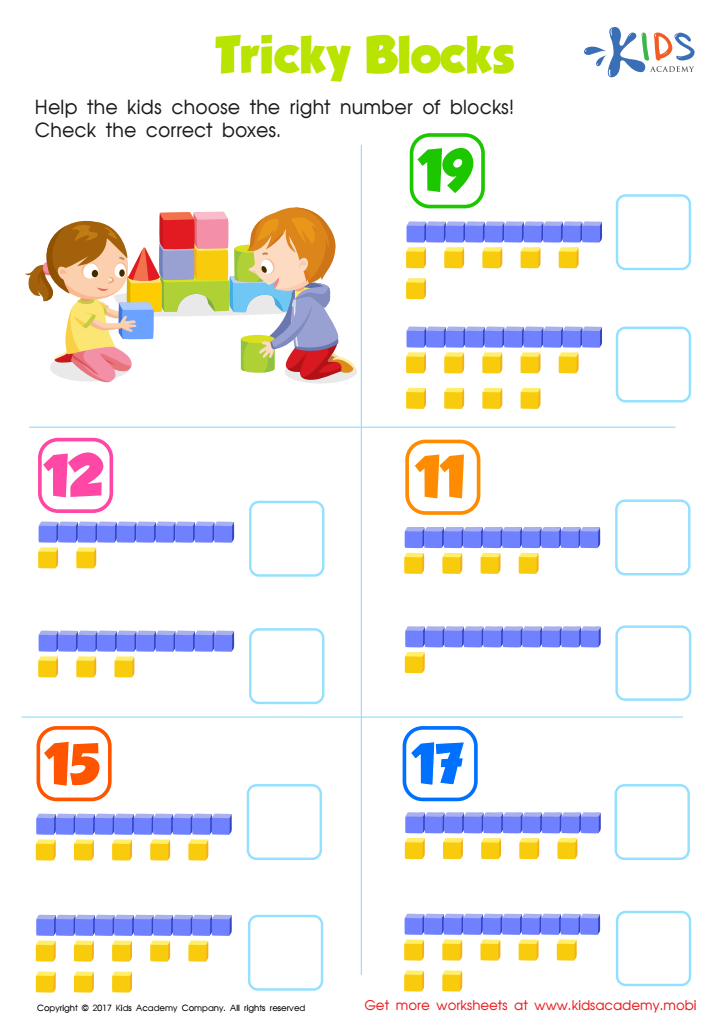
Tricky Blocks Worksheet
Help your child count with this printable worksheet. You'll be able to explain the technicalities of each answer as you work together to count the boxes and choose the correct number in the spaces provided. This will help your child better understand the concept and will go faster than if they do it alone.
 Assign to My Students
Tricky Blocks Worksheet
Worksheet
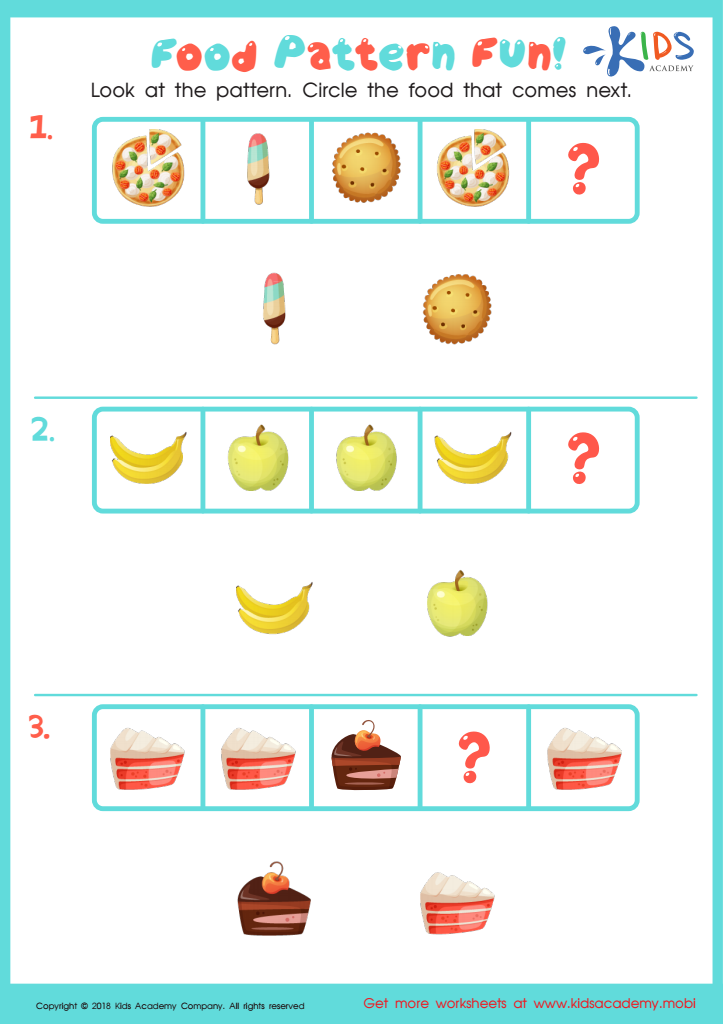
Food Pattern Fun Worksheet
Got kids who love snacks? Get them excited with this fun food pattern worksheet! Ask them to identify the foods in the printout then spot the pattern and circle the next food in each row. It's a great way to get them thinking and have fun at the same time!
Food Pattern Fun Worksheet
Worksheet
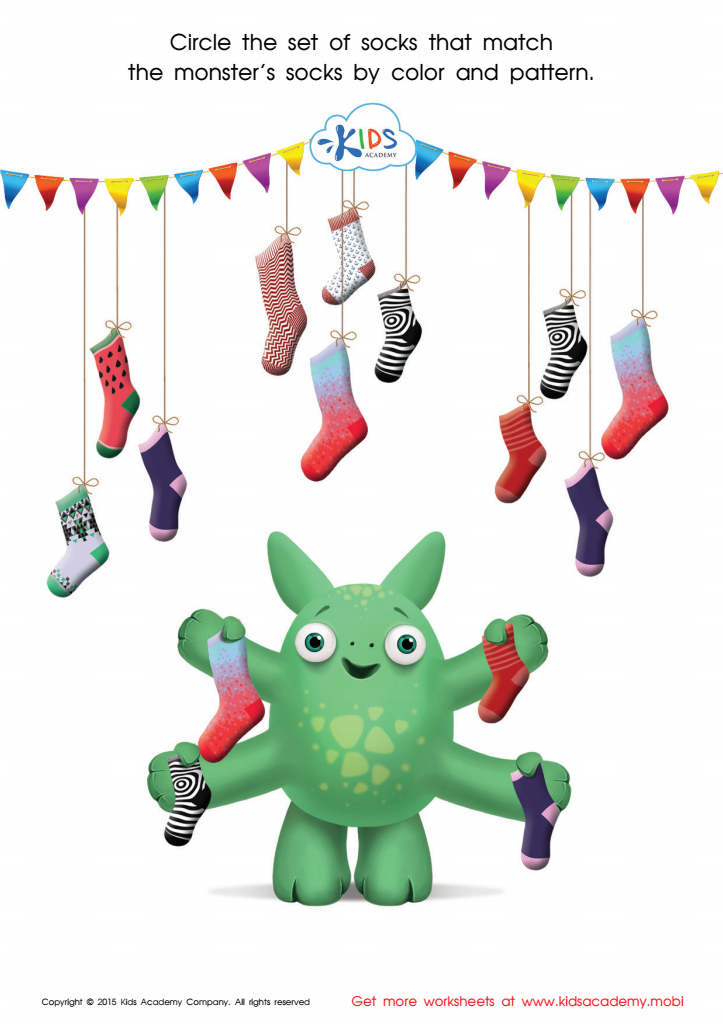
Sort the Monster's Socks Worksheet
Let your little one challenge herself and practice with matching Monster socks. She must be very attentive to match the same socks and draw a line connecting them!
Sort the Monster's Socks Worksheet
Worksheet
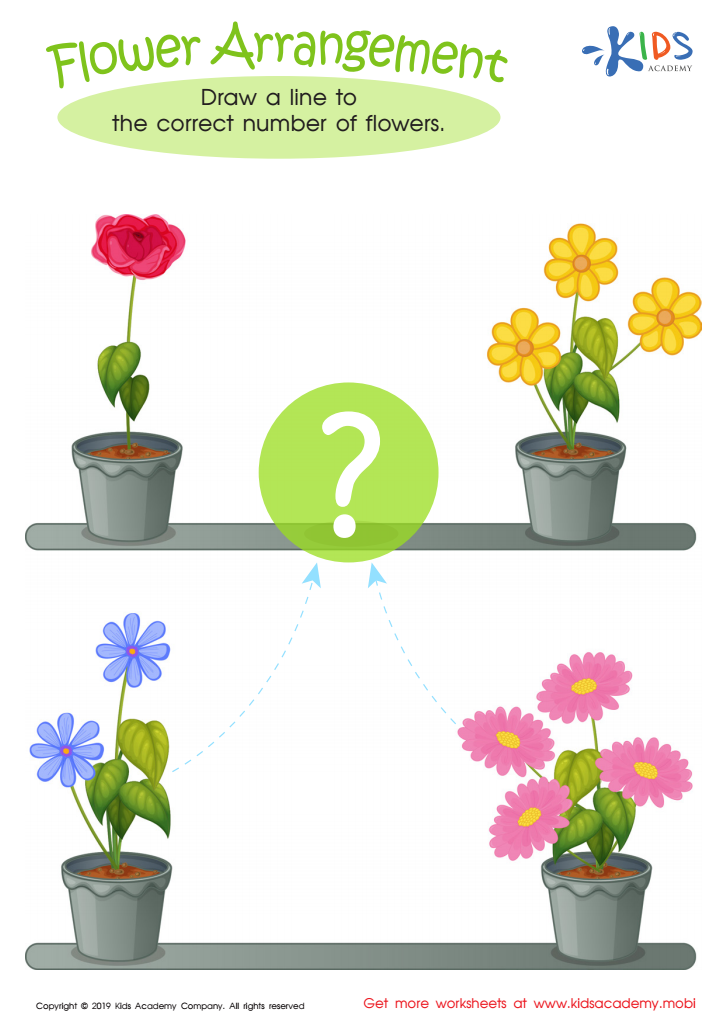
Flower Arrangement Worksheet
Your math whizzes can use flower power to showcase their counting skills with this bright PDF! One-to-one representation in pictures helps children build number sense, which leads to better math and computation efficiencies. This PDF features traceable lines for kids to draw to the correct number of flowers, all while practicing their counting with pretty pictures.
Flower Arrangement Worksheet
Worksheet
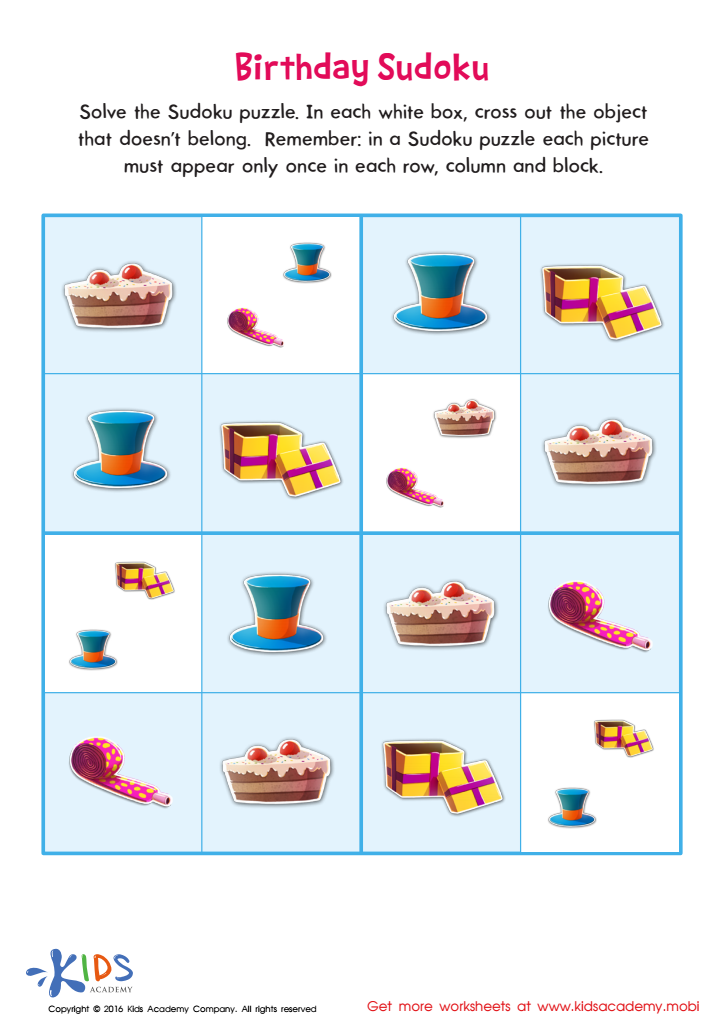
Birthday Sudoku Sorting Worksheet
With this Sudoku printable, your child will have fun and strengthen their problem-solving skills.
Birthday Sudoku Sorting Worksheet
Worksheet
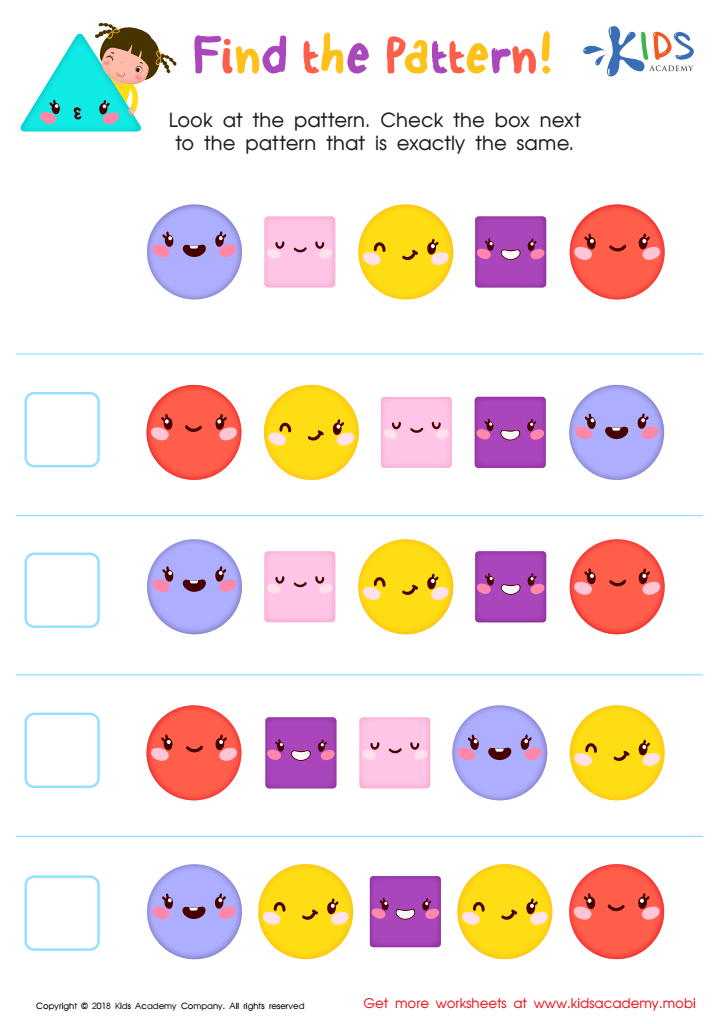
Find the Pattern Worksheet
This colorful pattern worksheet is perfect for testing your kids' pattern recognition. The bright colors will keep them engaged, while they check the box next to the pattern that is the same. Ask your kids to identify the colors used and see how well they can spot similarities!
Find the Pattern Worksheet
Worksheet
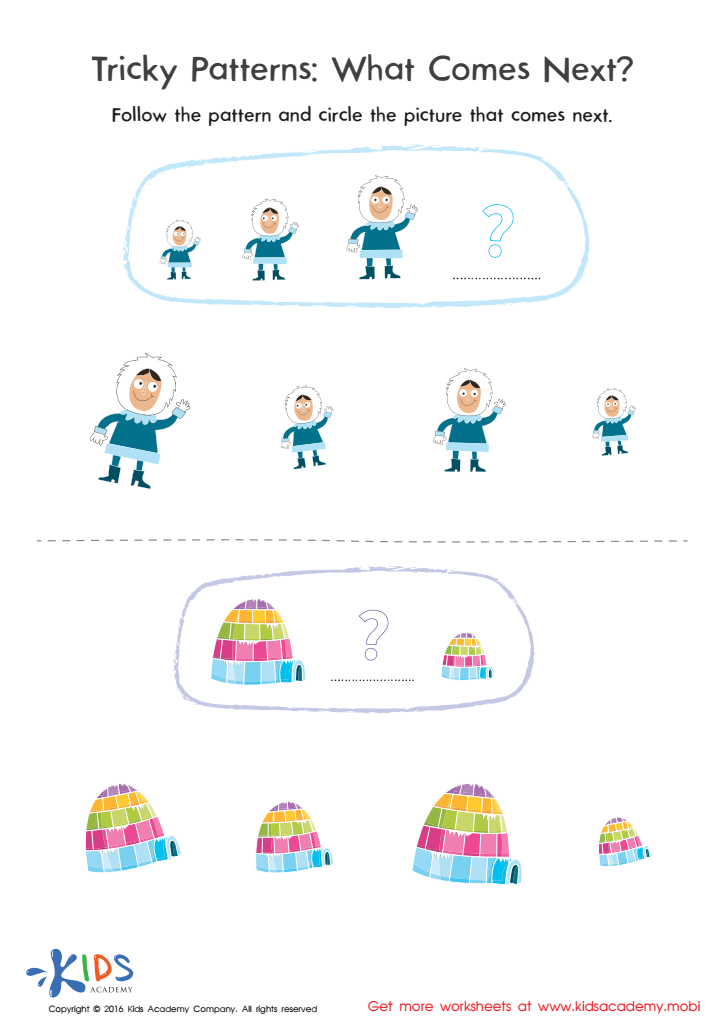
Tricky Patterns Size Worksheet
Give your child a head start on critical thinking with this picture pattern worksheet! It's an intriguingly fun way to help them master important skills like spatial reasoning, critical thinking, and logical reasoning. They'll differentiate between shapes, complete the pattern with a logical answer, and look for and understand patterns. It's the perfect foundation for future math skills, setting them up for future success!
Tricky Patterns Size Worksheet
Worksheet
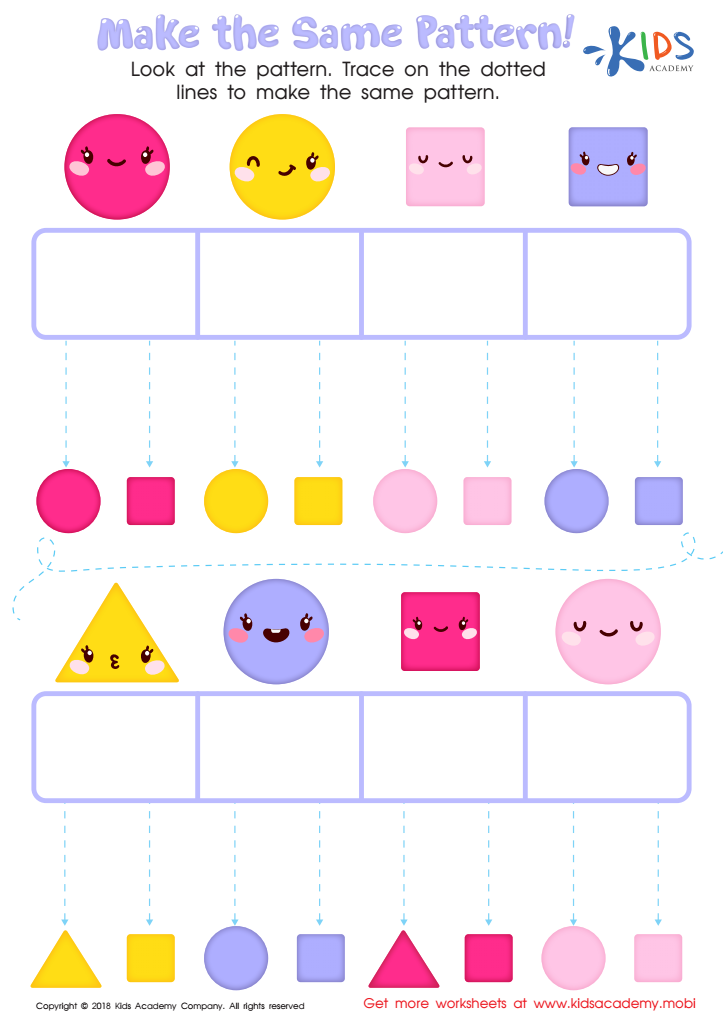
Make the Same Pattern Worksheet
Help your child look at the patterns in the tracing sheet and guide them to trace the dotted lines to match the shapes. This exercise tests their ability to copy pictures correctly, so emphasize the importance of paying attention to the instructions and details.
Make the Same Pattern Worksheet
Worksheet
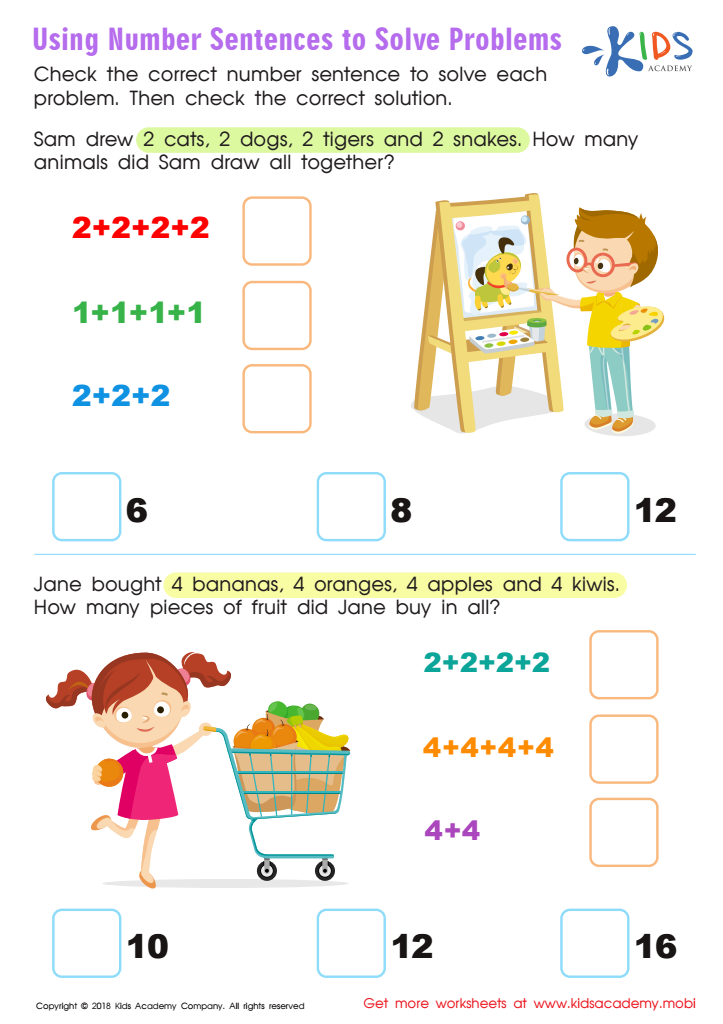
Using Number Sentences to Solve Problems Worksheet
Solving math problems requires an efficient strategy. Picture representation can help young mathematicians with basic addition problems, especially when it involves repeated addends. As they gain confidence, they'll be able to apply their number sentence solving abilities to more complex equations.
Using Number Sentences to Solve Problems Worksheet
Worksheet
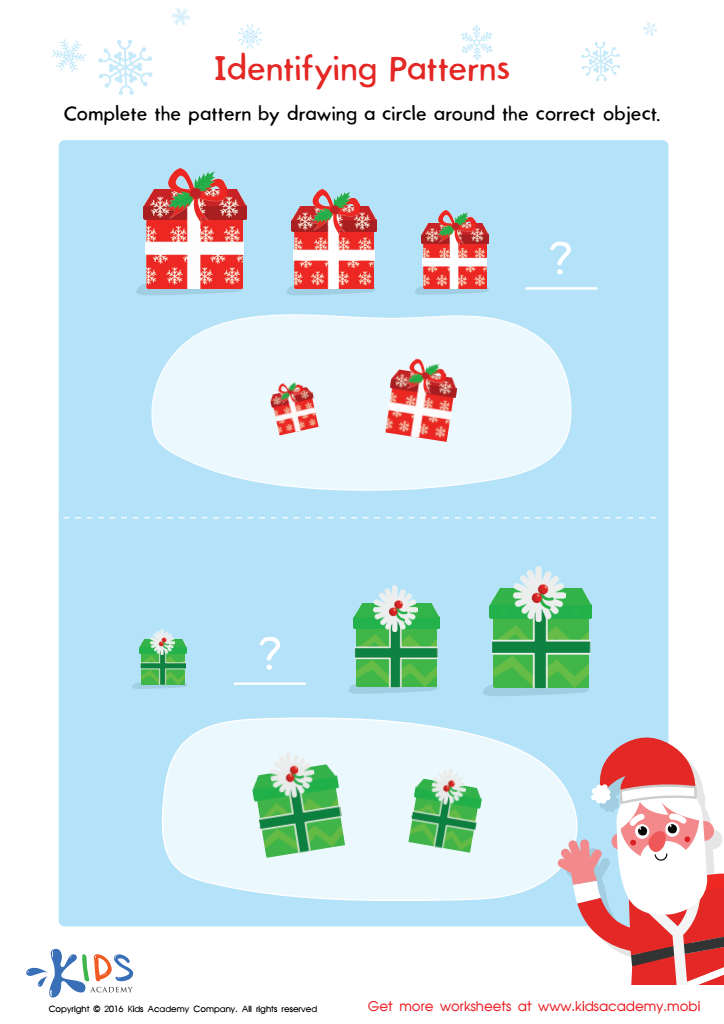
Identifying Patterns Worksheet
Kids can have fun as they learn with this festive worksheet! They'll practice early math skills while identifying patterns with colorful Christmas presents. Have your child get ready for the holidays by finding out which box comes next in the pattern!
Identifying Patterns Worksheet
Worksheet
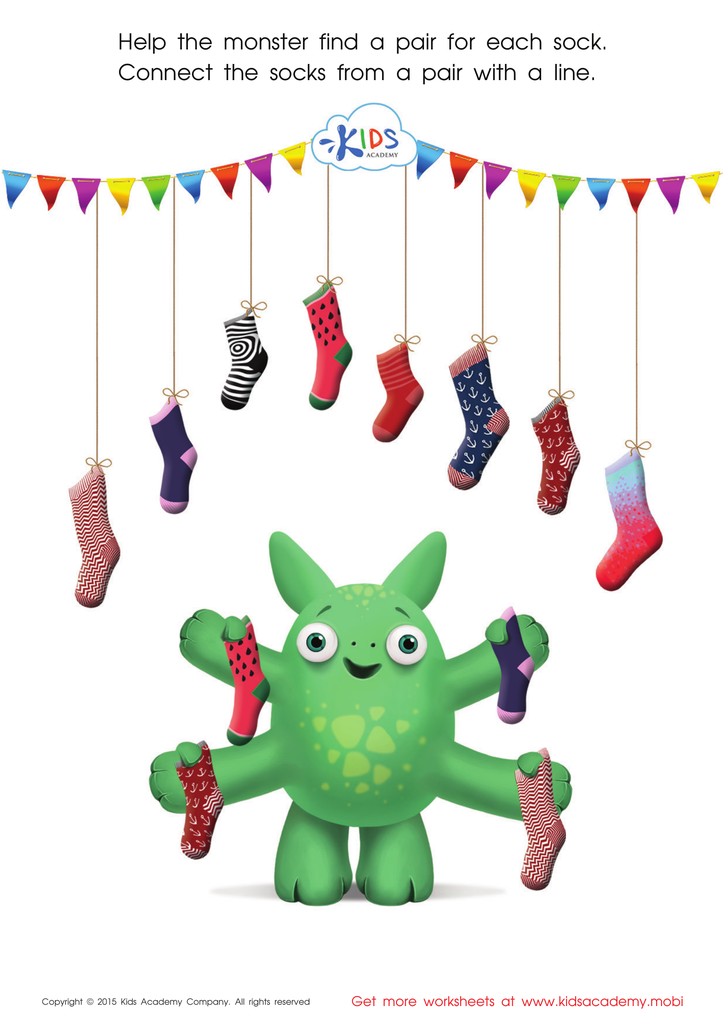
Math Matching Game: Monsterв's Socks Worksheet
Help the Monster put pairs of socks back together after a big storm! Kids draw lines to match the socks and develop cognitive and fine motor skills. Download and print the worksheet from Kids Academy. More preschool and kindergarten activities available.
Math Matching Game: Monsterв's Socks Worksheet
Worksheet
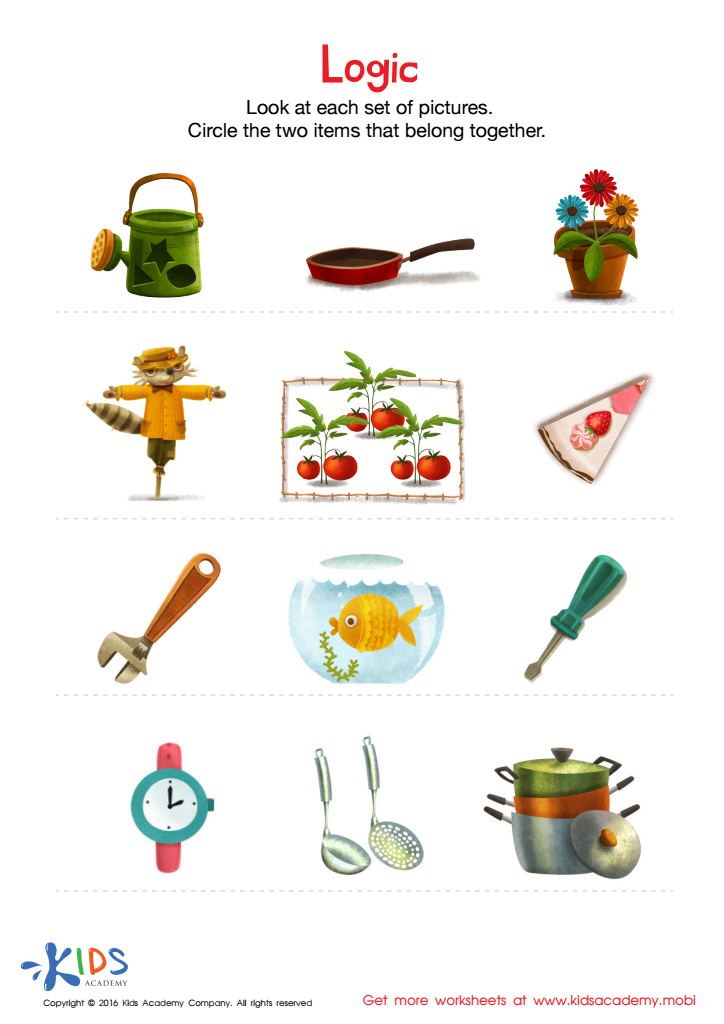
Logic Game Sorting Worksheet
Start your child's logic and reasoning development early with this fun matching worksheet! Through cute images and simple conversations, your little one can learn problem-solving, categorization, and matching skills. Plus, it's a great way for children to explore how items are used in real life. Try it and watch them boost skills with ease and fun!
Logic Game Sorting Worksheet
Worksheet
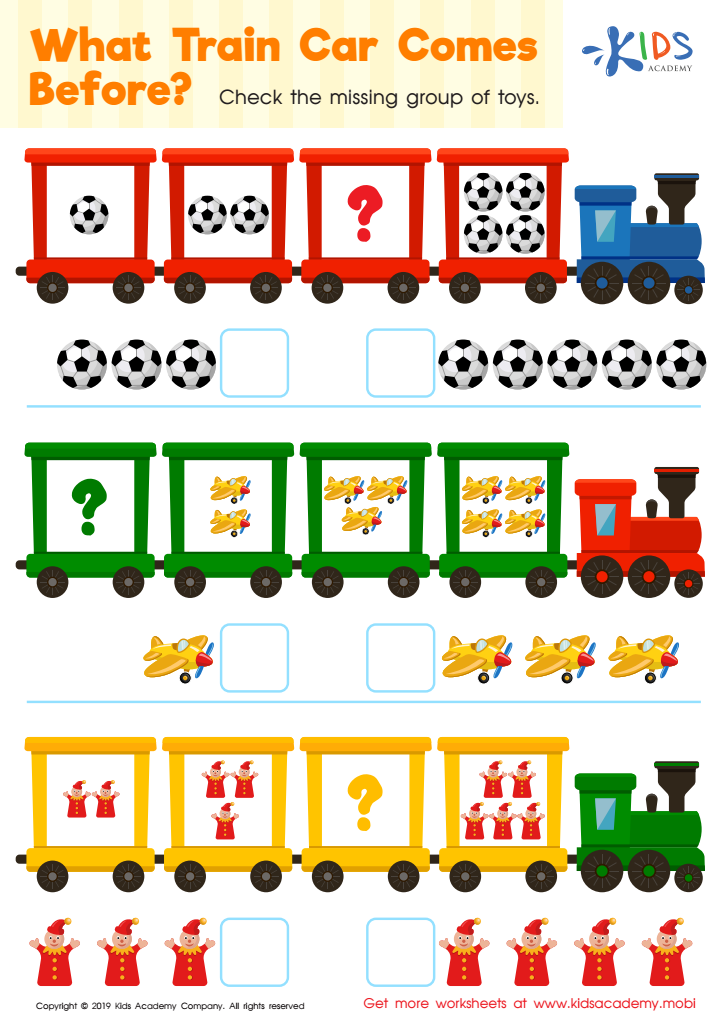
What Train Car Comes Before? Worksheet
Download this worksheet with your kids and have them identify the colorful objects pictured. Count the toys in the three trains together, then check the missing group of toys from the options provided. Have fun! (80 words)
What Train Car Comes Before? Worksheet
Worksheet
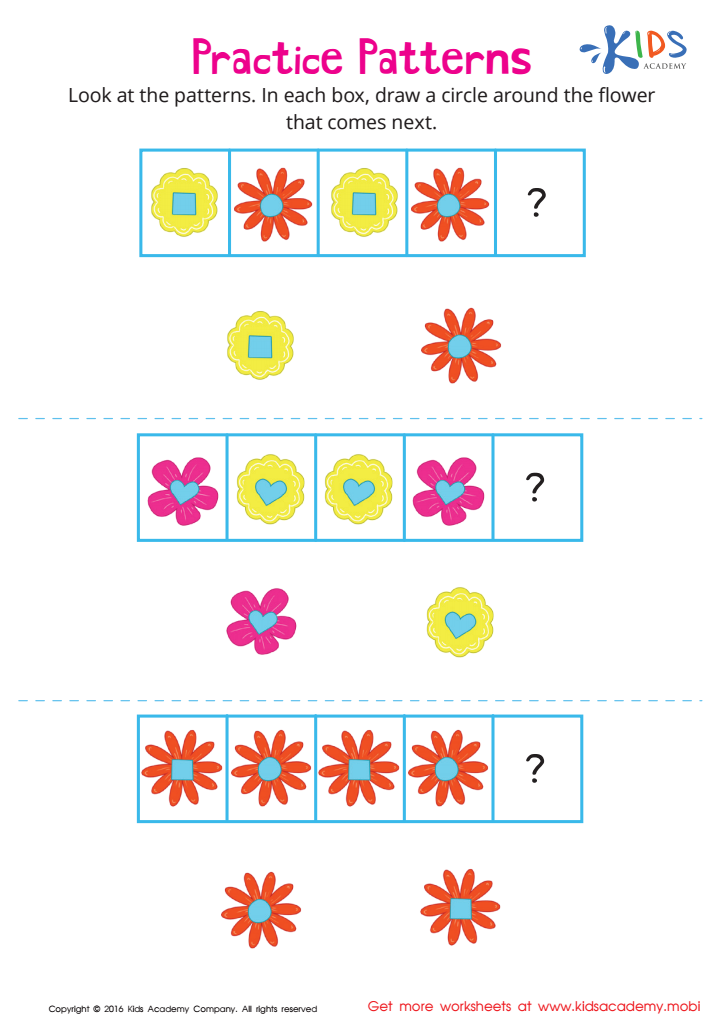
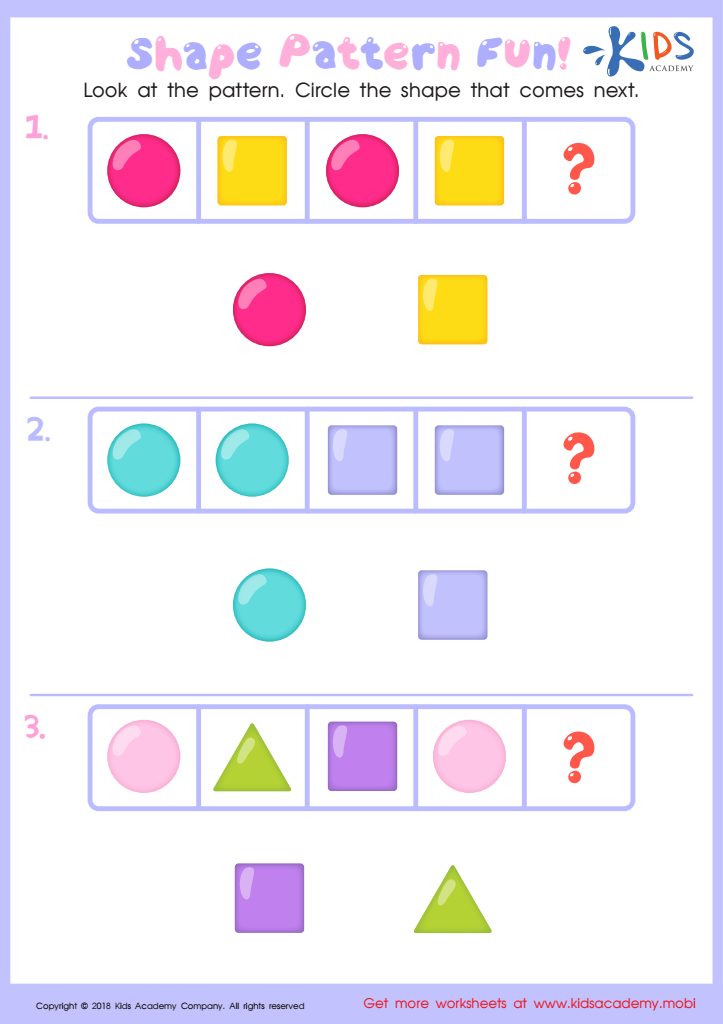
Shape Pattern Fun Worksheet
Challenge your kids to look at the pictures and identify colors, shapes and patterns. Ask them to circle the shapes that follow the sequence. See if they can spot the pattern and stick to it!
Shape Pattern Fun Worksheet
Worksheet
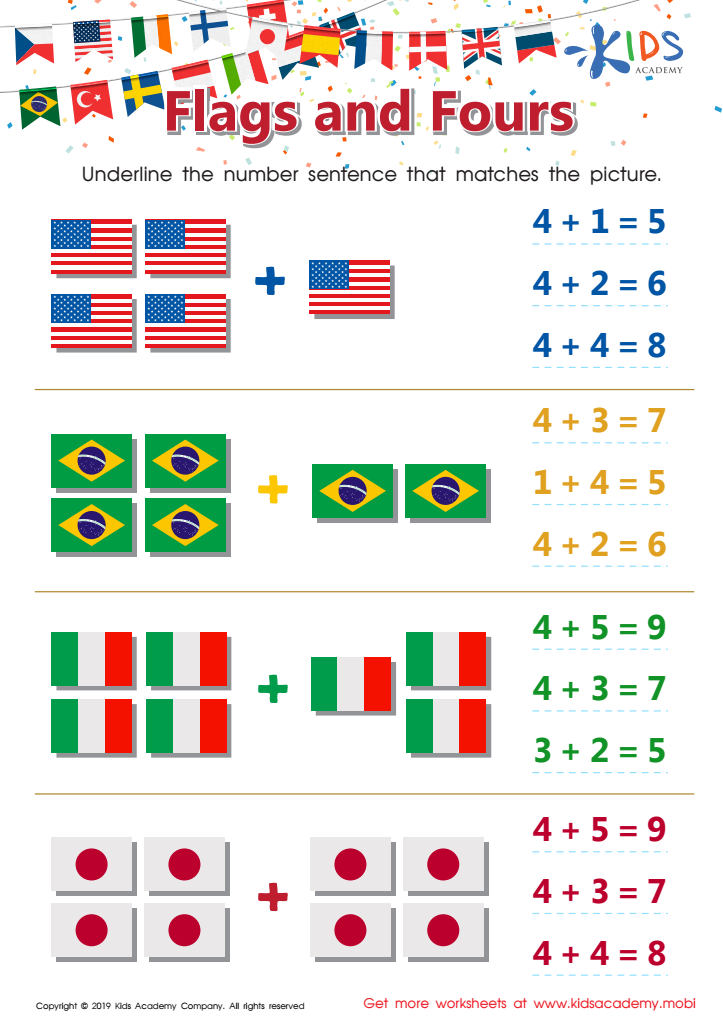
Flags and Fours Worksheet
Have your kids identify country flags from this colorful printout. Then, ask them to underline the number sentence that goes with each flag. Combining math with national flag recognition strengthens kids' knowledge of both, promoting an understanding of identity and numbers.
Flags and Fours Worksheet
Worksheet
Join Kids Academy for Free
Who is primarily going to use this learning content?






Pattern recognition in mathematics is a fundamental skill crucial for early childhood development, especially for children aged 3 to 5. During this formative period, children are naturally inclined to observe and categorize the world around them. Engaging in pattern recognition activities lays the groundwork for their mathematical understanding and logical thinking skills.
Parents and teachers should care about fostering this skill because early exposure to patterns helps children develop critical cognitive abilities. Recognizing patterns enhances their problem-solving skills and encourages analytical reasoning. Furthermore, it builds a foundation for more advanced mathematical concepts such as addition, subtraction, geometry, and algebra.
Additionally, pattern recognition nurtures creativity and strategic thinking. Through activities like sorting objects, experimenting with colors, or engaging in rhymes and sequences, children learn to predict outcomes, which boosts their confidence in learning.
Moreover, promoting pattern recognition supports language development as children articulate and describe their observations. This interdisciplinary approach enriches their learning experience, making it essential for parents and educators to provide ample opportunities for practice. By integrating pattern recognition into everyday activities, we equip young learners with necessary skills that serve as building blocks for future academic success.








