Vocabulary Building Matching Worksheets for Ages 3-5
6 filtered results
-
From - To
Boost your child's vocabulary in a fun and engaging way with our Vocabulary Building Matching Worksheets for ages 3-5! Designed to enhance language skills, these worksheets encourage young learners to match words with corresponding images, promoting word recognition and comprehension. Our colorful and interactive activities foster early literacy while keeping kids entertained. Perfect for parents and educators, these printable resources can easily be incorporated into at-home learning or classroom settings. Help your little ones build a strong foundation in vocabulary with our cleverly crafted matching exercises, setting them up for success as they begin their educational journey!
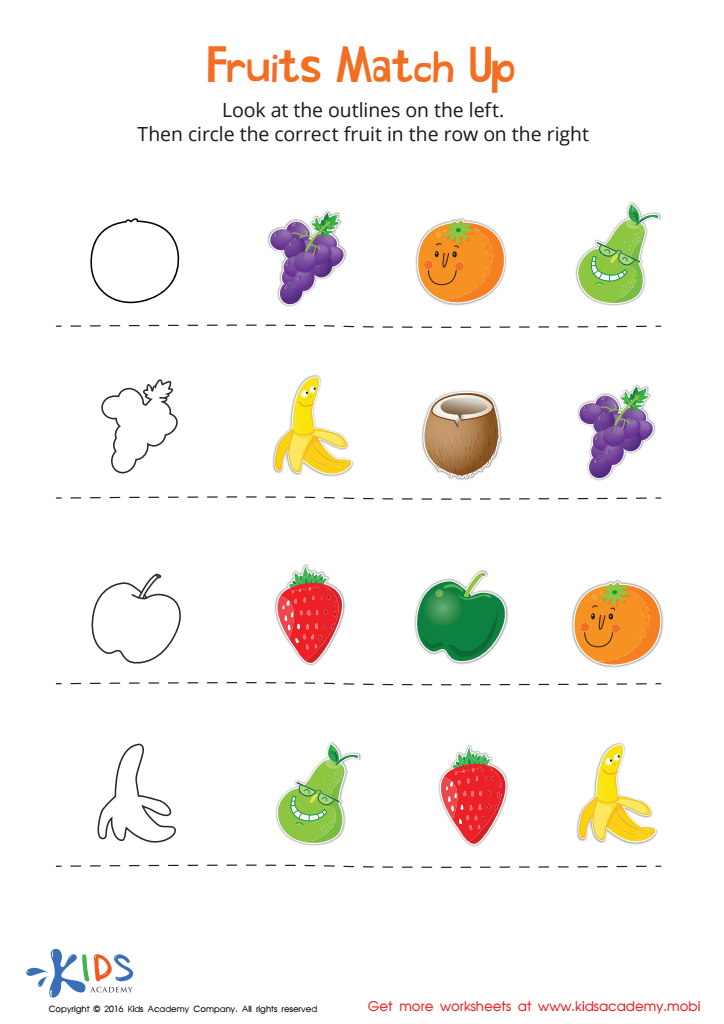
Fruits Match Up Worksheet
 Assign to My Students
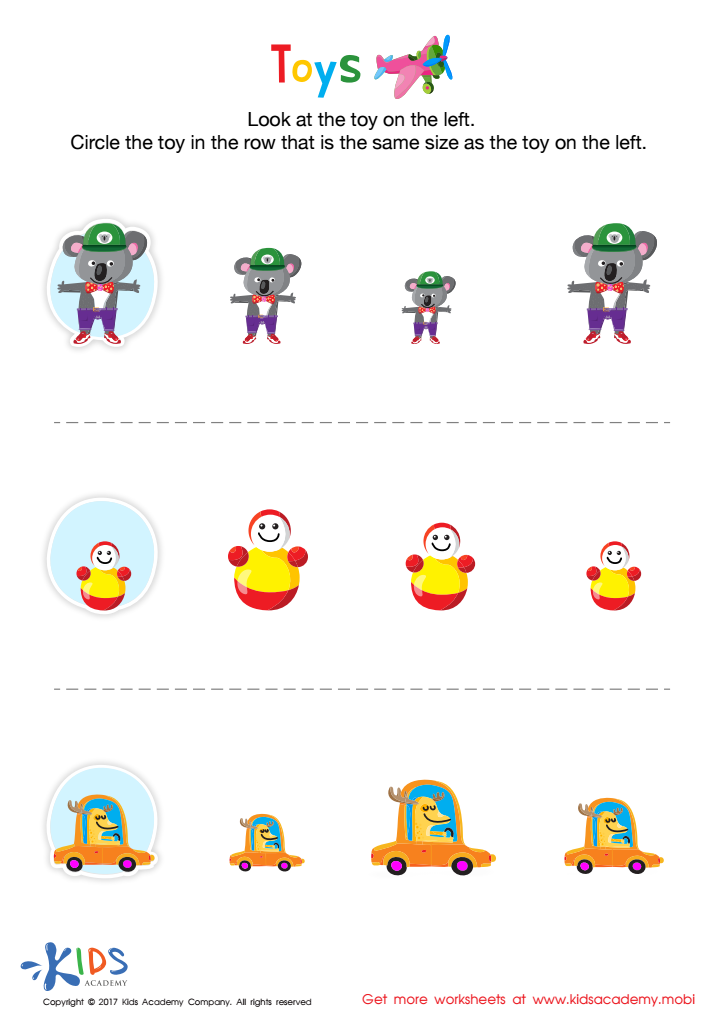
Matching: Classifying Toys by Size Worksheet
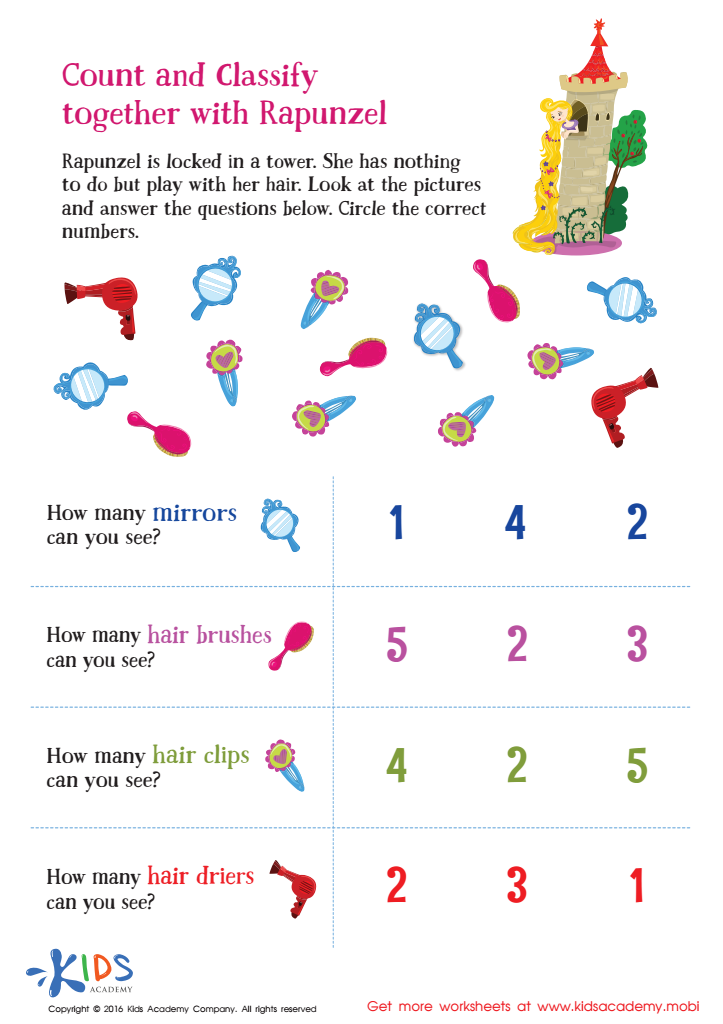
Fairy Tale Worksheet: Count and Classify with Rapunzel
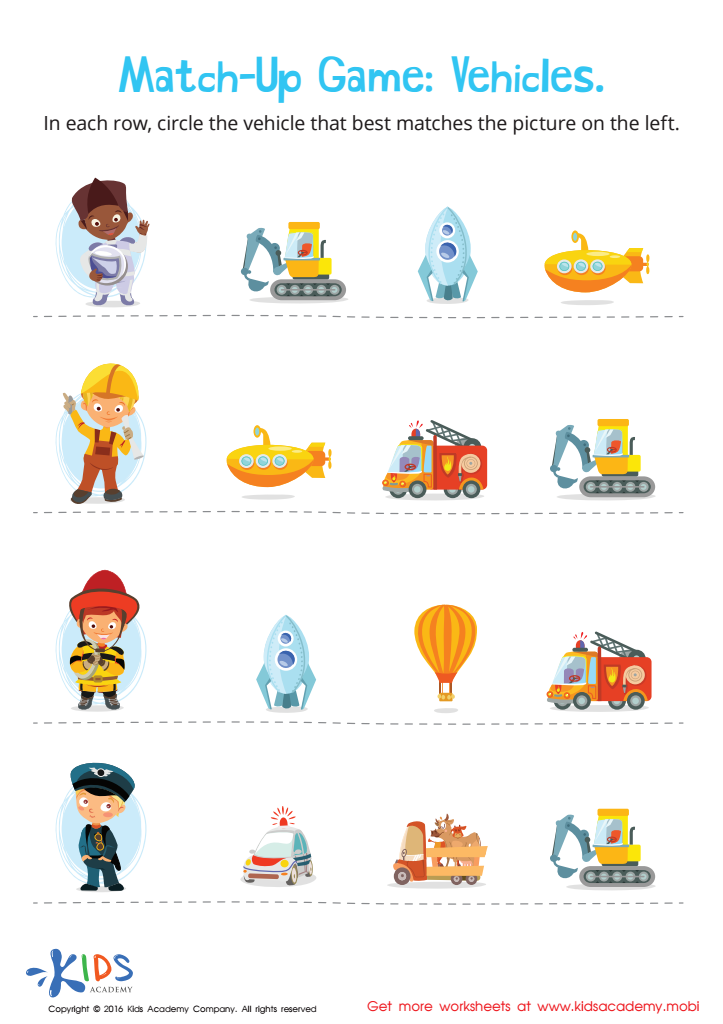
Vehicles Worksheet
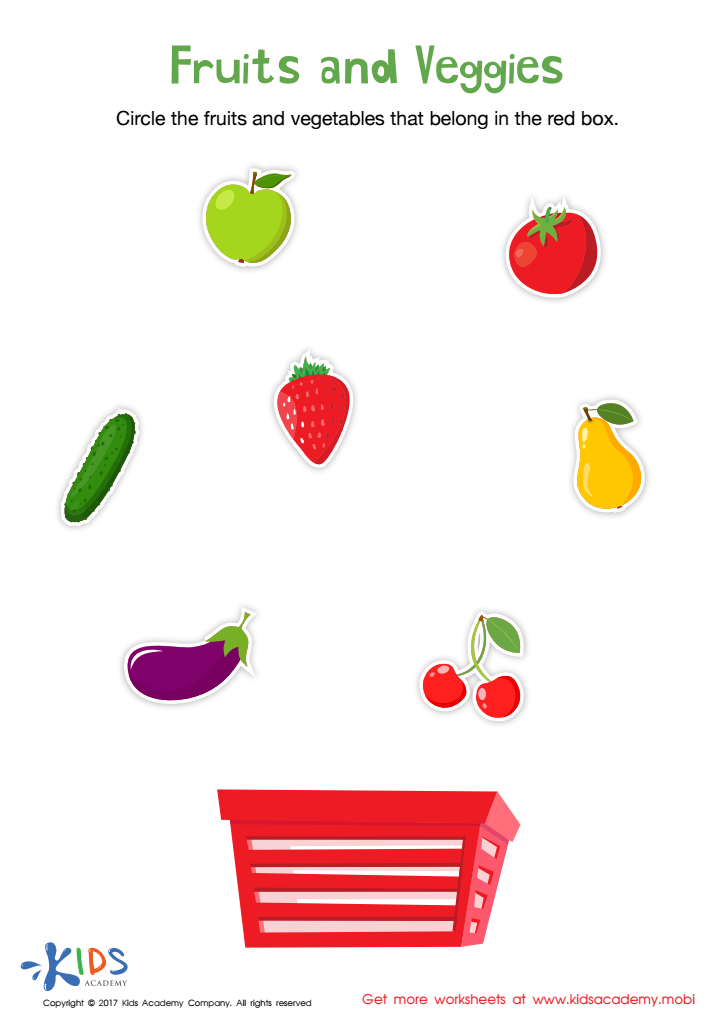
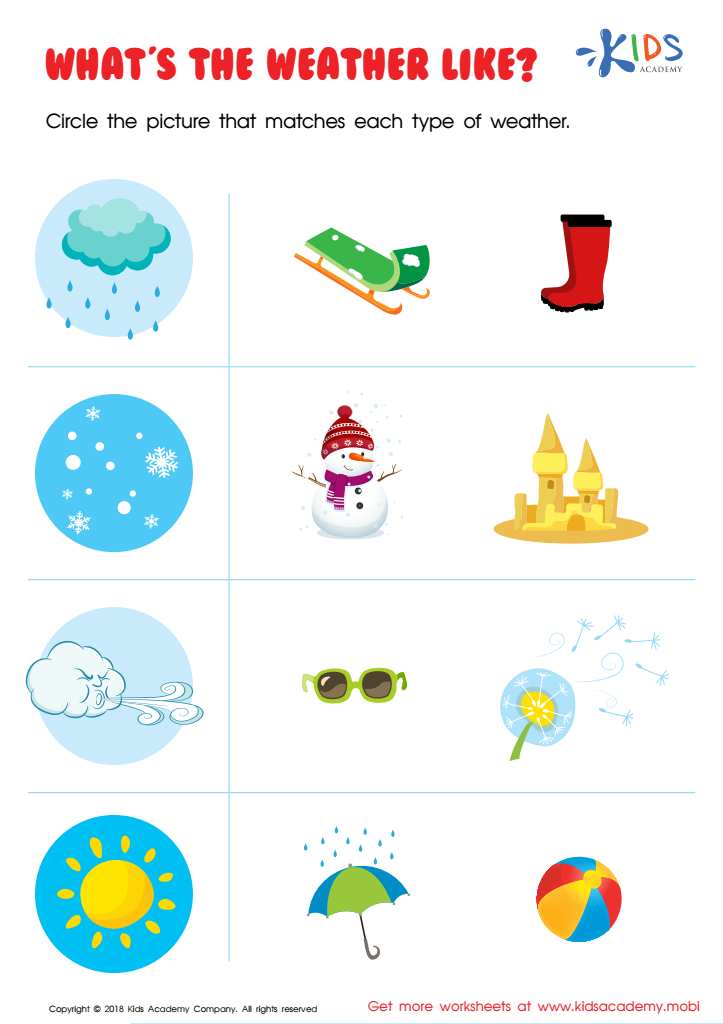
What's the Weather Like? Worksheet








Vocabulary building is crucial for children aged 3-5 as it lays the foundation for language development, literacy, and effective communication skills. During these formative years, children are rapidly absorbing vocabulary, often through play and interaction. Engaging in vocabulary building activities can enhance their ability to express thoughts, comprehend instructions, and engage socially.
Parents and teachers should care about vocabulary building because a rich vocabulary not only supports academic achievement but also nurtures a child's overall confidence and self-expression. Early exposure to diverse words helps children understand the world around them, making them more observant and curious learners.
Moreover, it prepares them for future educational milestones. Evidence shows that children with a robust vocabulary perform better in reading and writing as they enter school, significantly impacting their long-term educational trajectory.
Activities such as matching games establish connections between words and meanings, making learning enjoyable and interactive. This familiarizes children with new vocabulary in a playful context, reinforcing memory retention. By prioritizing vocabulary building, parents and teachers equip children with essential skills for lifelong learning and communication, ultimately fostering their cognitive and social development in alignment with educational goals.








