
Shape Recognition Worksheets for Ages 3-6
88 filtered results
Difficulty Level
Grade
Age
-
From - To
Subject
Activity
Standards
Discover our engaging Shape Recognition Worksheets designed specifically for children ages 3-6! These vibrant, interactive resources help young learners identify and differentiate various shapes, enhancing their cognitive development and visual skills. Featuring fun activities such as matching, drawing, and coloring, these worksheets make learning about shapes enjoyable and effective. Perfect for preschoolers and kindergarteners, each worksheet promotes fine motor skills while fostering creativity. Whether used at home or in the classroom, our shape recognition activities provide a strong foundation in early geometry concepts. Explore our collection today and support your child's journey in mastering essential shape identification skills!
Favorites
With answer key
Interactive
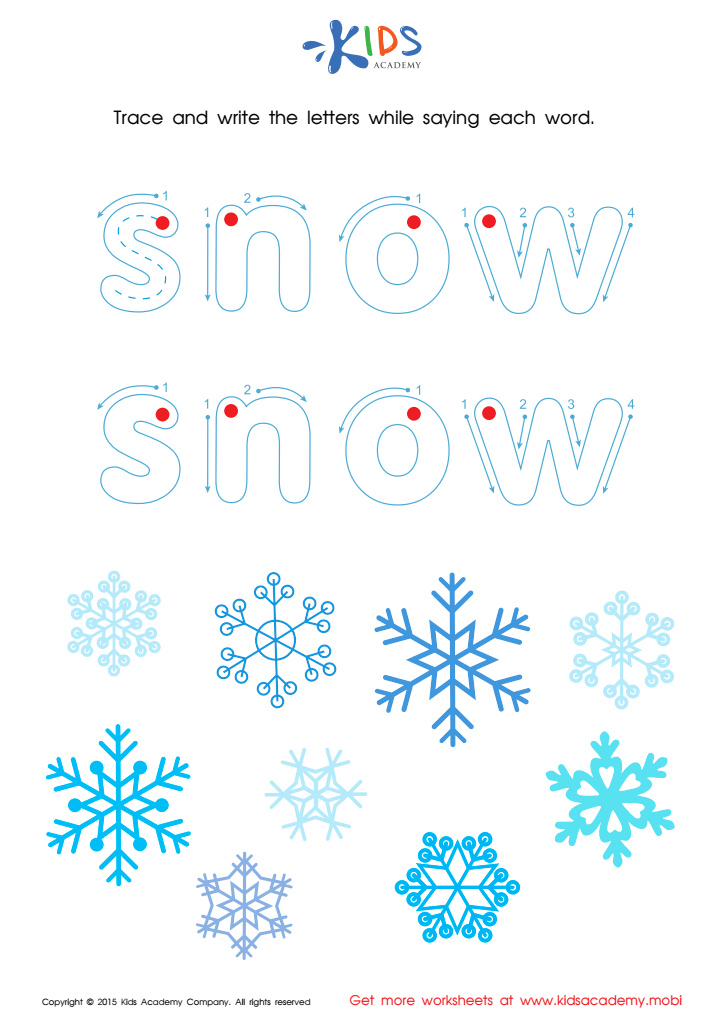
Snowflake Tracing Winter Words Worksheet
Get creative and have fun with our Snowflake handwriting worksheet! Trace the sight word, starting at the big red dots, and follow the arrows. It's a great way to help your little learner develop fine motor skills, work on spelling, and get ready for Christmas! More handwriting printables available on Kids Academy.
Snowflake Tracing Winter Words Worksheet
Worksheet
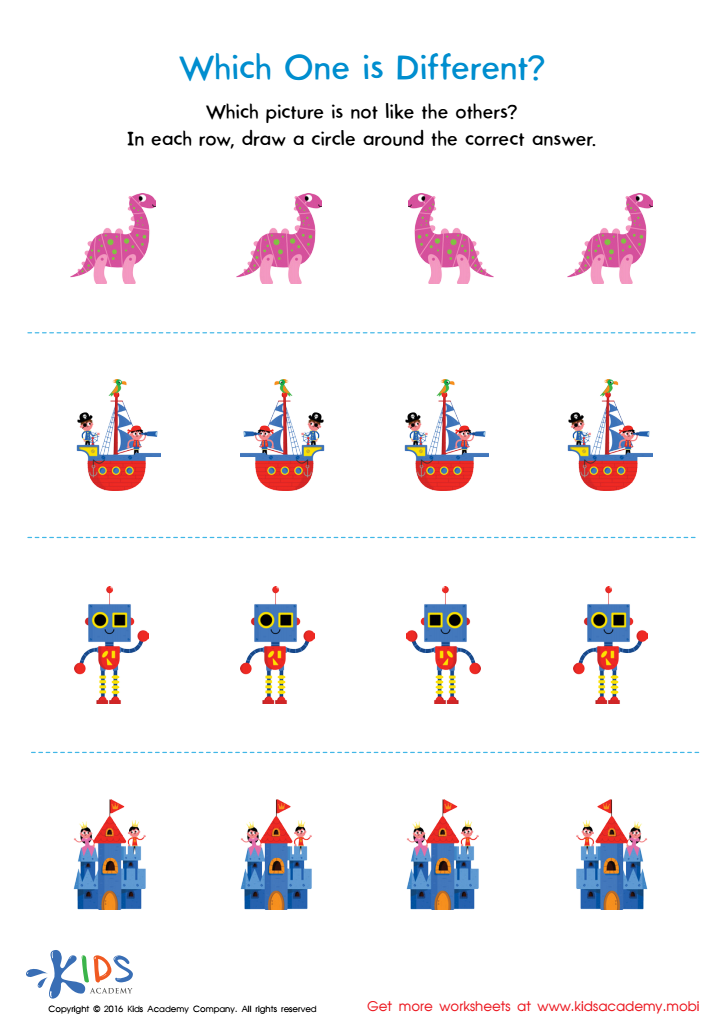
Which One Is Different Worksheet
Preschoolers can hone logical reasoning and critical analysis skills with this "Which one is Different?" worksheet. Kids must look closely and pick out unique attributes of objects and images. It's a skill that can serve them throughout their lifetime.
Which One Is Different Worksheet
Worksheet
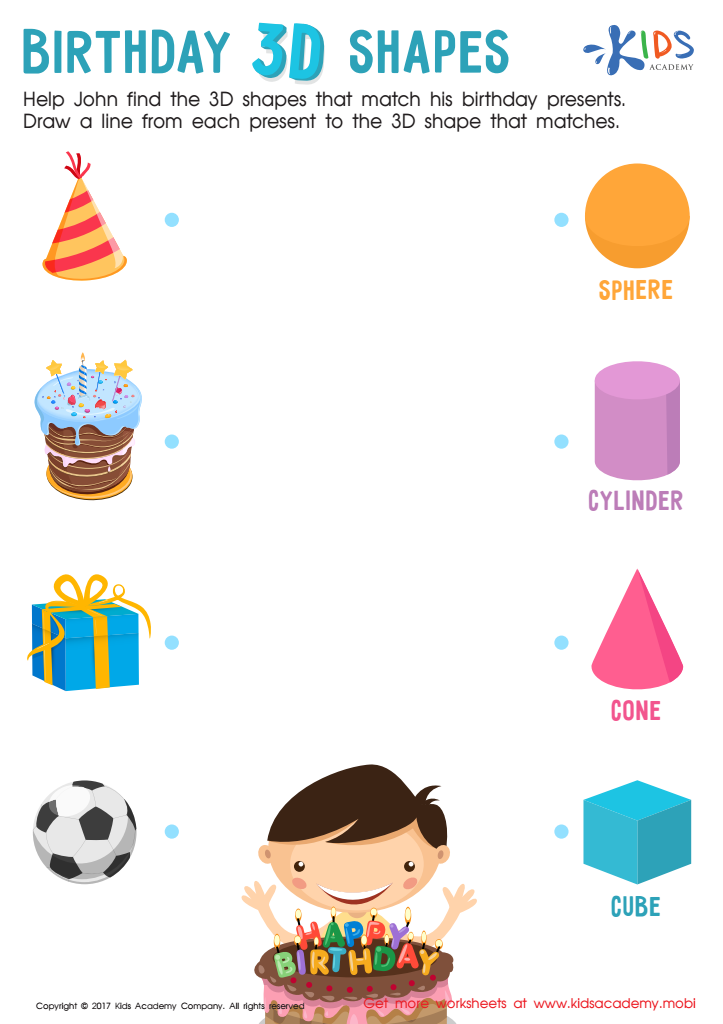
Birthday 3D Shapes Worksheet
It's John's birthday and he needs your help. Ask your kids to draw a line from each present to the matching 3D shape. First, check they understand the difference between 2D and 3D shapes. Then, they can help John figure out which 3D shape matches each present.
Birthday 3D Shapes Worksheet
Worksheet
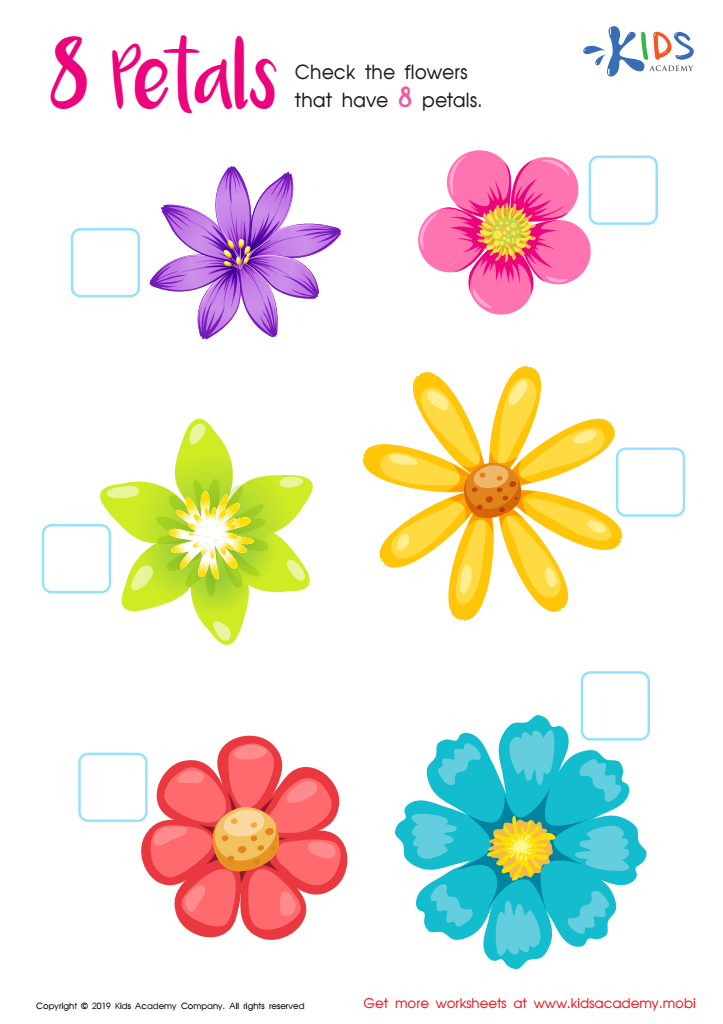
8 Petals Worksheet
Help your children master counting with this fun worksheet. It's filled with colorful flowers and they must count the petals and check the flowers with 8 petals. It's a great way to practice their counting skills and have some fun too!
8 Petals Worksheet
Worksheet
Find the Curved Lines! Worksheet
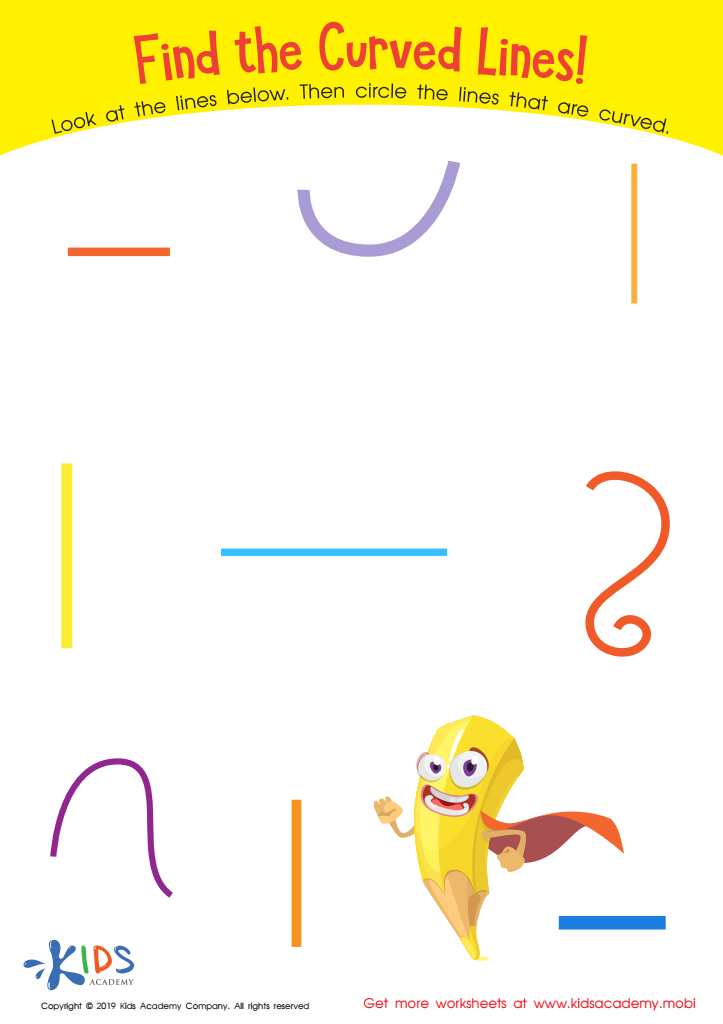
Help your child build their writing skills by having them trace words and practice with exercises. This worksheet helps them identify and draw curved lines. There are seven curved lines among nine shapes and lines. Ask your child to spot the curved lines and circle them.
Find the Curved Lines! Worksheet
Worksheet
Cone Hide-and-Seek Worksheet
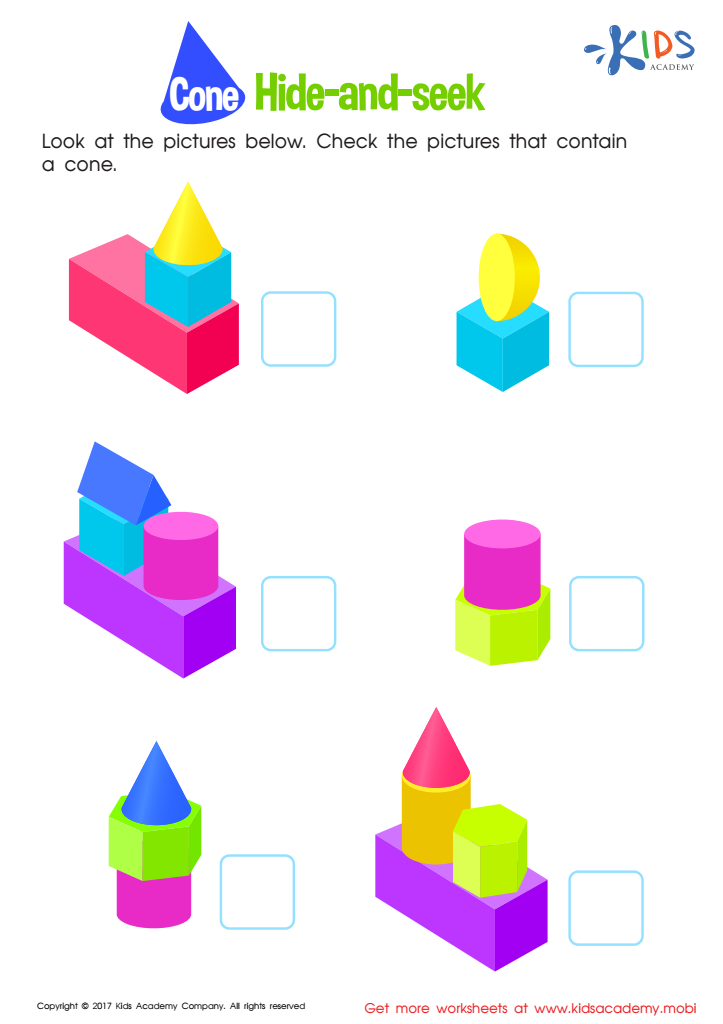
Prior to starting this worksheet, quiz your kid on shapes. If they gave quite a few, you've done well! This pdf will teach them more about cones; show them the pictures in the printout and have them identify which ones contain a cone.
Cone Hide-and-Seek Worksheet
Worksheet
Force and Interactions: Review 2 Worksheet
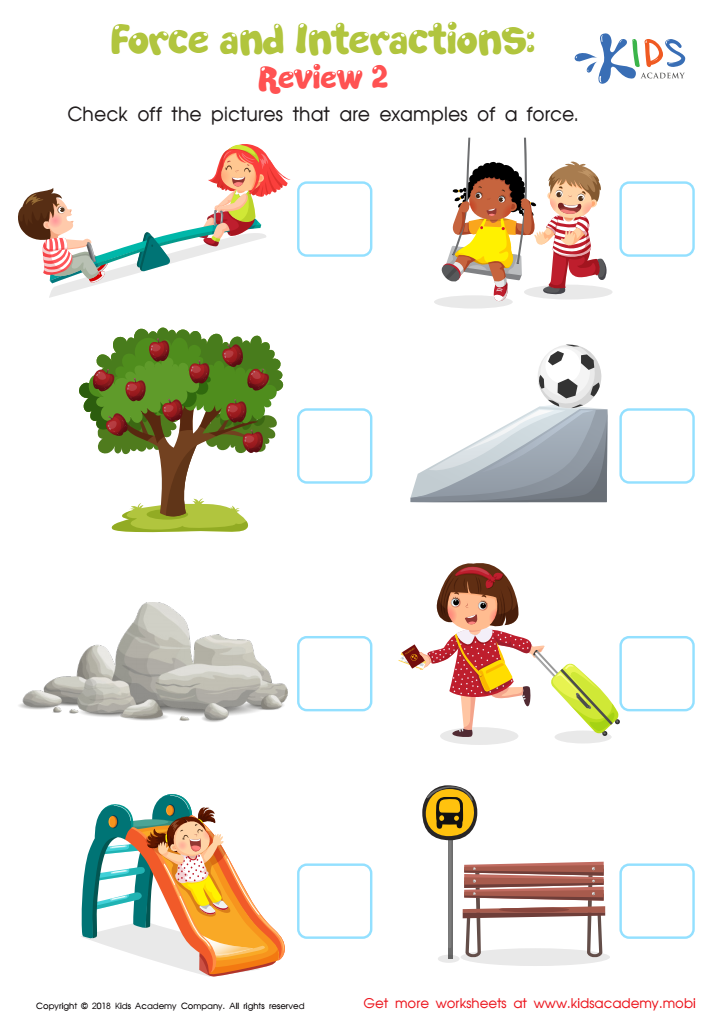
Your child can identify force examples by checking the pictures. There are 8 images of kids engaging in activities and objects in motion. Get them to name the activities and objects, or if they know, explain force and interaction.
Force and Interactions: Review 2 Worksheet
Worksheet
Using Triangles to Make Squares and Rhombuses Worksheet
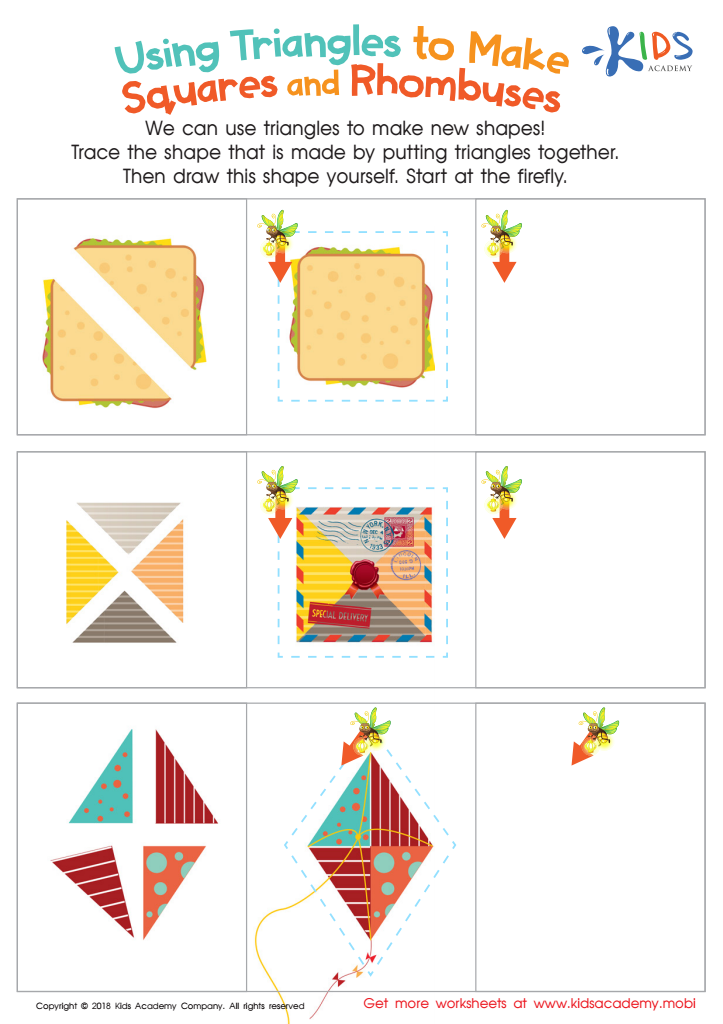
Learning shapes is a fun way to boost spatial skills and critical thinking. This worksheet shows children how to use triangles to construct squares and rhombuses. Clear illustrations and a printout help children draw the new shape. A great activity for the math classroom! 80 words.
Using Triangles to Make Squares and Rhombuses Worksheet
Worksheet
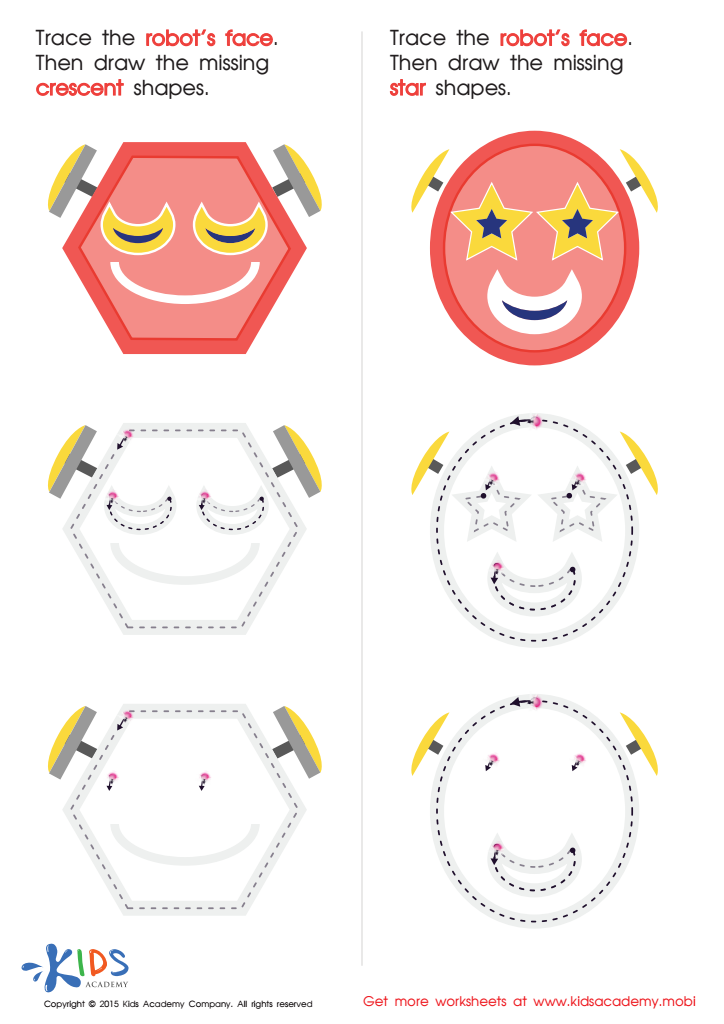
Composing a Robot's Face of Crescents And Stars Worksheet
Get free math geometry worksheets at Kids Academy! Help your child learn by practicing together - trace the robot's face and draw the missing crescent and star shapes. Be sure to remember their names! Have fun and learn with shapes for kids.
Composing a Robot's Face of Crescents And Stars Worksheet
Worksheet
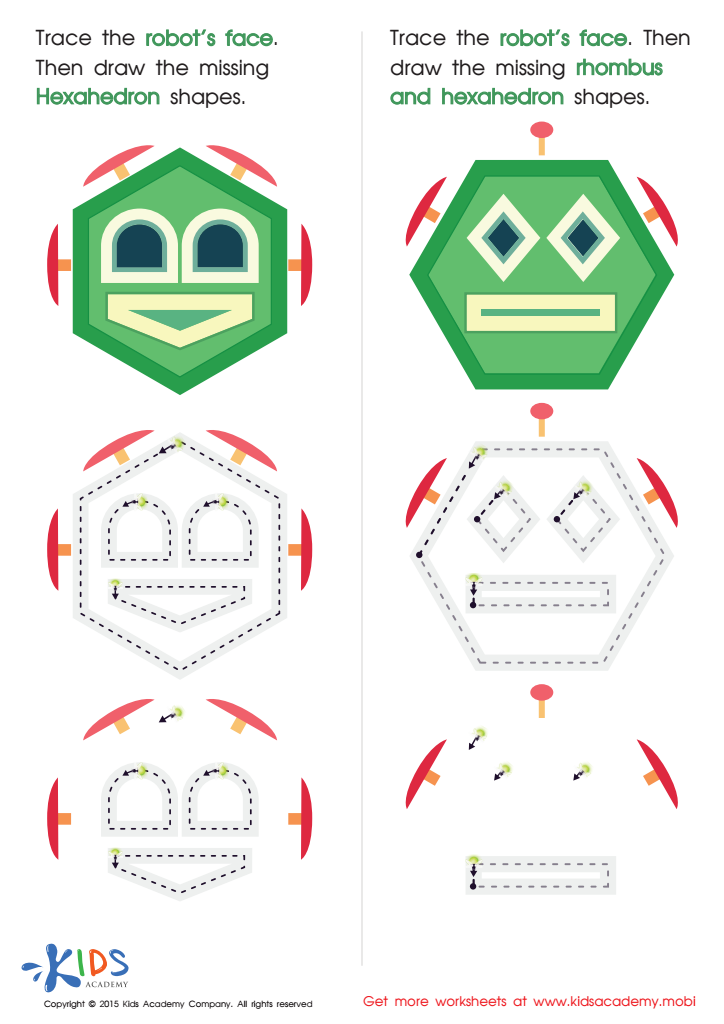
Practice Drawing Hexahedrons And a Rhombus Worksheet
Trace the Robot's face, draw hexahedron and rhombus shapes, then trace again. Our tracing shapes worksheets make it easy for kids to learn geometry. Get more materials from Kids Academy to practice all the shapes.
Practice Drawing Hexahedrons And a Rhombus Worksheet
Worksheet
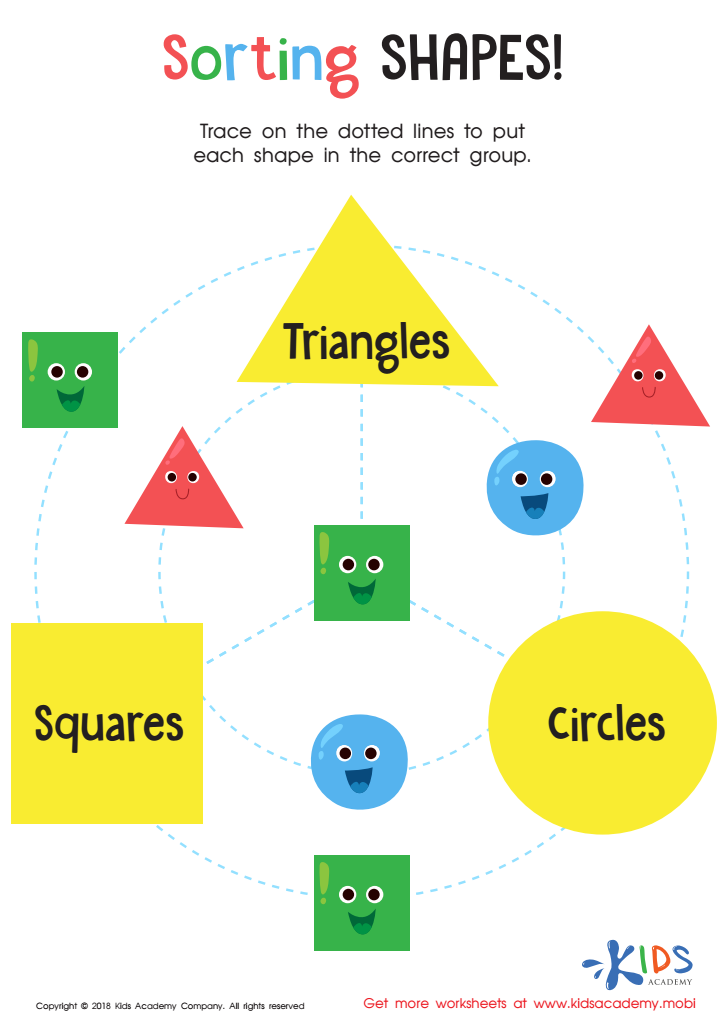
Sorting Shapes - Part 3 Worksheet
Download this fun PDF to help your kiddos recognize basic shapes like circles, squares, and triangles. It'll sharpen their fine motor skills as they trace and sort shapes by color, size, and sides. Your kids won't even realize they're learning with these cheery shapes!
Sorting Shapes - Part 3 Worksheet
Worksheet
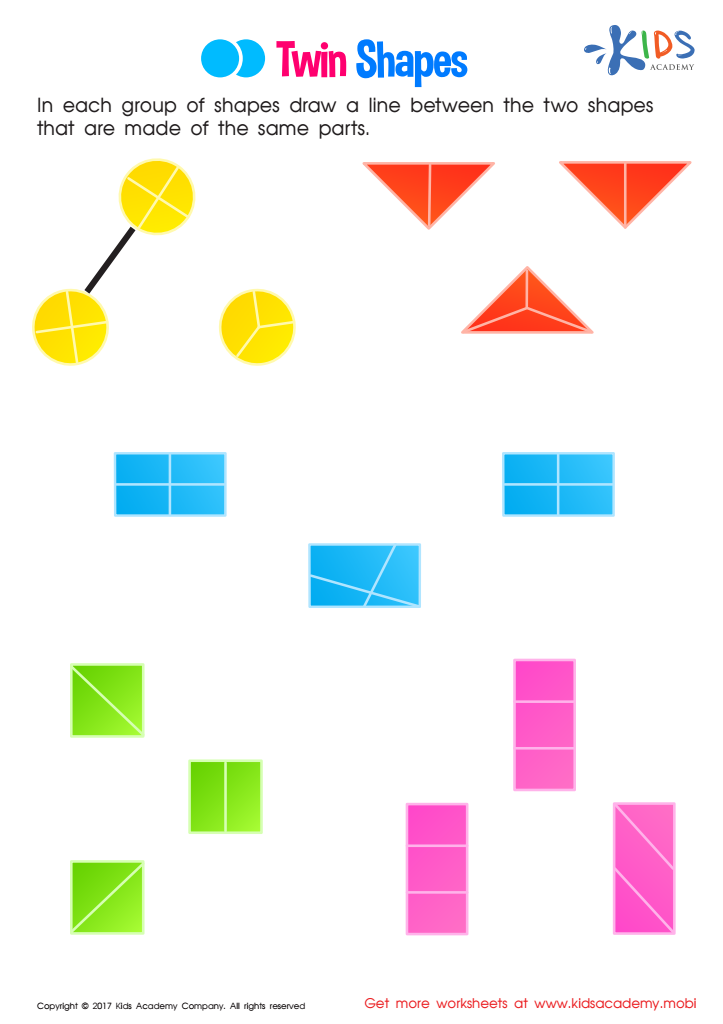
Twin Shapes Worksheet
Your students' goal in this worksheet is to find the twin shapes: drawing a line between two shapes made of the same parts. Likely, the first shapes encountered were circles, triangles, rectangles and squares - examples of which are seen frequently in everyday life. Encourage them to apply what they know and work out which is the twin shape!
Twin Shapes Worksheet
Worksheet
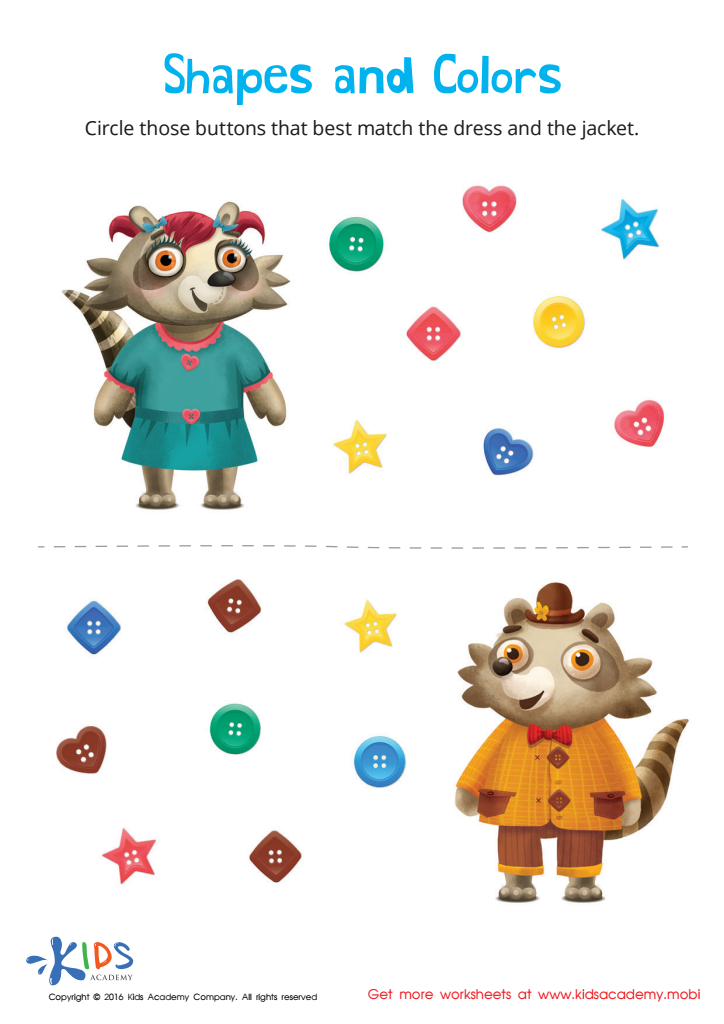
Matching: Shapes and Colors Worksheet
Help Mr. and Mrs. Raccoon find the right buttons to match their shirts! Kids will identify shapes and colors and learn to match them correctly.
Matching: Shapes and Colors Worksheet
Worksheet
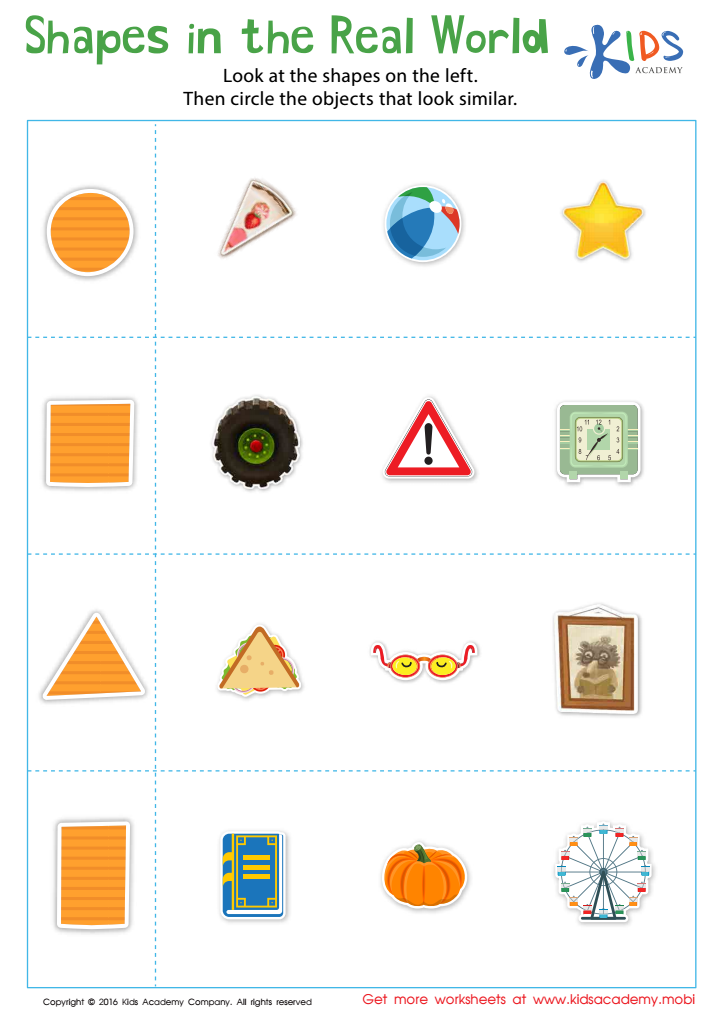
Shapes in the Real World Worksheet
Teach kids math in real-world context with this fun and inviting PDF. Let them explore geometric shapes and match them with everyday objects, giving them practice with fine motor skills and reinforcing basic shapes. Help them understand that math is everywhere in their lives!
Shapes in the Real World Worksheet
Worksheet
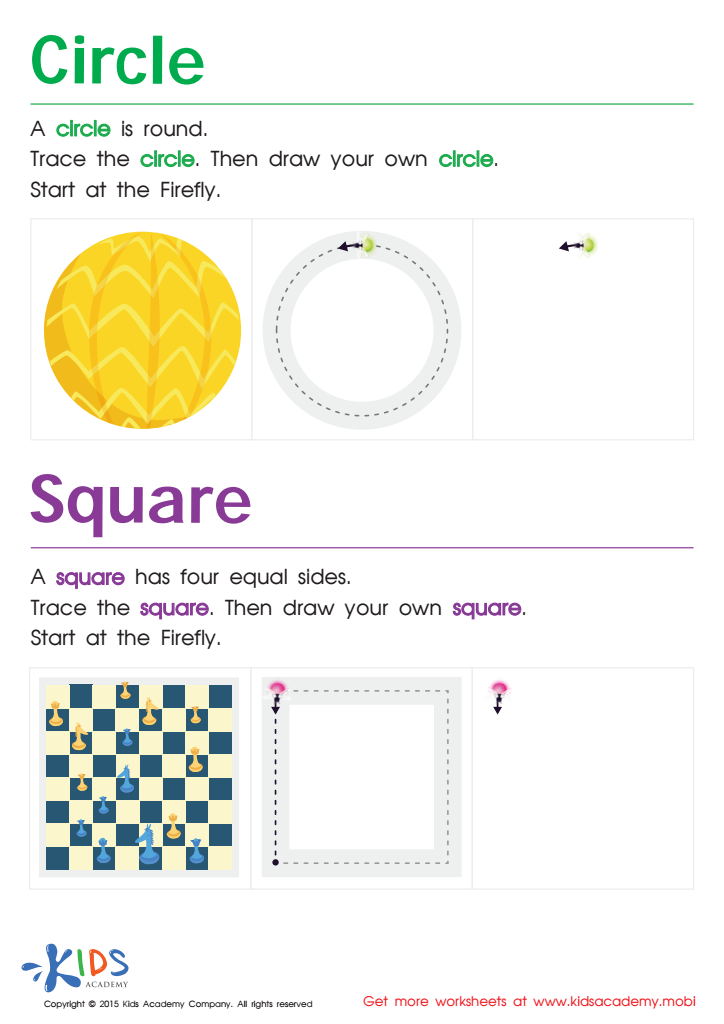
Trace And Draw a Circle And a Square Worksheet
Our new collection will help your preschoolers learn shapes faster: tracing circles and squares and recognizing their properties with the aid of colorful pictures. Get them now at Kids' Academy!
Trace And Draw a Circle And a Square Worksheet
Worksheet
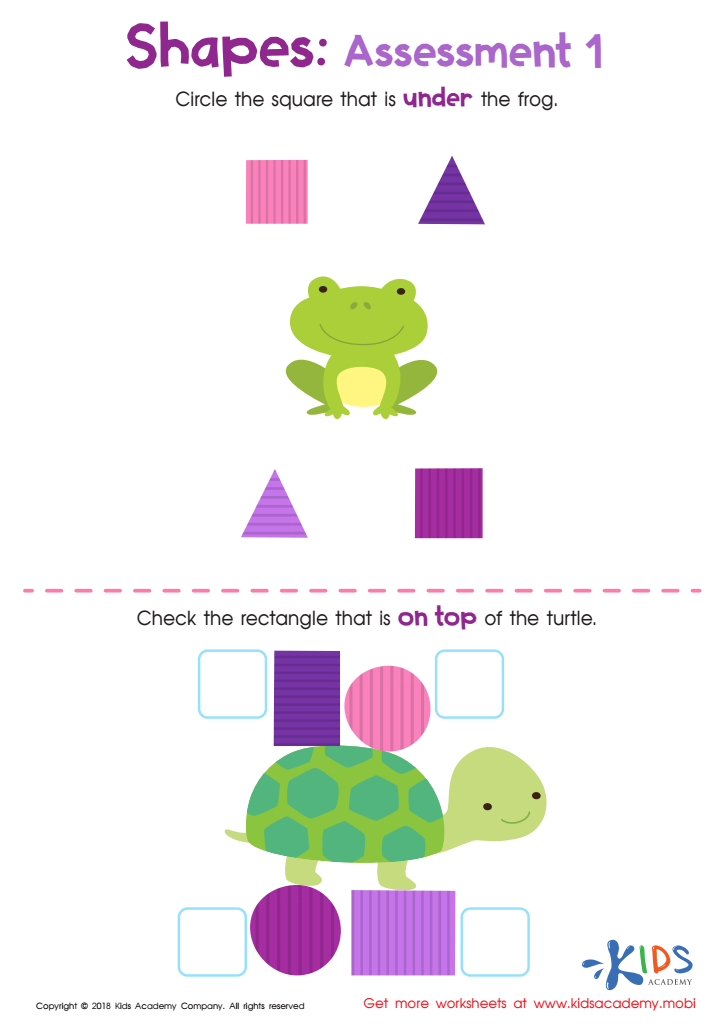
Geometry – Assessment 1 Worksheet
This activity helps preschoolers find shapes "on top of" and "under" animals. They must identify the correct shapes assigned to them. It's a great way to learn geometry and placements of objects.
Geometry – Assessment 1 Worksheet
Worksheet
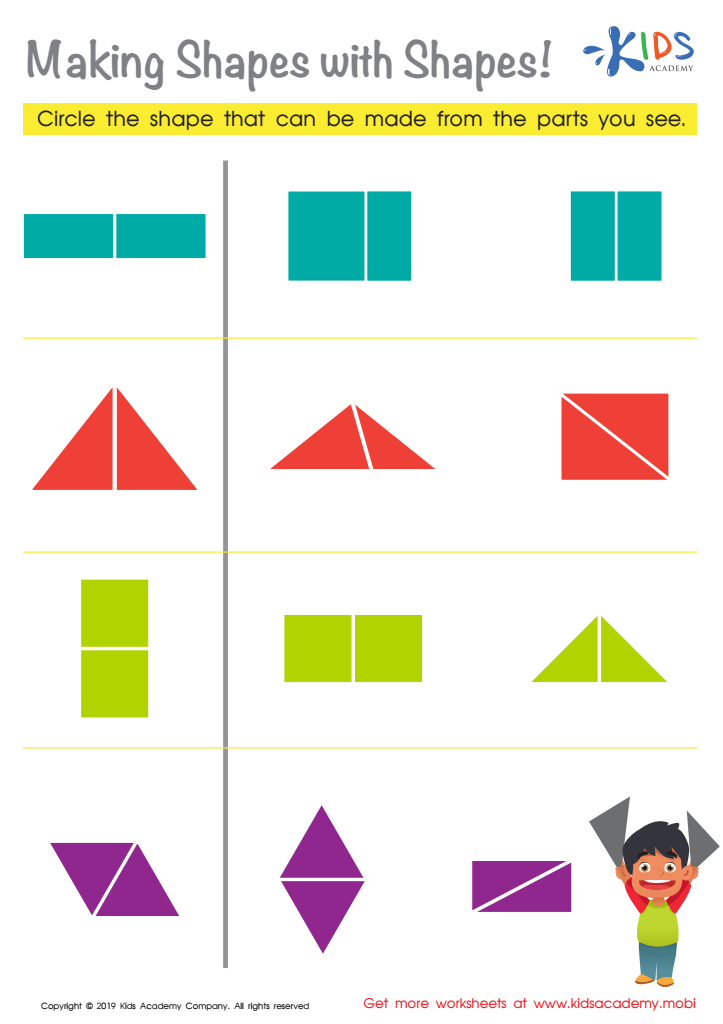
Making Shapes with Shapes Worksheet
Help your kindergartners identify shapes with this simple worksheet. Examine the shapes on the left and have them circle the one they can make from the parts in the picture. Shapes can be tricky, but this exercise will help clear up any confusion.
Making Shapes with Shapes Worksheet
Worksheet
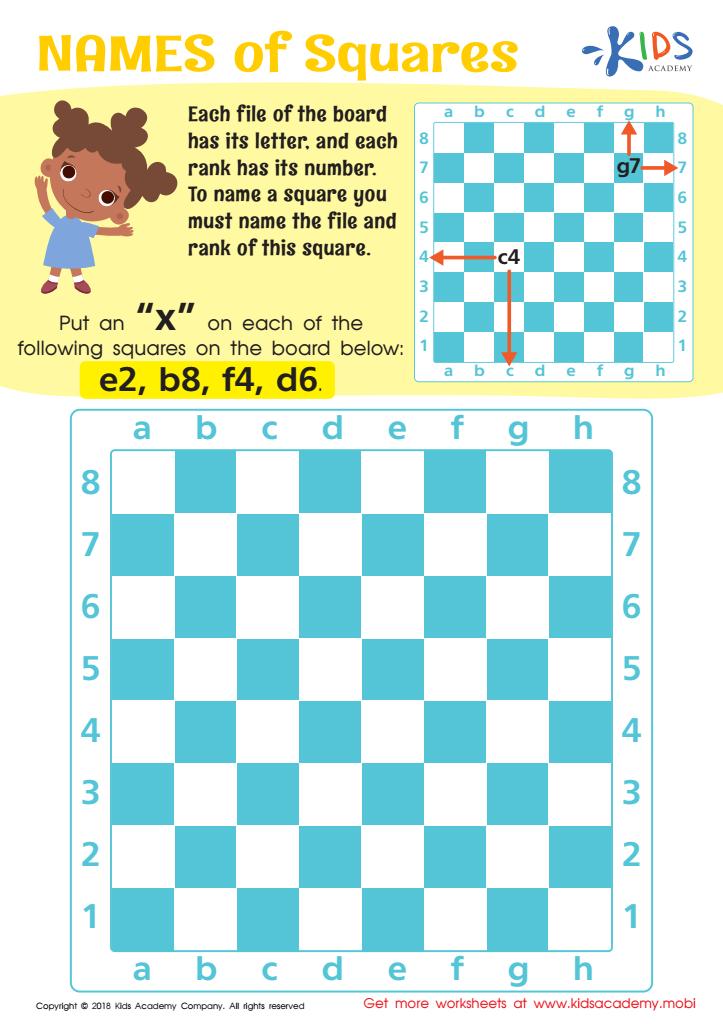
Names of Squares Worksheet
Ask your students to put an X on the appropriate squares. This worksheet is part of learning chess basics. Each file is marked with a letter and rank with a number. This allows moves and squares to be easily named and noted. e.g. The square marked "e5" is the fifth rank of the e-file.
Names of Squares Worksheet
Worksheet
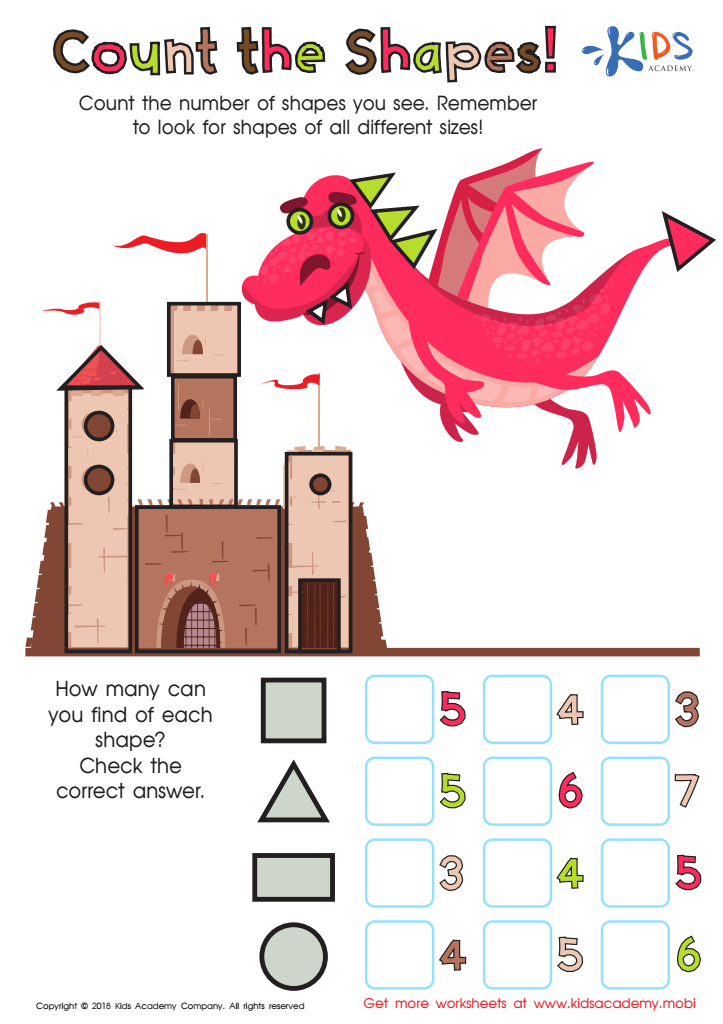
Count the Shapes Worksheet
This fun and learning worksheet is perfect for sharpening visual discrimination skills. Kids search a castle picture featuring a dragon and identify shapes, counting circles, squares, triangles and rectangles. Checking the correct box beside the number, they practice shape identification and counting. Download now and get started!
Count the Shapes Worksheet
Worksheet
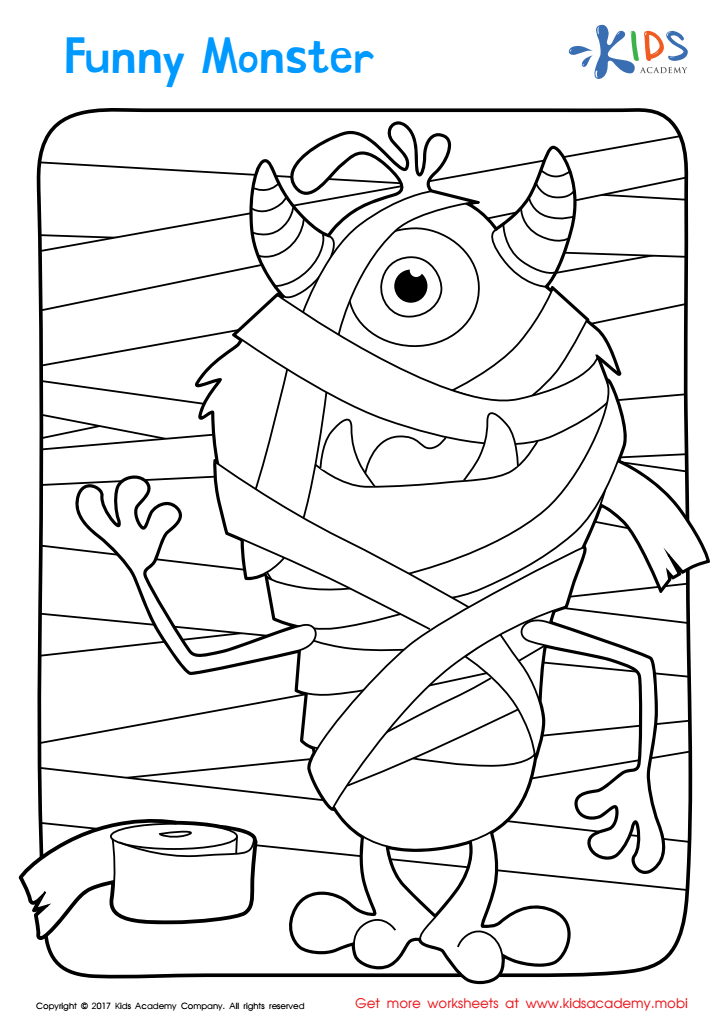
Halloween: A Funny Monster Worksheet
Get ready for spooky fun: print and color this Halloween coloring page with your child today!
Encourage your child to get into the Halloween spirit with a free coloring page! Print it on cardstock to decorate a trick-or-treat bag or hang it up on the wall. Kids will love creating their own custom-made box or adding it to an existing bag to take on their candy-collecting adventure. Get ready for fun and print out this page now!
Download (PDF)
 Assign to My Students
Assign to My Students
Halloween: A Funny Monster Worksheet
Worksheet
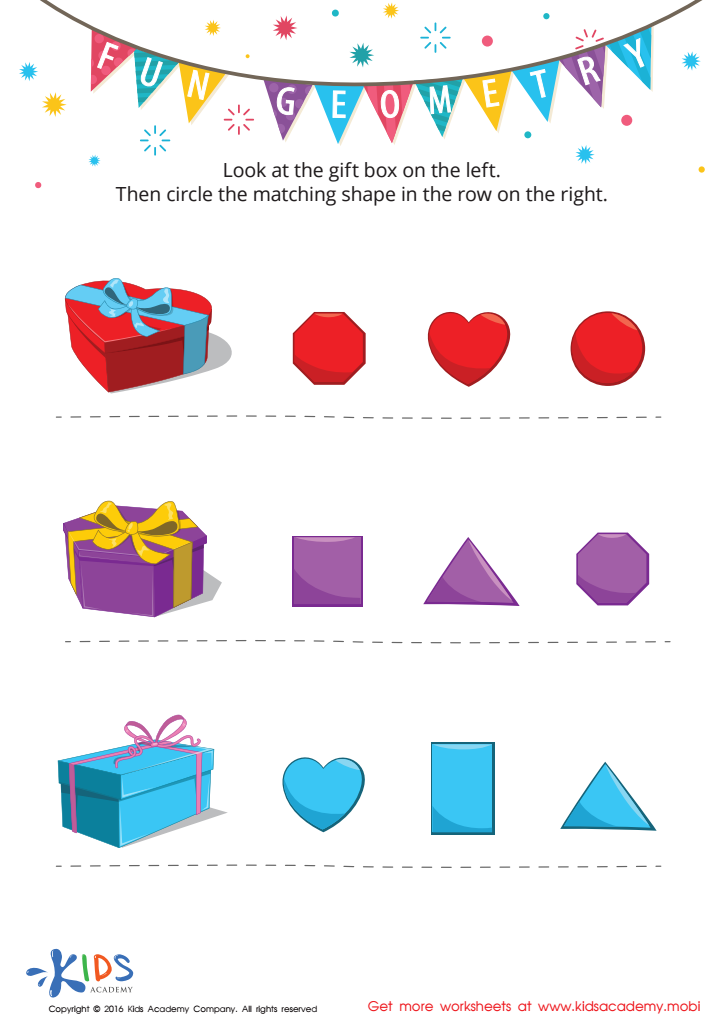
Fun Geometry Worksheet
Give your child the gift of learning with this fun and educational geometry matching worksheet! It'll help them develop essential matching and problem-solving skills while having fun. Vibrant pictures will excite them to complete it and get a better grasp of the world around them.
Fun Geometry Worksheet
Worksheet
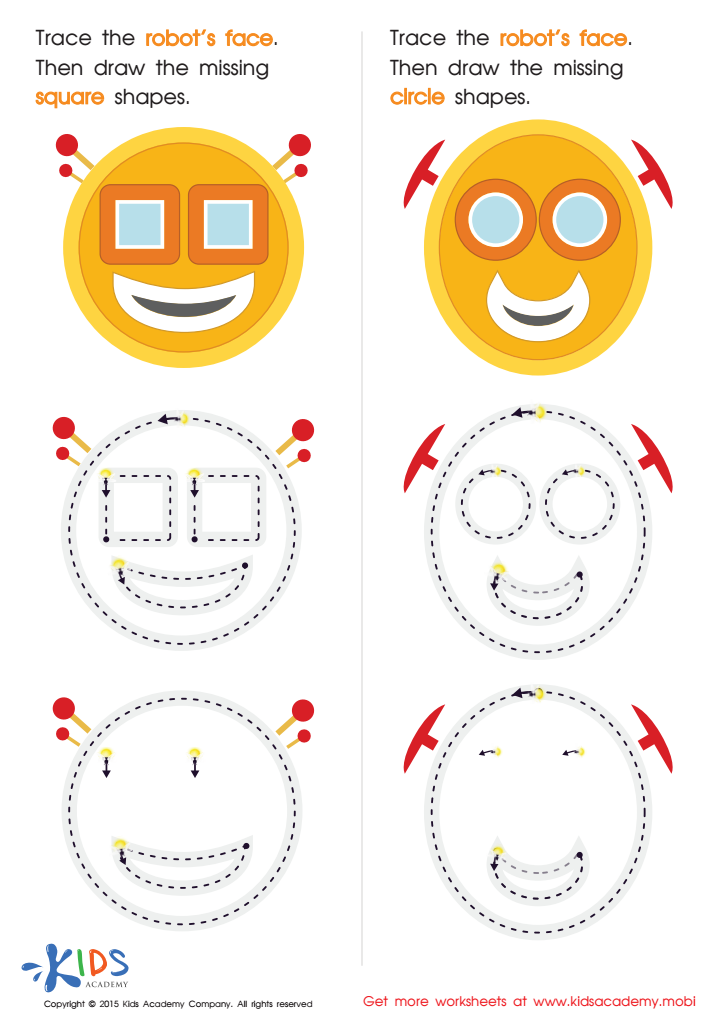
Practicing to Draw Circles And Squares Printable
Download our free printable geometry worksheets to learn shapes with your preschoolers. Trace Robot's face, draw the square parts and round shapes, remember the names for each one. Get more materials for kids at Kids Academy and make learning fun with our free printable geometry worksheets.
Practicing to Draw Circles And Squares Printable
Worksheet
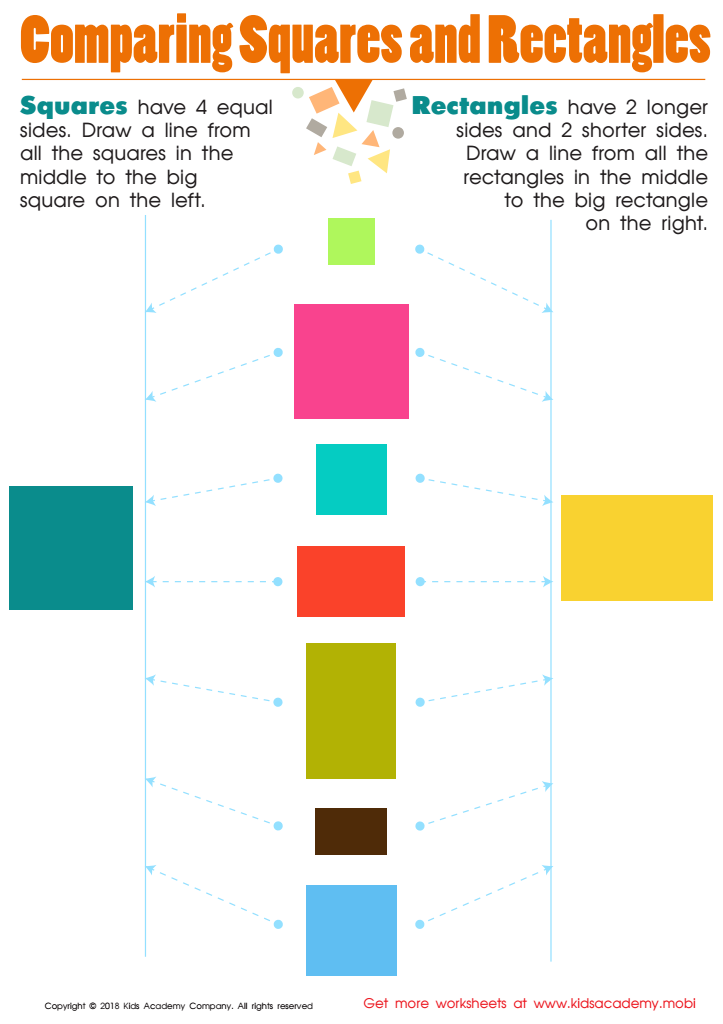
Comparing Squares Rectangles Worksheet
Help your little learner distinguish rectangles from squares with this fun geometry worksheet from Kids Academy! Read the definitions at the top, use the shapes on either side as a guide, then trace over the dotted line to match the rectangles and squares!
Comparing Squares Rectangles Worksheet
Worksheet
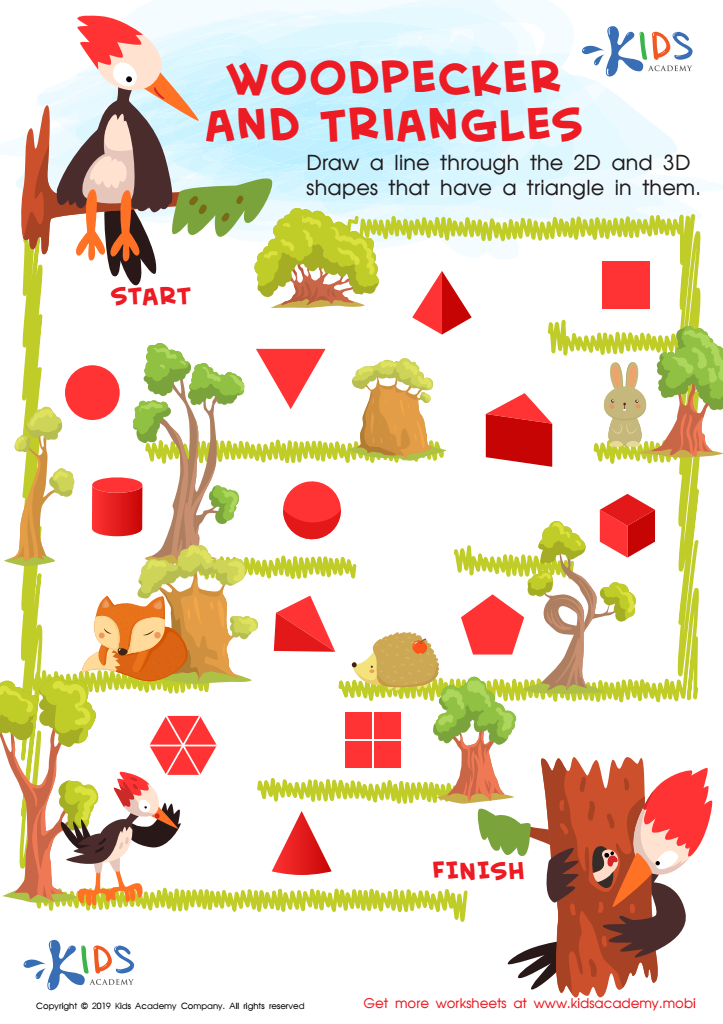
Woodpecker and Triangles Worksheet
Woodpeckers peck wood, and this printout helps kids learn about triangles. Ask your kindergartners to draw a triangle, then draw a line through the shapes that have a triangle in them to help the woodpecker get out of the maze.
Woodpecker and Triangles Worksheet
Worksheet
Join Kids Academy for Free
Who is primarily going to use this learning content?



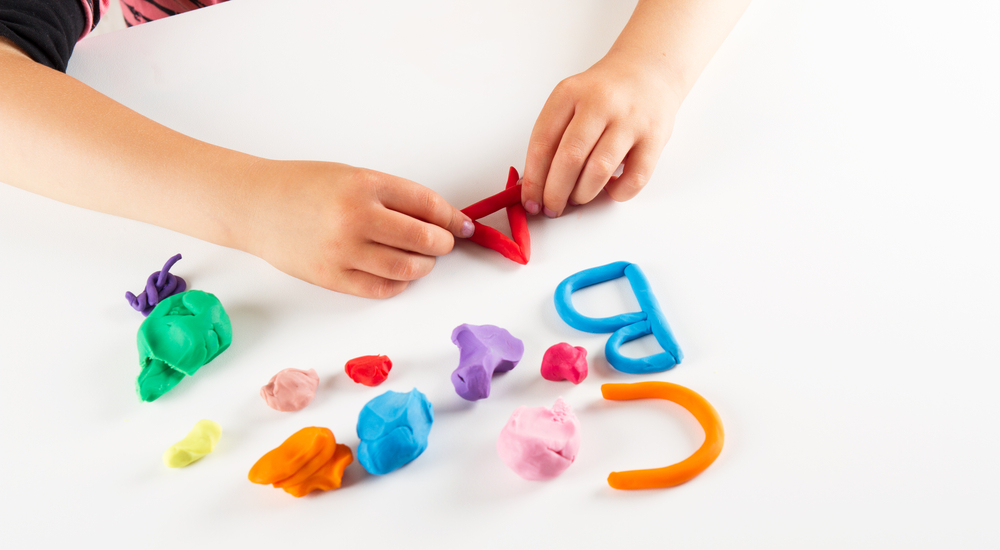



Shape recognition is a foundational skill that serves as a building block for early cognitive development in children aged 3-6. Parents and teachers should prioritize this concept for several reasons. First, recognizing shapes enhances children’s ability to identify patterns and categorize objects, which is crucial for developing logical thinking and problem-solving skills. These skills form the basis for advanced learning in mathematics and geometry later on.
Additionally, shape recognition plays a significant role in fostering spatial awareness. Understanding shapes helps children navigate their environment, which is essential for physical development and motor skills. Engaging with shapes through play fosters creativity and exploration, while also supporting language development as children learn to describe and discuss what they observe.
Furthermore, early shape recognition can boost confidence and independence, empowering children to express their understanding of the world around them. It creates a strong foundation for lifelong learning and adaptability. By incorporating shape recognition activities into daily routines, parents and teachers provide enriching opportunities for holistic growth, promoting curiosity and a love for learning that will stay with children as they advance in their education. Thus, it’s essential for caregivers to recognize the importance of this developmental milestone.








