Two Vowels Together Worksheets for Ages 3-7
11 filtered results
-
From - To
Unlock the door to reading success with our "Two Vowels Together Worksheets for Ages 3-7"! Perfectly designed for young learners, these engaging activities help children master vowel combinations through fun and interactive exercises. Each worksheet focuses on common vowel pairs, reinforcing essential phonics skills as kids practice sliding sounds together. Ideal for preschoolers and early elementary students, our resources make learning to read an exciting adventure. Boost your child's confidence and phonemic awareness with these expertly crafted worksheets. Visit our website and jumpstart your child's reading journey today! Parents and teachers alike will love the educational benefits.
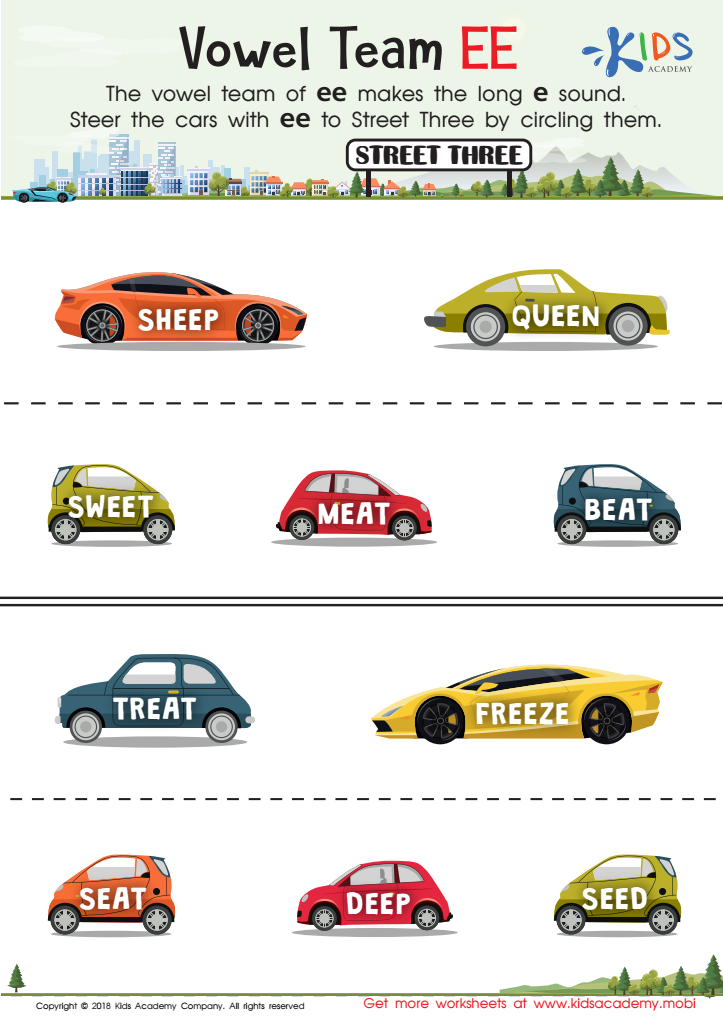
Vowel team ee Worksheet
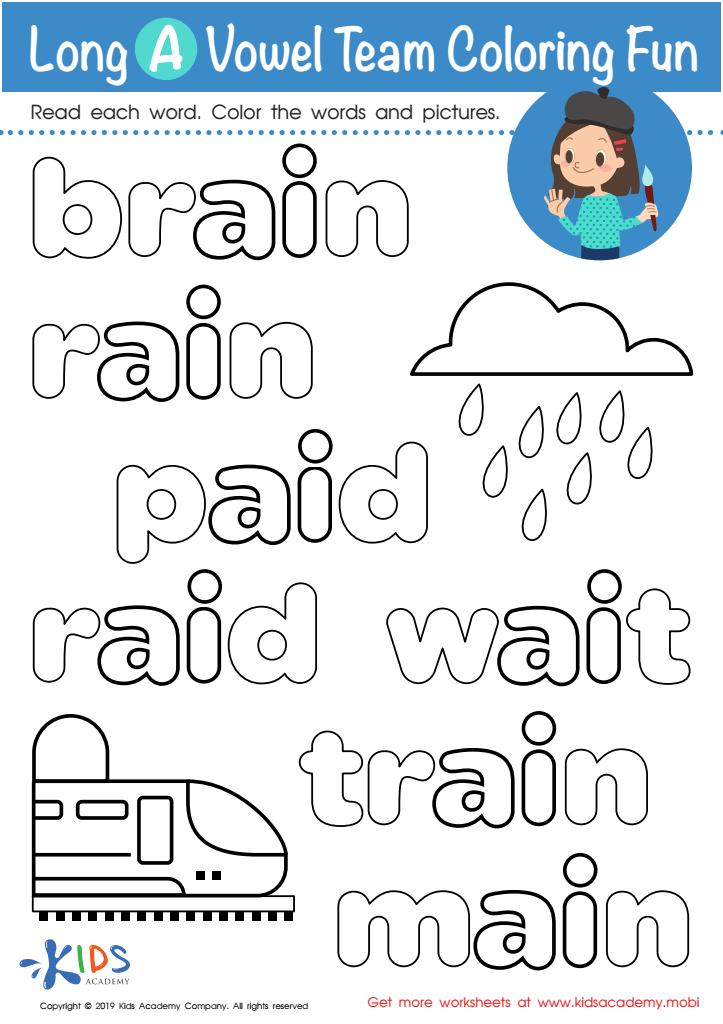
Long A Vowel Team Coloring Fun Worksheet
 Assign to My Students
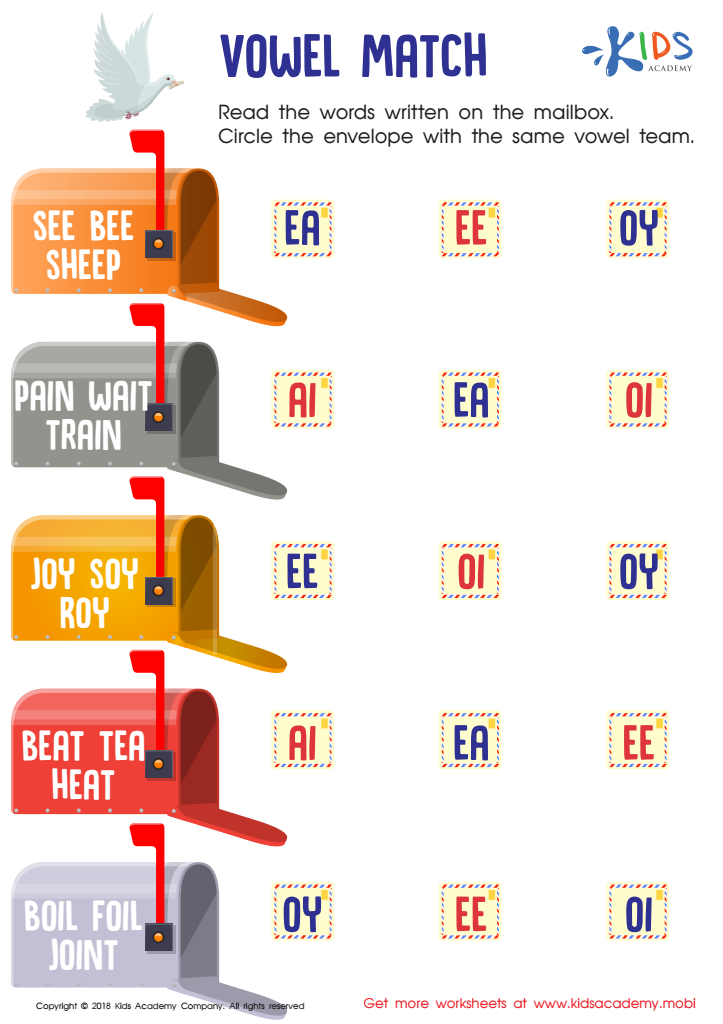
Vowel match Worksheet
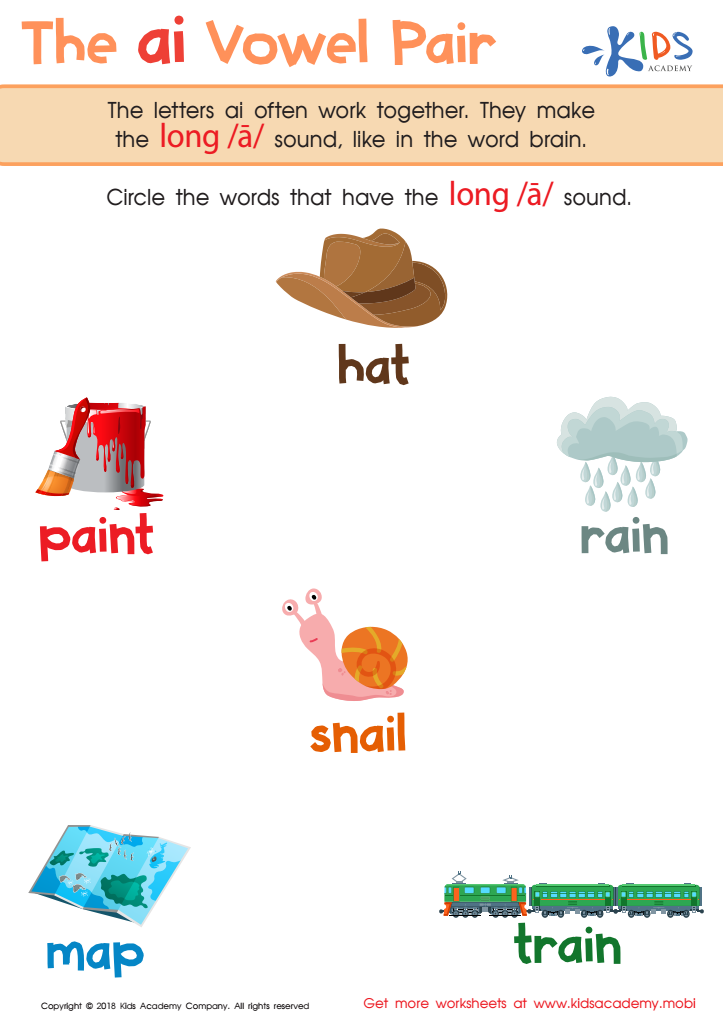
The AI Vowel Pair Worksheet
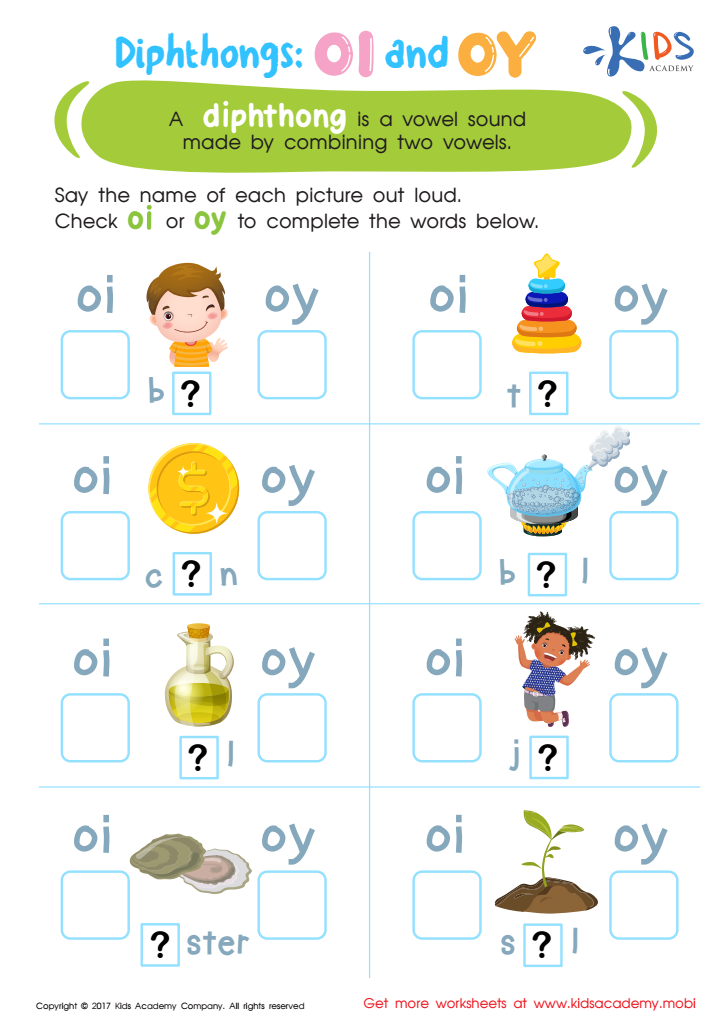
Vowel Diphthongs OI OY Worksheet
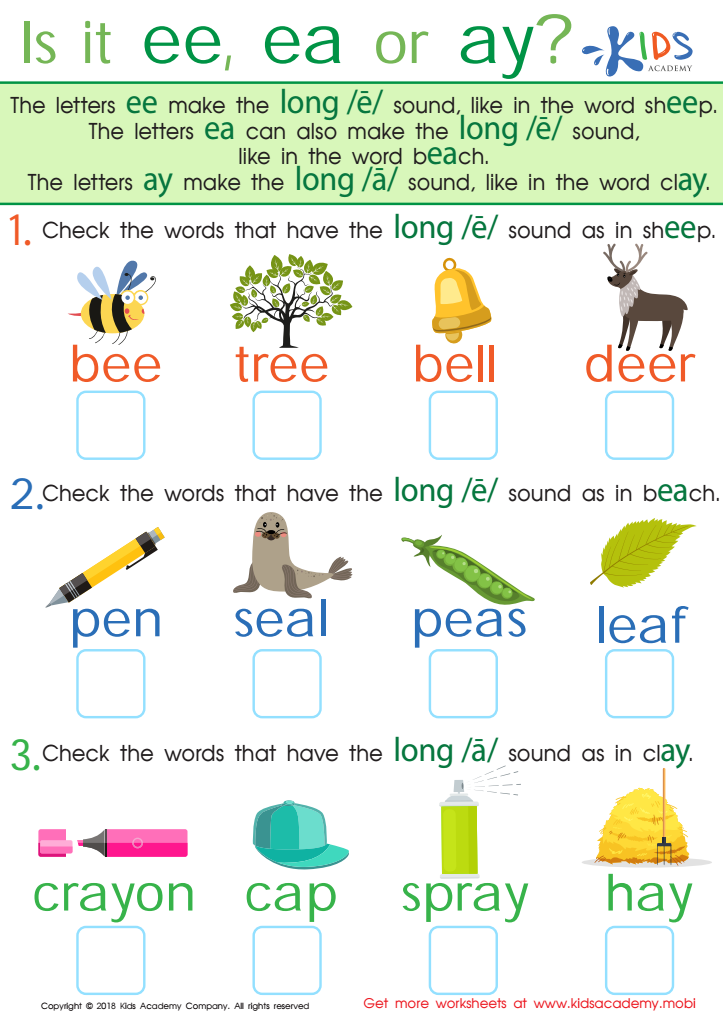
Is It EE, EA, or AY? Worksheet
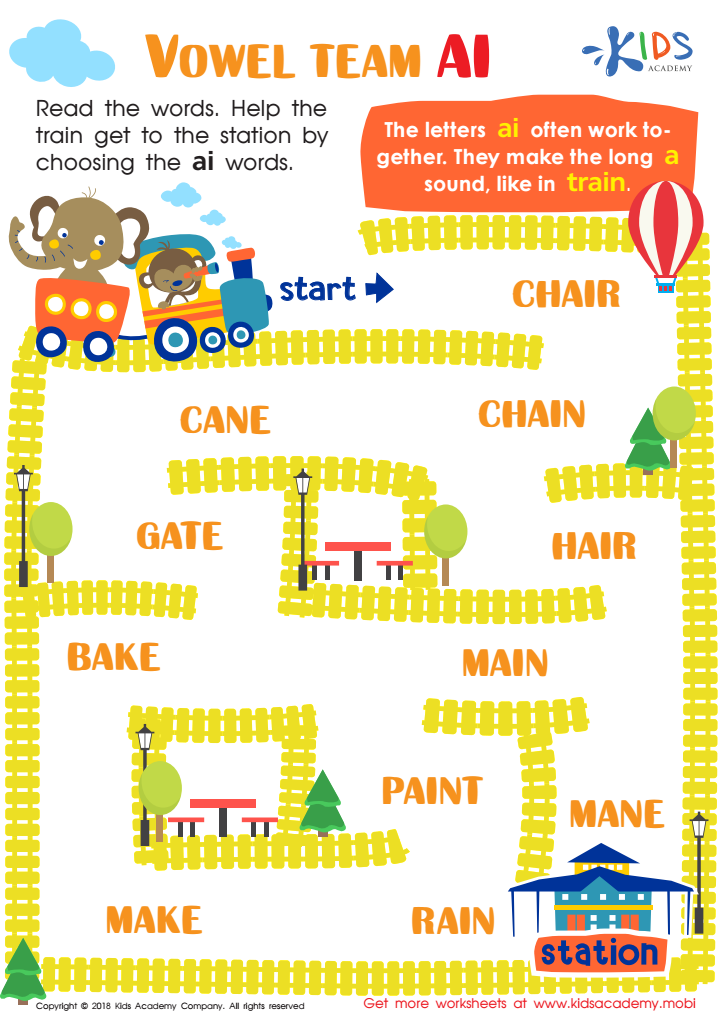
Vowel team ai Worksheet
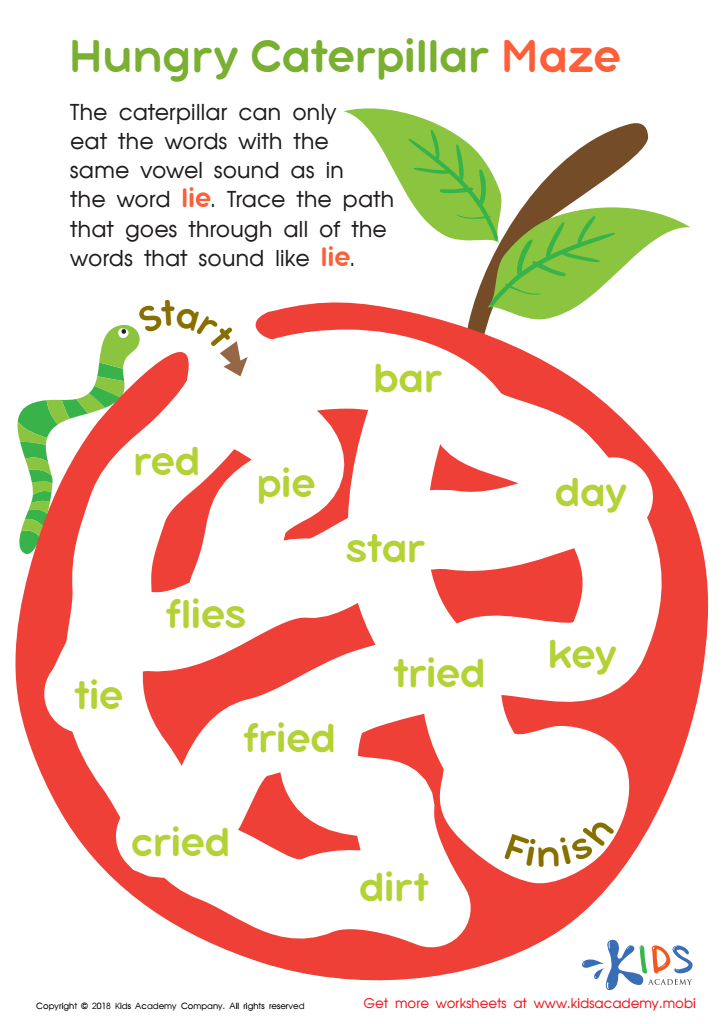
Hungry Caterpillar Maze Worksheet
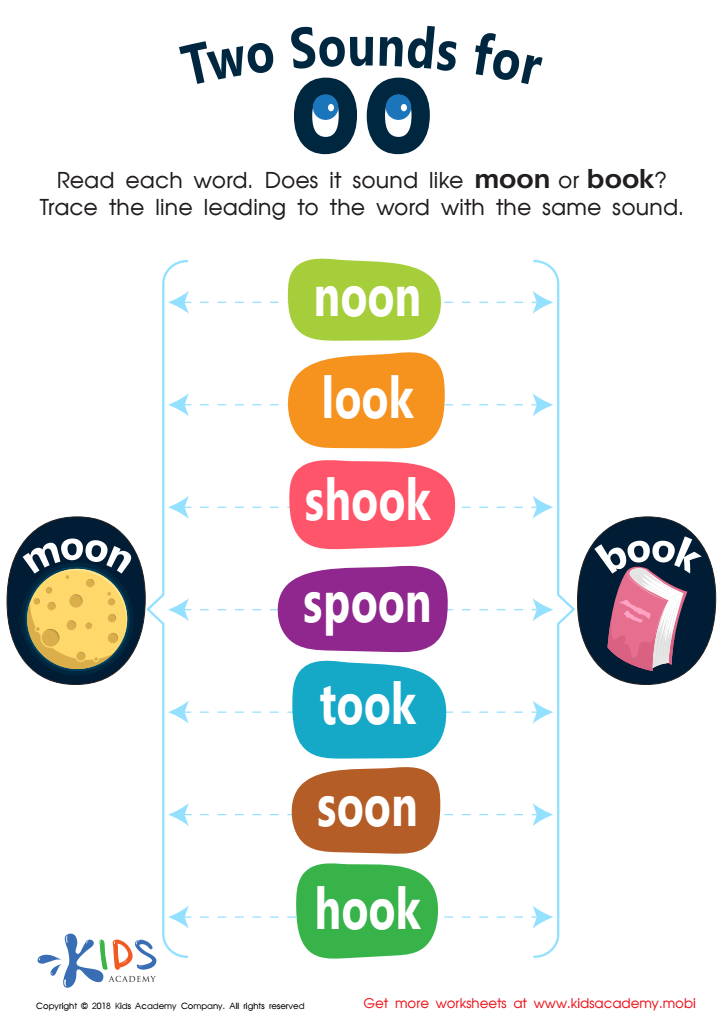
Two Sounds for OO Worksheet
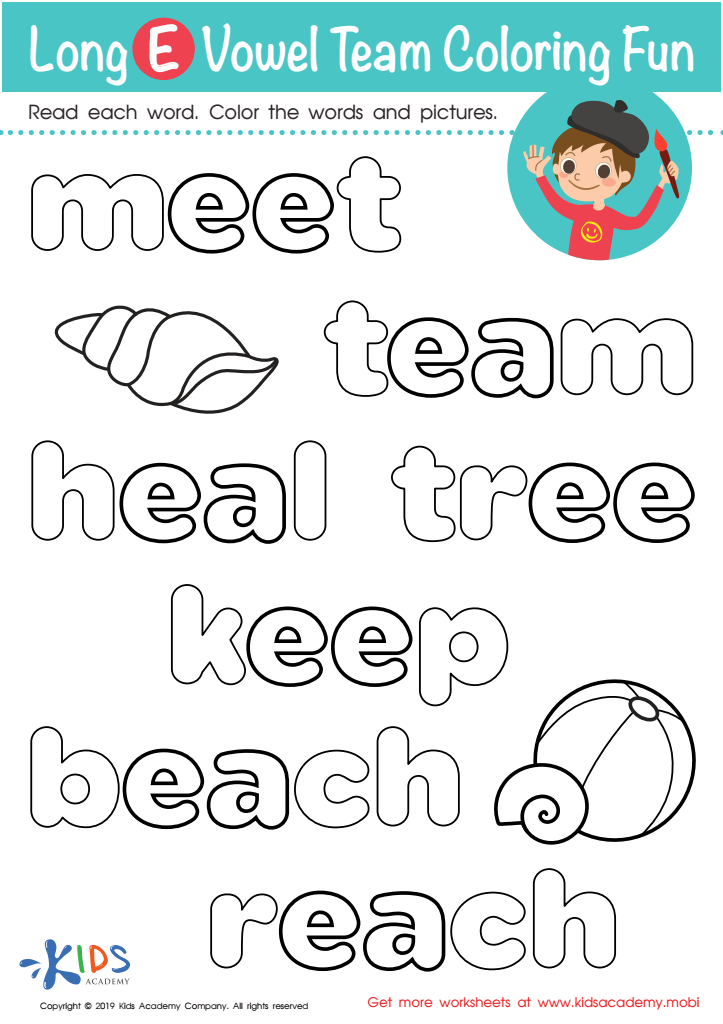
Long E Vowel Team Coloring Worksheet
Assign to My Students
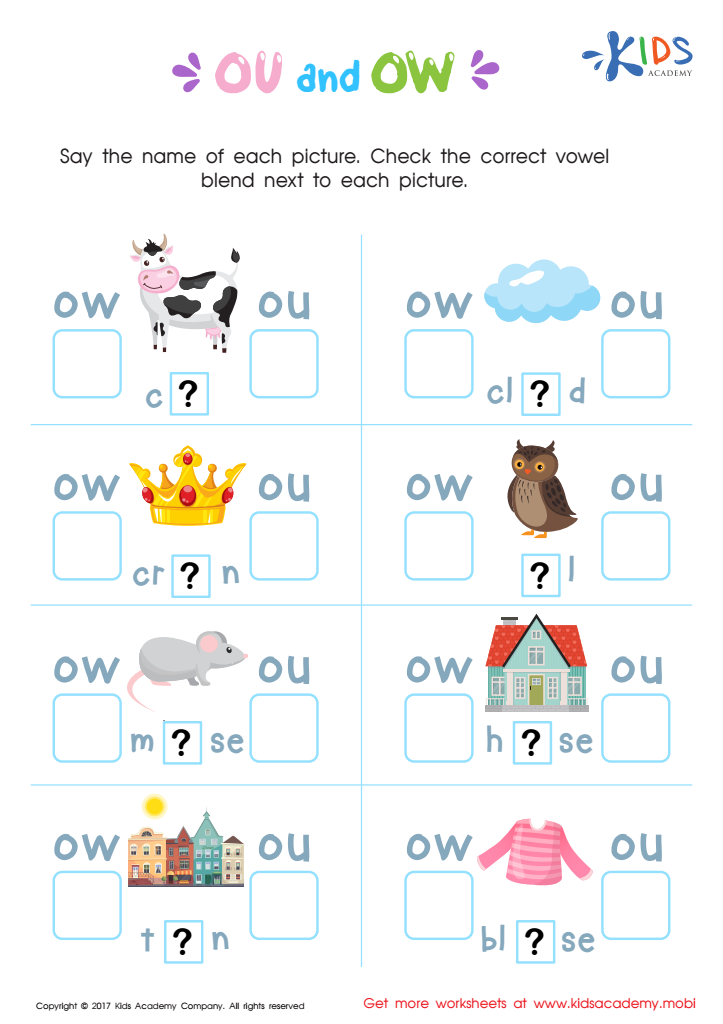
OU and OW Words Worksheet


Parents and teachers should prioritize understanding and teaching the concept of "Two Vowels Together" to children aged 3-7 because it forms a foundational part of early reading skills. At this crucial developmental stage, children are beginning to recognize patterns and rules that govern language. Learning how two vowels can work together, often resulting in a specific sound, greatly enhances a child's ability to decode and pronounce new words.
For example, in words like "boat" or "train," the two vowels usually create a single, long vowel sound, simplifying vocabulary expansion and reading fluency. Without grasping this concept, children might mispronounce these words, hindering comprehension and potentially leading to frustration and reduced confidence.
Moreover, mastering vowel combinations fosters better spelling skills. As children learn words with consistent vowel patterns, they can apply these rules more easily to new words, encouraging independent learning and exploration.
Importantly, early literacy skills are directly linked to future academic success. Proficiency in recognizing and using vowel combinations can thereby set young learners on a path toward effective communication, higher self-esteem in their reading abilities, and a lifelong love of learning. This early investment catalyzes overall cognitive development, facilitating smoother transitions into more complex literacy tasks as they grow.